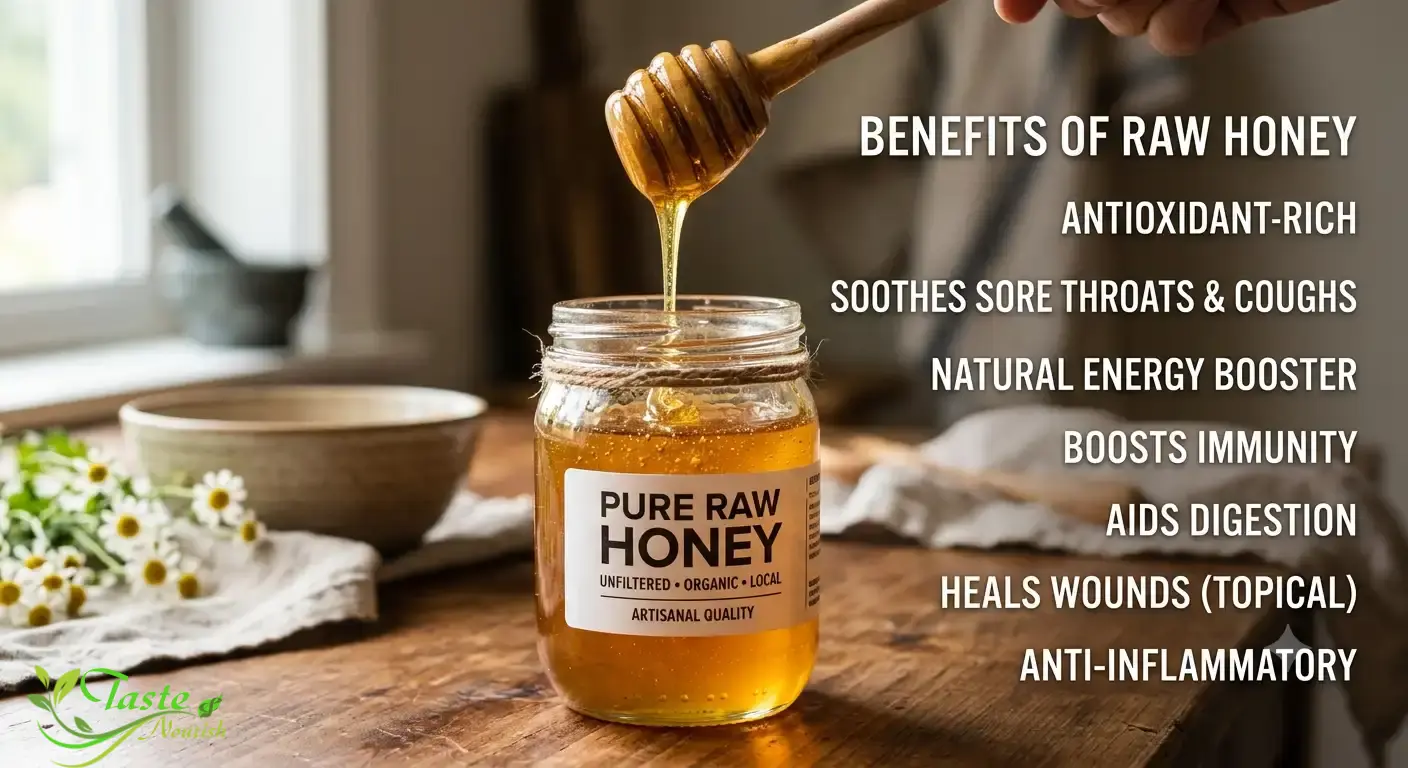
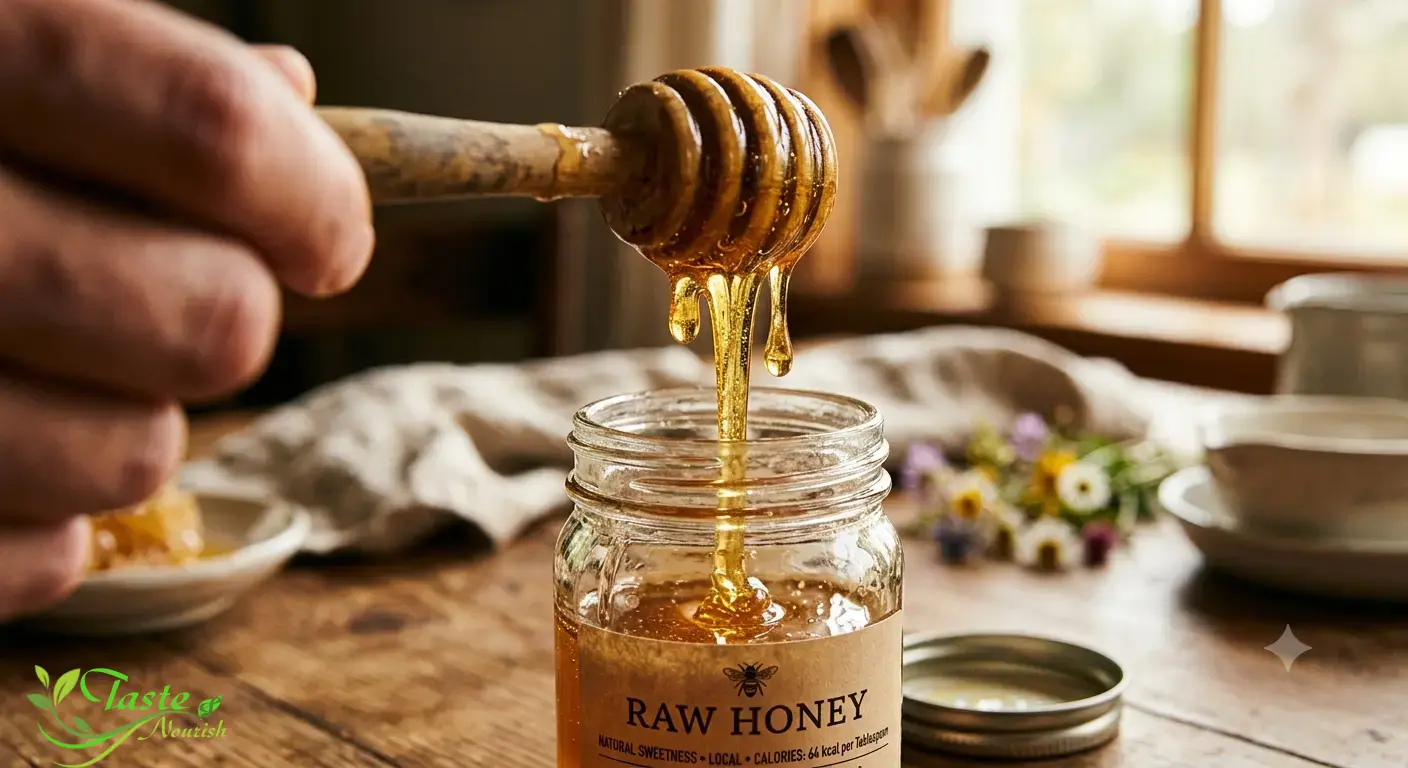
Honey has been valued for centuries as both a natural sweetener and a traditional remedy. Today, researchers continue to study its antioxidant properties and potential health benefits.
Whether you drizzle it over oatmeal, stir it into tea, or use it in everyday recipes, honey offers more than sweetness. However, it is still high in sugar, and its health effects depend on how much you consume and how you use it.
This guide explores the potential benefits of honey, what scientific research tells us, its nutritional value, and the precautions to keep in mind.
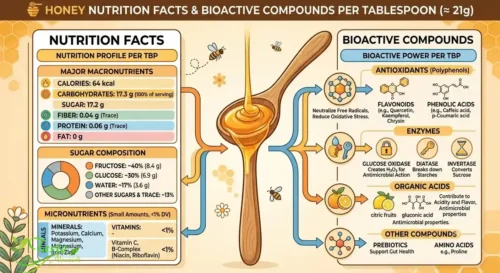
Honey contains natural sugars, small amounts of amino acids and minerals, enzymes, and plant compounds such as polyphenols and flavonoids. The exact composition varies depending on the flowers from which bees collect nectar and how the honey is processed.
Some of these compounds have antioxidant activity in laboratory studies. Honey has also shown antimicrobial properties under certain conditions, but these findings do not mean that eating honey can treat infections, prevent cancer, or replace medical treatment.
Unlike a multivitamin, honey provides very small amounts of most vitamins and minerals. Its main nutritional contribution is carbohydrates and energy.
Nutritional Profile of Honey
Honey Nutrition Facts Table
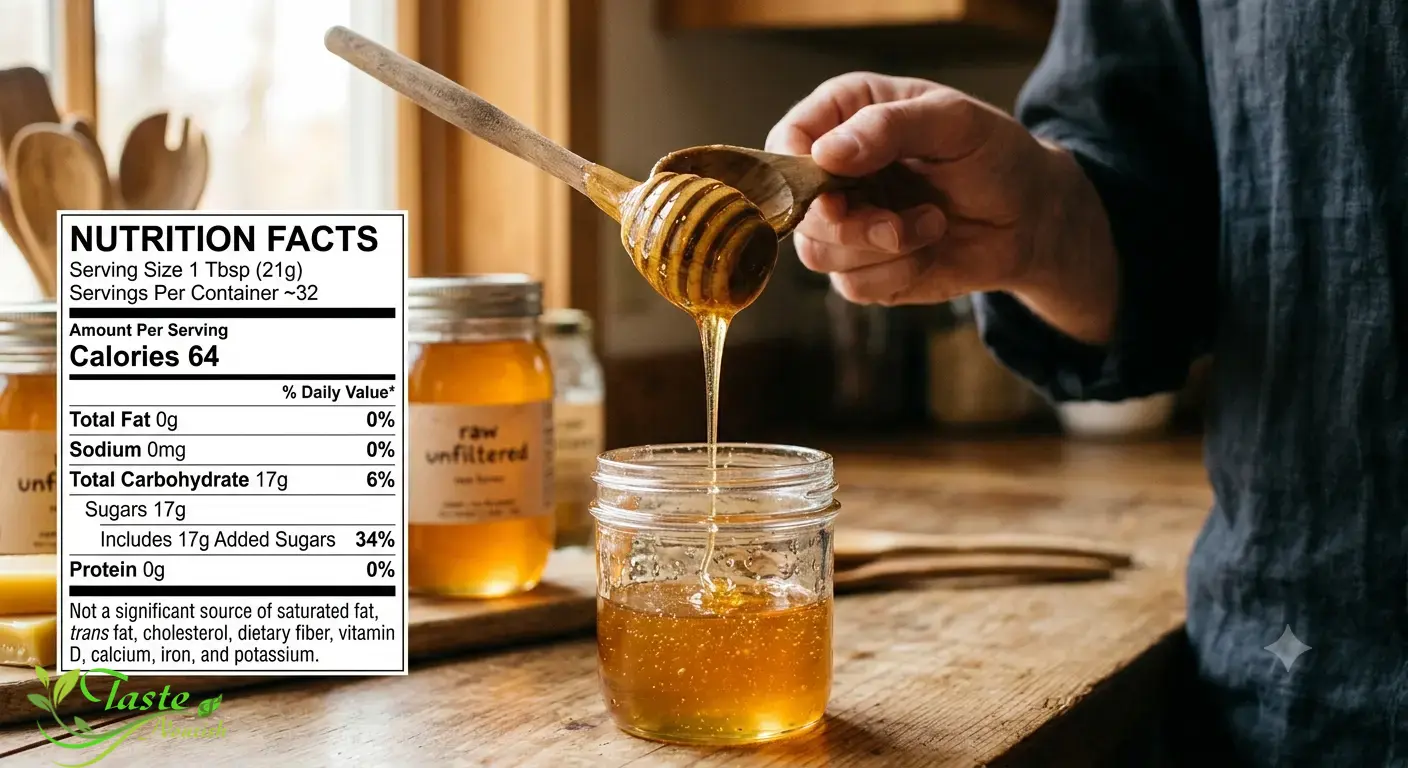
Before diving into the benefits, let’s ground everything in real nutritional data. Here is what one tablespoon (21g) of raw honey typically contains:
Nutrient
Amount per 1 tbsp (21g)
Calories
64 kcal
Total Carbohydrates
17.3g
Sugars (Fructose + Glucose)
~16g
Protein
0.06g
Fat
0g
Fiber
0g
Calcium
1.26mg
Iron
0.09mg
Magnesium
0.42mg
Potassium
10.9mg
Zinc
0.045mg
Vitamin C (trace)
<0.1mg
Antioxidants (Polyphenols)
Varies by type
Reader Note: The exact nutritional content of honey varies significantly depending on its floral source, geographic origin, and processing method. Darker honeys, like buckwheat, are generally richer in antioxidants.
Key Bioactive Compounds in Honey
The nutritional profile of honey is diverse and influenced by its geographical origin, floral source, processing, and storage conditions. It primarily consists of sugars and water along with proteins (enzymes), organic acids, vitamins such as B6, thiamine, niacin, riboflavin, and pantothenic acid, and minerals such as calcium, copper, iron, magnesium, and potassium. Beyond macro and micronutrients, honey’s real power lies in its bioactive compounds:
Flavonoids: Plant compounds studied for their antioxidant activity.
Phenolic acids: Compounds that contribute to honey’s antioxidant properties.
Enzymes: Including glucose oxidase, which can contribute to hydrogen peroxide production under certain conditions.
Methylglyoxal (MGO): A compound associated with the antibacterial activity of Manuka honey.
Oligosaccharides: Certain carbohydrates in honey that are being studied for their potential effects on gut bacteria.
Prebiotics: oligosaccharides that feed beneficial gut bacteria
Top Health Benefits of Honey Backed by Science
1. Powerful Antioxidant Properties
Honey contains antioxidants, including polyphenols and flavonoids, that may help neutralize free radicals under certain conditions. However, antioxidant activity measured in laboratory studies does not necessarily translate into proven health benefits in humans.
Some research has examined changes in antioxidant markers after honey consumption. More evidence is needed to determine whether these effects lead to meaningful improvements in long-term health.
One study showed that antioxidants in buckwheat honey were detectable in blood plasma, showing that eating honey could enhance antioxidant activity in the body. This is significant because it confirms honey’s bioactive compounds are actually absorbed — they don’t just pass through your system. Darker varieties tend to pack a bigger antioxidant punch, so choosing raw, minimally processed honey gives you the most benefit for your buck.
Key Takeaway:
Antioxidant levels vary by honey type and floral source. Darker honeys may contain higher amounts of certain antioxidant compounds, but this does not establish that one variety prevents or treats disease.
2. Natural Antibacterial and Antimicrobial Activity
One of the most well-established benefits of honey is its ability to fight bacteria — and this goes way beyond simply being a low-water, high-sugar environment that bacteria can’t survive in.
Honey exhibits significant antimicrobial activity and is effective against bacteria, fungi, and antibiotic-resistant pathogens, and these antimicrobial properties are multifactorial. The mechanisms behind this are genuinely fascinating.
Honey produces hydrogen peroxide through the enzyme glucose oxidase. Its low pH creates an acidic environment hostile to microbes. Its low water activity draws moisture out of bacterial cells, essentially dehydrating them to death.
Manuka honey takes this even further with its high methylglyoxal (MGO) content, which provides antibacterial activity even when hydrogen peroxide is neutralized — making it especially effective against drug-resistant strains.
Honey is effective in managing some conditions such as antibiotic-resistant infections, a fact that is becoming increasingly important as global antibiotic resistance continues to rise. This positions honey as more than a folk remedy — it’s a legitimate area of modern medical research.
How honey fights bacteria — a quick breakdown:
Produces hydrogen peroxide via glucose oxidase enzyme
Maintains a low pH (3.2–4.5) hostile to pathogens
Extremely low water activity dehydrates microbial cells
Methylglyoxal (MGO) in Manuka directly disrupts bacterial DNA
Medical-grade honey is used in some wound dressings because it may help manage certain wounds and burns. However, the evidence varies by wound type, and honey is not suitable for every wound.
Medical-grade honey products are specially prepared for clinical use. Regular kitchen honey should not be applied to serious wounds or burns as a substitute for medical care.
Honey is also used in skincare products, but evidence that applying ordinary honey treats acne or other skin conditions remains limited.
Manuka honey in particular has been incorporated into clinical wound dressings and medical-grade products used in hospitals worldwide. The key distinction to remember is that medical-grade honey is sterile and regulated for clinical use — applying regular kitchen honey to a serious wound is not recommended.
⚠️ Important Note: Never apply regular store-bought honey directly to burns or serious wounds without medical advice. Medical-grade honey products are specially processed and sterile. Honey may irritate some people’s skin or trigger an allergic reaction. Test cautiously and discontinue use if irritation occurs.
4. Benefits of Honey for Cough and Respiratory Health
If you’ve ever reached for honey when you had a sore throat, your instincts were well-founded. A 2021 review found that honey was beneficial for managing symptoms of an upper respiratory tract infection, and honey can be a safer option than cough sweets, which are generally not suitable for young children. This is a particularly important finding because health authorities in many countries have moved away from recommending over-the-counter cough medications for children, leaving parents searching for safe, effective alternatives.
In one study, 2 teaspoons of honey relieved children’s nighttime cough and allowed them to sleep. Honey works as a cough suppressant through multiple pathways: its thick, viscous texture coats and soothes irritated throat tissue; its antimicrobial compounds reduce the bacterial or viral load in the upper respiratory tract; and its anti-inflammatory properties reduce swelling and discomfort in the throat lining.
Research studies haven’t found that taking honey or using it as a nose spray eases seasonal allergy symptoms, so while honey helps with respiratory infections and coughs, it shouldn’t be expected to replace allergy medication.
Practical Tip: Mix one to two teaspoons of raw honey with warm (not boiling) water and a squeeze of lemon for an effective home remedy for sore throats and dry coughs. Never add honey to boiling water, as heat degrades its beneficial enzymes and antioxidants.
5. Benefits of Honey for Heart Health
Honey contains flavonoids and other compounds that have been studied for their potential effects on cardiovascular health. Some research has examined changes in cholesterol and other cardiovascular risk markers following honey consumption.
However, the available evidence does not establish that honey prevents heart disease or reliably lowers blood pressure or cholesterol. Honey is also a source of free sugars, so it is best consumed in moderation as part of a balanced diet.
6. Blood Sugar and Diabetes Management
Honey contains glucose and fructose, so it can raise blood sugar levels. Its effect varies with the type of honey, the amount consumed, and the rest of the meal.
Some studies have examined the effects of honey on blood glucose and other metabolic markers, but the findings do not establish that honey is a treatment for diabetes or that it reliably improves insulin sensitivity.
People with diabetes should count honey as a source of carbohydrates and consider its effect on their blood glucose levels. Honey should not be considered a sugar-free food or a substitute for diabetes medication or professional dietary advice.
Consulting a registered dietitian before adding honey to a diabetic meal plan is always the right call.
7. Gut Health and Digestive Benefits
The prebiotic properties of honey, which support gut health by promoting the growth of beneficial bacteria, further enhance its appeal as a dietary supplement. Prebiotics are essentially food for the good bacteria living in your gut — and a healthy gut microbiome is now linked to everything from immune function to mental health.
Honey contains oligosaccharides that act as fuel for beneficial strains like Lactobacillus and Bifidobacterium. Beyond prebiotics, studies suggest that honey might help ease diarrhea in people with infections caused by bacteria, and honey also might help lessen irritation that can happen with conditions that cause gut inflammation, such as ulcerative colitis. The antimicrobial activity of honey may help reduce pathogenic bacteria in the gut while its anti-inflammatory compounds soothe the gut lining.
Traditional Chinese medicine has used honey for digestive complaints for millennia, and as clinical studies have validated, the protective effects of honey on the gastric mucosa and its mild laxative properties align with its traditional use in treating ulcers, constipation, and indigestion.
Actionable Gut Health Tips Using Honey:
Add one teaspoon of raw honey to warm water first thing in the morning to gently support digestion
Use honey instead of sugar in fermented foods like yogurt to preserve probiotic cultures
Mix honey with apple cider vinegar and warm water as a traditional digestive tonic
Choose raw, unfiltered honey to retain prebiotic oligosaccharides that processing can degrade
Combine honey with ginger tea to address nausea and digestive discomfort
Avoid heating honey above 40°C (104°F) to preserve its enzyme and probiotic content
8. Anti-Inflammatory Effects
Some compounds in honey have shown anti-inflammatory activity in laboratory and experimental studies. However, more research is needed to determine whether consuming honey produces clinically meaningful anti-inflammatory effects in humans. Honey should not be considered a treatment for chronic inflammatory diseases.
Types of Honey and Their Unique Benefits
Manuka vs. Raw vs. Regular Honey — A Comparison Table
Not all honey is created equal. The type you choose dramatically affects the concentration of beneficial compounds you actually get.
Honey Type
Key Feature
Best Used For
Antioxidant Level
Price Range
Manuka Honey
High MGO + UMF rating
Wound care, antibacterial
Very High
$$$$
Raw Honey
Unfiltered, unheated
General health, gut support
High
$$
Buckwheat Honey
Darkest variety
Antioxidant boost, cough
Very High
$$
Acacia Honey
Low GI, light flavor
Blood sugar management
Moderate
$$
Wildflower Honey
Diverse floral sources
Immunity, everyday use
High
$
Pasteurized Honey
Heat-treated, shelf-stable
Cooking, baking
Low-Moderate
$
Pro Tip: Varieties such as Manuka honey from New Zealand, acacia honey from Europe, and buckwheat honey from North America each possess unique chemical profiles and therapeutic potentials — for instance, Manuka honey is prized for its high MGO content, which confers exceptional antibacterial properties. ScienceDirect
How to Use Honey Daily — Practical Tips
Best Ways to Add Honey to Your Diet
Getting the most out of honey is as much about how you use it as how much you use. Honey can be used in warm drinks, dressings, oatmeal, yogurt, and smoothies. Heating may affect some of its enzymes and other compounds, but there is no need to follow a strict 40°C limit for ordinary cooking. Here are the smartest ways to incorporate honey into your daily routine:
In warm (not hot) beverages: Stir into warm water, herbal tea, or golden milk at temperatures below 40°C to preserve enzymes
As a natural sweetener in oatmeal or yogurt: Replaces refined sugar while contributing sweetness and small amounts of other compounds
In salad dressings: Combine with olive oil, lemon juice, and Dijon mustard for a functional, delicious dressing
As a pre-workout energy source: A tablespoon of honey before exercise provides fast-releasing glucose for fuel
On whole-grain toast with nut butter: Combines complex carbs, healthy fats, protein, and honey’s antioxidants
In smoothies: Add raw honey after blending to avoid heat exposure and retain all bioactives
How Much Honey Should You Eat Per Day?
This is the question most people don’t ask — and they probably should. Honey is still a high-sugar food, and consuming it in unlimited quantities defeats its health purpose entirely.
The World Health Organization recommends limiting free sugars to less than 10% of total daily energy intake, with a further reduction to below 5% suggested for additional health benefits. These recommendations include sugars naturally present in honey.
There is no single daily amount of honey that is appropriate for everyone. The amount you consume should depend on your overall diet, energy needs, and health considerations. Using honey in place of other sweeteners, rather than adding it to an already high-sugar diet, can help limit total sugar intake.
Who Should Avoid Honey? Safety and Precautions
Honey is safe for the vast majority of people, but there are important exceptions that must be taken seriously.
Groups who should avoid or limit honey:
Infants under 12 months — Honey can cause a rare but serious digestive condition called infant botulism. Raw honey may have cells in it that bacteria use to make spores that can grow and multiply in a baby’s gut, making a harmful toxin that can make a baby seriously ill.
People with bee pollen allergies — Honey may have bee pollen in it, and bee pollen allergies, though rare, can cause serious reactions including wheezing and breathing problems and irregular heart rhythms.
People on Phenytoin (Dilantin) — Drug interaction risk noted in clinical literature
Uncontrolled diabetics — Should use only under dietitian supervision due to carbohydrate content
Those with fructose malabsorption — Honey is high in fructose and may cause digestive distress
Honey vs. Sugar — Which Is Better for You?
Honey vs. Sugar Comparison Table
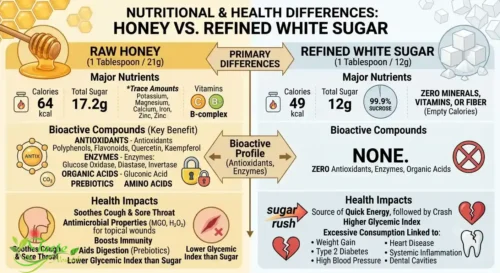
The eternal sweetener debate. Here’s how raw honey stacks up against refined white sugar across key health metrics:
Feature
Raw Honey
Refined White Sugar
Calories per tbsp
~64 kcal
~48 kcal
Glycemic Index
45–64 (varies)
65
Antioxidants
Contains small amounts of antioxidant compounds
Does not provide meaningful amounts of antioxidants
Antibacterial Properties
Shows antimicrobial activity under certain conditions
Does not have comparable antimicrobial activity in ordinary food use
Prebiotic Effect
Potential effects on gut bacteria are still being studied
Not a meaningful source of prebiotic compounds
Vitamins & Minerals
Trace amounts
None
Anti-inflammatory
Clinical effects in humans remain uncertain
Excessive free sugar intake can contribute to an unhealthy diet
Sweetness Relative to Sugar
Higher (use less)
Baseline
Processing
Minimal (raw)
Highly refined
Best Used As
Sweetener to be consumed in moderation
Sweetener to be consumed in moderation
Honey contains small amounts of compounds that are not present in significant amounts in refined white sugar. However, both are sources of free sugars, and honey is not automatically healthier in every situation.
If you enjoy honey, you can use it as a sweetener in moderation. Replacing sugar with honey may change the flavor and composition of your food, but the overall amount of free sugar you consume still matters.
Benefits of Honey FAQs
What is the best time to eat honey for maximum health benefits?
There is no established best time to eat honey for maximum health benefits. You can enjoy it with meals or in drinks according to your preferences, while keeping your overall free sugar intake in mind.
Is raw honey better than regular honey?
Raw honey may retain different amounts of pollen, enzymes, and other compounds depending on how it is handled and processed. However, raw honey is not proven to provide superior health outcomes in every situation. Both raw and pasteurized honey are sources of sugar and should be consumed in moderation.
Can honey help with weight loss?
Honey does not directly cause weight loss. Although it can be used instead of other sweeteners, it still provides calories and free sugars. Weight management depends on overall dietary patterns, energy intake, physical activity, and other individual factors.
How much honey per day is safe for adults?
There is no universal daily limit for honey that applies to every adult. Honey counts toward total free sugar intake, so the appropriate amount depends on your overall diet and health needs. The World Health Organization recommends keeping free sugars below 10% of daily energy intake and suggests reducing them further to below 5%.
Is Manuka honey worth the high price?
Manuka honey is known for its methylglyoxal (MGO) content and is used in some specialized wound-care products. However, a high MGO content does not mean that eating Manuka honey treats infections or serious skin conditions. For everyday cooking and sweetening, the higher price may not be necessary.
Conclusion
Honey is a versatile natural sweetener that contains small amounts of antioxidants and other compounds of scientific interest. Research suggests that it may help soothe coughs and that medical-grade honey has specific uses in wound care, but many other proposed health benefits require further study.
The best way to enjoy honey is in moderation as part of a balanced diet. Because it is high in free sugars, it is important to consider your overall sugar intake rather than assuming that a natural sweetener is always a healthier choice.
Honey can be a useful ingredient in everyday cooking, but it should not replace medical treatment or be viewed as a cure for disease.
**Hanan Abo Samra** shares practical cooking insights, delicious recipes, and evidence-based nutrition information. Drawing on more than 20 years of hands-on cooking experience, she creates helpful food content that combines everyday cooking knowledge with information from reliable scientific sources. Her goal is to help readers better understand the foods they eat, explore their nutritional benefits, and prepare delicious meals with confidence.