Can honey help with weight loss, or does it simply add calories to your diet? Honey is a natural sweetener, but it is still a concentrated source of sugar and energy. Whether it fits into a weight-management plan depends mainly on portion size and total calorie intake.
Key takeaway — Honey does not directly burn body fat. Replacing another sweetener with a measured amount of honey may change the flavor and calorie content of a meal, but honey itself has not been established as a weight-loss treatment.
What Is Honey, Really?
Honey is a natural sweetener made by bees from flower nectar. It’s roughly 80% sugar, 17% water, and 3% everything else — enzymes, pollen, antioxidants, and trace minerals.
That “3% everything else” is the part marketers love to highlight. It’s real, but it’s small. Honey is still, first and foremost, a concentrated source of sugar and calories.
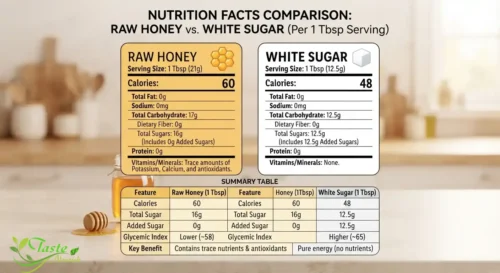
Unlike white table sugar, raw honey contains active enzymes, over 200 bioactive compounds, and polyphenols that may support gut and metabolic health in small amounts, according to nutrition data compiled from USDA FoodData Central.
Honey Nutrition Facts at a Glance
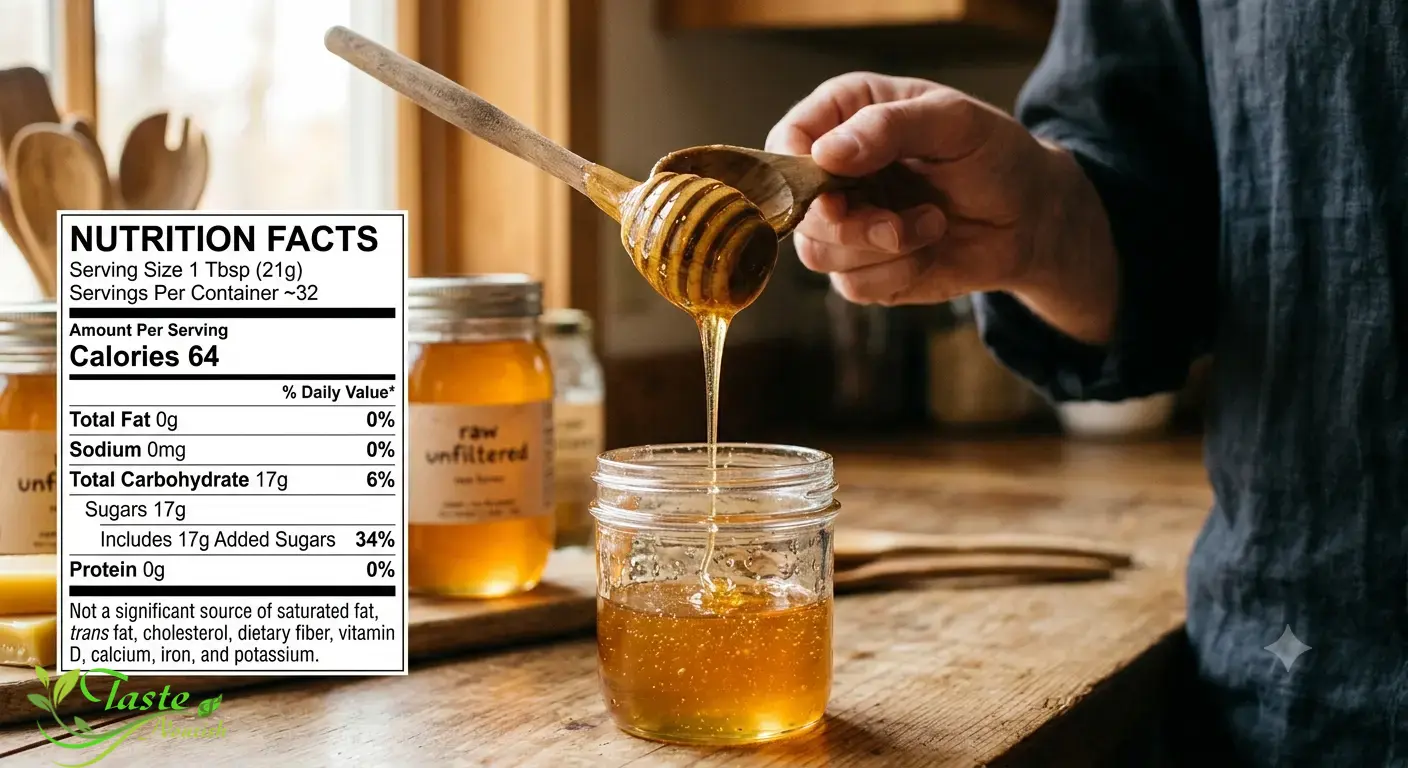
Before deciding whether honey fits your weight-loss plan, it helps to see the numbers side by side. Here’s the standard profile for one tablespoon (21g) of raw honey.
Nutrient
Amount per tbsp (21g)
Calories
64 calories
Total carbohydrates
17g
Fructose
approximately 38% of sugars
Glucose
approximately 31% of sugars
Fat
0g
Protein
Trace amounts
Glycemic index
58–64, moderate category
Glycemic load
approximately 10–12 per tbsp
Notice honey has more calories per tablespoon than sugar. That’s because it’s denser and contains more water-adjusted sugar mass, not because it’s “worse” nutritionally.
Can Honey Really Help You Lose Weight?
This is where things get nuanced. The short answer: maybe, but the evidence is far from conclusive — especially in humans.
What Animal Studies Show
Most of the encouraging honey-and-weight-loss research comes from rodent studies, not people. A 2022 systematic review found that the majority of screened studies included six animal trials and three human clinical trials, with animal results skewing far more positive.
In these studies, honey reduced body weight, body fat, and fat cell size in obese animal models. Researchers also observed that honey increased physical activity in obese rats, which raised their energy expenditure and contributed to weight loss.
Emerging research has even pointed to specific honey proteins. Proteins related to royal jelly have shown anti-obesity potential in animal experiments, activating genes tied to fat metabolism and raising metabolic rate. Promising — but this is early-stage, animal-level science.
What Human Studies Show
Human data tells a more cautious story. Human studies haven’t found a significant weight-reducing effect from honey, though researchers note those trials weren’t especially robust either.
A small number of human studies have compared honey with other sugars and examined changes in body weight or metabolic markers. These studies are limited, and their findings do not establish that honey reliably causes weight loss. Larger, well-designed trials are needed to determine whether replacing other sweeteners with honey has meaningful long-term effects on body weight.
Reader note: No credible study shows honey burns fat on its own. Its potential weight-loss role is almost always tied to replacing worse sugar sources, not some unique metabolic magic.
How Honey May Support Weight Management
If honey isn’t a fat-burner, how might it help at all? Three mechanisms come up repeatedly in the research.
Appetite and Satiety
Honey has not been shown consistently to reduce appetite or increase fullness enough to produce weight loss. Some people may prefer its flavor and choose to use a smaller amount, but this depends on individual taste and eating habits.
Gut Health and Prebiotic Effects
Honey contains small amounts of carbohydrates that are being studied for their potential effects on gut bacteria. However, evidence that eating honey improves gut health in a way that leads to weight loss remains insufficient.
Blood Sugar and Glycemic Load
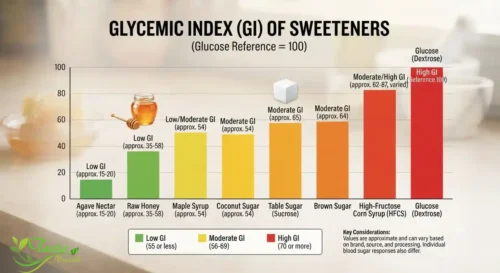
Honey’s glycemic index varies by variety, and its effect on blood glucose depends on the amount consumed and the rest of the meal. A lower glycemic index does not mean that honey prevents blood sugar fluctuations, reduces cravings, or causes weight loss.
Honey vs. Other Sweeteners for Weight Loss
Choosing a sweetener isn’t just about calories. Here’s how honey stacks up against common alternatives.
Sweetener
Calories/tbsp
Glycemic index
Micronutrients
Best for
Honey
64
58–64
Antioxidants, trace minerals, enzymes
Occasional use, flavor-forward swaps
White sugar
49
65
None
Baking precision only
Maple syrup
52
~54
Manganese, zinc
Whole-food recipes
Agave nectar
63
Low (high fructose)
Minimal
Low-GI baking
Stevia (liquid)
~0
0
None
Strict calorie control
Honey isn’t the lowest-calorie or lowest-GI option on this list. Its case rests on flavor intensity (you use less) and its unique enzyme and antioxidant content.
How to Use Honey for Weight Loss the Right Way
If you’re going to keep honey in your routine, portioning and pairing matter more than the honey itself. Here’s a practical approach.
Portion Control and Timing
Treat honey as a condiment, not a diet staple. There is no universal daily limit of honey specifically for weight loss. The appropriate amount depends on your overall diet, energy needs, and health goals. Measure the amount you use, and consider replacing another sweetener rather than adding honey on top of your usual intake.
Measure it — don’t eyeball a “drizzle.”
Use it to replace sugar, not stack on top of it.
Choose raw or minimally processed varieties when possible.
Store it sealed at room temperature to preserve enzyme activity.
Avoid heating honey excessively, which degrades beneficial compounds.
Check labels for “honey blends” cut with cheaper syrups.
Pair It With Protein or Fiber
Adding a small amount of honey to foods such as plain yogurt or oatmeal can make them more enjoyable. Protein and fiber can contribute to fullness as part of a balanced meal, but adding honey does not itself guarantee a smaller blood glucose rise or greater weight loss.
Honey and Lemon Water — Does It Really Burn Fat?
This is one of the internet’s most searched weight-loss “hacks.” The honest answer is that no single food or drink targets fat loss in a specific area.
Warm lemon water with honey does not burn fat or target belly fat. It may fit into a weight-management plan if it replaces a higher-calorie drink and does not significantly increase your overall calorie intake. Honey still adds calories and free sugars, even when mixed with water and lemon.
If you want to try it, here’s a simple method:
Warm (not boiling) one cup of water — excess heat degrades honey’s enzymes.
Stir in one teaspoon of raw honey.
Add the juice of half a fresh lemon.
Drink it in place of a sugary morning beverage, not in addition to breakfast.
Track how it affects your overall daily calorie intake over two weeks.
Risks and Downsides to Keep in Mind
Honey is not risk-free, especially for certain people or in large amounts. Keep these considerations in mind before making it a daily habit.
It’s still an added sugar and counts toward FDA-recommended sugar limits.
Overuse can spike blood glucose and triglycerides in sensitive individuals.
People with diabetes or insulin resistance should use it cautiously.
Infants under one year should never be given honey due to botulism risk.
“Ultra-filtered” honey may offer little more than empty calories.
Excess fructose intake is linked to increased fat production in the liver.
Nutrition experts are consistent on one point: substituting sugar with honey will not necessarily promote weight loss unless it’s part of a broader strategy to reduce overall added sugar intake.
Comparing Honey Varieties by Glycemic Index
Not all honey behaves the same in your body. Floral source changes the fructose-to-glucose ratio, which shifts the glycemic index significantly.
Honey variety
Approximate glycemic index
Notes
Acacia
~32
Lowest common option, high fructose
Tupelo
~45–74
Wide range by source
Buckwheat
73–83
Darker, more antioxidants, higher GI
Clover
~69
Common commercial variety
Yellow box
35
Lower-GI specialty honey
If blood sugar control is your priority, acacia or other high-fructose, light-colored honeys are generally the smarter pick.
Simple Ways to Add Honey to a Weight-Loss-Friendly Diet
Small, intentional swaps are where honey earns its place in a healthy routine. Try these approaches:
Replace sugary cereal with plain oats sweetened with a teaspoon of honey.
Use honey instead of syrup on a protein-forward pancake or waffle.
Stir a small amount into plain yogurt instead of buying flavored, sugar-loaded versions.
Whisk honey into salad dressings to cut down on bottled dressing sugar.
Add it to tea instead of reaching for a sugary latte.
Use it in marinades, where a little goes a long way on flavor.
Honey for weight loss
Verdict
Direct fat-burning effect
Not supported by human evidence
Helps replace worse sugar sources
Plausible, indirect benefit
Safe in moderate daily amounts
Yes, for most healthy adults
Suitable for diabetics without guidance
Not recommended
Better than sugar nutritionally
Marginally, due to antioxidants
Honey for Weight Loss FAQs
Does honey burn belly fat?
No. There is no good evidence that honey specifically burns belly fat. Changes in body fat depend on overall energy balance, eating patterns, physical activity, and other individual factors.
How much honey per day is safe for weight loss?
There is no specific daily amount of honey proven to promote weight loss. If you choose to eat it, measure your portion and include its calories and sugars in your overall diet.
Is honey better than sugar for weight loss?
Honey has a slightly lower glycemic index than table sugar and contains antioxidants sugar lacks, but the calorie and sugar content are comparable overall.
Can diabetics use honey to lose weight?
Honey still raises blood glucose meaningfully and should only be used under a healthcare provider’s guidance for anyone managing diabetes.
Does honey and warm water help you lose weight overnight?
No. Honey and warm water do not cause meaningful fat loss overnight. Body weight can fluctuate from day to day due to fluid balance and other factors, but lasting weight loss requires sustainable dietary and lifestyle changes.
Conclusion
Honey can be part of a balanced diet, but it is not a fat-burning food or a proven weight-loss aid. It provides calories and free sugars, so portion size matters.
If you enjoy honey, use a measured amount in place of another sweetener rather than adding it to your usual intake. Sustainable weight management depends on your overall eating pattern, activity level, and long-term habits.
**Hanan Abo Samra** shares practical cooking insights, delicious recipes, and evidence-based nutrition information. Drawing on more than 20 years of hands-on cooking experience, she creates helpful food content that combines everyday cooking knowledge with information from reliable scientific sources. Her goal is to help readers better understand the foods they eat, explore their nutritional benefits, and prepare delicious meals with confidence.