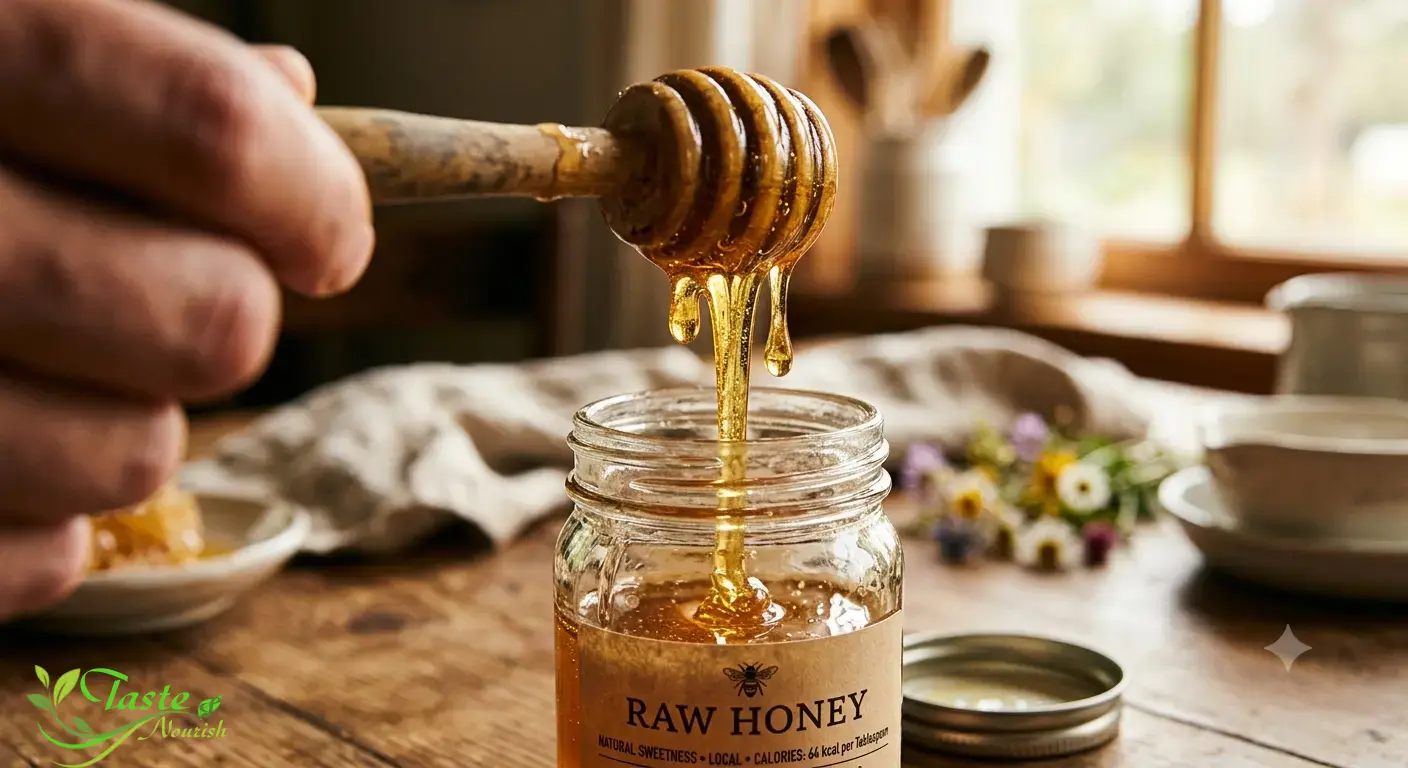
If you’ve ever hovered your spoon over a jar of golden honey and wondered exactly how many calories you’re about to add to your morning tea or yogurt bowl, you’re not alone. Honey calories are one of the most searched nutrition topics online — and for good reason. Honey occupies a fascinating middle ground between a natural sweetener and a functional food, and understanding its caloric profile is the first step to using it wisely.
Whether you are tracking calories, planning recipes, or comparing sweeteners, understanding serving sizes can help you estimate how much energy honey adds to your diet. This guide covers the calories in common portions of honey, its nutritional composition, and how it compares with other sweeteners.
What Are Honey Calories? The Basics You Need to Know
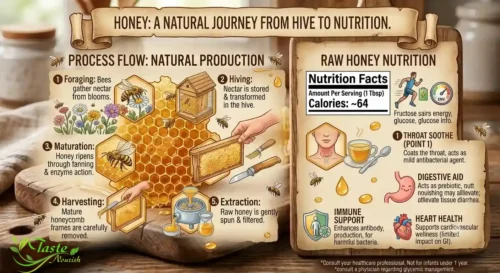
Honey is essentially nature’s concentrated sugar solution, produced by bees from the nectar of flowers through a process of enzymatic activity and water evaporation. Because it’s a sugar-dense liquid, it’s naturally high in calories relative to its volume. But before you write it off as just another empty-calorie sweetener, it’s worth understanding exactly what’s inside that spoonful — because the story is a lot more nuanced than most people think.
One hundred grams of honey provides 304 calories, placing it in the top 29% of calorie-dense foods. Its nutrient content consists of roughly 82% carbohydrates, 17% water, and less than 1% other nutrients. That high carbohydrate-to-water ratio is what makes honey so energy-dense. Think of it like a battery — compact, powerful, and concentrated. A little goes a long way, which is actually good news for those who use it in moderation.
How Many Calories in a Teaspoon of Honey?
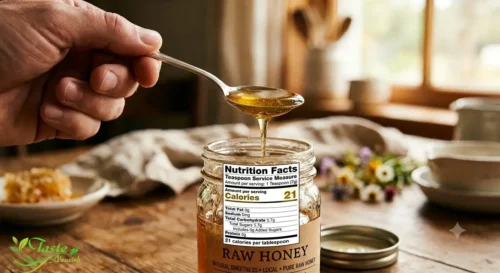
A teaspoon is the most common “casual” serving — the amount most people drizzle into their morning coffee or stir into a cup of green tea. On average, there are 21 calories in a teaspoon of honey. That’s a pretty manageable number in the context of a full day’s diet, especially when you consider that you’re also getting trace amounts of enzymes, antioxidants, and minerals alongside those 21 calories.
If you’re someone who watches every calorie but still craves a touch of sweetness, a single teaspoon of honey is genuinely one of the smarter choices you can make — delivering real flavor without a meaningful caloric hit.
How Many Calories in a Tablespoon of Honey?
Scale up to a tablespoon — which is how most recipes measure honey and how many people actually use it — and the numbers change noticeably.
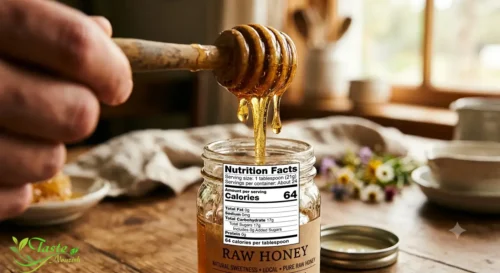
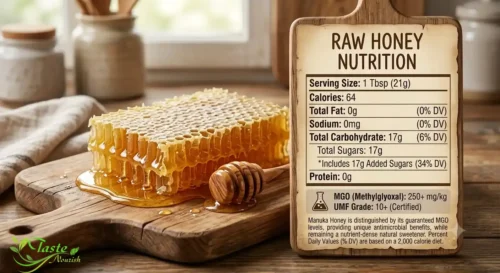
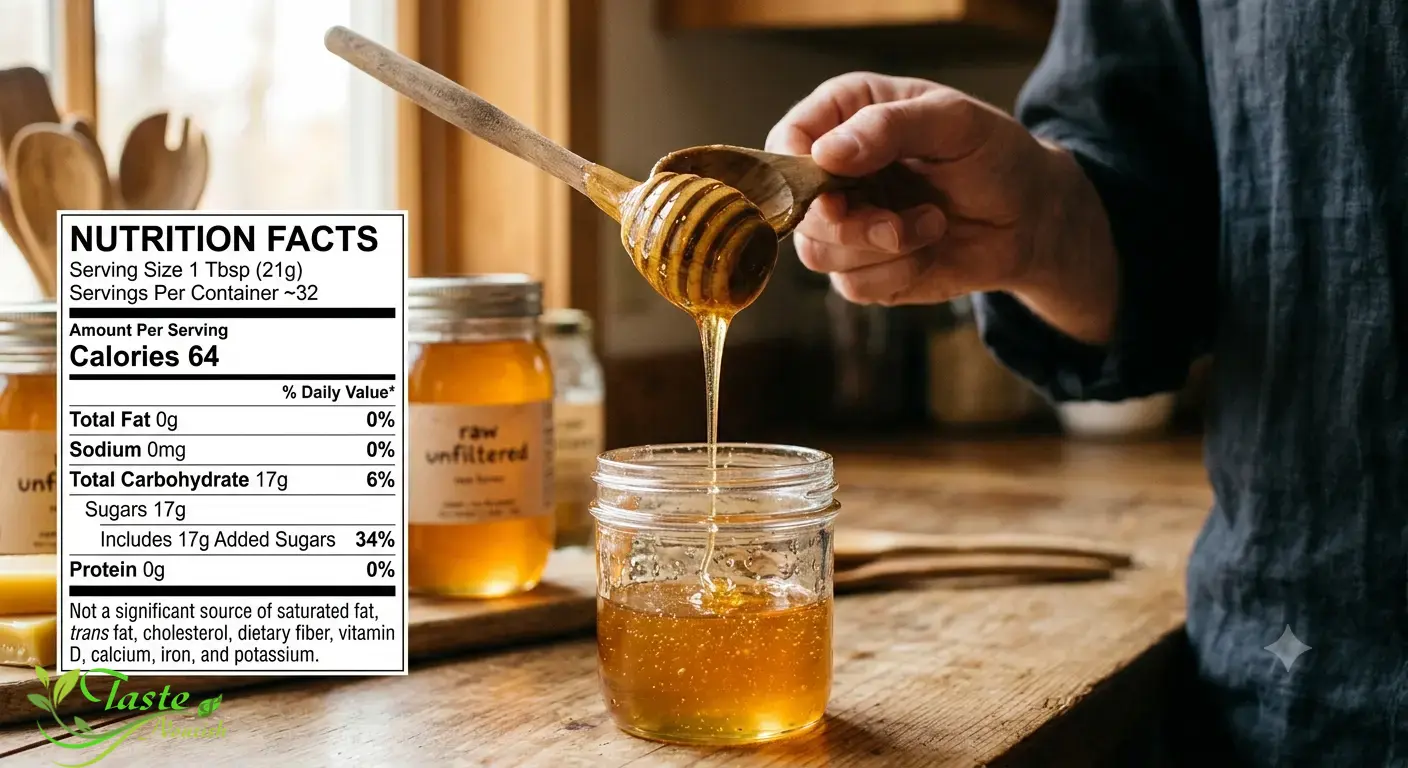
One tablespoon of honey contains 64 calories, with a macronutrient breakdown that is virtually 100% carbohydrates, 0% fat, and just 0.4% protein. That 64-calorie figure is the number cited most consistently across nutrition databases, including the USDA FoodData Central database, which is the gold standard for nutritional information in the United States. It’s worth keeping that number in your head because it comes up constantly when evaluating honey’s role in your overall diet.
Honey Nutrition Facts: Full Breakdown
Calories are only one piece of the nutritional puzzle. To truly understand what honey brings to the table, you need to look at the full spectrum of what’s inside that jar.
Macronutrient Profile of Honey
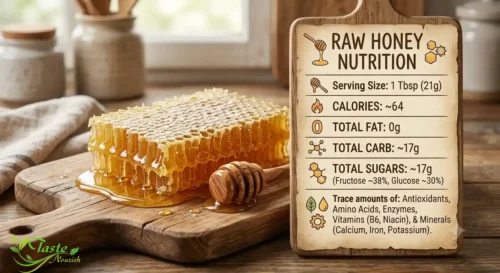
The macronutrient profile of honey is dominated almost entirely by carbohydrates, specifically sugars. A tablespoon of honey contains about 64 calories and 17 grams of carbohydrates, mainly from natural sugars, and provides only minimal fat or protein. Those 17 grams of carbs come primarily from two monosaccharides: fructose and glucose, which exist in honey in their free, unbound forms. This is an important distinction from table sugar, where these two molecules are chemically bonded as sucrose and must be broken down before absorption.
Here is the complete honey nutrition facts table per common serving sizes:
Nutrient
Per Teaspoon (7g)
Per Tablespoon (21g)
Per 100g
Calories
21 kcal
64 kcal
304 kcal
Total Carbohydrates
5.8g
17.3g
82.2g
Sugars (Fructose + Glucose)
~5.5g
~16g
~79g
Protein
<0.1g
<0.2g
<0.5g
Fat
0g
0g
0g
Water
~1.2g
~3.6g
~17g
Fiber
0g
0g
0g
Vitamins, Minerals, and Bioactive Compounds in Honey
Beyond its macros, honey contains a surprisingly diverse array of micronutrients and bioactive compounds — though it’s important to be honest that these are present only in trace amounts per serving.
A tablespoon of honey contains trace amounts of vitamins and minerals, including small amounts of potassium, calcium, and some antioxidants. Honey is also rich in antioxidants, particularly flavonoids and phenolic acids, which contribute to its health-promoting properties. These compounds — especially the polyphenols — are what give honey a legitimate claim to being more than just a sugar source, and they are the focus of a rapidly growing body of scientific research.
Recent scientific research has focused on honey’s antioxidant capacity, which is linked to a variety of bioactive compounds such as phenolic acids, enzymes (including glucose oxidase and catalase), flavonoids, ascorbic acid, carotenoids, amino acids, and proteins. Together, these components work synergistically to neutralize free radicals, regulate antioxidant enzyme activity, and reduce oxidative stress. It’s genuinely impressive chemistry for what most people think of as just a sweetener.
Here’s a look at the key bioactive components in honey:
Bioactive Component
Function
Found in Honey?
Flavonoids
Antioxidant, anti-inflammatory
✅ Yes
Phenolic Acids
Antioxidant, anticancer
✅ Yes
Glucose Oxidase
Antibacterial (produces H₂O₂)
✅ Yes
Defensin-1 Peptide
Antibacterial
✅ Yes
Methylglyoxal (MGO)
Powerful antibacterial (Manuka only)
✅ Manuka only
Oligosaccharides
Prebiotic fiber
✅ Yes (small amounts)
Free Amino Acids
Cell repair, enzyme support
✅ Yes
Honey Calories vs. Sugar Calories: A Direct Comparison
This is the comparison that almost everyone wants to know: is honey actually better than sugar from a calorie standpoint? The answer is more interesting than a simple yes or no.
Why Honey Has More Calories Per Tablespoon Than Sugar
Here’s something that surprises a lot of people: one tablespoon of honey contains approximately 64 calories, while a tablespoon of sugar has about 48 calories — making sugar lower in calories per tablespoon than honey.
This calorie difference comes down to density — a tablespoon of honey weighs around 28 grams, almost twice the weight of a tablespoon of sugar, which weighs only about 16 grams. So honey is denser, heavier, and therefore more caloric per tablespoon — but it’s also significantly sweeter than sugar, which means you typically need less of it to achieve the same level of sweetness. That natural sweetness advantage is a practical calorie-saving mechanism that doesn’t show up in a simple tablespoon-to-tablespoon comparison.
Glycemic Index: How Honey and Sugar Affect Blood Sugar
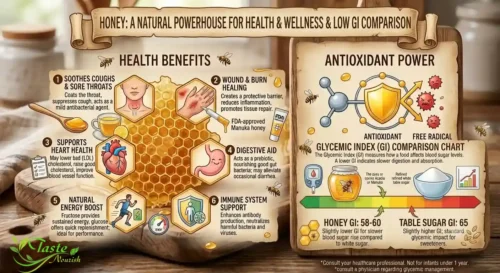
Pure honey has a glycemic index (GI) of 60, meaning it has a medium effect on blood sugar levels. Table sugar, by comparison, carries a GI of around 65. While that gap doesn’t sound dramatic, it has real implications for sustained energy and blood sugar management.
Because of the sweetness of Manuka honey and regular honey, people tend to use less honey to achieve the same level of sweetness, which helps reduce overall calorie intake. A lower GI means that honey causes a slower rise in blood sugar, providing a steady energy release, while sugar causes a quicker spike in blood glucose followed by a crash, which can lead to hunger and overeating.
Here is a side-by-side comparison of honey vs. sugar:
Factor
Honey (1 tbsp)
Sugar (1 tbsp)
Calories
64 kcal
48 kcal
Weight
~21g
~12–16g
Carbohydrates
17g
13g
Glycemic Index
~58–60
~65
Fat
0g
0g
Antioxidants
Yes (flavonoids, phenolics)
No
Vitamins & Minerals
Trace amounts
None
Sweetness Intensity
Higher
Lower
Processing Level
Minimal (raw)
Heavily refined
Calories in Different Types of Honey
Not all honey is created equal. The floral source, geographic origin, and processing methods all influence a honey’s flavor, color, and nutritional profile — though the caloric content remains fairly consistent across varieties.
Raw Honey vs. Processed Honey Calories
There are two types of honey sold in stores: raw honey, which has not been pasteurized or filtered, and processed honey, which is pasteurized by heating it to 160 degrees Fahrenheit and then cooled quickly and pushed through a fine mesh filter. This processing pretty much degrades or destroys the important vitamins and nutrients found in raw honey. But when it comes to honey calories, the caloric content of raw honey and processed honey is pretty much the same — there are, on average, 64 calories in a tablespoon of both raw and processed honey.
The key takeaway? If your goal is purely calorie counting, it doesn’t matter much whether you choose raw or processed honey. However, if you want to maximize the health benefits that justify those calories, raw honey is clearly the better option. Raw honey retains its full complement of enzymes, antioxidants, pollen, and propolis — all of which are either diminished or eliminated by high-temperature pasteurization.
Here are the calorie counts across common honey varieties:
Wildflower Honey — approximately 60–64 calories per tablespoon
Clover Honey — approximately 63–64 calories per tablespoon
Buckwheat Honey — approximately 60–65 calories per tablespoon (darker; higher antioxidants)
Acacia Honey — approximately 60–63 calories per tablespoon (lower GI)
Manuka Honey — approximately 60–70 calories per tablespoon
Orange Blossom Honey — approximately 60–64 calories per tablespoon
Manuka Honey Calories
Manuka honey deserves special mention because it commands premium prices and intense consumer interest. Per standard serving, Manuka honey delivers 304–335 kcal per 100 grams — nearly identical to regular raw or pasteurized honey. A single tablespoon of 21 grams contains approximately 64 kcal.
The energy comes almost exclusively from simple sugars: roughly 38–40% fructose, 31–35% glucose, and 17–20% sucrose and oligosaccharides, depending on floral source, harvest season, and UMF rating.
What distinguishes Manuka honey from standard varieties isn’t its caloric content — it’s the presence of methylglyoxal (MGO), a compound with exceptionally potent antibacterial properties that is virtually absent in other honey types.
Honey and Weight Loss — What Does Science Actually Say?
Honey does not directly cause weight loss. It can fit into a calorie-controlled eating pattern, but it still contributes calories and free sugars. Replacing another sweetener with a measured amount of honey may change the calorie total, depending on the amounts used.
Can Honey Help You Manage Appetite?
There’s some genuinely interesting science suggesting that honey may have modest advantages over refined sugar when it comes to appetite regulation. Scientific studies show that the nutrients in honey may support weight loss by regulating the appetite, reducing inflammation, supporting fat metabolism, and supporting a healthy gut biome.
Honey contains small amounts of oligosaccharides — complex carbohydrates that behave like prebiotic fiber in the gut, feeding beneficial bacteria and supporting the kind of gut microbiome diversity that researchers increasingly link to healthy weight maintenance. This is something refined white sugar simply cannot offer.
A comprehensive review analyzing 48 clinical trials published between 1985 and 2022, with a total of 3,655 subjects, observed more beneficial effects of honey intake than negative effects on different cardiovascular and metabolic risk factors, glucose tolerance, mucositis caused by chemo-radiotherapy, cough in children, and wound healing.
Beneficial effects of honey intake were especially evident when its intake replaced the intake of other sweeteners. That last point is key — honey works best for weight management not as an addition to your diet, but as a replacement for less nutritious sweeteners.
How to Use Honey Smartly Without Gaining Weight
The practical approach to using honey without gaining weight comes down to portion control and timing. Here are six actionable ways to incorporate honey intelligently:
Swap sugar for honey in your morning coffee or tea — use half the amount of honey you’d normally use sugar, since honey is sweeter
Use it as a pre-workout energy source — one teaspoon 30 minutes before exercise provides fast-digesting glucose and fructose for sustained energy
Drizzle it on plain Greek yogurt — the protein and fat in the yogurt slow sugar absorption and extend satiety
Replace processed syrups and condiments — a teaspoon of honey over oatmeal saves significant calories compared to maple-flavored syrup
Track it like any other added sugar — the American Heart Association recommends limiting added sugar to 25g/day for women and 36g/day for men; one tablespoon of honey contains 17g of sugar
Avoid adding honey to already-sweet foods — stacking sweeteners is one of the easiest ways to unknowingly tip your calorie balance
Health Benefits of Honey Beyond Its Calorie Count
Here’s where things get really interesting. Honey has been used medicinally for thousands of years, and modern science is increasingly validating what ancient cultures intuitively understood. The calories in honey come packaged with a remarkable array of biological activity.
Antioxidants and Anti-Inflammatory Properties
Honey stands out for its extensive health benefits, which include robust protection against cardiovascular issues, notable anticancer and anti-inflammatory effects, enhanced glycemic control in diabetes, immune modulation, neuroprotection, and effective wound healing.
As a recognized functional food and dietary supplement, honey is essential for the prevention and adjunct treatment of chronic diseases. This is not marketing language — this assessment comes from peer-reviewed research published in the journal Antioxidants in August 2025, reflecting the current scientific consensus on honey’s therapeutic potential.
Honey positively modulates the glycemic response by reducing blood glucose, serum fructosamine, or glycosylated hemoglobin concentrations, and exerts antibacterial properties caused by its consistent amount of hydrogen peroxide and non-peroxide factors such as flavonoids, methylglyoxal, and defensin-1 peptide. The flavonoids in honey, in particular, are among the most well-studied natural antioxidants in the world, linked to reduced oxidative stress, lower inflammation markers, and better cardiovascular outcomes.
Honey for Energy, Gut Health, and Immunity
Honey’s fructose-glucose combination makes it an almost perfect quick-release energy food. Because fructose and glucose exist as free monosaccharides in honey — unlike the bonded sucrose in table sugar — they can be absorbed directly into the bloodstream without requiring enzymatic breakdown first. This makes honey genuinely useful as a pre- or intra-workout fuel source, a fact that many endurance athletes and sports nutritionists take advantage of. According to research referenced on USDA FoodData Central, honey’s carbohydrate composition supports rapid glycogen replenishment.
Here are six proven health benefits that make honey’s calories worth considering:
Wound healing — honey’s low pH, high sugar concentration, and hydrogen peroxide content create an environment hostile to bacteria while drawing moisture from wounds
Cough suppression — multiple clinical studies and pediatric guidelines support honey as an effective, safe cough remedy for children over one year old
Gut microbiome support — oligosaccharides in honey feed beneficial gut bacteria, supporting immune function and digestion
Antioxidant protection — flavonoids and phenolic acids in honey neutralize free radicals linked to aging and chronic disease
Blood sugar modulation — evidence from clinical trials suggests honey may improve glycemic control compared to sucrose, particularly in Type 1 diabetes
Cardiovascular support — honey’s polyphenols have been associated with reduced LDL cholesterol oxidation and improved blood vessel function
“Bee products are considered to be one of the most spiritual and magical foods on the planet, as well as one of the top superfoods and sources of concentrated nutrition.” — David Wolfe, author of Superfoods
Current research has clarified honey’s ability to influence signaling pathways related to oxidative stress and inflammation, such as nuclear factor kappa B (NF-κB) and mitogen-activated protein kinases (MAPKs), offering mechanistic insight into its therapeutic actions. Both laboratory-controlled and in vivo studies have supported honey’s role in reducing oxidative biomarkers and lipid peroxidation, regulating blood glucose levels, and protecting against cellular apoptosis. This kind of mechanistic understanding is what elevates honey from folk remedy to evidence-based functional food.
How Many Calories in Honey-Based Recipes?
If you cook with honey regularly, you need to know how the calorie math works in practice. Because honey is used in such varying amounts across recipes, the caloric impact can range from negligible to substantial.
Here are practical calorie estimates for common honey-based uses:
Honey lemon tea (1 tsp honey) — approximately 21 calories from honey
Honey yogurt parfait (1 tbsp honey) — approximately 64 calories from honey
Honey salad dressing (2 tbsp honey per recipe, 4 servings) — approximately 32 calories from honey per serving
Honey glazed salmon (2 tbsp honey per recipe, 2 servings) — approximately 64 calories from honey per serving
Honey oatmeal (1 tbsp honey) — approximately 64 calories from honey
Honey granola (¼ cup honey per batch, 8 servings) — approximately 85 calories from honey per serving
As you can see, the caloric contribution of honey scales directly with how much you use. Recipes that call for generous amounts of honey — like certain baked goods or barbecue glazes — can add up quickly, while single-serving uses like sweetening a cup of tea remain calorie-light.
How Much Honey Should You Eat Per Day?
This is the practical question that ties everything together. The recommended serving size for honey is typically 1–2 tablespoons per day, depending on your caloric and sugar intake goals. At one tablespoon, you’re looking at 64 calories and 17 grams of sugar. At two tablespoons, that doubles to 128 calories and 34 grams of sugar — which would already exceed the American Heart Association’s daily added sugar limit for women and approach the limit for men.
The smartest approach is to think of honey not as something to add freely to your diet, but as a deliberate, mindful replacement for less nutritious sweeteners. If you’re currently adding two teaspoons of table sugar to your coffee twice a day, switching to one teaspoon of honey achieves similar sweetness (because honey is sweeter) while delivering antioxidants and a lower glycemic response. That kind of strategic substitution is where honey truly earns its place in a health-conscious diet.
Here is a practical daily honey guide based on calorie goals:
Daily Calorie Goal
Recommended Daily Honey
Calories from Honey
Sugar from Honey
1,200–1,400 kcal
1 tsp (max)
21 kcal
5.8g
1,500–1,800 kcal
1–2 tsp
21–42 kcal
5.8–11.6g
2,000 kcal
1 tbsp
64 kcal
17g
2,200–2,500 kcal (active)
1–1.5 tbsp
64–96 kcal
17–25g
Reader Note: Honey should not be given to infants under 12 months of age due to the risk of infant botulism. For individuals with diabetes, consult a healthcare provider before adding honey to your diet.
Honey Calories FAQs
Q1. Is honey high in calories compared to other sweeteners?
Honey contains about 64 calories per tablespoon, which is slightly higher than table sugar at 48 calories per tablespoon. However, honey is significantly sweeter than sugar, meaning you typically use less of it to achieve the same sweetness — which can actually result in fewer total calories consumed. Compared to agave nectar and maple syrup, honey is roughly comparable in caloric density.
Q2. Does raw honey have fewer calories than regular honey?
No — raw honey and processed (pasteurized) honey contain essentially the same number of calories, around 64 per tablespoon. The difference between raw and regular honey lies in their nutritional richness: raw honey retains its full enzyme content, antioxidants, bee pollen, and propolis, all of which are partially or fully destroyed by pasteurization. For calorie counting purposes, treat them as equivalent.
Q3. Can I eat honey every day and still lose weight?
Yes, honey can fit into a weight-management plan if its calories are included in your overall intake. Eating honey every day does not itself cause weight loss, and the amount that fits your diet depends on your energy needs and other food choices.
Q4. Is honey good for diabetics given its calorie and sugar content?
Honey has a glycemic index of approximately 58–60, which is lower than table sugar’s GI of 65, meaning it causes a somewhat slower and more moderate rise in blood sugar. Some clinical research suggests honey may improve glycemic control compared to sucrose. However, honey is still a significant source of sugar at 17 grams per tablespoon, and people with diabetes should consult their healthcare provider before incorporating it regularly into their diet.
Q5. How do honey calories compare to honey in hot drinks — does heating change the calorie count?
Heating honey — for example, dissolving it in hot tea — does not change its caloric content. Calories are a measure of energy stored in chemical bonds, and the moderate heat involved in stirring honey into a warm beverage doesn’t break down those bonds in a way that reduces caloric value. What heating can do, over time and at high temperatures, is degrade honey’s heat-sensitive enzymes and antioxidants — another reason to add honey after brewing rather than during.
Conclusion
Honey provides about 21 calories per teaspoon and 64 calories per tablespoon, with most of its energy coming from carbohydrates. Its exact nutritional values vary slightly by product and serving size.
For accurate calorie tracking, measure the amount you use and compare sweeteners by equal weight when possible. Honey can be enjoyed in moderation, but being natural does not make it calorie-free or a weight-loss food.
**Hanan Abo Samra** shares practical cooking insights, delicious recipes, and evidence-based nutrition information. Drawing on more than 20 years of hands-on cooking experience, she creates helpful food content that combines everyday cooking knowledge with information from reliable scientific sources. Her goal is to help readers better understand the foods they eat, explore their nutritional benefits, and prepare delicious meals with confidence.