
Raw Honey Digestion Benefits: Does It Really Help Your Gut?
Does Raw Honey Aid Digestion? Benefits, Risks & How to Use
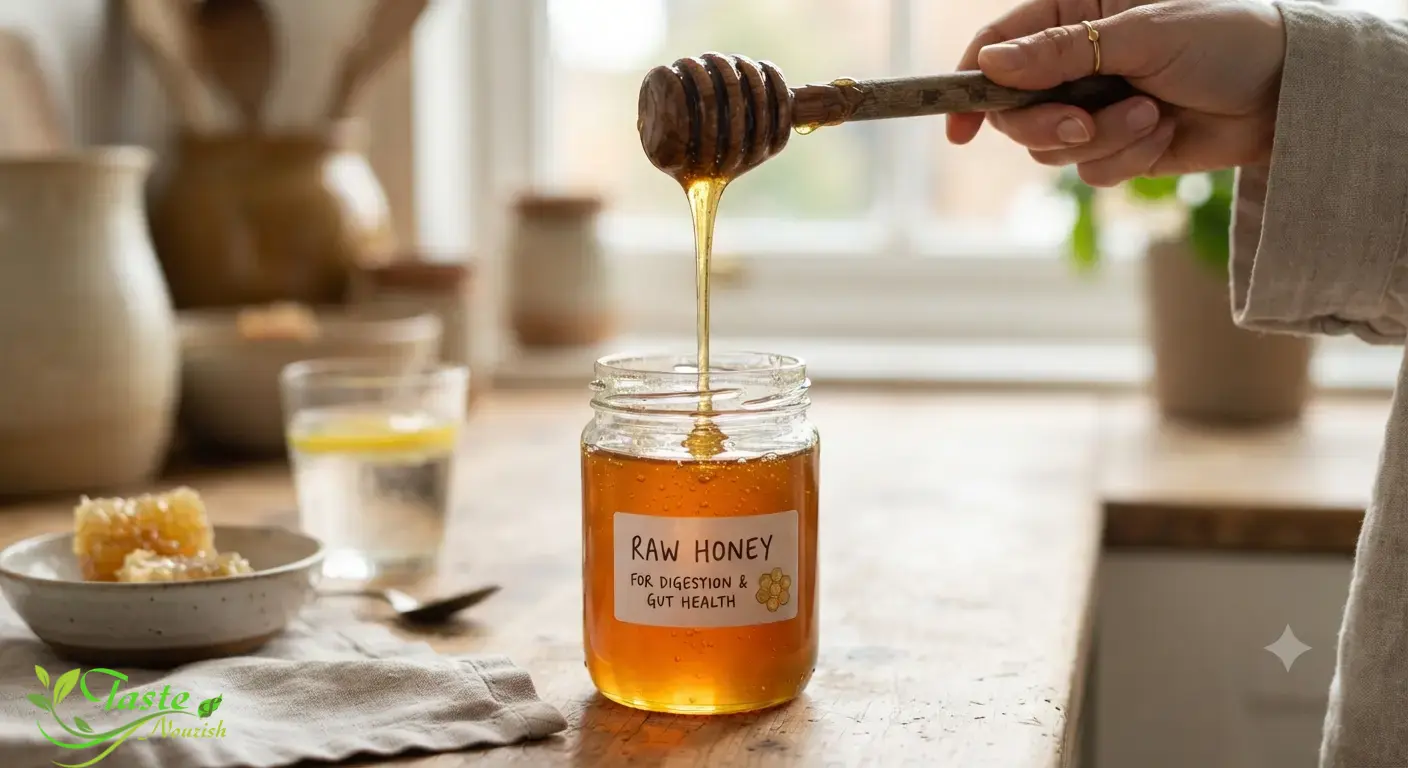
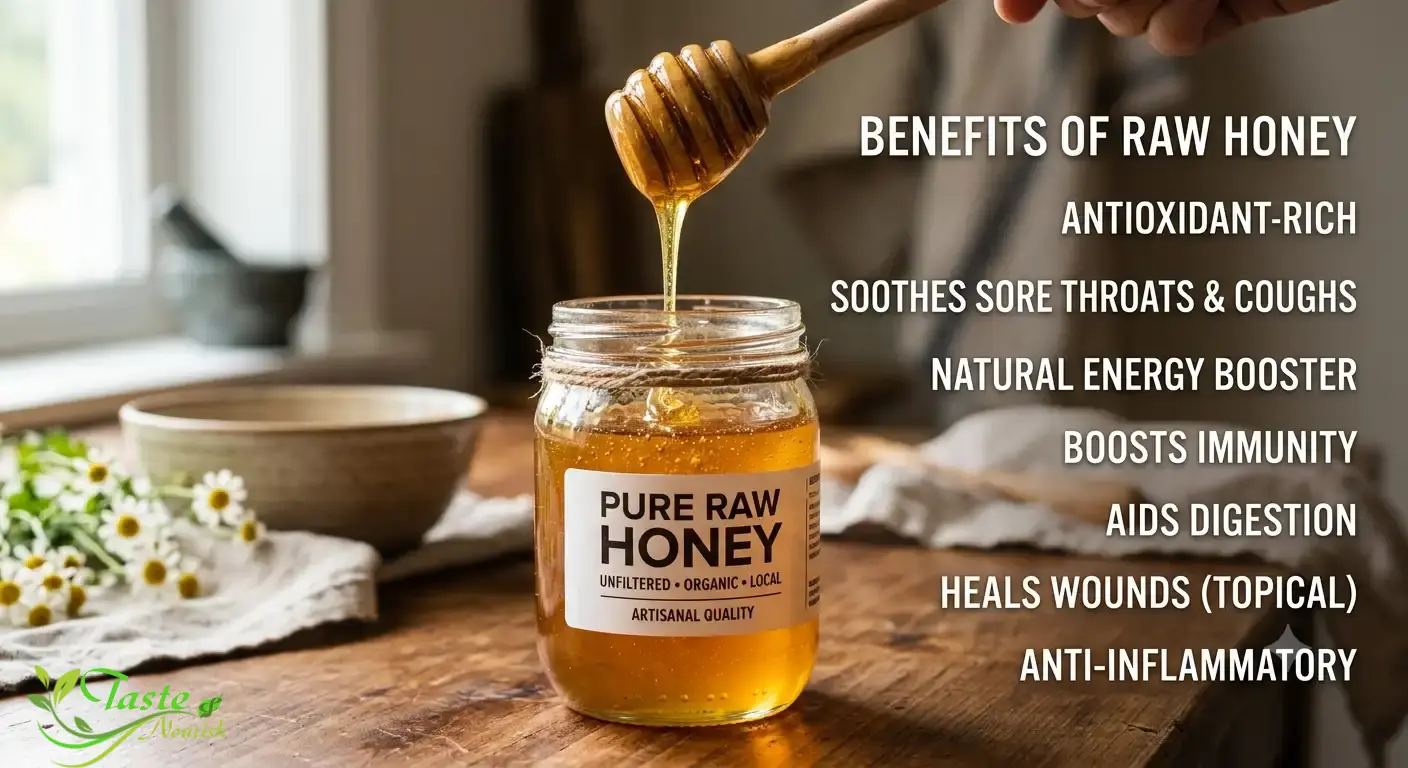
Ever wondered why your grandmother swore by a spoonful of honey for an upset stomach? It turns out she was onto something. Raw honey digestion isn’t just old folk wisdom — it’s backed by a growing body of research on prebiotics, enzymes, and gut bacteria. This guide breaks down exactly what happens when raw honey moves through your digestive system, what the science actually says, and how to use it wisely.
Key takeaway: Raw honey acts primarily as a prebiotic — it feeds the beneficial bacteria already living in your gut rather than adding new probiotic strains. Combined with natural enzymes and antibacterial compounds, this makes it a genuinely useful (though not magical) addition to a digestion-friendly diet.
What Happens When You Eat Raw Honey
Picture your digestive system as a relay race, with each organ handing off a baton to the next. Raw honey enters that race already halfway run. Unlike table sugar, which your body has to break down entirely from scratch, raw honey arrives pre-loaded with its own digestive enzymes, courtesy of the bees that made it. That head start is one of the biggest reasons raw honey digestion feels gentler for a lot of people than refined sugar does.
The Enzymes That Kickstart Digestion
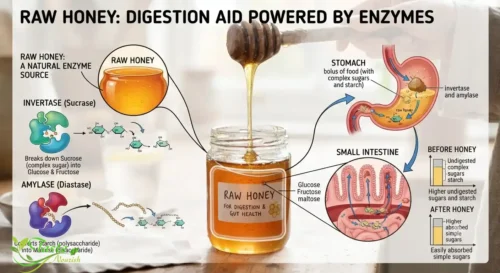
When a honeybee collects nectar, it mixes in enzymes like invertase and amylase as part of turning nectar into honey. Invertase splits sucrose into glucose and fructose, while amylase helps break down starches. Because raw honey hasn’t been heated above roughly 95–118°F, these enzymes stay largely intact. Once you eat it, they continue doing part of the digestive work your own saliva and pancreas would otherwise have to do alone, which is why many people describe raw honey as “easier on the stomach” than white sugar.
Why Raw Honey Behaves Differently Than Processed Honey
Commercial, store-shelf honey is typically pasteurized at around 160°F and pushed through fine filters to look clear and prevent crystallization. That process is convenient for shelf life, but it comes at a cost: heat destroys the very enzymes and reduces the polyphenol content that make raw honey nutritionally distinct. Raw honey, by contrast, is never heated above about 118°F and is minimally filtered, so it keeps its pollen, enzymes, and antioxidant compounds largely intact. If digestive benefit is the goal, raw honey is the version worth reaching for.
Raw Honey as a Prebiotic, Not a Probiotic
Here’s where a lot of confusion happens: honey doesn’t contain live bacteria the way yogurt or kefir does, so it isn’t technically a probiotic food. What it does contain are compounds that feed the probiotics you already have.
Oligosaccharides and Beneficial Bacteria
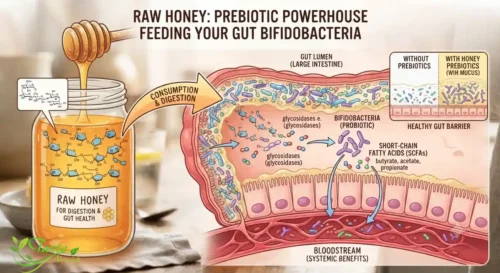
Raw honey contains prebiotic oligosaccharides that pass largely undigested into the colon, where they become food for beneficial microbes. Research points to these compounds supporting the growth of Bifidobacteria and Lactobacillus strains specifically. As these microbes ferment the oligosaccharides, they multiply and crowd out less desirable bacteria, gradually shifting the composition of your gut microbiome toward a more favorable balance.
Short-Chain Fatty Acids and Gut Lining Support
That fermentation process in the colon produces short-chain fatty acids (SCFAs), which serve as a primary fuel source for the cells lining your colon. Healthier colon cells generally mean a stronger gut barrier, which matters because a compromised intestinal lining has been linked to inflammation and conditions like leaky gut. Antioxidants in raw honey are also thought to help protect tight junction proteins, the structures that hold your intestinal lining together.
Raw Honey Nutrition Facts
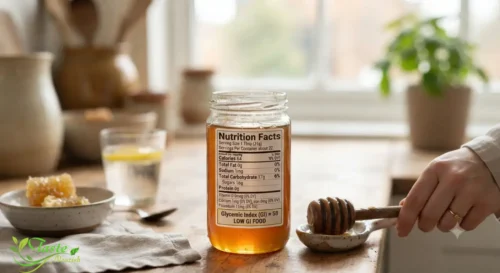
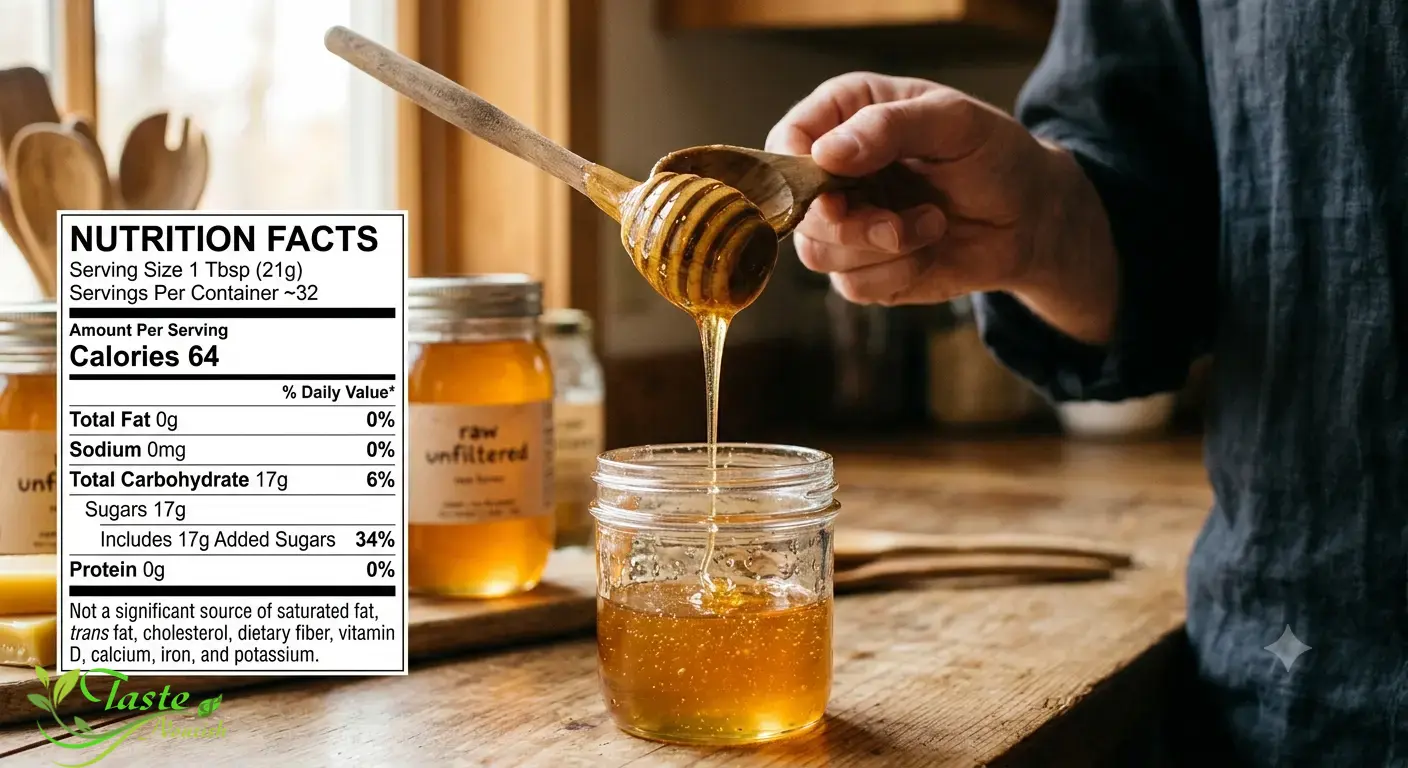
Before adding any food to your routine for its digestive benefits, it helps to know exactly what you’re consuming. Below is the nutritional breakdown for one tablespoon (about 21 grams) of raw honey, based on standard USDA reference values.
| Nutrient | Amount per Tablespoon (21g) |
|---|---|
| Calories | 64 kcal |
| Total Carbohydrates | 17 g |
| Sugars (glucose, fructose, maltose) | 17 g |
| Fat | 0 g |
| Protein | ~0.1 g |
| Fiber | 0 g |
| Sodium | 1 mg |
| Potassium | 11–55 mg (varies by variety) |
| Glycemic Index (average) | ~58 |
Calories, Sugars, and Glycemic Index
A tablespoon of raw honey delivers roughly 64 calories, almost entirely from natural sugars — an approximate 38% fructose, 31% glucose split, along with smaller amounts of maltose and other complex sugars. That’s more calories than a tablespoon of white sugar (about 49 calories), but honey’s higher fructose content makes it taste sweeter gram for gram, so people typically use less of it.
Here’s a practical note: the glycemic index of honey varies considerably by variety. Acacia honey sits around 32, well below table sugar’s GI of 65, while clover honey lands closer to 69. If blood sugar response matters to you, the type of raw honey you choose genuinely makes a difference.
Raw Honey vs. Processed Honey vs. Other Sweeteners

Not all sweeteners affect digestion the same way, and honey’s advantage really comes down to what survives processing. The table below compares raw honey against its most common alternatives.
| Sweetener | Calories/Tbsp | Enzymes Present | Prebiotic Effect | Notes |
|---|---|---|---|---|
| Raw Honey | 64 | Yes (intact) | Strong | Unheated, unfiltered, richest in antioxidants |
| Processed Honey | 64 | Mostly destroyed | Weak | Pasteurized at 160°F+, filtered |
| White Sugar | 49 | None | None | Zero micronutrients |
| Maple Syrup | 52 | None | Minimal | Higher in manganese, zinc |
| Agave Nectar | 63 | None | Minimal | Very high fructose (up to 90%) |
How Heat and Filtering Change Digestibility
Once honey is heated above roughly 95°F, its glucose oxidase and diastase enzymes begin to degrade. Push that temperature to the 160°F range used in commercial pasteurization, and you lose a substantial portion of the polyphenols responsible for honey’s anti-inflammatory reputation, on top of the enzyme loss. Practically speaking, this means you should avoid stirring raw honey into boiling water or baking with it at high heat if your goal is digestive support — add it to warm (not hot) tea, oatmeal, or yogurt instead.
Potential Digestive Benefits of Raw Honey
With the mechanics out of the way, here’s where raw honey digestion actually shows up in everyday digestive complaints.
Reader Note: These are general, food-based observations rather than clinical treatments — raw honey supports digestion, it doesn’t replace medical care for diagnosed digestive conditions.
Bloating and Occasional Indigestion
By feeding beneficial bacteria and encouraging a more balanced microbiome, raw honey may help reduce the kind of low-grade bloating and irregularity that often stems from an imbalanced gut. It isn’t a fast-acting antacid, but as part of a consistent routine, many people report smoother digestion over weeks rather than days.
IBS and Gut Dysbiosis
A meaningful share of IBS cases are linked to dysbiosis, an imbalance between beneficial and harmful gut bacteria. Because raw honey’s prebiotic oligosaccharides specifically favor Bifidobacteria and Lactobacillus growth, some research suggests it may help gradually rebalance a disrupted microbiome. That said, IBS is a complex, individualized condition, and honey should be viewed as a supportive dietary habit rather than a standalone fix.
Fighting Harmful Bacteria Like H. pylori
Honey contains natural antibacterial compounds, including hydrogen peroxide and, in Manuka varieties, methylglyoxal. Some studies point specifically to certain honey types showing activity against Helicobacter pylori, the bacterium behind most stomach ulcers, though researchers note that this evidence is still developing and shouldn’t replace prescribed antibiotic treatment when H. pylori is diagnosed.
Here are the core mechanisms researchers point to when explaining raw honey’s digestive effects:
- Prebiotic fermentation — oligosaccharides feed Bifidobacteria and Lactobacillus in the colon
- Enzyme activity — invertase and amylase assist in breaking down sugars and starches
- Antibacterial action — hydrogen peroxide and polyphenols suppress pathogenic bacteria
- Anti-inflammatory support — antioxidants help calm an irritated gut lining
- SCFA production — fermentation byproducts fuel and protect colon cells
- Barrier protection — antioxidants support tight junction proteins in the intestinal wall
How to Add Raw Honey to Your Diet for Digestive Support
Getting the benefits of raw honey digestion isn’t about eating more of it — it’s about eating it consistently and at the right moments.
Best Times to Take It
A tablespoon of raw honey on an empty stomach in the morning, or stirred into warm (not hot) water, tea, or plain yogurt, is a common approach for supporting digestion throughout the day. Pairing it with a probiotic-rich food like yogurt or kefir is a particularly logical combination, since the honey’s prebiotic fibers give those live cultures something to feed on immediately.

Practical ways to work raw honey into a digestion-supportive routine include:
- Stirring one tablespoon into warm (under 110°F) water first thing in the morning
- Drizzling it over plain yogurt or kefir instead of flavored, sugar-heavy versions
- Swapping it in for refined sugar in tea or coffee
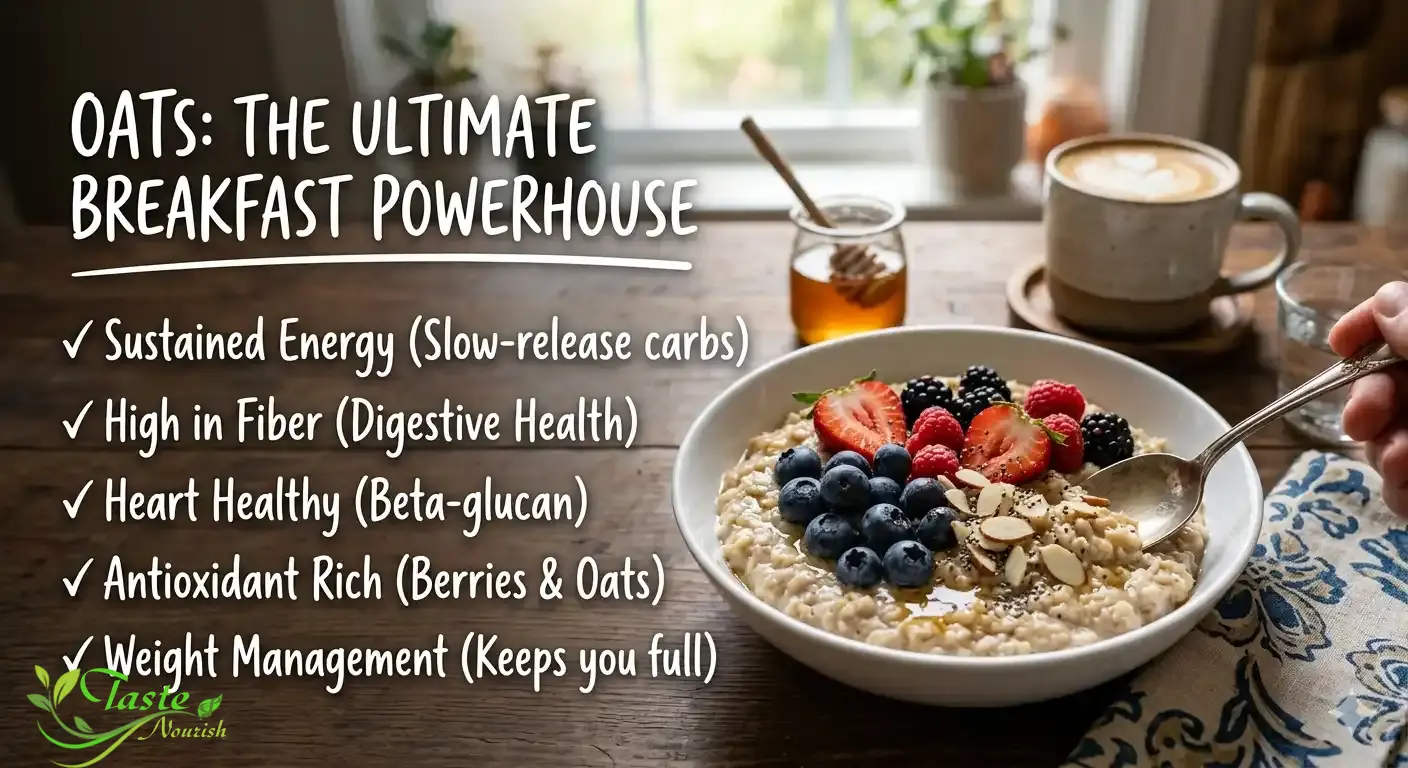
- Pairing a small spoonful with a fiber-rich breakfast like oatmeal
- Using it as a natural glaze on roasted vegetables instead of processed syrups
- Keeping a jar at room temperature to preserve its enzyme activity longer
How Much Is Too Much
Because raw honey is still roughly 80% sugar, moderation matters. The World Health Organization recommends limiting added sugars, honey included, to under 10% of daily calories — about 50 grams, or roughly 2.5 tablespoons, on a 2,000-calorie diet. For most people chasing digestive benefits specifically, one to two tablespoons a day is a reasonable, sustainable target rather than something to layer on top of an already sugar-heavy diet.
Risks and Who Should Avoid Raw Honey
Raw honey digestion benefits come with a short but important list of exceptions.

Infant Botulism Warning
This is the single most important safety rule around honey: never give honey, in any form, to a child under 12 months old. Honey can contain dormant spores of Clostridium botulinum. In adults and older children, a mature gut microbiome keeps these spores from ever becoming a problem. But an infant’s digestive system hasn’t developed that defense yet, which allows the spores to germinate and produce a dangerous toxin inside the gut — a condition called infant botulism.
Health authorities including the CDC and the American Academy of Pediatrics are unanimous on this point, and it applies even to trace amounts, such as a dab of honey on a pacifier.
Blood Sugar and Diabetes Considerations
Even with a somewhat lower glycemic index than table sugar in some varieties, raw honey is still a concentrated source of sugar. Anyone managing diabetes or insulin resistance should talk to a healthcare provider before adding regular honey intake to their diet, and should never use honey as a substitute for prescribed medication. Choosing a lower-GI variety like acacia honey, in small, carefully tracked amounts, is a more cautious approach for blood-sugar-sensitive individuals.
A quick summary of who should exercise caution:
- Infants under 12 months (strict avoidance — no exceptions)
- People with diagnosed diabetes or insulin resistance
- Anyone with a known bee product or pollen allergy
- Individuals on a strict low-sugar or ketogenic protocol
- People taking blood-thinning medication (honey may have mild anticoagulant properties)
- Anyone with an active, undiagnosed digestive condition should consult a doctor first
Conclusion
Raw honey digestion comes down to a fairly simple story once you strip away the hype: it’s a prebiotic-rich, enzyme-active food that feeds your existing gut bacteria, offers modest antibacterial protection, and behaves more gently on your system than refined sugar does. It isn’t a cure for digestive disease, and it isn’t a substitute for a genuinely varied, fiber-rich diet — but used consistently, in modest amounts, and in its truly raw and unheated form, it’s a small dietary upgrade with real, evidence-backed mechanisms behind it.
The biggest caveat to remember is the one non-negotiable rule: keep it away from children under a year old, no matter how small the amount.
Raw Honey Digestion FAQs
Does raw honey help you digest food faster?
Raw honey doesn’t dramatically speed up digestion, but its natural enzymes assist in breaking down starches and sugars, which can make digestion feel smoother, especially compared to refined sugar.
Can raw honey cure bloating or IBS?
No single food cures a diagnosed digestive condition. Raw honey’s prebiotic properties may support a more balanced gut microbiome over time, which some people find reduces bloating, but it works as a supportive habit, not a treatment.
Is raw honey safe for people with acid reflux?
Many people with mild acid reflux tolerate small amounts of raw honey well, and some use it to soothe throat irritation, but honey is still an added sugar and individual tolerance varies, so it’s worth monitoring your own response.
How is raw honey different from Manuka honey for digestion?
Manuka honey contains higher concentrated levels of methylglyoxal, giving it stronger targeted antibacterial power, useful for specific clinical applications. For everyday prebiotic and digestive support, standard high-quality raw honey offers comparable benefits at a fraction of the cost.
Can I heat raw honey without losing its digestive benefits?
Heating raw honey above roughly 95°F starts to degrade its enzymes, and temperatures near 160°F destroy much of its antioxidant content. For digestive benefits, add raw honey to warm, not hot, foods and drinks, or use it unheated altogether.
Sources
- Cleveland Clinic — Infant Botulism: What To Watch for and What To Do
- California Department of Public Health, Infant Botulism Treatment and Prevention Program — Prevention Guidance
- Healthline — 8 Raw Honey Benefits for Health
- Medical News Today — Honey: Health Benefits, Uses and Risks
- Poison Control — Botulism and Honey: What’s the Connection?
This guide is for informational purposes only and should not replace professional medical or nutritional advice. Always consult with healthcare providers regarding specific dietary needs and health conditions.