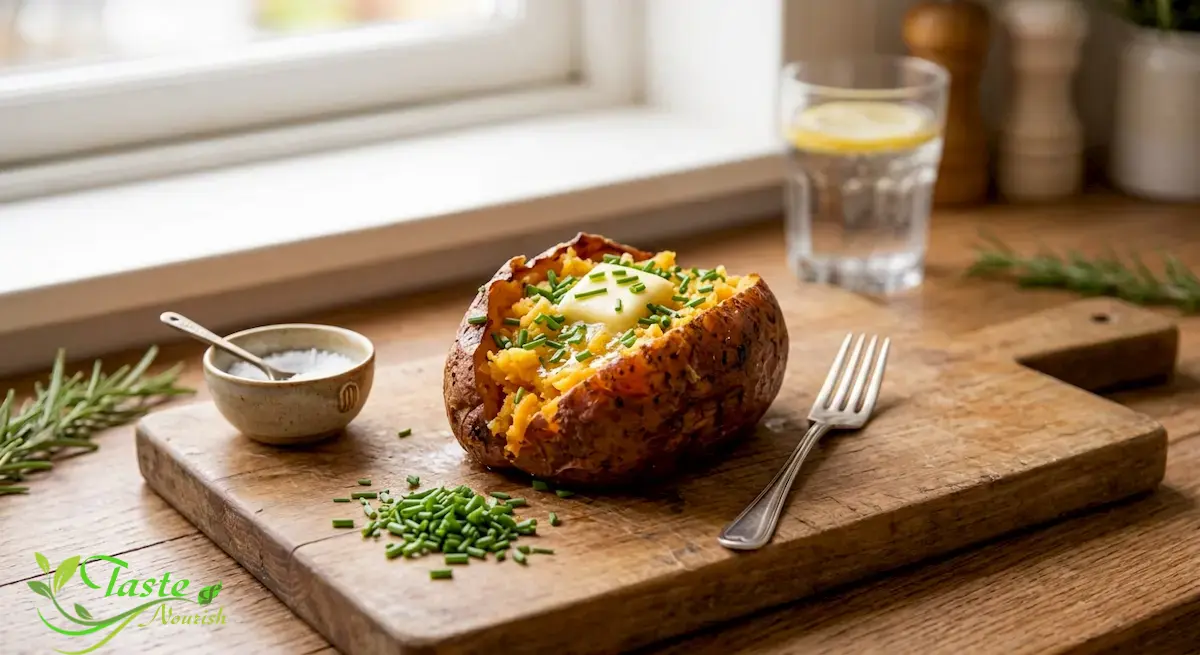
There’s something almost old-fashioned about a sweet potato jacket: one whole potato, baked until its skin blisters and its middle turns soft and custardy, then split open and piled with whatever you’re craving that night. Sweet potato jackets take the classic British jacket potato and swap in orange flesh that’s naturally sweeter, creamier, and packed with more nutrition per bite. No peeling, no chopping, no fussy technique — just a hot oven and a little patience.
This recipe walks through the exact method for skins that crisp instead of steam, flesh that fluffs instead of turning gummy, and a base topping formula you can dress up sweet or savory depending on the night.
Sweet potato jackets are whole sweet potatoes baked in their skins until the outside turns crisp and caramelized and the inside goes soft and fluffy, then split lengthwise and loaded with butter, herbs, or savory toppings. Rub scrubbed potatoes with oil, pierce them several times with a fork, and bake unwrapped at 400°F for 45 to 60 minutes, until a knife slides through with no resistance.
Recipe at a Glance
Detail
Time / Info
Prep Time
10 minutes
Cook Time
45–60 minutes
Total Time
About 1 hour
Servings
4 jackets
Difficulty
Easy
Key Takeaways
Sweet potato jackets are simply whole sweet potatoes baked in their skins, split open, and topped — no peeling or special equipment required.
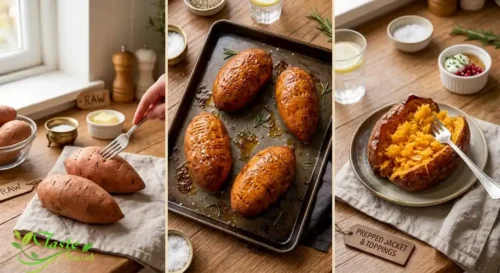
Baking directly on the oven rack or a sheet pan, never wrapped in foil, is what gives sweet potato jackets their crisp skin and caramelized ends.
Doneness is a texture cue, not a clock: the potato is ready when a knife or skewer slides in with zero resistance, usually 45 to 60 minutes at 400°F depending on size.
One medium sweet potato jacket supplies well over a full day’s vitamin A in the form of beta-carotene, along with meaningful fiber and potassium.
The base recipe is intentionally simple so it can go sweet (cinnamon, maple, pecans) or savory (cheddar, chives, black beans) depending on what you’re serving alongside it.
Why You’ll Love This Recipe
Sweet potato jackets solve the weeknight problem of wanting something that feels like a real meal without requiring real effort. The oven does almost all the work, and because the potato is the vessel and the topping, cleanup stays minimal. They’re naturally gluten-free, easy to make dairy-free with a simple swap, and flexible enough to satisfy both the person who wants cinnamon and maple and the person who wants cheese and black beans at the same table.
They also hold up well to batch cooking. Bake four, six, or eight at once, and you have a base for lunches, sides, or a fast dinner all week without repeating the same flavor twice.
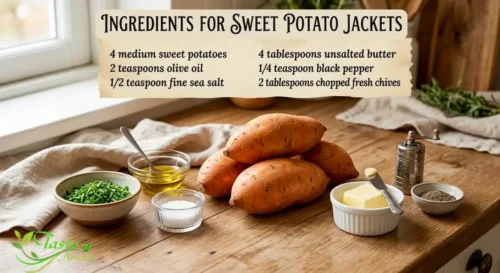
Ingredients for Sweet Potato Jackets
4 medium sweet potatoes
2 teaspoons olive oil
1/2 teaspoon fine sea salt
4 tablespoons unsalted butter
1/4 teaspoon black pepper
2 tablespoons chopped fresh chives
Ingredient Notes
This recipe makes four classic buttered sweet potato jackets, plus notes for building loaded versions.
4 medium sweet potatoes (about 7 to 8 ounces / 200 to 225g each) — Similarly sized potatoes cook evenly, so pick ones close in size rather than mixing small and jumbo.
2 teaspoons olive oil — Coats the skin so it blisters and crisps rather than dries out. Melted butter or avocado oil both work as substitutes; butter adds a slightly richer flavor but browns a touch faster, so watch the last 10 minutes of baking.
1/2 teaspoon fine sea salt, divided — Half goes on the skin before baking, half is for seasoning the flesh at the end.
4 tablespoons unsalted butter, softened — The classic finish. For a dairy-free version, use a plant-based butter or a drizzle of good olive oil; the flavor turns more neutral and less rich, which is a real trade-off rather than a like-for-like swap.
1/4 teaspoon black pepper
2 tablespoons chopped fresh chives (optional) — Green onion tops work as a substitute with a slightly stronger bite.
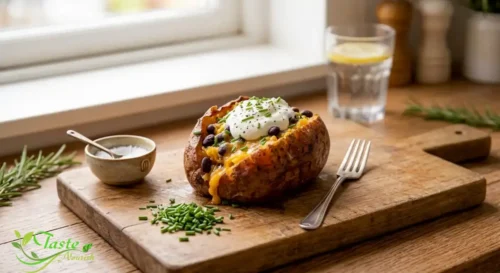
For loaded, savory jackets, add shredded cheddar, cooked and crumbled bacon or warmed black beans, and a spoonful of plain Greek yogurt in place of sour cream — the yogurt swap adds protein and tang with a bit less richness. For a sweet version, skip the pepper and chives and finish with a drizzle of maple syrup, a pinch of cinnamon, and chopped toasted pecans.
How to Make Sweet Potato Jackets
Getting sweet potato jackets right comes down to two things: dry, unwrapped heat, and patience with the timing. Here’s the step-by-step method.
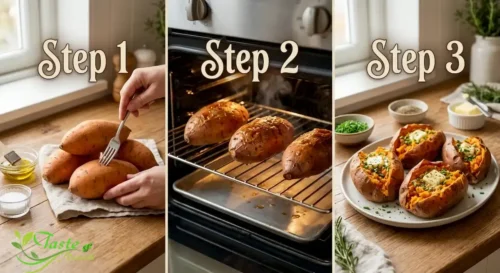
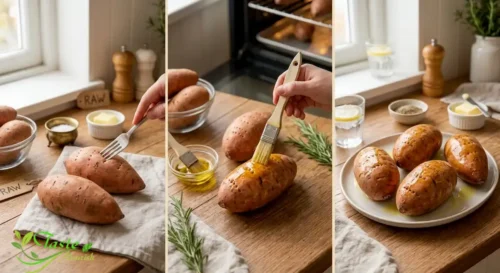
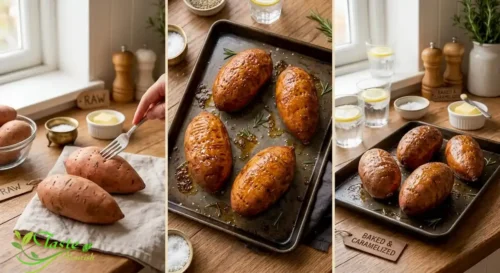
1- Preheat and prep. Preheat the oven to 400°F (205°C). Scrub the sweet potatoes under running water and pat them completely dry — moisture on the skin steams instead of crisps. Pierce each potato six to eight times with a fork, spacing the holes evenly around the potato. This lets steam escape as the potato cooks instead of building up inside.
2- Oil and season. Rub each potato all over with olive oil, then sprinkle with about a quarter of the salt, rubbing it into the skin.
3- Bake unwrapped. Place the potatoes directly on the middle oven rack with a sheet pan underneath to catch any drips, or set them on a parchment-lined sheet pan. Bake for 45 to 60 minutes, depending on size. You’ll know they’re close when the skin looks slightly wrinkled and blistered and you can smell caramelized sugar — sometimes a little dark syrup will bubble out at the ends, which is a good sign, not a mistake.
4- Check for doneness. Insert a paring knife or skewer into the thickest part of the largest potato. It should slide in and out with no resistance. If there’s any firmness, return the potatoes to the oven in 10-minute intervals until they’re fully tender.
5- Rest briefly. Let the potatoes rest for 5 minutes once out of the oven. This short rest lets the steam inside redistribute, which keeps the flesh fluffy instead of wet when you cut in.
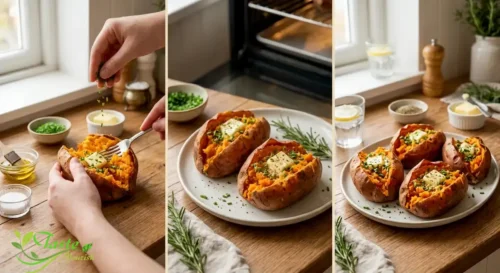
6- Split and fluff. Slice each potato lengthwise about three-quarters of the way through. Use a fork to gently fluff and loosen the flesh inside, pushing the ends toward the center to open up the jacket.
7- Top and serve. Add butter to each jacket while it’s still hot enough to melt it, then season with the remaining salt and the pepper. Finish with chives, or your chosen sweet or savory toppings, and serve immediately.
Expert Tips for Better Sweet Potato Jackets
Choose narrower, more uniform potatoes over wide, chunky ones. They cook more evenly all the way through and are easier to fill once split.
Bake on the middle or lower rack, not the top. Even heat from below helps the skin crisp without the tops scorching before the centers finish cooking.
Don’t skip drying the skin before oiling. Any surface moisture works against the oil and slows down browning.
Pair fat with the topping, not just the potato. Vitamin A from beta-carotene is fat-soluble, meaning it’s absorbed more efficiently alongside a source of fat such as butter, olive oil, or Greek yogurt, according to the Health Office of Dietary Supplements. A plain, dry sweet potato is still nutritious, but a little butter or oil helps your body use more of what’s in it.
Let the potato tell you when it’s done, not the timer. Oven variation, potato size, and even how long a potato has been stored all shift bake time, so treat 45 to 60 minutes as a range and confirm with a knife.
Common Mistakes to Avoid
Mistake
Why It Happens
The Fix
Wrapping potatoes in foil
It feels like it should speed up baking, but it traps steam against the skin
Bake unwrapped, directly on the rack or a sheet pan, for a crisp, caramelized skin
Skipping the fork holes
Steam has nowhere to escape as the potato heats through
Pierce each potato 6–8 times before baking
Baking at too low a temperature
Lower heat feels gentler, but it stalls caramelization and leaves the skin pale and tough
Stick to 400°F–425°F for a proper crisp exterior
Mixing wildly different potato sizes on one tray
Smaller potatoes finish first and can overcook while larger ones are still firm
Group potatoes by similar size, or pull smaller ones early and check the rest
Cutting in immediately after baking
Steam escapes all at once, leaving the flesh wetter and less fluffy
Rest whole potatoes 5 minutes before splitting
Over-salting before tasting the toppings
Cheese, bacon, and sauces are often already salty
Season the potato lightly first, then adjust after adding toppings
Recipe Variations
Once the base technique is down, sweet potato jackets become a template rather than a fixed recipe.
Loaded Savory Jackets: Top with shredded cheddar, warmed black beans or crumbled bacon, a spoonful of Greek yogurt or sour cream, and sliced scallions.
Cinnamon-Maple Jackets: Skip the pepper and chives. Mash the butter with a pinch of cinnamon, drizzle with maple syrup, and scatter with chopped toasted pecans.
Mediterranean-Style Jackets: Swap the butter for a spoonful of hummus, then top with crumbled feta, chopped parsley, and a drizzle of tahini.
Vegan Jackets: Use olive oil or a plant-based butter in place of dairy butter, and top with roasted chickpeas, tahini, and a squeeze of lemon.
Air Fryer Sweet Potato Jackets: Air fry at 380°F for 35 to 40 minutes, flipping once halfway, for a faster bake with an equally crisp skin — just work in batches if your basket is small, since crowding the potatoes traps steam the same way foil does.
Serving Suggestions
As a savory jacket, these pair naturally with grilled chicken, salmon, or a simple green salad with a sharp vinaigrette to balance the potato’s sweetness. Spoon leftover chili or a scoop of black bean and corn salsa over a split jacket for a fast, filling dinner. As a sweeter jacket with cinnamon and pecans, it works well alongside roasted pork or a weekend brunch spread.
Nutrition Information
Values below are an estimate for one plain buttered sweet potato jacket — one medium potato, 1 tablespoon of butter, and a light pinch of salt — and don’t include optional toppings like cheese, bacon, or maple syrup, which will change the totals. Figures are based on data from the USDA FoodData Central entry for sweet potato, cooked, baked in skin, without salt.
Nutrient
Amount per Serving (approx.)
Calories
~200 kcal
Protein
~2 g
Total Fat
~12 g
Carbohydrates
~24 g
Dietary Fiber
~4 g
Sugars
~10 g
Sodium
~340 mg (varies with added salt)
Potassium
~540 mg
Vitamin A
Well over 100% of the Daily Value
Sweet potatoes are one of the richest everyday food sources of provitamin A beta-carotene, which the body converts to vitamin A as needed, per the NIH Office of Dietary Supplements. They also contribute meaningful potassium, a mineral most American diets fall short on, and low potassium intake is linked to a higher risk of elevated blood pressure, according to the NIH’s consumer fact sheet on potassium. The skin itself is a good source of fiber; diets higher in fiber from whole foods like vegetables may support digestive regularity and healthy cholesterol levels, according to the Harvard T.H. Chan School.
These are general dietary patterns, not guarantees for any individual, so anyone managing a specific health condition should factor sweet potatoes into their plan with guidance from a doctor or registered dietitian.
Storage Instructions
Let baked sweet potato jackets cool to room temperature for no more than two hours before refrigerating, in line with general food-safety guidance from the USDA Food Safety and Inspection Service. Wrap cooled potatoes individually or store them in an airtight container in the refrigerator, where they’ll keep for 3 to 4 days. Reheat in a 375°F oven for about 15 minutes, or in the microwave in 60-second intervals, until they reach a safe internal temperature of 165°F throughout.
For the freezer, scoop the cooked flesh out of the skin, mash or leave it whole, and freeze in an airtight container for up to 3 months. Frozen sweet potato flesh is best used in mashes, soups, or baked goods rather than re-baked in the skin, since the texture softens considerably after freezing and thawing.
Make-Ahead Tips
Sweet potato jackets are one of the easier make-ahead sides. Bake a full batch up to 2 days ahead, keep them whole and unsplit in the refrigerator, and reheat in a 375°F oven for 15 to 20 minutes before splitting and topping fresh. Toppings like cheese, cooked bacon, or chopped herbs can also be prepped a day in advance and stored separately, so all that’s left at mealtime is warming the potatoes and assembling.
Sweet Potato Jackets Recipe FAQs
What’s the difference between a jacket potato and a baked sweet potato?
They’re the same basic technique — a whole potato baked in its skin — just with different varieties. “Jacket potato” is the traditional British term, most often used for russet or white potatoes, while sweet potato jackets use the same method with sweet potatoes, which bake up sweeter and softer.
Do I need to peel sweet potatoes before baking?
No. The skin is what crisps up and holds the jacket together once it’s split and filled, and it also adds fiber. Just scrub it well before baking.
Can I microwave sweet potato jackets instead of using the oven?
You can microwave a pierced sweet potato in 3- to 5-minute intervals until tender, which is faster, but the skin will stay soft rather than crisping. For the best texture, microwave until nearly tender, then finish in a 425°F oven for 10 to 15 minutes to crisp the skin.
Why is my sweet potato jacket still firm in the middle after an hour?
This usually comes down to size or oven calibration. Very large potatoes need more than an hour, and ovens can run cooler than their dial indicates. Keep baking in 10-minute increments and testing with a knife rather than relying on the clock alone.
Can I make sweet potato jackets ahead for meal prep?
Yes. Bake a full batch, store them whole and unsplit in the refrigerator for up to 4 days, and reheat individually as needed. Split, fluff, and top each one fresh after reheating for the best texture.
Are sweet potato jackets healthier than regular potato jackets?
They’re not strictly “healthier,” but they do offer a different nutrition profile — notably far more beta-carotene and vitamin A than a white potato, along with a comparable amount of fiber and potassium. Which one fits your plate better depends on your goals and what you’re pairing it with.
Whole sweet potatoes baked until the skin turns crisp and the inside goes soft and fluffy, then split open and topped with butter, herbs, or savory fillings.
Ingredients
4 medium sweet potatoes (about 7 to 8 ounces / 200 to 225g each)
2 teaspoons olive oil
1/2 teaspoon fine sea salt, divided
4 tablespoons unsalted butter, softened
1/4 teaspoon black pepper
2 tablespoons chopped fresh chives (optional)
Directions
Preheat the oven to 400°F (205°C). Scrub the sweet potatoes, pat them completely dry, and pierce each one 6 to 8 times with a fork.
Rub each potato all over with olive oil, then sprinkle with about a quarter of the salt, rubbing it into the skin.
Place the potatoes directly on the middle oven rack or a sheet pan and bake for 45 to 60 minutes, until the skin looks wrinkled and blistered.
Insert a paring knife into the thickest part of the largest potato. It should slide in with no resistance.
Let the potatoes rest for 5 minutes once out of the oven so the steam redistributes.
Slice each potato lengthwise about three-quarters of the way through and fluff the flesh with a fork.
Add butter while hot, season with remaining salt and pepper, finish with chives or your chosen toppings, and serve immediately.
Conclusion
Sweet potato jackets reward patience more than skill: a hot oven, a few fork holes, and enough time for the skin to crisp and the inside to turn tender is really all it takes. Once the base method is second nature, treat it as a template — swap the butter for hummus, the chives for cinnamon, or the salt for maple syrup — and you’ll have a different sweet potato jacket on the table every time you make one.
References
U.S. Department of Agriculture, Agricultural Research Service. “Sweet potato, cooked, baked in skin, without salt.” USDA FoodData Central. https://fdc.nal.usda.gov/
Hanan Abo Samra is the founder of Taste & Nourish, sharing trustworthy nutrition guidance and recipes drawn from 20+ years of hands-on cooking experience. When she's not developing new recipes, Hanan is researching the science behind everyday ingredients to bring readers practical, evidence-based guidance for a healthier lifestyle.