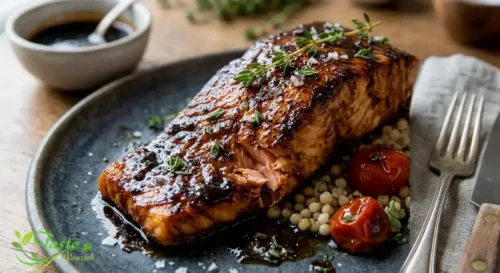
A good balsamic salmon recipe turns two everyday ingredients into something that tastes far more impressive than the effort behind it. Salmon fillets get a quick sear for a crisp edge, then simmer in a glaze of reduced balsamic vinegar, garlic, and a touch of honey until it clings to every bite. The whole dish comes together in one skillet, in under thirty minutes, with no marinating or special equipment required.
Whether you’re cooking a weeknight dinner or something a little more special, this recipe delivers a balance of tang, sweetness, and richness that pairs naturally with salmon’s buttery texture.
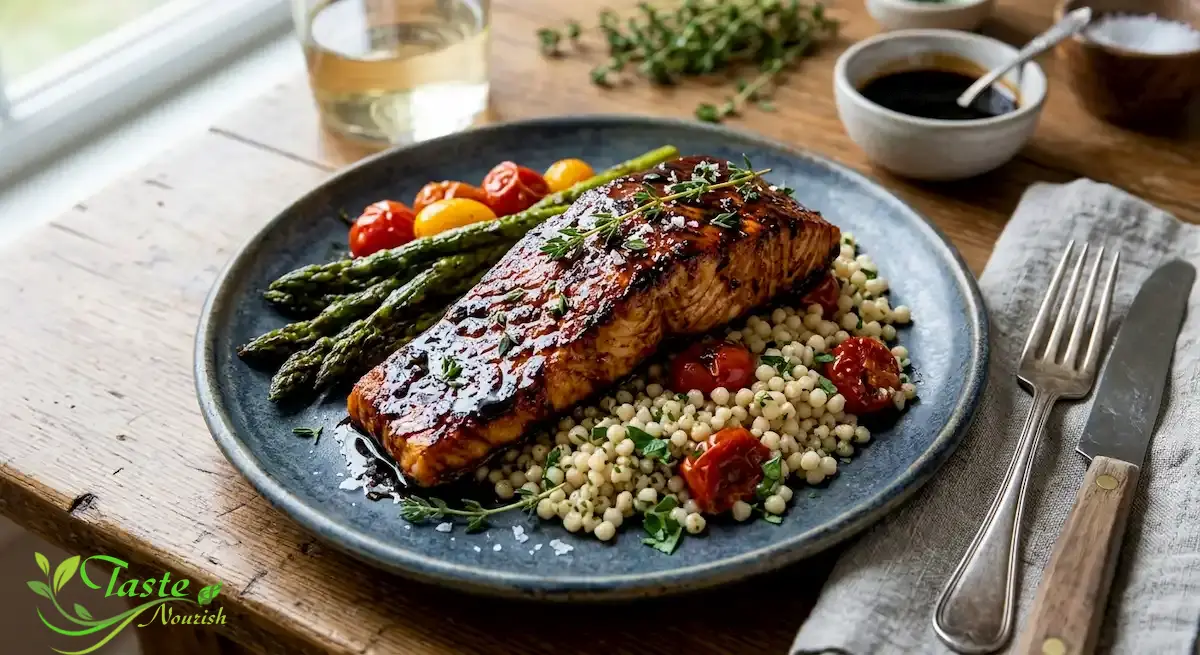
This balsamic salmon recipe pan-sears salmon fillets until golden, then finishes them in a glossy balsamic-honey glaze made right in the same skillet. It’s a tangy balsamic glazed salmon dinner that takes about 25 minutes start to finish, needs only a handful of pantry ingredients, and works equally well for a quick weeknight meal or a dinner party main course.
Key Takeaways
This balsamic salmon recipe comes together in a single skillet in about 25 minutes, with no marinating required.
The glaze balances the sharpness of balsamic vinegar with honey and garlic, so it coats the fish without masking its natural flavor.
Choosing evenly cut, similarly sized fillets helps the salmon cook through gently without drying out.
Salmon is a well-documented source of protein and omega-3 fatty acids, nutrients that may support cardiovascular health as part of a balanced diet.
Because the glaze and technique are so forgiving, this is an easy balsamic salmon recipe to double for meal prep or weeknight leftovers.
Why You’ll Love This Tangy Balsamic Glazed Salmon
Balsamic vinegar reduces into something almost syrupy when it hits a hot pan, developing a deep sweetness that plain vinegar never has on its own. Paired with a little honey and garlic, it becomes a glaze that clings to the fish instead of pooling on the plate.
The technique itself is straightforward: sear, reduce, glaze, serve. There’s no oven required, no complicated timing, and cleanup is limited to a single pan.
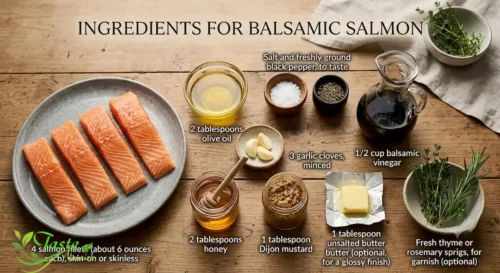
Ingredients for Balsamic Salmon
4 salmon fillets (about 6 ounces each), skin-on or skinless
2 tablespoons olive oil
Salt and freshly ground black pepper, to taste
3 garlic cloves, minced
1/2 cup balsamic vinegar
2 tablespoons honey
1 tablespoon Dijon mustard
1 tablespoon unsalted butter (optional, for a glossy finish)
Fresh thyme or rosemary sprigs, for garnish (optional)
Ingredient Notes
Use a standard commercial balsamic vinegar rather than an aged, syrup-thick one for this recipe; those pricier bottles are best saved for drizzling raw, since their concentrated sweetness can scorch quickly in a hot pan. Choose fillets of similar thickness so they finish cooking at the same time, and look for salmon with firm, moist flesh and no strong odor.
Substitutions
Ingredient
Substitute
Notes
Honey
Maple syrup or brown sugar
Nearly equivalent in sweetness and browning
Dijon mustard
Whole grain mustard
Adds texture; flavor is slightly milder
Butter
Extra olive oil
Makes the dish dairy-free; glaze will be slightly less glossy
Fresh garlic
1/2 teaspoon garlic powder
A real trade-off — flavor is flatter and less aromatic
Kitchen Tools You’ll Need
A large stainless steel or nonstick skillet is the only essential tool here, since it needs to go from searing to reducing a sauce without sticking. Tongs make it easier to flip the fillets without tearing the skin, and an instant-read thermometer takes the guesswork out of doneness if you’re new to cooking fish.
How to Make This Balsamic Salmon Recipe
Pat the salmon fillets dry with paper towels and season both sides generously with salt and pepper.
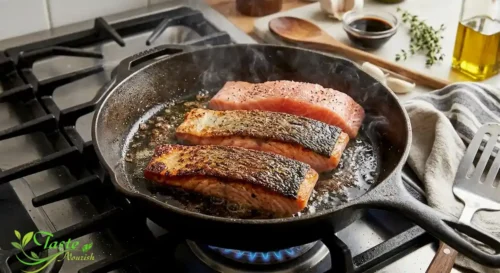
Heat the olive oil in a large skillet over medium-high heat until shimmering. Place the fillets in the pan, skin-side down if applicable, and sear undisturbed for 4 to 5 minutes until the skin is crisp and releases easily from the pan.
Flip the fillets and cook for another 3 to 4 minutes, depending on thickness, until the flesh is mostly opaque with just a slightly translucent center. Transfer the salmon to a plate and tent loosely with foil.
Lower the heat to medium and add the minced garlic to the same skillet. Cook for about 30 seconds, stirring constantly, until fragrant but not browned.
Pour in the balsamic vinegar, honey, and Dijon mustard, whisking to combine and scraping up any browned bits from the pan. Simmer for 3 to 5 minutes, stirring occasionally, until the glaze reduces by about half and coats the back of a spoon.
Stir in the butter, if using, until it melts into the glaze and turns glossy.
Return the salmon to the pan, spooning the glaze over each fillet. Cook for one more minute to heat through, then remove from the heat.
Garnish with fresh thyme or rosemary and serve immediately.
Tips for the Best Balsamic Salmon Recipe
Let the salmon sit at room temperature for about 10 minutes before cooking; cold fish straight from the refrigerator cooks unevenly. Resist the urge to move the fillets while they sear, since disturbing them too early is what tears the skin and prevents a proper crust from forming.
Watch the glaze closely once it starts to bubble; balsamic vinegar and honey can go from perfectly reduced to burnt in under a minute over high heat. If the glaze thickens too much before the salmon is ready, a splash of water loosens it back to the right consistency.
Common Mistakes to Avoid
Mistake
Why It Happens
The Fix
Dry, chalky salmon
Overcooking past the point where the fish is just opaque
Pull the salmon while the center is still slightly translucent; it will finish cooking from residual heat
Glaze won’t thicken
Heat is too low, or too much liquid was added
Raise heat slightly and simmer uncovered, stirring occasionally, until it coats a spoon
Skin sticks and tears
Pan wasn’t fully preheated, or fish was moved too soon
Let the oil shimmer before adding fish, and don’t flip until it releases on its own
Glaze tastes too sharp
Not reduced long enough for the acidity to mellow
Simmer a minute or two longer; the vinegar’s edge softens as it reduces
More Balsamic Salmon Recipe Variations
Rosemary-Garlic Balsamic Salmon: Add a sprig of fresh rosemary to the skillet while the glaze reduces, then discard it before serving for a subtle herbal note.
Spicy Balsamic Salmon: Whisk 1/4 teaspoon of red pepper flakes into the glaze for a gentle heat that plays well against the sweetness.
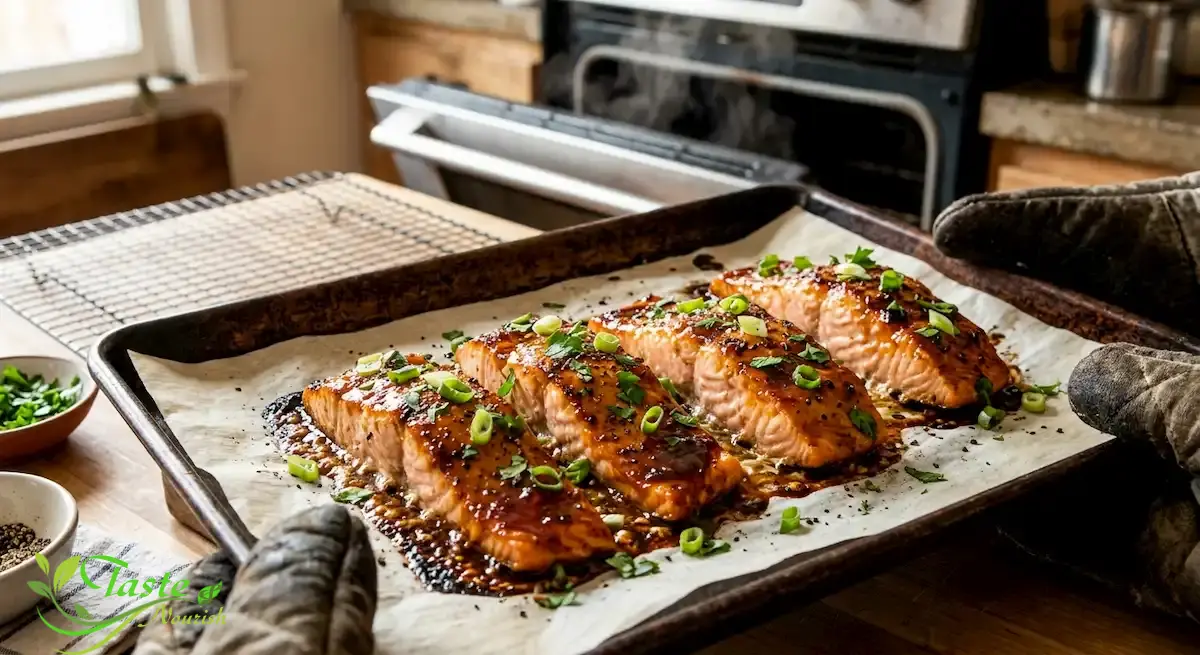
Sheet-Pan Balsamic Salmon: Whisk the glaze ingredients cold, pour over fillets on a lined sheet pan, and bake at 400°F for 12 to 15 minutes for a hands-off version with less stovetop attention.
Balsamic Salmon with Fig: Stir a tablespoon of fig jam into the glaze along with the honey for a deeper, more autumnal sweetness.
What to Serve with Balsamic Salmon
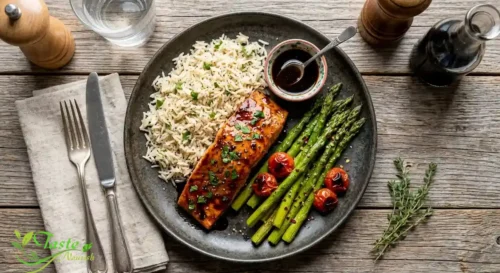
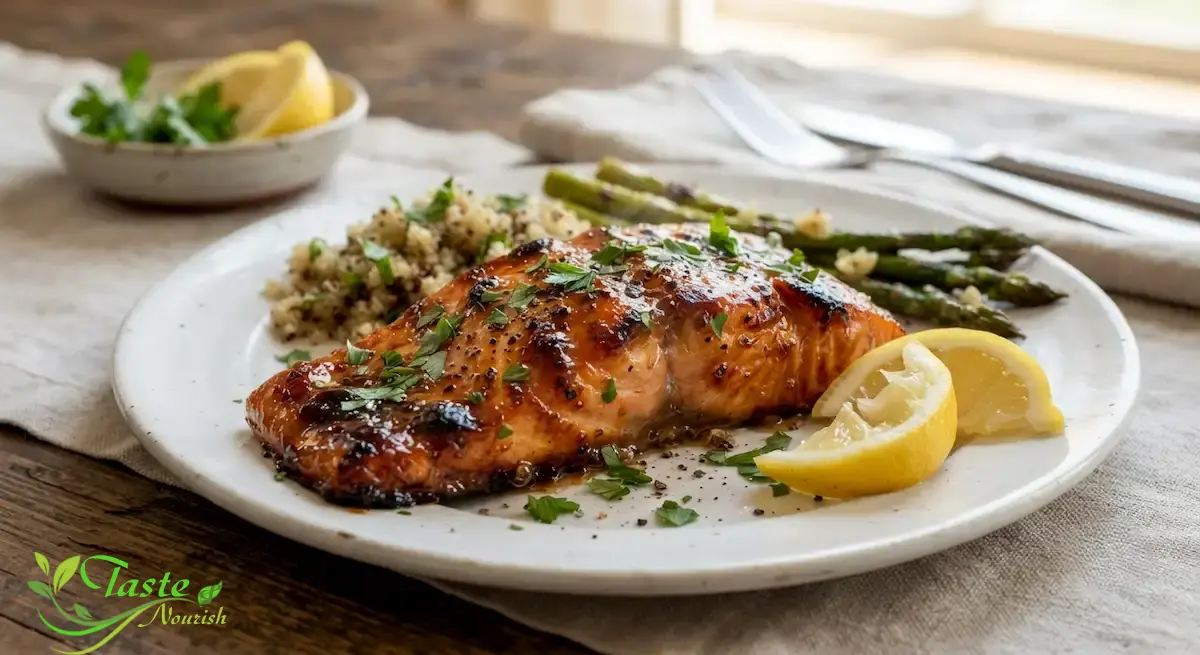
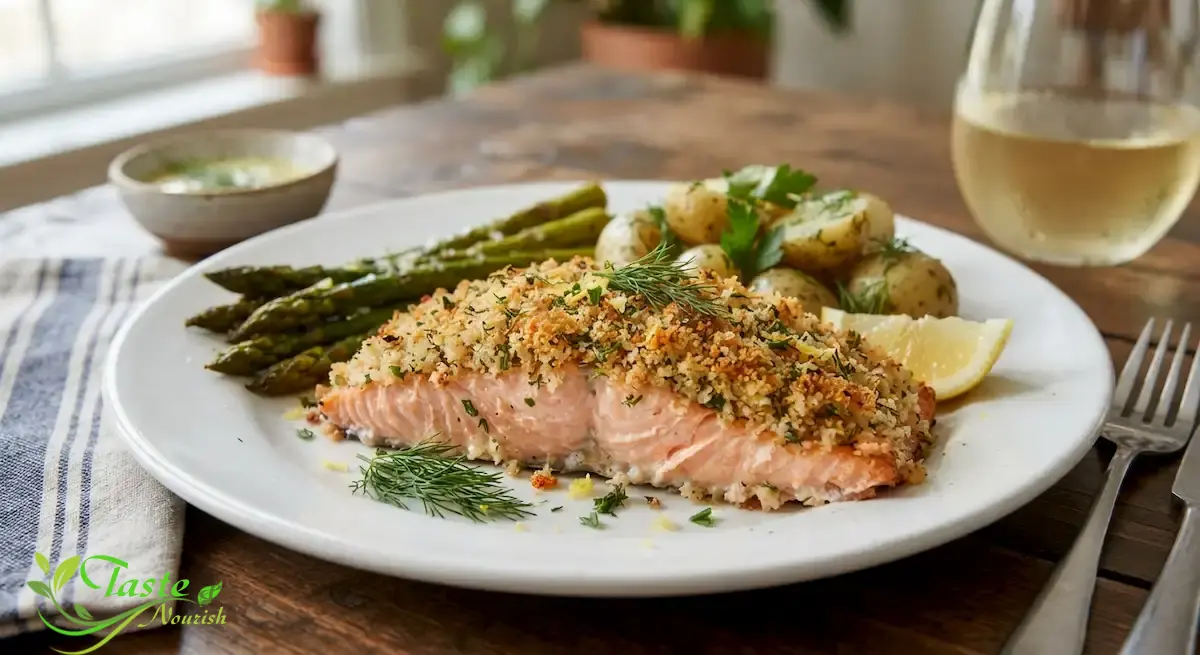
Roasted asparagus or green beans pick up the glaze nicely and take about the same time to cook as the salmon itself. Creamy mashed potatoes or a simple rice pilaf round out the plate, while a peppery arugula salad with shaved Parmesan adds a fresh contrast to the richness of the glaze.
Nutrition Information
The following values are approximate estimates per serving (one fillet with glaze) and will vary based on fillet size and the specific brands of ingredients used.
Nutrient
Approximate Amount
Calories
~410 kcal
Protein
~31 g
Total Fat
~27 g
Carbohydrates
~9 g
Omega-3 Fatty Acids
~1.5 g
Salmon is naturally rich in protein and long-chain omega-3 fatty acids, and USDA that a 100-gram cooked portion of farmed Atlantic salmon provides roughly 206 calories and just over 22 grams of protein. According to the NIH Office of Dietary Supplements, the omega-3s found in fish like salmon are associated with normal heart, brain, and eye function. The FDA recommends that most adults eat 2 to 3 servings of a variety of fish per week as part of a balanced diet.
Balsamic vinegar itself contributes a small amount of polyphenol antioxidants; research comparing fruit vinegars found that balsamic varieties consistently ranked among the highest in antioxidant activity.
Storage and Reheating Instructions
Store leftover balsamic salmon in an airtight container in the refrigerator for up to 3 days. For longer storage, freeze the cooked, cooled salmon in a freezer-safe container for up to 2 months, though the texture of the glaze softens slightly after thawing.
To reheat, warm the salmon gently in a covered skillet over low heat, or in a 275°F oven, until just heated through; both methods help prevent the fish from drying out. A microwave works in a pinch, but use short bursts at reduced power to avoid overcooking.
Make-Ahead Tips
The balsamic glaze can be made up to 3 days ahead and stored in the refrigerator; reheat it gently in the skillet before adding the freshly seared salmon. The salmon itself is best cooked just before serving, since searing loses its crisp texture once refrigerated and reheated.
This easy balsamic salmon recipe pan-sears salmon in a tangy balsamic glaze, ready in 25 minutes in one skillet.
Ingredients
"4 salmon fillets (about 6 ounces each), skin-on or skinless",
"2 tablespoons olive oil",
"Salt and freshly ground black pepper, to taste",
"3 garlic cloves, minced",
"1/2 cup balsamic vinegar",
"2 tablespoons honey",
"1 tablespoon Dijon mustard",
"1 tablespoon unsalted butter (optional)",
"Fresh thyme or rosemary sprigs, for garnish (optional)"
Directions
Pat the salmon fillets dry and season both sides with salt and pepper.
Heat olive oil in a large skillet over medium-high heat. Sear the fillets skin-side down for 4 to 5 minutes until crisp.
Flip and cook 3 to 4 minutes more until mostly opaque. Transfer to a plate and tent with foil.
Lower heat to medium, add garlic to the skillet, and cook 30 seconds until fragrant.
Add balsamic vinegar, honey, and Dijon mustard. Simmer 3 to 5 minutes until reduced by half and glossy.
Stir in butter until melted and glossy, if using.
Return salmon to the pan, spoon glaze over each fillet, and warm through for 1 minute.
Garnish with fresh herbs and serve immediately.
Notes
Use a standard commercial balsamic vinegar rather than an aged, syrup-thick one for this recipe; those pricier bottles are best saved for drizzling raw, since their concentrated sweetness can scorch quickly in a hot pan. Choose fillets of similar thickness so they finish cooking at the same time, and look for salmon with firm, moist flesh and no strong odor.
Balsamic Salmon Recipe FAQs
Can I use frozen salmon for this recipe?
Yes. Thaw the fillets fully in the refrigerator overnight and pat them very dry before searing, since excess moisture prevents a good crust from forming.
What’s the best balsamic vinegar for glazing?
A standard, mid-range balsamic vinegar works best for cooking. Save aged, syrupy balsamic vinegars for finishing dishes raw, since their sugars can burn quickly over direct heat.
Can I make this balsamic salmon recipe dairy-free?
Yes, simply skip the butter or replace it with an extra teaspoon of olive oil; the glaze will be slightly less glossy but just as flavorful.
Why isn’t my glaze thickening?
The heat is likely too low, or the glaze hasn’t simmered long enough. Keep it at a steady simmer, stirring occasionally, until it visibly coats the back of a spoon.
Can I grill the salmon instead of pan-searing it?
Yes. Grill the fillets over medium-high heat, then make the glaze separately in a small saucepan and brush it over the salmon during the last few minutes of grilling.
Is this easy balsamic salmon recipe healthy?
Salmon is a source of high-quality protein and omega-3 fatty acids, and this recipe uses only a modest amount of added sugar and fat, making it a reasonable choice for most balanced diets when enjoyed as part of a varied eating pattern.
Can I prepare the glaze in advance?
Yes, the glaze keeps well in the refrigerator for up to 3 days. Reheat it gently over low heat before spooning it over freshly cooked salmon.
Conclusion
This balsamic salmon recipe proves that a handful of pantry staples and one skillet are enough for a dinner that tastes considerably more involved than it is. Once the glaze technique feels familiar, it’s easy to adapt with herbs, a little heat, or a spoonful of jam to make it your own.
Hanan Abo Samra is the founder of Taste & Nourish, sharing trustworthy nutrition guidance and recipes drawn from 20+ years of hands-on cooking experience. When she's not developing new recipes, Hanan is researching the science behind everyday ingredients to bring readers practical, evidence-based guidance for a healthier lifestyle.