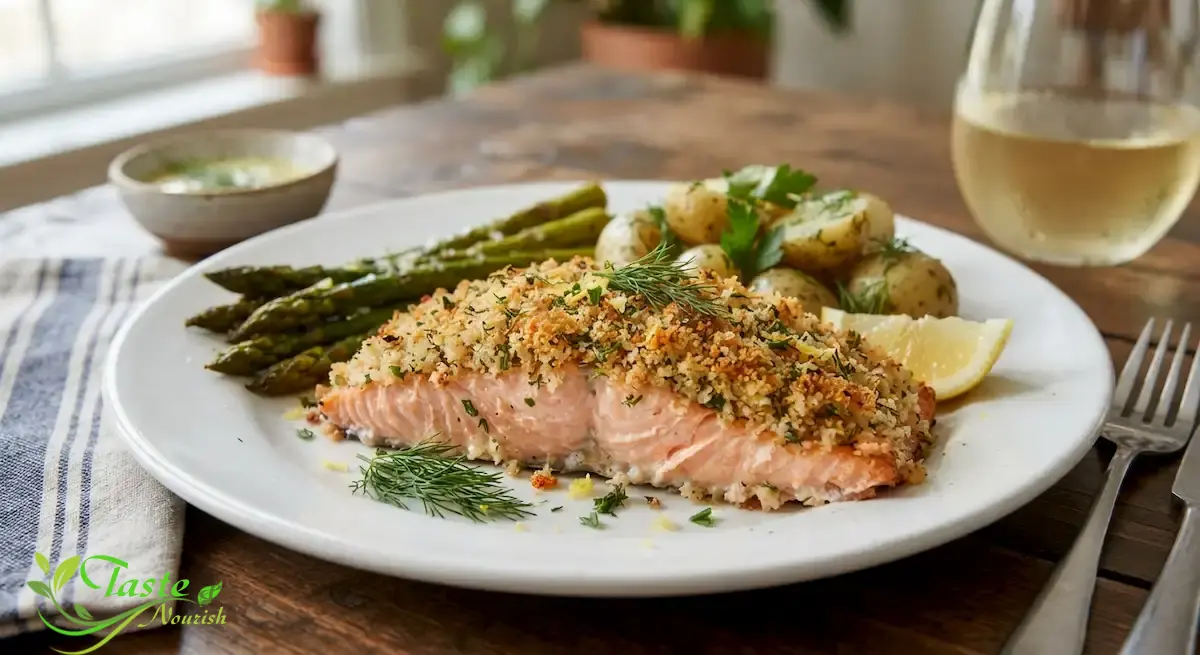
Few dinners deliver as much flavor for as little effort as a good dijon mustard salmon recipe. The tang of Dijon mustard, brightened with lemon and garlic, cuts through the richness of salmon without masking it, and a quick herb-panko crust adds crunch with almost no extra work. Whether it’s a weeknight family dinner or a dinner-party centerpiece, this dish comes together in under thirty minutes with ingredients most kitchens already have on hand.
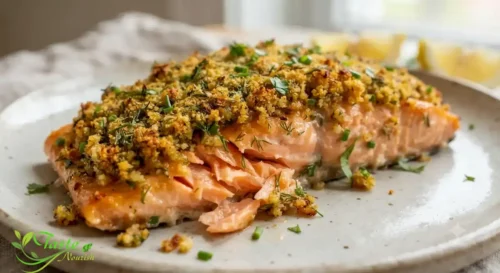
This dijon mustard salmon recipe bakes herb-crusted fillets at 400°F for 12 to 15 minutes, coating the fish in a tangy Dijon-lemon glaze topped with garlicky panko and fresh herbs. The result is a moist, flaky dinner ready in about 25 minutes, with a golden crust that turns an ordinary weeknight meal into something worth repeating.
Recipe at a Glance
Detail
Time / Info
Prep time
10 minutes
Cook time
12–15 minutes
Total time
About 25 minutes
Yield
4 servings
Difficulty
Easy
Key Takeaways
This dijon mustard salmon recipe uses just one bowl for the sauce and one for the crust, so cleanup stays simple.
A digital thermometer is the most reliable way to avoid overcooking; pull the salmon at 125–130°F for a moist, flaky center.
Dijon mustard’s acidity and emulsified texture help it cling to the fish and season it at the same time, so no separate marinating step is needed.
The herb-panko topping can be swapped for a gluten-free breadcrumb or skipped entirely for a lighter, lower-carb version.
Leftovers keep well for up to three days and reheat gently without drying out if you use low, indirect heat.
Why You’ll Love This Dijon Mustard Salmon Recipe
The sauce does double duty: Dijon’s sharpness balances salmon’s natural richness, while lemon and garlic keep it from tasting one-note. Because the mustard is already emulsified, it grips the fish immediately instead of pooling in the pan the way a thinner glaze would.
The herb-panko crust adds textural contrast without requiring any breading technique — no dredging stations, no egg wash, just a quick toss and a firm press. It’s a recipe that reads impressive but asks very little of the cook.
It’s also forgiving on a weeknight. The active prep is about ten minutes, most of it spent whisking a sauce and chopping herbs, and everything bakes on a single sheet pan.
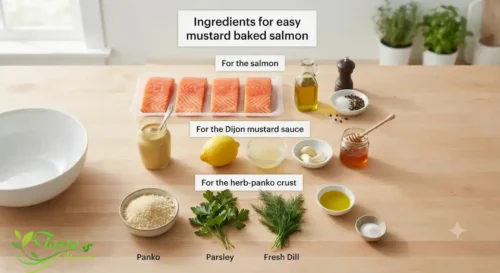
Ingredients for Dijon Herb-Crusted Salmon
For the salmon:
4 salmon fillets (6 oz / 170 g each), skin-on or skinless, center-cut for even thickness
1 tablespoon olive oil
Salt and freshly ground black pepper
For the Dijon mustard sauce:
3 tablespoons Dijon mustard
1 tablespoon fresh lemon juice
1 clove garlic, minced
1 teaspoon honey (optional, softens the mustard’s sharp edge)
For the herb-panko crust:
1/3 cup panko breadcrumbs
2 tablespoons chopped fresh parsley
1 tablespoon chopped fresh dill
1 tablespoon olive oil
Pinch of salt
Ingredient Notes
Dijon mustard is madewith brown or black mustard seeds and traditionally a splash of white wine or verjuice, which gives it a smoother, more complex heat than yellow mustard — that’s what lets it double as both seasoning and glue for the crust. Panko browns lighter and crisper than standard breadcrumbs because its flakes are larger and drier, so it holds its crunch even under a layer of sauce. Center-cut fillets of even thickness cook more predictably than tail-end pieces, which taper and tend to overcook before the thicker end is done.
Substitutions
Whole-grain mustard can replace some or all of the Dijon for a coarser, more rustic bite, though it won’t spread quite as smoothly. Gluten-free panko or crushed gluten-free crackers swap in at a 1:1 ratio for the breadcrumbs. Dried herbs work in a pinch — use about a third of the amount called for fresh, since dried herbs are more concentrated. The honey is optional and can be left out entirely for a lower-sugar version; the sauce will simply taste sharper.
Kitchen Tools Needed
Rimmed baking sheet
Parchment paper or a silicone baking mat
Small mixing bowl (for the sauce) and a second for the crust
Instant-read or digital meat thermometer
How to Make Dijon Mustard Salmon
Preheat the oven to 400°F (204°C) and line a rimmed baking sheet with parchment paper.
Pat the salmon fillets completely dry with paper towels. This step matters more than it seems — any surface moisture will steam the crust instead of letting it brown.
Season both sides of each fillet with salt and pepper, then arrange them on the prepared sheet, skin-side down if using skin-on fillets.
In a small bowl, whisk together the Dijon mustard, lemon juice, minced garlic, and honey until smooth.
Spread the mustard mixture evenly over the top of each fillet using the back of a spoon, building a layer thick enough to cling rather than run.
In a second bowl, combine the panko, parsley, dill, olive oil, and a pinch of salt. Toss until the crumbs are evenly coated and slightly clumped.
Press the panko mixture onto the mustard layer on each fillet, packing it gently with your fingertips so it holds together during baking.
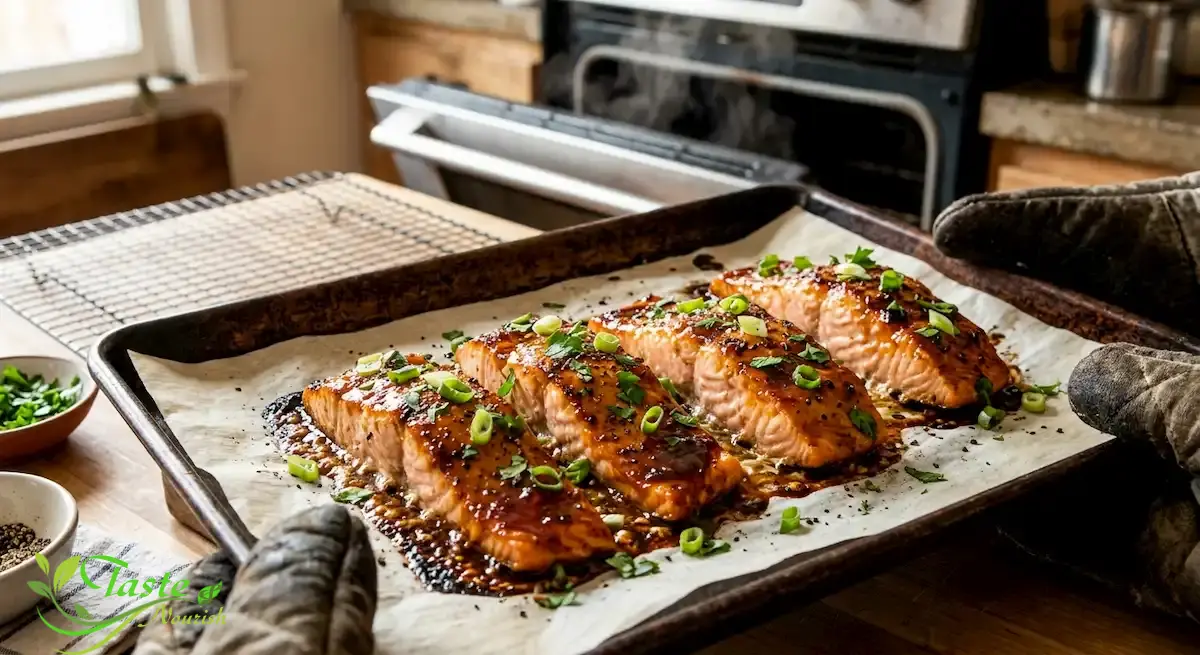
8. Bake for 12 to 15 minutes, until the crust is golden and the thickest part of the fillet reaches 125–130°F on a thermometer, or the fish flakes easily with a fork and looks opaque all the way through.
9. Let the salmon rest for 2 to 3 minutes before serving; carryover heat will finish cooking it through without drying it out.
10. Serve with lemon wedges.
Expert Tips for Perfect Mustard Baked Salmon
Let the salmon sit at room temperature for about 15 minutes before baking so it cooks more evenly from edge to center.
Pat the fish bone-dry before saucing — surface moisture is the main reason the crust turns soggy instead of golden.
If your fillets vary in thickness, loosely tent the thinner ends with foil for the last few minutes of baking so they don’t overcook while the thicker parts catch up.
For a deeper golden crust, finish with 60 to 90 seconds under the broiler, watching closely since panko browns fast.
Pull the salmon a few degrees before your target doneness; residual heat continues cooking it after it leaves the oven.
Common Mistakes to Avoid
Overcooking the fish. Salmon keeps cooking from residual heat once it’s out of the oven, so waiting until it hits your final target temperature in the oven means it will overshoot by the time it rests. Pull it 3–5 degrees early instead.
Skipping the pat-dry step. Wet fish releases steam in the oven, which softens the crust before it has a chance to brown. A few seconds with a paper towel fixes this.
Spreading the mustard sauce too thin. A thin, watery layer slides off during baking instead of clinging to the fish. Use the back of a spoon to build an even, slightly thick coat.
Not pressing the crust on firmly. Loose panko falls off the moment the fillets are moved. Press it into the mustard layer with your fingertips so the two layers bond.
Recipe Variations
Maple Dijon Salmon: swap the honey for maple syrup and add a pinch of smoked paprika to the sauce for a sweeter, smokier profile.
Dijon Herb Salmon (no crust): skip the panko topping and broil the sauced fillets alone for a lighter, lower-carb version.
Whole-Grain Mustard Salmon: replace half the Dijon with whole-grain mustard for a coarser, more rustic bite.
Stovetop Version: pan-sear the sauced, crusted fillets in a hot, dry skillet, crust-side down, for 4–5 minutes per side, for an oven-free take.
Foil-Packet Grilled Salmon: assemble the sauced and crusted fillets in foil packets and grill over medium heat for 10–12 minutes for a smoky, hands-off version.
Serving Suggestions
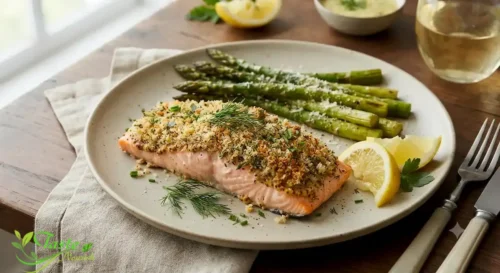
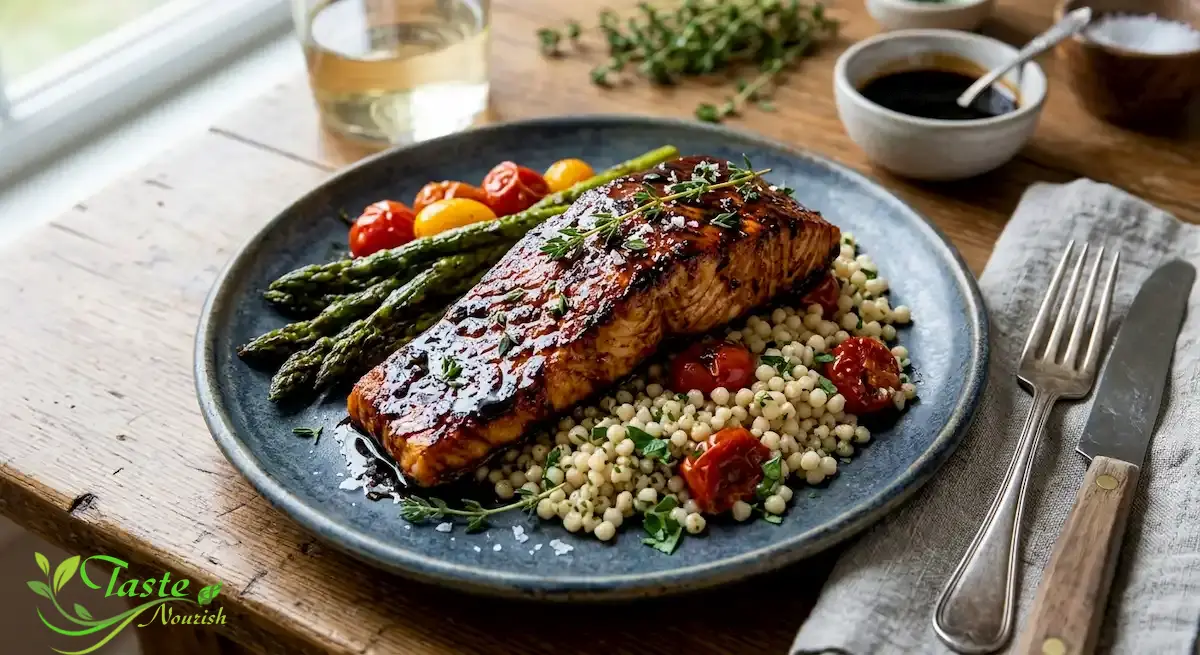
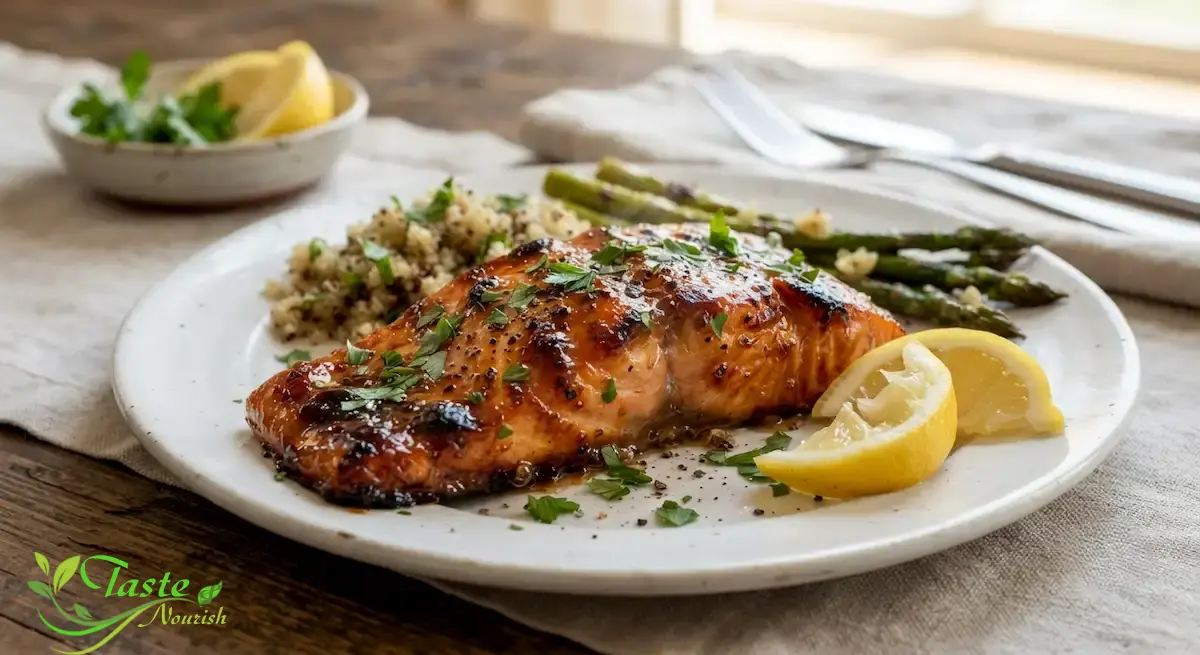
Roasted asparagus or green beans keep the plate simple and let the salmon lead. Garlic mashed potatoes or an herbed rice pilaf round the meal out for a heartier dinner, while a lemony arugula salad adds contrast if you want something lighter. A slice of crusty bread is worth having on hand to catch the pan juices. If you’re pouring wine, a dry white like Sauvignon Blanc complements the mustard’s acidity well.
Nutrition Information
Nutrient
Approximate Amount per Serving
Calories
~360 kcal
Protein
~35 g
Total fat
~20 g
Carbohydrates
~7 g
Sodium
~520 mg
These figures are estimates for one sauced, crusted fillet and will vary with exact fillet size and how much crust adheres. A 100-gram portion of cooked, farmed Atlantic salmon on its own provides roughly 22 grams of protein and 12 grams of fat, according to USDA FoodData Central.
Salmon is also one of the richest food sources of the long-chain omega-3 fats EPA and DHA, which the NIH Office of Dietary Supplements notes play a role in heart, brain, and eye function. A systematic review and meta-analysis published in eClinicalMedicine found that higher omega-3 intake was linked to a modestly lower risk of certain cardiovascular events, though the researchers noted the effect size varied by dose and population, so it’s best understood as one piece of an overall eating pattern rather than a guarantee.
Because Dijon mustard is a concentrated source of sodium, this dish also contributes a meaningful share of the CDC’s recommended daily limit of under 2,300 milligrams of sodium for most adults — worth factoring in if you’re watching your intake closely.
Storage Instructions
Refrigerate leftover salmon in an airtight container for up to 3 days. To freeze, wrap fillets tightly and store for up to 2 months; the texture softens slightly on thawing, so freezing suits meal prep more than fine dining. Thaw overnight in the refrigerator before reheating. For the best texture, reheat gently in a 275°F oven, loosely covered with foil, for 10 to 15 minutes; the microwave works in a pinch but will soften the crust. As with any cooked fish, don’t leave it at room temperature for more than 2 hours.
Make-Ahead Tips
The mustard sauce and the panko-herb topping can each be made up to 2 days ahead and refrigerated separately — combine them with the fish only just before baking so the crust stays crisp. You can also portion and season the raw fillets a day in advance, but hold off on adding the mustard layer until you’re ready to bake, since the acid in the sauce can start to soften the fish’s surface if it sits too long.
Dijon Mustard Salmon Recipe FAQs
What’s the best mustard for this dijon mustard salmon recipe?
Dijon specifically. Its smoother, more complex heat — thanks to the wine or verjuice used in traditional Dijon production — spreads more evenly and clings better to the fish than yellow mustard.
Can I use frozen salmon?
Yes. Thaw it fully in the refrigerator overnight and pat it very dry before saucing, since thawed fish tends to hold extra moisture that can prevent the crust from browning.
How do I know the salmon is done without a thermometer?
It should flake easily with a fork and look opaque all the way through, with a golden crust on top. A thermometer is still the most reliable way to avoid overcooking, since visual cues can lag behind actual doneness.
Can I make this gluten-free?
Yes — swap the panko for a gluten-free breadcrumb or certified gluten-free panko. Every other ingredient in the recipe is naturally gluten-free.
Is dijon mustard salmon healthy?
Generally, yes, as part of a varied diet. The FDA recommends most adults eat two to three servings of fish per week, and salmon is consistently listed among the lower-mercury “Best Choices.” The main thing to watch is sodium from the mustard if you’re tracking your intake.
Can I grill this instead of baking it?
Yes. Use the foil-packet method described in the variations section, or sear the sauced, crusted fillets directly on a well-oiled grate over medium heat, crust-side up, until cooked through.
Herb-crusted salmon fillets baked in a tangy Dijon-lemon glaze, topped with a garlicky panko crust. Ready in about 25 minutes.
Ingredients
4 salmon fillets (6 oz / 170 g each), skin-on or skinless
1 tablespoon olive oil
Salt and freshly ground black pepper
3 tablespoons Dijon mustard
1 tablespoon fresh lemon juice
1 clove garlic, minced
1 teaspoon honey (optional)
1/3 cup panko breadcrumbs
2 tablespoons chopped fresh parsley
1 tablespoon chopped fresh dill
1 tablespoon olive oil
Pinch of salt
Directions
Preheat the oven to 400°F (204°C) and line a rimmed baking sheet with parchment paper.
Pat the salmon fillets completely dry with paper towels.
Season both sides with salt and pepper and arrange on the sheet, skin-side down if using skin-on fillets.
Whisk together the Dijon mustard, lemon juice, minced garlic, and honey until smooth.
Spread the mustard mixture evenly over the top of each fillet.
Combine the panko, parsley, dill, olive oil, and a pinch of salt; toss until evenly coated.
Press the panko mixture onto the mustard layer on each fillet.
Bake 12 to 15 minutes, until the crust is golden and the thickest part reaches 125–130°F.
Rest 2 to 3 minutes, then serve with lemon wedges.
Conclusion
The one change that makes the biggest difference with this recipe is timing: pull the salmon at 125–130°F and let it rest rather than waiting for it to look “done” in the oven. That single habit is what separates good dijon mustard salmon from consistently great salmon.
“Effect of omega-3 fatty acids on cardiovascular outcomes: A systematic review and meta-analysis.” eClinicalMedicine, National Library of Medicine (PMC). https://pmc.ncbi.nlm.nih.gov/articles/PMC8413259/
Hanan Abo Samra is the founder of Taste & Nourish, sharing trustworthy nutrition guidance and recipes drawn from 20+ years of hands-on cooking experience. When she's not developing new recipes, Hanan is researching the science behind everyday ingredients to bring readers practical, evidence-based guidance for a healthier lifestyle.