Have you ever cracked open an egg only to be hit with that unmistakable sulphur smell that tells you it’s past its prime? It’s one of the most frustrating kitchen experiences — especially when eggs have been sitting in your fridge and you assumed they were fine. The truth is, how to store eggs is a topic most of us never really think about until something goes wrong. We buy them, toss them in the fridge, and hope for the best. But there’s actually a right and a wrong way to do it, and the difference can mean the gap between eggs that last five weeks and eggs that go bad in two.
Whether you’re buying a dozen from your local supermarket, grabbing a fresh carton from a farmers’ market, or collecting them from your own backyard hens, egg storage rules are not all created equal. Different types of eggs — washed, unwashed, store-bought, farm-fresh — all have unique storage needs that most guides gloss over. This article is your definitive, no-fluff resource on egg storage, covering everything from the science behind the shell to long-term freezing techniques that can make your eggs last up to a full year.
📌 Key Takeaway:Proper egg storage isn’t just about refrigerating — it’s about temperature consistency, carton protection, orientation, and understanding the type of egg you’re dealing with.
Before diving into storage methods, it helps to understand what you’re actually dealing with. An egg is a beautifully engineered structure, and knowing a bit about its anatomy will make every storage tip in this article click into place. Think of the eggshell not as a solid wall, but as a breathable membrane — thousands of microscopic pores run through it, and everything from bacteria to odors can travel through them under the wrong conditions.
The Bloom (Cuticle): Nature’s Invisible Freshness Shield
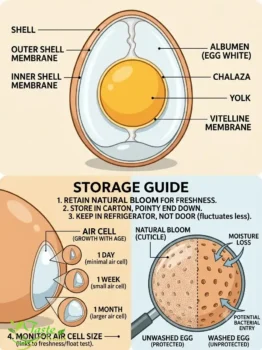
Right before a hen lays an egg, she coats it in a natural protective layer known as the “bloom” or cuticle. This protective barrier prevents bacteria from entering the egg and forms its first line of defense against infection — it’s nature’s way of protecting developing chicks in fertilized eggs. The bloom also helps retain moisture and keeps contaminants out, making an unwashed egg remarkably shelf-stable in the right conditions.
This is why farm-fresh eggs that have not been washed can sit safely on your kitchen counter for days without refrigeration. The moment you wash an egg and strip away the bloom, however, the game changes entirely — and refrigeration becomes non-negotiable.
Commercial store-bought eggs are pasteurized and washed as required by the USDA, which removes the bloom, leaving them more susceptible to spoilage. This is precisely why store-bought eggs must always be refrigerated. It’s one of the most misunderstood distinctions in kitchen food safety. People often assume all eggs follow the same rules, but the presence or absence of this natural coating fundamentally changes how — and where — you should store them.
The Air Cell and Why It Tells You Everything
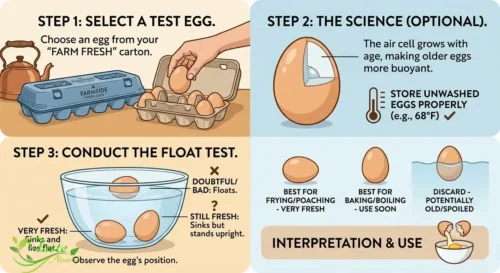
Every egg has an air sac at the rounded end. This air sac expands as the egg ages, because eggs are porous and allow air to enter while moisture escapes over time. This expansion of the air cell is the science behind the famous “float test” — the older the egg, the larger the air cell, and the more it floats. But the air cell does more than reveal age; it also affects yolk placement, bacterial risk, and texture. When you store eggs pointed-end down, the air sac stays at the top (the rounded end), away from the yolk, which helps keep everything centered, fresh, and protected.
How to Store Store-Bought Eggs in the Refrigerator
This is where most of us live day-to-day, so let’s get very specific. The basic rule everyone knows is “put eggs in the fridge,” but the details matter enormously. Done incorrectly, refrigerating your eggs can still result in off flavors, quicker spoilage, and wasted money. Done right, your store-bought eggs can outlast the date on the carton by weeks.
The Right Temperature and Location Inside Your Fridge
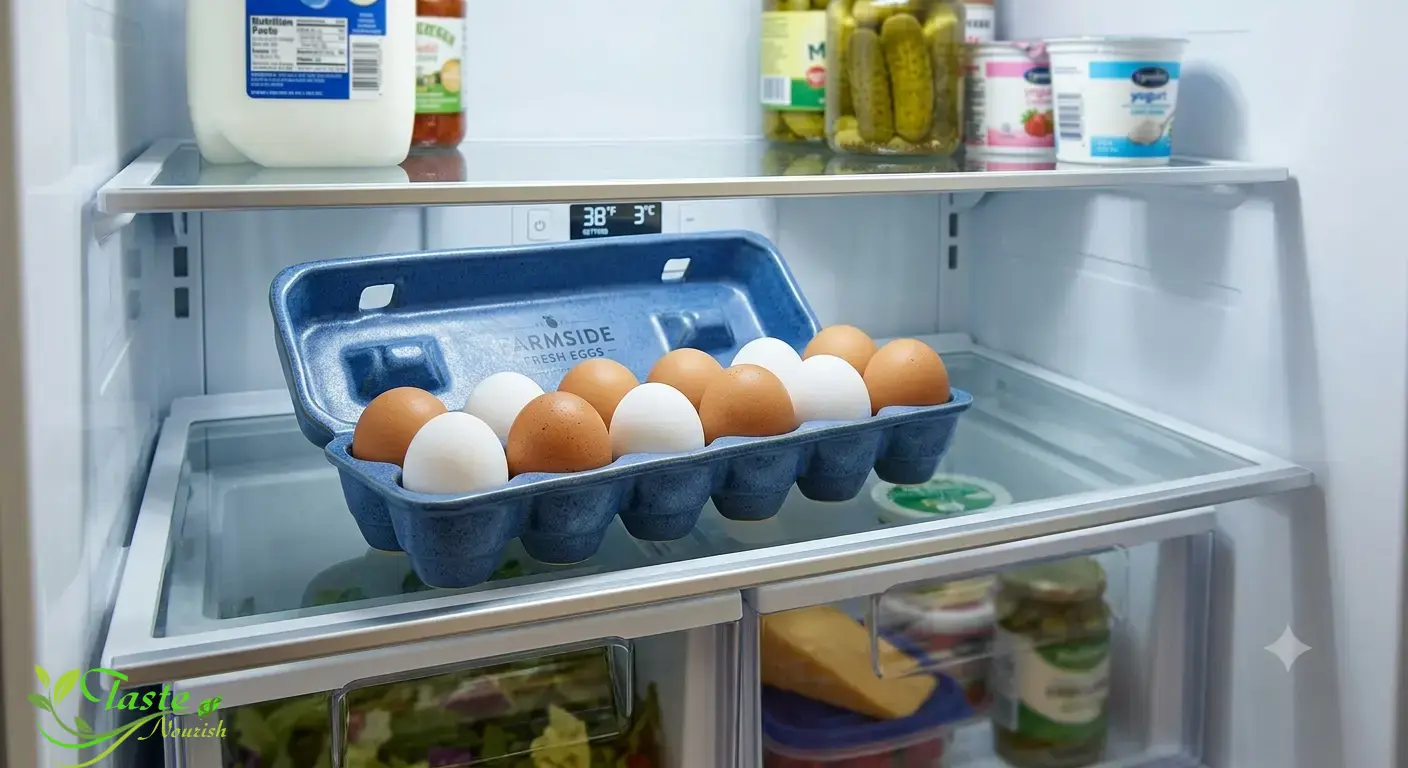
Eggs should be stored at 40°F or below, in their original carton on an inside shelf — not in the door. Keeping them on an inside shelf prevents temperature fluctuations and protects them from absorbing odors from other foods. The fridge door is the warmest zone in your entire refrigerator, and it experiences dramatic temperature swings every time you open and close it.
Placing your eggs there is like parking them in the sun — it dramatically shortens their life. Instead, the middle or back shelf, particularly the coldest part of your fridge, is ideal.
According to food safety experts and culinary instructors, the best way to ensure store-bought eggs last as long as possible is to store them at 40°F or below in the coldest part of the refrigerator, typically the middle or back. Storing eggs in the door is not recommended since the temperature fluctuates more frequently there, reducing shelf life. This isn’t just professional opinion — it’s food science.
Keep Them in the Carton — Always
The carton your eggs came in is doing more work than you might realize. Storing eggs in their original carton on an inside shelf and away from pungent foods helps prevent moisture loss, keeps them from picking up odors or flavors from other foods, and maintains temperature consistency.
Many people crack the carton and slide their eggs into one of those built-in egg holders on the fridge door. This is convenient but counterproductive — those open-air holders expose your eggs to odors, temperature swings, and moisture loss all at once. If you absolutely must transfer them, use a container with a tight-fitting lid, not an open tray.
Pointy End Down: Does It Really Matter?
If an egg is stored pointy end up, the air sac will slowly start making its way toward the yolk because air rises. This can bring bacteria closer to where it shouldn’t be. If the pointy end is stored down, the air bubble remains at the top and away from the yolk — this also keeps the yolk more centered, which matters especially for hard-boiled eggs. While most commercial cartons are designed to be stored flat, if you’re ever decanting eggs into another container, keep the pointy end facing down for optimal freshness and yolk positioning.
How Long Do Eggs Last? A Complete Shelf-Life Breakdown
This is the question everyone wants a clear answer to, and the good news is that well-stored eggs last a lot longer than most people assume. The bad news is that sell-by dates have nothing to do with safety — they’re quality indicators, and many people throw out perfectly good eggs because of them.
According to the U.S. Department of Agriculture (USDA), eggs in their shells are safe for 3 to 5 weeks in the fridge. The sell-by date will most likely expire during this time, but the eggs are still safe to eat. The American Egg Board adds that they can be used up to 3 weeks past their purchase date.
Here is a full reference table for egg shelf life:
Egg Form
Refrigerator
Freezer
Raw whole eggs (in shell)
3–5 weeks
Not recommended in shell
Raw whole eggs (out of shell)
Up to 2 days
Up to 1 year
Raw egg whites
Up to 4 days
Up to 1 year
Raw egg yolks
Up to 2–4 days
Up to 1 year (with salt or sugar)
Hard-boiled eggs (in shell)
Up to 1 week
Not recommended
Hard-boiled eggs (peeled)
Up to 5 days
Not recommended
Pickled eggs
3–4 months (refrigerated)
Not recommended
Decoding Egg Expiration Dates: Sell-By vs. Use-By vs. Pack Date
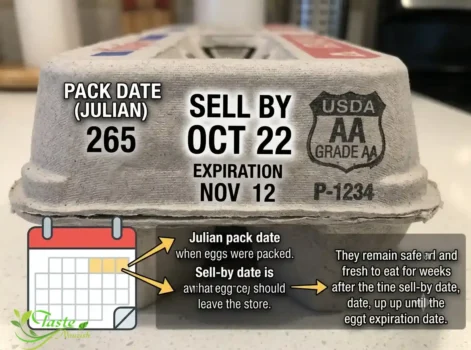
Expiration dates can sometimes be a helpful guide for freshness, but they aren’t always hard deadlines. Eggs are typically considered safe to eat well beyond the printed ‘sell-by’ or ‘expiration’ dates if stored correctly. When stored at 40°F or below, whole, uncracked eggs can last up to four weeks (or even longer) after the date marked on their cartons.
The pack date is often more useful — it’s the three-digit Julian calendar date (001 for January 1st, 365 for December 31st) stamped on commercial egg cartons, telling you exactly when the eggs were packaged.
💡 Reader Tip: If you’ve lost track of when your eggs were packed, do the float test (explained below) before tossing them. Many “expired” eggs are perfectly edible and delicious.
How to Store Farm-Fresh and Backyard Eggs
If you get your eggs from a local farm, a neighbor with backyard chickens, or a farmers’ market, welcome to a whole different world of egg storage. Farm-fresh eggs are often more nutrient-dense, flavorful, and vibrant than commercial eggs, but they play by different storage rules. Getting those rules wrong means wasting eggs that could have lasted months with the right approach.
Room Temperature vs. Refrigerator Storage for Unwashed Eggs
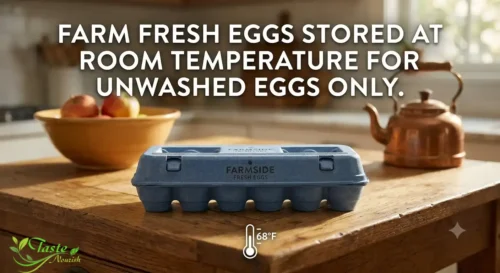
Unwashed fresh eggs from backyard chickens or a local farm that haven’t yet been refrigerated can safely be stored on the counter at room temperature for a couple of weeks. On the other hand, washed eggs must be refrigerated. If you purchase local eggs at a farmers’ market or farm stand, ask if they’ve been washed and whether they need to be refrigerated. When in doubt, store them in the fridge.
It’s a simple rule of thumb: if the bloom is intact, the counter is fine short-term; if it’s been washed away, refrigeration is mandatory.
Here are the key guidelines for farm-fresh egg storage:
Store unwashed eggs at room temperature for up to 2–3 weeks
Refrigerate unwashed eggs for up to 5 weeks
Never refrigerate then return to room temperature (condensation invites bacteria)
Store in a cool, dry, odor-free environment away from direct sunlight
Pointy end down is best, whether on counter or in fridge
Only wash eggs immediately before use, not before storage
Fresh eggs stored at approximately 55°F with 75% humidity will last about 2–3 months. At 30°F with 85% humidity, they can last up to 9 months. The freezing point for eggs is 28°F, so temperature regulation is critical.
The Water Glassing Method for Long-Term Preservation
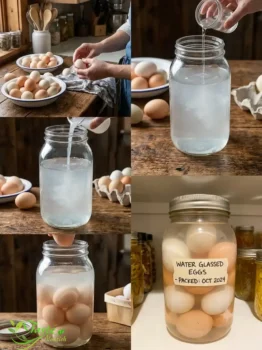
Water glassing — submerging unwashed eggs in a food-safe lime-water solution — is one of the oldest and most effective long-term egg preservation methods known to homesteaders. This method works because lime water fills the pores in the eggshells, creating a barrier that prevents air and bacteria from entering, thereby preserving eggs for much longer than normal.
Eggs can be stored in lime water for up to 6 months or sometimes longer, as long as the solution remains clear and the eggs stay submerged. This is how farmers historically had eggs available year-round before refrigeration existed.
How to Store Cracked, Separated, and Hard-Boiled Eggs
Not all eggs in your kitchen are whole, raw, and in the shell. Leftover yolks, separated whites, cracked eggs, and hard-boiled eggs all need specific handling to stay safe and usable. These are the details that most people overlook, and getting them wrong leads to waste.
Storing Raw Egg Whites and Yolks
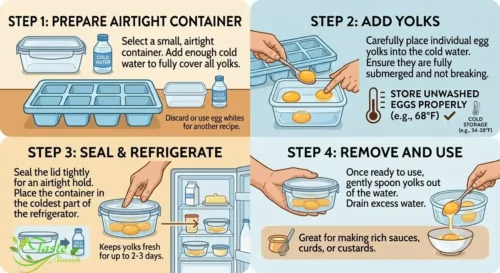
Leftover egg whites can be stored in an airtight container for up to 4 days, while leftover egg yolks can be stored in cold water in an airtight container for up to 2 days. The key with yolks is keeping them submerged in cold water, which prevents the surface from forming a dry, rubbery skin. Change the water daily if you’re storing them longer than a day. When it comes to cracked eggs that break in transit, don’t throw them out — break them into a clean, airtight container, refrigerate immediately, and use within two days.
Here are the best practices for storing separated eggs:
Transfer egg whites to a glass or BPA-free airtight container immediately after separating
Cover egg yolks with cold water before sealing the container
Label containers with the date and number of whites or yolks inside
Keep both at 40°F or below, away from pungent foods
Use within 2–4 days for best quality and food safety
Never leave separated egg components at room temperature for more than 2 hours
Storing Hard-Boiled Eggs
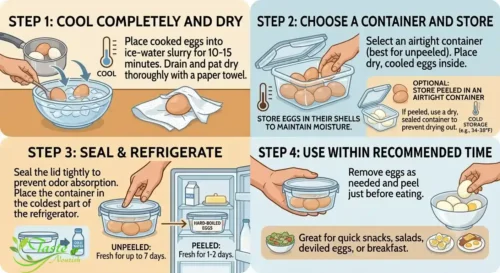
Hard-boiled eggs deserve their own moment in the spotlight because people consistently mishandle them. Hard-boiled eggs last up to 1 week in the refrigerator. However, there’s an important nuance: unpeeled hard-boiled eggs last significantly longer than peeled ones. The shell acts as a protective barrier even after cooking. If you’ve peeled them, place them in a bowl of cold water in the fridge and change the water daily, or store them in an airtight container lined with a damp paper towel. Either way, eat them within five days of peeling for best quality.
How to Freeze Eggs Properly
Freezing is the ultimate egg preservation hack, and it’s far more practical than most home cooks realize. With eggs costing more than ever, knowing how to freeze them correctly means you can stock up when prices drop and never run out again.
Freezing Whole Eggs
Raw whole eggs, or separated raw yolks or whites, can last up to one year in a freezer set to zero degrees Fahrenheit or colder. The American Egg Board does not recommend freezing whole raw eggs in their shells, or freezing hard-boiled eggs in any form. Freezing eggs in their shells is a disaster — the liquid inside expands as it freezes, cracks the shell, and creates a mess of shards and off-textured egg.
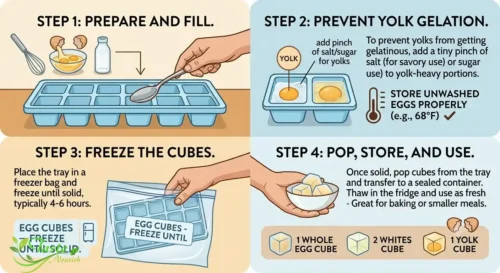
Here’s how to freeze whole eggs properly, step by step:
Crack fresh, clean eggs into a clean bowl.
Whisk gently until yolks and whites are fully combined — don’t over-beat or introduce air.
Pour into an ice cube tray, with approximately ¼ cup (50g) per well (roughly one egg).
Freeze until solid, then transfer cubes to a labeled, airtight freezer bag.
Note the date and number of eggs on the bag.
Thaw frozen whole eggs overnight in the refrigerator and use within 24 hours of thawing.
Freezing Egg Whites and Yolks Separately
Fresh egg whites can be separated from yolks and safely frozen for up to a year, but are best when used within 2 months. Whites freeze cleanly without any prep — simply pour them into a tightly sealed container or ice cube tray (2 tablespoons per cube = 1 large egg white).
Yolks are trickier. Egg yolks can take on a thick, gel-like texture when frozen. To avoid this, stir in either 1/8 teaspoon of salt or 1½ teaspoons of corn syrup before freezing, as recommended by the American Egg Board. The salt-mixed eggs can be used for savory dishes, and the corn syrup ones can be used for desserts. This simple step prevents them from becoming gelatinous bricks that are impossible to cook with.
Egg Component
Freezer Life
Preparation Needed
Whole eggs (out of shell)
Up to 1 year
Whisk and pour into containers
Egg whites
Up to 1 year
Pour directly, no prep needed
Egg yolks
Up to 1 year
Add salt (savory) or sugar (sweet)
Hard-boiled whole eggs
Not recommended
—
Hard-boiled yolks only
Up to 1 year
Freeze in a single layer
The Float Test — How to Tell If an Egg Has Gone Bad
This is one of the most practical and reliable freshness tests you can do with zero equipment — just a glass of water. Drop your egg in gently and watch what happens. A fresh egg sinks and lays flat on its side. A slightly older (but still good) egg sinks but stands upright. An egg that floats has a very large air cell and is past its prime.
If an egg floats in water, that does not mean the egg is automatically unsafe — a floating egg just has a larger air pocket, which means it has poor quality. Smell and color are better signs of whether an egg is bad. If it smells strange or looks off, throw it out. The float test is a useful screening tool, but your nose is the final judge. Always crack a questionable egg into a separate bowl before adding it to your recipe — a truly bad egg will announce itself immediately.
Here are the key signs your egg has gone off and should be discarded:
Sulfur or rotten odor when cracked
Discolored yolk (green, grey, or black tint)
Watery, overly runny white that spreads excessively
Pink or iridescent whites (possible Pseudomonas bacterial contamination)
Floating in water combined with an off smell
Why Proper Egg Storage Actually Matters More Than You Think
Let’s be real — eggs are not cheap right now. The average price of a dozen eggs has been running significantly higher than previous years, making it more important than ever to extend the shelf life of every carton you buy. Aside from cost, food safety is the elephant in the room. Salmonella contamination, bacterial growth, and off-flavors are all real consequences of improper storage. And while we often worry about raw meat sitting out, eggs are deceptively perishable in ways many people underestimate.
Think of an egg like a tiny, sealed ecosystem. The shell is porous — it breathes. It can absorb odors from nearby foods, lose moisture through evaporation, and allow bacteria to enter if the conditions are right. Understanding this means you realize that dropping your eggs in the fridge door is not the same as storing them properly. Every little decision — temperature, location, container, orientation — has a compounding effect on freshness. Good egg storage habits are the culinary equivalent of a good sleep schedule: small, consistent practices that have a huge payoff over time.
Egg Type
Room Temperature
Refrigerator
Freezer
Store-bought (in shell)
Up to 2 hours
3–5 weeks
Up to 1 year (out of shell)
Farm-fresh unwashed
2–3 weeks
Up to 5 weeks
Up to 1 year (out of shell)
Hard-boiled (in shell)
Up to 2 hours
Up to 1 week
Not recommended
Raw whites or yolks
Up to 2 hours
Up to 4 days
Up to 1 year
Common Egg Storage Mistakes to Avoid
Knowing what not to do is just as valuable as knowing the right techniques. Even seasoned cooks fall into a few classic egg storage traps that quietly shorten shelf life and compromise quality.
Here are the most common egg storage mistakes and how to correct them:
Storing in the fridge door: The door is the warmest and most temperature-variable spot. Move your eggs to an interior shelf immediately.
Washing farm eggs before storage: This strips the protective bloom. Wash only when you’re ready to cook.
Transferring to an open egg tray: Open trays expose eggs to odors and moisture loss. Keep them in the carton.
Leaving eggs out too long after purchase: Due to risk of bacteria growth and salmonella, don’t leave store-bought eggs out of the refrigerator for more than 2 hours. Any bacteria present in an egg can multiply quickly at room temperature.
Buying cracked eggs: Because bacteria can enter eggs through cracks in the shell, never purchase an egg that’s cracked.
Freezing eggs in the shell: The liquid expands and cracks the shell, contaminating the egg.
Refrigerating and then leaving out repeatedly: Temperature cycling is the enemy of egg freshness. Once refrigerated, keep them refrigerated.
Conclusion
So now you know that how to store eggs is far more nuanced than simply sticking them in the fridge and forgetting about them. Whether you’re dealing with store-bought eggs that need a cold, consistent interior shelf, farm-fresh eggs whose natural bloom needs protecting, leftover yolks that need water coverage, or a surplus dozen heading into the freezer, every egg type comes with its own set of best practices. These are not complex rules — they’re small, deliberate habits.
And in a world where a single dozen eggs can cost over five dollars, those habits directly protect your wallet, your health, and your food quality. Treat your eggs right, and they’ll last weeks or even months longer than you’d expect.
Store Eggs FAQs
Can you store eggs at room temperature in hot climates?
In hot climates, room temperature storage is not recommended for store-bought eggs, as heat accelerates bacterial growth. Stick to refrigeration at 40°F or below. Farm-fresh unwashed eggs may fare better for a short time in a cool, shaded spot, but refrigeration remains the safest option in consistently warm weather.
Why do European countries keep eggs on the counter while Americans refrigerate them?
The difference comes down to processing. In the U.S., commercial eggs are washed and pasteurized, which removes the natural protective bloom and requires refrigeration. In most European countries, eggs are not washed commercially, so the bloom remains intact, allowing safe counter storage. It’s not that one method is better — it’s that two different processing systems demand different storage responses.
Can you freeze hard-boiled eggs?
You shouldn’t freeze hard-boiled whole eggs or whites — the freezing and thawing process makes the whites rubbery, watery, and unpleasant. You can, however, freeze hard-boiled yolks only. Place them in a single layer in a saucepan, cover with water, bring to a boil, let stand covered for 12 minutes, then drain, dry, and freeze in an airtight container.
How do I know if a cracked egg in my carton is still safe to eat?
If an egg cracked during transport, break it into a clean, sealed container, refrigerate it immediately, and use it within two days. Don’t use cracked eggs that were left at room temperature for an unknown period or that have an off smell — the risk of bacterial contamination through the crack is real.
Is it safe to eat eggs after the sell-by date?
Yes, in most cases. The sell-by date is a quality indicator set for retailers, not a hard safety expiration. As long as your eggs were stored properly at 40°F or below, they are typically safe to consume 3–5 weeks after purchase. Always do the float test and the smell test before using older eggs to be sure.
**Hanan Abo Samra** shares practical cooking insights, delicious recipes, and evidence-based nutrition information. Drawing on more than 20 years of hands-on cooking experience, she creates helpful food content that combines everyday cooking knowledge with information from reliable scientific sources. Her goal is to help readers better understand the foods they eat, explore their nutritional benefits, and prepare delicious meals with confidence.