Yes — you absolutely can freeze eggs, and once you know how to do it properly, it’s one of the smartest food preservation moves you’ll ever make in your kitchen. The short answer is “yes,” but there’s a critical caveat that trips almost everyone up: you cannot simply toss a whole egg — shell and all — into the freezer and call it a day. The liquid inside expands as it freezes, which puts intense pressure on the shell, causes it to crack, and leaves you with a contaminated, messy disaster.
The good news is that once you remove the shell and prepare the egg correctly, freezing is not only safe but remarkably effective for extending shelf life.
According to the USDA Food Safety and Inspection Service (FSIS), you can freeze eggs for up to one year. That’s a remarkable extension compared to the three weeks or so you get from a standard refrigerator carton. Think about that for a moment — you could buy a bulk pack of eggs at the peak of freshness, prepare them for the freezer in under 15 minutes, and still be cracking open perfect, usable eggs nearly 12 months later.
Whether you’re a home cook trying to cut grocery bills, a backyard chicken keeper dealing with an egg surplus, or someone who simply hates food waste, knowing how to freeze eggs is a genuinely useful skill. Let’s walk through everything you need to know, from the science behind why eggs behave differently in the freezer, to the exact methods, measurement conversions, and cooking tips that will make your frozen eggs indistinguishable from fresh ones in most recipes.
Before you start freezing eggs, it really helps to understand what’s happening at a molecular level — because the science actually explains all the practical rules you’ll follow.
An egg is made up of water, protein, and fat, and when water freezes, it expands by roughly 9%. That expansion is exactly why whole eggs in the shell are a freezer no-go: there’s simply no room for that expansion within the rigid shell, so it cracks. Once the shell is gone and the egg is in a container with appropriate headspace, however, that expansion is completely harmless and the ice crystals that form during freezing don’t significantly damage the egg’s proteins or nutritional profile.
The Science Behind Egg Yolk Gelation
Here’s where it gets genuinely interesting: egg yolks behave very differently from egg whites in the freezer due to a phenomenon called gelation.
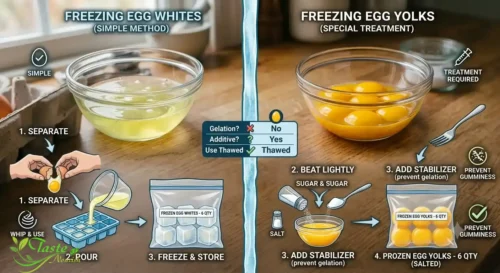
When egg yolks are frozen without any additive, the proteins inside undergo a structural change that causes the yolk to become thick, sticky, and almost gummy when thawed — so gelatinous, in fact, that it becomes nearly impossible to blend into recipes. To help retard this gelation, beat in either 1/8 teaspoon salt or 1½ teaspoons sugar or corn syrup per ¼ cup of egg yolks (about 4 yolks). This single step is the most important technique in egg freezing, and skipping it is the most common mistake beginners make.
Egg whites, on the other hand, don’t have this problem — their protein structure handles freezing remarkably well without any additive, and they thaw back to a nearly identical texture to fresh whites.
How to Freeze Whole Eggs Step by Step
Crack the eggs into a bowl.
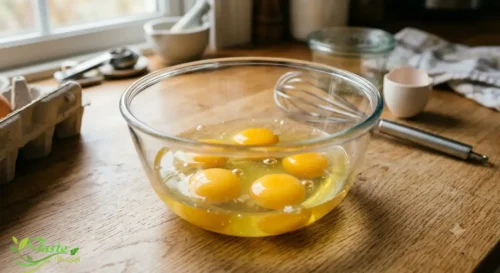
Break the eggs into a clean bowl and gently whisk them until the yolks and whites are completely combined. Avoid whipping in too much air, as excess air can reduce the quality during freezing.
Add a stabilizer.
To prevent the yolks from becoming grainy during storage, add one of the following per cup of whole eggs:
½ teaspoon salt for savory recipes.
1½ tablespoons sugar for sweet recipes.
1½ tablespoons corn syrup as an alternative for sweet recipes.
Strain the mixture.
Pour the beaten eggs through a fine-mesh sieve or colander to create a smoother, more uniform texture.
Package the eggs.
Transfer the mixture into airtight freezer containers or freezer bags, leaving about ½ inch (1.3 cm) of headspace to allow for expansion during freezing.
Seal and freeze.
Seal the containers tightly and place them in the freezer. The eggs usually freeze solid within 2 to 4 hours and can then be stored for long-term use.
Choose the Right Stabilizer
Use salt if the eggs will be used in savory dishes such as scrambled eggs, omelets, quiches, casseroles, or fried rice.
Use sugar or corn syrup if the eggs are intended for baking cakes, cookies, pancakes, waffles, or other sweet recipes.
Pro Tip: Many home cooks freeze two separate batches—one with salt for savory cooking and another with sugar for baking. Label each container clearly to avoid confusion later.
♦ ♦ Using Ice Cube Trays for Easy Portioning
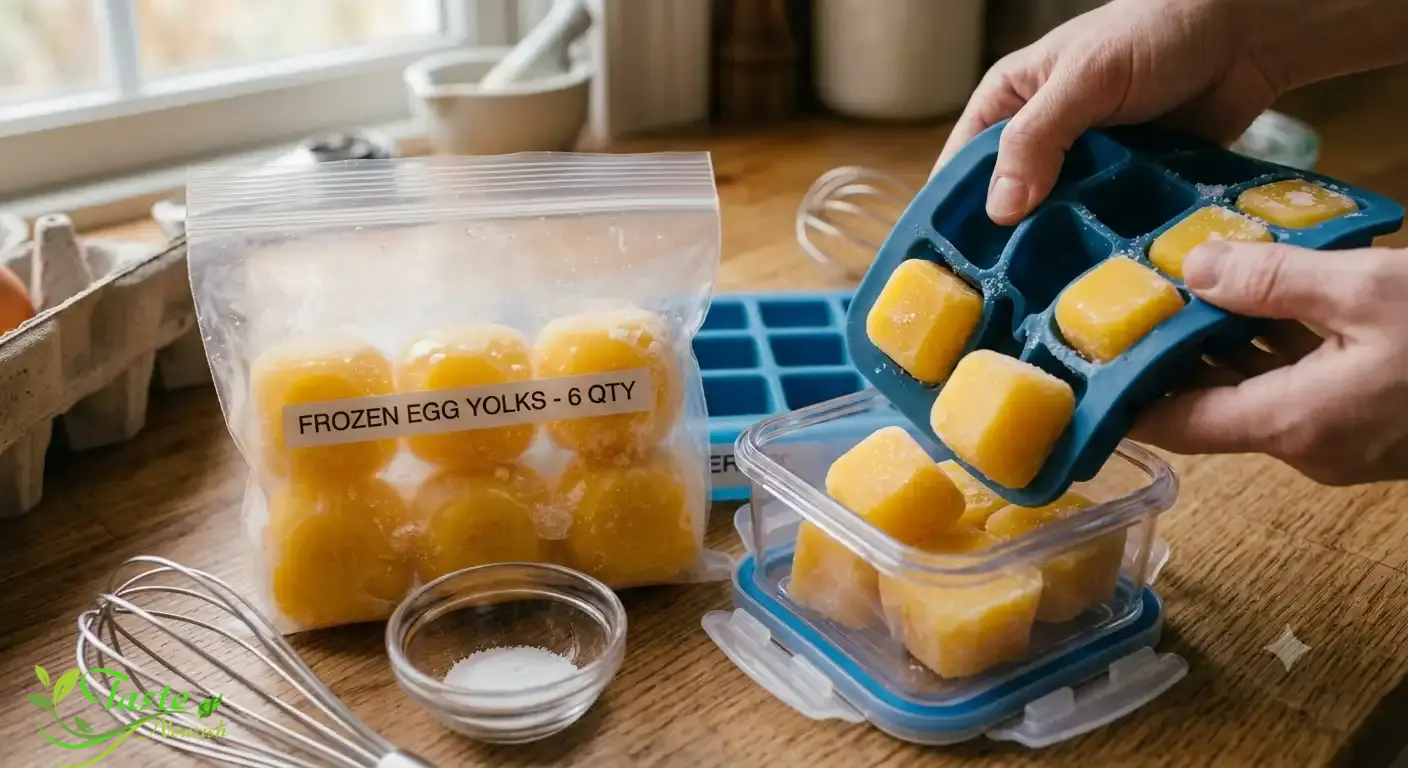
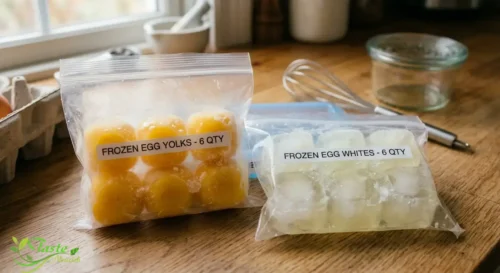
One of the cleverest techniques for freezing eggs is to use silicone ice cube trays or silicone muffin molds as your initial freezing vessel, then transfer the frozen portions to labeled freezer bags for long-term storage. Measure 3 tablespoons of egg mixture into each compartment of an ice cube tray. Freeze until solid, then remove frozen cubes and package in moisture-vapor resistant containers. Three tablespoons of the egg mixture (one cube) equals one whole egg.
This portioning method is brilliant because it means you never have to thaw a whole container of eggs just to use one or two — you pull out exactly as many cubes as your recipe calls for and leave the rest frozen. It also makes measuring incredibly easy: one cube, one egg. That kind of precision convenience is what separates a good food preservation system from a great one.
Egg Measurement Conversions for Frozen Eggs
Frozen form
Equivalent
3 tablespoons whole egg mixture
1 large whole egg
2 tablespoons egg white mixture
1 large egg white
1 tablespoon yolk mixture
1 large egg yolk
How to Freeze Egg Whites Separately
Freezing egg whites separately is arguably the easiest of all the egg-freezing methods, and egg whites are also the most versatile of the three options. There’s no stabilizer needed, no risk of gelation, and the whites thaw back to a texture that’s remarkably close to fresh — close enough to whip into meringue, angel food cake, or pavlova with excellent results.
If you regularly bake recipes that call for only yolks (think hollandaise sauce, lemon curd, or crème brûlée), you’ve probably thrown away a lot of egg whites over the years. Freezing them is the solution to that wasteful cycle, and it takes less than two minutes per batch.
For egg whites, gently mix whites — do not whip. Strain through a sieve. No sugar or salt is needed. Package, leaving ½-inch headspace. Seal and freeze.
Two tablespoons of the egg-white mixture equal one egg white. Thawed egg whites will beat to better volume if you allow them to sit at room temperature for about 30 minutes before using. That 30-minute rest is a small but important tip — cold egg whites don’t whip nearly as well as room-temperature ones, and that temperature differential can be the difference between a fluffy, voluminous meringue and a flat, disappointing one.
Frozen egg whites are also ideal in individual ice cube portions; one standard ice cube holds approximately two tablespoons of egg white, making recipe measurement as simple as counting cubes.
Key tips for freezing egg whites:
Never whip air into the whites before freezing — this damages the protein structure
Use airtight containers or heavy-duty freezer bags to prevent freezer burn
Label clearly with the number of whites and the freeze date
Allow to sit at room temperature 30 minutes after thawing before beating
Use within 24 hours of thawing for best results
Never refreeze thawed egg whites
How to Freeze Egg Yolks Separately
Egg yolks are the divas of the freezer world — they need a little more attention and preparation than whites, but they’re absolutely worth the extra care.
The gelation problem discussed earlier makes unseasoned frozen yolks nearly unusable, but with the right stabilizer added before freezing, they thaw beautifully and perform well in everything from custards and sauces to baked goods and pasta dough. The flavor of properly frozen egg yolks is indistinguishable from fresh in most cooked applications, making this a genuinely useful preservation technique rather than a compromise.
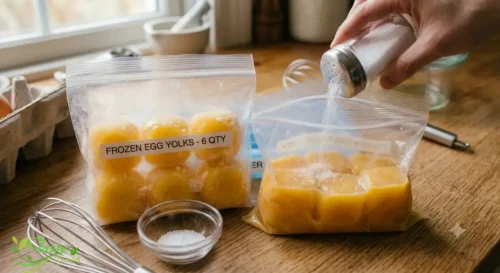
Add 1/8 teaspoon salt or 1½ teaspoons sugar for every four yolks that you plan on freezing. Immediately after adding, use a whisk or electric mixer to beat well, as if you were making scrambled eggs.
Don’t let the sugar or salt sit on the yolks without stirring, as it will “burn” them and yield a clumpy texture. This tip about not letting the salt or sugar sit undissolved is critical and rarely mentioned in basic guides — the osmotic effect of undissolved salt or sugar draws moisture out of the yolk surface, creating an unpleasant, clumped texture even before freezing begins.
Whisk immediately and you’ll avoid this entirely. Egg yolks can be frozen for up to 4 months, but are best in texture and flavor when frozen no longer than 2 months.
Step-by-step guide to freezing egg yolks:
Carefully separate yolks from whites, ensuring no white gets into the yolks
Place yolks in a bowl and add your stabilizer (salt for savory, sugar for sweet)
Immediately whisk together vigorously — don’t let it sit
Strain through a fine-mesh sieve to remove any chalazae (the white stringy bits)
Pour into airtight containers or ice cube trays (1½ tbsp = 1 yolk)
Leave ½ inch of headspace in containers
Seal, label with quantity, stabilizer type, and date
Freeze immediately
Can You Freeze Hard-Boiled Eggs?
This is one of the most Googled questions in the egg-freezing space, and the honest answer is: sort of, with a big asterisk. Hard-boiled whole eggs — the cooked egg whites together with the cooked yolks — are famously terrible candidates for freezing because the cooked egg white becomes rubbery, watery, and completely unpleasant in texture after thawing.
If you’ve ever accidentally left a hard-boiled egg in the freezer, you know exactly what we’re talking about: that strange, spongy, almost foam-like texture that makes the egg unappetizing and difficult to eat. No amount of technique or preparation can fully prevent this because it’s a fundamental property of how cooked egg white proteins react to ice crystal formation.
⇒ You can freeze hard-boiled egg yolks to use later for toppings or garnishes:
Place the cooked yolks in a saucepan.
Arrange the hard-boiled egg yolks in a single layer inside a saucepan.
Cover with water.
Add enough water to cover the yolks by at least 1 inch (2.5 cm).
Bring to a boil.
Cover the saucepan and quickly bring the water just to a boil.
Let the yolks stand.
Remove the pan from the heat and let the yolks sit in the hot water, covered, for about 12 minutes.
Drain and package.
Remove the yolks with a slotted spoon, drain them thoroughly, and pack them into airtight freezer containers or freezer bags before placing them in the freezer.
Important Note: Do not freeze hard-boiled whole eggs or hard-boiled egg whites. They become tough, rubbery, and watery after thawing, making them unpleasant to eat. Freeze only the cooked yolks if you plan to use them later as toppings or garnishes.
So if you’ve made a batch of deviled eggs for a party and have leftover yolk filling, freezing the yolk portion alone is perfectly viable. But the complete hard-boiled egg? Leave it in the fridge and eat it within a week instead.
Can You Freeze Cooked Egg Dishes?
Great news for meal preppers: many cooked egg dishes freeze surprisingly well, which opens up a whole world of make-ahead convenience that goes beyond just raw eggs. The key principle to understand is that dishes with additional ingredients — fat, starch, dairy, vegetables — tend to protect the egg proteins during freezing better than plain cooked eggs do, because those surrounding ingredients buffer the texture changes that occur during the freeze-thaw cycle.
This is why a cheesy egg muffin or a vegetable-loaded frittata comes out of the freezer tasting nearly restaurant-quality, while a plain fried egg becomes a rubbery disappointment.
Best Cooked Egg Dishes for Freezing
Scrambled eggs freeze and reheat beautifully — slightly undercook before freezing for the best texture. Egg muffins or frittatas packed with veggies and cheese also freeze well and reheat easily in the microwave or oven. Hard-boiled egg yolks freeze well, but whites can turn rubbery. Egg-based casseroles, breakfast burritos with scrambled eggs and cheese, quiches (without a water-heavy filling), and egg-stuffed muffins are all excellent candidates for batch cooking and freezing.
The golden rule for any cooked egg dish you plan to freeze is to slightly undercook it before it goes in the freezer — because reheating will finish the cooking process, and you don’t want to end up with a twice-cooked, overcooked result. Fried eggs or poached eggs are best avoided, as their texture becomes tough and unappealing after freezing and thawing.
Freezing Eggs Storage Times at a Glance
Understanding exactly how long each type of frozen egg stays at peak quality is essential for planning your freezer inventory effectively. While safety and quality are two different things — frozen eggs are technically safe well beyond these windows — quality degrades over time, and using your frozen eggs within the recommended periods ensures you’re getting the best possible result in your cooking.
Egg Type
Maximum Safe Storage
Best Quality By
Whole eggs (beaten)
12 months
4 months
Egg whites
12 months
6 months
Egg yolks (with stabilizer)
4 months
2 months
Cooked egg dishes (scrambles, frittatas)
3 months
1–2 months
Hard-boiled yolks only
3 months
1 month
Hard-boiled whole eggs
Not recommended
N/A
📌 Key Takeaway: While the USDA says frozen eggs are safe for up to a year, aim to use whole beaten eggs within 4 months and yolks within 2 months for the best texture and flavor in your cooking.
How to Thaw Frozen Eggs Safely
Thawing frozen eggs correctly is just as important as freezing them correctly — rush the process or do it wrong, and you’re introducing food safety risks or ending up with a subpar product. The microwave is tempting but is actually the worst method available: it heats unevenly, can begin cooking sections of the egg before others are thawed, and produces an inconsistent result that’s frustrating to cook with. Patience is the real secret ingredient in thawing eggs well.
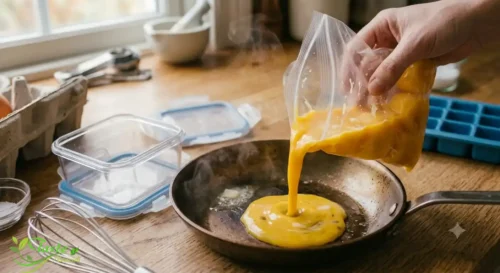
When you’re ready to use frozen eggs, thaw them overnight in the refrigerator or under running cold water. Use egg yolks or whole eggs as soon as they’re thawed. Thawed egg whites will beat to better volume if you allow them to sit at room temperature for about 30 minutes. The refrigerator overnight method is always the safest and most reliable approach — you wake up to perfectly thawed, food-safe eggs that are ready to cook with immediately. If you need a quicker option, immerse the sealed bag or container in a bowl of warm tap water, replacing it every 30 minutes until fully defrosted.
Regardless of method, the rule is absolute: never refreeze thawed eggs, and always use them within 24 hours of thawing.
Safe thawing methods (fastest to slowest):
Under cold running water (30–60 minutes) — for individual portions
Bowl of warm water, changed every 30 minutes (1–2 hours)
Overnight in the refrigerator (8–12 hours) — most recommended
Counter thawing — only if cooking immediately and within 1–2 hours
Microwave — not recommended for food safety and texture reasons
How to Use Frozen Eggs in Cooking and Baking
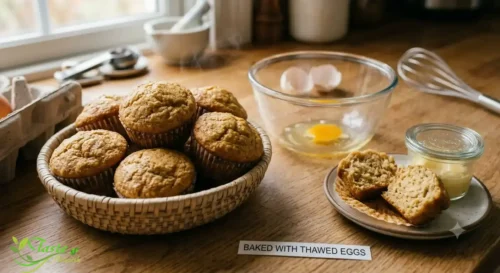
Here’s the reassuring truth that will make you feel confident about using frozen eggs: in the vast majority of recipes, thawed frozen eggs perform identically to fresh eggs. Baked goods — cakes, cookies, muffins, breads, pancakes — are where frozen eggs really shine, because the mixing and baking process blends everything together in a way that makes any minor textural differences completely irrelevant.
If you’re making a batch of chocolate chip cookies and you pull out your pre-portioned egg cubes from the freezer, the cookies will be completely indistinguishable from ones made with fresh eggs. The same goes for omelets, scrambled eggs, frittatas, egg fried rice, custards, sauces, and pasta dough.
Where frozen eggs are not ideal is in applications that require the egg to perform specific structural functions that depend on precise fresh-egg behavior. Meringues, soufflés, and mousse require egg whites that whip to maximum volume — and while thawed frozen whites can still whip well (especially after their 30-minute room temperature rest), they may not achieve the same peak volume as super-fresh whites.
Similarly, fried eggs, poached eggs, or soft-boiled eggs where the texture and appearance of the individual components (the intact yolk, the set white) are central to the dish are not good candidates for frozen eggs. Frozen eggs are not recommended for recipes requiring fluffy whites, like meringues. Keep a small reserve of fresh eggs for these applications and use your frozen stock for everything else.
Recipe Category
Frozen Eggs Suitable?
Notes
Cakes & muffins
✅ Excellent
No difference in final product
Cookies & brownies
✅ Excellent
Works perfectly
Scrambled eggs
✅ Very good
Whisk well after thawing
Frittatas & quiches
✅ Very good
Add cheese for best texture
Omelets
✅ Good
Works well in most cases
Pasta dough
✅ Good
Yolks work particularly well
Custards & sauces
✅ Good
Yolks only recommended
Meringue & soufflé
⚠️ Limited
May not reach peak volume
Poached / fried eggs
❌ Not suitable
Texture becomes unpleasant
Hard-boiled (whole)
❌ Not suitable
Whites become rubbery
Why Would You Want to Freeze Eggs in the First Place?
You might be wondering, why bother freezing eggs when they last a few weeks in the fridge anyway? That’s a fair question, and the answer becomes obvious the moment you find yourself staring at a carton of 18 eggs that’s about to expire — or when your local supermarket runs an incredible sale and you want to stock up.
Freezing eggs is essentially a form of pantry insurance, giving you the flexibility to buy in bulk, save real money, and never run out of a kitchen staple that goes into everything from breakfast scrambles to holiday baking. It’s the culinary equivalent of meal prepping, except for your ingredients rather than your meals.
Saving Money When Eggs Are on Sale
Egg prices have been notoriously volatile in recent years, swinging dramatically due to supply chain issues, avian flu outbreaks, and seasonal demand. When you spot a great deal on eggs — whether at a warehouse store, a farmers’ market, or your neighborhood grocery — buying extra and freezing them is a financially smart move that most households overlook entirely.
A dozen eggs frozen today at a lower price is money you’re putting back in your pocket next month when prices spike again. The key is preparation: spend 10 to 15 minutes properly prepping your eggs for the freezer, and you’ve locked in both the price and the freshness simultaneously, creating a buffer that pays dividends every single week.
Reducing Kitchen Waste
Food waste is one of those quiet household problems that adds up alarmingly fast. Eggs that expire before you can use them, leftover yolks from a recipe that only called for whites, or extra egg whites from a custard — all of these situations lead to food being thrown in the trash. Freezing is the elegant solution that professional kitchens have used for decades and that home cooks are only now starting to embrace more widely.
When you know you can freeze the excess, you stop throwing away perfectly good food, and that shift in mindset has a cascading positive effect on both your grocery budget and your environmental footprint.
Common Mistakes to Avoid When Freezing Eggs
Learning the right techniques is only half the battle — knowing what not to do is equally important when it comes to getting consistently great results from your frozen egg stock. Most of the mistakes people make are simple and completely avoidable once you know about them, and being aware of these pitfalls will save you from wasting food, time, and money. Think of this as the “been there, done that” section — the hard-won lessons distilled into a quick checklist.
Mistakes to avoid when freezing eggs:
Freezing in the shell — liquid expands, shells crack, bacteria can enter
Skipping the stabilizer in yolks — leads to gelatinous, unusable texture after thawing
Letting salt or sugar sit on yolks before whisking — causes surface “burning” and clumping
Using regular hard plastic containers without headspace — can crack during expansion
Whipping air into eggs before freezing — damages protein structure
Thawing in the microwave — causes uneven cooking and food safety risks
Refreezing thawed eggs — destroys texture and creates bacterial risk
Not labeling containers — you will forget what’s inside and when it was frozen
Freezing cracked or dirty eggs — compromised shell = bacteria access before freezing
Freezing hard-boiled whole eggs — whites become irreversibly rubbery
📌 Reader Note: Under no circumstance should eggs be frozen in their shells. Once eggs are prepared and in the freezer, use frozen eggs within 1 year. Do not.
Can You Freeze Eggs FAQs
Can you freeze eggs in their shells?
No, never freeze eggs in their shells. The liquid inside expands as it freezes, which causes the shell to crack. A cracked shell allows bacteria to enter the egg, creating a food safety hazard. Always crack, prepare, and transfer eggs to airtight containers before freezing.
How do you know if a frozen egg has gone bad?
After thawing, use your senses: a bad egg will have an off or sulfurous smell, unusual discoloration, or a watery, separated texture that seems different from normal. When in doubt, throw it out. Always label your frozen eggs with the date to ensure you’re using them within the recommended storage window.
Can I freeze eggs that are past their use-by date?
No. You should only freeze clean, fresh eggs that are still within their use-by date. Freezing does not improve egg quality — it preserves it. Freezing an egg that’s already past its prime will simply preserve a poor-quality egg, not restore it to freshness.
Do frozen eggs taste different from fresh ones?
In most cooked applications — baking, scrambling, frittatas, sauces — frozen eggs taste virtually identical to fresh eggs. The main differences are textural rather than flavor-based, and they primarily affect applications like meringue or fried eggs where texture is paramount. For baking and most cooking, the difference is undetectable.
Can you freeze store-bought liquid eggs?
Yes. Commercially prepared liquid egg products (such as cartons of egg whites or whole liquid eggs) can typically be frozen in their original sealed carton if unopened, or transferred to a freezer-safe container once opened. Always check the manufacturer’s guidance on the carton, as storage times can vary by brand and formulation.
Conclusion
So, can you freeze eggs? Absolutely — and doing it correctly is simpler than most people imagine. The fundamental rules are clear: remove the shell, add a stabilizer to yolks, use the right portioning method, label everything clearly, and thaw safely in the refrigerator overnight. Whether you’re dealing with a weekend egg surplus from your backyard hens, stocking up during a supermarket sale, or simply trying to reduce household food waste, freezing eggs is a practical, safe, and effective solution that the USDA endorses for up to a full year of storage.
The real magic of freezing eggs isn’t just about extending shelf life — it’s about flexibility. When you have a well-stocked freezer with pre-portioned egg cubes, you’re always ready to bake a batch of cookies, whip up a weekend frittata, or add richness to a pasta sauce without racing to the store. Think of it as building a pantry staple that’s simultaneously fresh and convenient.
Start with one method — whole beaten eggs in silicone molds — and once you’re comfortable, experiment with separate whites and yolks.
You’ll quickly realize that a frozen egg, properly prepared and thoughtfully thawed, is barely different from the egg you cracked this morning.
Hanan Abo Samra is the founder of Taste & Nourish, sharing trustworthy nutrition guidance and recipes drawn from 20+ years of hands-on cooking experience. When she's not developing new recipes, Hanan is researching the science behind everyday ingredients to bring readers practical, evidence-based guidance for a healthier lifestyle.
What’s up i am kavin, its my first occasion to commenting anywhere, when i read this piece of writing
i thought i could also create comment due to this good article.






What’s up i am kavin, its my first occasion to commenting anywhere, when i read this piece of writing
i thought i could also create comment due to this good article.