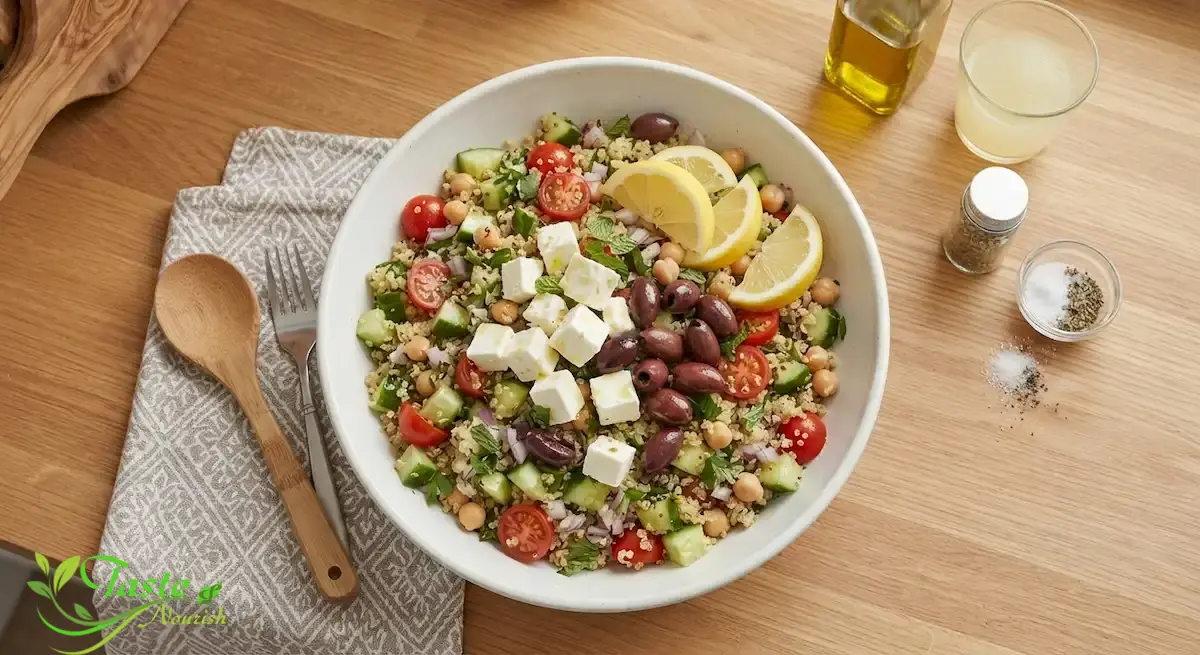
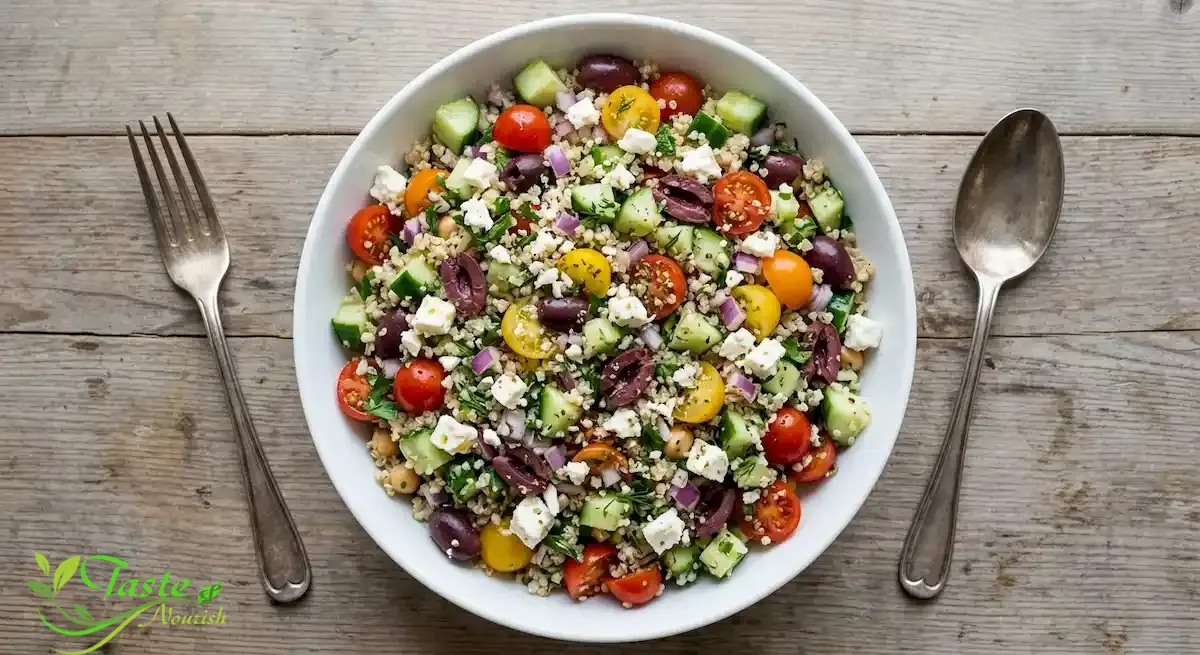
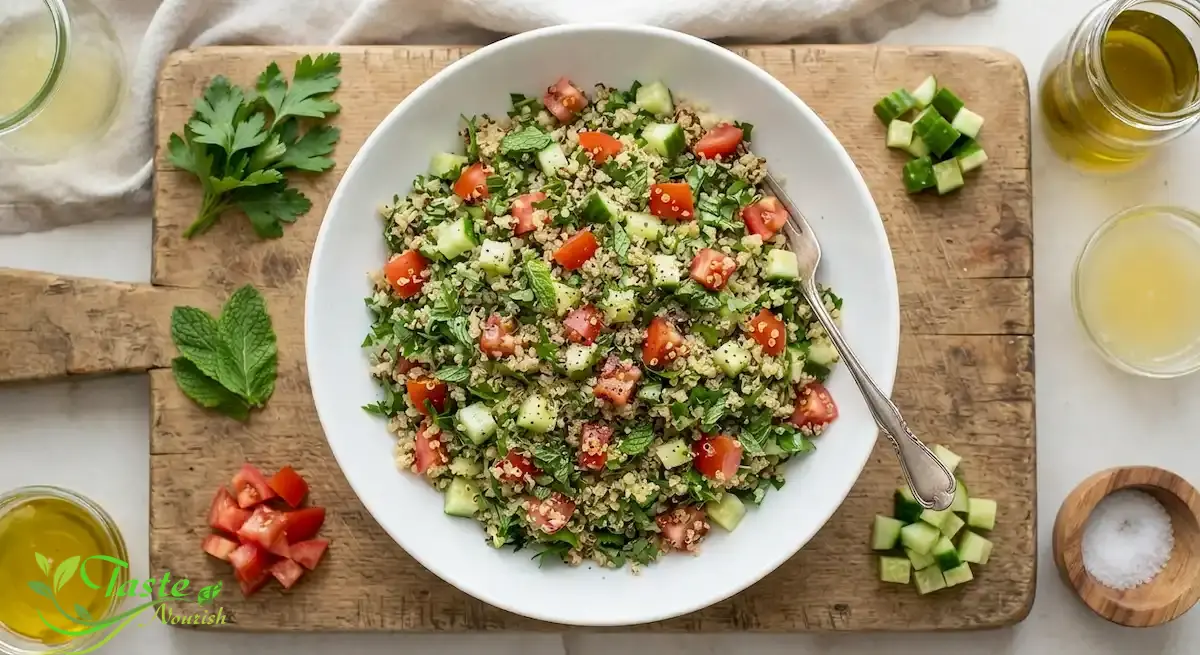
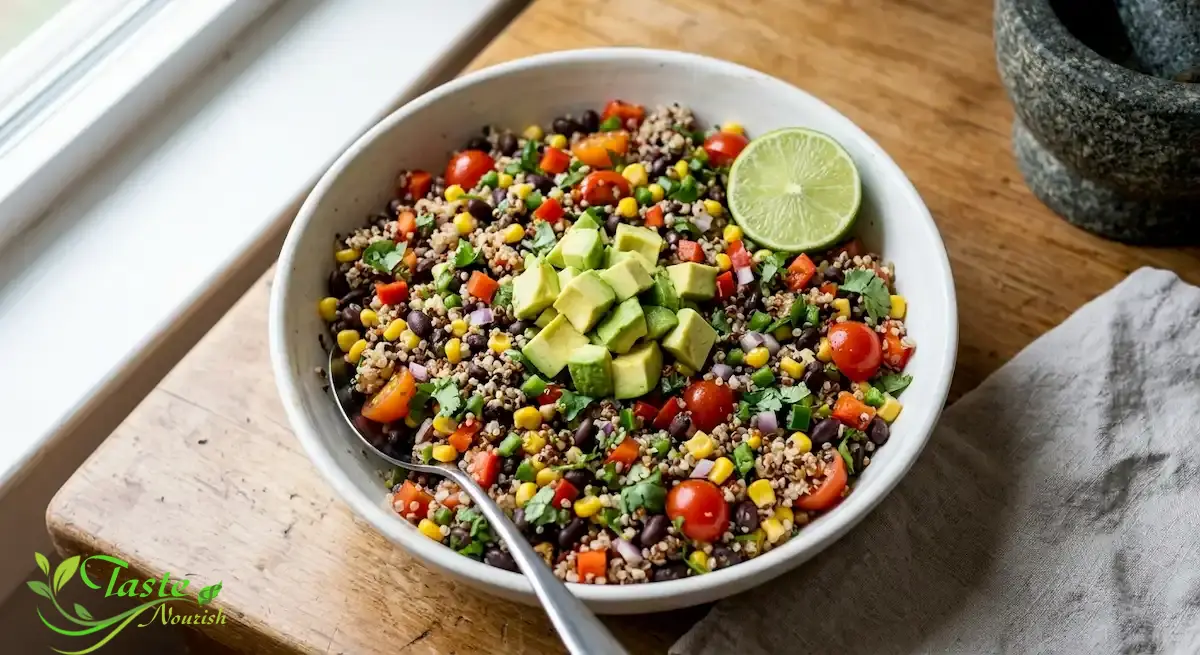
A good mediterranean quinoa salad recipe earns its place in your weekly rotation because it does three things at once: it holds up in the fridge for days, it travels well for lunch, and it still tastes bright and herby on day four. This version leans on fluffy quinoa, crisp cucumber and tomato, briny olives, and a lemon-garlic dressing that ties everything together without drowning it.
This mediterranean quinoa salad recipe combines cooked quinoa with cucumber, tomatoes, red onion, chickpeas, kalamata olives, and feta, tossed in a lemon-olive oil dressing. It takes about 35 minutes start to finish, serves 6, and keeps well in the refrigerator for up to five days, making it a reliable make-ahead lunch or side dish.
Mediterranean Quinoa Salad at a Glance
Detail
Time / Amount
Prep Time
20 minutes
Cook Time
15 minutes
Total Time
35 minutes (plus optional 30-minute chill)
Yield
6 servings (about 8 cups)
Difficulty
Easy
Key Takeaways: Mediterranean Quinoa Salad Recipe
This mediterranean quinoa salad recipe is naturally gluten-free and comes together with one pot and one bowl.
Rinsing the quinoa before cooking removes its bitter outer coating, called saponin.
The salad tastes better after an hour or two in the fridge, once the dressing has had time to soak in.
Chickpeas and feta both add protein, so it works as a light main dish, not just a side.
It’s an easy mediterranean quinoa salad to scale up for meal prep since none of the components wilt quickly.
Why You’ll Love This Recipe
Every ingredient here has a job. The quinoa provides a chewy, slightly nutty base that soaks up dressing without turning mushy. The vegetables add crunch and acidity, the olives and feta bring salt and richness, and the lemon-garlic dressing pulls it all into one cohesive bite. Nothing needs last-minute cooking beyond the quinoa itself, so it’s realistic for a weeknight.
It’s also forgiving. Swap in whatever crisp vegetables are in your fridge, adjust the lemon to taste, and it still works. That flexibility is part of what makes it a genuinely easy mediterranean quinoa salad rather than a recipe that only succeeds with exact measurements.
Ingredients
1 cup uncooked quinoa, rinsed
2 cups water or low-sodium vegetable broth
1 English cucumber, diced small
2 cups cherry tomatoes, halved
1/2 small red onion, finely diced
1 (15-ounce) can chickpeas, rinsed and drained
1/2 cup kalamata olives, pitted and halved
3/4 cup crumbled feta cheese
1/2 cup fresh flat-leaf parsley, chopped
1/4 cup fresh mint, chopped
3 garlic cloves, minced
1/3 cup extra-virgin olive oil
1/4 cup fresh lemon juice (about 2 lemons)
1 teaspoon dried oregano
Salt and freshly ground black pepper, to taste
Ingredient Notes
Rinse the quinoa even if the package says “pre-rinsed” — a quick rinse under cold water removes any remaining saponin residue and keeps the finished salad from tasting soapy or bitter. Cook it in broth rather than water for a rounder, less flat flavor, since quinoa on its own can taste a little grassy.
Use an English (or Persian) cucumber if you can. Their thinner skin and smaller seed cavity mean less watery runoff sitting at the bottom of the bowl, which keeps the salad from turning soggy overnight.
Extra-virgin olive oil matters here more than in a cooked dish, since it’s the dominant fat in an uncooked dressing. A fruity, robust olive oil will noticeably improve the final flavor.
Substitutions
No feta on hand: goat cheese works, though it’s tangier and softer than feta, so add it gradually and taste as you go. For a dairy-free version, leave the cheese out and add extra olives and a pinch more salt to keep the savory balance.
No fresh mint: parsley alone is fine; the mint adds brightness but isn’t essential to the dish holding together. Canned chickpeas can be swapped for cooked and cooled dried chickpeas, but this is a genuine trade-off in convenience, not an equivalent shortcut.
Kitchen Tools Needed
Medium saucepan with a lid, for cooking the quinoa
Fine-mesh strainer, for rinsing the quinoa without losing the small grains down the drain
Large mixing bowl
How to Make Mediterranean Quinoa Salad
Rinse and cook the quinoa. Rinse quinoa under cold water in a fine-mesh strainer for about 30 seconds. Combine with the broth or water in a saucepan, bring to a boil, then reduce heat to low, cover, and simmer for 15 minutes, until the liquid is absorbed and the grains show a small curled white ring. Remove from heat and let stand, covered, for 5 minutes, then fluff with a fork and spread on a plate or baking sheet to cool to room temperature.
Prep the vegetables. While the quinoa cooks, dice the cucumber, halve the cherry tomatoes, and finely dice the red onion. If the onion tastes sharp to you, soak the diced pieces in cold water for 10 minutes, then drain — this mellows the bite without needing to cook them.
Make the dressing. In a small bowl, whisk together the olive oil, lemon juice, minced garlic, oregano, 1/2 teaspoon salt, and a few grinds of black pepper until emulsified.
Combine. In a large bowl, combine the cooled quinoa, cucumber, tomatoes, red onion, chickpeas, olives, parsley, and mint.
Dress and toss. Pour the dressing over the salad and toss well to coat every part evenly.
Fold in the feta. Add the feta last and fold gently so the crumbles stay mostly intact rather than smearing into the dressing.
Rest and serve. Taste and adjust salt, pepper, or lemon juice. Serve right away, or chill for 30 minutes to an hour so the flavors settle before serving.
Expert Tips
Spread cooked quinoa on a sheet pan to cool rather than leaving it in the hot saucepan — trapped steam turns it gummy instead of light and separate.
Salt the dressing before adding it to the salad, not after. Salt doesn’t distribute evenly once the vegetables are already mixed in.
If you’re making this ahead, hold back the tomatoes and feta until closer to serving time; both release liquid and lose texture the longer they sit dressed.
A finishing squeeze of fresh lemon right before serving revives flavors that mellow in the fridge.
Common Mistakes to Avoid
Adding dressing to hot quinoa. This causes the grains to clump and steam themselves soft. Let the quinoa cool to room temperature first.
Skipping the rinse. Unrinsed quinoa carries a bitter, slightly soapy coating that’s noticeable in a cold salad, where there’s no sauce or heat to mask it.
Overdressing early. Tomatoes and cucumber release water once salted and dressed. If the salad sits dressed for a full day, it can turn watery — dress in stages if you’re prepping far in advance.
Using pre-crumbled feta. It’s drier and less flavorful than feta you crumble yourself from a block, since block feta is packed in brine that keeps it moist.
Recipe Variations
For a Greek-style quinoa salad recipe, add sliced cucumber ribbons, extra kalamata olives, a diced green bell pepper, and swap the mint for additional oregano — this leans the flavor closer to a classic Greek horiatiki.
For a heartier main course, add grilled chicken or chickpea-forward protein by doubling the chickpeas. For a spring version, fold in blanched asparagus tips and swap parsley for dill.
Serving Suggestions
Serve alongside grilled chicken, lamb kofta, or pan-seared salmon for a complete dinner. It also works well next to warm pita and hummus, or spooned into a bowl with grilled halloumi for a vegetarian plate. For a beverage pairing, a chilled dry rosé or sparkling water with lemon both suit the salad’s acidity.
Nutrition Information
The following values are an estimate for one serving (about 1 1/3 cups, based on 6 servings total), calculated from standard ingredient data in the USDA FoodData . Actual values will vary depending on specific brands and exact portion sizes.
Nutrient
Amount per Serving
Calories
~310 kcal
Protein
~9 g
Carbohydrates
~30 g
Dietary Fiber
~6 g
Total Fat
~18 g
Sodium
~420 mg
This salad’s fiber comes largely from the quinoa and chickpeas. Research summarized by the National Institutes of Health associates higher dietary fiber intake with better cardiovascular outcomes, though individual results depend on overall diet and health status. The dish also follows the general pattern of a Mediterranean-style diet, and a systematic review published in a peer-reviewed journal found that greater adherence to this dietary pattern is associated with reduced cardiovascular risk, though this is population-level research and not a guarantee of individual outcomes.
The extra-virgin olive oil in the dressing also contributes monounsaturated fat. The FDA has recognized a qualified health claim stating that oleic acid in oils like olive oil, when used in place of saturated fat, may support heart health — though the agency describes this evidence as supportive rather than conclusive.
Storage Instructions
Store the salad in an airtight container in the refrigerator for up to 5 days. Because it contains no cooked meat or dairy beyond feta, it holds up better over time than most cooked salads, though texture is best within the first 3 days.
This salad is not recommended for freezing. Cucumber and tomato both turn watery and limp once thawed, and the texture doesn’t recover.
Serve cold or at room temperature; reheating isn’t necessary or recommended, since warming the vegetables softens them past the point of a good salad texture.
Make-Ahead Tips
Cook the quinoa up to 3 days ahead and store it separately, chilled, in an airtight container. Chop the vegetables a day ahead and store them separately from the dressing. Combine everything and dress it within a few hours of serving for the best texture, especially if tomatoes are involved.
Mediterranean Quinoa Salad Recipe FAQs
Can I make this salad the night before?
Yes. It actually improves slightly overnight as the dressing absorbs into the quinoa. For the best texture, hold back the feta and stir it in just before serving.
Is this recipe gluten-free?
Yes, quinoa is naturally gluten-free, and none of the other ingredients in this recipe contain gluten. Always check labels on packaged items like broth if cross-contamination is a concern.
Can I use a different grain instead of quinoa?
Cooked and cooled farro, couscous, or bulgur all work in the same proportions, though farro and bulgur aren’t gluten-free.
Why is my quinoa mushy?
This usually means too much liquid was used or it simmered too long. Stick to a 2:1 liquid-to-quinoa ratio and check it at the 15-minute mark.
How do I make this vegan?
Omit the feta or use a plant-based feta alternative, and add a pinch of extra salt and a few more olives to keep the savory balance.
Can I serve this warm?
It’s designed as a cold or room-temperature salad. Serving it warm will wilt the cucumber and tomato and dull the dressing’s brightness.
This mediterranean quinoa salad recipe combines cooked quinoa with cucumber, tomatoes, red onion, chickpeas, kalamata olives, and feta, tossed in a lemon-olive oil dressing.
Ingredients
1 cup uncooked quinoa, rinsed
2 cups water or low-sodium vegetable broth
1 English cucumber, diced small
2 cups cherry tomatoes, halved
1/2 small red onion, finely diced
1 (15-ounce) can chickpeas, rinsed and drained
1/2 cup kalamata olives, pitted and halved
3/4 cup crumbled feta cheese
1/2 cup fresh flat-leaf parsley, chopped
1/4 cup fresh mint, chopped
3 garlic cloves, minced
1/3 cup extra-virgin olive oil
1/4 cup fresh lemon juice
1 teaspoon dried oregano
Salt and freshly ground black pepper, to taste
Directions
Rinse quinoa under cold water, then combine with broth in a saucepan. Bring to a boil, reduce heat, cover, and simmer 15 minutes. Rest 5 minutes, fluff, and spread out to cool.
While the quinoa cooks, dice the cucumber, halve the tomatoes, and finely dice the red onion.
Whisk together olive oil, lemon juice, minced garlic, oregano, salt, and pepper for the dressing.
In a large bowl, combine the cooled quinoa, cucumber, tomatoes, red onion, chickpeas, olives, parsley, and mint.
Pour the dressing over the salad and toss to coat evenly.
Fold in the feta gently so the crumbles stay mostly intact.
Taste and adjust seasoning. Serve immediately or chill 30 to 60 minutes before serving.
Conclusion
This mediterranean quinoa salad recipe rewards a little patience with the cooling step and pays it back with a salad that actually gets better as it sits. Make it a day ahead if you can, hold the feta back until serving, and you’ll have a reliable dish that works for lunch, a potluck, or a light dinner side.
“Mediterranean Diet for Primary and Secondary Prevention of Cardiovascular Disease and Mortality: An Updated Systematic Review.” PubMed Central (PMC), National Institutes of Health. https://pmc.ncbi.nlm.nih.gov/articles/PMC10421390/
Hanan Abo Samra is the founder of Taste & Nourish, sharing trustworthy nutrition guidance and recipes drawn from 20+ years of hands-on cooking experience. When she's not developing new recipes, Hanan is researching the science behind everyday ingredients to bring readers practical, evidence-based guidance for a healthier lifestyle.