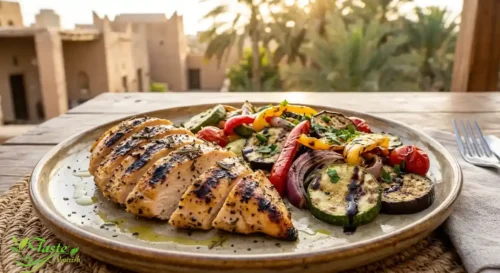
Few foods show up on more dinner plates than grilled chicken. It’s the default order at restaurants, the go-to meal-prep protein, and the centerpiece of backyard cookouts all summer long. But how much do you actually know about what’s on your plate?
This guide breaks down the nutrition, the science, the risks, and the practical grilling know-how — all in one place. Whether you’re grilling for weight management, muscle building, or just because it tastes good, you’ll walk away knowing exactly what you’re eating and how to cook it well.
Grilled Chicken Nutrition Facts
Chicken breast is one of the most nutrient-dense, low-fat protein sources widely available, which is a big reason it shows up in so many fitness and weight-management plans. Grilling doesn’t add meaningful calories the way frying does, since it typically requires little to no additional oil.
According to USDA, cooked, boneless, skinless chicken breast provides roughly 165 calories and about 31 grams of protein per 100-gram serving. That’s a lot of protein for relatively few calories, which explains chicken breast’s reputation as a lean-eating staple.
Calories, Protein, and Macros at a Glance
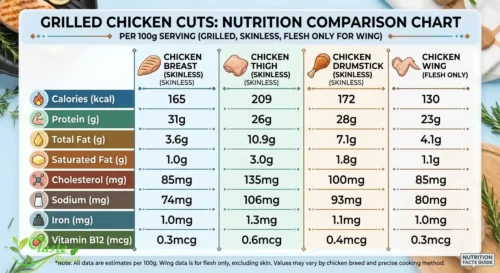
Here’s how a standard 3.5-ounce (100g) serving of grilled, skinless chicken compares across common cuts:
Cut (skinless, cooked)
Calories
Protein
Fat
Carbs
Chicken breast
~165 kcal
~31g
~3.6g
0g
Chicken thigh
~209 kcal
~26g
~10.9g
0g
Drumstick
~172 kcal
~28g
~5.7g
0g
Wing
~203 kcal
~30g
~8.1g
0g
Breast meat is the leanest option by a clear margin, while thigh meat carries more fat but also more flavor and moisture, which some cooks prefer for grilling since it’s more forgiving of slightly longer cook times.
Vitamins and Minerals Worth Knowing
Grilled chicken isn’t just about protein. It also delivers meaningful amounts of:
Vitamin B6 and niacin — support energy metabolism
Phosphorus — important for bone health
Selenium — involved in immune function and antioxidant activity
Choline — plays a role in liver and brain function
None of these nutrients make chicken a “superfood” on their own, but together they add real value to a meal that’s already doing a lot of nutritional heavy lifting through protein alone.
Potential Health Benefits of Grilled Chicken
Grilled chicken’s biggest advantage is simple: it delivers a lot of high-quality protein without much saturated fat, especially when the skin is removed before or after cooking. That combination is why it shows up so often in weight-management and muscle-building diets.
It’s worth being precise about what the evidence actually supports here. Chicken may help people meet protein goals and manage weight when it replaces higher-fat meats, but it isn’t a cure-all, and its benefits depend heavily on portion size, preparation method, and what else is on the plate.
Muscle Maintenance and Weight Management
Protein plays a central role in preserving lean muscle mass, especially during weight loss or as people age. Grilled chicken breast, being both low in fat and high in complete protein, is a practical way to hit daily protein targets without a large calorie cost.
It also tends to be filling. Protein is generally more satiating than carbohydrates or fat gram-for-gram, so a grilled chicken meal can help curb between-meal snacking for some people. That’s not a guaranteed effect for everyone, but it’s a commonly reported experience among people using chicken as a diet staple.
A Heart-Conscious Protein Choice
The American Heart Association recommends including lean proteins such as skinless poultry as part of a heart-healthy eating pattern, and grilling is listed among the preferred cooking methods over frying. This isn’t a small distinction — the cooking method genuinely changes the fat content of the final dish.
The organization specifically suggests choosing nonfried poultry without the skin, capped at around 5.5 ounces of cooked chicken per day. That’s roughly half a chicken breast or a leg-and-thigh piece without the skin, which is a useful mental benchmark for portioning.
Pro Tip: Removing the skin before grilling — rather than after — reduces the amount of rendered fat that gets reabsorbed into the meat during cooking.
Risks and Who Should Be Cautious
Grilled chicken is generally considered a safe, nutritious food, but two real risk categories deserve honest attention: chemical compounds formed during high-heat cooking, and bacterial contamination from improper handling. Neither risk is a reason to avoid grilled chicken entirely, but both are worth understanding.
The HCA/PAH Question
When muscle meat is cooked at high temperatures — including grilling — two classes of chemical compounds can form: heterocyclic amines (HCAs) and polycyclic aromatic hydrocarbons (PAHs). According to the National Cancer Institute, these compounds form when meat is cooked using high-temperature methods such as pan-frying or grilling directly over an open flame, and laboratory studies have found them to be mutagenic, meaning they can cause DNA changes that may increase cancer risk.
It’s important to add nuance here rather than alarm. Exposure to high levels of HCAs and PAHs has been shown to cause cancer in animal studies, but whether this exposure causes cancer in humans is still unclear. Human data comes mostly from observational studies linking frequent consumption of well-done or charred meat with modestly elevated cancer risk in some populations, not from controlled trials proving causation.
The practical response isn’t to give up grilling — it’s to grill smarter:
Avoid charring meat or exposing it directly to open flame for extended periods
Marinate chicken beforehand, since some research suggests marinades may reduce HCA formation
Flip meat frequently instead of leaving it on one side
Trim excess fat to reduce flare-ups that create PAH-laden smoke
Avoid eating heavily blackened portions
Foodborne Illness Risk From Undercooking
This is the more immediate and well-documented risk. Per the CDC, raw chicken can be contaminated with Campylobacter, Salmonella, or Clostridium perfringens, and eating undercooked chicken — or food cross-contaminated by raw chicken juices — can cause food poisoning.
CDC estimates that Salmonella causes more foodborne illnesses in the U.S. than any other bacteria, and chicken is a major source, with roughly 1 million people getting sick from contaminated poultry every year.
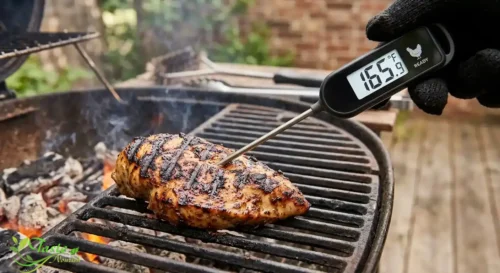
The fix is straightforward: cook chicken to a safe internal temperature and handle it correctly beforehand. USDA guidance calls for cooking all poultry to a minimum internal temperature of 165°F, measured with a food thermometer, before removing it from the heat source. Color and texture are not reliable indicators of doneness — a thermometer is the only accurate method.
Splashing water spreads bacteria around the sink and counters
Use separate cutting boards
Prevents cross-contamination with produce or ready-to-eat food
Refrigerate leftovers within 2 hours
Slows bacterial regrowth
People with weakened immune systems, young children, pregnant women, and older adults face higher risk from undercooked poultry and should be especially strict about hitting 165°F every time.
What Is Grilled Chicken, Exactly?
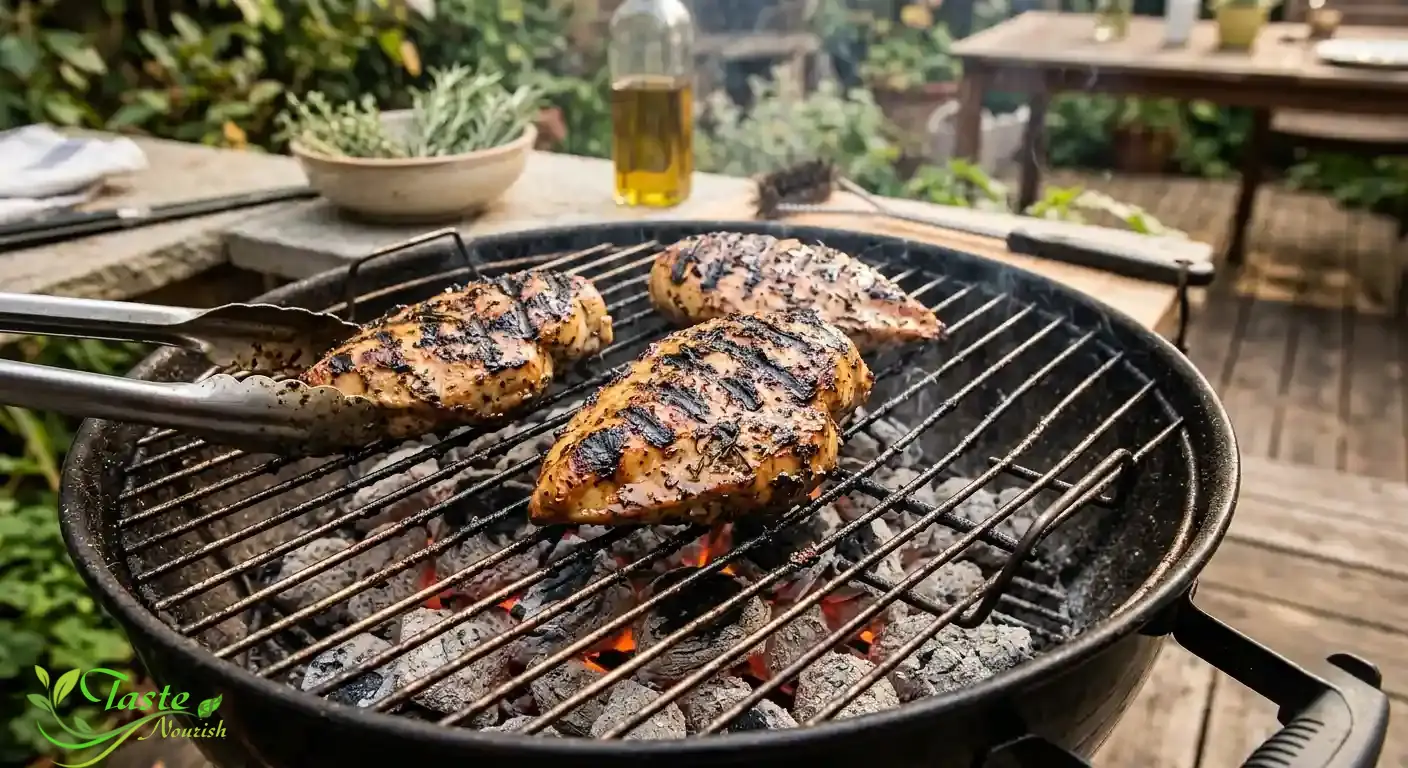
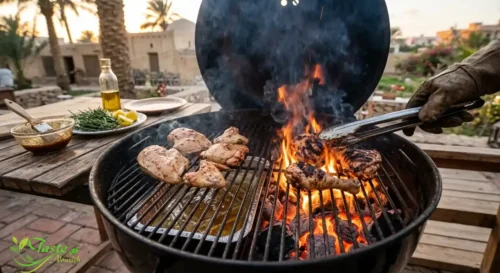
Grilled chicken is simply chicken — breast, thigh, drumstick, or whole bird — cooked over direct or indirect heat from a flame, charcoal bed, or heated grate. The dry, high heat sears the exterior while the inside cooks through, creating that signature contrast between a slightly charred crust and juicy meat underneath.
It sounds simple because it is. But the method matters. Grilling is fundamentally different from boiling, baking, or frying because it exposes the meat directly to intense, often uneven heat. That’s part of why grilled chicken tastes so distinct, and it’s also why cooking technique has a real effect on both flavor and food safety.
A Brief Origin Story
Cooking meat over open flame is about as old as cooking itself. Long before backyard grills and propane tanks, humans were roasting birds over fire pits simply because it was the fastest way to make raw meat edible and safe.
Modern grilling culture, though, is a patchwork of traditions. Think of Latin American pollo a la brasa, Southeast Asian satay skewers, Southern American barbecue, and Mediterranean spit-roasted chicken. Each region developed its own marinades, rubs, and heat techniques, but the underlying idea never changed: fire plus chicken equals dinner.
Today’s grilled chicken recipes are really just modern remixes of a method that’s been around for thousands of years.
Why Grilled Chicken Tastes the Way It Does
That smoky, slightly charred flavor comes from a chemical process called the Maillard reaction, where proteins and sugars on the meat’s surface brown under high heat. It’s the same reaction responsible for a seared steak crust or toasted bread.
Grilling also causes some fat to render and drip away, which is part of why grilled chicken often tastes leaner and lighter than fried or pan-seared versions. Smoke itself adds another flavor layer, especially with charcoal or wood chips, giving grilled chicken a taste that’s genuinely hard to replicate indoors.
Key Takeaway:Grilled chicken’s flavor comes from browning (Maillard reaction), rendered fat, and smoke exposure — not from any single ingredient or seasoning.
Buying and Storing Chicken for the Grill
Good grilled chicken starts before it ever touches the grate. The quality of the raw chicken you buy, and how you store it beforehand, has a direct effect on both flavor and safety.
What to Look for at the Store
Fresh chicken should look plump and slightly pink or off-white, never gray or dull. The packaging should be cold to the touch and free of excess liquid pooling at the bottom, which can indicate temperature abuse during transport or storage.
A few practical buying habits go a long way:
Check the sell-by date, but also trust your senses — off smells mean toss it
Choose skin-on cuts if you plan to grill low and slow, since the skin protects moisture
Buy boneless, skinless breasts for faster, more even grilling
Bag raw chicken separately at checkout to avoid contaminating other groceries
Storage and Reheating Guidelines
Raw chicken should go into the refrigerator immediately and be cooked within one to two days, or frozen if you’re not using it soon. Once grilled, leftovers keep well for three to four days refrigerated, or up to four months frozen without major quality loss.
Reheating grilled chicken properly matters just as much as the initial cook. Bring leftovers back up to 165°F internally, whether you’re using an oven, skillet, or microwave, and add a splash of broth or water to prevent the meat from drying out during reheating.
How to Grill Chicken Well
Technique separates rubbery, bland grilled chicken from something genuinely craveable. The good news is that most of what makes grilled chicken great comes down to a handful of controllable variables: seasoning, heat management, and timing.
Marinating and Seasoning Basics
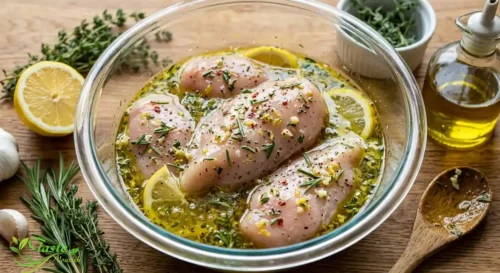
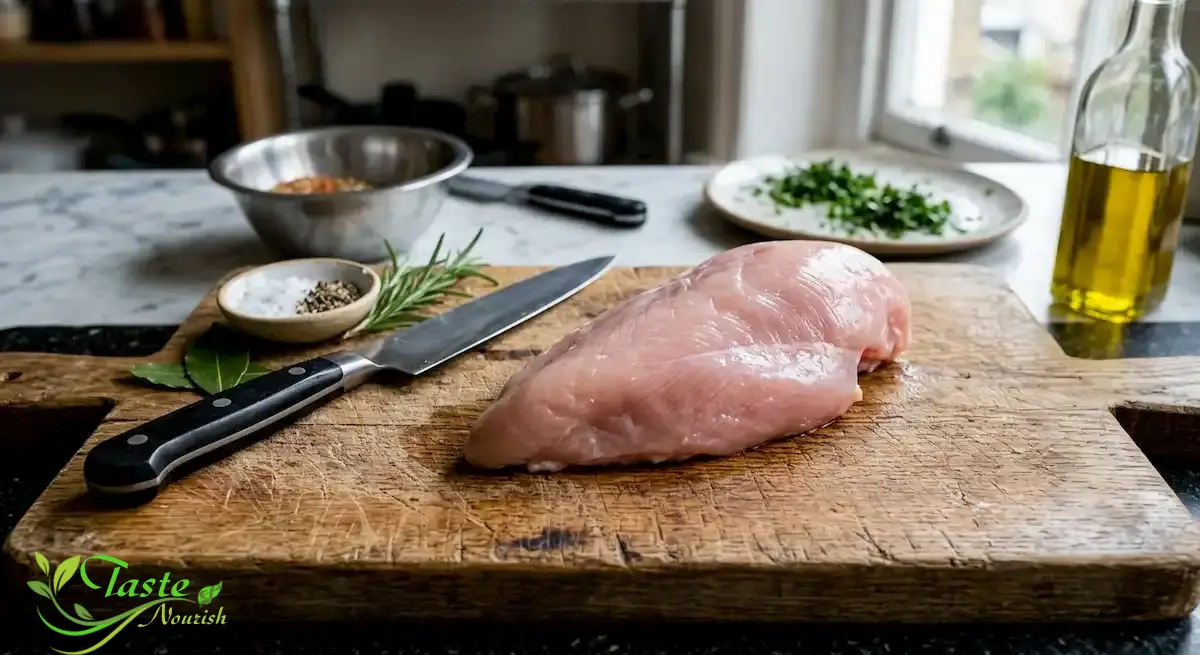
Marinades do more than add flavor. Acidic ingredients like lemon juice, vinegar, or yogurt can help tenderize the meat, while oil helps distribute fat-soluble flavor compounds and can reduce sticking on the grill. A basic marinade ratio — roughly three parts oil to one part acid, plus herbs and aromatics — works for almost any cut.
Dry rubs are a simpler alternative when you’re short on time. A mix of salt, pepper, paprika, garlic powder, and a touch of sugar creates a solid crust without needing hours of prep. Either way, season generously — chicken breast in particular is bland on its own and needs real seasoning to shine.
Pro Tip: Salt chicken at least 30 minutes before grilling, or the night before if possible. This gives the salt time to penetrate the meat rather than just sitting on the surface.
Grilling Methods Compared
Not all grilling setups behave the same way, and picking the right one for your cut matters.
Method
Best For
Heat Style
Notes
Direct gas grilling
Thin cutlets, boneless breasts
High, even heat
Fast but easy to overcook
Charcoal grilling
Bone-in thighs, whole cuts
Smoky, variable
Adds deeper flavor, needs monitoring
Indirect/two-zone grilling
Bone-in, larger pieces
Mixed high/low
Reduces charring risk, more forgiving
Grill pan (indoor)
Small batches, year-round
Direct, controlled
No smoke flavor but consistent results
Two-zone grilling — searing over direct heat, then finishing over indirect heat — is often the most reliable method for beginners, since it reduces the chance of a charred exterior with an undercooked center.
Common Myths About Grilled Chicken
A lot of grilling advice floating around isn’t quite accurate. Here are a few myths worth clearing up:
“Pink chicken always means it’s undercooked.” Not necessarily — pink coloring can persist even at safe temperatures due to natural pigments, especially in chicken that was previously frozen. Temperature, not color, is the real test.
“Washing raw chicken makes it safer.” It does the opposite, since splashing water can spread bacteria onto surrounding surfaces.
“Marinating for hours makes chicken proportionally more tender.” Beyond a certain point, acidic marinades can actually start breaking down the meat’s texture, making it mushy rather than tender.
“Grilled chicken is always healthier than baked chicken.” Nutritionally, the two are very similar; the real difference comes down to added fats, marinades, and sauces, not the cooking method itself.
“You should press down on grilling chicken to cook it faster.” This just squeezes out moisture, leaving the meat drier — patience beats pressure here.
Conclusion
Grilled chicken earns its popularity honestly. It’s a lean, versatile, protein-rich food that fits into nearly any eating pattern, from muscle-building diets to heart-conscious meal plans. The nutritional upside is real, but so are the risks — undercooking and excessive charring both carry consequences worth taking seriously.
The good news is that none of this is complicated to manage. Buy quality chicken, season it well, cook it to 165°F with a thermometer instead of guesswork, and avoid letting it blacken over open flame. Do that consistently, and grilled chicken remains exactly what it’s always been: simple, satisfying, and good for you.
Grilled Chicken FAQs
Is grilled chicken healthier than fried chicken?
Generally, yes. Grilling requires little to no added oil and allows some fat to render away during cooking, while frying adds significant fat and calories through the cooking oil itself.
What internal temperature should grilled chicken reach?
All poultry should reach a minimum internal temperature of 165°F, verified with a food thermometer inserted into the thickest part of the meat, away from bone.
Does marinating chicken reduce cancer-causing compounds from grilling?
Some research suggests marinating may help reduce HCA formation during high-heat cooking, though it isn’t a guaranteed fix and shouldn’t replace basic precautions like avoiding charring.
Can I eat grilled chicken every day?
Chicken can be part of a daily eating pattern for many people, but variety matters for overall nutrition, and portion control — roughly 3 to 5.5 ounces per day per general heart-health guidance — is worth keeping in mind.
Why does my grilled chicken always turn out dry?
Overcooking is the most common cause. Pulling chicken breast off the grill right at 165°F, rather than well beyond it, along with a short rest period afterward, usually solves the problem.
A simple, juicy grilled chicken breast recipe using a basic oil-and-acid marinade, seasoned generously and cooked with the two-zone grilling method for a safe, perfectly grilled result every time.
Ingredients
4 boneless, skinless chicken breasts (about 6 oz each)
3 tablespoons olive oil
1 tablespoon lemon juice or vinegar
2 cloves garlic, minced
1 teaspoon paprika
1 teaspoon salt
1/2 teaspoon black pepper
1/2 teaspoon dried oregano
Directions
Whisk together olive oil, lemon juice, garlic, paprika, salt, pepper, and oregano in a bowl.
Coat chicken breasts in the marinade and refrigerate for at least 30 minutes, or up to overnight for deeper flavor.
Preheat the grill to medium-high heat, setting up two zones: one direct heat area and one indirect heat area.
Place chicken breasts over direct heat and sear for 2 to 3 minutes per side to develop grill marks.
Move chicken to the indirect heat zone and continue cooking until the internal temperature reaches 165°F, about 8 to 10 more minutes.
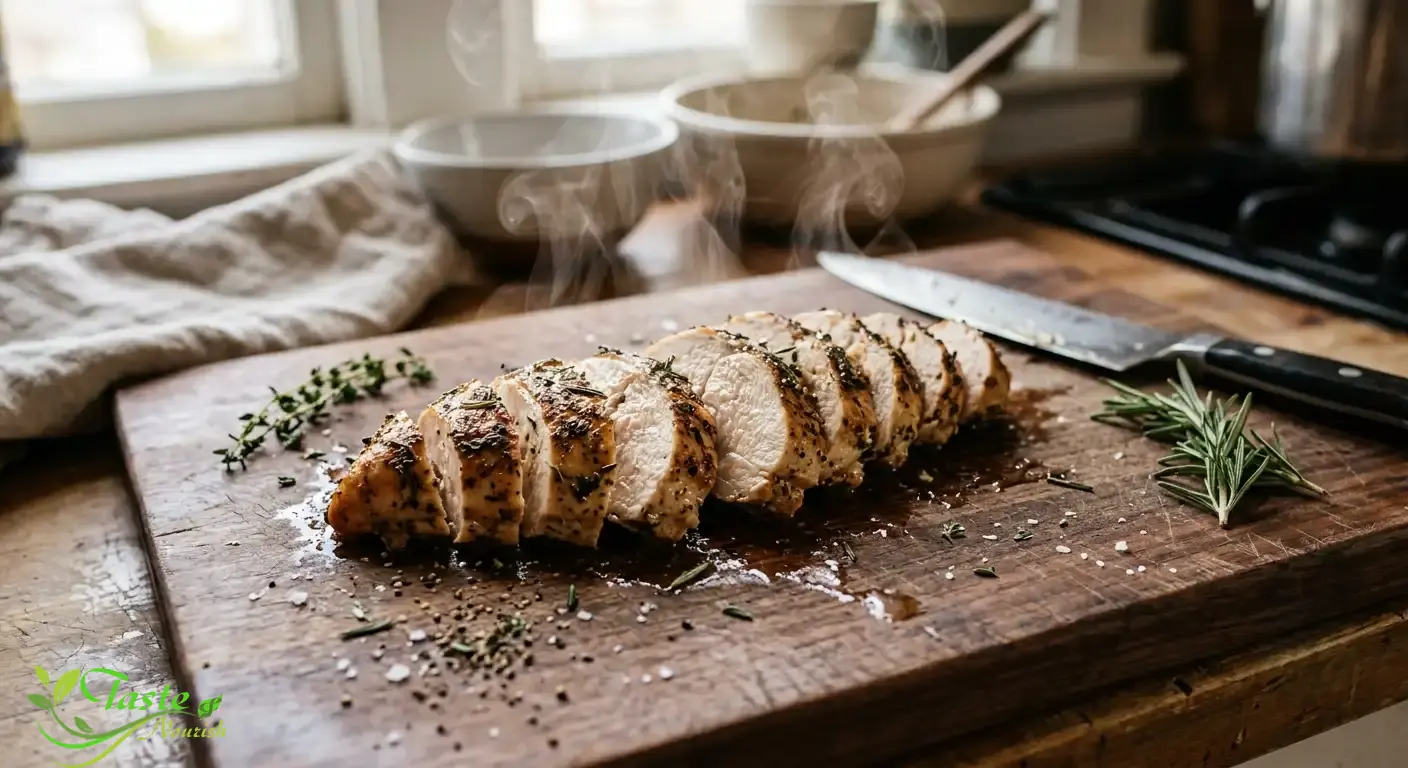
Remove chicken from the grill and let it rest for 5 minutes before slicing and serving.
Hanan Abo Samra is the founder of Taste & Nourish, sharing trustworthy nutrition guidance and recipes drawn from 20+ years of hands-on cooking experience. When she's not developing new recipes, Hanan is researching the science behind everyday ingredients to bring readers practical, evidence-based guidance for a healthier lifestyle.