Few ingredients earn a permanent spot on the weekly grocery list quite like chicken. It soaks up marinades, plays nicely with almost any cuisine, and turns a rushed Tuesday night into something that actually tastes like dinner. Whether you’re trying to eat more protein, feed a picky household, or just get food on the table without much fuss, chicken recipes are usually the answer.
This guide walks through the cuts, the nutrition, the mistakes almost everyone makes, and one reliable recipe you can lean on when you don’t feel like thinking too hard about what’s for dinner.
Key Takeaways
Chicken breast, thighs, drumsticks, and ground chicken all cook differently — matching the cut to the method matters more than the recipe itself.
Cooked chicken is safe once it hits 165°F internally, regardless of color or cooking method.
Cooked chicken keeps for 3 to 4 days in the fridge; after that, freeze it or toss it.
Skinless chicken breast is one of the leanest, most protein-dense foods available, but chicken thighs are more forgiving for beginner cooks.
Recipe: Garlic Herb Baked Chicken Breast
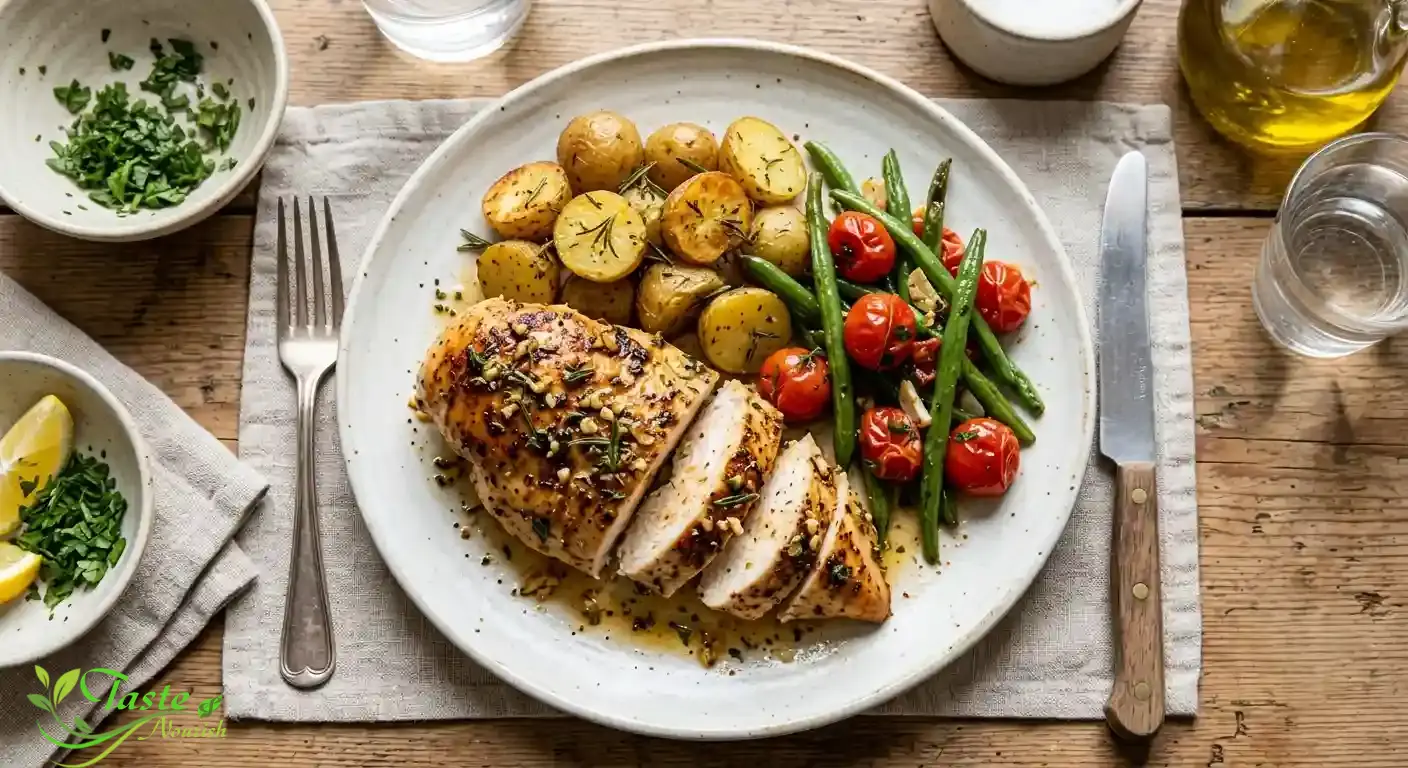
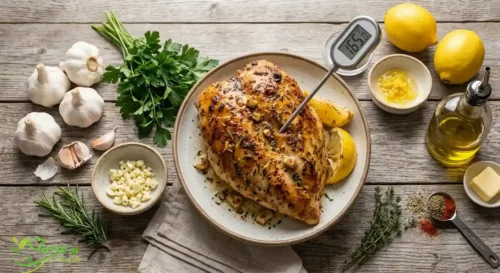
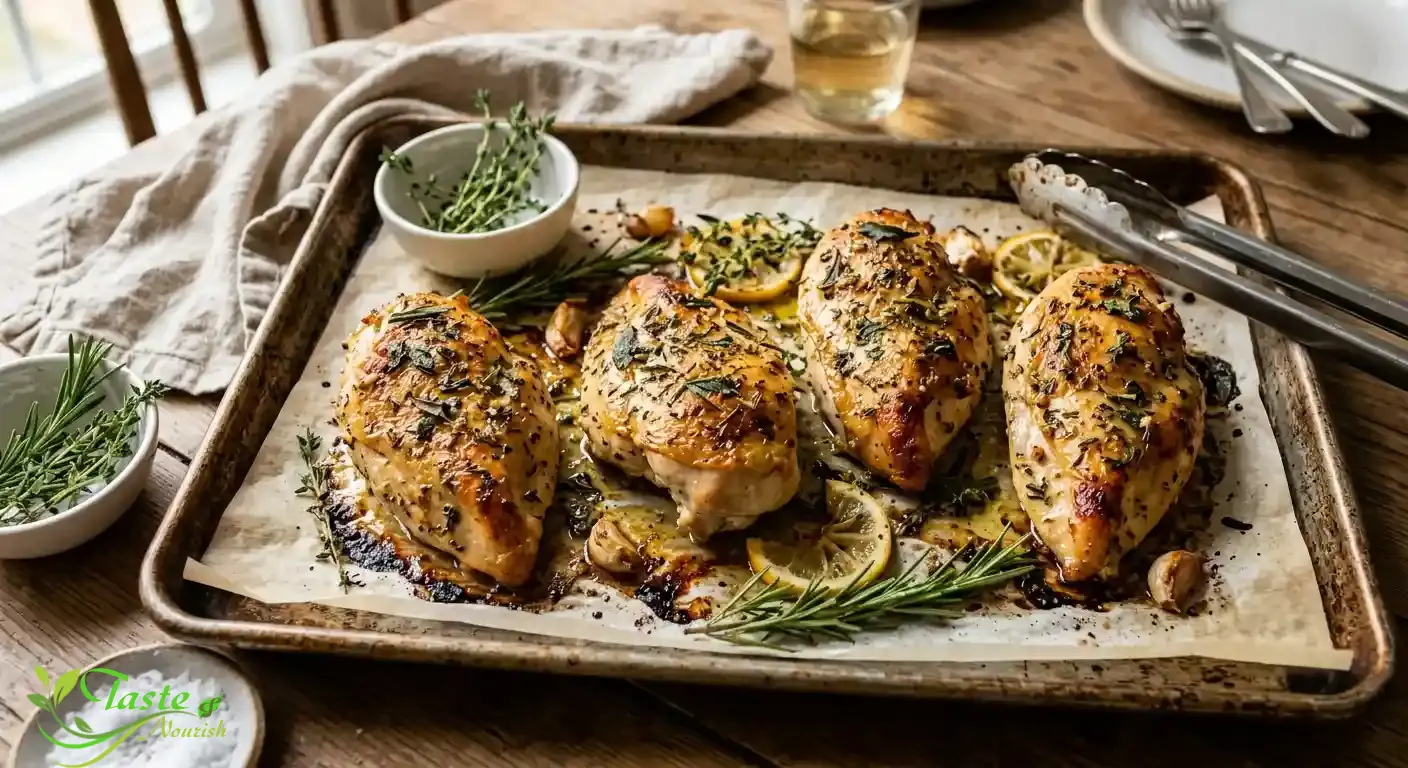
This is the kind of recipe worth memorizing: a simple garlic-and-herb marinade, a hot oven, and a meat thermometer. It works for a quiet dinner for two or scaled up for meal prep, and it reheats well for lunches throughout the week.
2 tablespoons unsalted butter, melted (optional, for basting)
Equipment: baking dish or rimmed sheet pan, mixing bowl and whisk, tongs, and an instant-read meat thermometer (non-negotiable if you want consistently juicy results).
Step-by-Step Instructions
Preheat the oven to 400°F (204°C) and pat the chicken breasts dry with paper towels so the marinade clings better and the surface browns instead of steaming.
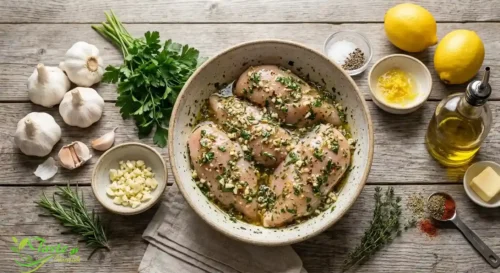
In a mixing bowl, whisk together the olive oil, garlic, rosemary, thyme, paprika, salt, pepper, lemon juice, and lemon zest.
Coat the chicken breasts in the marinade and let them sit for 15 to 20 minutes at room temperature, or up to 4 hours covered in the refrigerator for deeper flavor.
Arrange the chicken in a single layer in the baking dish and pour any remaining marinade over the top.
Bake for 20 to 25 minutes, checking with a meat thermometer at the thickest part of the breast. The FSIS recommends cooking all cuts of chicken to a safe minimum internal temperature of 165°F, and that’s the number to look for, not the color of the meat (USDA FSIS).
Let the chicken rest for 5 minutes before slicing; the internal temperature will continue climbing slightly during this time and the juices redistribute instead of running out onto the cutting board.
Brush with melted butter just before serving if you’d like a richer finish, then serve with the pan juices spooned over the top.
💡 Pro Tip: If your breasts are uneven in thickness, pound the thicker end flat before marinating. It’s a small step that prevents the classic problem of a dry outer edge next to an undercooked center.
Know Your Chicken Cuts Before You Cook
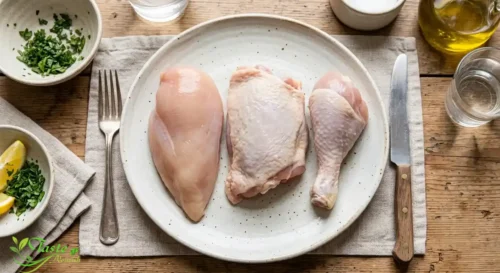
Not all chicken is created equal, and most recipe failures trace back to using the wrong cut for the wrong method. Breast meat, thigh meat, and ground chicken behave very differently in a hot pan or oven, so it helps to know what you’re working with before you start following any recipe blindly.
Chicken Breasts
Chicken breast is the leanest cut on the bird, which makes it a favorite for high-protein, lower-fat meals, but that same leanness means it dries out fast if it’s overcooked even slightly. Breasts cook best with quick, high-heat methods like grilling, pan-searing, or baking at a moderate oven temperature, and they benefit enormously from a marinade or brine since there’s little fat to keep them moist on their own.
Pounding breasts to an even thickness before cooking is one of the simplest fixes for uneven doneness, since a thick end and a thin end will never finish cooking at the same time otherwise.
Chicken Thighs and Drumsticks
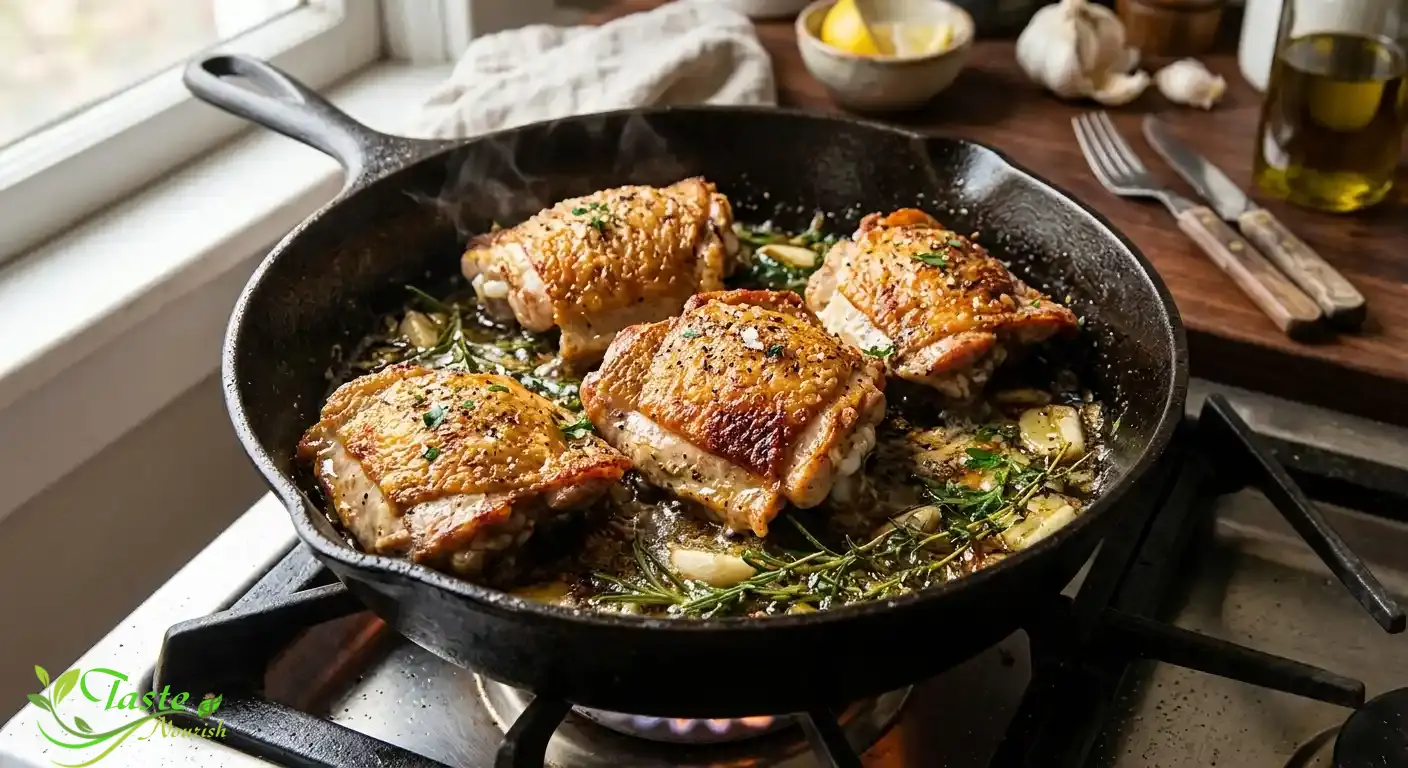
Dark meat cuts like thighs and drumsticks contain more fat and connective tissue, which makes them noticeably more forgiving than breast meat and, for many cooks, more flavorful. Because of that extra fat, thighs hold up well to longer cooking methods such as braising, slow-roasting, or grilling over indirect heat without turning stringy or dry.
They’re a smart pick for beginner cooks or for recipes that need to sit on the stove or in the oven a little longer than planned, since a few extra minutes rarely ruins them the way it would a chicken breast.
Ground Chicken and Tenders
Ground chicken is a lighter substitute for ground beef or turkey in tacos, meatballs, and stir-fries, though it benefits from a bit of added fat or moisture (like a splash of broth or a spoonful of mayonnaise in a meatball mix) since it can turn dry and crumbly on its own.
Chicken tenders, the strip of meat just under the breast, cook even faster than a full breast and are a convenient option for quick stir-fries, kebabs, or breaded cutlets when time is tight.
Cut
Calories (per 100g, cooked)
Protein (g)
Best Cooking Methods
Best For
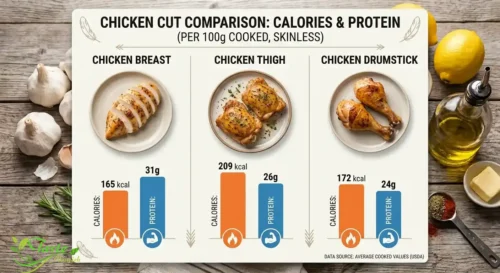
Chicken Breast (skinless)
~165
~31
Baking, grilling, poaching
Meal prep, salads, high-protein meals
Chicken Thigh (skinless)
~209
~26
Braising, roasting, grilling
Curries, stews, sheet-pan dinners
Drumstick
~172
~28
Roasting, grilling, frying
Family dinners, BBQ
Ground Chicken
~189
~24
Sautéing, simmering
Tacos, meatballs, stir-fries
Chicken Nutrition Facts at a Glance
Chicken’s popularity isn’t just about convenience; it’s also genuinely nutrient-dense. A 100-gram serving of cooked, skinless chicken breast delivers around 165 calories and roughly 31 grams of protein, giving it one of the best protein-to-calorie ratios of any widely available food.
That protein density is a big part of why chicken breast shows up so often in high-protein meal plans, weight management diets, and post-workout meals, since it delivers a large amount of usable protein without much accompanying fat.
How Chicken Compares to Red Meat
Chicken and turkey are generally considered healthy protein sources because they carry relatively low levels of saturated fat compared with red meats like beef, lamb, and pork, and they also contain more unsaturated fat, which is associated with better outcomes for heart health, according to Harvard Health Publishing (Harvard Health). That said, how chicken is prepared changes the equation substantially.
Breaded, deep-fried chicken or chicken smothered in cream sauce is a very different nutritional profile than a simply grilled or baked breast, so the cooking method often matters as much as the cut itself.
People managing cholesterol or saturated fat intake generally do better choosing skinless cuts and baking, grilling, or poaching rather than frying.
Nutrition Facts Per Serving
Nutrient
Approximate Amount
Calories
~320 kcal
Protein
~38 g
Fat
~16 g
Carbohydrates
~2 g
Sodium
~480 mg
Values are estimates based on a 6 oz breast prepared with the ingredients above and will vary depending on exact portion size and how much of the oil-based marinade is consumed versus left in the pan.
Pro Tips for Juicy, Flavorful Chicken Every Time
A handful of small habits separate consistently good chicken from the dry, rubbery version most of us have accidentally served at least once. Brining or marinating, even briefly, helps the meat hold onto moisture during cooking, and it’s especially worthwhile for lean breast meat.
Pulling chicken breasts off the heat a few degrees before the 165°F mark and letting carryover cooking finish the job (a technique many professional kitchens rely on) can help preserve juiciness, provided the final resting temperature still reaches the safe threshold.
Resting the meat for at least five minutes before cutting into it is just as important as the cooking itself, since slicing too early lets all those flavorful juices spill out rather than stay in the meat.
Use a meat thermometer every time; visual cues like clear juices or white color are not reliable indicators of doneness.
Pound breasts to an even thickness for uniform cooking.
Let marinated chicken come closer to room temperature before it hits the pan or oven for more even cooking.
Sear dark meat cuts first, then finish low and slow for the best texture.
Common Chicken Recipe Mistakes (and How to Fix Them)
Most disappointing chicken dinners come down to a short list of repeatable mistakes, and nearly all of them are easy to correct once you know what’s causing the problem.
Mistake
Why It Happens
The Fix
Dry, rubbery breast meat
Overcooking past 165°F, or cooking straight from cold
Use a thermometer; let chicken sit at room temp 15–20 min before cooking
Uneven cooking
Breast is thicker on one end than the other
Pound to an even thickness before cooking
Bland flavor
Under-seasoned or marinated too briefly
Salt generously and marinate at least 15–20 minutes, longer for whole cuts
Soggy skin
Skin wasn’t dried before cooking
Pat skin completely dry with paper towels first
Sticking to the pan
Pan wasn’t hot enough or chicken was moved too soon
Preheat the pan fully and let the chicken release naturally before flipping
Easy Substitutions and Recipe Variations
Chicken recipes are some of the most forgiving in the kitchen when it comes to swaps. Boneless thighs can replace chicken breasts in almost any baked or pan-seared recipe, and they’ll actually be more forgiving of a few extra minutes in the oven. Fresh herbs can be swapped one-to-one for dried at roughly a 3-to-1 ratio (three parts fresh to one part dried), and citrus like lime or orange can stand in for lemon depending on the flavor profile you’re after.
For dairy-free versions of creamy chicken dishes, canned coconut milk or a cashew-based cream works well in place of heavy cream, while a plant-based butter substitute handles basting duties just as effectively as the real thing.
Turning this same base recipe into something new is mostly a matter of changing the marinade. Swap the herbs and lemon for soy sauce, ginger, and a touch of honey for an Asian-inspired version, or use cumin, chili powder, and lime for a Tex-Mex spin that works well sliced over rice or tucked into tortillas. Ground chicken can replace ground turkey or beef in most recipes with only a minor adjustment to added fat, since it’s leaner than either option.
Storing, Freezing, and Reheating Chicken Safely
Cooked chicken needs to go into the refrigerator within two hours of cooking, or within one hour if it’s been sitting somewhere warmer than 90°F, such as an outdoor picnic table in summer. Once refrigerated, cooked chicken and poultry dishes are safe to eat for 3 to 4 days, according to FSIS guidance, after which point they should be frozen or discarded rather than risked (USDA FSIS).
Frozen leftovers stay safe indefinitely from a bacterial standpoint, though quality and flavor decline the longer they sit, so using them within 2 to 3 months is a reasonable target for the best results.
When reheating, bring leftover chicken back up to an internal temperature of 165°F, whether that’s in a microwave, oven, or on the stovetop, since reheating is meant to kill off any bacteria that may have developed during storage, not just warm the food through. A splash of broth or a drizzle of olive oil before reheating helps counteract the dryness that naturally comes from a second round of cooking, especially with lean breast meat.
Why Chicken Recipes Are America’s Favorite Weeknight Dinner
Chicken isn’t just popular, it’s the most-eaten animal protein in the country. USDA Economic Research Service data shows per-person availability of broiler meat has been climbing for years and was projected to reach roughly 102.7 pounds in 2025 and 102.8 pounds in 2026, making chicken the single most consumed animal product in the United States (USDA ERS). That’s not an accident.
Chicken costs less per pound than most cuts of beef, cooks faster than a pork shoulder or a brisket, and takes on flavor from nearly any spice cabinet, whether you’re going for Tex-Mex, Thai basil, or a plain roast with lemon and garlic.
There’s also the practical side of things. A family of four can eat well off a couple of pounds of chicken thighs, and leftovers repurpose easily into sandwiches, salads, or a quick soup the next day.
Home cooks also tend to feel more confident with chicken than with pricier cuts of meat, since a slightly overcooked thigh is still edible, even if a $30 ribeye cooked past medium feels like a waste. That forgiving quality, paired with the sheer number of ways to season and cook it, is exactly why chicken recipes dominate weeknight meal plans across the country.
Chicken Recipes for Every Diet and Occasion
The same basic ingredient adapts easily across dietary needs and the kind of occasion you’re cooking for, which is part of why it remains such a dependable pantry staple.
Diet or Occasion
Recipe Idea
Why It Works
High-protein / fitness-focused
Grilled chicken breast with vegetables
Lean, high protein-to-calorie ratio
Keto or low-carb
Chicken thighs in garlic butter sauce
Higher natural fat content, minimal carbs
Family weeknight dinner
Sheet-pan chicken and roasted vegetables
One pan, minimal cleanup, kid-friendly flavors
Meal prep
Baked chicken breast with rice and greens
Reheats well, portions easily into containers
Comfort food / gatherings
Slow-roasted whole chicken
Feeds a crowd, minimal hands-on effort
Food Safety Rules Every Home Cook Should Know
Raw chicken carries a real risk of foodborne illness if it’s handled or cooked incorrectly, and the CDC estimates that Salmonella alone causes more foodborne illness in the United States than any other bacteria, with chicken as a major contributor, sickening around 1 million people every year (CDC).
The core rules are simple but worth repeating: keep raw chicken separate from other groceries and foods in the refrigerator, wash your hands and any surfaces that touch raw chicken thoroughly, and never rely on color or texture alone to judge whether chicken is done.
A few habits make the biggest difference in a home kitchen. Store raw chicken on the bottom shelf of the refrigerator so its juices can’t drip onto other food, and use a dedicated cutting board for raw meat if possible. Skip washing raw chicken under the tap before cooking, since doing so can actually spread bacteria around the sink and countertops rather than remove it.
Most importantly, always confirm doneness with a food thermometer rather than guessing, since undercooked chicken can look identical to safely cooked chicken in some cases.
Conclusion
Good chicken recipes don’t need to be complicated to be reliable. Understanding the difference between a lean breast and a forgiving thigh, keeping a meat thermometer within reach, and following a few basic food safety habits will do more for your cooking than any single recipe ever could. Once the marinade-and-bake method from this guide becomes second nature, it’s easy to build dozens of variations around it, whether that means a quick weeknight dinner, a batch of meal-prep containers, or something a little more special for guests.
Chicken earns its place at the center of so many dinner tables because it rewards a little bit of care with a lot of flexibility.
Chicken Recipes FAQs
Q1. What temperature should chicken be cooked to?
All cuts of chicken, including breasts, thighs, wings, and ground chicken, should reach a minimum internal temperature of 165°F as measured with a food thermometer, regardless of the cooking method used.
Q2. Is chicken healthier than beef?
Chicken and turkey generally contain less saturated fat than red meats like beef, lamb, and pork, which is one reason they’re often recommended as a leaner protein choice, though preparation method matters just as much as the cut itself.
Q3. How long does cooked chicken last in the fridge?
Cooked chicken is safe to eat for 3 to 4 days when stored in the refrigerator at 40°F or below in a sealed, airtight container.
Q4. Can chicken be pink and still safe to eat?
Yes. Chicken can appear slightly pink even after reaching a safe internal temperature of 165°F, so color is not a reliable way to judge doneness; a food thermometer is the only accurate method.
Q5. What’s the best chicken cut for beginners?
Chicken thighs are generally more forgiving than breasts because their higher fat content makes them harder to overcook, which makes them a good starting point for less experienced cooks.
Chicken Recipes Made Easy: Cuts, Tips & a Juicy Recipe
Recipe by Hanan Abo Samra
0.0 from 0 votes
Servings
4
servings
Prep time
10
minutes
Cooking time
25
minutes
Calories
320
kcal
A simple, foolproof garlic herb baked chicken breast recipe using a quick marinade and a hot oven — ready in 35 minutes and perfect for weeknight dinners or meal prep.
Ingredients
4 boneless, skinless chicken breasts (about 6 oz each)
Hanan Abo Samra is the founder of Taste & Nourish, sharing trustworthy nutrition guidance and recipes drawn from 20+ years of hands-on cooking experience. When she's not developing new recipes, Hanan is researching the science behind everyday ingredients to bring readers practical, evidence-based guidance for a healthier lifestyle.