If you’ve been sticking to chicken breast out of habit, you’re missing out on the cut that professional cooks actually reach for most. Chicken thighs are more forgiving, more flavorful, and harder to dry out than almost any other part of the bird. They handle high heat, low heat, marinades, and neglect with equal grace.
This guide walks through everything you need to cook chicken thighs with confidence: how to pick the right cut, the cooking methods that work best, ten recipe ideas to get you started, and the food-safety basics that keep dinner both delicious and safe.
Key takeaway: Chicken thighs are a versatile, budget-friendly, protein-rich cut that stays juicy across nearly every cooking method — pan-searing, roasting, grilling, braising, and air frying — making them one of the most reliable proteins for weeknight cooking.
Why Chicken Thighs Deserve a Permanent Spot in Your Kitchen
Chicken thighs come from the upper leg of the bird, a muscle that gets regular use. That extra work builds more connective tissue and intramuscular fat than you’ll find in the breast. The payoff is a cut that stays moist even if you cook it a few minutes too long — something breast meat rarely forgives.
Price is another reason thighs show up so often in budget-conscious kitchens. Bone-in, skin-on thighs typically cost noticeably less per pound than boneless breasts, and the flavor payoff, if anything, runs the other direction. Home cooks looking to stretch a grocery budget without sacrificing taste tend to gravitate toward this cut for exactly that reason.
Dark Meat vs. White Meat: What Actually Sets Them Apart
The color difference between thighs and breasts comes down to myoglobin, the oxygen-storing protein found in muscles that work harder. Thighs, drumsticks, and wings all qualify as dark meat; breast and tenderloin are white meat. Dark meat carries more fat and slightly more calories, but it also holds onto moisture during cooking far better than lean white meat does.
That fat content isn’t purely a downside. It’s what makes thighs so tolerant of braising, slow roasting, and grilling — techniques that would leave a chicken breast tough and stringy. If you’ve ever wondered why restaurant chicken tastes so much juicier than what you make at home, thighs (and proper technique) are usually part of the answer.
Nutrition Snapshot: Calories, Protein, and Fat in Chicken Thighs
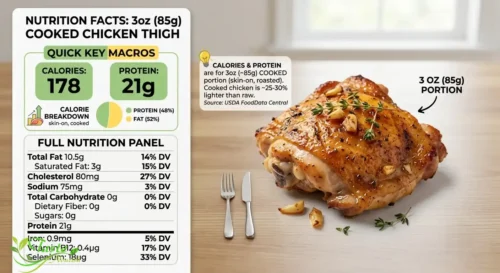
A skinless, cooked chicken thigh is a solid source of complete protein without being especially high in calories. According to USDA data, a 3-ounce cooked, skinless serving of chicken thigh contains 178 calories and provides 22.1 grams of protein, along with 9.3 grams of total fat, including 2.5 grams of saturated fat, and no carbohydrates or sugar.
Poultry, including chicken thighs, falls under the Protein Foods Group in USDA dietary guidance, and most adults need about 5 to 6½ ounce-equivalents from this group daily, with one ounce of cooked poultry counting as one ounce-equivalent.
Choosing skinless cuts and trimming visible fat are standard ways to keep saturated fat intake in check while still getting the protein and micronutrients this cut provides, including iron, zinc, and B vitamins.
Nutrient (per 3 oz cooked, skinless)
Amount
Calories
178
Protein
22.1 g
Total fat
9.3 g
Saturated fat
2.5 g
Carbohydrates
0 g
Iron
1.10 mg
Zinc
2.0 mg
Pro tip: If you’re watching saturated fat, remove the skin after cooking rather than before. Cooking skin-on keeps the meat moist, and you can peel it off right before serving without losing much of that benefit.
Bone-In vs. Boneless, Skin-On vs. Skinless: Choosing the Right Cut
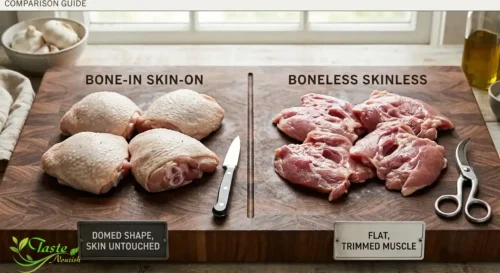
Not every recipe calls for the same cut, and knowing the trade-offs saves you a trip back to the store. The four common options — bone-in skin-on, bone-in skinless, boneless skin-on, and boneless skinless — each behave a little differently under heat.
Cut
Best for
Cook time
Flavor/texture notes
Bone-in, skin-on
Roasting, grilling, braising
Longer
Most flavorful, crispiest skin, most forgiving
Bone-in, skinless
Braises, soups, stews
Longer
Rich flavor without crispy skin
Boneless, skin-on
Pan-searing
Medium
Crispy skin, faster than bone-in
Boneless, skinless
Weeknight meals, meal prep
Shortest
Fastest-cooking, most versatile for chopping/dicing
When to Reach for Bone-In, Skin-On Thighs
Bone-in thighs are the most forgiving cut in the poultry case. The bone insulates the meat as it cooks, slowing heat transfer and reducing the odds of overcooking. Skin-on versions add another layer of protection, plus the payoff of crackly, rendered skin if you sear or roast them correctly.
This combination is the one to choose for oven-roasting, grilling, and braises where the chicken cooks for 25 minutes or longer. The extra cooking time that bone-in cuts require works in your favor here, giving connective tissue time to break down into something closer to gelatin, which is part of why braised thighs taste so rich.
When Boneless, Skinless Makes More Sense
Boneless, skinless thighs earn their popularity through sheer convenience. They cook faster, they’re easier to dice or shred, and there’s no bone to navigate at the dinner table. For stir-fries, tacos, grain bowls, and quick skillet dinners, this is almost always the right call.
The trade-off is a slightly narrower margin for error. Without bone or skin to buffer the heat, boneless skinless thighs can overcook faster than their bone-in counterparts, though they’re still considerably more forgiving than chicken breast. A meat thermometer takes the guesswork out of it entirely.
Essential Cooking Methods for Chicken Thighs
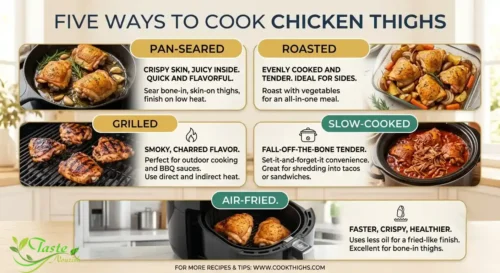
Chicken thighs adapt to nearly every cooking method in a home kitchen, which is part of what makes them such a reliable weeknight staple. The method you choose mostly comes down to how much time you have and what texture you’re after.
Pan-Searing and Skillet Cooking
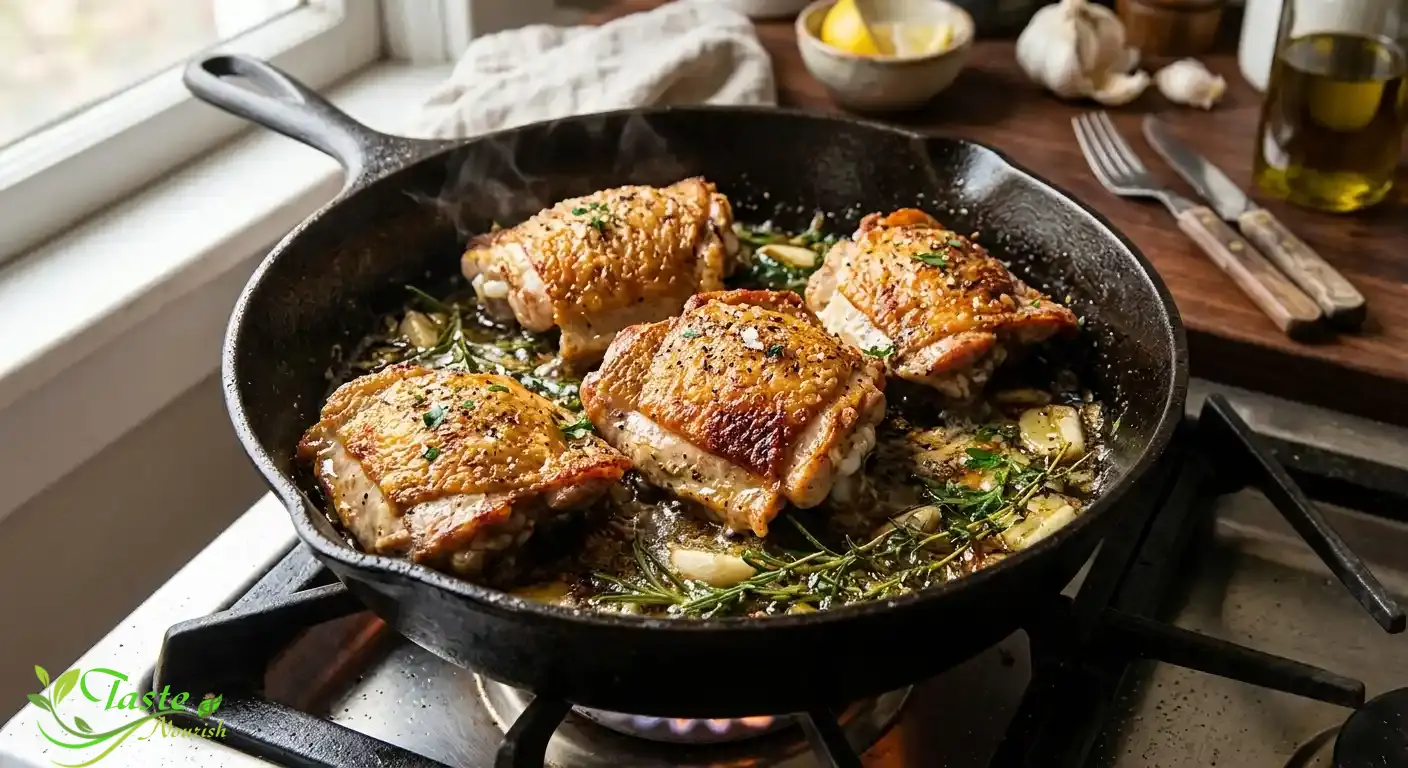
Pan-searing is the fastest route to a restaurant-style result. Starting boneless, skin-on thighs skin-side-down in a cold or barely warmed pan lets the fat render slowly, which is the secret to skin that shatters instead of turning rubbery. Once the skin is deeply golden, a quick flip finishes the meat in just a few more minutes.
This method works especially well for weeknight cooking because most of the time is hands-off. While the skin renders, you can prep a side dish or start a pan sauce with the flavorful browned bits left behind.
Oven-Baking and Roasting
Roasting is the go-to method for cooking multiple thighs at once with minimal supervision. A hot oven, somewhere around 425°F, gives skin-on thighs enough heat to crisp up while the interior cooks through evenly. Bone-in cuts typically need 35 to 45 minutes at that temperature, depending on size.
Sheet-pan dinners lean heavily on this technique, tossing thighs alongside vegetables that roast in the same timeframe. It’s one of the lowest-effort ways to get a complete meal on the table with a single pan to clean.
Grilling
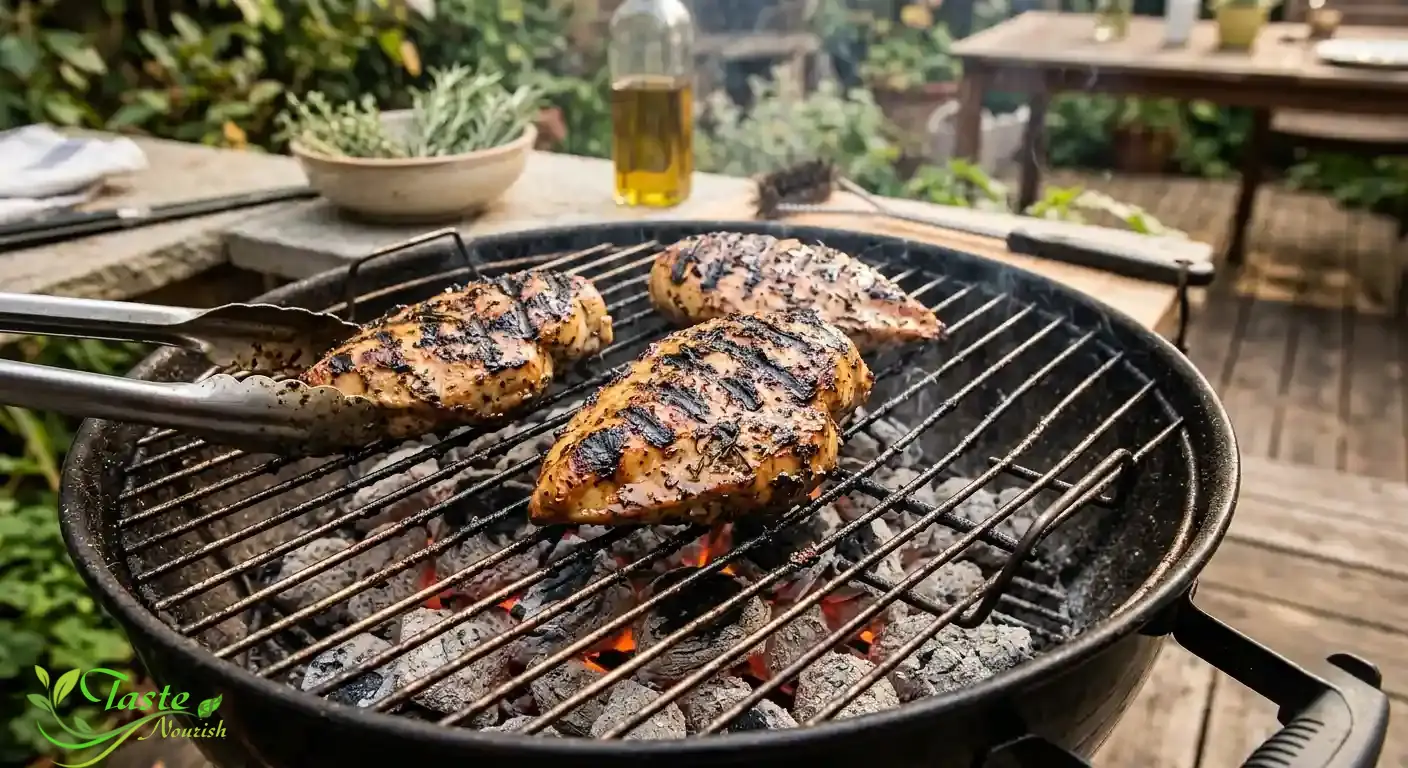
Grilling brings out a smokiness that pan-searing and roasting can’t replicate, and thighs are far more grill-friendly than lean breast meat. The fat content helps them resist flare-up flare-ups and drying out over direct heat, though moving them to indirect heat once they’re browned helps avoid charring before the interior finishes cooking.
Bone-in thighs generally take 30 to 40 minutes over indirect heat, while boneless cuts finish in roughly half that time over direct heat with occasional flipping.
Slow Cooking and Braising
Low, slow heat is where chicken thighs truly shine. Braising in a Dutch oven or slow cooker gives the connective tissue time to fully break down, resulting in meat that shreds effortlessly. This is the method to use for curries, stews, and shredded chicken destined for tacos or sandwiches.
Because thighs hold up so well to extended cooking, this is one of the few chicken preparations where walking away for a few hours actually improves the result rather than ruining it.
Air Frying
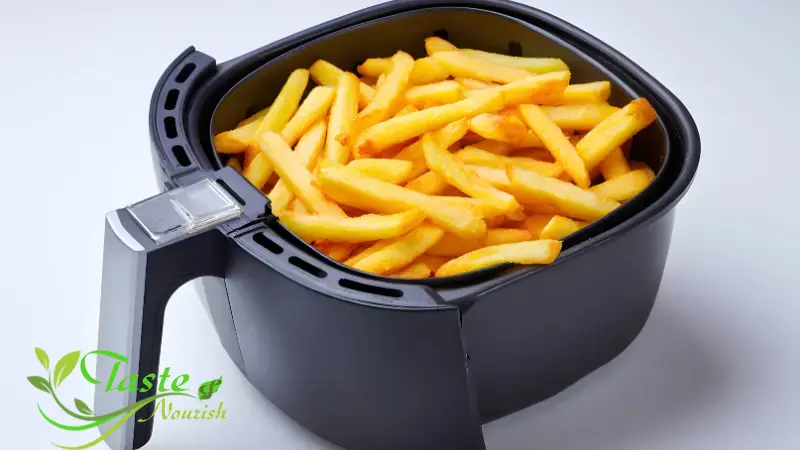
Air fryers have become popular for chicken thighs specifically because they replicate crispy skin without deep-frying. The compact, high-velocity heat circulates around the meat, rendering fat and crisping skin in roughly 20 to 25 minutes for bone-in cuts, faster for boneless.
It’s a strong option for smaller households or anyone looking to cut down on cleanup, since most air fryer baskets need little more than a wipe-down afterward.
10 Standout Chicken Thigh Recipes to Try This Week
These ten ideas cover a range of cooking methods and flavor profiles, so there’s something here whether you’re short on time or cooking for a crowd.
Weeknight-Friendly Recipes
Crispy Pan-Seared Thighs with Pan Sauce — Boneless, skin-on thighs seared until the skin is deeply golden, finished with a quick garlic-butter pan sauce. Ready in about 20 minutes.
Sheet-Pan Chicken Thighs with Root Vegetables — Bone-in thighs roasted alongside carrots, potatoes, and onions on one pan, seasoned simply with olive oil, salt, and herbs.
One-Pot Chicken Thigh Skillet with Rice — Boneless thighs browned, then simmered with rice and broth in the same pan for a hands-off, one-dish dinner.
Global-Inspired Flavors
Chicken Thigh Tikka Masala — Boneless thighs marinated in yogurt and spices, then simmered in a tomato-cream sauce, best served over rice.
Korean Gochujang Chicken Thighs — Bone-in or boneless thighs glazed with a sweet-spicy gochujang sauce and broiled until sticky and caramelized.
Greek Lemon-Oregano Chicken Thighs — Bone-in thighs marinated in lemon juice, garlic, and oregano, then roasted until the skin crisps and the juices run clear.
Coconut Curry Chicken Thighs — Boneless thighs simmered in coconut milk with curry paste, ginger, and vegetables for a rich, one-pot meal.
Low-Carb and Meal-Prep Friendly Options
Baked Chicken Thighs with Garlic and Herbs — A simple, high-protein, low-carb option that reheats well throughout the week.
Grilled Chicken Thigh and Vegetable Skewers — Boneless thigh cubes threaded with bell peppers and onions, ideal for outdoor cooking season.
Shredded Slow Cooker Chicken Thighs — Bone-in thighs braised until fall-apart tender, perfect for tacos, salads, or grain bowls throughout the week.
Food Safety: Cooking Chicken Thighs to the Right Temperature
Color and texture aren’t reliable ways to tell if chicken is done. Chicken needs to reach a safe minimum internal temperature of 165°F as measured with a food thermometer, regardless of whether you’re roasting, grilling, pan-searing, or slow cooking it. Many cooks push thighs slightly higher, into the 170–175°F range, because the extra time helps break down connective tissue for a more tender bite — but 165°F is the temperature at which the meat is confirmed safe to eat.
Thermometer placement matters as much as the number on the display. When cooking poultry parts like thighs, insert the food thermometer into the thickest area, avoiding the bone, since a bone-touching reading can give a falsely high result.
Washing raw poultry before cooking isn’t recommended, since bacteria from raw poultry juices can spread to other foods, utensils, and surfaces through a process called cross-contamination. Rinsing doesn’t remove bacteria — only proper cooking does. Keeping raw chicken and its juices away from other ingredients, and washing anything the raw chicken touched, does more for food safety than rinsing the meat itself.
Cooking method
Approx. time (bone-in)
Approx. time (boneless)
Target internal temp
Pan-sear
N/A (use boneless)
12–15 min
165°F
Oven roast (425°F)
35–45 min
20–25 min
165°F
Grill (indirect)
30–40 min
15–20 min
165°F
Braise/slow cook
4–6 hrs (low)
3–4 hrs (low)
165°F+
Air fry (400°F)
20–25 min
12–15 min
165°F
Common Mistakes That Ruin Chicken Thighs
Even a forgiving cut like chicken thigh can go wrong in a few predictable ways. Knowing what to watch for saves both the meal and the grocery money that went into it.
Overcrowding the pan. Too many pieces at once traps steam instead of allowing a proper sear, leaving skin pale and soggy rather than crisp.
Skipping the pat-dry step. Wet skin doesn’t brown. A few minutes with a paper towel before cooking makes a noticeable difference in crispness.
Cooking cold chicken straight from the fridge. Starting from an even temperature helps the meat cook more evenly; letting thighs sit at room temperature for 15–20 minutes before cooking helps.
Flipping too often. Constant flipping interrupts the browning process. Let the first side develop real color before touching it.
Relying on color instead of a thermometer. Pink near the bone doesn’t always mean undercooked, and pale meat doesn’t always mean it’s safe — only a thermometer reading confirms doneness.
Over-trimming the fat. Removing all visible fat before cooking can leave thighs drier than they need to be; a little rendered fat is part of what keeps this cut moist.
Storage, Reheating, and Meal Prep Tips
Cooked chicken thighs hold up well in the refrigerator, which makes them a solid choice for meal prep. Leftovers can be kept in the refrigerator for 3 to 4 days or frozen for 3 to 4 months. Refrigeration slows bacterial growth but doesn’t stop it, so using leftovers within that window matters more than it might seem.
For best texture, reheat thighs gently. A 300°F oven for about 10–15 minutes keeps the meat from drying out better than a microwave does, though a microwave is the faster option if you’re short on time. Either way, reheated chicken should reach 165°F throughout before serving.
Substitutions and variations: Chicken thighs and drumsticks can generally swap for each other in most recipes, since both are dark meat with similar cook times. Boneless thighs can stand in for chicken breast in stir-fries, tacos, and grain bowls, usually with better results, though cook times may run slightly shorter since thighs are typically thinner. For a leaner substitute, skinless bone-in thighs offer a middle ground between the fattier skin-on cut and leaner breast meat.
Pro tip: Freeze raw chicken thighs in a single layer on a sheet pan before transferring them to a freezer bag. This keeps individual pieces from fusing into one solid block, so you can pull out exactly the number you need.
Conclusion
Chicken thighs earn their place as a kitchen staple because they’re hard to mess up and easy to love. Whether you’re pan-searing for a fast weeknight dinner, slow-braising for something richer, or meal-prepping a batch for the week ahead, this cut rewards a little technique without demanding much fuss. Start with a thermometer, don’t crowd the pan, and let the natural fat in the meat do the work of keeping dinner juicy.
Chicken Thigh FAQs
Are chicken thighs healthier than chicken breast?
Neither cut is strictly “healthier” — they serve different goals. Chicken breast is leaner with fewer calories per ounce, while thighs offer slightly more fat but comparable protein and additional flavor. A 3-ounce cooked, skinless thigh provides 22.1 grams of protein at 178 calories, making it a reasonable fit for most balanced diets when portioned appropriately.
Why are my chicken thighs always tough?
Toughness in thighs usually points to undercooking rather than overcooking. The connective tissue in this cut needs time and heat to break down; pulling thighs off the heat too early, before that tissue softens, is the most common cause of a chewy result.
Can I cook chicken thighs from frozen?
It’s not recommended for most stovetop or grilling methods, since the outside can overcook before the inside thaws. Oven-baking or slow-cooking from frozen is possible with extended time, but for the most even results, thawing in the refrigerator first is the safer, more reliable approach.
What’s the best temperature to cook chicken thighs to?
165°F is the safe minimum internal temperature for all poultry, but many cooks prefer thighs closer to 175°F, where the extra time allows connective tissue to break down for a more tender texture.
Do I need to marinate chicken thighs before cooking?
No — thighs cook up flavorful and juicy without a marinade, thanks to their natural fat content. A marinade adds another layer of flavor and can help with browning, but it’s optional rather than essential for this cut.
Hanan Abo Samra is the founder of Taste & Nourish, sharing trustworthy nutrition guidance and recipes drawn from 20+ years of hands-on cooking experience. When she's not developing new recipes, Hanan is researching the science behind everyday ingredients to bring readers practical, evidence-based guidance for a healthier lifestyle.