
Lemon Roasted Broccoli Recipe (Easy, Bright, and Ready in 25 Minutes)
Quick Answer: Lemon Roasted Broccoli Recipe
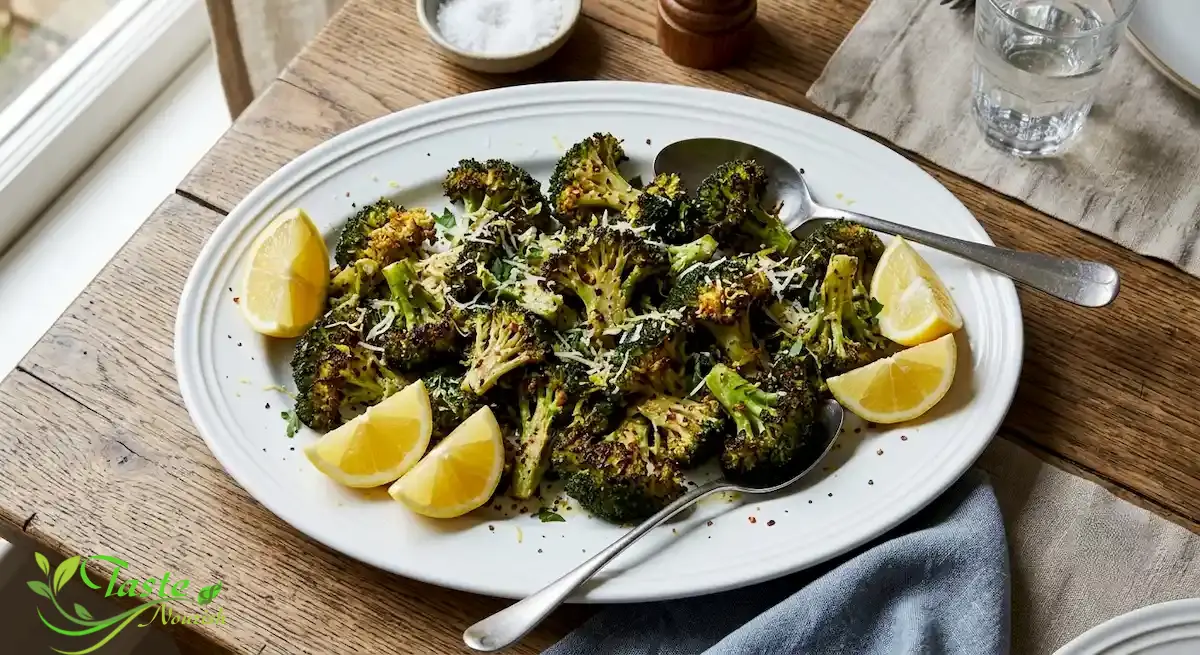
This lemon roasted broccoli recipe tosses fresh florets with olive oil, garlic, salt, and pepper, then roasts them at 425°F until the edges turn deep golden brown and crisp. Fresh lemon zest and juice get stirred in right after the pan comes out of the oven, so the citrus stays bright instead of turning bitter or dull. The whole dish takes about 25 minutes start to finish and serves four as a side.
Key Takeaways
- Roasting at high heat (425°F/220°C) creates crisp, caramelized edges that steaming or boiling can’t achieve.
- This lemon roasted broccoli recipe takes about 25 minutes total and needs just seven ingredients.
- Broccoli is a strong source of vitamin C and vitamin K, and it contains sulforaphane, a plant compound studied for its potential role in cancer prevention.
- Add lemon juice after roasting, not before, to keep the citrus flavor bright rather than muted.
- People taking blood thinners such as warfarin should keep their broccoli intake consistent from day to day because of its vitamin K content.
What Is Lemon Roasted Broccoli?
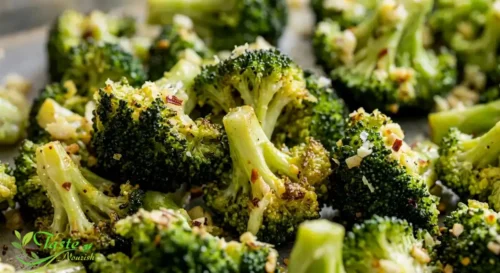
Lemon roasted broccoli is simply fresh broccoli florets tossed in olive oil and roasted at high heat until the edges char slightly and the stems turn tender, then finished with lemon zest and juice. The high, dry heat of the oven does something steaming can’t: it caramelizes the natural sugars in the broccoli, giving you deep flavor without any added sweetener.
Lemon plays two roles here. It cuts through the richness of the olive oil, and its acidity balances the slightly bitter, sulfur-forward notes that broccoli is known for.
This method works with almost any broccoli you have on hand, fresh or frozen, and it scales easily for a weeknight dinner or a larger holiday spread. It also holds up well next to bold mains like roasted chicken, grilled salmon, or a simple pasta, since the lemon keeps the flavor from competing with anything else on the plate.
Ingredients for This Lemon Roasted Broccoli Recipe
Prep time: 10 minutes. Cook time: 20 minutes. Total time: 30 minutes. Servings: 4.
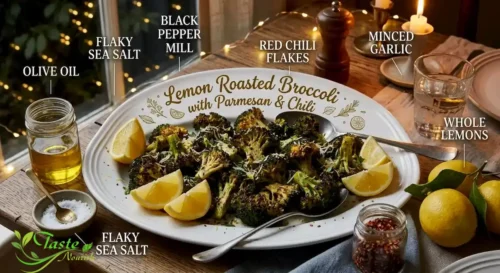
- 1 large head broccoli (about 1.5 pounds), cut into florets
- 3 tablespoons olive oil
- 3 cloves garlic, minced
- 1 lemon, zested and juiced
- 1/2 teaspoon salt
- 1/4 teaspoon black pepper
- 1/4 teaspoon red pepper flakes (optional)
- 2 tablespoons grated parmesan (optional)
How to Make This Lemon Roasted Broccoli Recipe (Step by Step)
Prep the Broccoli
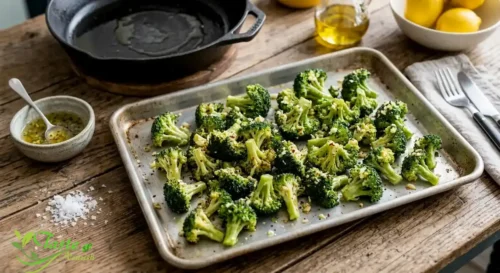
Preheat the oven to 425°F and line a large baking sheet with parchment paper. Cut the broccoli into evenly sized florets so they roast at the same rate, and slice any especially thick stems in half lengthwise.
- Toss the broccoli florets on the baking sheet with olive oil, minced garlic, salt, and pepper.
- Spread the florets into a single layer with as many cut sides facing down as possible, since this is where the best browning happens.
Roast Until Golden and Crisp-Tender
- Roast for 18 to 22 minutes, flipping the florets halfway through, until the edges are deeply browned and the stems are fork-tender.
- Watch closely in the last few minutes, since broccoli can go from perfectly charred to burnt quickly at this temperature.

Finish With Lemon
- Remove the pan from the oven and immediately toss the hot broccoli with the lemon zest and juice, so the citrus aroma stays fresh instead of cooking off.
- Top with parmesan and red pepper flakes if using, then serve right away while the edges are still crisp.
Pro tip: adding lemon juice while the broccoli is still hot helps the acidity cling to the florets instead of just pooling at the bottom of the pan.
Broccoli Nutrition Facts
Broccoli is naturally low in calories and carbohydrates while delivering a notable amount of fiber, vitamin C, and vitamin K. According to the USDA FoodData Central database, the numbers below reflect one cup of chopped raw broccoli (about 91 grams), before any oil or seasoning is added.
| Nutrient | Amount per 1 cup raw | % Daily Value |
|---|---|---|
| Calories | 31 | — |
| Protein | 2.6 g | — |
| Carbohydrates | 6 g | — |
| Fiber | 2.4 g | 9% |
| Vitamin C | 81 mg | 90% |
| Vitamin K | 92 mcg | 77% |
| Folate | 57 mcg | 14% |
| Potassium | 288 mg | 6% |
Roasting changes this slightly. Dry heat causes some vitamin C loss compared to eating broccoli raw, though generally less than boiling causes, since none of the water-soluble vitamin gets leached into cooking water.
Health Benefits of Broccoli
Rich in Vitamin C and Antioxidants
A single cup of raw broccoli provides close to the full daily value of vitamin C, an antioxidant involved in immune function, collagen production, and wound healing, according to the National Institutes of Health Office of Dietary Supplements. Because vitamin C is water-soluble and doesn’t stay stored in the body long, eating vitamin C-rich foods regularly, rather than occasionally, may help support these functions.
May Support Heart and Colon Health
Cruciferous vegetables like broccoli have been linked in observational research to better markers of cardiovascular and digestive health. These associations don’t prove cause and effect, but they’re consistent enough across studies to be worth paying attention to.
Contains Sulforaphane, a Compound Under Active Study
Broccoli contains glucoraphanin, which converts to sulforaphane when the vegetable is chopped or chewed. Sulforaphane has been studied in laboratory and early clinical research for its antioxidant and potential cancer-protective properties, though most human trials are still small and early-stage.
What the Science Says
A 2025 analysis published in BMC Gastroenterology and summarized by Harvard Health Publishing pooled data from 17 studies covering more than 97,000 people and found that those eating the most cruciferous vegetables had a lower risk of developing colon cancer compared with those eating the least, with the protective association leveling off at higher intakes.
A separate scientific review of sulforaphane research, published through the National Institutes of Health’s PubMed Central archive, describes evidence from laboratory and animal studies suggesting sulforaphane may influence pathways involved in cancer cell growth, though the authors note that more large-scale human trials are needed before firm conclusions can be drawn.
It’s worth being cautious here. Observational nutrition research can show a pattern without proving broccoli itself is the cause, since people who eat more vegetables often have other healthy habits too. Current research supports broccoli as part of a healthy dietary pattern, not as a treatment for any condition.
Potential Risks and Side Effects
For most healthy adults, broccoli is very well tolerated. Still, a few things are worth knowing before you make it a daily habit.
- Broccoli contains raffinose, a sugar that can cause gas or bloating in some people, especially when eaten raw or in large amounts.
- It contains compounds called goitrogens, which in very high amounts may interfere with thyroid hormone production, though this is mainly a concern with extremely large raw intakes combined with low iodine levels.
- Its vitamin K content can affect blood clotting medications, according to the NIH Office of Dietary Supplements, which notes that people on vitamin K antagonists like warfarin should keep their intake of vitamin K-rich vegetables steady rather than changing it suddenly.
Who Should Be Cautious With Broccoli?
People taking warfarin or similar blood-thinning medications should talk with their doctor or pharmacist about keeping their vitamin K intake consistent, rather than avoiding broccoli altogether. People with diagnosed thyroid conditions may want to ask their healthcare provider about cruciferous vegetable intake, particularly if eating very large amounts raw.
Anyone with a sensitive digestive system or a known intolerance to FODMAPs may find that smaller portions, or cooked rather than raw broccoli, sit better.
How Much Broccoli Should You Eat?
General dietary guidance recommends adults aim for 2 to 3 cups of vegetables a day, with cruciferous vegetables like broccoli included a few times a week. The colon cancer research mentioned above found benefits associated with 20 to 40 grams of cruciferous vegetables daily, roughly a quarter to a third of a cup, with the protective effect leveling off beyond that amount.
A cup or two of roasted broccoli as a side dish, eaten a few times a week, fits comfortably within these general recommendations.
How to Choose the Best Broccoli for Roasting
Look for broccoli heads that are tightly closed and deep green, with no yellowing florets or soft, mushy spots. The stalk should feel firm rather than rubbery when you press it, and the cut end should look moist rather than dried out. Smaller, tighter florets tend to roast more evenly and crisp up better than very large, loose ones, so it’s worth breaking bigger heads down into smaller, more uniform pieces before cooking.
Storage Tips
Store fresh, uncooked broccoli in the refrigerator crisper drawer, loosely wrapped in a damp paper towel or a perforated bag, where it should keep for about 5 to 7 days. Avoid sealing it in an airtight container, since trapped moisture speeds up spoilage.
Leftover lemon roasted broccoli keeps in an airtight container in the fridge for up to 4 days and reheats best in a hot oven or air fryer, which helps bring back some of the crispness a microwave can’t.
More Ways to Enjoy This Easy Lemon Broccoli Side Dish Recipe
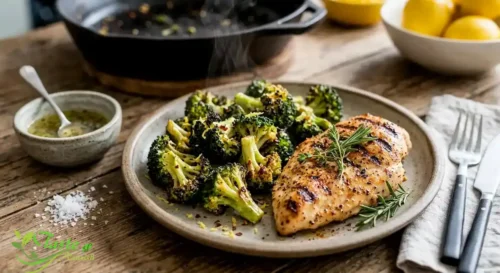
Once you’ve got the base method down, this easy lemon broccoli side dish recipe is easy to riff on. A few simple variations:
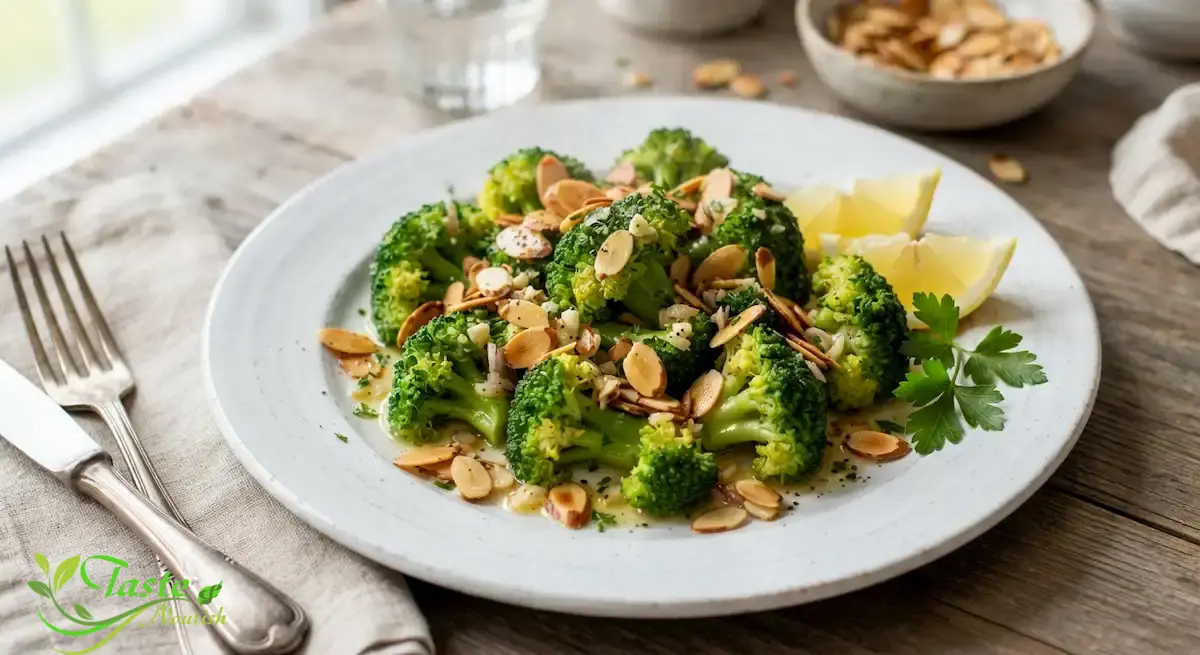
- Add toasted pine nuts or slivered almonds after roasting for crunch.
- Swap parmesan for crumbled feta and a drizzle of tahini for a different flavor direction.
- Toss in halved cherry tomatoes for the last 10 minutes of roasting to add sweetness and color.
- Finish with a light drizzle of good olive oil and flaky salt instead of parmesan for a dairy-free version.
Common Mistakes to Avoid With This Lemon Roasted Broccoli Recipe
Crowding the pan is the most common issue, since florets piled on top of each other steam instead of roast, leaving you with soft, pale broccoli instead of crisp, browned edges. Use two baking sheets if needed rather than one overcrowded one. Adding the lemon juice before roasting is another common misstep, since the acid can make the broccoli taste flat and the citrus flavor cooks off in the oven.
Skipping the flip halfway through roasting also leads to uneven browning, with one side charred and the other still pale.
Myths vs Facts About Broccoli
| Myth | Fact |
|---|---|
| Cooking broccoli destroys all its nutrients. | Cooking reduces some heat-sensitive nutrients like vitamin C, but roasting retains more than boiling, since none of the nutrients leach into water. |
| Raw broccoli is always healthier than cooked. | Raw broccoli has more intact vitamin C, but light cooking can make certain plant compounds, including some linked to sulforaphane formation, easier for the body to use. |
| Broccoli stems should be thrown away. | Stems are edible and contain fiber and nutrients similar to the florets; peeling the tough outer layer makes them just as pleasant to eat. |
Roasted vs Steamed vs Raw Broccoli: Quick Comparison
| Method | Texture | Vitamin C Retention | Best For |
|---|---|---|---|
| Roasted | Crisp edges, tender inside | Moderate to high | Flavor-forward side dishes |
| Steamed | Soft, tender throughout | High | Quick weeknight sides, babies/toddlers |
| Raw | Crunchy, firm | Highest | Salads, dips, snacking |
Lemon Roasted Broccoli Recipe
4
servings10
minutes20
minutes160
kcalAn easy lemon roasted broccoli recipe with crispy golden edges, garlic, and fresh lemon, ready in 25 minutes.
Ingredients
1 large head broccoli (about 1.5 pounds), cut into florets
3 tablespoons olive oil
3 cloves garlic, minced
1 lemon, zested and juiced
1/2 teaspoon salt
1/4 teaspoon black pepper
1/4 teaspoon red pepper flakes (optional)
2 tablespoons grated parmesan (optional)
Directions
- Preheat the oven to 425°F and line a baking sheet with parchment paper. Cut the broccoli into evenly sized florets.
- Toss the broccoli with olive oil, garlic, salt, and pepper, then spread in a single layer, cut sides down.
- Roast for 18 to 22 minutes, flipping halfway, until the edges are golden and crisp.
- Remove from the oven and immediately toss with lemon zest and juice. Top with parmesan and red pepper flakes if using, then serve warm.
Lemon Roasted Broccoli Recipe FAQs
Can I use frozen broccoli for this lemon roasted broccoli recipe?
Yes, but thaw and pat it very dry first, since frozen broccoli holds extra water that can cause steaming instead of roasting. You may also need a few extra minutes in the oven to get the same crisp edges.
How do I keep roasted broccoli from getting soggy?
Make sure the florets are dry before tossing them with oil, spread them in a single layer with space between pieces, and avoid overcrowding the pan. A hot oven, at least 425°F, also helps moisture evaporate quickly instead of pooling.
What can I serve with lemon roasted broccoli?
It pairs well with roasted or grilled chicken, baked salmon, pasta dishes, or grain bowls with quinoa or rice. The bright lemon flavor also works nicely alongside richer mains like steak or roasted pork.
Can I make this ahead of time?
You can wash and cut the broccoli up to a day ahead and store it in the fridge, but it’s best roasted just before serving, since the crisp texture fades once it sits. If you do need to make it ahead, reheat briefly in a hot oven rather than a microwave.
Is roasted broccoli healthier than steamed broccoli?
Neither is clearly “healthier” across the board. Steaming tends to preserve slightly more vitamin C, while roasting develops more flavor through browning, which can make it easier to enjoy broccoli more often. The more relevant question is usually which method you’ll actually eat regularly.
References
- “FoodData Central.” U.S. Department of Agriculture, Agricultural Research Service. https://fdc.nal.usda.gov/
- “Vitamin C: Fact Sheet for Health Professionals.” National Institutes of Health, Office of Dietary Supplements. https://ods.od.nih.gov/factsheets/VitaminC-HealthProfessional/
- “Vitamin K: Fact Sheet for Health Professionals.” National Institutes of Health, Office of Dietary Supplements. https://ods.od.nih.gov/factsheets/VitaminK-HealthProfessional/
- “Sulforaphane: A Broccoli Bioactive Phytocompound with Cancer Preventive Potential.” National Institutes of Health, PubMed Central. https://pmc.ncbi.nlm.nih.gov/articles/PMC8508555/
- “How Many Servings of Cruciferous Vegetables Should You Eat to Fight Colon Cancer?” Harvard Health Publishing. https://www.health.harvard.edu/cancer/how-many-servings-of-cruciferous-vegetables-should-you-eat-to-fight-colon-cancer
Conclusion
This lemon roasted broccoli recipe earns its place in a weekly rotation because it’s fast, forgiving, and delivers real flavor without much effort. Beyond taste, broccoli brings meaningful nutrition to the table, from vitamin C and fiber to plant compounds still being studied for their potential health effects. Keep the pan uncrowded, save the lemon for the end, and you’ve got a side dish that’s easy to make often rather than just once.