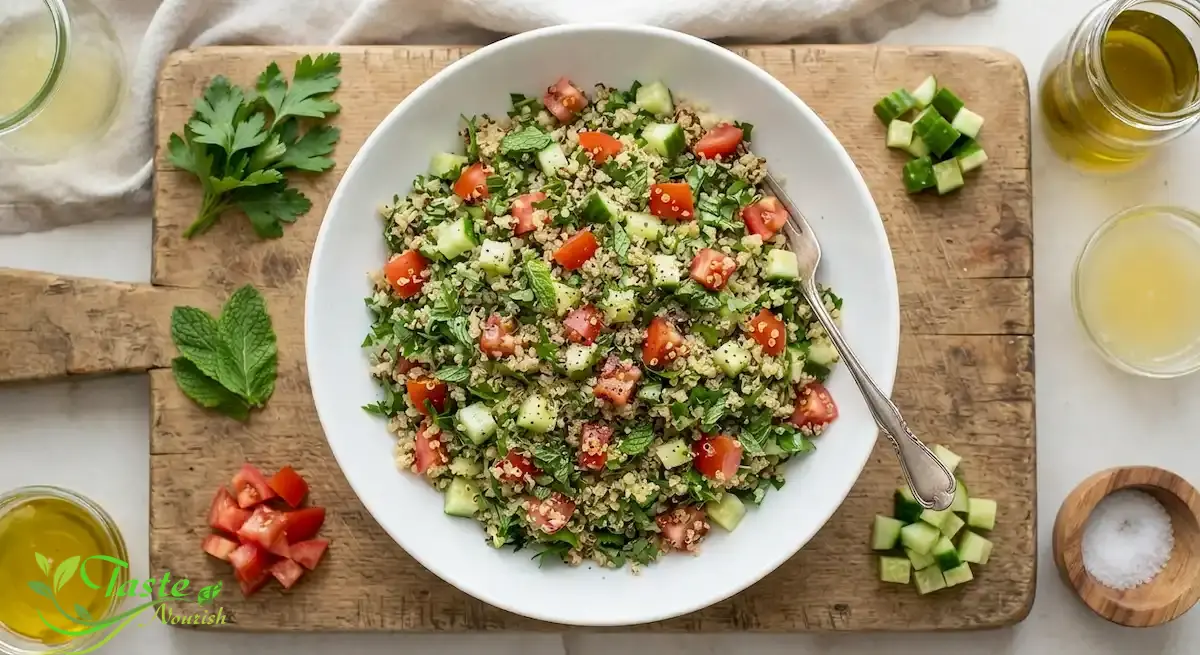
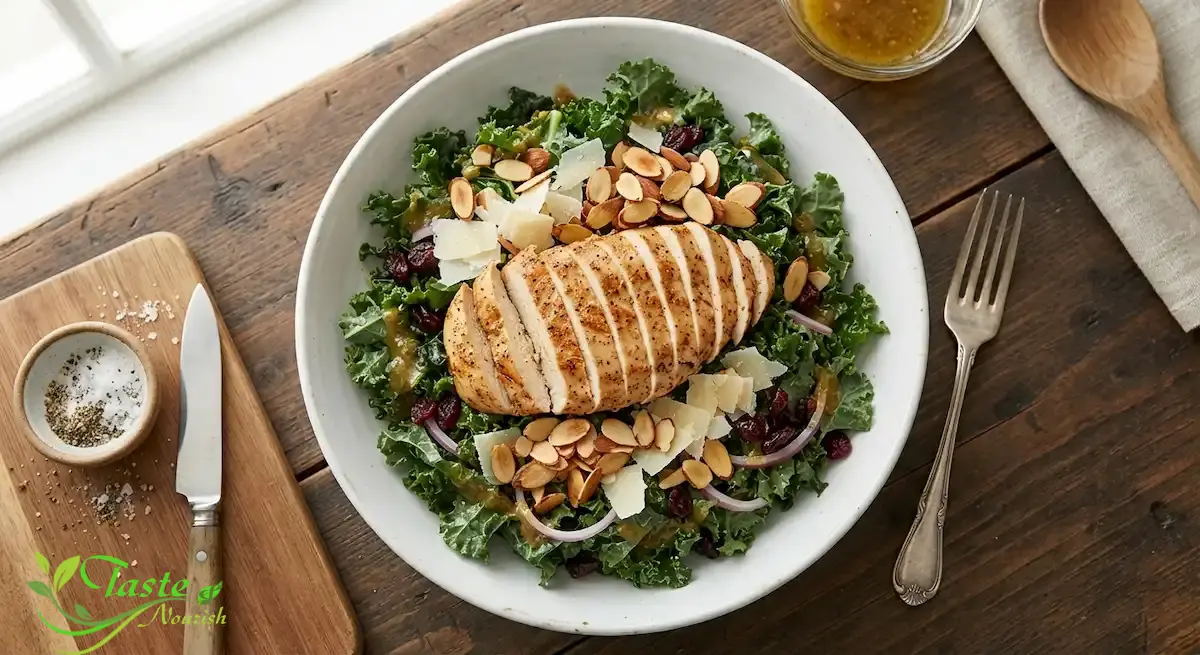
Tabbouleh is traditionally a bulgur wheat salad built around a mountain of chopped parsley, but this quinoa tabbouleh recipe reworks the classic for anyone who wants that same bright, herb-forward flavor without the gluten. Swapping bulgur for quinoa doesn’t just solve a dietary restriction — it adds a noticeably higher protein count and a slightly nuttier bite that holds up well against the lemon and olive oil dressing.
The result tastes close enough to the original that most guests won’t clock the substitution, and it keeps beautifully in the fridge for busy-week lunches.
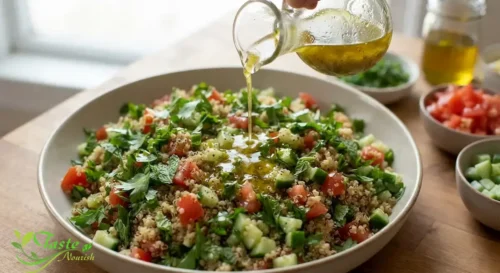
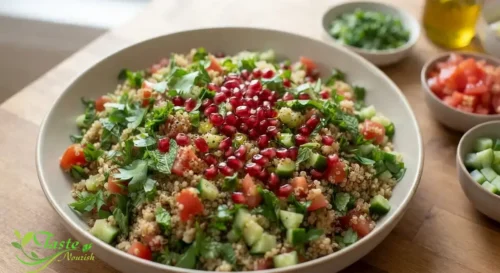
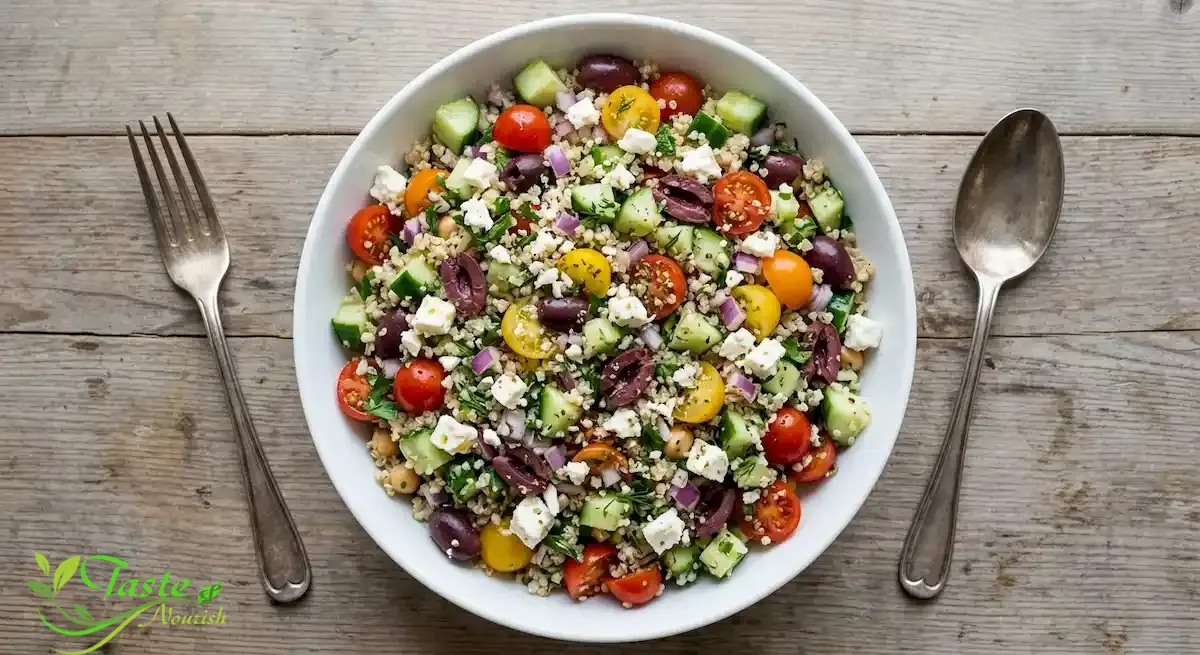
This quinoa tabbouleh recipe replaces bulgur with rinsed, fluffed quinoa, then tosses it with finely chopped parsley, mint, tomato, cucumber, and scallions in a lemon-olive oil dressing. It’s naturally gluten-free, ready in under an hour, and best served chilled or at room temperature as a side, a light lunch, or a base for grilled protein.
Recipe at a Glance
Prep Time
Cook Time
Cool/Rest Time
Total Time
Yield
Difficulty
20 minutes
15 minutes
15 minutes
50 minutes
6 servings (about 1 cup each)
Easy
Key Takeaways
This quinoa tabbouleh recipe swaps bulgur for protein-rich quinoa, making it naturally gluten-free without sacrificing the herb-forward flavor of the original dish.
Fresh parsley and mint should outweigh the grain — traditional tabbouleh is an herb salad with grain mixed in, not the other way around.
Cooling the quinoa fully before mixing keeps the herbs vibrant and prevents them from wilting or discoloring.
The finished salad keeps well for up to four days refrigerated, making it a dependable meal-prep staple.
A simple lemon and olive oil dressing does the heavy lifting here — no extra components or specialty ingredients needed.
Why You’ll Love This Quinoa Tabbouleh Recipe
Quinoa is one of the few plant foods that supplies all nine essential amino acids, which is why nutrition researchers often describe it as a complete protein comparable in quality to animal sources (National Library ). That protein content, combined with its fiber, makes this version more filling than a bulgur-based tabbouleh — useful if you’re serving it as a light main rather than a side.
It’s also genuinely fast once the quinoa is cooked. Most of the work is chopping, and almost none of it requires special skill. And because the dressing is just lemon juice and olive oil, it’s easy to scale up for a crowd or scale down for a solo lunch without recalculating a complicated sauce.
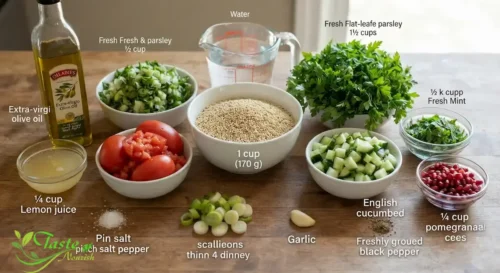
1 English cucumber (or 2 Persian cucumbers), diced small
4 scallions, thinly sliced (white and green parts)
1 small garlic clove, minced (optional)
⅓ cup extra-virgin olive oil
¼ cup fresh lemon juice, plus more to taste
¾ teaspoon fine sea salt, plus more to taste
¼ teaspoon freshly ground black pepper
¼ cup pomegranate seeds, for serving (optional)
Ingredient Notes
Rinsing the quinoa isn’t optional here — the seed’s natural coating, called saponin, tastes bitter and slightly soapy if it isn’t washed off before cooking. Use a fine-mesh strainer and rinse under cold water for about 30 seconds.
Keep the herb-to-grain ratio generous. Traditional tabbouleh is closer to a chopped herb salad than a grain bowl, so don’t be tempted to cut the parsley and mint back to “garnish” amounts.
Seeding the tomatoes matters more than it seems like it would. The gel and seeds hold a lot of water, and skipping this step is the single biggest reason homemade tabbouleh turns watery by day two.
Substitutions
Quinoa is what makes this a gluten-free tabbouleh quinoa salad, since the seed is naturally free of the gluten found in wheat-based bulgur (National Library). If a household member needs a certified gluten-free product rather than an inherently gluten-free grain, check the packaging — cross-contact during processing is possible, and the FDA’s gluten-free labeling standard exists specifically to address that risk (U.S. Food and Drug Administration).
No mint on hand? Basil works as a stand-in, though it’s a trade-off rather than a true swap — it shifts the salad toward a more Italian flavor profile rather than the cool, slightly peppery note mint provides. Bell pepper can replace cucumber if you want crunch without the seeds and moisture.
Kitchen Tools Needed
You don’t need anything specialized beyond a medium saucepan with a lid and a fine-mesh strainer small enough to catch quinoa’s tiny grains — a standard colander’s holes are too wide. A rimmed baking sheet also helps the quinoa cool quickly and evenly before it meets the herbs.
How to Make Quinoa Tabbouleh — Step-by-Step Instructions
1. Rinse the quinoa. Place the quinoa in a fine-mesh strainer and rinse under cold running water for about 30 seconds, rubbing the grains gently between your fingers until the water runs clear.
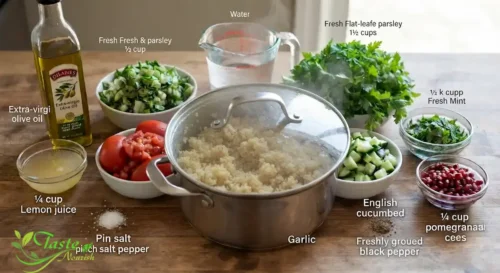
2. Cook the quinoa. Combine the rinsed quinoa and water (or broth) in a medium saucepan. Bring to a boil, then reduce heat to low, cover, and simmer for 12–15 minutes, until the liquid is absorbed and you can see the germ separate into a small curved thread around each grain.
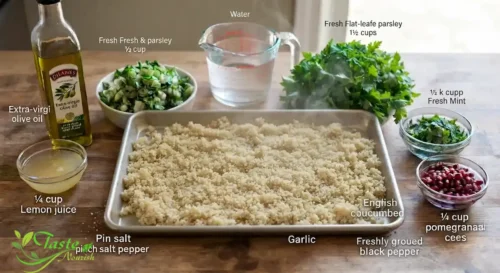
3. Cool it down. Fluff the quinoa with a fork and spread it in a thin layer on a rimmed baking sheet. Let it cool to room temperature, about 15 minutes — this step keeps the herbs from wilting once everything is combined.
4. Prep the vegetables and herbs. While the quinoa cooks and cools, chop the parsley and mint finely, seed and dice the tomatoes, dice the cucumber, and slice the scallions.
5. Make the dressing. In a small bowl, whisk together the olive oil, lemon juice, garlic (if using), salt, and pepper until slightly emulsified.
6. Combine and toss. In a large bowl, combine the cooled quinoa, parsley, mint, tomatoes, cucumber, and scallions. Pour the dressing over the top and toss until everything is evenly coated.
7. Rest, then serve. Let the salad sit for 10–15 minutes before serving so the flavors meld. Taste and adjust salt or lemon juice, then top with pomegranate seeds if using.
Expert Cooking Tips
Toast the quinoa dry before adding liquid. A minute or two in the empty saucepan over medium heat before you add water deepens the nutty flavor and helps the grains stay separate instead of clumping.
Chop the herbs by hand, not in a food processor. A processor bruises parsley and mint, releasing chlorophyll that turns the salad an unappetizing khaki color within an hour. A sharp knife keeps the herbs bright green.
Dress it while the quinoa still has a trace of warmth, if serving right away. Slightly warm quinoa absorbs the lemon and olive oil more readily than fully chilled quinoa. If you’re making it ahead, though, cool it completely first and dress closer to serving time.
Common Mistakes to Avoid
Mistake
Why It Happens
The Fix
Skipping the rinse
The saponin coating on raw quinoa is often mistaken for a rinse-optional step, but it’s what causes the bitter, slightly soapy taste people blame on quinoa itself.
Rinse under cold water in a fine-mesh strainer until the water runs clear.
Adding herbs to hot quinoa
Residual heat wilts delicate parsley and mint almost instantly, dulling both their color and flavor.
Spread the quinoa on a baking sheet and let it cool fully before combining.
Using dried herbs
Tabbouleh depends on the volume and moisture of fresh herbs; dried versions can’t replicate the texture.
Use fresh parsley and mint only — there’s no reliable substitute here.
Overcooking the quinoa
A few extra minutes on the stove pushes quinoa from fluffy to mushy, which makes the whole salad feel heavy.
Start checking at the 12-minute mark for a visible germ ring and tender-but-distinct grains.
Skipping the tomato seeding step
Tomato seeds and gel release liquid over time, which waters down the dressing.
Seed and dice the tomatoes before adding them, and drain briefly on paper towels if they look juicy.
Recipe Variations
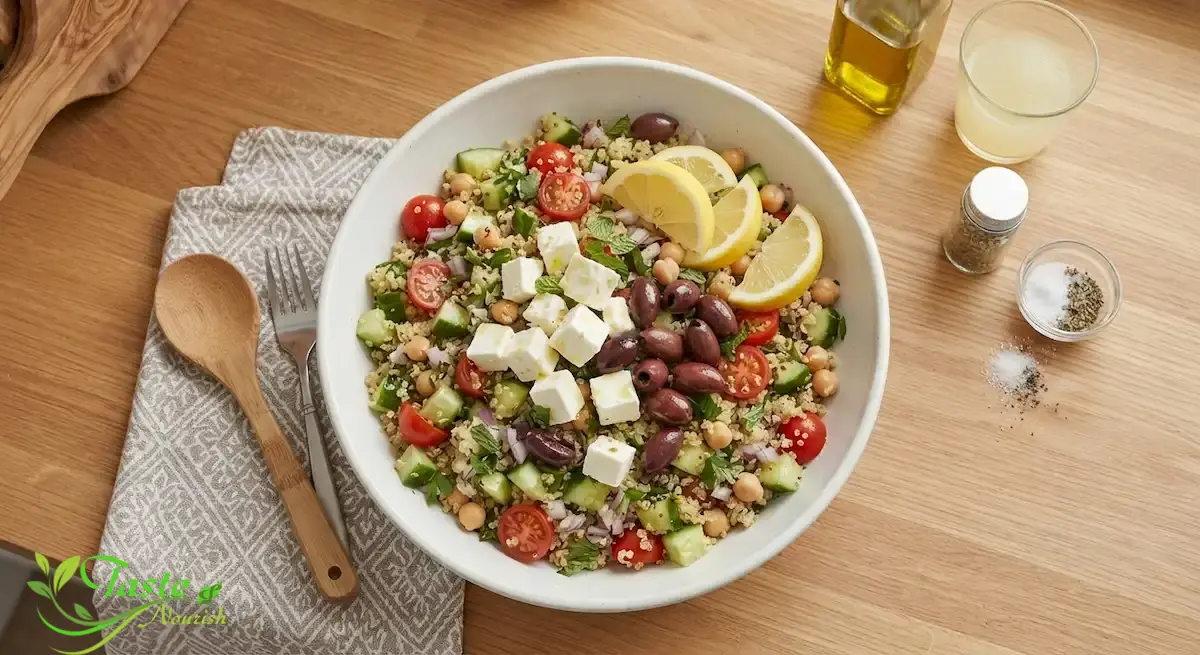
Add chickpeas — Stir in a rinsed, drained can of chickpeas to turn this into a more substantial main-dish salad.
Swap the herb — Dill in place of mint gives the salad a different, slightly grassier character that pairs especially well with cucumber and feta.
Add feta — Crumbled feta isn’t traditional, but it adds a salty, creamy contrast — just note it moves the dish out of vegan territory.
Split the grain — Use half quinoa and half bulgur if you’re not strictly avoiding gluten; it splits the difference in cost and gets closer to the classic texture.
Serving Suggestions
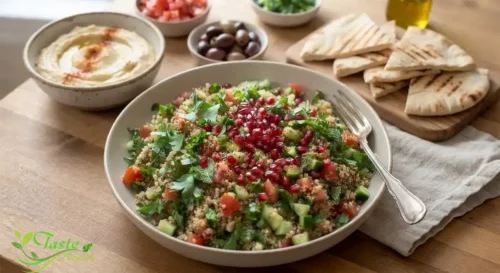
Quinoa tabbouleh is a natural fit alongside grilled chicken, kofta, or falafel, and it holds its own next to warm pita and a bowl of hummus. For a heartier plate, spoon it under grilled salmon or shrimp — the acidity in the dressing cuts through richer proteins well. A dollop of labneh or tzatziki on the side rounds things out if you’re building a full mezze-style spread.
Nutrition Information
The figures below are estimates for one of six servings, calculated using standard nutrition databases and the ingredients listed above; actual values will shift with exact ingredient brands and portion sizes.
Nutrient
Approximate Amount
Calories
~230 kcal
Protein
~5 g
Carbohydrates
~22 g
Dietary Fiber
~4 g
Total Fat
~14 g
Sodium
~150 mg
Quinoa itself is the main source of both the protein and fiber here: a single cooked cup contributes roughly 8 grams of protein and 5 grams of fiber, according to USDA . That fiber contributes toward the 22–34 grams per day most adults are advised to get, per the Dietary Guidelines for Americans. The parsley and tomato also supply meaningful vitamin C, a nutrient that can support immune function and improves the body’s absorption of iron from plant foods like quinoa (National Institutes of Dietary Supplements).
Storage Instructions
Refrigerate leftover tabbouleh in an airtight container for up to four days. The cucumber and tomato will soften gradually, but the flavor generally holds up well, and some cooks even prefer it a day in once the dressing has fully absorbed.
This salad doesn’t freeze well once assembled — thawed cucumber and fresh herbs turn watery and limp. If you want a freezer-friendly head start, cook and cool a plain batch of quinoa and freeze it for up to two months, then thaw and build the salad fresh.
No reheating is needed, since tabbouleh is meant to be served cold or at room temperature. If it’s been in the fridge, let it sit out for about 10 minutes before serving to soften the olive oil and wake the flavors back up.
Make-Ahead Tips
Cook and cool the quinoa up to three days ahead and store it separately from the vegetables. Herbs and vegetables can be chopped a few hours in advance if kept covered in the fridge. For the fullest flavor with the least sogginess, keep the dressing separate until an hour or so before serving, then toss everything together.
Quinoa Tabbouleh Recipe FAQs
Is quinoa tabbouleh the same as traditional tabbouleh?
Not exactly. Traditional tabbouleh is made with bulgur, a form of parboiled cracked wheat. This version replaces the bulgur with quinoa, which changes the texture slightly and makes the dish gluten-free.
Can I make this quinoa tabbouleh recipe ahead of time?
Yes. It actually improves after a few hours in the fridge as the flavors meld, and it holds well for up to four days. Just keep in mind the vegetables will continue to soften the longer it sits.
What’s the best type of quinoa to use — white, red, or black?
White quinoa is the mildest and most tender, which makes it the easiest match for this recipe. Red or black quinoa hold their shape a bit more and add visual contrast against the herbs, so either is a fine substitute if that’s what you have.
How do I keep quinoa tabbouleh from getting watery?
Seed and drain the tomatoes before adding them, make sure the quinoa is fully cooled, and if you’re prepping more than a few hours ahead, hold off on dressing the salad until closer to serving time.
Is this recipe vegan?
Yes, as written it’s fully plant-based. Adding feta, as suggested in the variations, would take it out of vegan territory.
Can I use dried parsley and mint instead of fresh?
It’s not recommended. Tabbouleh relies on the volume, texture, and moisture of fresh herbs, and dried herbs won’t give you the same result — the dish will taste more like seasoned grain than an herb salad.
1 English cucumber (or 2 Persian cucumbers), diced small
4 scallions, thinly sliced
1 small garlic clove, minced (optional)
⅓ cup extra-virgin olive oil
¼ cup fresh lemon juice, plus more to taste
¾ teaspoon fine sea salt, plus more to taste
¼ teaspoon freshly ground black pepper
¼ cup pomegranate seeds, for serving (optional)
Directions
Place the quinoa in a fine-mesh strainer and rinse under cold running water for about 30 seconds, rubbing the grains gently until the water runs clear.
Combine the rinsed quinoa and water (or broth) in a medium saucepan. Bring to a boil, reduce heat to low, cover, and simmer for 12–15 minutes, until the liquid is absorbed and the germ separates into a small curved thread around each grain.
Fluff the quinoa with a fork and spread it in a thin layer on a rimmed baking sheet. Let it cool to room temperature, about 15 minutes.
While the quinoa cooks and cools, chop the parsley and mint finely, seed and dice the tomatoes, dice the cucumber, and slice the scallions.
In a small bowl, whisk together the olive oil, lemon juice, garlic (if using), salt, and pepper until slightly emulsified.
In a large bowl, combine the cooled quinoa, parsley, mint, tomatoes, cucumber, and scallions. Pour the dressing over the top and toss until evenly coated.
Let the salad sit for 10–15 minutes before serving so the flavors meld. Taste and adjust salt or lemon juice, then top with pomegranate seeds if using.
Final Thoughts on This Quinoa Tabbouleh Recipe
What makes this quinoa tabbouleh recipe worth keeping in rotation is how little it asks of you for what it gives back: a naturally gluten-free, protein-forward salad that tastes brighter the longer it sits in the fridge. Chop the herbs by hand, let the quinoa cool fully before mixing, and you’ll land on a version that holds its own against the bulgur original.
National Library of Medicine, PMC (National Center for Biotechnology Information). “Harnessing the Potential of Quinoa: Nutritional Profiling, Bioactive Components, and Implications for Health Promotion.” https://www.ncbi.nlm.nih.gov/pmc/articles/PMC11273950/
Hanan Abo Samra is the founder of Taste & Nourish, sharing trustworthy nutrition guidance and recipes drawn from 20+ years of hands-on cooking experience. When she's not developing new recipes, Hanan is researching the science behind everyday ingredients to bring readers practical, evidence-based guidance for a healthier lifestyle.