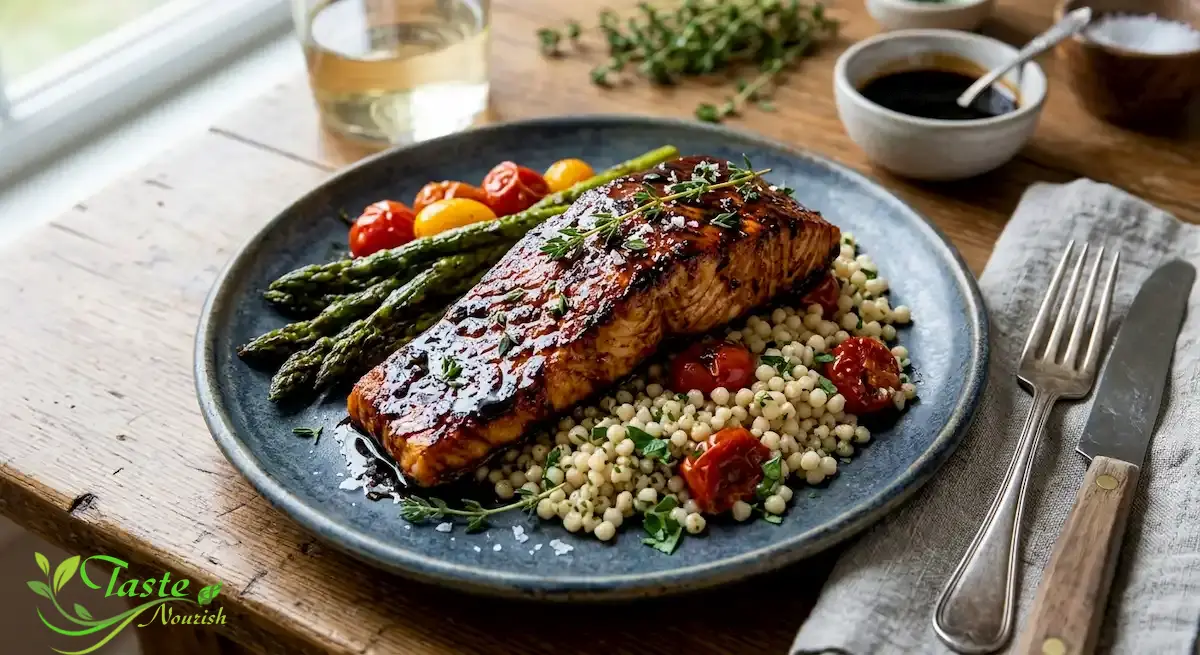
Few dinners come together as fast — or taste as impressive — as a good maple salmon recipe. Sweet, sticky, and layered with a savory edge from garlic and soy sauce, this dish turns simple pantry staples into a glaze that caramelizes beautifully in the oven. It’s the kind of recipe that looks like it took real effort but actually comes together in under 30 minutes, which is exactly why it’s become a weeknight favorite for home cooks who still want something worth setting the table for.
This maple salmon recipe bakes salmon fillets in a glaze of pure maple syrup, soy sauce, garlic, and Dijon mustard until the top turns glossy and slightly caramelized. It takes about 10 minutes to prep, 12 to 15 minutes to bake, and serves four — a fast, flavorful dinner that pairs sweet and savory in every bite.
Maple Salmon Recipe at a Glance
Detail
Time / Info
Prep Time
10 minutes
Marinating Time (optional)
15 to 30 minutes
Cook Time
12 to 15 minutes
Total Time
About 30 minutes
Yield
4 servings
Difficulty
Easy
Key Takeaways for This Maple Salmon Recipe
This maple salmon recipe uses just seven main ingredients and one baking sheet, making it an easy weeknight dinner.
Pure maple syrup, not pancake syrup, is essential for real maple flavor and proper caramelization.
Salmon is done at an internal temperature of 125°F to 130°F for medium, or 145°F if you prefer it fully cooked through.
A short marinating time deepens the flavor, but the recipe still works well if you skip it and bake right away.
Leftover maple salmon keeps well in the refrigerator for up to three days, making it a good option for meal prep.
Why You’ll Love This Maple Salmon Recipe
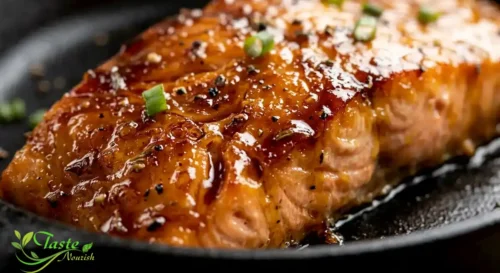
The glaze does all the heavy lifting here. Maple syrup brings natural sweetness, soy sauce adds savory depth, and a touch of Dijon mustard keeps the whole thing from tasting one-note. As it bakes, the sugars in the syrup caramelize against the hot pan, forming a glossy, slightly sticky coating that clings to the fish instead of pooling underneath it.
It’s also forgiving. There’s no delicate sauce to break, no long list of steps to follow in order, and no special equipment required. Whether you’re cooking for a weeknight family dinner or a low-key dinner party, this recipe scales easily and holds up well even if it sits for a few minutes before serving.
Ingredients for Sweet Maple Glazed Salmon
4 salmon fillets, about 6 ounces each, skin-on or skinless
1/4 cup pure maple syrup
2 tablespoons soy sauce
1 tablespoon Dijon mustard
2 cloves garlic, minced
1 tablespoon olive oil
1 teaspoon fresh lemon juice
1/2 teaspoon smoked paprika, optional
Salt and black pepper, to taste
Fresh parsley or thyme, for garnish
Lemon wedges, for serving
Ingredient Notes
Choose fillets of similar thickness so they finish cooking at the same time. Center-cut pieces work best for this reason. Always use pure maple syrup rather than a pancake-style syrup blend; the latter is mostly corn syrup and won’t caramelize or taste the same. Dijon mustard rounds out the sweetness and helps the glaze cling to the fish rather than sliding off.
Substitutions
Tamari can replace soy sauce for a gluten-free version with a nearly identical flavor. Coconut aminos also work, though the result will be slightly sweeter and less salty, so you may want to add a pinch more salt. Whole grain mustard can stand in for Dijon if that’s what you have on hand. Maple syrup itself doesn’t have a true equivalent substitute; honey is the closest option, but it browns faster, so watch the salmon closely if you make that swap.
Kitchen Tools Needed
Rimmed baking sheet
Parchment paper or foil, for easy cleanup
Small mixing bowl and whisk
Basting brush or spoon
Instant-read thermometer, for checking doneness
How to Make Maple Salmon: Step-by-Step
Start by whisking the glaze, then let the fish take on flavor before it hits the oven.
In a small bowl, whisk together the maple syrup, soy sauce, Dijon mustard, minced garlic, olive oil, lemon juice, and smoked paprika if using.
Pat the salmon fillets dry with a paper towel and place them in a shallow dish. Pour about two-thirds of the glaze over the fillets, reserving the rest for basting. Let the salmon marinate for 15 to 30 minutes at room temperature, or up to 2 hours in the refrigerator.
Preheat the oven to 400°F. Line a rimmed baking sheet with parchment paper or foil for easy cleanup.
Remove the salmon from the marinade and arrange the fillets on the prepared baking sheet, skin-side down if applicable. Season lightly with salt and pepper.
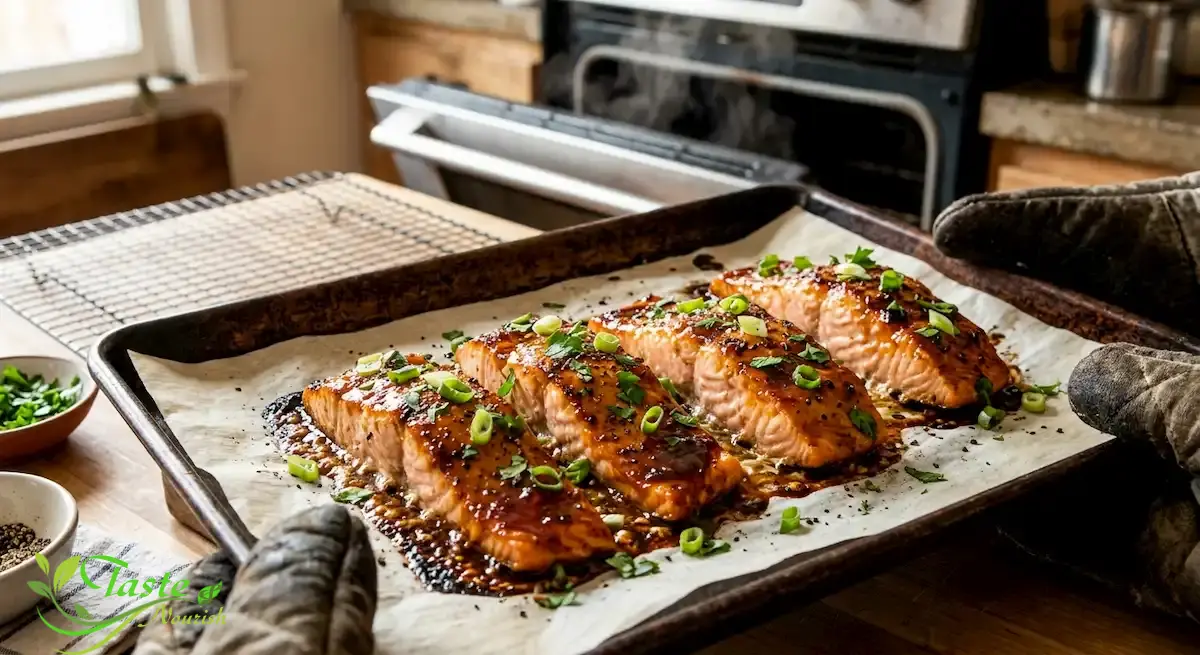
Bake for 10 minutes, then brush the fillets with the reserved glaze. Continue baking for another 2 to 5 minutes, until the salmon flakes easily with a fork and reaches an internal temperature of at least 125°F for medium doneness.
For a deeper caramelized top, switch the oven to broil for the final 1 to 2 minutes, watching closely so the glaze doesn’t burn.
Let the salmon rest for 2 to 3 minutes, then garnish with fresh parsley or thyme and serve with lemon wedges.
Expert Tips for This Easy Maple Syrup Salmon Recipe
Pro tip: Bring the salmon close to room temperature before baking. Fillets straight from the refrigerator cook unevenly, leaving the center underdone by the time the edges are ready.
Pat the fish dry before marinating so the glaze adheres rather than sliding off in the pan. If your fillets have skin, leaving it on during baking helps hold the flesh together and makes flipping unnecessary, since this method doesn’t require turning the fish at all.
Use a thermometer rather than guessing by time alone. Fillet thickness varies enough between cuts that a minute or two can be the difference between perfectly flaky salmon and an overcooked, dry piece.
Common Mistakes to Avoid
Using pancake syrup instead of pure maple syrup. Pancake syrup is mostly corn syrup and won’t caramelize the same way, resulting in a flatter, less flavorful glaze. Always check the label for “100% pure maple syrup.”
Overcooking the fish. Salmon continues cooking slightly after it comes out of the oven. Pull it a few degrees before your target temperature to avoid dry, chalky fillets.
Walking away during the broil step. Because the glaze contains sugar, it can go from caramelized to burnt in under a minute under high broiler heat. Stay at the oven for those final minutes.
Skipping the pat-dry step. Wet fish prevents the glaze from clinging properly and can lead to steaming instead of caramelizing.
Maple Salmon Recipe Variations
Once you’re comfortable with the base method, small swaps can shift the flavor in different directions without changing the technique.
Spicy maple salmon: Add 1/4 teaspoon of red pepper flakes or a small drizzle of sriracha to the glaze for a sweet-heat balance.
Maple mustard salmon: Increase the Dijon mustard to 2 tablespoons and add a pinch of dried tarragon for a more tangy, herbal profile.
Grilled maple salmon: Skip the oven and grill the fillets over medium heat on a foil sheet or cedar plank, basting with the reserved glaze during the last few minutes.
Maple salmon bowls: Flake the finished salmon over rice with steamed vegetables and a drizzle of extra glaze for a quick grain bowl.
What to Serve with Maple Salmon
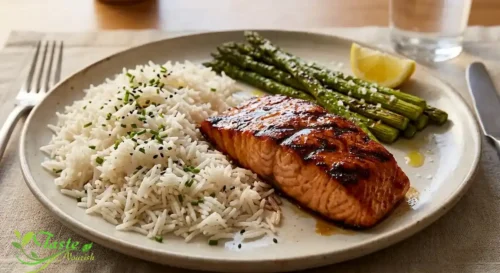
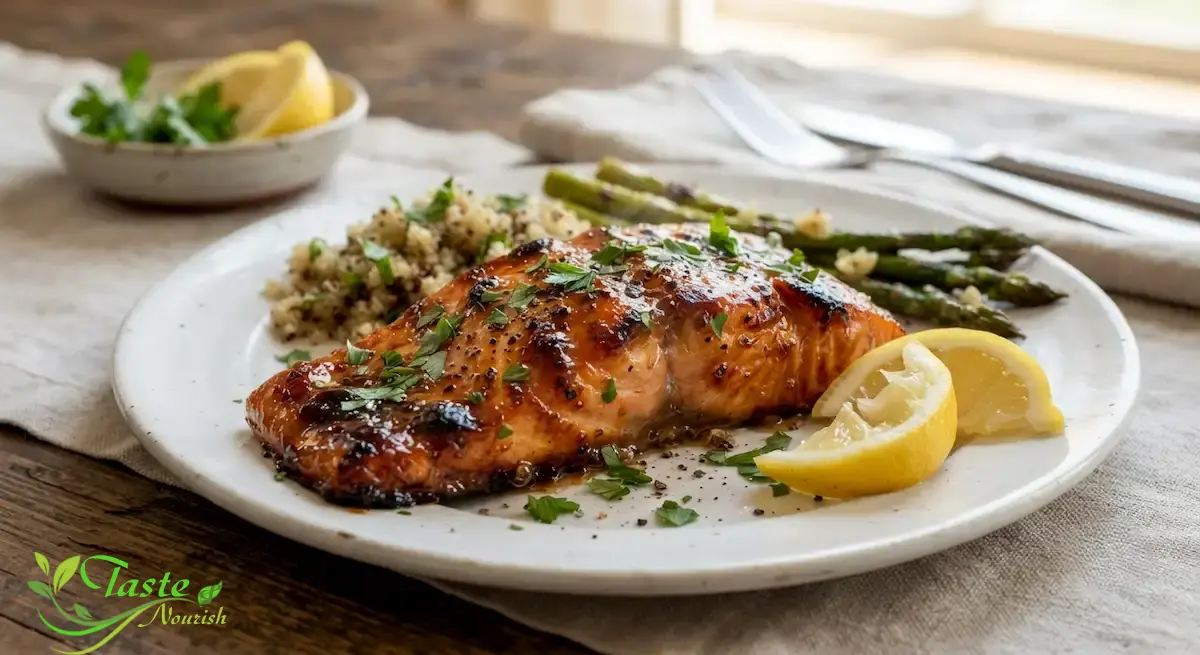
The sweetness of the glaze pairs naturally with sides that bring some acidity or bitterness to balance the plate. Roasted asparagus, garlicky sautéed greens, or a simple arugula salad with lemon vinaigrette all work well. For something heartier, serve the salmon over rice, quinoa, or mashed sweet potatoes, which soak up any extra glaze from the pan.
Maple Salmon Nutrition Information
The following values are an estimate per serving, based on a 6-ounce fillet with glaze, and will vary depending on the exact cut of salmon and any ingredient substitutions.
Nutrient
Approximate Amount
Calories
330 kcal
Protein
34 g
Total Fat
17 g
Carbohydrates
11 g
Sugars
9 g
Sodium
430 mg
Salmon is naturally rich in protein and long-chain omega-3 fatty acids, according to USDA FoodData Central, which tracks the nutrient composition of Atlantic salmon and other seafood. These omega-3s, primarily EPA and DHA, are associated with heart health benefits, and research summarized by the NIH Office of Dietary Supplements notes that the body cannot produce them on its own, making dietary sources like fish especially valuable.
Harvard’s Nutrition Source similarly points to fish as a major dietary source of long-chain omega-3 fats, and Harvard T.H. Chan School of Public Health notes that eating fatty fish once or twice a week may support cardiovascular health. The FDA’s advice about eating fish recommends two to three servings of lower-mercury fish per week as part of a balanced diet, and salmon is generally categorized among the “Best Choices” for regular consumption.
As for the maple syrup in the glaze, peer-reviewed research published via the National Library of Medicine’s PMC database has identified naturally occurring phenolic compounds in maple syrup that may contribute antioxidant activity, though it remains a source of added sugar and is best used in moderation.
This information is provided for general awareness and isn’t a substitute for personalized advice from a registered dietitian or healthcare provider.
How to Store and Reheat Maple Salmon
Let leftover salmon cool to room temperature before storing, then transfer it to an airtight container. Refrigerated, it stays fresh for up to 3 days. For longer storage, wrap individual fillets tightly and freeze for up to 2 months.
To reheat, warm the salmon gently in a 275°F oven for about 10 minutes, or until just heated through. This low, slow method helps prevent the fish from drying out. A skillet over low heat with a splash of water and a lid works well too. Microwaving is faster but tends to overcook the edges, so use short 20-second bursts if that’s your only option.
Make-Ahead Tips
The glaze can be whisked together up to 3 days in advance and stored in a sealed jar in the refrigerator. You can also marinate the raw salmon up to 2 hours ahead of time, though longer than that isn’t recommended, since the acidity in the lemon juice can start to change the texture of the fish.
This easy maple salmon recipe bakes in under 30 minutes with a sticky-sweet glaze of maple syrup, soy sauce, garlic, and Dijon mustard.
Ingredients
4 salmon fillets, about 6 ounces each
1/4 cup pure maple syrup
2 tablespoons soy sauce
1 tablespoon Dijon mustard
2 cloves garlic, minced
1 tablespoon olive oil
1 teaspoon fresh lemon juice
1/2 teaspoon smoked paprika, optional
Salt and black pepper, to taste
Fresh parsley or thyme, for garnish
Lemon wedges, for serving
Directions
Whisk together the maple syrup, soy sauce, Dijon mustard, minced garlic, olive oil, lemon juice, and smoked paprika.
Pat the salmon dry and pour two-thirds of the glaze over the fillets. Marinate 15 to 30 minutes at room temperature.
Preheat the oven to 400°F and line a rimmed baking sheet with parchment paper.
Arrange the salmon on the baking sheet and season lightly with salt and pepper.
Bake for 10 minutes, brush with the reserved glaze, then bake 2 to 5 minutes more until the salmon flakes easily.
Broil for 1 to 2 minutes for a deeper caramelized top, watching closely to avoid burning.
Rest 2 to 3 minutes, garnish with fresh herbs, and serve with lemon wedges.
Maple Salmon Recipe FAQs
Can I use frozen salmon for this recipe?
Yes, as long as it’s fully thawed first. Thaw fillets in the refrigerator overnight, then pat them very dry before marinating, since frozen salmon tends to release extra moisture.
What can I substitute for soy sauce?
Tamari works as a close, gluten-free swap. Coconut aminos are another option, though the flavor will be milder and slightly sweeter.
How do I know when the salmon is done?
The fish should flake easily with a fork and reach an internal temperature of at least 125°F for medium or 145°F if you prefer it well done. An instant-read thermometer takes the guesswork out of it.
Can I cook this on the stovetop instead of baking?
Yes. Sear the fillets in an oiled skillet over medium heat for about 4 minutes per side, brushing with the glaze during the last minute of cooking on each side.
Is maple salmon a healthy dinner option?
It can fit well into a balanced diet. Salmon is a good source of protein and omega-3 fatty acids, though the maple syrup does add natural sugar, so portion size is worth keeping in mind if you’re watching sugar intake.
Conclusion
This maple salmon recipe proves that a handful of pantry staples can turn into a genuinely restaurant-worthy dinner in under half an hour. Keep a close eye during the final broil, use a thermometer instead of guessing, and you’ll have a glossy, caramelized fillet on the table with almost no cleanup to show for it.
Zhang Y., et al. “Chemical Compositional, Biological, and Safety Studies of a Novel Maple Syrup Derived Extract for Nutraceutical Applications.” PMC, National Library of Medicine. https://pmc.ncbi.nlm.nih.gov/articles/PMC4334281
Hanan Abo Samra is the founder of Taste & Nourish, sharing trustworthy nutrition guidance and recipes drawn from 20+ years of hands-on cooking experience. When she's not developing new recipes, Hanan is researching the science behind everyday ingredients to bring readers practical, evidence-based guidance for a healthier lifestyle.