You’ve probably stood in your kitchen at 7 a.m., spoon in hand, wondering if you’re even eating oats at the right moment. Maybe a friend swears by overnight oats before bed, while your trainer insists on a bowl an hour before the gym. So which one is it?
Here’s the honest answer: the best time to eat oats depends on what you want oats to do for you, whether that’s weight loss, blood sugar control, muscle recovery, or just not feeling hangry by 10 a.m. This guide breaks down the science behind oat timing so you can stop guessing and start eating oats with a purpose.
Oats aren’t just a bland bowl of beige — they’re a metabolic tool, and like any tool, they work best when used at the right moment. Beta-glucan, the soluble fiber that makes oats famous, forms a gel-like substance in your gut that slows digestion and blunts blood sugar spikes by lowering glycemic response and helping regulate blood pressure and cholesterol. That slow-release mechanism behaves differently depending on your activity level, insulin sensitivity, and what else is happening in your body at that hour.
Eating oats right before a workout fuels muscles in one way; eating them at midnight interacts with your metabolism in a completely different way.
Think of oats less like a single-purpose food and more like a Swiss Army knife — the same tool, but a different blade depending on the job. Getting the timing right isn’t about rigid rules; it’s about matching the tool to the task you actually need done.
Key takeaway:Oats aren’t a one-size-fits-all food — when you eat them changes how your body uses them, not just how full you feel.
Morning Oats — The Classic Choice and Why It Works
For most people chasing steady energy and appetite control, breakfast remains the best time to eat oats. Morning is considered the best time to eat oatmeal for weight loss because starting your day with a warm bowl helps kickstart metabolism, and because oats take a long time to digest, eating them at breakfast prevents the dreaded mid-morning hunger pang that often leads to snacking.
That’s not just folk wisdom — it lines up with how your body handles carbohydrates after a night-long fast. Your cortisol is naturally elevated in the early hours, your digestive system is primed, and a slow-digesting carb source like oats gives you fuel without the crash that comes from sugary cereal or pastries.
If you’ve ever eaten a doughnut for breakfast and felt ravenous by 10:30, you already understand the problem oats are solving.
A bowl of oats essentially acts like a metering valve, releasing energy gradually instead of dumping it all at once.
How Morning Oats Affect Metabolism and Cortisol
Eating oats within the first hour of waking is effective for consistent energy, better blood sugar control, and reducing late-morning cravings, because that window aligns with naturally higher cortisol and a body primed to absorb nutrients. What you eat during that window genuinely shapes how the rest of your morning unfolds — your focus, your mood, and whether you’re reaching for a granola bar by lunchtime.
This doesn’t mean you need to eat the second your eyes open, but there’s a real physiological argument for not skipping breakfast altogether if oats are your go-to. Pairing oats with a source of protein, like Greek yogurt or eggs on the side, smooths out the energy curve even further.
The combination keeps you anchored rather than riding a blood sugar rollercoaster from 7 a.m. to noon.
Best Morning Add-Ins for Sustained Energy
What you stir into your bowl matters almost as much as the oats themselves. Here are the add-ins worth prioritizing:
Greek yogurt or skyr — adds protein that extends satiety well past breakfast.
Chia or flax seeds — boost omega-3s and add extra fiber without extra sugar.
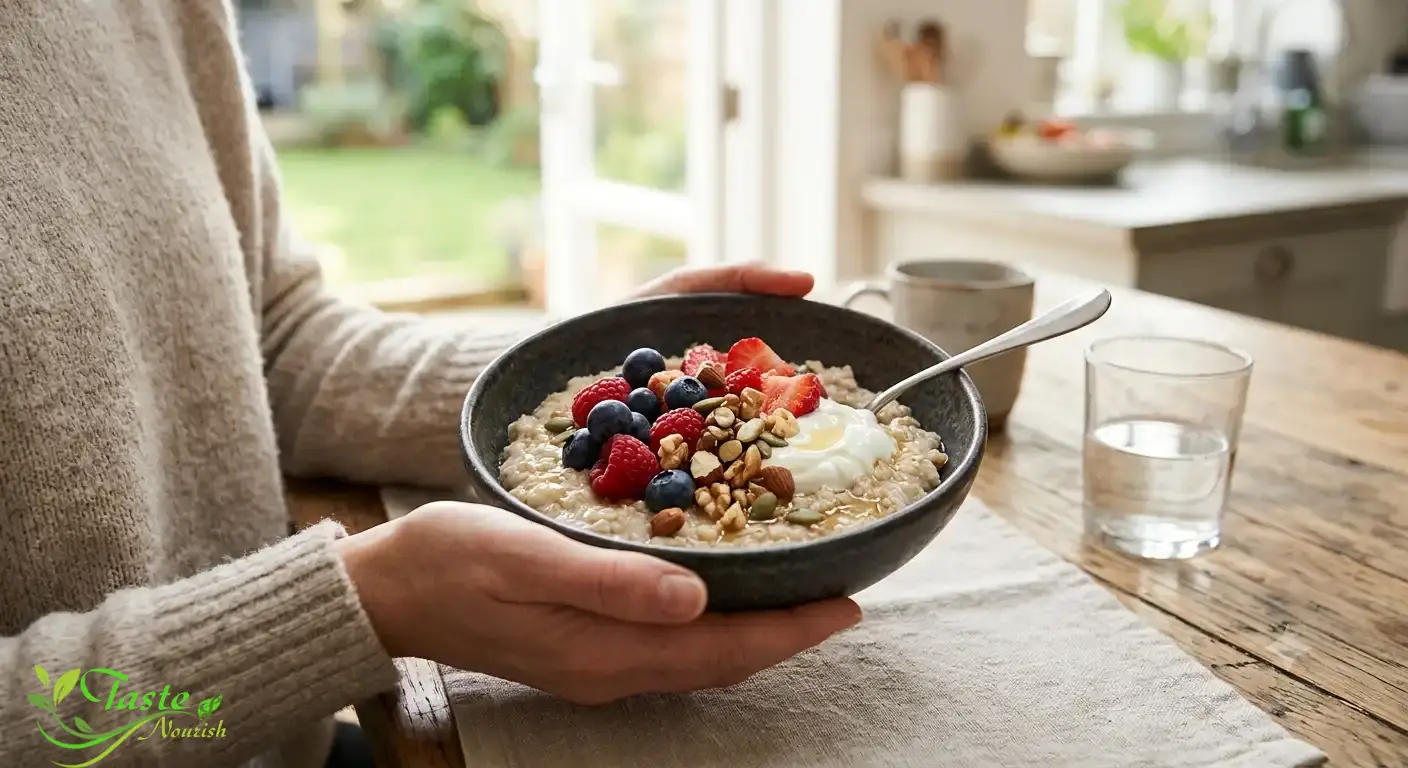
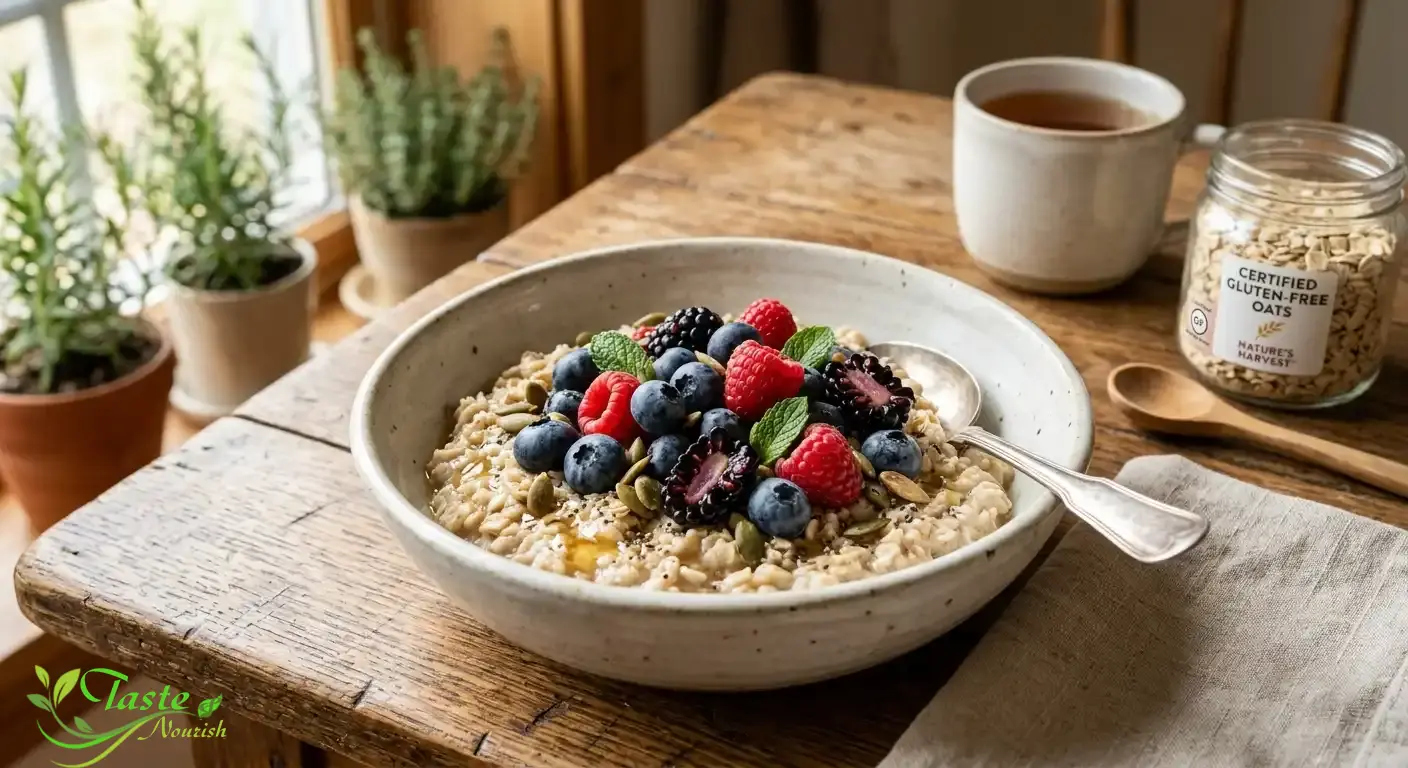
A handful of berries — provide antioxidants and natural sweetness, keeping added sugar low.
Nut butter — a spoonful adds healthy fats that slow digestion further.
Cinnamon — has been studied for mild blood sugar benefits and adds flavor without calories.
A small handful of nuts — walnuts or almonds add crunch, fat, and a protein boost.
Reader note: If your oats leave you hungry by 10 a.m. despite eating a “big” bowl, the problem usually isn’t portion size — it’s missing protein or fat. Plain oats and water digest faster than oats with toppings.
Pre-Workout Oats — Fueling Your Training Session
If your goal is performance rather than weight loss alone, the best time to eat oats shifts toward the hour or so before exercise. Oats provide carbs for fuel, protein for muscle support, and fats for endurance, digesting steadily rather than heavily — making them effective when eaten roughly 60–90 minutes before a workout to avoid energy crashes and hunger distractions.
This timing window gives your stomach enough time to begin breaking down the meal so you’re not training on a brick of undigested oatmeal, but it’s close enough that the slow-release carbohydrates are actively available when you need them most.
Athletes and casual gym-goers alike use this window because oats avoid the rapid sugar spike (and subsequent crash) you’d get from something like a sports drink or candy bar. It’s the difference between a campfire that burns steadily for hours and a pile of dry kindling that flares up and dies in minutes. takenoats
How Far Before Exercise Should You Eat Oats?
The 60–90 minute window isn’t arbitrary — it reflects how long it typically takes for complex carbohydrates to begin converting into usable glycogen without causing gastrointestinal discomfort mid-workout.
Eating too close to training, say 15–20 minutes before, risks cramping or sluggishness because your blood is busy directing itself toward digestion rather than your muscles.
Eating too far in advance, four or five hours out, means the energy boost may have already faded by the time you start your set.
For early risers who train first thing, a smaller bowl 45 minutes before exercise, paired with a banana for quicker-acting carbs, often strikes the right balance.
Experiment within that window to find your personal sweet spot, since digestion speed varies meaningfully between individuals.
Best Time to Eat Oats — Morning, Afternoon, or Night?
The best time to eat oats depends on your health goals. Oats can support workout recovery, curb afternoon cravings, and even fit into an evening routine for people managing cholesterol.
Oats After a Workout (Recovery and Muscle Refueling)
Eating oats after exercise can help replenish depleted glycogen stores and support muscle recovery.
Why oats work post-workout:
Provide carbohydrates to restore glycogen stores.
Pair well with protein sources like whey protein or cottage cheese.
Supply amino acids needed for muscle repair.
Help prevent energy crashes and post-workout fatigue.
Offer a minimally processed alternative to sugary recovery drinks.
Best post-workout combination: A bowl of oats topped with whey protein, Greek yogurt, or cottage cheese.
Oats as an Afternoon Snack
Oats aren’t just a breakfast food. They also make an excellent mid-afternoon snack.
Benefits of eating oats in the afternoon:
Help curb cravings between meals.
Provide steady, long-lasting energy.
Reduce the likelihood of reaching for sugary snacks.
Support portion control and weight management.
Increase fullness thanks to their fiber content.
Simple snack idea: A small bowl of oats with nuts, cinnamon, or a drizzle of honey.
Eating Oats at Night — Cholesterol and Digestion Benefits
Eating oats in the evening can be a practical option, especially for people trying to manage cholesterol levels.
Potential benefits of nighttime oats:
Beta-glucan fiber binds to cholesterol and helps remove it from circulation.
Supports overnight cholesterol metabolism.
Provides a light and easy-to-digest dinner option.
May contribute to heart health when eaten regularly.
Does Eating Oats at Night Cause Weight Gain?
This is the question that stops most people from trying oats at dinner, and the honest answer is nuanced. Oats themselves aren’t inherently fattening at any hour — what matters more is total daily calories, portion size, and what you pair them with. That said, broader research on meal timing suggests later eating isn’t neutral for everyone. A five-month observational study of 420 people following a standardized Mediterranean diet found that those who ate their midday meal after 3 p.m. lost significantly less weight than early eaters — 7.7 kg versus 9.9 kg — despite reporting similar calorie intake, sleep duration, and macronutrient content.
Separately, a controlled trial found that an evening snack, compared to an identical morning snack, decreased fat oxidation and raised total and LDL cholesterol even though glucose and insulin levels didn’t differ.
The takeaway isn’t “never eat oats at night” — it’s that a modest, plain bowl of oats at dinner is very different from a sugar-loaded version eaten at 11 p.m. right before bed.
Weight gain depends primarily on:
Total daily calorie intake.
Portion size.
Toppings and added ingredients.
Overall eating habits.
For healthier nighttime oats:
Keep portions moderate.
Limit added sugar.
Avoid large bowls immediately before bed.
Choose simple toppings such as berries, nuts, or cinnamon.
Best Time to Eat Oats for Weight Loss
If weight loss is your primary driver, timing strategy matters less than consistency, but the data does lean in one direction.
For weight loss, the most effective approach is eating oatmeal strategically throughout the day — starting the morning with a hearty bowl for appetite management, adding oats before a workout for sustained energy, and using them as a mid-morning or afternoon snack to curb cravings.
The common thread across every successful approach is fiber-driven satiety: oats fill your stomach and slow gastric emptying so you’re simply not as hungry two hours later. This is precisely why oats outperform low-fiber breakfast options like white toast or sugary cereal in head-to-head appetite studies — it isn’t about “burning fat” through some metabolic trick, but about preventing the overeating that derails most diets by 11 a.m.
What the Research Says About Meal Timing and Weight
It’s worth separating myth from mechanism here, because a lot of weight-loss advice around meal timing oversimplifies real data. In a randomized crossover study, participants who shifted their eating schedule later showed attenuated melatonin and leptin peaks, sustained glucose elevation through early morning hours, and decreased insulin secretion — suggesting an impaired insulin response when eating is delayed.
In another trial, men restricted from eating between 7 p.m. and 6 a.m. consumed roughly 244 fewer daily calories than during their usual eating schedule and showed a small but statistically significant weight reduction, compared to a slight weight gain during normal eating. None of this proves oats specifically cause weight gain at night — it shows that overall late-evening eating patterns can subtly work against weight management goals, regardless of the specific food.
Translated practically: an earlier oat-based breakfast supports weight loss more reliably than relying on oats as a late-night meal replacement.
Quick takeaway table — Oat timing and weight goals:
Goal
Best Timing
Why It Works
General weight management
Breakfast
Reduces mid-morning snacking via sustained satiety
Appetite control during the day
Mid-morning or afternoon snack
Curbs cravings before they peak
Cholesterol management
Dinner (light portion)
Aligns with overnight cholesterol processing
Muscle recovery
Within 60 minutes post-workout
Replenishes glycogen and supplies protein-pairing carbs
Best Time to Eat Overnight Oats
Overnight oats deserve their own discussion because the soaking process changes both convenience and digestion. Overnight oats — oats soaked in milk or yoghurt in the fridge overnight — are perfect for the morning, giving busy people a healthy, fiber-rich meal ready to grab without any cooking.
But does soaking change how your blood sugar responds? Research specifically testing oats soaked overnight in milk versus other breakfast options examined whether this preparation method retains the same relatively low glycemic and insulinaemic impact as cooked oats, given that traditional cooking gelatinizes starch and increases glycemic response while solubilizing beta-glucan.
In practical terms, this means overnight oats tend to digest a bit differently than hot cooked oats — generally favorably, since the cold-soak process doesn’t trigger the same rapid starch breakdown that boiling does.
If your schedule makes a hot breakfast impossible, prepping overnight oats the evening before remains one of the most reliable ways to guarantee a fiber-rich morning regardless of how rushed you are.
Oats and Blood Sugar — Timing for Diabetics
For anyone managing blood sugar, timing oats correctly isn’t just about convenience — it’s about avoiding unnecessary glucose spikes.
Oats have a low glycemic index, causing a slower, more gradual rise in blood sugar compared to refined carbohydrates, largely because the beta-glucan fiber forms a gel-like substance that slows glucose absorption and may enhance insulin sensitivity. That said, timing still interacts with portion size and what else is on your plate.
A more pronounced glucose response can occur when a large amount of overnight oats is eaten late at night, when insulin sensitivity is naturally lower, which is why portion control matters as much as the clock — roughly half to three-quarters of a cup of dry oats is sufficient for most people.
Post-meal spikes can be further reduced by pairing oats with mild activity, like a short morning walk, since exercise improves insulin sensitivity while poor sleep tends to worsen it.
Glycemic Index of Different Oat Types
Not all oats behave the same way in your bloodstream, and the differences are large enough to matter for blood sugar management.
Steel-Cut vs. Rolled vs. Instant Oats
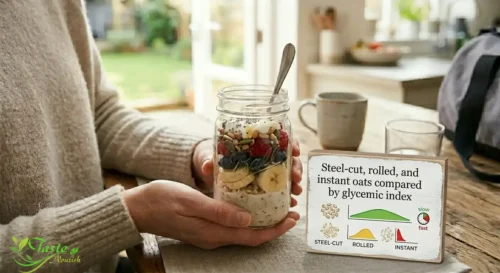
Steel-cut oats: carry a glycemic index of around 53, making them the slowest-digesting and gentlest option for blood sugar control.
Rolled oats: sit slightly higher, around a GI of 59, due to the additional processing (steaming and flattening) compared to steel-cut.
Instant oats: tend to have the highest GI, around 67, because heavier processing breaks down the starch structure further, allowing faster digestion and quicker blood sugar rises.
Expert insight:Oatmeal generally has a low-to-medium glycemic index ranging between 40 and 70 depending on preparation, meaning how you cook and what you add matters as much as the type of oat you choose.
Oats Nutrition Facts Table
Understanding what’s actually in your bowl helps explain why timing produces such different effects depending on activity level and goals.
Nutrient (per 100g raw oats)
Amount
Calories
389 kcal
Protein
~17g (17% of calories)
Carbohydrates
~67% of calories
Fat
~16% of calories
Fiber
38% of Daily Value
Glycemic Index
~59 (varies by processing)
Manganese
214% of Daily Value
Potassium
9% of Daily Value
Comparing Oat Timing Strategies — Pros and Cons
Every timing approach comes with tradeoffs worth weighing against your specific goals and schedule.
Requires morning prep time unless using overnight oats
Pre-workout
Sustained energy, fewer crashes during training
Needs 60–90 min lead time to digest properly
Post-workout
Supports glycogen and muscle recovery
Less effective without added protein source
Afternoon snack
Prevents vending-machine snacking
Easy to overdo portions if not measured
Dinner
May support cholesterol management
Late, large portions may align with reduced weight loss in some studies
How Much Oats Should You Eat at Each Time of Day?
Portion size shifts the entire equation, regardless of when you eat. Here’s a practical breakdown for different times and goals:
Breakfast (general health): 40–50g dry oats, roughly ½ cup, paired with protein.
Pre-workout: 30–40g dry oats with a quick carb source like banana for faster fuel.
Post-workout: 40–50g dry oats blended with protein powder or Greek yogurt.
Afternoon snack: 20–30g dry oats — enough to curb hunger without overloading calories.
Dinner (cholesterol-focused): 30–40g dry oats, kept low-sugar and light on toppings.
Diabetic-friendly portion: ½ to ¾ cup dry oats max, paired with protein or fat to blunt glucose response.
Common Mistakes That Cancel Out the Benefits of Oats
Even the best-timed bowl of oats can backfire if a few common habits sneak in. Here’s what derails most people’s oat routine without them realizing it:
Drowning oats in sugar or syrup, which spikes blood sugar regardless of the fiber content.
Choosing heavily processed instant packets loaded with added sugar instead of plain rolled or steel-cut oats.
Eating oats alone with no protein or fat, leading to hunger returning within an hour or two.
Oversized portions, since even healthy carbohydrates can cause excess calorie intake at any time of day.
Skipping hydration, since oats’ fiber needs adequate water intake to function properly in digestion.
Eating a large bowl very late at night, which research suggests may align with reduced insulin sensitivity for some people.
Practical Tips for Building an Oats Routine That Sticks
Key takeaway: Consistency beats perfection — the “best” time to eat oats is ultimately the time you’ll actually stick with long-term.
How to Make Oats a Daily Habit
The long-term benefits of oats come from consistency rather than eating them at a specific time of day. Building a sustainable oat habit can be simple with a few practical strategies.
Tips for Eating Oats Regularly
Prepare overnight oats in advance: Make several servings on Sunday to save time during busy weekdays.
Keep oats available at work: Store rolled or steel-cut oats at your desk for a convenient and healthier snack option.
Experiment with evening oats: If you’re managing cholesterol, try a modest bowl of oats at dinner and monitor how you feel over time.
Pay attention to your body’s signals: Some people prefer oats in the morning, while others feel better eating them later in the day.
Focus on consistency: Eating oats regularly matters more than following a strict schedule.
♥ The Key Takeaway
There is no single “best” time to eat oats. The ideal approach is to find a routine that fits your lifestyle and helps you enjoy oats consistently, allowing you to benefit from their fiber, nutrients, and long-term health advantages.
Best Time to Eat Oats FAQs
Is it bad to eat oats at night?
Not inherently. A light, plain oatmeal dinner can support cholesterol management since the body processes cholesterol overnight, though very large or sugar-heavy portions late at night may align with reduced insulin sensitivity for some individuals.
Do oats help you lose belly fat specifically?
Oats don’t target fat in one area, but their fiber content supports overall calorie control by increasing fullness, which contributes to general fat loss over time when paired with a balanced diet.
Can I eat oats every day without getting bored or gaining weight?
Yes, as long as portions stay reasonable and toppings don’t pile on excess sugar; oats provide a healthy balance of energy, protein, and fiber that supports daily nutritional needs when eaten consistently.
Are overnight oats less healthy than hot cooked oats?
No — there is no inherent blood sugar issue with overnight oats; how they’re prepared and what they’re eaten with matters more than the soaking method itself.
What’s the best type of oats for blood sugar control?
Steel-cut oats, with a glycemic index around 53, cause the slowest and most gradual blood sugar rise compared to rolled or instant oats, making them the preferred choice for stable glucose control.
Conclusion
There’s no single universally “correct” hour to eat oats — the right timing depends entirely on what you’re optimizing for. Morning oats support metabolism and appetite control, pre-workout oats fuel performance, post-workout bowls aid recovery, and a modest evening serving may support cholesterol management thanks to the body’s overnight processing rhythm. What stays consistent across every scenario is portion control, pairing oats with protein or healthy fats, and choosing less-processed varieties like steel-cut or rolled oats over heavily refined instant packets.
Build your oats routine around your actual goals and schedule rather than chasing a mythical perfect hour, and you’ll get far more consistent results than obsessing over the clock ever could.
Hanan Abo Samra is the founder of Taste & Nourish, sharing trustworthy nutrition guidance and recipes drawn from 20+ years of hands-on cooking experience. When she's not developing new recipes, Hanan is researching the science behind everyday ingredients to bring readers practical, evidence-based guidance for a healthier lifestyle.