
Oats Calories: Dry vs Cooked, Milk and Toppings Explained
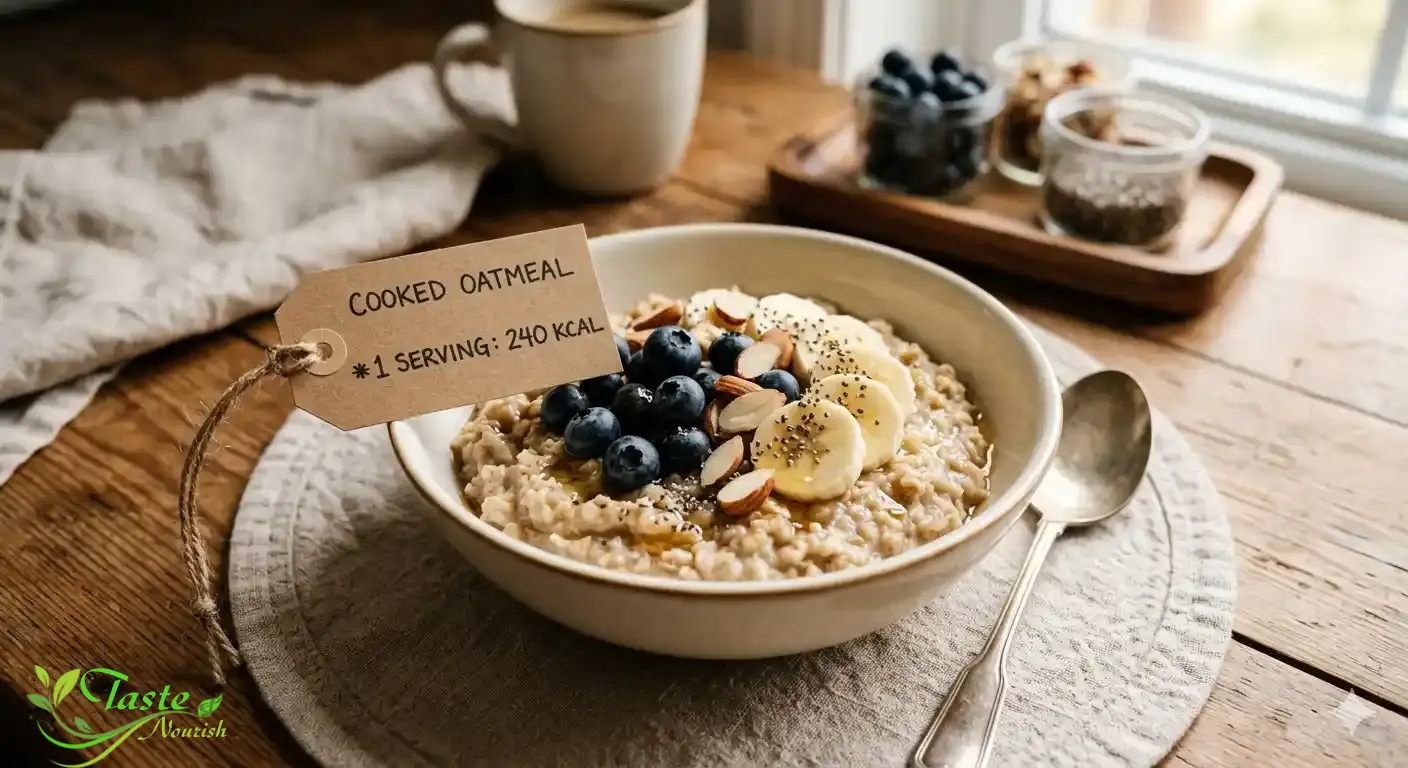
Oats calories depend on three things: how much dry oats you measure, whether you count them dry or cooked, and what you stir in. The gap between the dry and cooked numbers confuses a lot of people, and so does the jump from a plain bowl to one loaded with milk and toppings.
This guide gives the numbers for each step, so you can count your own bowl accurately.
How Many Calories Are in Oats? (Quick Answer)
The short answer on oats calories: plain dry oats have about 379 calories per 100 grams, which works out to roughly 152 calories in a 40-gram serving (about 1/2 cup). Cooked with water, one cup of oatmeal (234 grams) has about 166 calories. Milk and toppings add calories on top of those figures.
Key Takeaways: Oats Calories
- Oats calories are easiest to track by weighing the oats dry, before any water, milk, or toppings go in.
- Cooking with water adds weight, not calories. A cooked cup comes from roughly 44 grams of dry oats, which is why it is not identical to a 40-gram dry portion.
- Milk changes the total more than most people expect: a cup of whole milk adds about 149 calories, while unsweetened almond milk adds about 30.
- Nut butter, honey, and seeds are small spoonfuls with a large calorie effect. A fully loaded bowl can reach roughly 500 calories.
- Plain rolled, steel-cut, and instant oats are similar by dry weight. Flavored packets are the exception, because of added sugar.
Oats Calories at a Glance
| Amount | Approximate calories |
|---|---|
| 100 g dry oats | 379 |
| 1 cup dry oats (81 g) | 307 |
| 1/2 cup dry oats (40 g) | 152 |
| 100 g cooked with water | 71 |
| 1 cup cooked with water (234 g) | 166 |
These values come from the USDA FoodData Central entries for oats, regular and quick, not fortified, dry, and oats, regular and quick, unenriched, cooked with water, without salt. They are rounded, and individual brands differ, so the package label is the best reference for the product you buy.
Why Dry and Cooked Oats Show Different Numbers
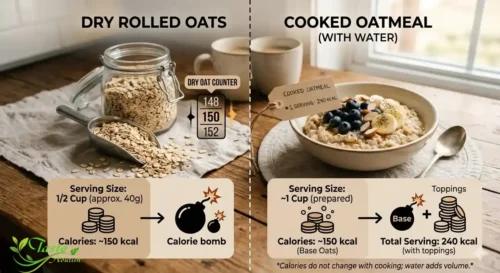
Oats absorb water as they cook. Water has no calories, so 100 grams of cooked oatmeal is mostly water and carries far fewer calories than 100 grams of dry oats. The calories from the original oats are still there; they are just spread over a heavier portion.
The USDA entry for a cooked cup (166 calories) works out to roughly 44 grams of dry oats, which is slightly more than a 40-gram portion. That is why a cooked cup and a 1/2-cup dry measure are close but not the same.
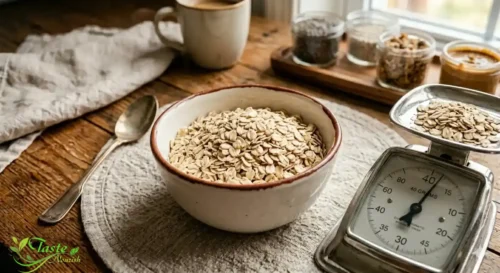
The practical rule: compare dry with dry and cooked with cooked, and never apply a per-100-gram dry value to cooked oatmeal. I would weigh the oats dry on a kitchen scale before cooking, because a level cup is 81 grams in the USDA entry but a heaped or packed scoop can weigh noticeably more.
Oats Calories by Type
Plain rolled oats, steel-cut oats, and plain instant oats provide broadly similar calories when you compare them by dry weight, so the type matters less than the amount you measure. Labels for plain products usually list a serving of about 40 grams, which makes them easy to compare.
Differences show up in cooked portions. Steel-cut oats generally absorb more water and cook longer, so a cooked cup may weigh and measure differently from rolled oats. Flavored instant packets are where calories can climb, because added sugar, dried fruit, and other ingredients are part of the product. Check the label instead of judging by the word “instant.”
How Milk and Other Liquids Change the Total
Water adds nothing, so plain oatmeal stays at the calories of the dry oats. Cooking with milk or a plant-based drink is where the total starts to move. The values below are for 1 cup (about 240 mL).
| Liquid | Approximate calories |
|---|---|
| Water | 0 |
| Whole milk | 149 |
| 2% reduced-fat milk | 122 |
| Nonfat (skim) milk | 83 |
| Unsweetened almond milk | about 30 |
| Unsweetened oat milk | about 90 |
The dairy values come from USDA data summarized by Harvard Health. The plant-milk figures are from University of Florida extension guides on almond milk and oat milk. Sweetened and flavored versions are higher, and brands vary, so check the label.
If you cook the oats in milk and eat all of it, add the full milk calories to the oats. Milk also adds protein and calcium, so the extra calories are not empty ones. Whether they fit your day is a personal question.
How Toppings Change Your Oatmeal Calorie Count
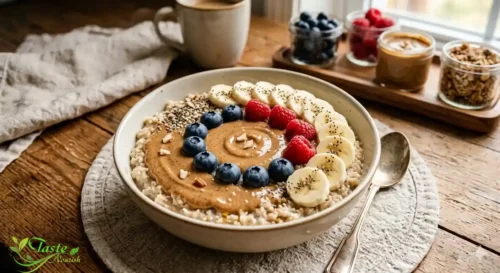
Toppings are where most of the surprise calories come from, because the portions are small but dense. Nut butter is the usual culprit: a heaped spoonful can hold noticeably more than a level tablespoon.
| Topping | Portion | Approximate calories |
|---|---|---|
| Almond butter | 1 tablespoon | about 98 |
| Peanut butter | 1 tablespoon | about 96 |
| Chia seeds | 1 tablespoon | about 58 |
| Honey | 1 tablespoon | about 60–65 |
| Maple syrup | 1 tablespoon | about 52 |
| Blueberries | 1/2 cup | about 42 |
Other toppings, such as bananas, nuts, and dried fruit, vary a lot by size and brand, so weigh or check the label.
Three sample bowls
Here is how the pieces add up, starting from a 40-gram portion of dry oats (152 calories).
| Bowl | What is in it | Approximate calories |
|---|---|---|
| Plain | 40 g oats cooked in water | 152 |
| Lean | 40 g oats, 1 cup unsweetened almond milk, 1/2 cup blueberries | 224 |
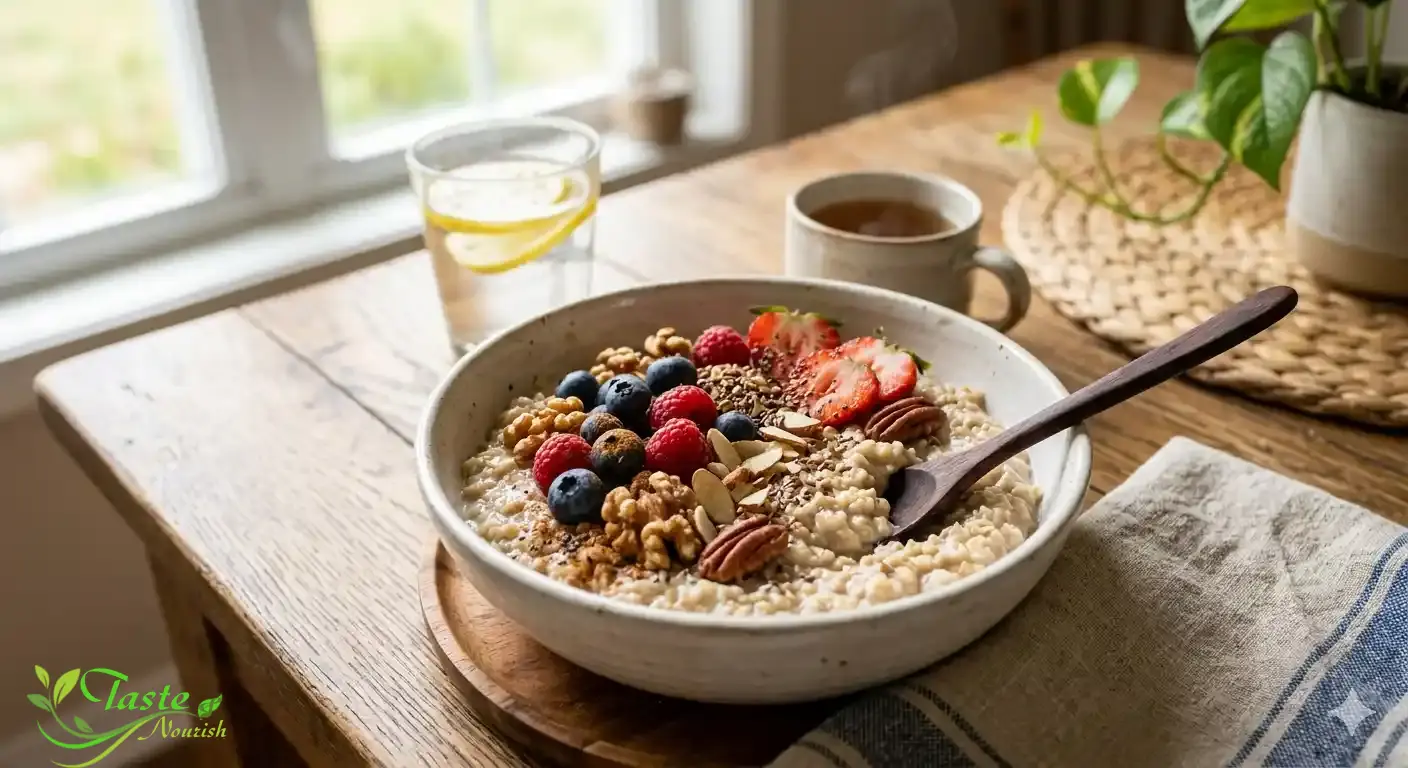
| Loaded | 40 g oats, 1 cup whole milk, 1 tablespoon almond butter, 1/2 cup blueberries, 1 tablespoon chia seeds | 499 |
None of these is better or worse in itself. The loaded bowl also brings more protein, fat, and fiber than the plain one. The point is that the same 40 grams of oats can sit anywhere from about 150 to about 500 calories depending on what goes with it.
Common Mistakes When Counting Oats Calories
- Mixing dry and cooked weights: 100 grams of dry oats and 100 grams of cooked oatmeal are very different amounts of food.
- Measuring by scoop: Cups and spoons vary with how the oats are packed. A scale is more reliable than a cup.
- Forgetting the liquid: Milk and plant drinks count, especially if you cook the oats in them.
- Overlooking small toppings: A spoonful of nut butter or honey can add as many calories as a third of the oats themselves.
- Assuming all instant oatmeal is the same: Plain instant oats and flavored packets are different products.
Do Oats Help With Weight Loss?
Oats can be a filling, fiber-containing breakfast, but studies have not shown that they cause weight loss on their own. Total calories, portions, and toppings decide the result, which is why counting the bowl accurately matters. Our guide to oats for weight loss covers portions and meal ideas, and the benefits of oats article explains what the research does and does not show.
Oats Calories FAQs
How many calories are in 1 cup of dry oats?
A level cup of dry rolled oats (81 grams) has about 307 calories in the USDA entry. A heaped or packed scoop weighs more and so has more calories, which is why weighing is more reliable than measuring by cup.
Is oatmeal high in calories compared with other breakfasts?
A plain bowl is moderate. The total depends mostly on the milk and toppings, as the sample bowls above show. Compare breakfasts by calories together with the fiber and protein you want, not by calories alone.
Do steel-cut oats have fewer calories than rolled oats?
Plain steel-cut and rolled oats are similar by dry weight. A cooked cup can differ because the oats absorb different amounts of water.
How can I make oatmeal lower in calories without losing flavor?
Measure the dry oats, cook them in water or an unsweetened plant drink, and flavor them with cinnamon or fruit. Measure nut butter and sweeteners instead of eyeballing them. There is no need to drop nutritious toppings; just account for them.
Are instant oats unhealthy because of their calories?
No. Plain instant oats have calories similar to other plain oats by dry weight. Flavored packets add sugar and other ingredients, so check the label.
Plain Oatmeal with Water
A simple, base oatmeal recipe made with water, using 40g of dry oats per serving.
1
servings2
minutes5
minutes152
kcalIngredients
40g rolled oats
180ml water
Pinch of salt (optional)
Directions
- Combine oats and water in a small saucepan over medium heat.
- Bring to a gentle simmer, stirring occasionally, for about 5 minutes.
- Remove from heat once the oats reach your desired thickness and serve.
The Bottom Line on Oats Calories
Oats calories are simple once you separate three questions: how much dry oats, cooked in what, and topped with what. I would start from a weighed dry portion, add the liquid and toppings you actually use, and treat the total as an estimate, since brands differ.
For vitamins, minerals, and per-serving nutrition, see oats nutrition facts. For the evidence on cholesterol and blood sugar, see the benefits of oats.
This article provides general nutrition information and is not personal medical advice. If you track calories for a medical reason or have a health condition, check with a qualified healthcare professional.