Flax seeds show up on ingredient lists for smoothies, oatmeal, and baked goods more than almost any other seed, and for good reason: they’re one of the richest food sources of a specific plant omega-3 fat, plus fiber and a class of plant compounds called lignans. This article looks at the health benefits of flax seeds the way the evidence actually supports them, not the way most “superfood” roundups do.
The health benefits of flax seeds are mostly tied to three components: omega-3 fat (ALA), soluble and insoluble fiber, and lignans. Human research most consistently supports modest improvements in LDL cholesterol, blood pressure, and digestive regularity. Evidence for blood sugar and cancer-related effects is real but preliminary, and flax seeds work best ground rather than whole.
Key Takeaways: Health Benefits of Flax Seeds
Flax seeds are the richest common food source of alpha-linolenic acid (ALA), a plant-based omega-3 fat, along with a notable amount of fiber in a small serving.
The strongest human evidence for the health benefits of flax seeds involves LDL cholesterol and blood pressure, largely from studies using 30 grams (about 2 tablespoons) of ground flaxseed daily.
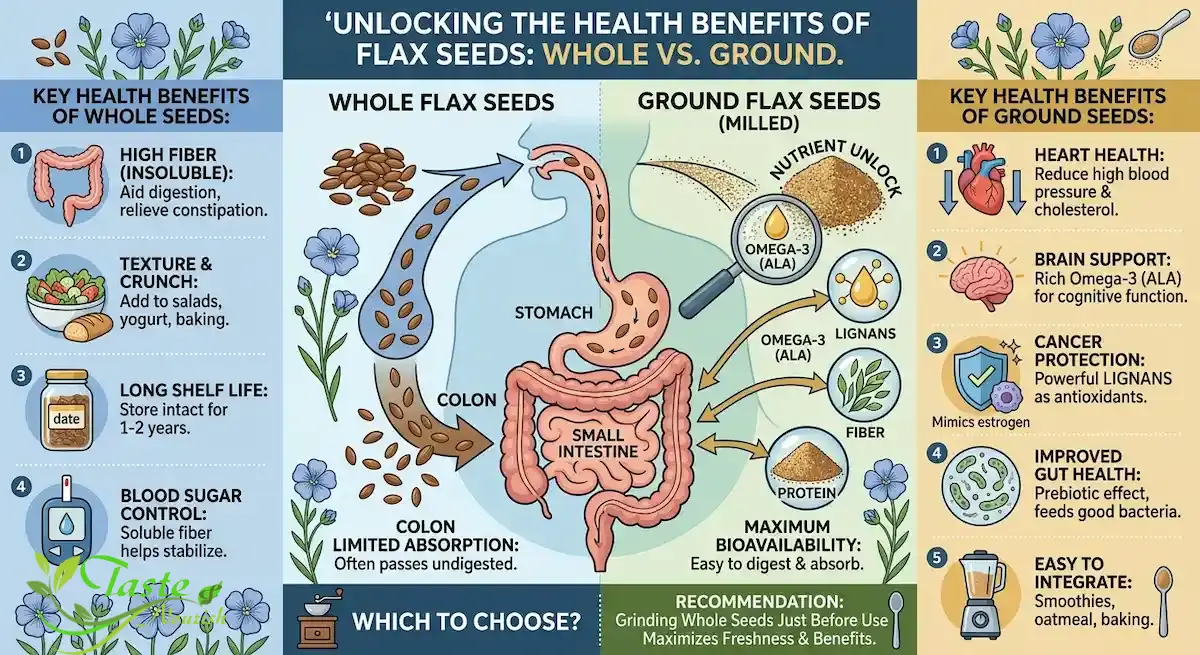
Whole flax seeds largely pass through the digestive tract intact; grinding them is what makes their nutrients available to your body.
Lignans in flax seeds are being studied for a possible role in hormone-related cancer risk, but this research is still early and shouldn’t be read as proof of a protective effect.
Flax seeds should never be eaten raw or unripe, and people on blood thinners or with hormone-sensitive conditions should talk to a doctor before adding large amounts.
What Is Flaxseed?
Flaxseed comes from the flax plant (Linum usitatissimum), grown for thousands of years for both its fiber (linen) and its seed. The seeds are small, oval, and shiny, ranging from reddish-brown to golden yellow depending on the variety, with a mild, nutty flavor. You’ll find flax as whole seeds, ground meal, flour, or pressed oil, and it’s sold as a food ingredient as well as a dietary supplement.
Flaxseed Nutrition Facts
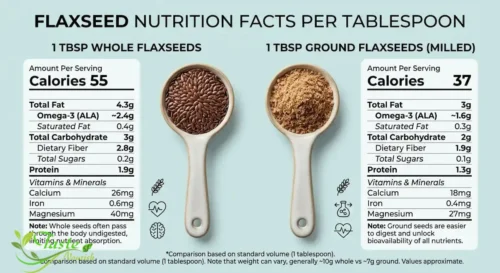
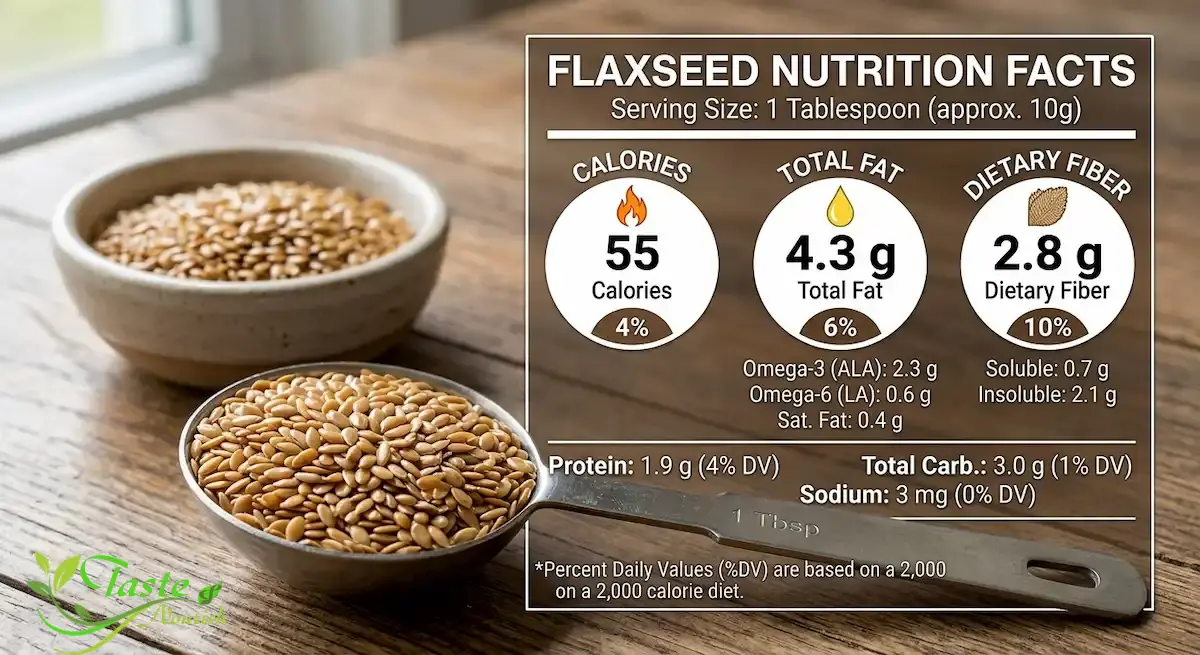
Flax seeds are calorie-dense but nutrient-dense too, which is why typical servings are small — usually 1 to 2 tablespoons. The table below reflects USDA FoodData Central values for ground flaxseed.
Nutrient
Amount per 1 tbsp, ground (7 g)
Calories
37
Total Fat
3 g (mostly polyunsaturated and monounsaturated)
Carbohydrates
2 g
Dietary Fiber
1.9 g
Sugars
Less than 1 g
Protein
1.3 g
Flax seeds are also unusually rich in alpha-linolenic acid (ALA), an essential omega-3 fat. The USDA estimates roughly 1.8 grams of omega-3 fatty acids per tablespoon of ground flaxseed — for comparison, the daily adequate intake for ALA is 1.6 grams for men and 1.1 grams for women, so a single tablespoon can cover that amount. Values vary somewhat by flax variety and growing conditions, so treat these as reliable estimates rather than fixed numbers.
Potential Health Benefits of Flax Seeds
If you’re looking for a flaxseed health benefits list that holds up to scrutiny, it’s shorter than most articles suggest — but each item below is backed by actual human research, not just a nutrient’s theoretical function.
Heart Health: Cholesterol and Blood Pressure
This is where the evidence for flax seeds is strongest. According to the Mayo Clinic, several studies have found that daily flaxseed intake can lower total cholesterol and LDL (“bad”) cholesterol, an effect generally attributed to its fiber, ALA, and lignan content working together rather than any single component.
Blood pressure evidence comes from a well-known randomized, placebo-controlled trial in patients with peripheral artery disease, most of whom also had high blood pressure. Participants who consumed 30 grams of milled flaxseed daily for six months saw significant reductions in both systolic and diastolic blood pressure compared with placebo, with effects linked to blood levels of ALA and flax lignans (Rodriguez-Leyva et al., Hypertension).
It’s worth noting this trial studied a specific patient population already managing cardiovascular disease, so the size of the effect may not translate directly to healthy adults.
Digestive Regularity
Flax seeds contain both soluble fiber, which forms a gel-like mucilage in water, and insoluble fiber, which adds bulk to stool. Cleveland Clinic dietitian Julia Zumpano notes that this soluble fiber slows digestion and can help you feel full longer, and Mayo Clinic lists constipation relief as one of the more consistently supported uses of flaxseed.
This is a fiber effect rather than something unique to flax — but flax delivers a meaningful amount of fiber in a small, easy-to-add serving.
Blood Sugar and Type 2 Diabetes
Evidence here is genuinely mixed. Mayo Clinic states that flaxseed might lower blood sugar in people with type 2 diabetes, but cautions that study results are inconsistent. Some individual trials, including one using 16 grams of flaxseed daily in adults with type 2 diabetes, reported improvements in glucose and lipid markers, but findings vary by dose, population, and study design. This is a plausible benefit worth discussing with a healthcare provider if you have diabetes, not a settled outcome.
Lignans and Cancer Risk: A Promising but Unproven Lead
Flax seeds are an exceptionally concentrated source of lignans, plant compounds with a mild estrogen-like structure that are being studied for a possible role in hormone-related cancers.
The USDA notes that in one human study, women newly diagnosed with breast cancer who ate a muffin containing 25 grams of flaxseed daily for about six weeks showed changes suggestive of reduced tumor cell growth, and a separate study found that men with a precancerous prostate condition had lower PSA levels after adding 30 grams of flaxseed to a low-fat diet daily (USDA ARS).
These are real findings, but they come from small studies measuring biomarkers, not large trials measuring cancer diagnoses or survival. Broader omega-3 research tells a more cautious story: a large clinical trial reviewed by the NIH Office found that omega-3 supplementation did not reduce overall cancer risk, including breast, prostate, or colorectal cancer. The honest summary is that flaxseed’s lignans are an active area of research, not an established cancer-prevention strategy.
Why Ground Flaxseed Works Better Than Whole
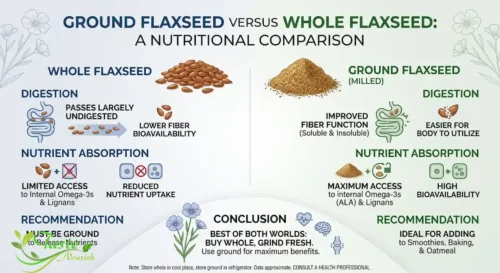
This is one of the most practically important facts about flax seeds, and it’s often left out of benefit-focused articles. Whole flax seeds have a tough outer coat that resists digestion, so a meaningful portion can pass through your digestive tract without being broken down — meaning you miss out on the ALA, lignans, and much of the fiber’s benefit. Mayo Clinic News Network both note that ground or milled flaxseed is significantly easier for the body to absorb than whole seed.
If you buy whole flax seeds, grinding them yourself in a coffee or spice grinder just before use preserves freshness. Pre-ground flaxseed meal is more convenient but oxidizes faster, which affects flavor and fat quality over time.
How Much Flaxseed Should You Eat?
There’s no official dietary reference intake for flaxseed itself. Mayo Clinic Health System describes 1 to 2 tablespoons per day as a commonly used, reasonable amount, and most of the research showing cholesterol and blood pressure benefits used doses in the 30-gram (roughly 2 to 4 tablespoon) range daily.
There’s no evidence that more is automatically better, and very high intakes raise the safety concerns covered below — so starting with a tablespoon or two and building up as tolerated is a sensible approach rather than a specific target to hit.
Simple Ways to Add Flaxseed to Your Diet
Smoothies: Stir a tablespoon of ground flaxseed into a blended smoothie; it thickens the texture slightly and blends in without changing the flavor much.
Oatmeal or yogurt: Sprinkle over hot cereal or yogurt for added fiber and a mild, nutty note.
Baking: Mix into muffin, pancake, or bread batter — 1 tablespoon of ground flaxseed plus 3 tablespoons of water can replace one egg for binding in vegan baking.
Salads and soups: Sprinkle ground flaxseed over salads or stir into soups just before serving to avoid excess heat exposure.
Homemade granola or trail mix: Add whole or ground seeds for texture and nutritional density.
Storing Flaxseed So It Doesn’t Go Rancid
Flaxseed’s fat content is largely unsaturated, which makes it nutritious but also more prone to oxidation than seeds higher in saturated fat. Whole flax seeds are fairly stable and can be kept in a cool, dry pantry for a reasonably long time.
Once ground, flaxseed oxidizes faster; Mayo Clinic Health System recommends storing ground flaxseed in the refrigerator to preserve its nutritional quality, and it can also be frozen for longer storage. A rancid, sharp, or paint-like smell is a sign it’s past its best and should be discarded rather than used.
Possible Drawbacks and Who Should Be Careful
Flax seeds are generally well tolerated at typical food-serving amounts, but a few points genuinely matter:
Never eat raw or unripe flax seeds. Mayo Clinic specifically warns against this; unripe seeds contain higher levels of compounds that can release small amounts of cyanide-related substances, unlike mature, dried flaxseed sold for food use.
Drink enough water. Because flaxseed absorbs liquid and expands, taking it with too little water can cause digestive discomfort or, in rare cases, intestinal blockage.
Medication interactions. Flaxseed and flaxseed oil may affect how well some medications are absorbed and can interact with blood thinners; Mayo Clinic advises anyone taking regular medications to talk with a healthcare provider first, and to tell a surgical team if they use flaxseed oil, since it may affect blood clotting.
Pregnancy. The National Center notes that some research suggests flaxseed may be unsafe during pregnancy, though the evidence isn’t conclusive; Mayo Clinic advises against flaxseed or flaxseed oil use during pregnancy or breastfeeding as a precaution.
Hormone-sensitive conditions. Because lignans have estrogen-like activity, people with hormone-sensitive conditions should discuss flaxseed with their doctor rather than assuming it’s automatically safe or unsafe.
Allergy. True flaxseed allergy is uncommon but possible, as with any seed.
Common Misconceptions About Flaxseed
Myth: Whole flax seeds give you the same benefits as ground. In reality, whole seeds are harder to digest and much of their nutritional content may pass through unused, which is why ground or milled flaxseed is generally recommended.
Myth: Flaxseed oil is nutritionally interchangeable with whole flaxseed. Flaxseed oil provides ALA but strips out the fiber and most of the lignans, which are part of what makes whole flaxseed’s evidence base what it is. NCCIH notes, for example, that flaxseed mucilage powder showed some support for weight management in one trial, while flaxseed oil and lignan extract supplements did not.
Myth: Flaxseed can prevent or cure cancer. Lignan research is real and ongoing, but current human evidence comes from small studies measuring biomarkers, not large trials proving reduced cancer risk. No food should be treated as a cancer treatment or guaranteed preventive measure.
Health Benefits of Flax Seeds FAQs
What are the health benefits of flax seeds?
The best-supported health benefits of flax seeds involve modestly lower LDL cholesterol, reduced blood pressure in some populations, and improved digestive regularity, largely due to their fiber, ALA, and lignan content. Effects on blood sugar and hormone-related cancer risk are being studied but are not yet firmly established in humans.
Why eat flax seeds instead of taking a fish oil supplement?
Flax seeds provide ALA, a plant-based omega-3, along with fiber and lignans that fish oil doesn’t contain, making them a useful option for vegetarians, vegans, or anyone wanting a whole-food source of omega-3 fat. However, the body converts ALA to the longer-chain omega-3s EPA and DHA only in small amounts, so flax isn’t a direct nutritional substitute for fish or fish oil if EPA and DHA specifically are the goal.
Can you eat flaxseed every day?
Yes, for most healthy adults, 1 to 2 tablespoons of ground flaxseed daily is a commonly used and reasonable amount, and this is close to the doses used in much of the supporting research. People with digestive conditions, hormone-sensitive conditions, or who take regular medications should check with a healthcare provider first.
Is flaxseed better raw, ground, or as oil?
Ground flaxseed is generally the most practical choice: it’s more digestible than whole seed and, unlike oil, retains the fiber and lignans. Raw in this context means uncooked, ground flaxseed, which is fine — but raw or unripe whole seeds straight from an unprocessed flax plant should never be eaten.
Does flaxseed need to be refrigerated?
Whole flax seeds are relatively stable at room temperature in a cool, dry spot. Ground flaxseed oxidizes faster and is best kept refrigerated or frozen to preserve freshness and nutritional quality.
Can flaxseed help you lose weight?
The evidence is limited and specific to certain forms. NCCIH points to one clinical trial suggesting flaxseed mucilage powder mixed with water may support weight loss, but notes that flaxseed lignan extract and flaxseed oil supplements don’t appear to help. Flaxseed’s fiber may also support fullness as part of an overall balanced diet, but it isn’t a standalone weight-loss solution.
The Bottom Line on the Health Benefits of Flax Seeds
Flax seeds earn their reputation honestly, but the honest version is more specific than most headlines suggest. The best-supported benefits are modest improvements in LDL cholesterol, blood pressure, and digestive regularity, driven by a combination of ALA, fiber, and lignans. Effects on blood sugar and cancer-related outcomes are actively being studied but aren’t proven.
Ground flaxseed, added in modest daily amounts and stored properly, is a reasonable and well-tolerated way to work these nutrients into a balanced diet — just skip the raw or unripe seeds, watch for medication interactions, and check with a healthcare provider if you’re pregnant or managing a hormone-sensitive condition.
Hanan Abo Samra is the founder of Taste & Nourish, sharing trustworthy nutrition guidance and recipes drawn from 20+ years of hands-on cooking experience. When she's not developing new recipes, Hanan is researching the science behind everyday ingredients to bring readers practical, evidence-based guidance for a healthier lifestyle.