Pumpkin seeds show up on a lot of “healthiest foods” lists, but not every claim attached to them holds up equally well. Some benefits of pumpkin seeds are backed by solid nutrition data and a handful of human studies. Others are based mainly on what individual nutrients do in the body, not on proof that eating the seeds themselves produces those effects. This article separates the two, using USDA nutrition data and the research that actually exists on pumpkin seeds and pumpkin seed oil.
Pumpkin seeds are a nutrient-dense source of plant protein, unsaturated fat, magnesium, zinc, and fiber. Human research supports their role as a source of these nutrients, and small studies suggest pumpkin seed oil may help with urinary symptoms and blood pressure. Bigger claims, like disease prevention, aren’t supported by strong human evidence yet.
Key Takeaways: Benefits of Pumpkin Seeds
A 1-ounce (28 g) serving of roasted, hulled pumpkin seeds provides about 8 g of protein, 14 g of mostly unsaturated fat, and roughly 37% of the Daily Value for magnesium.
The best-documented benefits of pumpkin seeds relate to their mineral content (magnesium, zinc, iron) rather than dramatic health claims.
Small human trials on pumpkin seed oil extract, not whole seeds, show possible benefits for urinary symptoms and blood pressure — the evidence doesn’t automatically transfer to eating the seeds.
Whole pumpkin seeds contain only modest amounts of vitamin E; their antioxidant profile comes more from phenolic compounds and phytosterols.
Shell-on seeds provide more fiber per serving than hulled pepitas, but store-bought shelled seeds can be high in added sodium.
What Are Pumpkin Seeds?
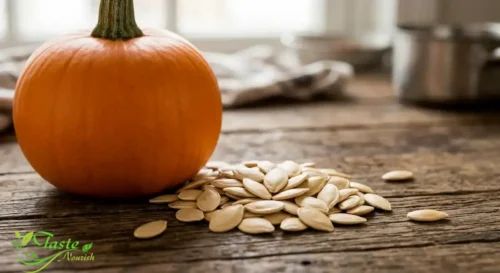
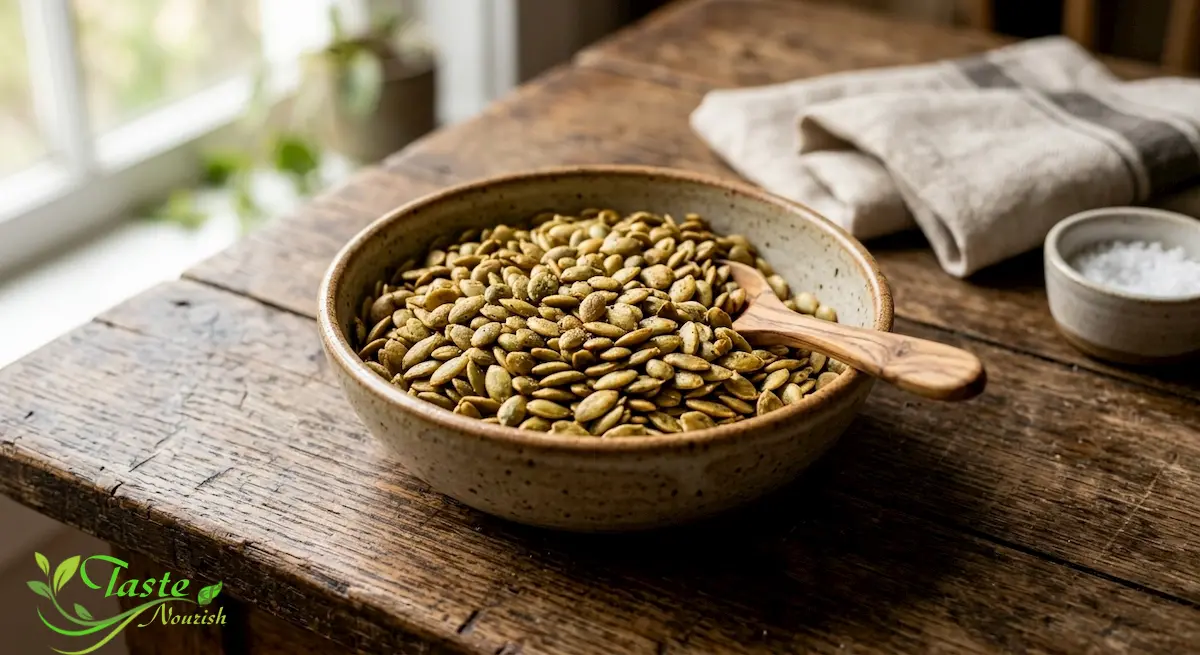
Pumpkin seeds, also called pepitas (from the Spanish pepita de calabaza), are the edible seeds found inside pumpkins and certain other squash. Most seeds sold in stores are the hull-less variety: flat, oval, olive-green kernels that come out of the pumpkin already shell-free. Traditional carving pumpkins produce seeds with a tough white shell that most people remove before eating, though the shell itself is also edible and adds fiber.
Pumpkin Seeds Nutrition Facts
Values below are for roasted, hulled pumpkin seed kernels with no added salt, based on USDA FoodData Central data. A standard serving is 1 ounce (28 g), or about a quarter cup.
Nutrient
Amount per 1 oz (28 g)
% Daily Value
Calories
~160
—
Protein
~8 g
—
Total fat
~14 g
18%
Saturated fat
~2.4 g
12%
Carbohydrates
~4 g
1%
Fiber
~1.8 g
6%
Sugars
<1 g
—
Magnesium
~154 mg
37%
Zinc
~2.1 mg
19%
Phosphorus
~329 mg
26%
Manganese
~1.3 mg
55%
Iron
~2.3 mg
13%
Potassium
~221 mg
5%
Most of the fat in pumpkin seeds is unsaturated, split fairly evenly between monounsaturated (mainly oleic acid) and polyunsaturated fat (mainly linoleic acid). Because they’re calorie-dense, portion size matters more with pumpkin seeds than it does with lower-calorie foods like vegetables.
Antioxidants in Pumpkin Seeds: A More Accurate Picture
Pumpkin seeds are often described as loaded with antioxidants, but the details are more specific than that phrase suggests. Whole pumpkin seed kernels contain phenolic compounds, phytosterols, small amounts of carotenoids, and lignans. What they don’t contain much of is vitamin E — a widely cited “antioxidant vitamin.” A one-ounce serving supplies well under 1 mg of vitamin E, a small fraction of the 15 mg Daily Value. For comparison, the same size serving of sunflower seeds supplies close to 10 mg.
This matters because a lot of the antioxidant research on pumpkin seeds actually used pumpkin seed oil, which concentrates fat-soluble compounds like tocopherols and phytosterols far beyond what’s in the whole seed. A study on pumpkin seed oil’s antioxidant activity doesn’t necessarily describe what happens when you eat a handful of roasted pepitas.
If antioxidant content is the reason you’re drawn to pumpkin seeds, know that their real strength is the mineral profile above, with phenolic and phytosterol content as a secondary contributor.
Potential Health Benefits of Pumpkin Seeds
A concentrated source of magnesium
Pumpkin seeds are one of the more magnesium-dense whole foods available, and magnesium is a mineral many people in Western diets don’t get enough of. Magnesium supports nerve and muscle function and helps regulate blood pressure. Harvard Health notes that pumpkin seeds are among the best natural sources of this mineral.
Large observational studies have linked higher overall magnesium intake to lower rates of type 2 diabetes, but those studies looked at total dietary magnesium, not pumpkin seeds specifically — so this is best understood as “pumpkin seeds are a good way to meet your magnesium needs,” not “pumpkin seeds prevent diabetes.”
A meaningful plant-based source of zinc
Zinc supports immune cell function and wound healing, and pumpkin seeds are one of the richer plant sources of it — useful for anyone eating less meat. Some research has connected low zinc status to reduced immune function and lower sperm quality, but the direct evidence linking pumpkin seed consumption itself to improved immunity or fertility in humans is limited; much of it comes from animal studies or from zinc supplementation research generally, not trials of pumpkin seeds.
The seeds are a reliable way to get more zinc into your diet, which is a legitimate benefit on its own without needing to promise more.
Studied for prostate and urinary symptoms — mostly as an oil extract
This is the area with the most specific human research, and also the area most often overstated. Small clinical trials have tested concentrated pumpkin seed oil extract in people with benign prostatic hyperplasia (BPH) and overactive bladder, with some showing improved urinary symptoms and quality of life. One trial in 39 people with BPH found pumpkin seed oil reduced symptoms, though it was less effective than prescription medication.
These are real, if modest, findings — but they apply to concentrated oil supplements, not to eating a handful of seeds as a snack. If you’re looking into this specifically for a urinary health concern, that’s a conversation for a doctor, not a substitution decision to make based on a snack choice.
Plant protein and fiber that support fullness
At roughly 8 g of protein and nearly 2 g of fiber per ounce, pumpkin seeds contribute to satiety more than many other snack foods of the same calorie count. Cleveland Clinic dietitians describe pumpkin seed protein as comparable in quality to soy protein, with a full set of essential amino acids. This is a straightforward, well-supported benefit: seeds combining protein, fiber, and unsaturated fat tend to be more filling per calorie than refined-carbohydrate snacks.
Unsaturated fat and minerals linked to heart-health markers
The combination of monounsaturated and polyunsaturated fat, magnesium, and potassium in pumpkin seeds lines up with a generally heart-supportive nutrition profile. A small trial in postmenopausal women found that pumpkin seed oil supplementation modestly lowered diastolic blood pressure. This is a real result from human research, but it’s a single small study using a supplement, not proof that eating pumpkin seeds as food lowers blood pressure or reduces heart disease risk.
The most defensible statement is that pumpkin seeds fit well into an overall diet pattern associated with cardiovascular health, largely because of their fat and mineral composition.
Raw vs. Roasted Pumpkin Seeds
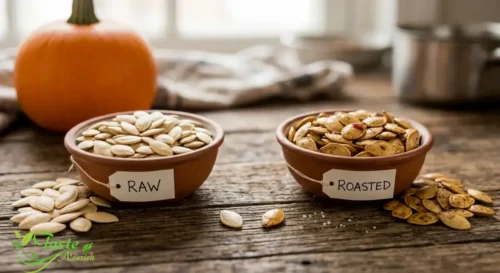
Roasting pumpkin seeds changes texture and flavor more than it changes basic nutrition. Calorie content per ounce is similar between raw and roasted seeds; roasted seeds sometimes show slightly higher calorie density per gram because moisture is driven off during roasting, concentrating the remaining nutrients slightly.
Some research has found that roasting can increase measurable antioxidant activity in pumpkin seeds, possibly due to the formation of Maillard reaction compounds, though this doesn’t mean roasted seeds are unambiguously “healthier” — high-heat roasting can also degrade some heat-sensitive compounds.
For most home cooks, the more practical differences are texture (crunchier when roasted) and digestibility, since roasting softens the shell if seeds are roasted with it on.
How Many Pumpkin Seeds Should You Eat?
There’s no official government-recommended amount specific to pumpkin seeds. A standard culinary serving is about 1 ounce (28 g), roughly a quarter cup or a small handful of hulled kernels. At around 160 calories per ounce, pumpkin seeds are calorie-dense enough that eating straight from a large bag can add up quickly.
Measuring out a serving, rather than snacking directly from the package, is a simple way to enjoy the nutrition benefits without overshooting your calorie needs for the day.
How to Add Pumpkin Seeds to Your Diet
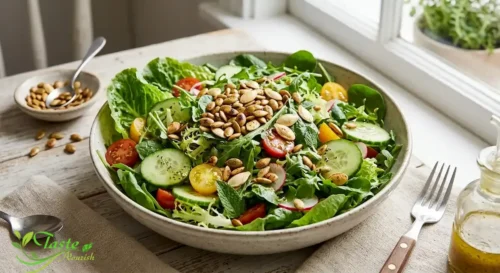
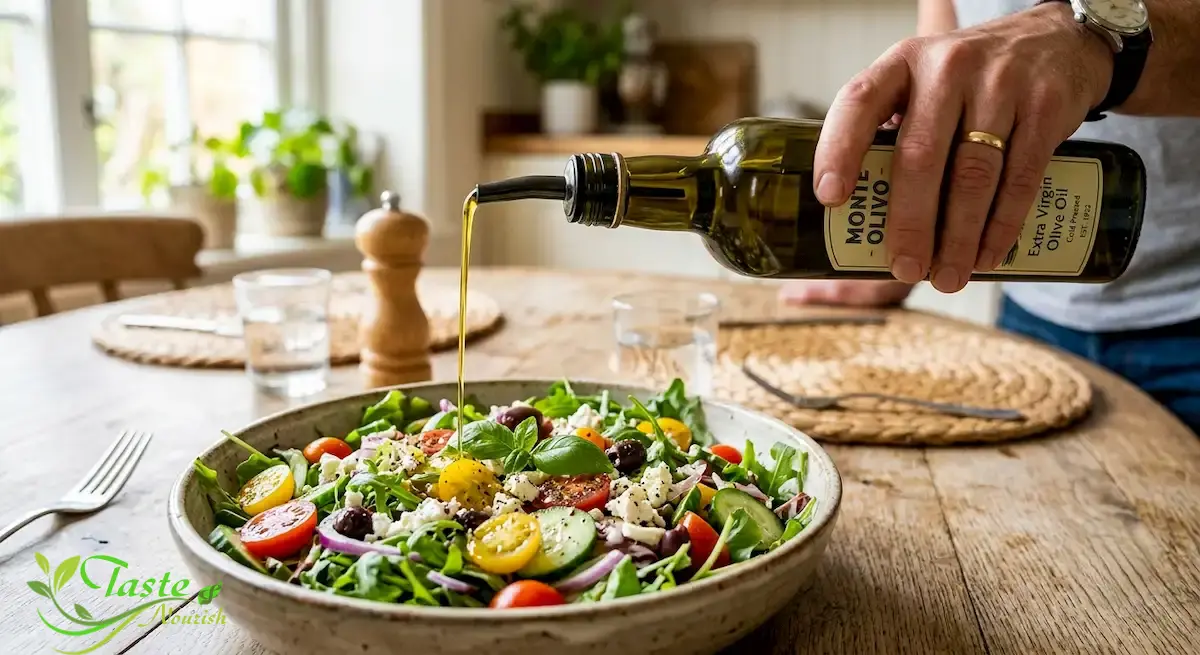
Salads: Roasted pepitas add crunch and protein in place of croutons.
Oatmeal or yogurt: Stir in a tablespoon for texture and staying power at breakfast.
Soups: A scattering of toasted seeds works well on squash, pumpkin, or bean soups.
Homemade granola or trail mix: Combine with oats, nuts, and dried fruit for a portable snack.
Pesto and sauces: Pumpkin seeds can substitute for pine nuts in pesto for a lower-cost, nut-free option.
Baking: Fold into bread, muffin, or granola bar batter for added texture and nutrients.
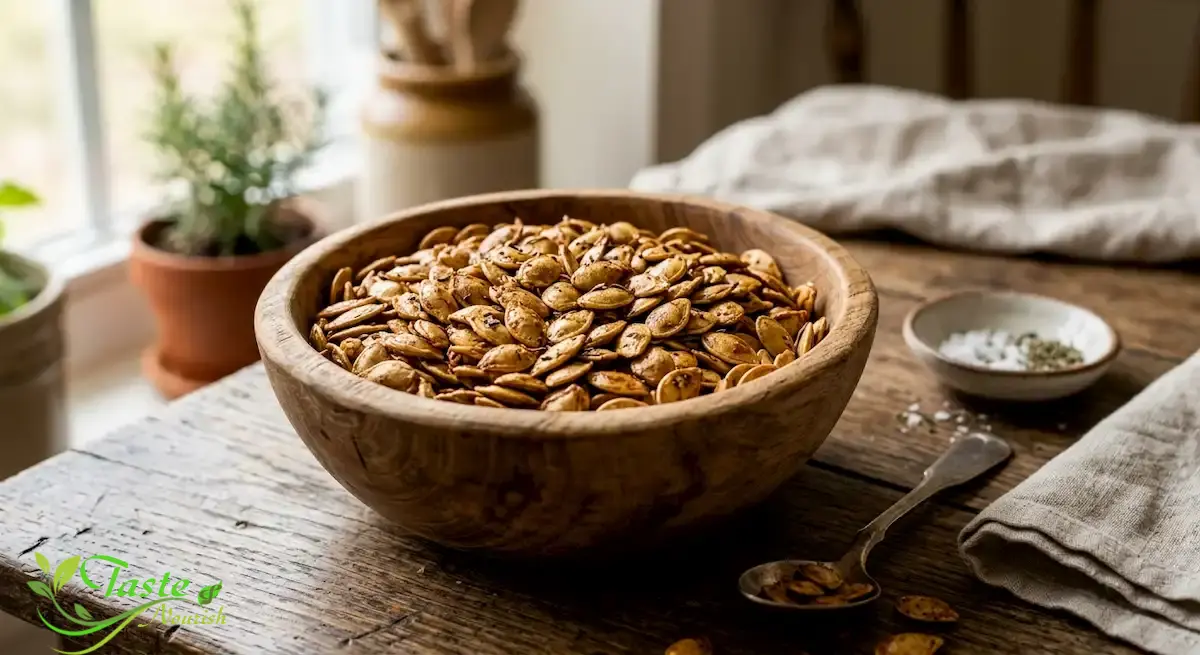
Roasted whole-pumpkin seeds: If you’re carving a pumpkin, rinse the seeds, pat dry, toss with a little oil, and roast at around 300°F until golden for a whole-seed, higher-fiber snack.
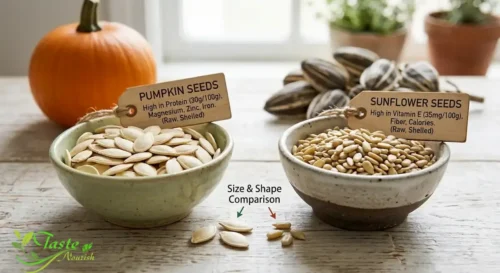
Pumpkin Seeds vs. Sunflower Seeds
These two seeds are often grouped together, but their nutrient strengths differ in ways worth knowing if you’re choosing between them.
Characteristic
Pumpkin Seeds (1 oz)
Sunflower Seeds (1 oz)
Calories
~160
~165
Protein
~8 g
~5.5 g
Magnesium
~154 mg (37% DV)
~91 mg (22% DV)
Zinc
~2.1 mg (19% DV)
~1.4 mg (13% DV)
Vitamin E
<1 mg
~9.8 mg (65% DV)
Pumpkin seeds win on protein, magnesium, and zinc. Sunflower seeds are a considerably better source of vitamin E. Neither is objectively “healthier” — they’re complementary, and there’s no evidence-based reason to pick only one.
Possible Drawbacks and Who Should Be Careful
Calorie density: At roughly 160 calories per ounce, pumpkin seeds can contribute to excess calorie intake if eaten without attention to portion size.
Sodium in packaged varieties: Salted, shell-on pumpkin seeds can carry a significant amount of sodium per serving. Checking the label or choosing unsalted or lightly salted versions helps manage this.
Choking risk: Whole seeds with shells can pose a choking hazard for young children; supervise kids eating any whole seeds or nuts.
Allergies: Pumpkin seed allergy is uncommon but does exist. Anyone with a known seed or tree nut allergy should introduce pumpkin seeds cautiously and consult a doctor or allergist if unsure.
Digestive sensitivity: The fiber and fat content, while generally beneficial, can cause bloating in some people if a large amount is eaten at once, particularly if the person isn’t used to a high-fiber diet.
There’s no established medication interaction with ordinary dietary amounts of pumpkin seeds. Anyone taking prescription medication for blood pressure or urinary symptoms who is considering a concentrated pumpkin seed oil supplement (rather than the food) should talk to a healthcare provider first, since supplement doses are far higher than what’s in a food serving.
Common Misconceptions About Pumpkin Seeds
Myth: Pumpkin seeds are a top source of vitamin E.
What the evidence shows: Whole pumpkin seed kernels contain very little vitamin E — under 1 mg per ounce. This claim likely comes from confusing whole seeds with pumpkin seed oil, or with other seeds like sunflower seeds that genuinely are vitamin E–rich.
Myth: Eating pumpkin seeds treats an enlarged prostate.
What the evidence shows: Some small trials suggest concentrated pumpkin seed oil extract may modestly ease BPH-related urinary symptoms, but it hasn’t outperformed medication, and eating whole seeds as a snack hasn’t been studied the same way. This is a case for talking to a doctor, not self-treating with seeds.
Myth: “Superfood” means pumpkin seeds have unique disease-fighting power.
What the evidence shows: “Superfood” isn’t a regulated or scientific term. Pumpkin seeds are genuinely nutrient-dense for their calorie count, which is a real and useful quality — but that’s different from having proven, unique effects on disease that other protein- and mineral-rich foods don’t also offer.
Benefits of Pumpkin Seeds FAQs
Are pumpkin seeds good for you?
Yes, in the context of an overall balanced diet. They provide plant protein, fiber, unsaturated fat, and minerals like magnesium and zinc that many diets fall short on.
Can you eat pumpkin seeds every day?
A daily one-ounce serving fits comfortably into most diets and is a common way people get consistent magnesium and zinc intake. Because they’re calorie-dense, it’s worth accounting for that portion within your overall daily calories rather than adding it on top without adjustment.
Are pumpkin seeds better raw or roasted?
Neither is clearly superior nutritionally. Roasting mainly changes flavor and texture; some research suggests it may modestly increase measurable antioxidant activity, but the difference isn’t dramatic either way.
Do pumpkin seeds need to be refrigerated?
Raw or roasted pumpkin seeds can be stored in a cool, dry pantry in an airtight container for short-term use, but because of their fat content, they’re prone to going rancid. Refrigerating or freezing them extends freshness, especially for longer storage.
Do pumpkin seeds help you sleep?
They contain tryptophan and magnesium, both of which are involved in processes related to sleep regulation. However, there isn’t strong clinical trial evidence that eating pumpkin seeds specifically improves sleep quality. It’s a plausible, minor contributor within an overall healthy diet, not a proven sleep aid.
What’s the difference between pumpkin seeds and pepitas?
Pepitas are hull-less pumpkin seeds — the shell-free kernels most commonly sold in stores. “Pumpkin seeds” can also refer to the shelled, white-husked seeds you’d scoop from a carving pumpkin.
Conclusion
The real benefits of pumpkin seeds are more modest and more solid than some headlines suggest: they’re a genuinely useful source of plant protein, magnesium, zinc, and unsaturated fat, all backed by straightforward nutrition data. Claims about prostate health, blood pressure, and antioxidant power are based on real research, but mostly on concentrated oil extracts rather than the whole seed you’d eat as a snack.
Eaten in reasonable portions as part of a varied diet, pumpkin seeds are a smart, nutrient-dense choice — just not a substitute for medical treatment or a guaranteed fix for any specific health condition.
References
USDA FoodData Central. U.S. Department of Agriculture, Agricultural Research Service. https://fdc.nal.usda.gov/
Hanan Abo Samra is the founder of Taste & Nourish, sharing trustworthy nutrition guidance and recipes drawn from 20+ years of hands-on cooking experience. When she's not developing new recipes, Hanan is researching the science behind everyday ingredients to bring readers practical, evidence-based guidance for a healthier lifestyle.