

Greek Yogurt Spinach Dip Recipe (Healthy & Creamy)

The recipe below walks through the one step most versions skip — wringing the spinach completely dry — because that’s the difference between a dip that stays thick for hours and one that turns watery on the table.
Quick Answer
To make Greek yogurt spinach dip, wilt fresh spinach (or thaw and drain frozen spinach), squeeze out as much liquid as possible, then fold it into a mixture of plain Greek yogurt, crumbled feta, Parmesan, garlic, lemon juice, and fresh dill. Chill for at least an hour so the flavors settle and the dip firms up, then serve cold with pita chips or fresh vegetables.
Key Takeaways
- Squeezing every bit of moisture out of the spinach is the single biggest factor in getting a thick, scoopable Greek yogurt spinach dip instead of a runny one.
- Whole-milk or 2% plain Greek yogurt gives noticeably better body and richness than nonfat yogurt, which tends to taste thin and sour on its own.
- Feta cheese varies a lot in saltiness by brand, so taste before adding extra salt rather than seasoning by habit.
- Chilling the dip for at least an hour lets the yogurt, feta, and herbs come together and makes the dip noticeably thicker than it is right after mixing.
- This is a cold, no-bake dip, so it needs to follow standard refrigeration and serving-temperature rules for dairy-based dips.
What Is Greek Yogurt Spinach Dip?
It’s a cold, no-bake dip built around plain Greek yogurt instead of the mayonnaise-and-sour-cream base used in classic spinach dip recipes. The thicker protein content of Greek yogurt lets it stand in for a good portion of the fat in a traditional dip while still holding a scoopable, spreadable consistency. Feta, garlic, lemon, and fresh dill push the flavor toward Mediterranean territory, similar to a loaded tzatziki, though it isn’t a traditional dish tied to a specific regional recipe — it’s a modern combination built around those familiar flavors.
Ingredients
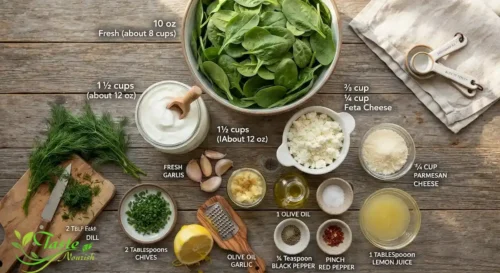
- Fresh baby spinach (10 oz, about 8 cups)
- Olive oil (1 tablespoon)
- Garlic (3 cloves, minced)
- Plain Greek yogurt (1½ cups, about 12 oz)
- Feta cheese (⅔ cup, crumbled)
- Parmesan cheese (¼ cup, grated)
- Fresh dill (2 tablespoons, chopped)
- Chives or scallions (2 tablespoons, finely chopped)
- Fresh lemon juice (1 tablespoon) and zest (½ teaspoon)
- Kosher salt (¼ teaspoon, plus more to taste)
- Black pepper (¼ teaspoon)
- Crushed red pepper flakes (a pinch, optional)
Ingredient Notes
- Fresh baby spinach (10 oz, about 8 cups) — or two 10-ounce boxes of frozen chopped spinach, thawed. Fresh spinach gives a brighter color and flavor; frozen is more convenient but needs extra attention to draining.
- Olive oil (1 tablespoon) — for wilting the spinach and softening the garlic’s raw bite.
- Garlic (3 cloves, minced) — briefly cooked rather than added raw, so it flavors the dip without overpowering it.
- Plain Greek yogurt (1½ cups, about 12 oz) — use whole-milk or 2% for a creamier, less tangy result. This is the base of the dip, so its thickness directly determines the dip’s final consistency.
- Feta cheese (⅔ cup, crumbled) — adds saltiness and a slightly tangy bite. Check the label for pasteurized milk, which is standard for feta sold in U.S. grocery stores.
- Parmesan cheese (¼ cup, grated) — rounds out the salt and adds a savory depth that feta alone doesn’t provide.
- Fresh dill (2 tablespoons, chopped) — the dip’s main herbal note. Dried dill works in a pinch; use about 2 teaspoons.
- Chives or scallions (2 tablespoons, finely chopped) — for a mild oniony bite without the sharpness of raw onion.
- Fresh lemon juice (1 tablespoon) and zest (½ teaspoon) — the acidity balances the richness of the yogurt and feta. Bottled lemon juice will work but won’t give you the zest.
- Kosher salt (¼ teaspoon, plus more to taste) — add gradually, since feta already contributes salt.
- Black pepper (¼ teaspoon)
- Crushed red pepper flakes (a pinch, optional) — for a background warmth, not real heat.
How to Prepare the Spinach
This is the step that determines whether your finished dip is thick and creamy or thin and watery, so it’s worth doing carefully.
1. Wilt fresh spinach. Heat the olive oil in a large skillet over medium heat. Add the garlic and cook for about 30 seconds, just until fragrant — don’t let it brown, or it will taste bitter. Add the spinach in two or three batches, tossing each batch until it wilts down before adding the next. The whole process takes 2 to 3 minutes; you’re done once the spinach is fully wilted and bright green. Remove from the heat and let it cool for about 10 minutes.
2. Or drain thawed frozen spinach. If using frozen spinach, thaw it completely first (overnight in the fridge, or a few minutes in the microwave). Skip the cooking step — it’s already cooked.

3. Squeeze out the liquid. Transfer the spinach to a clean kitchen towel or a few layers of cheesecloth. Gather the edges and wring it firmly over the sink until no more liquid comes out. Fresh spinach releases a surprising amount of water even after a quick wilt; frozen spinach holds even more. You’re aiming for a dense, compact ball — when you’re done, you should have about 1 to 1¼ cups of packed spinach.
4. Chop it finely. A rough chop leaves long strands that make the dip stringy and awkward to scoop. A fine chop distributes evenly through the yogurt base instead.
How to Make Greek Yogurt Spinach Dip
1. In a medium mixing bowl, combine the Greek yogurt, feta, Parmesan, dill, chives, lemon juice, lemon zest, salt, pepper, and red pepper flakes (if using). Stir until mostly smooth — a few small feta crumbles are fine, or mash them with the back of a fork if you prefer a smoother dip.

2. Fold in the prepared spinach, stirring just until it’s evenly distributed through the yogurt mixture. Overmixing at this point won’t hurt the flavor, but stop once the color is even so you don’t crush the texture.
3. Taste and adjust. Add more salt only if needed — feta brands vary widely in saltiness — and add an extra squeeze of lemon if the dip tastes flat.
4. Cover and refrigerate for at least 1 hour, and up to 24 hours. The dip will visibly thicken and the flavors will taste more cohesive after chilling than they do right after mixing.
5. Give the dip a quick stir before serving, since a small amount of liquid can separate to the surface during chilling. Garnish with a little extra dill or a drizzle of olive oil if you like, and serve cold.
How to Get the Best Texture
Three things control whether this dip turns out thick and creamy or loose and watery:
How well you drain the spinach. This matters more than any other single factor. If the dip turns watery within an hour of mixing, under-drained spinach is almost always the cause.
The yogurt’s thickness. Greek yogurt brands vary quite a bit — some are noticeably thicker than others even within the “Greek yogurt” label. If your yogurt looks thin straight out of the container, spoon it into a fine-mesh strainer lined with a coffee filter or paper towel and let it drain in the fridge for 15 to 20 minutes before using it. This concentrates the yogurt the same way you’d make labneh, just on a smaller scale.
Chilling time. The dip firms up as it sits, since the cold slows everything down and lets the yogurt’s proteins and the feta settle into the mixture rather than sitting loosely around the spinach. A dip served immediately after mixing will always be looser than the same dip an hour later.
How to Get the Best Flavor
The flavor here is a balance of four things: the tang of the yogurt, the saltiness of the feta, the brightness of the lemon, and the herbal note from the dill. If any one of them dominates, the dip tastes flat instead of layered.
Because feta’s saltiness varies significantly by brand, always taste the mixture before adding extra salt — it’s easy to over-salt a batch made with a particularly briny feta. Fresh dill gives a cleaner, brighter flavor than dried; if you only have dried on hand, use about a third of the amount and expect a slightly muted herbal note.
A small amount of lemon zest, not just the juice, adds a floral quality that juice alone doesn’t provide. If the dip tastes dull after chilling, it’s almost always missing acid, not salt — try an extra squeeze of lemon before reaching for the salt shaker.
How to Serve Greek Yogurt Spinach Dip

Serve the dip cold, straight from the refrigerator or set over a bowl of ice if it’s going to sit out at a gathering. Good dippers include pita chips, toasted pita wedges, sturdy whole-grain crackers, cucumber rounds, bell pepper strips, cherry tomatoes, and endive spears.
For presentation, spread the dip in a shallow bowl, swirl the surface slightly with the back of a spoon, and finish with a drizzle of olive oil, a few extra dill fronds, and a light dusting of black pepper or paprika.
Make-Ahead Instructions
The full dip can be made up to 2 days ahead of when you plan to serve it — the flavor actually improves slightly after a day in the fridge as the garlic and lemon mellow into the yogurt. If you want to prep further ahead, you can wilt, squeeze, and chop the spinach up to a day in advance and store it separately in an airtight container; fold it into the yogurt mixture the day you plan to serve, since letting chopped spinach sit directly in the yogurt for multiple days can start to release liquid again.
Storage
Store leftover dip in an airtight container in the refrigerator. Because this is a dairy-based dip made with fresh spinach, it should be treated like any other perishable dip: FoodSafety.gov’s cold food storage guidelines recommend keeping dips like this refrigerated and using them within 3 to 4 days for best quality and safety.
If the dip has been sitting out at a party, don’t return the leftovers to the fridge if it’s been out longer than 2 hours — FoodSafety.gov’s guidance on serving dips at gatherings notes that perishable foods left at room temperature beyond that window should be discarded rather than saved.
Freezing isn’t recommended. Yogurt– and feta-based dips tend to separate and turn grainy once thawed, since freezing breaks down the proteins that give the dip its smooth texture — you’ll end up with a watery, curdled result rather than something worth serving.
Common Mistakes
- Skipping the squeeze-dry step. This is the most common reason the dip turns watery. Even a quick wilt releases more liquid than it looks like, and skipping the wringing step leaves that water sitting in the finished dip. Always squeeze the spinach in a towel until it stops releasing liquid.
- Using nonfat Greek yogurt to make the dip “healthier.” Nonfat yogurt is noticeably thinner and more sour on its own, and the dip loses richness as a result. Whole-milk or 2% yogurt is still far lighter than a mayonnaise-and-sour-cream dip, so there’s little reason to go nonfat here.
- Salting before tasting the feta. Feta brands range from mildly salty to quite briny. Adding salt out of habit before tasting the mixture is an easy way to end up with an over-salted dip you can’t fix.
- Serving it immediately after mixing. A freshly mixed batch is looser and tastes less developed than the same dip after an hour in the fridge. Give it time to chill before deciding it needs more of anything.
- Not fully thawing or draining frozen spinach. Frozen spinach holds a lot of ice-cold water. If it isn’t completely thawed and firmly squeezed, that water ends up diluting the dip.
- Chopping the spinach too coarsely. Long strands of spinach make the dip stringy and harder to scoop cleanly. A fine chop after squeezing gives a much better bite.
- Leaving the dip out too long at a party. Beyond looking unappetizing as it warms, a dairy-based dip left at room temperature for more than 2 hours moves into unsafe territory. Nest the serving bowl in a larger bowl of ice if it needs to sit out for a while.
Troubleshooting
- Dip is too watery: almost always under-drained spinach, or a thinner brand of Greek yogurt. Fix a current batch by stirring in a little extra crumbled feta or squeezed spinach to absorb the excess liquid; next time, strain the yogurt and wring the spinach more thoroughly.
- Dip tastes bland: usually under-seasoned, or made with older dried herbs that have lost their potency. Add more fresh lemon zest, dill, or a touch more garlic, tasting as you go.
- Dip is too salty: typically from a briny feta. Stir in a bit more plain yogurt to dilute it, and add an extra squeeze of lemon to keep the flavor balanced rather than just diluted.
- A little liquid pools on top after chilling: this is normal, minor whey separation from the yogurt, not a sign anything went wrong. Just stir it back in before serving.
- Garlic tastes too sharp: the garlic likely wasn’t cooked long enough to mellow, or too much was used. Cook it a little longer next time, keeping it just short of browning.
Variations
- Spinach-artichoke style: fold in ½ cup of chopped, well-drained marinated or canned artichoke hearts along with the spinach.
- Lower-sodium version: replace the feta with an equal amount of small-curd cottage cheese blended smooth in a food processor, which cuts the salt significantly while keeping the dip creamy.
- Spicier version: add a finely minced jalapeño (seeds removed for less heat) along with the garlic, or increase the red pepper flakes.
- Dairy-free version: swap in a plain, unsweetened plant-based yogurt and replace the feta and Parmesan with 2 tablespoons of nutritional yeast plus a little extra salt to taste. The texture will be slightly different but still dippable.
Appetizer Platter or Party Serving Ideas
This dip works well as part of a mezze-style spread alongside hummus, olives, roasted red peppers, and warm pita. For a game-day table, set it next to something heartier and fried, since the cold, bright flavor of the dip offers a good contrast. It also holds up well on a make-ahead holiday appetizer table, since it’s meant to be served cold and doesn’t need last-minute attention beyond a stir and a garnish.

Food Safety
A few points are worth knowing since this dip combines fresh produce and dairy:
- Washing the spinach: if you’re using fresh spinach rather than pre-washed bagged spinach, rinse it under plain running water rather than soaking it in a filled sink, and skip soap or produce washes — the FDA’s guidance on cleaning fresh produce notes that plain running water is sufficient and that soap or commercial produce washes aren’t recommended or necessary.
- Feta and other soft cheeses: feta is a soft cheese, and people who are pregnant, 65 or older, or have a weakened immune system are advised to be more cautious with soft cheeses generally. CDC guidance on Listeria risk during pregnancy specifically lists feta among the soft cheeses to eat only if the label confirms it’s made from pasteurized milk, which is standard for feta sold in U.S. grocery stores but worth double-checking on imported or specialty products.
- Serving at room temperature: keep the dip refrigerated until serving, and don’t let it sit out longer than 2 hours (1 hour if the room is especially warm), consistent with USDA guidance on handling perishable, refrigerated foods.
Greek Yogurt Spinach Dip Recipe FAQs
Can I make Greek yogurt spinach dip ahead of time?
Yes. It can be fully made up to 2 days ahead and stored covered in the refrigerator. The flavor actually improves slightly after resting overnight.
Why is my spinach dip watery?
Almost always because the spinach wasn’t squeezed dry enough before mixing, or because a thinner brand of Greek yogurt was used. Wring the spinach firmly in a towel until it stops releasing water, and consider straining thin yogurt before using it.
Can I use frozen spinach instead of fresh?
Yes. Thaw it completely, then squeeze out as much liquid as possible before chopping and folding it in — frozen spinach holds more water than fresh, so this step matters even more.
Is Greek yogurt spinach dip healthier than regular spinach dip?
It generally has more protein and less saturated fat than versions built on sour cream and mayonnaise, since Greek yogurt makes up most of the base. That said, it still contains cheese and should be enjoyed as part of a balanced diet like any other appetizer.
Can I freeze this dip?
It’s not recommended. The yogurt and feta tend to separate and turn grainy once thawed, so the texture suffers significantly.
What can I substitute for feta?
Small-curd cottage cheese blended smooth works well and lowers the sodium content. Goat cheese is another option if you want a similar tang with a softer texture.
How long does this dip keep in the fridge?
Store it in an airtight container and plan to use it within 3 to 4 days, in line with general food safety guidance for refrigerated dairy-based dips.
What should I serve with Greek yogurt spinach dip?
Pita chips, toasted pita wedges, sturdy crackers, and fresh vegetables like cucumber, bell pepper, and cherry tomatoes all work well as dippers.
Conclusion
A good Greek yogurt spinach dip comes down to two things: draining the spinach thoroughly and giving the mixture time to chill before serving. Get those two steps right, and everything else — the feta, the lemon, the dill — falls into place on its own. Made this way, it’s a dip that holds its texture on a crowded appetizer table and doesn’t need to be the last thing you set out before guests arrive.