Some appetizers earn their place on the table through technique. Caprese skewers earn theirs through restraint. There’s no oven, no stovetop, and no waiting around — just three good ingredients threaded onto a stick and finished with olive oil and balsamic. The trick isn’t the assembly, which takes minutes. It’s handling the ingredients so the finished skewers look as clean and vibrant as they taste. This recipe walks through exactly that: how to prep the tomatoes, mozzarella, and basil so nothing weeps, wilts, or slides off the skewer, plus how to time the dressing so the platter still looks fresh an hour into the party.
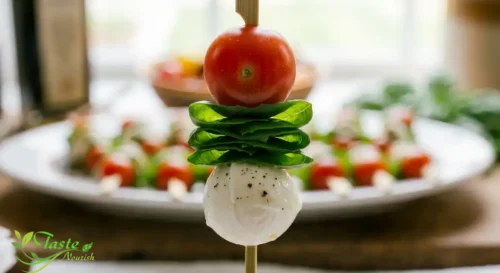
Caprese skewers are made by threading a cherry tomato, a folded basil leaf, and a small ball of fresh mozzarella onto a short skewer, then finishing the platter with a drizzle of olive oil, balsamic glaze, and a pinch of flaky salt. Because nothing is cooked, the entire recipe takes about 10 minutes of active time. The only real technique involved is drying the tomatoes and mozzarella thoroughly before assembly — skip that step and the platter turns watery within the hour.
Key Takeaways
Caprese skewers require no cooking — just assembly, so ingredient quality and moisture control matter more than technique.
Pat the mozzarella and tomatoes fully dry before threading; residual brine and tomato juice are what make skewers turn soggy on the platter.
Hold off on the olive oil, balsamic glaze, and salt until just before serving to keep the basil from bruising and the tomatoes from weeping.
A thick balsamic glaze clings to the skewers; thin balsamic vinegar just pools at the bottom of the platter.
Skewers can be assembled a few hours ahead and refrigerated undressed, making this a genuinely useful make-ahead party appetizer.
What Are Caprese Skewers?
Caprese skewers are a handheld version of the Caprese salad, an Italian combination of tomato, mozzarella, and basil traditionally dressed with olive oil and sometimes balsamic. Putting the same three ingredients on a skewer turns a fork-and-plate salad into a one-bite party food — no cutlery, no bowl, no dressing dripping down someone’s wrist.
The flavor is unchanged from the classic salad; what changes is portability and presentation, which is exactly what makes this version so popular for parties, potlucks, and holiday spreads.
Ingredients
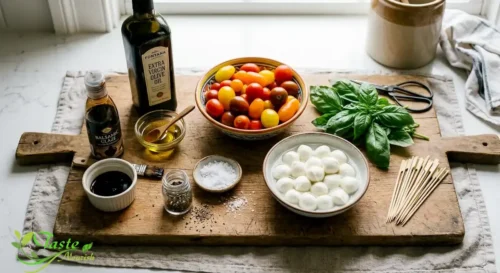
24 cherry or grape tomatoes
24 small fresh mozzarella balls (bocconcini or ciliegine)
24 fresh basil leaves
3 tablespoons extra-virgin olive oil
2 tablespoons balsamic glaze
1/4 teaspoon flaky sea salt
Freshly ground black pepper
24 appetizer skewers or toothpicks
Ingredient Notes
24 cherry or grape tomatoes — Choose tomatoes that are firm, deeply colored, and roughly the same size as your mozzarella balls so each skewer sits evenly. Overripe or split tomatoes will leak juice onto the platter.
24 small fresh mozzarella balls (bocconcini or ciliegine) — Look for mozzarella packed in liquid, sold specifically as “bocconcini” (walnut-sized) or “ciliegine” (cherry-sized). Ciliegine is closer in size to cherry tomatoes and skewers more evenly. Low-moisture block mozzarella will not have the same creamy texture and isn’t a good substitute here.
24 fresh basil leaves — Use small to medium leaves if possible; they fold onto the skewer without tearing. Wilted, spotted, or blackened leaves should be skipped since basil doesn’t improve once it’s bruised.
3 tablespoons extra-virgin olive oil — A good, fruity olive oil is doing real flavor work here since nothing is cooked. This isn’t the place for a bland, all-purpose oil.
2 tablespoons balsamic glaze — Balsamic glaze (also sold as balsamic reduction) is thick and syrupy, unlike regular balsamic vinegar, which is thin and won’t cling to the skewers. Use a store-bought glaze or make your own by simmering balsamic vinegar until it coats the back of a spoon.
1/4 teaspoon flaky sea salt — Flaky salt seasons the surface of the tomato and mozzarella without dissolving in immediately, giving each bite a little crunch of salinity.
Freshly ground black pepper, to taste
24 appetizer skewers or toothpicks (4-inch, sturdy wood or bamboo)
How to Prepare the Ingredients
Drain the mozzarella thoroughly. Fresh mozzarella is packed in brine or water. Pour it into a colander, then spread the balls on a few layers of paper towels and let them sit for 5–10 minutes, patting occasionally. Skipping this step is the single biggest cause of soggy skewers, since the mozzarella will keep releasing liquid onto the platter as it sits out.
Wash and dry the tomatoes. Rinse the tomatoes, then dry them completely with a clean towel or salad spinner. Any surface water left on the skin will dilute the balsamic glaze once it’s drizzled on.
Wash and dry the basil gently. Rinse basil leaves and lay them flat on a towel, or spin them in a salad spinner on the lowest setting. Basil bruises easily, so avoid pressing or rubbing the leaves — pat, don’t scrub.
How to Make Caprese Skewers
1. Fold each basil leaf in half, with the shiny side facing out, rather than leaving it flat or tearing it. Folding protects the leaf from bruising and lets it sit neatly against the tomato and mozzarella.
2. Thread the skewer. Starting about half an inch from one end, pierce a tomato through its center, then the folded basil leaf, then a mozzarella ball. Push each piece down gently so they sit snugly together without crushing the mozzarella.
3. Repeat with the remaining tomatoes, basil, and mozzarella until you have 24 assembled skewers.
4. Arrange the skewers on a serving platter in a single layer or standing upright in a shallow bowl or glass, depending on your presentation.
5. Drizzle with olive oil and balsamic glaze just before serving, moving in thin lines across the platter rather than pooling it over any one skewer.
6. Finish with flaky salt and a few grinds of black pepper right before you bring the platter to the table.
A finished skewer should look glossy from the oil, not wet or dripping. The tomato should hold its shape, the mozzarella should look creamy white rather than translucent or weeping, and the basil should still be a bright, unblemished green.
How to Get the Best Texture
Because nothing is cooked, texture here is really about moisture control. Fresh mozzarella and cherry tomatoes both carry a lot of surface liquid, and that liquid is what turns a crisp-looking platter into a puddled one. Drying both ingredients thoroughly before assembly — not just rinsing and moving on — is what keeps the skewers looking clean for the length of a party rather than just the first ten minutes.
Timing the dressing matters just as much as drying the ingredients. Salt pulls moisture out of tomatoes through osmosis, so salting the platter too early causes the tomatoes to weep into the balsamic and thin it out. Adding the olive oil, balsamic glaze, and salt in the last few minutes before serving keeps the tomatoes firm and the glaze glossy instead of watered down.
How to Get the Best Flavor
With no cooking involved, every ingredient is tasting exactly like what it is, so quality has an outsized effect on the final flavor. Take the mozzarella out of the refrigerator about 20–30 minutes before assembling — cold mozzarella tastes muted and a little rubbery, while room-temperature mozzarella is noticeably creamier and milkier.
Balsamic glaze does more than add tang; its sweetness balances the acidity of the tomato and the mildness of the mozzarella, which is why a true glaze (thick, syrupy, slightly sweet) works better here than plain balsamic vinegar, which is sharper and thinner.
Flaky salt added right before serving is what pulls the whole bite together — both the tomato and mozzarella are mild on their own, and a good pinch of salt is what keeps the skewers from tasting flat.
How to Serve Caprese Skewers
Serve Caprese skewers cold or at cool room temperature — straight out of the refrigerator, the mozzarella tastes dull, but they shouldn’t sit out so long that the tomatoes soften or the basil wilts. Arrange them on a platter with a little space between each skewer so the balsamic drizzle doesn’t run from one skewer into the next, and consider lining the platter with a few extra basil leaves for color.
These skewers are typically served as a finger food on their own, but they also work well alongside other room-temperature appetizers like olives, cured meats, or a simple bread board, since none of those need active serving attention either.
Make-Ahead Instructions
Caprese skewers are one of the more forgiving make-ahead appetizers, as long as you separate assembly from dressing. You can thread the tomato, basil, and mozzarella onto the skewers a few hours ahead of time, arrange them on the serving platter, cover tightly, and refrigerate until close to serving time.
Hold off on the olive oil, balsamic glaze, salt, and pepper until just before guests arrive. Dressing the skewers too far in advance draws moisture out of the tomatoes and can darken the basil, so that last step should always happen right before serving, not during prep.
Storage
If you have undressed leftover skewers, store them in an airtight container in the refrigerator. Because this appetizer contains fresh dairy and cut tomato, it should be treated like any other cold combination food: refrigerate it promptly and plan to eat leftovers within 3 to 4 days, which is the general USDA guideline for refrigerated leftovers.
Keep in mind this is a quality window as much as a safety one — the tomatoes will soften and the basil will darken well before that, so leftovers are best eaten within a day for the freshest texture. If the skewers were already dressed with balsamic and left out, follow the food safety guidance below on how long they can safely sit at room temperature before that clock matters more than flavor.
Common Mistakes
Skipping the drying step. Both tomatoes and mozzarella carry surface moisture straight out of their packaging. Threading them wet means that liquid ends up pooling on the platter within minutes. Pat both dry with paper towels before assembly.
Dressing the platter too early. Balsamic glaze and salt both draw moisture out of tomatoes over time, which waters down the glaze and can bruise the basil. Add the dressing in the last few minutes before serving, not during prep.
Using out-of-season or bland tomatoes. Since nothing is cooked to concentrate flavor, a mealy or underripe tomato tastes exactly as bland on the skewer as it does on its own. Cherry and grape tomatoes are more reliably flavorful year-round than large slicing tomatoes.
Serving the mozzarella straight from the fridge. Cold mozzarella tastes duller and firmer than it should. Let it sit at room temperature for 20–30 minutes before assembling for a noticeably creamier bite.
Using regular balsamic vinegar instead of a glaze. Balsamic vinegar is thin and runs straight off the skewer instead of clinging to it. A true balsamic glaze or reduction is thick enough to coat the ingredients evenly.
Tearing or cutting the basil. Cut or torn basil bruises and blackens quickly, especially once it touches acid like balsamic. Fold whole small leaves instead of slicing them.
Forgetting to salt. Without a cooking process to build flavor, both the tomato and mozzarella need a finishing salt to taste like more than “fresh and mild.” A pinch of flaky salt right before serving makes a noticeable difference.
Troubleshooting
Platter looks watery or soggy. This almost always comes from skipping the drying step or dressing the skewers too far ahead. Next time, pat the mozzarella and tomatoes fully dry before threading, and add the oil and glaze only in the last few minutes before serving.
Basil is turning black or bruised. Basil oxidizes quickly once it’s cut or crushed, and contact with acidic balsamic speeds that up. Use whole, gently folded leaves instead of torn ones, and add the balsamic as close to serving time as possible.
Skewers taste bland. This is usually a seasoning or ingredient issue rather than a technique problem. Make sure you’re salting right before serving and using ripe, flavorful tomatoes and a good olive oil — there’s nowhere for weak ingredients to hide in a no-cook recipe.
Tomatoes or mozzarella keep sliding off the skewer. This usually means the pieces are too small for the skewer or were pierced off-center. Choose ciliegine-sized mozzarella close to the size of your tomatoes, and push the skewer through the center of each piece.
Balsamic glaze pools instead of coating the skewers. Thin balsamic vinegar won’t cling the way a glaze does. If your glaze seems too thin, look for a thicker brand or simmer plain balsamic vinegar in a small saucepan until it reduces to a syrupy consistency.
Variations
Prosciutto-wrapped: Wrap a small strip of prosciutto around the mozzarella ball before threading for a salty, savory variation.
Pesto instead of fresh basil: Skip the whole basil leaf and dab a small amount of pesto onto the mozzarella before assembling for a more concentrated herb flavor.
Marinated mozzarella: Let the drained mozzarella sit briefly in olive oil, garlic, and a pinch of red pepper flakes before threading for extra flavor in every bite.
Different tomato colors: Mix red, orange, and yellow cherry tomatoes for a more colorful platter — flavor stays essentially the same, but the visual variety works well for larger gatherings.
Balsamic reduction with honey: Stir a small amount of honey into your balsamic glaze for a slightly sweeter, more caramelized finish.
Appetizer Platter and Party Serving Ideas
Caprese skewers hold up well on a larger appetizer board since they don’t need reheating or last-minute cooking. Group them with other no-fuss, room-temperature items like marinated olives, sliced salami, and crusty bread, so the whole board can be set out at once without anyone needing to manage a hot dish.
For a buffet or holiday spread, arrange the skewers standing upright in a shallow glass or small jar lined with extra basil leaves — it keeps them from rolling around the platter and makes for an easy, grab-and-go presentation for guests moving through a room.
Food Safety
Fresh mozzarella and cut tomatoes are perishable and should be treated with the same care as any other cold, dairy-based appetizer. Keep the assembled skewers refrigerated until shortly before serving, and once they’re out, follow the standard guidance from the USDA Food Safety and Inspection Service on the “Danger Zone”: perishable food shouldn’t sit at room temperature for more than two hours, or one hour if the room is warmer than 90°F, since bacteria multiply fastest in that range.
If you’re serving these outdoors or at a longer party, the FDA’s guidance on handling food safely while eating outdoors recommends keeping the platter on ice or swapping in a fresh, chilled batch every couple of hours rather than letting one platter sit out for the whole event. For general at-home storage, the FDA’s guidance on storing food safely and the USDA’s guidance on leftovers and food safety both support refrigerating promptly and eating leftovers within a few days. If you’re transporting a party platter or serving take-out-style at a gathering, the USDA’s guidance on safe handling of take-out foods offers useful tips on keeping cold platters cold along the way.
No-Cook Caprese Skewers Recipe FAQs
Can I make Caprese skewers ahead of time?
Yes. Assemble the tomato, basil, and mozzarella onto the skewers up to a few hours ahead and refrigerate them covered. Add the olive oil, balsamic glaze, and salt just before serving so the basil and tomatoes stay fresh.
Why is my Caprese skewer platter watery?
This is almost always caused by moisture left on the tomatoes and mozzarella, or by dressing the skewers too far in advance. Dry both ingredients thoroughly before assembly, and add the balsamic and salt right before serving.
Can I use regular balsamic vinegar instead of balsamic glaze?
You can, but the effect is different. Balsamic vinegar is thin and will run off the skewers rather than cling to them. If you only have vinegar on hand, simmer it gently in a small saucepan until it thickens into a syrupy glaze.
What size mozzarella should I use?
Ciliegine, the cherry-sized fresh mozzarella balls, work best since they’re close in size to cherry tomatoes and skewer evenly. Bocconcini, which are larger, also work but may make the skewers a bit heavier and less balanced in each bite.
How should I store leftover Caprese skewers?
Store undressed leftovers in an airtight container in the refrigerator, and plan to eat them within a few days for both safety and best texture. The tomatoes and basil will soften and darken over time, so leftovers taste best when eaten within a day.
Can I freeze Caprese skewers?
No. Fresh mozzarella and tomatoes both break down in texture once frozen and thawed — the mozzarella turns watery and grainy, and the tomatoes go mushy. This appetizer is best made fresh and eaten within a day or two.
What can I serve alongside Caprese skewers?
They pair naturally with other room-temperature appetizers like marinated olives, cured meats, and crusty bread, since none of those require active serving or reheating either.
Conclusion
Caprese skewersprove that a great appetizer doesn’t need a stove — it needs good ingredients handled the right way. Dry the mozzarella and tomatoes, fold the basil instead of tearing it, and save the olive oil, balsamic glaze, and salt for the last few minutes before serving. Follow that order and these Caprese skewers will look as fresh at the end of the party as they did when you first set them out.
Hanan Abo Samra is the founder of Taste & Nourish, sharing trustworthy nutrition guidance and recipes drawn from 20+ years of hands-on cooking experience. When she's not developing new recipes, Hanan is researching the science behind everyday ingredients to bring readers practical, evidence-based guidance for a healthier lifestyle.