Veggie and hummus bites are the appetizer you make when you need something fresh, colorful, and genuinely easy on the table in fifteen minutes flat. There’s no oven, no stovetop, and no waiting around for anything to cool. Just crisp vegetables, good hummus, and a few finishing touches that turn simple ingredients into something that looks like you tried a lot harder than you actually did.
This isn’t a recipe that hides behind a long ingredient list or a fussy technique. The whole appeal is how little stands between you and a finished platter. That said, there are a handful of small details, mostly around moisture control and assembly order, that separate a bite that holds together and tastes bright from one that turns watery and bland by the time guests reach for it. This article walks through both.
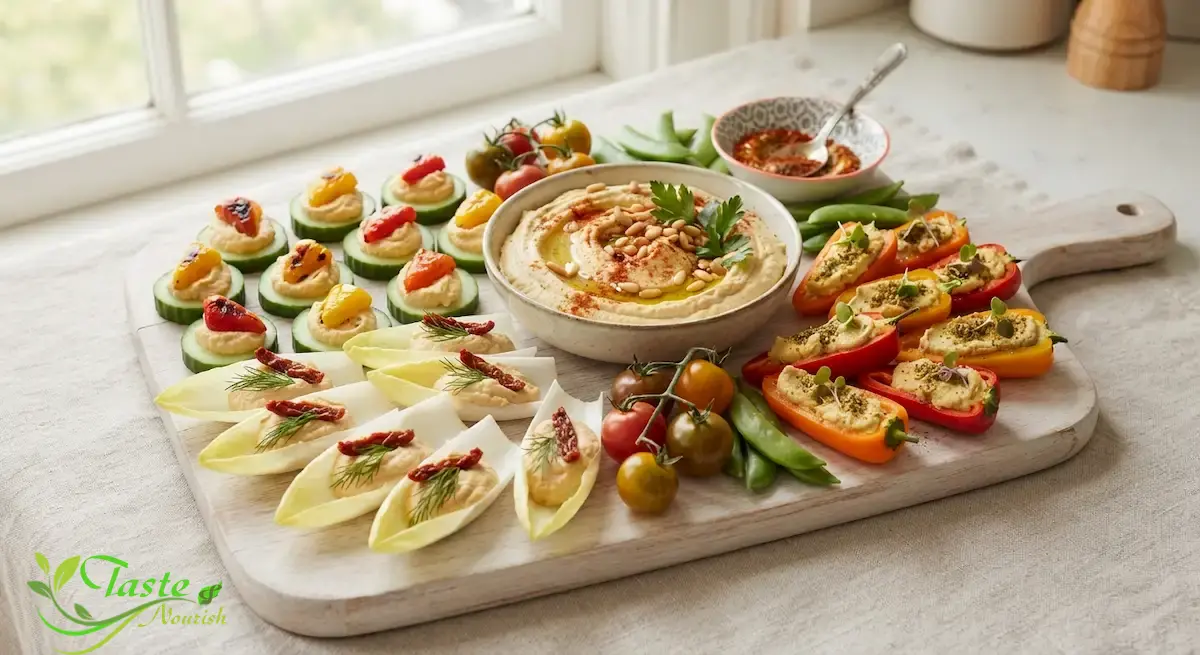
To make veggie and hummus bites, choose vegetables that can hold a scoop of hummus without collapsing (cucumber rounds, mini pepper halves, endive leaves, or hollowed cherry tomatoes work best), dry them thoroughly after washing, then pipe or spoon a small mound of hummus onto each piece. Finish with a garnish like olive oil, smoked paprika, herbs, or toasted seeds, and serve within a couple of hours for the best texture.
Key Takeaways
The single biggest factor in good veggie and hummus bites is dryness — any lingering water on the vegetables will thin the hummus and make the platter look sloppy within minutes.
Firm, cup-shaped, or sliceable vegetables (cucumber, mini peppers, endive, cherry tomatoes) work better as bite bases than anything leafy or delicate.
Hummus should be thick enough to hold a piped peak; if it’s the pourable consistency you’d use for dipping, it will slide off before it reaches the table.
Prep the vegetables and hummus separately ahead of time, but assemble the bites close to serving — this is what keeps veggie and hummus bites crisp instead of soggy.
Because the vegetables release moisture as they sit, treat assembled bites as a perishable food: refrigerate until serving and don’t leave them at room temperature more than two hours.
Ingredients
These quantities make about 30–36 bites, enough for a small gathering. Scale up or down based on your guest count.
1½ cups hummus
1 English (seedless) cucumber
6–8 mini sweet peppers
2 heads Belgian endive
12 cherry or grape tomatoes
1 cup sugar snap peas
Ingredient Notes
1½ cups hummus — store-bought or homemade, plain or a mild flavor like roasted garlic or lemon. Avoid very loose, thin hummus; a thicker consistency holds its shape once piped and won’t run off the vegetables.
1 English (seedless) cucumber, cut into ¼-inch rounds. English cucumbers have thinner skin and far less internal seed-water than standard cucumbers, so they stay firmer as a base.
6–8 mini sweet peppers, tops trimmed, halved lengthwise and seeded. Their natural boat shape makes them one of the easiest vegetables to fill.
2 heads Belgian endive, leaves separated and trimmed at the base. The leaves are naturally cupped and sturdy enough to pick up by hand.
12 cherry or grape tomatoes, halved with the seeds and pulp scooped out using a small spoon or melon baller, leaving a shallow tomato “cup.”
1 cup sugar snap peas, trimmed and left whole as edible dippers alongside the filled bites, or split lengthwise if you want a flatter surface for hummus.
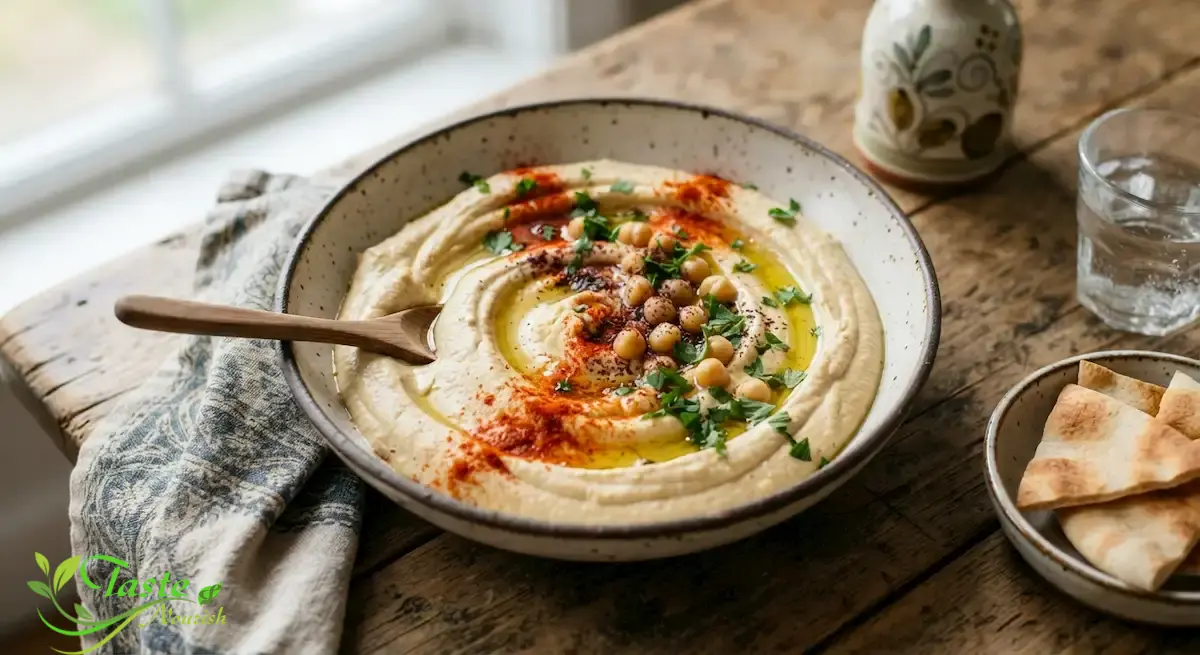
Garnish: a drizzle of extra-virgin olive oil, a pinch of smoked paprika or za’atar, chopped fresh parsley or dill, lemon zest, and a scattering of toasted pine nuts, pepitas, or everything-bagel seasoning for crunch.
You don’t need all five vegetables. Three varieties with different shapes, colors, and textures is usually enough to make the platter feel varied without a long shopping list.
How to Prepare the Vegetables
This is the step that determines whether the finished platter looks crisp or soggy, so it’s worth doing carefully.
Wash everything under cold running water, rubbing firm produce like cucumbers and peppers gently as you rinse. Skip soap or produce washes — they aren’t recommended for fresh produce and can leave residue behind.
Dry thoroughly. Lay the washed vegetables on a clean kitchen towel or several layers of paper towel and let them air-dry, or blot them dry by hand. Any surface water left on the vegetables will bead into the hummus and thin it out, so don’t rush this part.
Cut just before assembling whenever possible. Cucumber rounds and hollowed tomatoes especially will start to weep liquid once cut, so don’t slice them hours ahead and let them sit on the counter.
Hollow the tomatoes and peppers carefully. For tomatoes, a small spoon or melon baller scoops the seeds cleanly without tearing the flesh. For mini peppers, run a paring knife around the inside of the pepper to loosen the membrane and seeds before pulling them free.
Pat the cut surfaces dry one more time right before filling, especially tomatoes, which hold moisture inside the hollowed cup.
How to Make Veggie and Hummus Bites
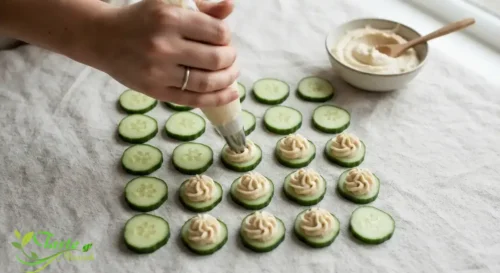
1. Fill a piping bag or a zip-top bag with the hummus. If using a zip-top bag, snip about ¼ inch off one corner. Piping gives you a neat, uniform mound on each piece, which matters more here than in a bowl of dip because every bite is on display.
2. Pipe a small mound of hummus onto each cucumber round, into each pepper half, at the base of each endive leaf, and into each tomato cup. Aim for about a teaspoon per bite — enough to taste in every bite without overwhelming the vegetable or making the piece top-heavy.
3. Garnish immediately while the hummus is still soft enough for toppings to stick. A light drizzle of olive oil, a pinch of paprika, a few flecks of herb, or a scattering of toasted seeds all adhere best to fresh hummus rather than hummus that’s started to firm up in the fridge.
4. Arrange on a platter by vegetable type or in alternating color blocks, and serve within an hour or two of assembly for the best texture.
How to Get the Best Texture
Texture is really the whole game with a no-cook, fresh-vegetable appetizer — there’s no cooking step to fix a problem after the fact, so prevention matters more than correction.
Keep the vegetables crisp. Crispness comes almost entirely from how well you dried the vegetables and how close to serving time you assembled the platter. Vegetables that sit cut and exposed to air for hours will soften and start to release water, which both dulls their snap and waters down the hummus sitting on top.
Get the hummus consistency right. Hummus made for dipping is often looser than what you want here. If your hummus feels thin enough to drip off a spoon, it’s too thin to hold a peak on a cucumber round. You can thicken store-bought hummus slightly by stirring in a tablespoon or two more tahini, or simply choose a thicker-style hummus at the store.
Mind the tomato cups specifically. Hollowed tomatoes continue to release liquid from the cut surface even after you’ve scooped and dried them. If you’re prepping tomato cups more than an hour ahead, keep them upside down on a paper towel in the fridge to drain, then blot again just before filling.
How to Get the Best Flavor
Because the vegetables are raw and unseasoned, the hummus and garnish carry almost all of the flavor, so it’s worth being a little deliberate about both.
Choose a hummus that complements, not competes. A plain or lemon-forward hummus lets the natural sweetness of peppers and peas come through, while a roasted garlic or roasted red pepper hummus adds more depth if your vegetables are on the milder side (like cucumber and endive).
Use the garnish for contrast, not decoration. A little acid — lemon zest, a few drops of lemon juice, or a pinch of sumac — brightens the richness of the hummus. Smoked paprika or za’atar adds warmth without heat. Toasted nuts or seeds add crunch that the soft hummus and crisp-but-yielding vegetables don’t otherwise have.
Season lightly with flaky salt. Hummus is usually salted on its own, but a light pinch of flaky salt on top of each bite, right before serving, sharpens the flavor of the vegetable underneath it in a way that salt mixed into the hummus can’t.
How to Serve Veggie and Hummus Bites
Serve the bites chilled or at cool room temperature — straight-from-the-fridge hummus can taste muted, so pulling the platter out 10–15 minutes before guests arrive lets the flavor open up slightly without letting the vegetables warm for too long.
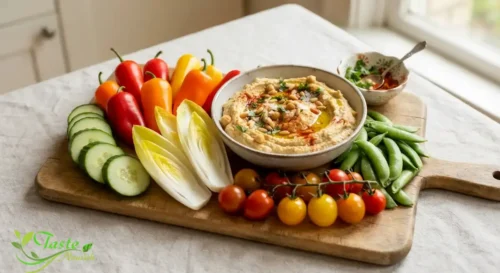
Arrange by vegetable type in rows or clusters rather than mixing everything together; it makes the platter easier to read at a glance and helps guests with allergies or preferences pick out what they want. A small bowl of extra hummus in the center works well for guests who want to double-dip with whole snap peas or extra cucumber slices you’ve set aside as plain dippers.
These bites don’t need much alongside them, but warm pita triangles, olives, or a small bowl of marinated feta round out the platter if you want a slightly bigger spread.
Make-Ahead Instructions
Most of the work here can be done ahead — just not the final assembly.
Up to 1 day ahead: Wash and dry all vegetables. Slice cucumbers and store them layered between paper towels in an airtight container in the fridge. Hollow the peppers and refrigerate.
Same day, a few hours ahead: Hollow the tomatoes and keep them upside down on paper towel in the fridge to drain.
Right before serving: Pat all cut surfaces dry one final time, then pipe the hummus and garnish. Assembling close to serving time is what keeps the bites from turning watery on the platter.
Storage
Veggie and hummus bites are best eaten within a few hours of assembly, while the vegetables are still crisp and the hummus hasn’t absorbed moisture from the cut surfaces. If you have leftovers, store them in an airtight container in the refrigerator, ideally with the hummus portions on top rather than pressed against other pieces, and eat them within a day for the best texture — the vegetables will continue to soften the longer they sit.
Because the assembled bites combine raw produce with a chickpea-and-oil-based hummus, treat the finished platter like any perishable food: keep it refrigerated until serving, and don’t leave it out at room temperature for more than two hours (one hour if the room is warmer than 90°F). If the platter has been sitting out at a party, follow the same rule for any leftovers you’re considering saving.
Common Mistakes
Not drying the vegetables well enough. This is the most common reason the platter looks soggy within an hour. Any surface water on the cucumber or inside the pepper cups mixes into the hummus and thins it out. Pat vegetables dry, then let them air-dry a few extra minutes before filling.
Using hummus that’s too thin. Dip-style hummus often won’t hold a piped shape. If it slides right off the vegetable, it’s too loose — stir in extra tahini or switch to a thicker brand or homemade batch.
Cutting vegetables too far in advance. Cucumber rounds and tomato cups both release liquid once cut. Slicing them hours ahead and leaving them exposed on the counter guarantees a watery platter by serving time.
Overfilling each bite. A heaping mound of hummus looks generous but makes the piece top-heavy and messy to eat in one bite. A modest teaspoon-sized portion holds its shape and eats more cleanly.
Skipping the garnish. Without a little oil, herb, or spice on top, the bites can taste one-note and look unfinished, since the hummus itself is the only visible topping.
Assembling the whole platter hours before the party. Even well-dried vegetables soften over several hours once the hummus is on them. Prep components ahead, but pipe and garnish close to serving.
Choosing watery or seedy vegetables as the base. Standard cucumbers (versus English) and very juicy tomatoes hold more internal water and tend to weep more once cut, undermining an otherwise careful prep.
Troubleshooting
The platter looks watery or the hummus has thinned out. This almost always traces back to moisture on or inside the vegetables. Next time, dry vegetables more thoroughly and assemble closer to serving. For a platter that’s already sitting out, blot visible liquid with a paper towel and add a fresh dab of hummus if needed.
The hummus won’t hold its shape when piped. The hummus is too thin. Stir in an extra tablespoon of tahini or a spoonful of Greek yogurt to firm it up, or chill it for 15–20 minutes before piping, which also helps it hold a peak.
The hummus keeps sliding off the cucumber rounds. Cucumber skin is smooth and slick, especially if there’s any residual moisture. Make sure the surface is fully dry, and consider scoring a shallow ring around the top of each round with a fork to give the hummus something to grip.
The tomato cups are soupy inside. The seeds and pulp weren’t scooped out completely, or the cups weren’t drained before filling. Scoop more thoroughly with a small spoon and let the hollowed tomatoes sit cut-side-down on paper towel for a few minutes before filling.
Variations
Flavored hummus: roasted red pepper, roasted garlic, or a spicy harissa hummus all work well as a base and change the character of the platter without any extra steps.
Add a protein element: a few chickpeas, a small cube of feta, or a sliver of smoked salmon pressed into the hummus turns a simple bite into a heartier one.
Herb-forward version: stir chopped dill, mint, or basil directly into the hummus before piping for a greener, herbier bite.
Extra crunch: a sprinkle of everything-bagel seasoning, crushed pistachios, or crispy fried shallots on top adds textural contrast to the soft hummus.
Appetizer Platter or Party Serving Ideas
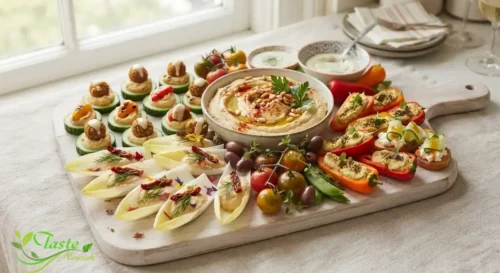
Veggie and hummus bites work well as one component of a larger spread rather than the only thing on the table. They pair naturally with a cheese board, a bowl of olives, or warm pita for a mezze-style setup, and their bright colors make them a good counterpoint on a holiday appetizer table that’s otherwise heavy on baked or fried options.
For a game-day or potluck spread, arranging the bites on a large platter with the vegetable dippers around the edge and a small bowl of extra hummus in the center lets guests build their own version if the pre-assembled bites run out.
Food Safety
Fresh produce can carry bacteria from soil, water, or handling, so wash all vegetables under running water before cutting them, even ones you plan to peel, since dirt on the surface can transfer to the flesh during cutting. Soap, detergent, and commercial produce washes aren’t recommended for fresh produce.
Use a clean cutting board and knife for the vegetables, separate from anything used for raw meat, poultry, or seafood, to avoid cross-contamination.
Once assembled, treat the platter as a perishable food. Perishable foods shouldn’t sit at room temperature for more than two hours (one hour if it’s warmer than 90°F), so keep the platter refrigerated until shortly before serving, and replace or refresh a platter that’s been sitting out at a party rather than letting it linger for hours at room temperature.
veggie and hummus bites FAQs
Can I make veggie and hummus bites ahead of time?
You can prep the vegetables and hummus separately up to a day ahead, but it’s best to assemble the actual bites within an hour or two of serving so the vegetables stay crisp and the hummus doesn’t thin out.
Why did my hummus bites turn watery?
Almost always because the vegetables weren’t dried thoroughly before filling, or the bites were assembled too far ahead of serving. Both cucumber and tomato release moisture once cut, and that moisture mixes into the hummus over time.
What vegetables work best for this recipe?
Firm, cup-shaped, or sliceable vegetables hold hummus best — English cucumber rounds, mini sweet pepper halves, Belgian endive leaves, and hollowed cherry tomatoes are the most reliable choices. Leafy or very delicate vegetables tend to wilt or tear.
Can I use homemade hummus instead of store-bought?
Yes, and it’s worth making sure it’s on the thicker side. Homemade hummus can vary a lot in consistency depending on the recipe, so if yours is thin, blend in a little extra tahini before piping.
How should I store leftover veggie and hummus bites?
Keep them refrigerated in an airtight container and eat them within a day. The vegetables will continue to soften over time, so leftovers won’t have quite the same crisp texture as a freshly assembled platter.
Can I freeze veggie and hummus bites?
No. Fresh vegetables like cucumber and tomato don’t freeze well — they turn watery and limp once thawed — so this isn’t a good candidate for freezing at any stage.
What can I substitute for hummus?
A thick white bean dip or a tzatziki-style yogurt dip can work with the same assembly method, though the flavor and texture will be different from classic hummus.
Conclusion
Veggie and hummus bites prove that a no-cook appetizer doesn’t have to mean an afterthought. With dry, well-chosen vegetables, a hummus thick enough to hold its shape, and assembly timed close to serving, you end up with a platter that’s as crisp and fresh at the end of the party as it was at the start.
Hanan Abo Samra is the founder of Taste & Nourish, sharing trustworthy nutrition guidance and recipes drawn from 20+ years of hands-on cooking experience. When she's not developing new recipes, Hanan is researching the science behind everyday ingredients to bring readers practical, evidence-based guidance for a healthier lifestyle.