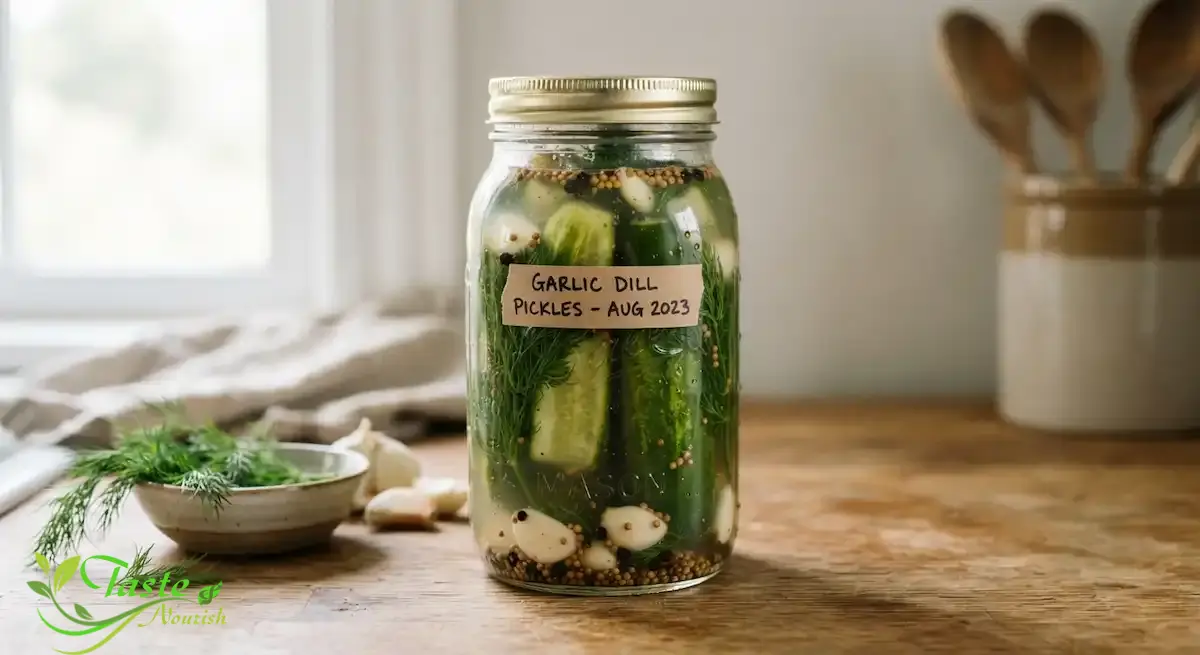
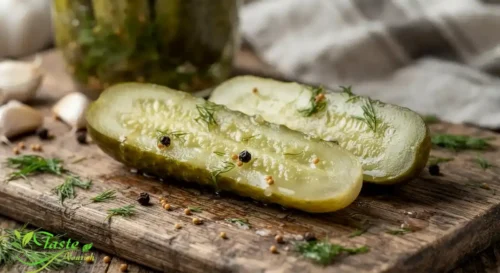
If you’ve got a bag of cucumbers sitting in your fridge and no real plan for them, this garlic dill pickle brine recipe is exactly what you need. It takes about fifteen minutes of hands-on work, a handful of pantry staples, and a little patience while the jar chills out. The payoff is a batch of homemade garlic dill pickles with that sharp, garlicky snap you’d expect from a good deli spear, and you won’t need canning equipment or a fermentation crock to get there. Whether you grow your own cucumbers or just grabbed some at the farmers market, this brine turns them into something worth bragging about within a day or two.
This garlic dill pickle brine recipe combines vinegar, water, pickling salt, fresh garlic, and dill to turn cucumbers into homemade garlic dill pickles in as little as 24 hours. Because it’s a refrigerator method rather than a canned one, there’s no boiling-water processing step involved, just a warm brine poured over cucumbers and chilled. The pickles are snackable the next day, though the flavor keeps deepening for about a week, and a jar will keep well in the fridge for up to two months.
Key Takeaways
This garlic dill pickle brine recipe relies on a simple ratio of vinegar, water, and salt, so no canning experience is required.
Refrigerator garlic pickles are a quick-pickle method, not a fermented or shelf-stable canned product, so the jar has to stay cold at all times.
Fresh garlic, fresh dill, and firm, unwaxed cucumbers make the biggest difference in flavor and crunch.
Homemade garlic dill pickles are technically ready to eat after 24 hours, but most people find the flavor is best around day 3 to 5.
The brine is naturally high in sodium, so portion size is worth keeping in mind if you’re watching your salt intake.
Why This Garlic Dill Pickle Brine Recipe Works
The short version: vinegar’s acidity firms up the cucumber slightly while stopping the growth of spoilage organisms, salt draws out excess water and helps the pickles stay crisp, and garlic plus dill do the flavor heavy lifting. Because the cucumbers never get cooked, they keep more of their raw crunch than a canned pickle would.
Smashing the garlic cloves instead of leaving them whole also matters more than people expect. A bruised clove releases more of its natural compounds into the brine, which is part of why an overnight rest in the fridge tastes noticeably more garlicky than a pickle you eat within the first hour.
What Are Homemade Garlic Dill Pickles?
Homemade garlic dill pickles are cucumbers that have been soaked in a vinegar-based brine seasoned with garlic, fresh or dried dill, and usually a few whole spices like peppercorns or mustard seed. They fall into the “quick-pickle” or “fresh-pack” category of pickled foods rather than the fermented category, which matters more than it might sound like.
According to the National Center for Home Food Preservation, fresh-pack or quick-process pickles are not fermented at all; the cucumbers are simply brined, then covered in seasoned vinegar, while true fermented dills go through a curing process that can take one to several weeks. That’s the whole reason refrigerator garlic dill pickles are so appealing for a home cook: you skip the waiting and the guesswork of fermentation and still end up with a genuinely good pickle.
Garlic Dill Pickle Brine Recipe
This makes one quart jar of pickles, roughly eight to ten spears depending on how you cut the cucumbers. It scales easily if you want to double or triple it for a bigger batch.
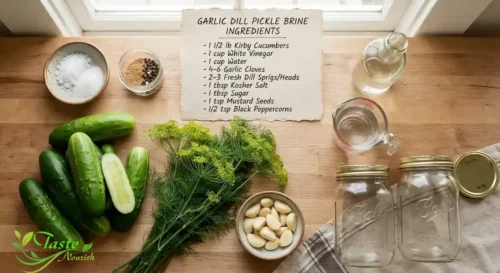
1 pound pickling cucumbers (Kirby or similar), washed
1 cup water
1 cup distilled white vinegar or apple cider vinegar (5% acidity)
1 tablespoon pickling or canning salt
1 teaspoon sugar, optional
4 to 6 garlic cloves, peeled and lightly smashed
2 to 3 fresh dill heads, or 2 tablespoons dill seed
1 teaspoon black peppercorns
1/2 teaspoon mustard seed, optional
1/4 teaspoon red pepper flakes, optional
Equipment
One clean quart-size glass jar with a tight-fitting lid
Small saucepan
Cutting board and knife
Instructions
Wash the cucumbers well. Trim and discard a thin, 1/16-inch slice from the blossom end of each one, since that end can carry an enzyme that softens pickles over time. Slice into spears, rounds, or leave whole, whichever you prefer.
In the saucepan, combine the water, vinegar, salt, and sugar. Bring just to a simmer, stirring until the salt and sugar dissolve, then remove from the heat and let it cool for a few minutes.
Layer the smashed garlic, dill, peppercorns, and any optional spices into the bottom of the jar.
Pack the cucumbers into the jar as snugly as you can without crushing them.
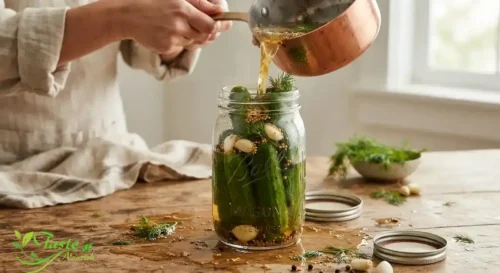
Pour the warm brine over the cucumbers until they’re fully covered, leaving about half an inch of headspace at the top.
Seal the jar, let it cool to room temperature on the counter, then move it to the refrigerator.
Chill for at least 24 hours before tasting. Flavor keeps building through day 3 to 5, which is the sweet spot most people prefer.
Tip: Don’t swap in a vinegar you’re not sure about, and don’t dilute it further than the recipe calls for. The National Center for Home Food Preservation is direct about this: altering the vinegar, food, or water proportions in a tested pickle recipe can affect both safety and texture, so it’s not the place to freestyle.
Nutrition Facts for Refrigerator Garlic Pickles
Exact numbers will shift depending on how much salt and garlic end up in each spear, but the general nutrition profile of a dill pickle is pretty consistent across homemade and store-bought versions. The table below reflects typical values reported in the USDA database for dill cucumber pickles.
Nutrient (per 1 spear, about 35g)
Approximate Amount
Calories
4 to 5 kcal
Sodium
200 to 280 mg
Total Carbohydrate
1 g
Fiber
0.4 g
Potassium
20 to 25 mg
Vitamin K
Small but notable amount
The standout number here is sodium. A single spear can carry roughly 10% of a day’s recommended sodium limit, which is worth knowing if you tend to eat a few at a time or use the brine in other dishes.
Health Benefits of Garlic in Pickles
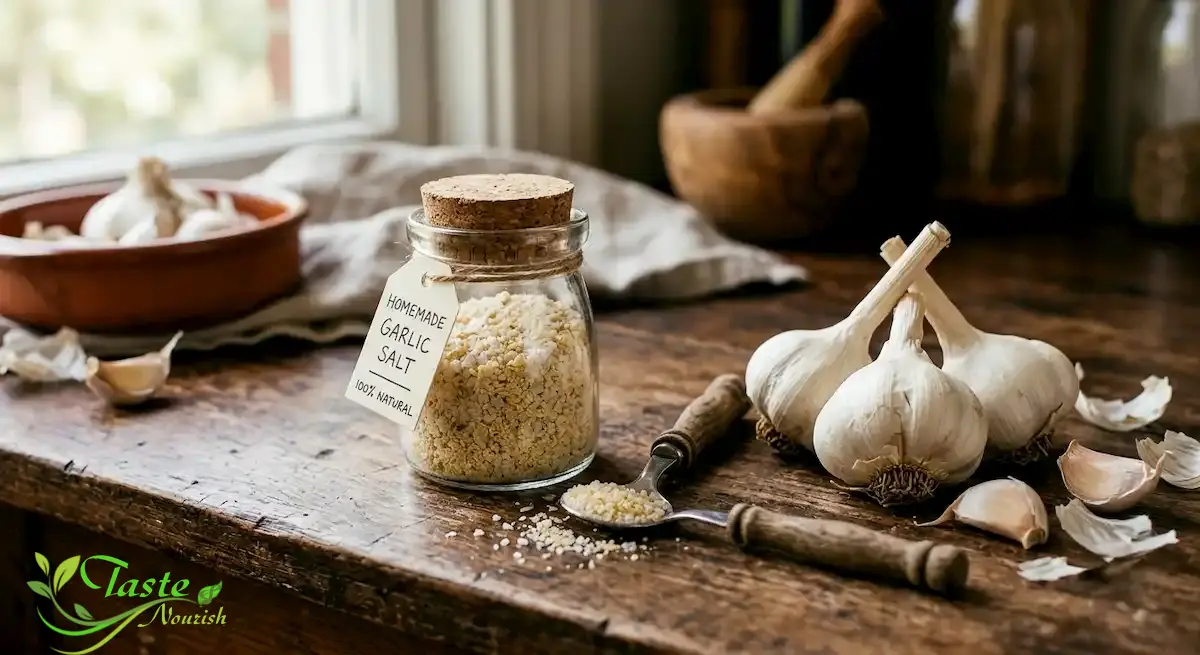
Garlic itself has a long history of being credited with health perks, and some of that reputation holds up under research, though usually with caveats. The compound getting most of the credit is allicin, a sulfur-containing substance that forms when a garlic clove is cut or crushed, which is part of why smashing the cloves for this brine isn’t just a texture choice.
The National Center for Complementary and Integrative Health reports that garlic supplements may modestly reduce total and LDL cholesterol in people with high cholesterol, and that garlic may help lower blood pressure to a small degree in some people. These are described as small effects from concentrated supplements, not from the small amount of garlic infused into a jar of pickles, so it’s a stretch to expect a pickle spear to move the needle on cholesterol.
Beyond cardiovascular research, a review published on PubMed Central notes that allicin has been studied for its antioxidant and antimicrobial properties, with interest from both the food science and medical research communities. Garlic also brings small amounts of vitamin C, vitamin B6, and manganese to the table, though again, the quantities in a homemade brine are culinary, not clinical.
What the Research Says
It helps to separate two different questions here: what does research say about garlic in general, and what does that mean for a jar of pickles. Most of the clinical research on garlic’s health effects comes from concentrated supplements, aged garlic extract, or garlic oil, not from raw cloves eaten in normal food amounts.
The NCCIH is fairly candid about the limits of the evidence. Immune-boosting claims, for instance, are backed by very little solid research; a 2022 review it cites found only two small studies suggesting a possible benefit, both with real methodological weaknesses. Cholesterol and blood pressure findings are described as modest at best, and researchers still don’t fully agree on how much garlic, in what form, produces a meaningful effect.
None of this means garlic is pointless in your diet, just that a garlic dill pickle brine recipe should be thought of as flavor with a side of nutrition, not a substitute for medical treatment or dietary supplements. If you’re specifically trying to manage cholesterol or blood pressure, that’s a conversation for your doctor, not your pickle jar.
Potential Risks and Side Effects
For most healthy adults, homemade garlic dill pickles are a low-risk food, but there are a few things worth knowing. Garlic itself can cause breath odor, mild stomach upset, gas, or heartburn in some people, especially when eaten raw and in larger amounts than a body is used to.
Garlic may also increase the risk of bleeding, according to the National Center for Complementary and Integrative Health, which is mainly a concern for people taking blood-thinning medication or preparing for surgery. Vinegar’s acidity can aggravate acid reflux or sensitive tooth enamel for some people if pickles become a frequent snack rather than an occasional one.
There’s also a food-safety angle specific to refrigerator pickles that’s worth taking seriously. Extension research cited by Kansas State University, drawing on National Center for Home Food Preservation data, notes that refrigerator pickles have increasingly been linked to cases of listeriosis, a foodborne illness caused by Listeria monocytogenes. The fix is straightforward: stick to a reliable, properly acidified recipe like this one, keep the jar refrigerated the entire time, and don’t leave it sitting out on the counter.
Who Should Be Cautious With Garlic Dill Pickles?
A few groups may want to be more careful with how much of this brine and garlic they eat. People on blood-thinning medications, or anyone with a procedure or surgery coming up, should mention garlic intake to their healthcare provider given the bleeding-risk research noted above.
People managing high blood pressure, heart failure, or kidney disease are often advised to watch sodium closely, and pickle brine is not a low-sodium food by any measure. Anyone with a known garlic allergy, active acid reflux, or a sensitive stomach may also want to start with a small portion to see how they tolerate it.
How Much Garlic Dill Pickle Brine Is Too Much?
There’s no official serving limit for pickles, but sodium is the practical ceiling here. The Centers for Disease Control and Prevention notes that Americans consume more than 3,300 mg of sodium a day on average, well above the federal recommendation of under 2,300 mg daily for teens and adults as part of a healthy eating pattern.
Since a single pickle spear can carry somewhere around 200 to 280 mg of sodium, a few spears alongside an already salty meal can add up fast. Enjoying homemade garlic dill pickles as a topping, a side, or an occasional snack rather than eating a whole jar in one sitting is the simplest way to keep that in check.
How to Choose the Best Cucumbers and Garlic
Not every cucumber is built for pickling. Look for pickling cucumbers, sometimes labeled Kirby, which are smaller, firmer, and less watery than the smooth-skinned slicing cucumbers meant for salads. They should feel firm all over with no soft or mushy spots, since a cucumber that’s already going soft will only get softer in the brine.
For garlic, choose firm, plump bulbs with tight, unbroken skin and no green sprouts poking through the cloves, which is a sign the garlic is past its prime. Fresh dill heads give a brighter, more herbal flavor than dried dill weed, though dill seed is a fine substitute if that’s what’s on hand. Whichever vinegar you use, check the label for 5% acidity, since that’s the level tested pickling recipes are built around.
Storing Your Garlic Dill Pickle Brine Recipe
Once the jar is sealed and refrigerated, it should stay refrigerated the entire time, no exceptions. These are quick pickles, not shelf-stable canned goods, so they don’t get the boiling-water processing that would let them sit safely in a pantry.
Use clean utensils every time you fish a pickle out of the jar to avoid introducing bacteria into the brine. Stored properly and consistently kept cold, a jar of homemade garlic dill pickles typically stays good for one to two months, though the crunch is usually best in the first few weeks.
Best Ways to Eat and Serve Homemade Garlic Dill Pickles
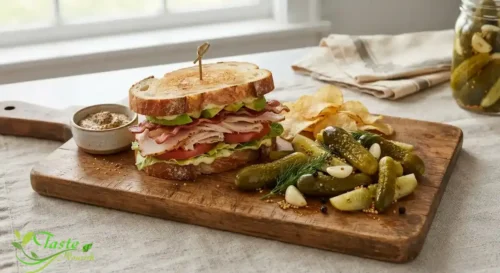
Beyond eating them straight out of the jar, these pickles are a natural fit chopped into tuna, chicken, or potato salad for a tangy crunch. They also make an easy burger or sandwich topping, and a few spears alongside a charcuterie board add a nice acidic contrast to rich cheeses and cured meats.
Don’t overlook the leftover brine once the pickles are gone. It works well as a quick marinade for chicken thighs, a tangy addition to a Bloody Mary, or a fast way to pickle thinly sliced onions or radishes for tacos.
Common Mistakes to Avoid With This Garlic Dill Pickle Brine Recipe
The most common misstep is using a vinegar of unknown or lower acidity, which can leave the pickles under-preserved and less safe to store for any length of time. Skipping the blossom-end trim is another easy one to overlook, and it can lead to pickles that turn mushy faster than expected.
Packing the jar too tightly can also work against you, since the brine needs room to fully surround every cucumber piece. Pouring boiling-hot brine straight onto the cucumbers, rather than letting it cool slightly first, tends to soften the texture more than a warm brine does, and skimping on garlic contact time is why some batches taste more like a plain dill pickle than a truly garlicky one.
Myths vs Facts About Garlic Dill Pickle Brine
Myth
Fact
All homemade pickles are fermented
Refrigerator garlic pickles are a quick-pickle method using vinegar, not fermentation
You need a canner to make pickles safely at home
Refrigerator pickles skip canning entirely, as long as they’re kept cold and eaten within a few weeks
More garlic in the brine means bigger health benefits
The amount of garlic in a jar of pickles is a culinary amount, well below what’s used in supplement research
Pickle brine is a proven cramp cure
Some people find it soothing, but research on brine and muscle cramps is limited and inconclusive
Fermented vs Refrigerator Garlic Dill Pickles
Feature
Fermented Dill Pickles
Refrigerator Garlic Dill Pickles
Method
Salt brine, natural fermentation
Vinegar brine, no fermentation
Time to ready
1 to 4 weeks
24 hours to 5 days
Equipment
Fermentation crock or weighted jar
Any clean glass jar
Storage
Refrigerate after fermentation completes
Refrigerate immediately and continuously
Flavor profile
Tangy, complex, slightly funky
Bright, sharp, straightforwardly garlicky
FAQs About the Garlic Dill Pickle Brine Recipe
How long do homemade garlic dill pickles last in the fridge?
Kept consistently refrigerated, they’re generally good for one to two months, though the texture is at its crispest in the first few weeks.
Can I reuse the pickle brine for a second batch of cucumbers?
It’s not recommended. The brine loses acidity and flavor strength after the first batch, so a fresh batch of brine gives more reliable results and better safety.
Do refrigerator pickles need to be processed in a water-bath canner?
No. That’s the main appeal of a refrigerator pickle recipe like this one, it skips canning entirely, as long as the jar stays refrigerated the whole time.
Why did my pickles turn out soft instead of crunchy?
The most common causes are skipping the blossom-end trim, using cucumbers that were already a bit soft, or pouring brine that’s too hot directly over the cucumbers.
Can I make this brine without fresh dill?
Yes. Dill seed works as a substitute for fresh dill heads, and dried dill weed can work in a pinch, though the flavor will be a bit less bright.
Is garlic dill pickle brine actually good for you?
It’s a low-calorie food with a small amount of garlic’s beneficial compounds, but it’s also high in sodium, so it’s best enjoyed in reasonable portions rather than as a health food in itself.
Conclusion
This garlic dill pickle brine recipe is about as low-effort as home pickling gets: no canner, no fermentation crock, just a simple brine, a jar, and a little patience. What you get back is a batch of homemade garlic dill pickles with real crunch and a garlic bite that store-bought versions rarely match.
Keep the jar cold, stick to a tested vinegar ratio, and give it at least a full day before you dig in. After that, the only real decision left is whether the jar makes it to the fridge door before it’s empty.
Hanan Abo Samra is the founder of Taste & Nourish, sharing trustworthy nutrition guidance and recipes drawn from 20+ years of hands-on cooking experience. When she's not developing new recipes, Hanan is researching the science behind everyday ingredients to bring readers practical, evidence-based guidance for a healthier lifestyle.