Chicken breast has a reputation for going dry the second it overcooks, and honestly, it earns that reputation more often than not. Brining is the one technique that changes that outcome more reliably than almost anything else you can do in the kitchen. If you’ve ever wondered how to brine chicken for consistently juicy, flavorful results, you’re in the right place.
Whether you soak chicken in a saltwater bath or rub salt straight onto the skin, the goal is the same. You want seasoned meat all the way through that stays juicy under heat, not just a well-seasoned surface with a bland center.
This guide covers the chicken brine ratio and time that professional kitchens actually rely on, compares wet brine vs. dry brine chicken methods side by side, and walks through the food safety rules that keep the whole process trouble-free.
Key Takeaway: A standard wet brine uses about 3/4 cup of salt per gallon of water, or 3 tablespoons per quart, for roughly 30 minutes to a few hours depending on the cut. Dry brining uses about 3/4 to 1 teaspoon of kosher salt per pound of chicken, applied directly to the skin, for anywhere from one hour to overnight.
Brining works through a fairly simple mechanism. Salt dissolves into water, or in a dry brine, it first draws moisture out of the meat itself, and either way it changes how the muscle fibers hold onto liquid.
Salt loosens the structure of some proteins in muscle tissue, which lets those proteins trap more water inside the meat instead of losing it to evaporation on the grill or in the oven. A peer-reviewed study from Cornell University’s Department of Poultry Science on how different salts affect the water holding capacity of poultry meat found that sodium chloride measurably increases how much moisture chicken muscle can retain during cooking.
That extra retained moisture is exactly why brined chicken tastes noticeably juicier bite after bite, even when it’s cooked a little past the target temperature. Salt also seasons the meat from the inside out, so every forkful tastes deliberately seasoned instead of only the outer layer.
Wet Brine vs. Dry Brine Chicken: What’s the Difference
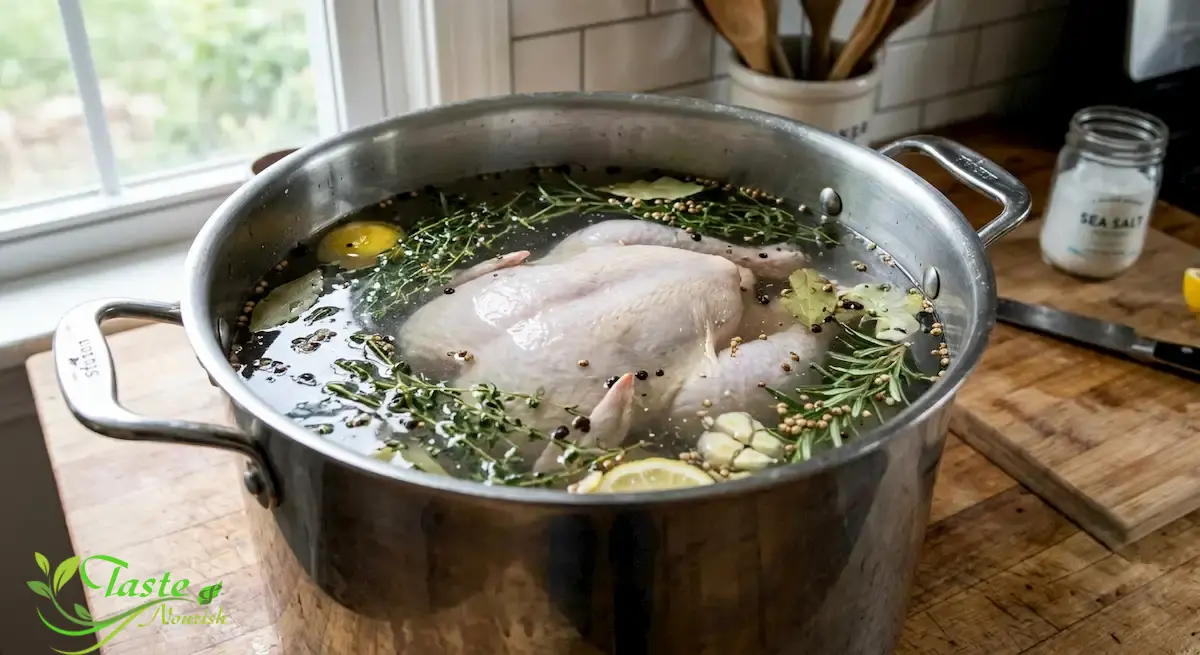
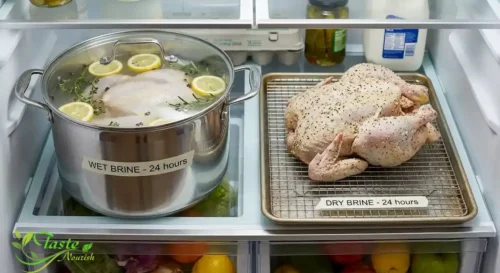
A wet brine submerges chicken in a saltwater solution, sometimes with sugar, herbs, or aromatics mixed in. A dry brine skips the water entirely and relies on kosher salt rubbed directly onto the skin and meat.
Both techniques lean on the same salt chemistry, but they produce noticeably different results in texture, flavor concentration, and whether the skin crisps up well once it hits heat.
How Wet Brining Works
Submerging chicken in a saltwater solution lets salt spread evenly across the surface and slowly move deeper into the meat through diffusion. Wet brining works especially well for lean cuts like boneless chicken breast that dry out fast, and it can carry extra flavor from add-ins like brown sugar, garlic, or citrus straight into the meat as it soaks.
How Dry Brining Works
A dry brine pulls moisture out of the chicken at first, dissolving the surface salt into a light, natural brine that then reabsorbs back into the meat over time. Since there’s no added water, dry-brined skin actually dries out in the refrigerator, which sets it up to crisp far better than wet-brined skin once it hits the oven or grill.
Factor
Wet Brine
Dry Brine
Best for
Lean cuts prone to drying out, whole chickens
Bone-in, skin-on cuts and whole chickens
Skin crispiness
Softer skin unless dried well before cooking
Crispier skin, since no water is added
Flavor add-ins
Easy to infuse herbs, sugar, citrus, aromatics
Limited to what’s rubbed directly on the surface
Equipment needed
Large food-grade container or bag
Just a rimmed sheet pan and a wire rack
Refrigerator space
More, since it includes liquid
Less, since it’s just the chicken
Sodium control
Set by ratio and soak time
Easier to measure precisely by weight
Chicken Brine Ratio and Time
Getting the chicken brine ratio right matters more than almost any other variable in the process. Too little salt barely seasons the meat, while too much salt or too long a soak pushes chicken toward a spongy, overly salty texture.
For wet brining, the USDA’s guidance on brining poultry recommends 3/4 cup of salt per gallon of water, or 3 tablespoons of salt per quart, using plain table salt for the most predictable results.
That ratio works out to roughly a 5 to 6 percent salt solution, which is concentrated enough to season chicken within a few hours without requiring an overnight soak for smaller cuts.
Wet Brine Time by Cut
Cut
Wet Brine Time
Whole chicken (3 to 5 lb)
8 to 12 hours
Bone-in breasts or thighs
1 to 2 hours
Boneless, skinless breasts
30 minutes to 1 hour
Wings
30 minutes to 1 hour
Tenders or cutlets
15 to 30 minutes
Dry Brine Salt Amount and Time
For dry brining, use roughly 3/4 to 1 teaspoon of kosher salt per pound of chicken, distributed evenly over the skin and any exposed meat. Coarse kosher salt dissolves more slowly and evenly than fine table salt, which is why most dry-brine instructions call specifically for it rather than iodized table salt.
A boneless, skinless cut needs closer to 1/2 teaspoon per pound and only an hour or two in the refrigerator. A whole chicken can handle the full 1 teaspoon per pound and benefits from sitting uncovered for 12 to 24 hours, which gives the skin more time to dry out before roasting.
How to Brine Chicken Step by Step
How to Wet Brine Chicken
Dissolve the salt, and sugar if using, completely in a small amount of warm water, then add cold water or ice to bring the whole batch down to refrigerator temperature before it touches the chicken.
Submerge the chicken fully in a food-grade container, using a plate or a weighted bag if needed to keep it under the liquid.
Refrigerate the chicken and brine the entire time, and never let the container sit out at room temperature.
Remove the chicken once the time for that cut is up, rinse it briefly under cool water, and pat it completely dry with paper towels.
Cook right away, or set it uncovered on a rack in the refrigerator for up to a few hours to let the skin dry further before cooking.
How to Dry Brine Chicken
Pat the chicken completely dry with paper towels before adding any salt.
Measure the kosher salt for the weight of the chicken and distribute it evenly over every surface, working it gently into the skin.
Set the chicken on a wire rack over a rimmed baking sheet, uncovered, in the refrigerator.
Leave it for the time appropriate to the cut, letting the surface salt dissolve into a light brine and reabsorb into the meat.
Cook straight from the refrigerator. There’s no rinsing step with a dry brine, and rinsing would only wash away the seasoning.
Food Safety When Brining Chicken
Brining still means handling raw poultry, so the same food safety rules that apply everywhere else in the kitchen apply here too. The CDC’s guidance on preventing food poisoning centers on four steps that matter just as much during brining: clean, separate, cook, and chill.
Keep the chicken, and the brine it’s sitting in, refrigerated at 40°F or below for the entire process. USDA’s “Danger Zone” guidance places the range between 40°F and 140°F as the window where bacteria multiply fastest, doubling in number in as little as 20 minutes at room temperature.
Use a food-grade container for wet brining, such as glass, stainless steel, or a heavy resealable bag, and skip reactive metals like uncoated aluminum, which can react with salt and any acidic ingredients in the brine.
Never reuse liquid that raw chicken has already soaked in, and don’t baste with it either unless it’s been brought to a full boil first to destroy any bacteria transferred from the raw meat.
Wash hands, cutting boards, and any surface the raw chicken or its brine touched with hot, soapy water right afterward, and cook the finished chicken to a minimum internal temperature of 165°F, checked with a food thermometer rather than by color alone.
Pro Tip: Set a timer the moment you start a wet brine. It’s easy to get distracted and leave lean cuts like chicken breast in the brine for hours longer than intended, which pushes texture from juicy into spongy fast.
Common Brining Mistakes to Avoid
Over-brining is the most common misstep, and it happens faster with boneless cuts than most home cooks expect. Leaving chicken in a wet brine too long pushes salt concentration past good seasoning and into a texture that turns rubbery and overly salty by the time it cooks.
Skipping the pat-dry step before cooking is another frequent mistake. Wet skin steams instead of browning, which blocks the deep golden color and crisp texture that brining is often used to achieve in the first place.
Swapping table salt for kosher salt without adjusting the amount throws off the whole ratio, since grain size changes how much salt actually fits in a spoon. Kosher salt is less dense than table salt, so measuring by volume instead of weight can leave a brine noticeably under- or over-salted.
Brining pre-seasonedor enhanced chicken, the kind labeled with a saline solution already injected during processing, is another one worth watching for. Adding a full brine on top of that can push sodium and salt levels well past what the recipe intended.
Flavor Variations and Add-Ins
A basic salt-and-water brine already does the heavy lifting, but both wet and dry brines take well to extra flavor. Brown sugar, honey, or maple syrup soften the saltiness and help the skin brown a little deeper during cooking.
Aromatics like garlic cloves, bay leaves, black peppercorns, and fresh herbs such as thyme or rosemary infuse subtle background flavor into a wet brine over time. Citrus peel, apple cider, or a splash of vinegar can add brightness without overwhelming the chicken itself.
For a dry brine, mix dried herbs, smoked paprika, garlic powder, or black pepper directly into the salt before rubbing it on. Just keep any sugar in a dry brine modest, since sugar can scorch faster than salt under high roasting heat.
Sodium and Health Considerations
Brined chicken does pick up more sodium than unsalted chicken, which is worth keeping in mind for anyone watching their intake closely. The FDA’s guidance on sodium in the diet notes that most American adults already eat around 3,400 milligrams of sodium a day, well above the recommended limit of under 2,300 milligrams for most adults.
Research suggests that diets consistently higher in sodium are associated with increased blood pressure over time, so people managing hypertension or otherwise limiting sodium may want to shorten brining time, use a lighter ratio, or rinse brined chicken more thoroughly before cooking.
Choosing a shorter brine, cutting the salt ratio, or skipping additional salt in a pan sauce afterward are simple ways to bring the overall sodium load back down without giving up the technique entirely.
Storing Brine and Leftover Chicken
Unused wet brine that never touched raw chicken can be refrigerated and reused within a few days, since it’s still just salt water. Once raw chicken has soaked in it, that brine is done and should go straight down the drain, not into a future batch.
Cooked, brined chicken keeps the same as any other cooked poultry. Refrigerate leftovers within two hours of cooking, store them in a shallow container to help them cool quickly, and eat them within three to four days for the best quality and safety.
Common Myths About Brining Chicken
Myth: Brined chicken always tastes salty. Followed correctly, a brine seasons the meat evenly rather than making it taste like straight salt. Salty results almost always trace back to too much salt, too long a soak, or skipping the rinse and dry step.
Myth: Brining and marinating are the same thing. A marinade typically relies on acid and oil for flavor and tenderizing, while a brine relies on salt concentration to change how the meat holds water. They can overlap, but the mechanisms driving the results are different.
Myth: You need special equipment to brine chicken. A large zip-top bag, a stockpot, or even a clean cooler with ice packs can all work for wet brining. Dry brining needs even less, just a sheet pan and a rack.
Myth: Brined skin can never get crispy. Wet-brined skin can absolutely crisp up if it’s patted dry and given time uncovered in the refrigerator before cooking. Dry brining sidesteps the issue entirely since it never adds water to begin with.
How to Brine Chicken FAQs
Q1. Can chicken sit in a brine too long?
Yes. Leaving chicken, especially boneless cuts, in a wet brine well past the recommended time pushes texture toward spongy and the flavor toward overly salty. Stick to the times for the specific cut rather than brining overnight out of habit.
Q2. Do I need to rinse chicken after brining?
Rinse after a wet brine to remove excess surface salt, then pat the chicken thoroughly dry. Skip rinsing after a dry brine, since there’s no excess liquid to remove and rinsing would only wash away the seasoning that’s already worked its way in.
Q3. Can I brine chicken that’s still partially frozen?
Chicken should be fully thawed before brining so the salt can penetrate evenly and the meat stays within a safe refrigerator temperature the whole time. Partially frozen chicken brines unevenly and can sit in the danger zone longer as it thaws.
Q4. Is a dry brine just a salt rub?
Functionally, yes, though the timing is what separates the two. A quick salt rub right before cooking adds surface seasoning, while a true dry brine sits for at least an hour, often much longer, so the salt has time to dissolve, penetrate, and season the meat throughout.
Q5. Can I add sugar to a chicken brine?
Yes, sugar is a common addition to wet brines and works well in modest amounts alongside the salt. Keep it in check for a dry brine that will see high, direct heat, since sugar browns and scorches faster than the surrounding skin.
Conclusion
Brining chicken comes down to two reliable paths: a wet soak in a measured saltwater solution, or a dry rub of kosher salt that works with time instead of added liquid. Either one, done with the right ratio and timing for the cut, turns ordinary chicken into something noticeably juicier and better seasoned all the way through.
The details that matter most are simple to keep track of: measure the salt accurately, keep everything refrigerated, don’t overshoot the time for the cut, and dry the skin thoroughly before it hits heat. Once those habits are in place, brining stops being an extra step and starts being the reason the chicken turns out right.
Hanan Abo Samra is the founder of Taste & Nourish, sharing trustworthy nutrition guidance and recipes drawn from 20+ years of hands-on cooking experience. When she's not developing new recipes, Hanan is researching the science behind everyday ingredients to bring readers practical, evidence-based guidance for a healthier lifestyle.