Honey is one of the few foods in your pantry that never truly goes bad, but that doesn’t mean you can toss a jar wherever and forget about it. Knowing how to store honey properly is what keeps it smooth, spoonable, and full of flavor for years instead of turning cloudy, gritty, or rock-hard in the back of your cabinet. The good news is that honey storage isn’t complicated. A few simple habits around temperature, containers, and moisture are all it takes to protect its quality for the long haul.
This guide walks through exactly where to keep honey, which containers work best, how to handle crystallization, and the storage mistakes that quietly ruin good honey.
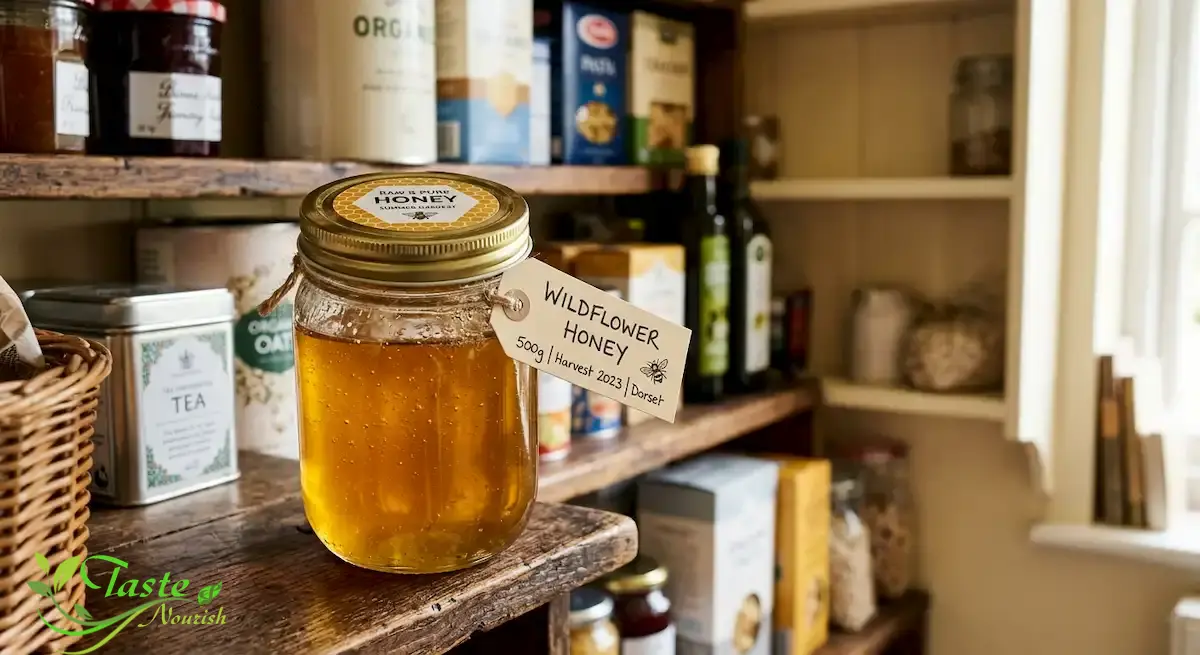
Here’s the quick answer on how to store honey: keep it in a tightly sealed glass or food-grade plastic container at room temperature, roughly 50°F to 70°F (10°C to 21°C), away from direct sunlight and heat sources like the stove. Skip the refrigerator — cold temperatures speed up crystallization rather than slowing it down. Stored this way, honey keeps well for years and needs very little upkeep beyond a tight lid and a clean, dry spoon every time you dip in.
Key Takeaways
The short version of how to store honey: sealed container, room temperature, out of direct light, and never in the fridge.
Honey doesn’t spoil under normal conditions, but poor storage can still cause quality loss or crystallization.
Crystallization is a natural process, not a sign that honey has gone bad.
Glass jars with tight-fitting lids are the most reliable storage container for honey.
Honey should never be given to babies under 12 months old, due to the risk of infant botulism.
If honey ever foams, smells like alcohol, or grows mold, that’s true spoilage from moisture contamination, and it should be discarded.
What You Need to Know About Honey Storage
Honey behaves differently from almost every other food in your kitchen. Its low moisture content and natural acidity make it a poor environment for bacteria and mold to grow, which is why sealed honey can realistically last for years, sometimes even decades, without becoming unsafe to eat.
What honey storage actually protects against isn’t spoilage in the traditional sense — it’s quality loss. Heat, light, and air exposure can gradually darken honey, dull its aroma, and change its flavor. Moisture is the bigger concern: honey is hygroscopic, meaning it naturally pulls water from the air. If enough moisture gets in, usually from a loose lid, a wet spoon, or a very humid kitchen, it can dilute the honey enough to allow natural yeasts to ferment it.
Understanding that distinction is the key to good honey storage tips: you’re managing quality and texture, not fighting off spoilage the way you would with dairy or meat.
How to Store Honey: Step-by-Step Instructions
Choose a glass or food-grade plastic jar with a tight, screw-on lid. Avoid containers that don’t seal completely, since air exposure invites moisture and speeds up quality loss.
Find a spot at room temperature, away from the stove, oven, or any appliance that generates heat. A pantry shelf or a kitchen cabinet away from direct sun works well.
Keep the jar out of direct sunlight. A closed cabinet or pantry is better than an open counter near a window.
Always use a clean, dry spoon or honey dipper. Even a small amount of water on a utensil can introduce moisture that eventually leads to fermentation.
Screw the lid on tightly after every use. A loose or crooked lid lets in humidity, especially in kitchens without great ventilation.
Skip the refrigerator. Refrigeration doesn’t make honey safer, and it actually accelerates crystallization, turning smooth honey grainy much faster than room-temperature storage.
What’s the Best Way to Store Honey Long-Term?
For honey you plan to use within the next year or two, a sealed jar in a cool, dark cabinet at steady room temperature is the best way to store honey. Consistency matters more than hitting an exact number on the thermometer — a stable spot that doesn’t swing between warm and cool is better than a technically “ideal” spot that fluctuates.
If you buy honey in bulk or don’t expect to use it for a long stretch, consider splitting it into two containers: a smaller “everyday” jar you keep on hand, and a larger backup container that stays sealed and undisturbed. This limits how often the bulk supply is exposed to air, light, and utensils, which helps preserve its quality for longer.
Freezing is also an option for very long-term storage, since cold temperatures below freezing actually stop crystal formation rather than speeding it up. It’s not necessary for most home cooks, but it’s a useful option if you’ve stocked up and want to keep a portion in peak liquid condition for a special use later on.
Temperature and Food Safety
Honey’s natural chemistry — low moisture and high acidity — makes it inhospitable to the bacteria that cause foodborne illness in most other foods, which is why it doesn’t require refrigeration for safety. That’s a food quality consideration, not a food safety concern for the general population.
There is one important exception. Honey should never be given to infants younger than 12 months old, including in cooked or baked foods, because it can contain bacterial spores that cause infant botulism, a serious illness. This risk is specific to babies’ immature digestive systems and doesn’t apply to older children, teens, or adults, including during pregnancy or breastfeeding.
Best Containers, Tools, or Equipment
Glass jars with airtight lids are the most reliable choice. Glass doesn’t absorb odors, doesn’t react with honey, and lets you see when it’s time to reorganize or refill.
Food-grade plastic squeeze bottles are convenient for everyday use, especially for tea, coffee, or drizzling over food, as long as the cap seals fully.
Honey dippers or a dedicated spoon kept just for honey reduce the chances of introducing moisture from a utensil that’s been in water or another dish.
Avoid reactive metal containers for long-term storage. Stick with glass or food-grade plastic instead.
Can You Freeze Honey?
Yes, honey can be frozen, and it’s a legitimate long-term storage option, though it isn’t necessary for most kitchens. Freezing temperatures actually prevent the crystal formation that causes honey to turn grainy at room temperature or in the refrigerator.
To freeze honey, leave it in a sealed, airtight container with a little headspace, since honey expands slightly as it freezes. When you’re ready to use it, let it thaw gradually at room temperature rather than microwaving it or placing it in hot water right away. Frozen and thawed honey keeps its flavor and texture well, with no meaningful downside beyond the extra planning it takes.
How to Tell If Honey Is No Longer Good
Honestly, it’s rare for honey to actually spoil. Most of the changes you’ll notice over time are cosmetic, not safety issues:
Crystallization (a cloudy, grainy texture) is completely natural and does not mean the honey has gone bad.
Darkening or a milder flavor over long storage periods is a quality change, not spoilage.
True spoilage is uncommon and almost always traces back to moisture contamination. Watch for:
Foaming or bubbling in the jar
A sour or alcohol-like smell, which signals fermentation
Visible mold, usually from a wet utensil or contaminated container
If you notice any of these signs, the honey has fermented or become contaminated and should be thrown out rather than used. When in doubt, it’s safest to discard the jar and start fresh.
Common Mistakes to Avoid
Refrigerating honey “to keep it fresh.” This backfires by speeding up crystallization. Room temperature is better for texture.
Leaving the lid loose between uses. Even a partially open jar lets in humidity over time.
Dipping in a wet spoon. This is one of the most common causes of fermentation in home-stored honey.
Storing honey near the stove or in a sunny spot. Heat and light both degrade flavor and color faster than room-temperature, shaded storage.
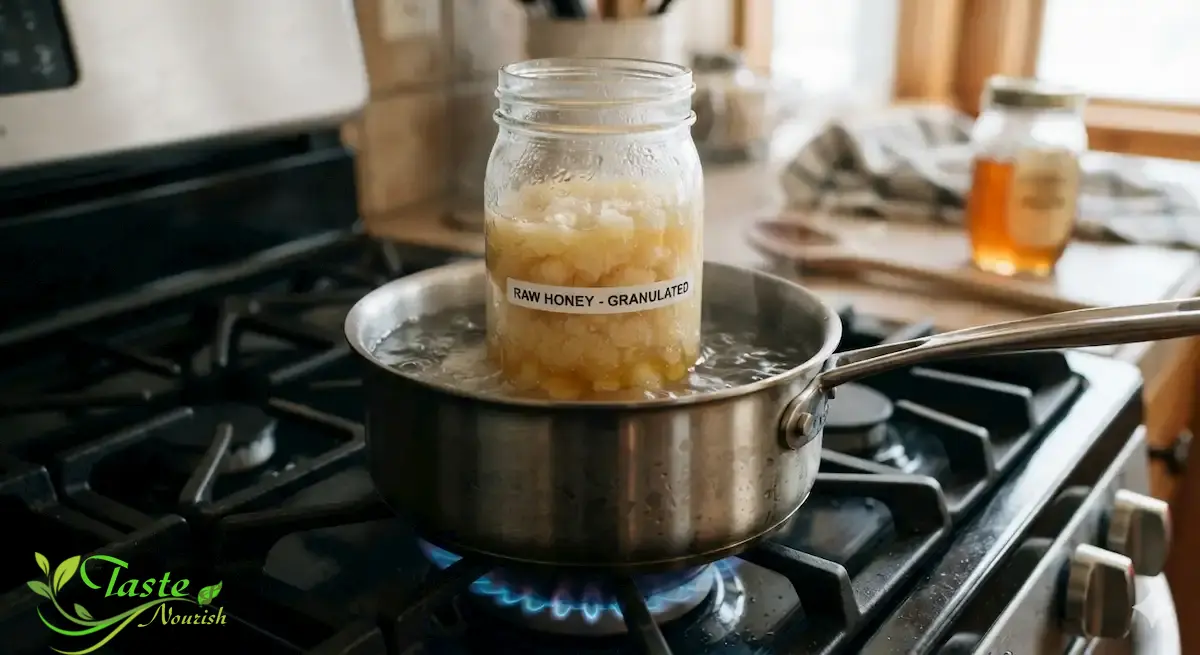
Throwing out crystallized honey. It’s still good; it just needs a gentle warm-water bath to return to liquid form.
Overheating honey to fix crystallization. Boiling or scorching it damages flavor and its natural enzymes. Gentle, low heat is all that’s needed.
Using reactive metal scoops or containers. Stick with glass, food-grade plastic, or dedicated honey dippers.
Buying more honey than you’ll realistically use in a year or two. Splitting bulk honey into a working jar and a sealed backup limits repeated air exposure.
Expert Kitchen Tips
Keep a small everyday jar in regular rotation and leave your backup supply sealed until you need it.
If your honey crystallizes and you don’t mind the texture, use it as-is: crystallized honey spreads beautifully on toast and stirs easily into warm tea.
When you do need to re-liquefy honey, warm only the amount you need rather than reheating the whole jar repeatedly.
Store honey away from strong-smelling foods like onions or spices, since it can pick up odors over time.
Label bulk containers with the purchase date so you can track how long honey has been in storage, even though it won’t spoil on that timeline.
A honey dipper or squeeze bottle cuts down on mess and repeated lid removal in busy kitchens, especially with kids around.
Variations and Alternatives
Not all honey behaves the same way in storage. Raw, unfiltered honey tends to crystallize faster because it still contains tiny particles, like pollen and wax fragments, that act as starting points for crystal formation. Filtered or processed honey, which has had those particles removed, generally stays liquid longer under the same storage conditions.
Creamed or whipped honey is a different case: it’s intentionally crystallized under controlled conditions to create a smooth, spreadable texture. It stores the same way as liquid honey, in a sealed container at room temperature.
Comb honey, sold with the wax comb still intact, follows the same basic storage rules, though the comb itself is best kept in a single layer to avoid crushing.
Quick Reference: How to Store Honey by Method
Storage Location
Temperature
Best For
Notes
Pantry or cabinet shelf
About 50–70°F (10–21°C)
Everyday use
Keep away from the stove and direct sunlight
Dark, cool cupboard
Steady room temperature
Longer-term room storage
Consistency matters more than an exact number
Refrigerator
About 35–40°F (2–4°C)
Not recommended
Speeds up crystallization; not needed for safety
Freezer
0°F (−18°C) or below
Optional long-term liquid preservation
Prevents crystallization; thaw gradually at room temperature
How to Store Honey FAQs
How do you store honey once it’s opened?
Keep opened honey in its original sealed jar, or transfer it to an airtight glass or food-grade plastic container, and store it at room temperature away from sunlight and heat. Opening the jar doesn’t change how it should be stored.
What is the best way to store honey long-term?
Keep it sealed in glass at a steady room temperature, away from light and heat, and consider splitting bulk honey into a small everyday jar plus an untouched backup container to limit repeated air exposure.
Does honey need to be refrigerated?
No. Refrigeration isn’t necessary for safety and actually speeds up crystallization. Room temperature storage keeps honey smoother for longer.
How long does honey last?
Properly stored honey can remain safe to eat indefinitely, though many producers list a “best by” date of about two years for peak flavor and quality. That date reflects quality, not a safety cutoff.
Can you freeze honey?
Yes. Freezing honey in a sealed, airtight container prevents crystallization and preserves its texture. It’s optional for most households but useful for very long-term storage.
Why did my honey turn hard or grainy?
That’s crystallization, a natural process where the sugars in honey separate out over time. It happens faster in cooler temperatures, including the refrigerator, and doesn’t mean the honey has spoiled.
Is it safe to give honey to babies?
No. Honey should never be given to children under 12 months old, in any form, because of the risk of infant botulism. This risk doesn’t apply to adults, older children, or pregnant or breastfeeding people.
How can I fix crystallized honey?
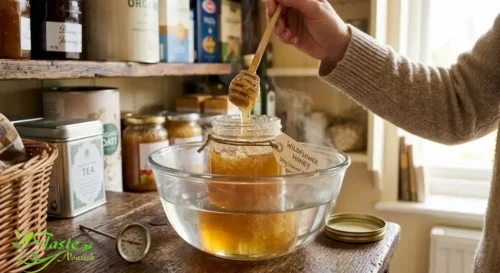
Place the sealed jar in a bowl of warm water, or set it near-boiling water that’s been removed from the heat, and let it sit until the crystals dissolve, stirring occasionally. Avoid boiling the honey directly, since high heat can scorch it and damage its flavor.
Key Takeaways: How to Store Honey
The most reliable way to store honey is in a sealed glass or food-grade plastic container at room temperature, away from light and heat.
Refrigeration isn’t needed for safety and actually speeds up crystallization.
Crystallized honey is still good; it just needs gentle rewarming, not a trip to the trash.
True spoilage is rare and shows up as foaming, a sour or alcohol-like smell, or mold, almost always caused by moisture getting into the jar.
Honey should never be given to infants under 12 months old, due to the risk of infant botulism.
Conclusion
Once you understand how to store honey, keeping a jar in peak condition takes almost no effort. A sealed container, a spot away from heat and sunlight, and a clean, dry spoon are really all it takes to protect its flavor and texture for years. Even if it crystallizes along the way, a gentle warm-water bath brings it right back — no need to toss a perfectly good jar of honey.
References
National Honey Board. “Frequently Asked Questions.” National Honey Board. https://honey.com/faq
Hanan Abo Samra is the founder of Taste & Nourish, sharing trustworthy nutrition guidance and recipes drawn from 20+ years of hands-on cooking experience. When she's not developing new recipes, Hanan is researching the science behind everyday ingredients to bring readers practical, evidence-based guidance for a healthier lifestyle.