If you’ve stood in the honey aisle staring at jars labeled “organic,” “raw,” and “pure” and wondered what any of it actually means, you’re not alone. The organic honey meaning most people assume — pesticide-free, unprocessed, extra pure — isn’t quite what USDA certification guarantees.
Organic honey is honey produced under certified organic farming and hive-management practices, verified by an accredited certifying agent. On its own, that label says nothing about whether the honey is raw, filtered, or nutritionally different from the jar sitting next to it.
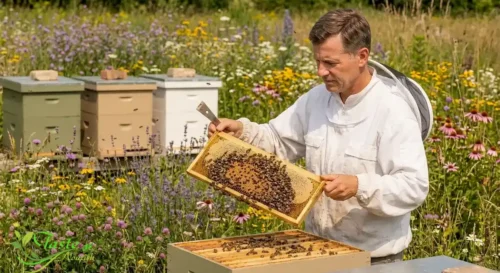
The organic honey meaning boils down to farming practices, not honey quality. Certification requires that a beekeeper’s hives sit within a documented forage radius, usually somewhere between 1.8 and 3 miles, of land that’s certified organic or otherwise free of prohibited pesticides. Beekeepers must also skip synthetic mite and disease treatments in favor of approved substances, and hive equipment has to stay free of prohibited chemicals.
None of this determines whether the honey is raw, pasteurized, filtered, or unusually pure — those are separate questions. Because so little U.S. land meets the forage requirement, most USDA-certified organic honey sold domestically is imported.
Key Takeaways
Organic honey meaning refers to certified farming and hive-management practices, not purity, rawness, or nutrition.
Bees must forage mainly on pesticide-free land within roughly a 2 to 3 mile radius of the hive.
The USDA has never finalized a dedicated organic standard for beekeeping, so honey is certified under adapted livestock and handling rules.
Organic status doesn’t guarantee honey hasn’t been mixed with cheaper sugar syrups — that’s a separate purity issue the FDA regulates.
Most organic honey on U.S. shelves is imported, since few American regions have enough untreated land within bee-flight range.
Honey, organic or not, should never go to a baby under 12 months old, because of the risk of infant botulism.
What You Need to Know About Organic Honey
Broadly, USDA organic certification means a food was grown or produced under federal rules covering soil health, feed, pest control, and allowed substances, with annual inspections to back it up. Honey doesn’t fit neatly into that system.
The National Organic Standards Board drafted specific rules for organic beekeeping back in 2001 and revised them in 2010, but the USDA’s National Organic Program never formally adopted them. In practice, certifying agents use those draft recommendations as a working guide, while technically certifying honey operations under the existing organic livestock and handling regulations — rules originally written with cattle and poultry in mind, not bees.
That gap matters for shoppers. It means “organic honey” isn’t a single, crisply defined product the way organic milk or organic apples are. It’s a certification built on adapted rules and applied inconsistently depending on the certifier and country of origin.
How Organic Honey Certification Works
Getting honey certified organic is harder than it sounds, mainly because bees don’t respect property lines. Here’s what certifiers actually check.
Forage zone documentation. The beekeeper must show that land within a defined radius of each hive — commonly cited as 1.8 to 3 miles, since bees can range that far or farther — is free of synthetic pesticides, herbicides, and genetically modified crops.
Hive management records. Only approved, non-synthetic substances can be used to treat common problems like Varroa mites; synthetic miticides and antibiotics are off the table.
Hive materials. Boxes, frames, and wax foundation must be free of synthetic paints, coatings, or pesticide contamination.
Feed standards. Any supplemental feed given to bees, such as sugar syrup during lean seasons, must itself meet organic requirements.
Traceability and inspection. A USDA-accredited certifying agent inspects the operation and reviews records annually, tracing the honey from hive to jar.
The forage-zone rule is the sticking point. A honeybee can range up to five miles from its hive, and most commercial farmland in the U.S. is treated with conventional pesticides at some point. That leaves very few places, mostly remote or heavily wild areas, where an American beekeeper can guarantee compliant forage. As a result, the bulk of USDA-certified organic honey on store shelves is imported from countries like Brazil, where more untreated land is available.
One practical exception: beekeepers who sell less than $5,000 a year, such as small operations at farmers markets, can label honey “organic” without going through full certification, as long as they still follow the underlying standards. If you buy local, it’s worth simply asking the beekeeper how they manage their hives.
Is Organic Honey Better Than Regular Honey?
Nutritionally, no meaningful difference has been established. Honey is overwhelmingly fructose and glucose regardless of certification, and the small amounts of antioxidants, enzymes, and pollen it carries depend far more on the flowers the bees visited than on whether the operation is certified organic.
Flavor and color work the same way — they’re driven by floral source (clover, wildflower, buckwheat, orange blossom, and so on), not by organic status. A certified organic wildflower honey and a conventional wildflower honey from a similar region will taste much more alike than either will resemble a dark buckwheat honey.
Where organic certification does mean something is the farming and hive-management side: fewer synthetic pesticide inputs, restrictions on synthetic mite treatments, and a documented forage zone. If those environmental and animal-welfare practices matter to you, the label reflects real requirements. It just isn’t a purity or health upgrade, and it doesn’t automatically mean the honey is raw or unadulterated.
Organic vs. Raw vs. Regular Honey: What’s the Difference
These three labels answer three different questions, and a single jar can carry more than one at once.
Organic describes how the bees were raised and where they foraged, under certification rules.
Raw describes processing: raw honey hasn’t been heated above roughly 118°F and is only lightly filtered, so it may still contain small amounts of pollen, wax, or propolis.
Regular (commercial) honey is typically pasteurized and filtered for clarity and shelf stability, which also slows down crystallization.
So honey can be raw and organic, organic but pasteurized, raw but conventionally farmed, or neither raw nor organic. Reading the label carefully is the only way to know which combination you’re getting.
How to Read an Organic Honey Label
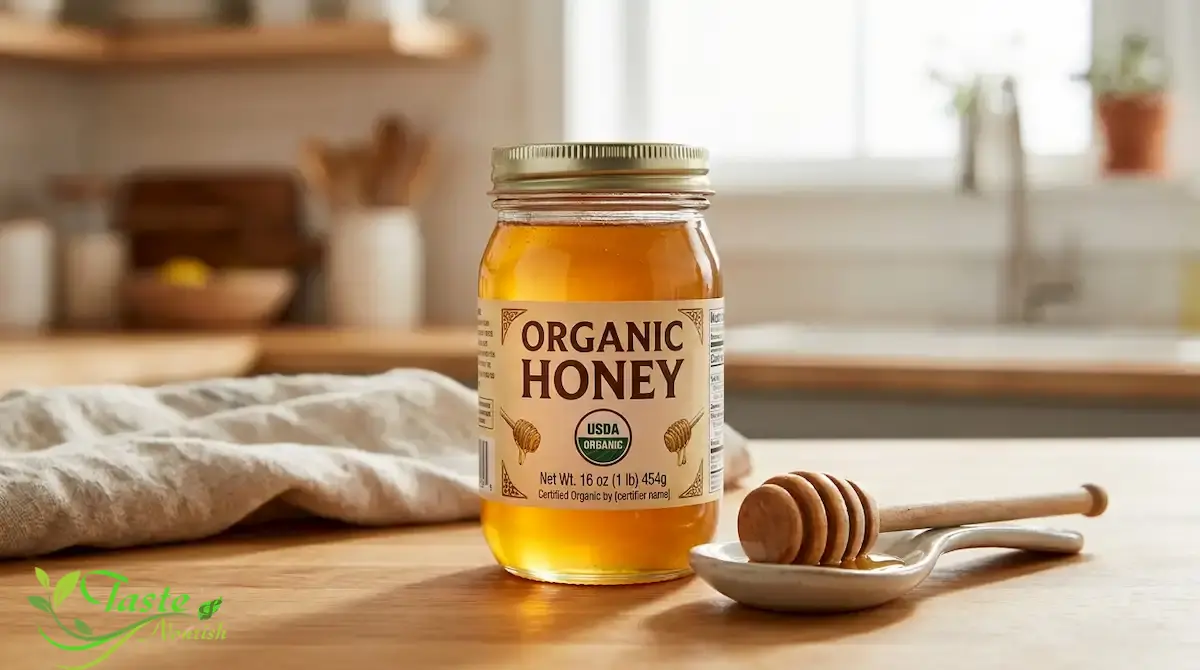
Look for the actual USDA organic seal, not just the word “organic” used loosely in marketing copy on the front of the jar.
Check for the certifying agent’s name, which is required on certified organic products and tells you who verified the claim.
Read the ingredient list. A true honey product should list only “honey.” If any sweetener has been added, federal rules require the product be labeled a “blend,” with the added sweetener declared.
Note the country of origin. Since most organic-certified honey sold in the U.S. is imported, this isn’t a red flag on its own, but it’s useful context.
Don’t treat “natural,” “pure,” or “farm fresh” as stand-ins for certified organic. Those terms aren’t regulated the same way and can appear on any honey.
How to Store Honey So It Lasts
Honey is one of the easiest pantry staples to store correctly, mainly because its low moisture content and natural acidity make it inhospitable to most bacteria and mold when it’s kept sealed.
Room temperature storage: Keep honey in a cool, dry pantry or cupboard, away from the stove, oven, or a sunny windowsill. Consistent moderate heat and light gradually dull flavor over time.
Containers: A glass jar with a tight-fitting lid is ideal. Plastic squeeze bottles made for food use are fine too; just keep the cap clean and sealed between uses.
Skip the refrigerator. Cold temperatures speed up crystallization rather than preventing it.
Keep moisture out. Always use a dry spoon or dipper. Introducing water into the jar is the main way honey ends up fermenting.
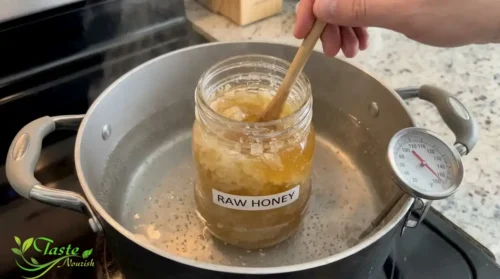
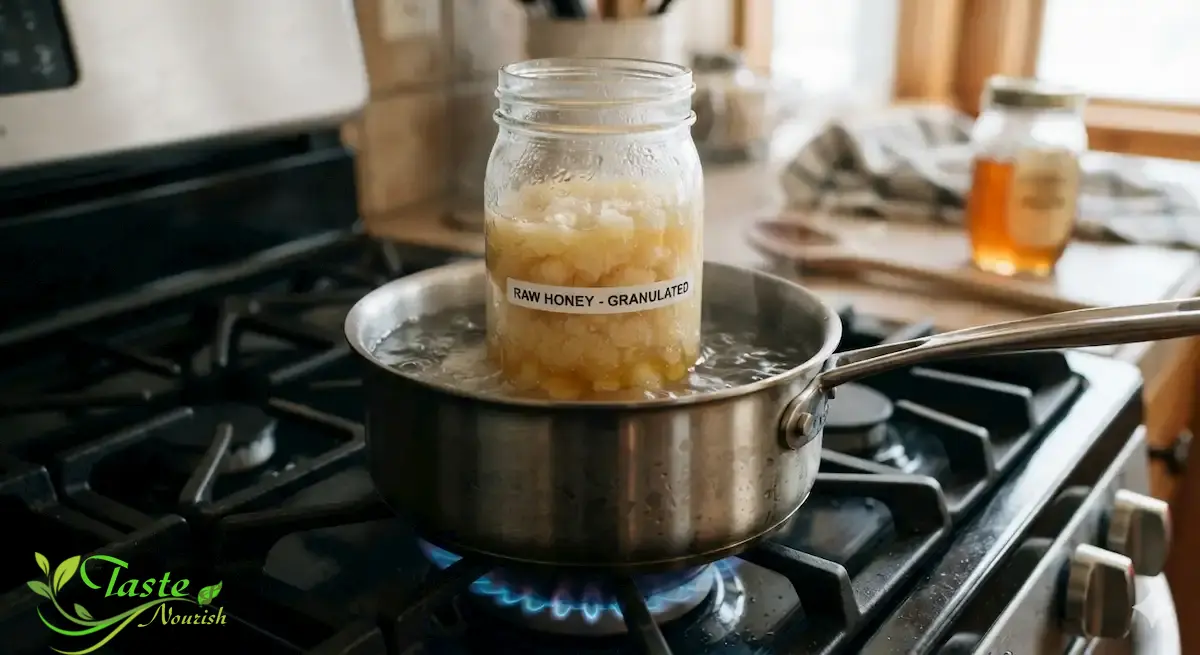
Crystallization is normal. Honey turning cloudy or grainy over time is a natural quality change, not spoilage. To reliquify it, set the jar in a bowl of warm (not boiling) water and stir occasionally until it clears.
Properly stored, sealed honey has an extremely long shelf life. Any “best by” date on the label is a quality indicator, not a safety cutoff.
How to Tell If Honey Has Gone Bad
True spoilage is rare, but it can happen if moisture gets into the jar. Watch for:
Fermentation signs: small bubbles, a sour or alcohol-like smell, or a thin, watery layer combined with an off odor.
Visible mold on the surface or around the lid, which shouldn’t be present in properly sealed honey.
Unusual smell or appearance that doesn’t match the honey’s normal color and floral scent.
Crystallization, darkening with age, or cloudiness on their own are not signs of spoilage and don’t mean the honey is unsafe. If you notice fermentation or mold, discard the jar rather than tasting it to check.
Common Mistakes to Avoid
Assuming “organic” means “raw” or “pure.” They’re separate claims — check the label for each one you care about.
Refrigerating honey. It speeds up crystallization without adding any safety benefit.
Double-dipping a wet spoon into the jar. This is the most common cause of home-fermented honey.
Microwaving honey at full power to de-crystallize it. Uneven heating can scorch the honey and, if left in a sealed plastic container, build pressure. Use a warm water bath instead.
Throwing out crystallized honey. It’s still good; it just needs gentle warming.
Giving honey to a baby under 12 months, even a trace on a pacifier or baked into a recipe.
Trusting “natural” or “pure” wording as equivalent to certified organic. Those words aren’t regulated the way the organic seal is.
Assuming a higher price automatically means higher purity. Price reflects sourcing and certification costs, not a guarantee against adulteration.
Expert Kitchen Tips
Reliquify crystallized honey in a warm water bath, stirring occasionally, rather than using direct high heat.
If certified organic honey isn’t available locally, ask a nearby beekeeper how they manage pests and where their hives forage — you’ll often get more real information than a label provides.
Store honey away from the stove and any sunny counter spot; steady warmth is the main thing that dulls flavor over time.
Match the honey variety to the job: mild clover or wildflower honey for everyday sweetening, and a stronger honey like buckwheat for marinades, glazes, or baked goods where you want its flavor to stand out.
Keep one dedicated spoon or dipper for honey so you’re not introducing food residue or moisture from other uses.
Read the ingredient statement before the marketing claims on the front of the jar — that’s where added sweeteners have to be disclosed.
Buy a size you’ll realistically use within a year; flavor holds up best when honey doesn’t sit open for long stretches.
Look for third-party marks like Certified Naturally Grown as a more transparent alternative when USDA organic certification isn’t practical for a local producer.
Variations and Alternatives to Organic Honey
If organic certification isn’t available or affordable where you shop, a few alternatives are worth knowing about.
Raw honey focuses on minimal processing rather than farming practices, and is widely available from local producers.
Local wildflower or clover honey is rarely certified organic, but buying directly from a beekeeper often gives you more transparency about hive practices than a label alone would.
Manuka honey, primarily from New Zealand and Australia, is graded on its own separate scale and marketed for distinct floral and compositional properties rather than organic status.
Certified Naturally Grown honey uses peer-review-based standards adapted specifically for beekeeping, offering a documented alternative to USDA organic certification.
As a baking substitution, honey can generally replace granulated sugar at about ¾ cup of honey per 1 cup of sugar, with a slight reduction in other liquids in the recipe and a modest drop in oven temperature, since honey browns faster than sugar.
Food Safety Notes
Two food-safety points matter more than the organic label itself.
Infant botulism: Honey can carry dormant spores of the bacteria that cause botulism. These spores are harmless to older children and adults, but an infant’s digestive system isn’t developed enough to control them. The CDC advises never feeding honey, in any form, to a child under 12 months old, including honey baked into foods or used on a pacifier. This applies to raw, organic, and commercially pasteurized honey alike — pasteurization doesn’t eliminate the spores.
Purity and adulteration: Separately from organic status, the FDA has found that a share of imported honey tested in recent years contained undeclared added sweeteners like corn or cane syrup, a practice called economically motivated adulteration. When sweeteners are added, federal rules require the product be labeled a “blend,” not sold simply as “honey.” Buying from a source with a clear ingredient list and a reputable supply chain is the most reliable protection against this, regardless of whether the jar says organic.
Quick Reference Table
Honey Type
Certified Organic?
Heat-Treated?
Typical Source
Best For
USDA Organic Honey
Yes, hive and land practices
Varies by producer
Often imported (Brazil and similar regions)
Buyers prioritizing certified farming practices
Raw Honey
Not necessarily
No, minimally filtered
Local beekeepers, farmers markets
Drizzling, spreads, less processed preference
Regular Commercial Honey
No
Usually pasteurized and filtered
Standard grocery store brands
Everyday cooking and baking
Manuka Honey
No, separate grading system
Minimally processed
New Zealand, Australia
Specialty use
Local Wildflower Honey
Rarely certified
Varies by producer
Regional beekeepers
Traceability, supporting local apiaries
Organic Honey Meaning FAQs
What does organic honey mean exactly?
It means the bees were raised under certified organic hive-management practices and foraged mainly on land documented as free of synthetic pesticides within a defined radius of the hive. It does not mean the honey is raw, unprocessed, or nutritionally different from conventional honey.
Is organic honey better than regular honey?
Not nutritionally. Both are mostly natural sugars, and flavor depends on the flowers bees visited, not certification. Organic status mainly reflects farming and hive-management practices rather than a health or purity advantage.
Is organic honey the same as raw honey?
No. Organic refers to farming practices, while raw refers to minimal heating and filtering. A jar can be one, both, or neither, so check the label for each claim separately.
How is honey certified organic?
A USDA-accredited certifying agent verifies that hives sit within a documented pesticide-free forage zone, that only approved substances are used for pest control, and that hive materials and feed meet organic standards, with annual inspections and recordkeeping.
Why is most “USDA Organic” honey imported instead of produced domestically?
Because bees forage over a wide area, an entire multi-mile radius around each hive has to be free of synthetic pesticides. Very few U.S. regions have that much untreated land, so most compliant, certified honey comes from countries with more available wild or organic acreage.
Does honey ever expire or go bad?
Sealed honey stored properly rarely spoils, thanks to its low moisture content. Crystallization is a normal quality change, not spoilage. True spoilage shows up as fermentation (bubbling, a sour smell) or mold, usually caused by moisture getting into the jar.
Can babies have organic honey?
No. The organic label doesn’t change the infant botulism risk. The CDC recommends avoiding honey in any form, including baked into food, for children under 12 months old.
How can you tell if honey has been mixed with sugar syrup?
Read the ingredient list — a legitimate honey blend must disclose added sweeteners by law. At home, there’s no reliable kitchen test; buying from a transparent, reputable source is the most practical protection, since lab testing is what actually detects adulteration.
Key Takeaways: Organic Honey Meaning
Organic honey meaning centers on certified hive-management and land-use practices, not on purity, rawness, or superior nutrition.
Certification requires a documented pesticide-free forage zone around each hive, typically a few miles wide.
The USDA has no finalized organic standard specific to beekeeping, so certification runs on adapted rules.
Most organic-certified honey sold in the U.S. is imported due to land-use limitations.
Honey purity and adulteration are separate FDA-regulated issues from organic certification.
No honey, organic or otherwise, should be given to a child under 12 months old.
Conclusion
Once you understand the organic honey meaning behind the label, shopping gets a lot simpler. It’s a certification about how bees were kept and where they foraged, not a promise of purity or a nutritional upgrade. If those farming practices matter to you, look for the actual USDA seal and certifying agent’s name rather than words like “natural” or “pure.” And whatever jar ends up in your pantry, store it sealed at room temperature and keep it away from any child under one year old.
Hanan Abo Samra is the founder of Taste & Nourish, sharing trustworthy nutrition guidance and recipes drawn from 20+ years of hands-on cooking experience. When she's not developing new recipes, Hanan is researching the science behind everyday ingredients to bring readers practical, evidence-based guidance for a healthier lifestyle.