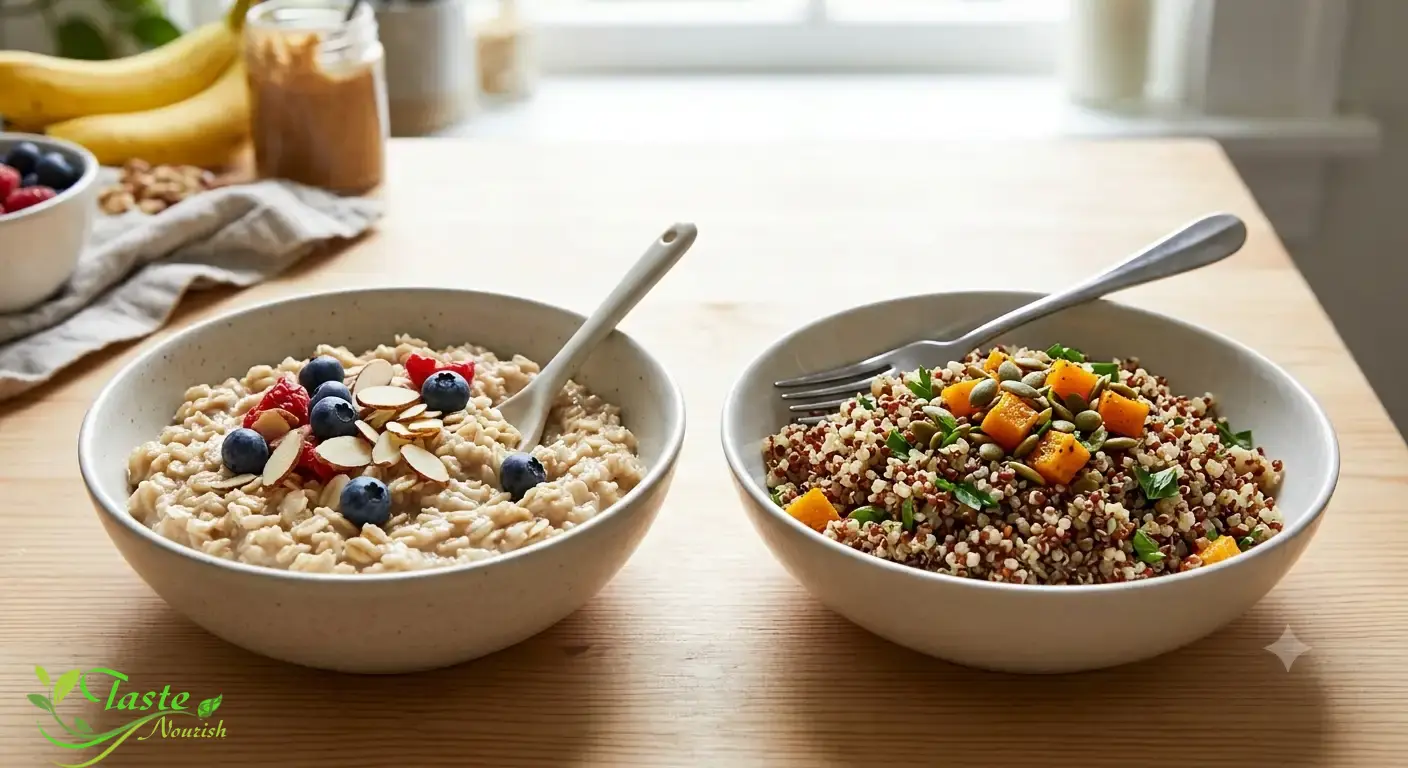
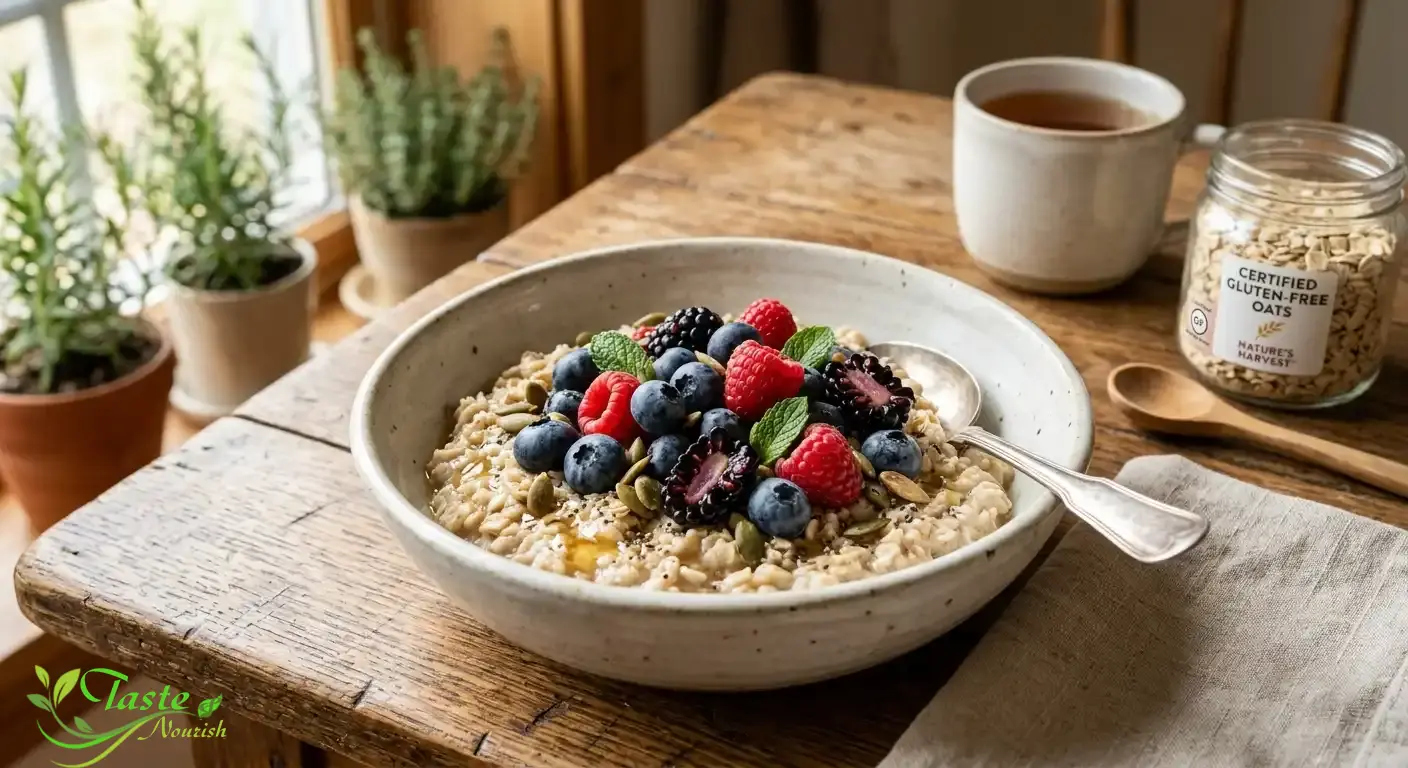
Standing in the grocery aisle, you’ve probably asked yourself the same question millions of health-conscious shoppers ask every week — oats or quinoa, which one actually deserves a spot in your pantry? Both have earned reputations as nutritional powerhouses, but they’re built differently at the molecular level, and that difference matters more than most articles admit.
This guide breaks down the real science behind oats vs quinoa, comparing calories, protein quality, fiber, glycemic response, and practical use cases so you can stop guessing and start choosing based on what your body actually needs.
You’ll notice right away that this isn’t a simple “one is healthier” verdict. Oats and quinoa aren’t even in the same biological family — oats are a true cereal grain, while quinoa is technically a seed that just acts like a grain in the kitchen. That distinction shapes everything from their amino acid profiles to how your blood sugar responds after breakfast. Let’s get into the details.
Oats vs Quinoa at a Glance — Quick Comparison Table
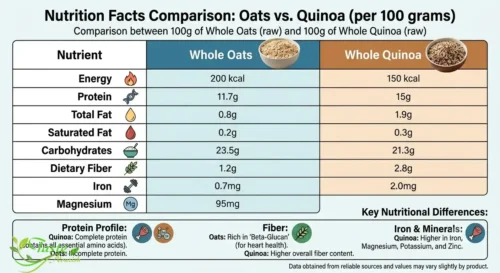
Before diving deep, here’s a snapshot table comparing both foods per 100 grams cooked, pulled from USDA nutrient data so you have a reliable starting reference point.
Nutrient (per 100g cooked)
Oats
Quinoa
Calories
379–389 kcal (dry oats)
120 kcal
Protein
13.2–16.9g
4.4g
Fiber
9.8–10.6g
2.8g
Fat
~7g
~1.9g
Glycemic Index
50–80 (varies by type)
~53
Gluten-Free
Naturally, but cross-contamination risk
Naturally, no risk
Complete Protein
No (low in lysine)
Yes (all 9 essential amino acids)
Key takeaway: Quinoa has 120.0 kcal and 4.4g protein per 100g, while oats has roughly 379.0 kcal and 13.2g protein. The numbers above are based on dry oats versus cooked quinoa, so don’t panic about the calorie gap — once oats are cooked with water, the gap narrows considerably.
What Are Oats? A Quick Refresher
Oats come from Avena sativa, a cereal grass that’s been a breakfast staple across Europe and North America for centuries. They reach your kitchen in several forms — steel-cut, rolled, instant, and oat groats — and each form affects cooking time and texture without dramatically changing the core nutrition.
What makes oats genuinely special isn’t just their fiber content; it’s the specific type of fiber they contain. Oats are one of the few foods loaded with beta-glucan, a soluble fiber that forms a gel-like substance in your digestive tract and slows down how quickly sugar enters your bloodstream.
This single compound is responsible for most of the health claims you’ve heard about oats, from cholesterol reduction to better blood sugar control. Beyond fiber, oats deliver a respectable dose of plant protein, manganese, phosphorus, and magnesium, making them far more than empty starchy calories.
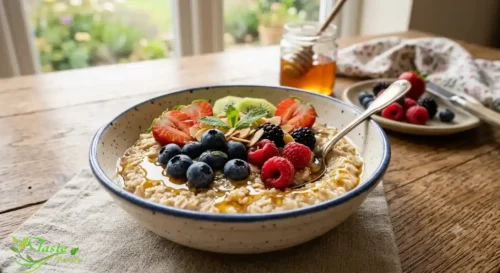
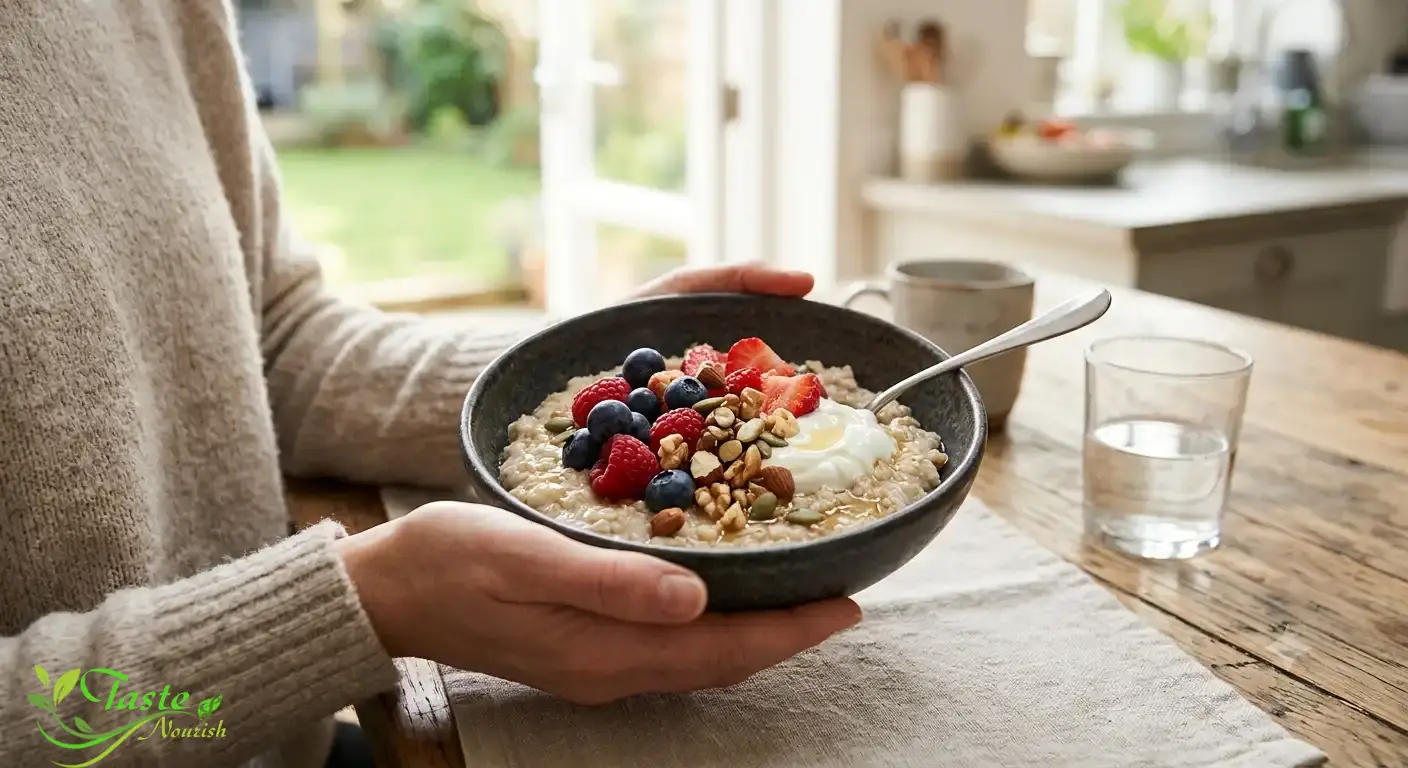
Texture-wise, oats are versatile enough to work in sweet and savory dishes alike, which partly explains their staying power in modern diets. You can turn them into overnight oats, savory porridge with vegetables, granola bars, or even use oat flour as a gluten-free baking substitute.
Reader tip: if you’re buying oats specifically for their cholesterol-lowering reputation, steel-cut or rolled oats retain more intact beta-glucan structure than heavily processed instant packets, many of which arrive pre-sweetened and stripped of some fiber benefit.
What Is Quinoa? A Quick Refresher
Quinoa, pronounced “keen-wah,” isn’t actually a grain at all — it’s a seed harvested from the Chenopodium quinoa plant, a leafy relative of spinach and beets that’s been cultivated in the Andes for thousands of years.
Quinoa is naturally gluten-free, and it earned the nickname “mother grain” from Incan civilizations who considered it sacred for its resilience and nutritional density.
What sets quinoa apart nutritionally is its protein structure — it is a well-balanced, plant-based, complete source of protein that is nutrient-dense, providing adequate macronutrients and rich in micronutrients.
That “complete protein” label is rare in the plant kingdom and is the single biggest reason quinoa gets singled out in vegetarian and vegan nutrition circles.
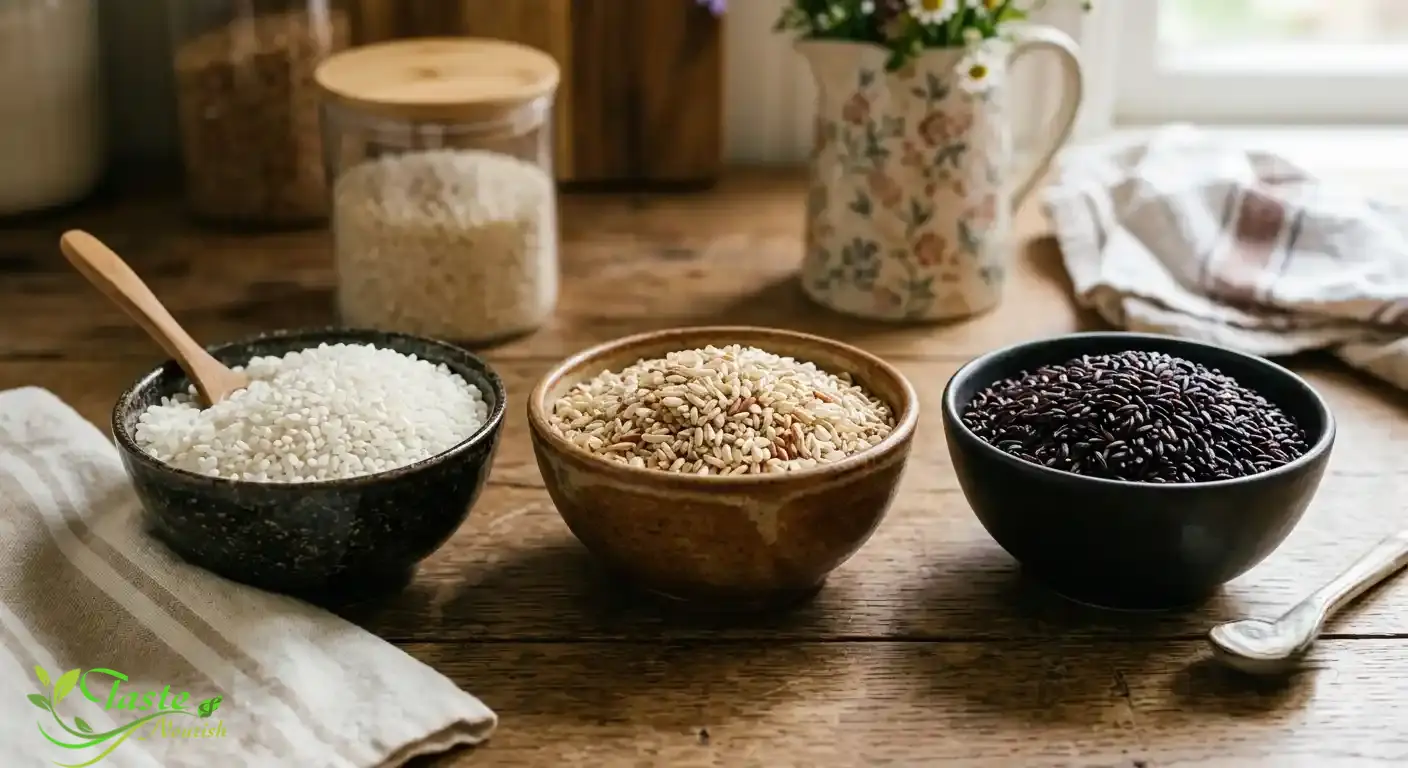
Quinoa comes in white, red, and black varieties, each with slightly different flavor intensity and crunch. White quinoa is the mildest and most common, red holds its shape better in salads, and black has an earthier, nuttier bite.
A study examining red, black, and white quinoa found that black quinoa has the lowest fat content but the highest omega-3 fatty acid and carotenoid content, so if you’re shopping specifically for antioxidants, the darker varieties may have a slight edge.
One practical note worth flagging: raw quinoa seeds are coated in saponins, a bitter, soap-like compound that acts as a natural pest deterrent. Most packaged quinoa is pre-rinsed, but giving it an extra rinse at home never hurts and improves the taste.
Oats vs Quinoa Nutrition Facts: Side-by-Side Breakdown
Calories and Macronutrients
Here’s where context matters enormously. When comparing the calorie content of prepared quinoa versus oatmeal, quinoa is more calorie-dense per cooked cup, containing 56 calories per cup compared to oatmeal, but quinoa also has more protein and fiber per cup than oatmeal. That might sound contradictory to the raw 100g numbers above, but it illustrates an important point: comparisons by weight and comparisons by typical serving size tell different stories.
Quinoa has slightly more carbohydrates per cup than oatmeal, with about 39 grams versus 28 grams of carbohydrates in one cup of oatmeal, while total fat content is roughly equal between the two at around 3.6 grams per cup. The practical lesson here is that serving size, not just nutrient density, drives your actual calorie intake at breakfast.
Protein Quality — Complete vs Incomplete
This is arguably the most important distinguishing factor between the two foods. Quinoa contains ideal levels of lysine and isoleucine and all other essential amino acids, making it the only grain-like food that is a true complete protein.
Oats, by contrast, fall short specifically on lysine, an essential amino acid your body can’t produce on its own. That said, oats still deliver more raw protein by weight in many comparisons — oats has 16.9g of protein per 100 grams compared to quinoa’s 4.4g, making oats roughly 284% higher in protein by this measurement.
So if total protein grams matter most to you, oats wins; if amino acid completeness matters most, quinoa wins. For most people eating a varied diet, this distinction is academic since you’re getting amino acids from multiple sources throughout the day anyway.
Fiber and Digestive Impact
Fiber is where oats pull decisively ahead in most direct comparisons. Oatmeal has roughly 250% more dietary fiber than quinoa, with quinoa containing about 2.8g of dietary fiber per 100 grams compared to oatmeal’s 9.8g.
That fiber gap matters for satiety, blood sugar regulation, and digestive regularity. However, it’s worth noting that quinoa’s fiber, while smaller in quantity, still contributes meaningfully to a balanced diet, and quinoa’s high fiber content can help promote satiety, reduce constipation risk, and improve gut health.
Vitamins and Minerals
Mineral comparisons reveal a genuinely mixed picture rather than a clean winner. Oats are higher than quinoa in manganese, vitamin B1, phosphorus, copper, iron, fiber, magnesium, zinc, and potassium, covering daily manganese needs 186% more than quinoa.
On the flip side, raw quinoa contains 2.3 times more vitamin B2, 1.6 times more vitamin B3, 4.1 times more vitamin B6, and 3.3 times more vitamin B9 (folate) than oats. Quinoa also pulls ahead on omega-3 content — 100 grams of raw quinoa contains 2.3 times more omega-3 fatty acids than oats. Here’s a quick practical breakdown of where each food shines nutritionally:
Oats lead in: manganese, thiamin (B1), phosphorus, zinc, and overall protein quantity
Both are strong in: magnesium, iron, and plant-based antioxidant compounds
Oats provide more: total dietary fiber per serving
Quinoa provides: a complete amino acid profile that oats lack
Neither food is a meaningful source of: vitamin A, vitamin B12, or vitamin D
Oats vs Quinoa for Weight Loss
If your main goal is shedding pounds, the calorie-per-serving math genuinely favors quinoa on paper. For weight loss purposes, quinoa is considered the better option at roughly 120 calories per serving compared to oats at 389 calories per serving, though both can fit a weight loss diet with proper portion control.
But raw calorie counts only tell part of the story — satiety matters just as much as calorie density when you’re trying to avoid snacking two hours later. Oats’ higher fiber and beta-glucan content tend to produce a thicker, more filling texture once cooked, which can curb hunger more effectively per calorie than quinoa does for some people.
The honest answer is that neither food sabotages a weight loss plan, and the “winner” depends heavily on how you build your plate around it. A bowl of oats topped with berries and a spoon of nut butter behaves very differently, metabolically speaking, than a quinoa salad loaded with olive oil and feta. Quick takeaway: don’t choose based on calories alone — choose based on which food keeps you satisfied longest and fits naturally into meals you’ll actually stick with.
Glycemic Index — Which One Is Better for Blood Sugar?
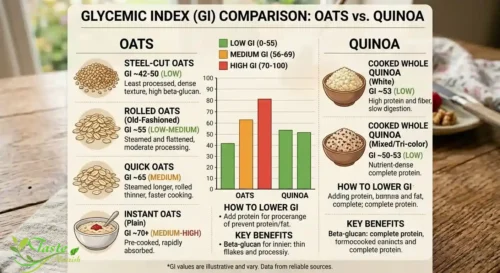
Glycemic index (GI) measures how quickly a food raises blood sugar, and this is genuinely one of the closer contests between the two foods.
♦ Quinoa has a glycemic index of approximately 53, which falls into the low GI category under 55, meaning it produces a slower, more sustained rise in blood sugar compared to refined grains.
♦ Oats vary more by processing method — steel-cut and rolled oats sit on the lower end of the GI spectrum, while heavily processed instant oats can climb significantly higher. Steel-cut oats take longer to digest, which means they have a lower glycemic index, while they keep you full longer and may stabilize blood sugar better than instant varieties.
⇒ For people managing diabetes or prediabetes, this processing distinction is critical and often overlooked in generic comparisons:
Quinoa has a lower glycemic index than many refined cereal products, and its combination of protein, fiber, and slowly digested starch can slow the rise in blood glucose after meals, with research associating quinoa-based foods with smaller postprandial glucose spikes in people with diabetes or prediabetes.
The practical bottom line:steel-cut oats and quinoa land in a similar, diabetes-friendly GI range, but instant or flavored oat packets can undo that advantage fast due to added sugars.
Expert insight: Registered dietitian Kiran Campbell, RDN, notes that “you need to individualize your nutritional plan of care,” emphasizing that healthy individuals benefit from including both oatmeal and quinoa in rotation rather than eliminating either one. She recommends getting a variety of whole grains in your diet, including both oatmeal and quinoa, to ensure a wider range of nutrients and adequate fiber intake.
Heart Health: Beta-Glucan vs Plant Compounds
Oats have a distinct regulatory advantage here that quinoa simply doesn’t share. The US Food and Drug Administration has authorized a specific health claim stating that oat beta-glucan reduces blood cholesterol levels, and that this cholesterol reduction can lower the risk of coronary heart disease.
That’s not marketing language — it’s an FDA-reviewed claim backed by decades of clinical research. Clinical studies have established that consuming at least 3 grams per day of oat beta-glucan can achieve up to a 10% reduction in LDL cholesterol and reduce cardiovascular disease risk by as much as 20%.
Mechanistically, beta-glucan’s cholesterol benefits come from its water-binding ability to form a gel that absorbs bile from the small intestine, prompting the liver to pull additional cholesterol from the blood to produce more bile.
Oats vs Quinoa for Heart Health
Quinoa does not have an FDA-backed cholesterol-lowering claim like oats.
Quinoa still offers valuable heart-supporting benefits, thanks to compounds such as saponins and hydroxybenzoic acids.
These compounds may help:
Reduce inflammation
Fight free radicals (oxidative stress)
Support cellular energy production
Aid weight management efforts
Quinoa is also rich in quercetin, containing higher levels than many well-known sources, including cranberries.
Quercetin has been widely studied for its potential to:
Reduce inflammation
Support healthy blood pressure
For clinically validated cholesterol reduction, oats currently have the stronger evidence base.
For broader antioxidant and anti-inflammatory support, quinoa remains an excellent choice.
Gluten-Free Considerations
Are Oats Really Gluten-Free?
This is one of the most commonly misunderstood points in the oats-versus-quinoa debate, and it deserves a direct answer.
Pure oats don’t naturally contain gluten, but they’re frequently grown, harvested, or processed in facilities that also handle wheat, barley, and rye, creating a real cross-contamination risk.
Oats also contain a protein called avenin, which is structurally similar to gluten and can trigger symptoms in a small subset of people with celiac disease, even when the oats are technically “pure.
” If you have celiac disease or severe gluten sensitivity, look specifically for oats labeled “certified gluten-free,” which guarantees they were grown and processed without cross-contact with gluten-containing grains.
Why Quinoa Is Naturally Safe
Quinoa carries none of that ambiguity. Quinoa is naturally gluten-free and safe for celiac patients, as well as those with gluten intolerance, since the gluten molecules found in wheat, barley, and rye that trigger autoimmune responses simply aren’t present in quinoa. Because it’s botanically a seed rather than a true cereal grain, quinoa doesn’t carry the avenin-related cross-reactivity concern that occasionally affects oat consumers.
For households managing celiac disease specifically, quinoa is generally the lower-risk, zero-guesswork option between the two.
Which Is Better for Muscle Building and Athletes?
For anyone training seriously or trying to hit daily protein targets, raw protein-per-calorie numbers tend to favor oats.
♦ Oats deliver significantly more protein by weight than quinoa, which matters for athletes stacking protein sources across multiple meals. That said, quinoa’s complete amino acid profile gives it unique value specifically for plant-based athletes who might otherwise need to combine multiple protein sources to get adequate lysine and methionine in one sitting.
♦ Quinoa is especially high in lysine, an essential amino acid typically low in other grains, and methionine, which is usually deficient in many legumes, making it a smart pairing food alongside legume-based meals for vegetarian and vegan lifters.
Here’s a practical list of how each food typically fits into an athlete’s routine:
Pre-workout oats: slow-digesting carbs from steel-cut or rolled oats provide sustained energy without a blood sugar crash mid-session
Post-workout quinoa: complete protein plus complex carbs supports both muscle recovery and glycogen replenishment
Oats for bulk meals: higher calorie and protein density per serving suits high-volume eaters
Quinoa for lean cutting phases: lower calorie density allows larger portion sizes within a calorie deficit
Combine both: layering quinoa into an oat-based bowl rounds out the amino acid gap oats alone can’t cover
Hydration consideration: both foods absorb significant water when cooked, supporting hydration alongside training
Taste, Texture, and Cooking Differences
Taste and Texture
Oats
Mild, slightly sweet flavor.
Soft and creamy texture when cooked.
Pairs well with fruits, cinnamon, honey, and milk.
Works in both sweet breakfasts and savory porridge recipes.
Quinoa
Nutty and slightly earthy flavor.
Light, fluffy texture with a subtle crunch.
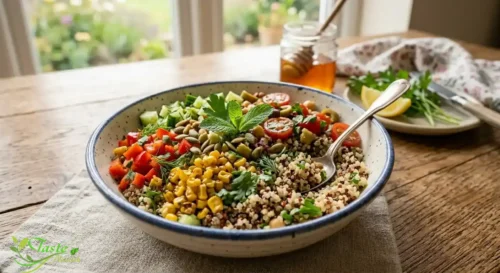
Commonly used in savory salads, grain bowls, and stuffed vegetables.
Less commonly used in sweet breakfast dishes.
Cooking Time and Preparation
Feature
Oats
Quinoa
Cooking time
About 5 minutes
About 15–20 minutes
Preparation
Ready to cook immediately
Requires rinsing to remove bitter saponins
Convenience
Excellent for quick breakfasts
Better suited for meal prep
Which Is More Practical?
Choose oats if you want a quick, convenient breakfast that cooks in minutes.
Choose quinoa if you’re preparing lunches and dinners ahead of time and need a versatile ingredient for salads and grain bowls.
Pros and Cons Table
Factor
Oats
Quinoa
Pro
FDA-recognized cholesterol-lowering claim
Complete protein with all 9 amino acids
Pro
Higher fiber and higher raw protein content
Lower calorie density per cooked serving
Pro
Faster to cook, more budget-friendly
Naturally gluten-free with no cross-contact risk
Con
Cross-contamination risk for celiac patients
Lower fiber than oats per serving
Con
Incomplete protein profile (low lysine)
Longer cooking time, needs rinsing
Con
Instant varieties often contain added sugar
Contains oxalates, a concern for kidney stone-prone individuals
Can You Combine Oats and Quinoa?
Absolutely, and honestly, this might be the smartest answer to the entire “oats vs quinoa” debate.
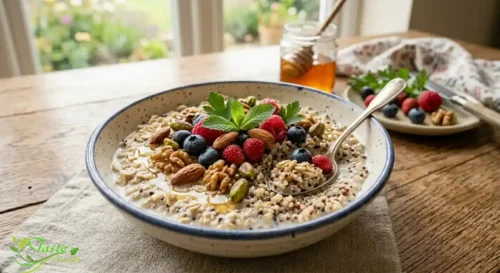
Mixing cooked quinoa into your morning oatmeal bowl, or vice versa, lets you stack the fiber and beta-glucan benefits of oats with the complete amino acid profile and folate content of quinoa in a single meal.
Texturally, the pairing works surprisingly well — quinoa’s slight crunch contrasts nicely against the creaminess of cooked oats, and the combined dish holds up well for overnight preparation in the fridge.
Nutritionally, you’re essentially covering each food’s individual weak spot: oats fill quinoa’s fiber gap, and quinoa fills oats’ amino acid gap.
Practical recipe note:cook quinoa and oats separately since their cooking times differ significantly, then combine them in roughly equal portions once both are tender. Add cinnamon, a drizzle of honey, and fresh fruit for a sweet version, or top with avocado, a fried egg, and hot sauce for a savory grain bowl that works equally well at breakfast or lunch.
Who Should Choose Oats?
Oats make the most sense if cholesterol management is a documented health priority for you, since their beta-glucan content carries genuine FDA-backed clinical evidence behind it. They’re also the more practical choice for people on tighter budgets and tighter mornings, given their lower cost per serving and dramatically shorter cooking time. Athletes and people trying to hit high daily protein and fiber targets through whole foods, rather than supplements, will generally find oats deliver more of both nutrients per typical serving size.
If sweet breakfast flavors are simply more appealing to your palate than savory grain dishes, oats’ natural mild sweetness makes them far easier to enjoy consistently, and consistency is what actually drives long-term health outcomes.
Who Should Choose Quinoa?
Quinoa is the stronger pick if you’re vegetarian, vegan, or simply trying to reduce animal protein intake without sacrificing amino acid completeness in a single food. It’s also the safer, zero-compromise option for anyone managing celiac disease or severe gluten sensitivity, since it carries none of the cross-contamination ambiguity that oats sometimes do. If you’re managing calorie intake closely during a cutting phase or structured weight loss program, quinoa’s lower calorie density per cooked serving allows for more generous portion sizes within the same calorie budget.
Finally, if your meals lean savory rather than sweet, quinoa’s versatility across salads, grain bowls, and stuffed vegetable dishes makes it the more adaptable everyday staple.
Oats vs Quinoa FAQs
Is quinoa healthier than oats overall?
Neither food is universally “healthier” — quinoa wins on complete protein and gluten safety, while oats win on fiber content and FDA-recognized cholesterol benefits. The better choice depends on your specific health goals.
Can diabetics eat oats and quinoa safely?
Yes, both fit well into a diabetes-friendly diet thanks to their low-to-moderate glycemic index values, though steel-cut or rolled oats are preferable over instant varieties, which can be processed in ways that raise their glycemic impact.
Which has more protein, oats or quinoa?
Oats contain significantly more protein by weight, but quinoa’s protein is “complete,” meaning it supplies all nine essential amino acids in one food, which oats alone do not.
Is quinoa safe for people with celiac disease?
Yes, quinoa is naturally and reliably gluten-free with no avenin-related cross-reactivity concerns, making it generally the lower-risk option compared to oats for strict celiac management.
Can I eat oats and quinoa together in one meal?
Yes, combining them is an excellent strategy since oats supply fiber and beta-glucan while quinoa supplies complete protein and folate, effectively covering each food’s individual nutritional gaps.
Conclusion
The oats versus quinoa debate doesn’t really have a single winner, and that’s actually good news for your kitchen. Oats bring unmatched fiber density, clinically proven cholesterol-lowering power through beta-glucan, and unbeatable convenience for busy mornings. Quinoa counters with a rare complete amino acid profile, lower calorie density, and zero gluten cross-contamination risk, making it the safer pick for celiac patients and a smarter staple for plant-based eaters.
Rather than picking a permanent side, the most nutritionally complete strategy is rotating both foods through your weekly meals, or simply combining them in one bowl to cover each other’s nutritional blind spots. Your best breakfast or lunch decision ultimately depends on your specific health priorities, whether that’s heart health, muscle building, blood sugar control, or simply finding a meal you’ll actually look forward to eating.
Hanan Abo Samra is the founder of Taste & Nourish, sharing trustworthy nutrition guidance and recipes drawn from 20+ years of hands-on cooking experience. When she's not developing new recipes, Hanan is researching the science behind everyday ingredients to bring readers practical, evidence-based guidance for a healthier lifestyle.