If you’ve ever pulled apart a piece of golden, shatteringly crisp baklava or forked through a perfectly layered spanakopita and thought, “I wish I could make that at home” — you’re in the right place. Filo pastry sheets are the secret behind some of the most spectacular, crowd-pleasing dishes in Mediterranean and Middle Eastern cooking, and the best part? They’re far easier to work with than most people think.
Also spelled phyllo (from the Greek word for “leaf”), filo pastry sheets are paper-thin layers of unleavened dough that, when stacked, brushed with fat, and baked, transform into the crispiest, most delicately flaky pastry in the culinary world. Unlike rich, butter-laden puff pastry, filo achieves its signature texture through sheer thinness and careful layering — which also makes it one of the lowest-fat pastry options you’ll find in any grocery store’s freezer aisle.
In this complete guide, you’ll learn everything there is to know about filo pastry sheets: their ancient Ottoman origins, the different types and thicknesses available, how to store and handle them without disaster, how to make them from scratch, the best savory and sweet recipes to try, and the most common mistakes to avoid. Whether you’re a total beginner or a confident cook looking to level up your pastry game, this is the only filo guide you’ll ever need.
Quick facts before we dive in:
🕰️ Filo has been used in cooking since at least the 15th century
🌍 It’s a staple in over 30 national cuisines worldwide
🥗 Per 4-sheet serving: approximately 160 calories, just 1g of fat
🛒 Available fresh or frozen in most major supermarkets globally
⏱️ Most filo-based recipes take under 45 minutes of active prep time
What Are Filo Pastry Sheets?
Filo pastry sheets (also spelled phyllo in American English, from the Greek φύλλο meaning “leaf”) are an extraordinarily thin, unleavened dough used as the foundation of dozens of iconic dishes across Mediterranean, Middle Eastern, and Central Asian cuisines. Unlike traditional pastry, which is made with butter and flour to create a rich, crumbly texture, filo is composed primarily of flour, water, and a small amount of oil — with the key feature being its ability to create a flaky, layered texture when stacked and baked.
Each individual sheet is so thin it’s nearly translucent, almost like a whisper of dough stretched to its physical limits. When you layer those sheets — usually brushing each one with melted butter or olive oil — and then bake them, you get that incomparably crispy, gossamer-light texture that makes filo-based dishes so addictive.
The dough itself is a marvel of culinary minimalism. Phyllo dough is made with flour, water, and a small amount of oil and sometimes raki or white vinegar, though some dessert recipes also call for egg yolks. There’s no yeast, no leavening agent, no piles of butter folded in — the texture comes entirely from how thinly the dough is stretched and how the layers interact during baking. The result is a pastry that manages to be both incredibly light and satisfyingly crunchy at the same time, an almost paradoxical achievement that no other dough quite manages to pull off.
It’s this unique combination of characteristics that has made filo pastry sheets a staple ingredient across dozens of national cuisines for centuries.
♦ The Meaning Behind the Name
The word filo (or phyllo) comes directly from the Greek word for “leaf,” which is exactly what these paper-thin sheets resemble — delicate, translucent leaves stacked one on top of the other. In Turkish, the same dough is called yufka, from Old Turkish words meaning “thin” or “weak.” The origin of filo is generally attributed to the Turkic peoples of Central Asia, who developed traditions of thin, layered flatbreads called yufka during the medieval period to suit their nomadic lifestyle, while its paper-thin form is likely to have evolved later in the palace kitchens of Ottoman Istanbul.
These different names reflect the same fundamental idea: dough stretched so thin it looks like it might float away, yet strong enough to hold together when layered with fat and filling.
♦ How Filo Differs From Other Pastry Doughs
This is a question that trips up a lot of people, especially when they’re standing in the frozen foods aisle trying to decide between filo and puff pastry. While both create flaky, layered results, they are made through fundamentally different processes and produce meaningfully different textures. Puff pastry is a laminated dough made by rolling cold butter into dough, creating thin, buttery layers that puff up when baked — it’s rich, airy, and best for recipes like turnovers or savory tarts with a tender, golden rise.
Filo, on the other hand, achieves its layers not through folding fat into the dough but through the physical act of stretching the dough to extreme thinness and then layering multiple sheets together with fat applied between them. The result is crispier, lighter, and less rich than puff pastry — more like a shattering crunch than a tender, buttery puff.
The Rich History of Filo Pastry Sheets
The story of filo pastry sheets is a story of empires, trade routes, and the relentless human pursuit of the perfect pastry. It’s a history that stretches back centuries and spans three continents, and understanding it gives you a genuine appreciation for just how culturally significant this humble dough truly is. Few ingredients in the culinary world carry this kind of historic weight, and when you unroll a pack of filo sheets today, you’re connected to a tradition that goes back to the royal kitchens of Istanbul and the nomadic camps of Central Asia.
♦ From the Ottoman Palace Kitchens to Your Grocery Store
With the rise of the Ottoman Empire, many argue that the paper-thin pastry associated with modern filo was invented in the Ottoman kitchens of the Topkapi Palace in Istanbul, where chefs constantly refined techniques for rolling and stretching dough into silky, translucent sheets. Ottoman pastry chefs perfected a method for stretching the traditional yufka into extreme thinness, using it to produce an array of baked goods, such as baklava and börek — with baklava appearing to be the first dish ever made of filo.
From Istanbul, the dough spread throughout the Ottoman Empire — into the Balkans, North Africa, and eventually Europe. Following the Ottoman conquest of Hungary in the 16th century, Hungarian sources began referring to a pastry known as rétes, the first recorded name for strudel, whose development was directly influenced by the concept of yufka.
The journey of filo to the Western world is a fascinating chapter in food history. Beginning in the 1960s, Greek immigrants began to popularize hand-made filo in parts of the United States, and with the invention of a practical filo machine in 1971, commercial filo dough was suddenly available frozen in American supermarkets, making it accessible to everyone.
What was once a dough that required skilled artisans to produce by hand — prior to World War I, households in Istanbul typically had two filo makers to prepare razor-thin sheets for baklava and the relatively thicker sheets used for börek — became something any home cook could pick up at a supermarket. That democratization of filo changed home cooking in the English-speaking world in a profound way, opening up an entirely new world of recipes to everyday cooks.
Types and Thicknesses of Filo Pastry Sheets
Not all filo pastry sheets are created equal, and one of the most important things to understand when shopping for filo is that thickness matters enormously. Using the wrong thickness for a recipe can result in a final dish that’s either too delicate and fragile or too thick and doughy. The good news is that once you understand the system, choosing the right filo for the job becomes intuitive.
♦ A Quick Comparison of Filo Sheet Thicknesses
Phyllo dough comes in various thicknesses, usually labeled #4, #7, or #10. The #4 is the thinnest variety, perfect for delicate pastries like baklava or making super crispy layers in dishes. The #7 is a middle ground, offering versatility and working well for recipes that need a balance between crispiness and sturdiness, like spanakopita. The #10 is the thickest of the lot, ideal for dishes requiring more structure, like pie crusts or savory turnovers.
Thickness
Label
Best Uses
Texture When Baked
Thinnest
#4
Baklava, crispy appetizers
Super flaky, shatters
Medium
#7
Spanakopita, savory pies
Balanced crisp & sturdy
Thickest
#10
Turnovers, pie crusts
Structured, holds filling
Country-style
Varies
Rustic pies, börek
Chewier, heartier
Beyond the numbered system, you’ll also encounter “country-style” filo, which is thicker and more rustic, often used in Greek home cooking for dishes like pita (savory pies). Most store-bought filo in supermarkets falls somewhere between the #4 and #7 range, which makes it extremely versatile for both sweet and savory applications. When in doubt, a medium-thickness filo is almost always a safe bet for the recipes you’ll encounter in most cookbooks.
Nutritional Profile — Is Filo Pastry Healthy?
One of the most common questions people ask about filo pastry sheets is whether they’re a healthier alternative to other pastry doughs. The short answer is yes — in its base form, filo is remarkably lean and light compared to options like puff pastry or shortcrust. The caveat, of course, is that the total fat content of a finished filo dish depends heavily on how much butter or oil you apply between the layers. The dough itself is almost virtuously low in fat.
According to Athens Foods, phyllo dough sheets contain no trans fat, no saturated fat, and no cholesterol, with a serving of 4 sheets (50g) containing just 160 calories and 1g of total fat — making it a genuinely lower-calorie substitute for high-fat puff pastry, ready-made crusts, and canned refrigerated doughs. When you compare that to puff pastry, which is loaded with butter incorporated directly into the dough, the difference is dramatic. Of course, when you generously butter each layer of filo in a baklava recipe, the fat content of the finished dish climbs — but that’s true of virtually any baked pastry.
Filo vs. Puff Pastry — Nutritional Comparison Table
Nutrient (per 50g serving)
Filo Pastry
Puff Pastry
Calories
~160
~270
Total Fat
~1g
~16g
Saturated Fat
0g
~8g
Cholesterol
0mg
~20mg
Carbohydrates
~34g
~26g
Protein
~4g
~4g
As the table shows, the difference between filo and puff pastry in terms of fat content is staggering. If you’re looking for a way to make lighter, more health-conscious pastry dishes without sacrificing texture or visual impact, filo pastry sheets are genuinely one of the best tools in the cook’s arsenal. The trick is to use a light hand with the butter or brush with olive oil instead, which delivers flavor with a somewhat better nutritional profile.
How to Buy and Store Filo Pastry Sheets
♦ Fresh vs. Frozen Filo Pastry
When it comes to buying filo pastry sheets, you’ll typically encounter two options at your local supermarket or specialty grocery store: fresh, refrigerated filo and frozen filo. Both have their merits, and the right choice largely depends on when you plan to use it and what you’re making. Fresh filo, when you can find it, tends to be more pliable and easier to work with straight out of the packet. It’s already at the right moisture level, tears less easily, and generally produces excellent results. The downside is that fresh filo has a short shelf life and needs to be used fairly quickly.
Frozen filo is far more commonly available and is the format most home cooks will encounter. The quality of frozen filo has improved dramatically over the decades, and when properly thawed, it’s virtually indistinguishable from fresh in terms of results. If you’re using frozen dough, the best approach is to thaw it in the fridge overnight — this slow, gentle thawing process ensures that the sheets don’t become too soft or stick together. Rushing the thawing process by using a microwave is almost always a mistake that leads to gummy, torn sheets that are frustrating to work with.
♦ Proper Storage Tips
Storing filo pastry sheets properly is absolutely critical to getting good results. Ready-to-use filo pastry sheets should be kept refrigerated and used within 3 days of opening. They are suitable for home freezing — freeze as soon as possible within the indicated date, and use within 1 month. Once thawed, do not refreeze. These guidelines are worth taking seriously because filo that has been incorrectly stored tends to become brittle, sticky, or mouldy, none of which is the foundation for a great baking experience.
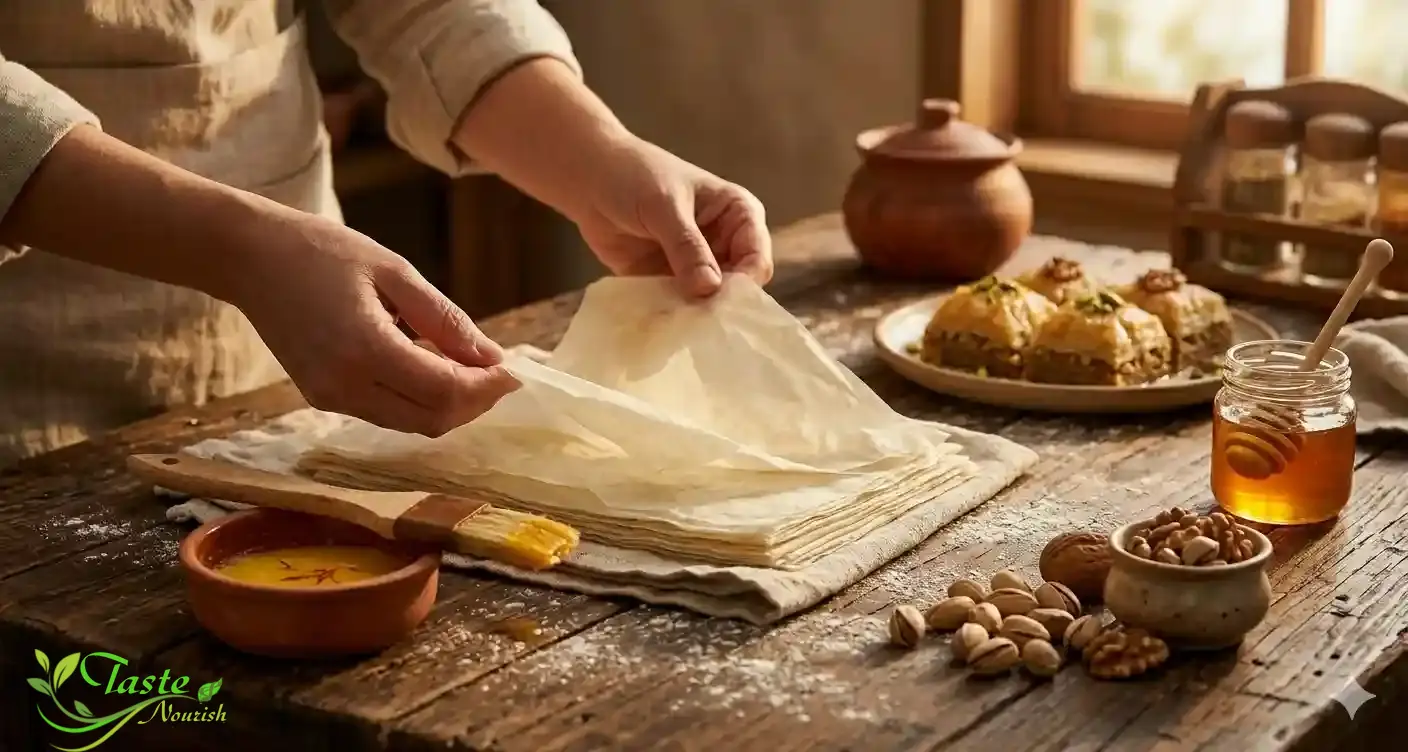
Once you’ve opened a package and begun working with the sheets, the remaining unused filo needs to be protected from the air immediately. Filo pastry sheets can dry out within minutes once opened, so it’s essential to keep the unused sheets covered with a slightly damp kitchen towel or cling film throughout your cooking session. This is the single most important habit you can develop when working with filo — keeping that damp cloth at hand and covering the stack every single time you pull a sheet off. It sounds fussy, but it makes the difference between sheets that peel apart beautifully and sheets that crack and crumble the moment you touch them.
Working With Filo Pastry Sheets — Expert Tips and Techniques
Here’s where a lot of home cooks hit a wall. They’ve bought their filo pastry sheets, they’ve followed the thawing instructions, and then they stand in front of the stack looking at it like it might bite them. The truth is that filo is one of those ingredients that rewards a calm, organized approach. Once you set up your workspace properly and understand the fundamental rules of handling filo, the whole process becomes surprisingly meditative and enjoyable.
♦ The Golden Rule: Keep It Moist
The absolute cardinal rule of working with filo pastry sheets is to never let them dry out. Filo is essentially a sheet of very low-fat dough stretched to paper-thin dimensions, which means it has almost no inherent moisture to protect it from the air. Phyllo is extremely thin and starts to become brittle once exposed to air, so work quickly and cover the unused sheets with a lightly dampened kitchen towel. A good habit is to prepare everything — your filling, your melted butter, your baking dish — before you even open the packet of filo. The moment those sheets hit the air, the clock is ticking.
Think of it like working with fresh pasta or rolled-out pie dough: the enemy is always time and air exposure, so you minimize both by staying organized and moving with purpose.
If you do end up with a sheet that tears or cracks at the edges, don’t panic. Phyllo is surprisingly forgiving when layered — if you end up with cracks or tears at the edges, just patch them with another sheet. Because you’re always working with multiple stacked layers, small imperfections in individual sheets are completely invisible in the finished product. The compulsive perfectionism that makes baking feel stressful actually has very little place in working with filo — it’s one of those ingredients where “good enough” genuinely is good enough, as long as you keep everything covered and moist.
♦ Buttering and Layering Like a Pro
The second major technique in working with filo pastry sheets is the art of buttering and layering. This is what transforms a stack of individual thin sheets into a cohesive, golden, flaky pastry structure. The fat you apply between layers — typically clarified butter, regular melted butter, or olive oil — serves two purposes: it adds flavor, and it helps the sheets adhere to one another while also creating steam during baking that separates the layers into distinct, flaky strata.
The technique involves laying one piece of filo on a clean surface, brushing it with the melted butter, then repeating with additional layers depending on the thickness of your filo — using two to three more layers for thicker country-style filo or three to four more layers for thinner-style filo. The brush strokes should be gentle but thorough, covering the surface without tearing the sheet. Use a proper pastry brush rather than a paper towel or spoon — the bristles allow you to apply butter evenly and gently without dragging on the delicate surface.
Some professional cooks prefer to use a spray oil for speed and even coverage, which is entirely valid, though you do lose a little of that rich, toasty butter flavor.
How to Make Homemade Filo Pastry Sheets From Scratch
Making filo pastry sheets from scratch is one of those ambitious kitchen projects that’s completely achievable if you approach it with patience and good humor. Yes, it takes time and practice. Yes, your first attempts probably won’t produce perfectly translucent sheets. But there’s something deeply satisfying about making this ancient dough from scratch, and the result — a filo that’s slightly thicker and more rustic than the commercial product — has a character and flavor all its own.
The basic process involves combining flour and salt in a large bowl, then slowly adding water and oil, mixing until combined. Beat the dough for about 5 minutes until smooth and slightly sticky, then divide into 12 equal pieces shaped into balls. The dough needs to rest — this is critical, because resting allows the gluten to relax, which makes the subsequent rolling and stretching much easier. Skip the rest period and you’ll be fighting the dough every step of the way, as it will spring back every time you try to roll it thinner.
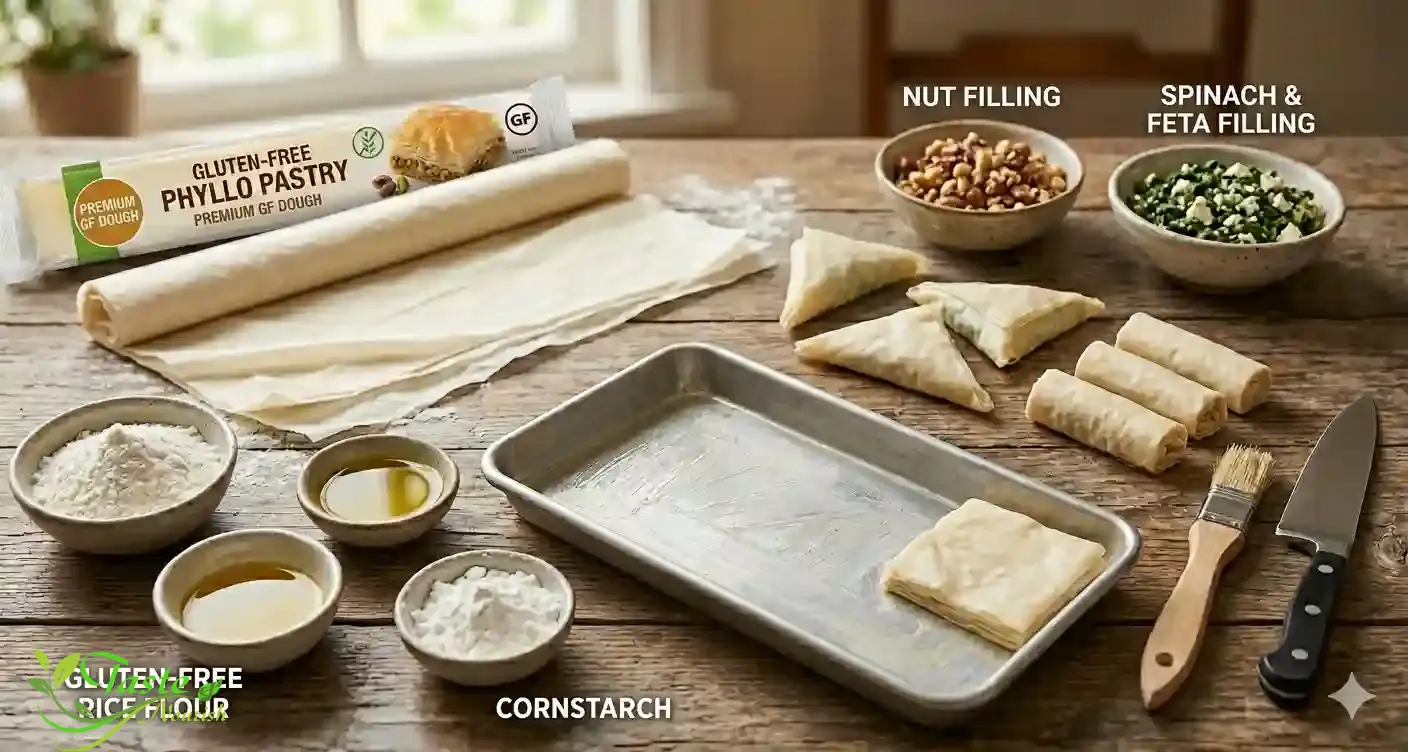
Once rolled out, each sheet should be placed on a piece of baking parchment dusted with cornflour, then dusted again and covered with a damp tea towel, with each subsequent sheet layered on top of the previous one with the same process repeated until all sheets are rolled. The traditional method of stretching filo by hand — using the backs of your hands to gently pull and stretch the dough over a large table — is a skill that takes years to master. For home cooks, a rolling pin and a generous amount of cornflour or starch for dusting works perfectly well and produces excellent results.
The Best Recipes Using Filo Pastry Sheets
The sheer range of dishes you can make with filo pastry sheets is genuinely astonishing. This is a dough that appears in the dessert traditions of Greece, Turkey, Lebanon, Morocco, and Iran; in the savory cooking of the Balkans and the Middle East; and increasingly in the fusion cooking of contemporary chefs around the world. Whether you’re in the mood for something sweet and sticky or savory and herb-scented, filo is the dough for you.
♦ Savory Recipes With Filo
The savory applications of filo pastry sheets are arguably where the ingredient truly shines. The combination of crisp, shattering pastry and a rich, well-seasoned filling is one of the great pleasures of Mediterranean cooking, and it’s endlessly replicable at home. Spanakopita — the iconic Greek spinach and feta pie — is the quintessential introduction to savory filo cooking. It uses multiple layers of buttered filo to enccase a filling of wilted spinach, crumbled feta, eggs, and herbs, producing a pie that’s golden and flaky outside and rich and creamy inside.
A classic spinach and feta pie uses a 200g pack of filo pastry with layers brushed with olive oil, seasoned with sea salt, pepper, and smoked paprika, filled with a mixture of wilted spinach, eggs, and feta, then baked in a 200°C oven until golden and crisp.
Beyond spanakopita, the savory filo world includes the Turkish börek (filo rolls filled with meat, cheese, or vegetables), Middle Eastern fatayer (stuffed pastry pockets), Moroccan bastilla (a spectacular pie of pigeon or chicken with almonds, eggs, and cinnamon dusted with powdered sugar), and countless appetizer formats — cigars, cups, triangles, and pinwheels — that make filo one of the most versatile party-cooking ingredients imaginable. Filo cups baked in a mini muffin tin and filled with savory mousses, dips, or tartare can be assembled in minutes and will absolutely dazzle at any gathering.
♦ Sweet Recipes With Filo
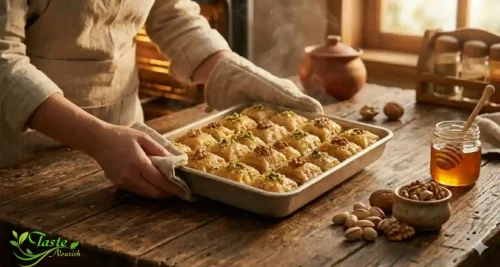
On the sweet side, filo pastry sheets are the backbone of some of the most beloved desserts in world culinary history. Baklava — layers of filo, chopped nuts, and spiced syrup — is probably the most famous filo dessert of all, and for good reason: the contrast between the crackling pastry layers and the sweet, fragrant nut filling soaked in honey syrup is almost impossibly good. The paper-thin sheets crackle when baked into crisp, golden layers, creating phyllo dough desserts with bakery-worthy appeal and minimal effort — from nutty baklava to rustic fruit galettes and apple strudels wrapped in buttery layers.
The Austrian apple strudel is another classic that relies entirely on filo’s unique properties — the thin dough wrapped tightly around a cinnamon-apple filling and baked until burnished gold is one of the great pastry achievements of European cuisine. Contemporary bakers have also discovered that filo works brilliantly in more unexpected sweet contexts: phyllo dough cinnamon rolls, where buttery sweet filling is lined between each sheet of phyllo and then rolled up to look like a cinnamon bun, offer an extra crispy texture with so much flavor in every single bite.
Filo cups filled with cream cheese and fresh berries, filo-wrapped cheesecakes, galettes, and tarts are all achievable at home with a pack of store-bought filo sheets and a little creativity.
Common Mistakes to Avoid When Using Filo Pastry Sheets
Even experienced cooks make mistakes with filo pastry sheets, often because they underestimate how quickly things can go wrong when the sheets are exposed to air or handled too roughly. The single most common mistake is failing to keep the unused sheets covered while you work, resulting in a stack of dried, crumbling sheets that tear the moment you try to peel them apart. The solution is simple: always keep a damp kitchen towel over the unused portion of your filo stack at all times, and always work quickly once a sheet is peeled off.
The second most common mistake is failing to thaw frozen filo properly. Many cooks, short on time, try to thaw filo at room temperature too quickly or — worst of all — in the microwave, which produces uneven results and often leads to sheets that stick together or become gummy and impossible to separate. Always plan ahead and thaw filo slowly in the refrigerator overnight. If you’re in a time crunch, you can place the sealed package under cold running water for 30 minutes, but overnight refrigerator thawing will always give you the best results.
Another mistake is applying too little fat between the layers. Skimping on the butter or oil might seem like a health-conscious choice, but under-buttered filo layers don’t adhere to each other properly, don’t produce the characteristic flaky separation, and often end up gummy rather than crisp. Be generous — you’re making pastry, after all. And finally, don’t skip the resting time if you’re making homemade filo from scratch. The gluten in the dough needs time to relax before you can roll and stretch it to the required thinness, and rushing this step will result in dough that fights back at every turn.
Conclusion
Filo pastry sheets are one of the great unsung heroes of the kitchen: ancient in origin, astonishingly versatile, surprisingly healthy in their base form, and capable of producing some of the most beautiful and impressive dishes in world cooking. From the Ottoman palace kitchens of Istanbul to the frozen foods aisle of your local supermarket, filo has traveled an extraordinary journey — and today, it’s more accessible than ever. Whether you’re layering it into a spanakopita, rolling it around a nut-and-spice filling for baklava, or using it to make effortlessly chic appetizer cups for a dinner party, filo pastry sheets reward every cook who takes the time to understand their unique character.
The key takeaways are simple: buy quality filo, thaw it properly, keep it covered while you work, be generous with your fat application between layers, and don’t be intimidated by the occasional tear or crack. Filo is far more forgiving than its reputation suggests, and the results you can achieve with a pack of filo sheets, some butter, and a good filling are genuinely extraordinary. So next time you’re browsing recipes and wondering whether to attempt that baklava or that spanakopita you’ve always admired, reach for the filo pastry sheets with confidence. You’ve got this.
Filo Pastry Sheets (FAQs)
1. What is the difference between filo pastry and puff pastry?
Filo pastry and puff pastry both produce flaky, layered results, but they’re made through completely different methods. Filo is made by stretching a simple flour-and-water dough to paper-thin sheets, which are then layered with brushed fat. Puff pastry is a laminated dough where cold butter is folded repeatedly into the dough, creating rich, buttery layers that puff dramatically when baked. Filo is crispier and lighter; puff pastry is richer and more tender.
2. Can I refreeze filo pastry sheets after thawing?
No — once filo pastry sheets have been thawed, they should not be refrozen. Refreezing causes the sheets to stick together and deteriorate in texture, making them impossible to separate and use properly. Once thawed, use them within the same day or keep them refrigerated and use within 3 days.
3. How many layers of filo pastry should I use?
It depends on the recipe and the thickness of your filo sheets. For most savory pies, 6–10 layers per side (top and bottom) is standard. For baklava, recipes typically call for anywhere from 14 to 18 layers in total. For delicate cups or small appetizers, 3–4 layers are usually sufficient to hold the shape.
4. Can I use olive oil instead of butter on filo pastry sheets?
Absolutely. Olive oil is a completely valid and widely used alternative to butter when working with filo pastry sheets, especially in savory Mediterranean recipes. It produces a slightly different flavor profile — nuttier and less rich — and is a great choice if you want to keep a dish dairy-free or if you prefer the taste of olive oil in savory cooking.
5. Why does my filo pastry become soggy instead of crispy?
Soggy filo is almost always caused by one of two things: too-wet filling or underbaking. If your filling contains a lot of moisture (like fresh spinach that hasn’t been properly drained, or a filling with too much liquid), that moisture steams the pastry from the inside rather than allowing it to crisp up. Always drain wet fillings thoroughly, pat them dry, and make sure your oven is hot enough — typically 180–200°C (350–400°F) — to drive off the moisture and create those beautiful golden, crunchy layers.
Hanan Abo Samra is the founder of Taste & Nourish, sharing trustworthy nutrition guidance and recipes drawn from 20+ years of hands-on cooking experience. When she's not developing new recipes, Hanan is researching the science behind everyday ingredients to bring readers practical, evidence-based guidance for a healthier lifestyle.