If you’ve never made a roasted garlic butter recipe at home, you’re missing one of the easiest ways to upgrade a weeknight dinner. Roasting mellows garlic’s sharp bite into something soft, caramelized, and almost sweet, then blending it into butter turns that flavor into a spreadable, meltable staple. This roasted garlic compound butter comes together with just a handful of ingredients and about an hour of mostly hands-off oven time.
Whether you’re topping a steak, spreading it on warm bread, or stirring it into mashed potatoes, this compound butter earns its place in your regular rotation. Below you’ll find the full recipe, the nutrition breakdown, some food-safety notes worth knowing, and a sweeter variation for anyone who wants a milder, honey-kissed spread.
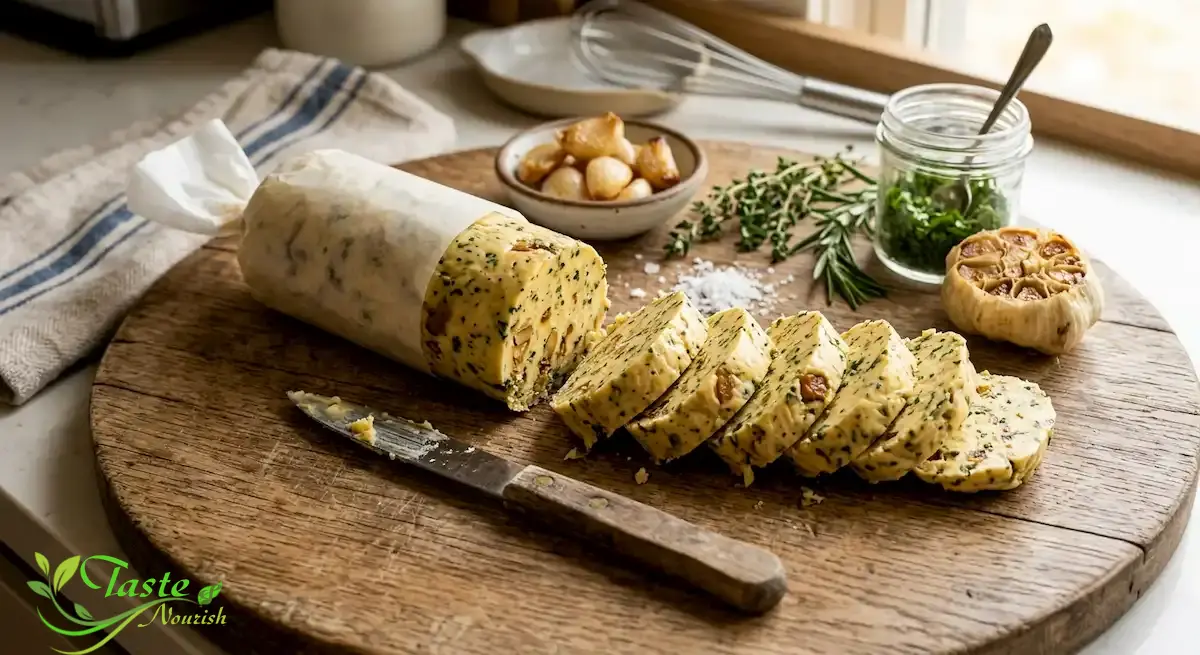
This roasted garlic butter recipe combines one whole head of oven-roasted garlic with softened butter, a pinch of salt, and fresh herbs, blended until smooth and chilled into a log or ramekin. Roasting the garlic first is what separates it from raw garlic butter — the low, slow heat converts sharp sulfur compounds into a sweeter, nuttier flavor, so the finished butter tastes rounded rather than harsh.
It takes about 10 minutes of prep, 40 to 45 minutes of roasting, and keeps in the fridge for about a week or in the freezer for several months.
Key Takeaways
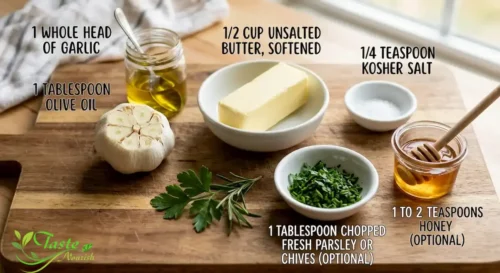
This roasted garlic butter recipe uses just four core ingredients: garlic, butter, salt, and olive oil, with herbs or honey as optional add-ins.
Roasting garlic before mixing it into butter softens its flavor and brings out natural sweetness, which is why some cooks call the result a sweet roasted garlic spread.
Garlic is naturally low in calories and provides small amounts of vitamin B6, vitamin C, and manganese, though the nutrition profile of the finished butter depends mostly on the butter itself.
Fresh, homemade garlic butter should always be refrigerated and used within about a week for both quality and food-safety reasons.
People on blood thinners or preparing for surgery should talk to a doctor before eating large, regular amounts of garlic.
What Is Roasted Garlic Compound Butter?
A compound butter is simply softened butter blended with other ingredients — herbs, citrus, spices, or in this case, roasted garlic — then chilled back into a solid so it can be sliced or scooped as needed. It’s a technique borrowed from classic French cooking, where compound butters (beurre composé) were used to finish sauces and proteins without any extra cooking required.
Roasted garlic compound butter takes that idea and builds it around a full head of garlic that’s been slow-roasted until soft, golden, and spreadable on its own. Because roasting tames garlic’s raw pungency, the butter that results is milder and more rounded than one made with raw minced garlic.
Some versions add a touch of honey or brown sugar, which is where the “sweet roasted garlic spread” style comes from — a compound butter that leans dessert-adjacent enough to work on cornbread or biscuits, not just steak.
Roasted Garlic Butter Recipe Ingredients
This recipe makes about three-quarters of a cup of finished butter, or roughly 12 servings of one tablespoon each.
1/2 cup (1 stick) unsalted butter, softened to room temperature
1/4 teaspoon kosher salt, plus more to taste
1 tablespoon finely chopped fresh parsley or chives (optional)
1 to 2 teaspoons honey, for the sweet variation (optional)
Prep time: 10 minutes Cook time: 40 to 45 minutes Total time: about 1 hour, plus chilling Yield: approximately 12 tablespoons
How to Make This Roasted Garlic Butter Recipe
Step 1: Roast the Garlic
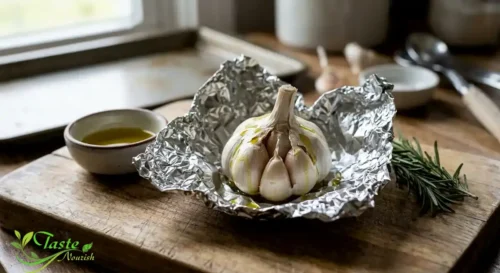
Preheat your oven to 400°F. Slice about a quarter inch off the top of the garlic head so the individual cloves are exposed, then set the head on a small piece of foil. Drizzle the olive oil over the cut surface, letting it soak down between the cloves, then wrap the foil snugly around the whole head.
Roast for 40 to 45 minutes, until the cloves are deeply golden and soft enough to pierce easily with a knife. Let the garlic cool for about 10 minutes before handling — it holds heat longer than it looks like it should.
Step 2: Mash and Mix
Once the garlic is cool enough to touch, squeeze the head from the root end so the softened cloves push out of their papery skins. Mash the cloves with a fork until you have a smooth, spreadable paste.
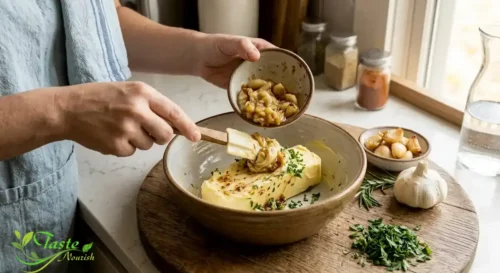
Add the softened butter, salt, and herbs (if using) to the mashed garlic and stir until fully combined. A stand mixer or food processor works too, but a bowl and fork are all you really need for a small batch like this one.
Step 3: Shape, Chill, or Freeze
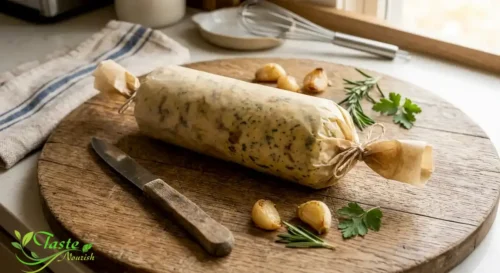
Spoon the finished butter onto a sheet of parchment paper and roll it into a log, twisting the ends like a piece of candy. Refrigerate for at least an hour to firm up, then slice off rounds as needed.
For longer storage, wrap the log tightly in plastic wrap over the parchment and freeze it; you can slice off portions straight from frozen. Either way, keep it refrigerated between uses rather than leaving it out on the counter.
Sweet Roasted Garlic Spread Variation
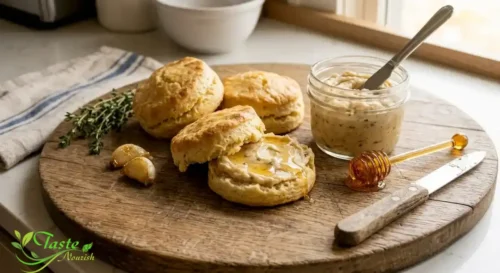
To turn this into a sweet roasted garlic spread, stir in one to two teaspoons of honey along with the butter, and skip the herbs. The combination of caramelized garlic and honey works surprisingly well on cornbread, biscuits, or a warm baguette, and it’s a nice way to introduce garlic-averse eaters to the flavor in a gentler form.
Nutrition Facts for Roasted Garlic Compound Butter
Because this compound butter is mostly butter by volume, its calorie and fat content tracks closely with plain butter, while the roasted garlic contributes flavor along with a small amount of extra nutrients. Raw garlic is rich in sulfur-containing compounds along with meaningful amounts of vitamin B6, vitamin C, manganese, and selenium.
Roasting doesn’t eliminate these nutrients, though some heat-sensitive compounds are reduced compared to raw garlic.
Nutrient (per 1 tablespoon serving)
Approximate Amount
Calories
~100
Total fat
~11 g
Saturated fat
~7 g
Sodium
~50 mg (varies with added salt)
Carbohydrates
~1 g
Protein
<1 g
These figures are estimates based on standard butter nutrition combined with a small amount of roasted garlic per serving; exact values will shift depending on the brand of butter and how much garlic ends up in each slice. For a precise breakdown of raw garlic’s nutrient content on its own, the USDA’s FoodData Central database is the most reliable public reference.
Health Benefits of Garlic
Garlic’s reputation as a health food isn’t just folklore — it has a real, if modest, evidence base behind it. Most of the research focuses on garlic eaten regularly over time or taken as a concentrated supplement, rather than the small amount used to flavor a batch of compound butter, so it’s worth keeping expectations realistic.
Some evidence suggests garlic preparations may help lower blood pressure in people with hypertension, though much of that research comes from smaller or lower-quality studies. Garlic supplements have also been studied for their effect on cholesterol, with research suggesting they may reduce total cholesterol and LDL cholesterol to a small extent in people who already have elevated levels.
Beyond cardiovascular markers, garlic’s natural sulfur compounds are also being studied for a possible role in metabolic and immune health, though this area of research is still developing.
What Does the Science Say? Scientific Evidence on Garlic
It helps to separate what’s well established from what’s still being studied. Regarding garlic and heart disease specifically, there’s currently no strong evidence that garlic supplements prevent it outright, and the research on whether garlic changes cardiovascular risk factors is mixed. That doesn’t mean garlic has no value — it means the effect size is likely modest rather than dramatic.
Cancer prevention is another area where the science is more cautious than popular claims suggest. A large cohort study following tens of thousands of participants from the Nurses’ Health Study and the Health Professionals Follow-Up Study looked specifically at whether garlic intake was associated with gastric cancer risk over multiple decades of follow-up, examining both overall garlic consumption and its relationship to H. pylori infection status.
Findings like these are part of why major health bodies continue to recommend getting garlic through food rather than relying on supplements for disease prevention, since food-based intake reflects a completely different pattern of use than concentrated pills.
Potential Risks and Side Effects
For most people, garlic in the amounts typically eaten in food is considered safe, with the most common complaints being bad breath, body odor, heartburn, or an upset stomach. Concentrated garlic supplements carry a slightly different risk profile than the small amount of roasted garlic in a pat of compound butter, so don’t assume supplement warnings translate directly to a recipe like this one.
The bigger practical risk with any garlic-and-fat mixture is food safety rather than the garlic itself. Homemade oils or spreads made with garlic should be refrigerated, and unused portions made with garlic or herbs should be discarded after just a few days at room temperature. Because garlic grows in soil where Clostridium botulinum spores are naturally present, mixing garlic into a low-oxygen, low-acid environment like butter and leaving it unrefrigerated is genuinely risky, not just an overcautious suggestion.
Who Should Avoid Garlic Butter?
Garlic’s natural sulfur compounds may slow blood clotting, which can raise bleeding risk for people taking blood thinners such as warfarin, clopidogrel, or aspirin. Anyone on these medications, anyone with a known garlic allergy, and anyone scheduled for surgery in the near future should check with a doctor before regularly eating garlic in larger amounts, including concentrated forms like compound butter used generously.
People managing acid reflux may also notice garlic aggravates symptoms and might want to use it more sparingly.
How Much Roasted Garlic Butter Should You Eat?
There’s no official daily recommendation for compound butter, but a reasonable serving is one to two tablespoons per meal, which is enough to coat a steak or flavor a side of vegetables without overwhelming the dish. Because butter itself is calorie-dense, portion size matters more for overall diet balance than any specific concern tied to the garlic.
If you’re using this as an occasional finishing touch rather than an everyday condiment, there’s little reason to overthink the amount.
How to Choose the Best Garlic for Roasting
Look for heads that feel firm and heavy for their size, with tightly closed, papery skins and no soft or sprouting cloves. Avoid any heads with visible mold, a sour smell, or cloves that feel spongy when pressed, since those are signs the garlic has started to break down.
Larger heads with plump cloves roast more evenly and yield more usable garlic paste per bulb, which matters if you’re scaling the recipe up. Elephant garlic, despite the name, is actually a milder relative of the leek family rather than true garlic, so stick with standard hardneck or softneck garlic varieties for the flavor this recipe is built around.
Storage Tips for Your Sweet Roasted Garlic Spread
Keep finished compound butter tightly wrapped in the refrigerator, where it will stay good for about five to seven days. For longer storage, freeze the wrapped log for up to several months and slice off portions as needed straight from frozen.
As a general food-safety rule, homemade preparations that combine garlic with fat should be refrigerated rather than left at room temperature, and any unused portion should be thrown out after just a few days if it wasn’t kept cold. This applies even though butter itself has a longer natural shelf life than raw garlic-in-oil mixtures — once garlic is blended in, treat the whole batch as a perishable, refrigerator-only item.
Best Ways to Eat or Cook With Roasted Garlic Compound Butter
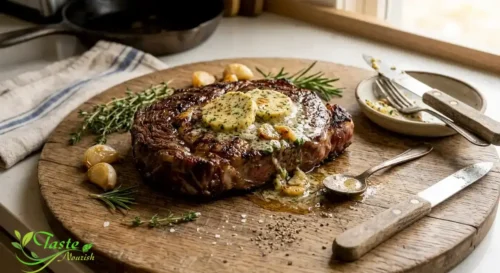
This compound butter is at its best simply melted over something hot right before serving, which is where its aroma and flavor really open up. A few reliable pairings include:
Melted over a freshly seared steak or roasted chicken
Spread on warm crusty bread or dinner rolls
Stirred into mashed potatoes or roasted vegetables
Tossed with hot pasta as a quick, no-cook sauce base
Spread on corn on the cob straight off the grill
The sweet variation with honey works particularly well on cornbread, biscuits, or pancakes, giving you a spread that bridges savory and sweet without tasting like plain garlic butter in the wrong context.
Common Mistakes to Avoid When Making Roasted Garlic Butter
The most common misstep is using cold butter straight from the fridge, which makes it nearly impossible to blend evenly with the roasted garlic paste — always let your butter soften at room temperature first. Another frequent mistake is under-roasting the garlic, leaving it firm and still sharp instead of soft and caramelized, which defeats the purpose of roasting in the first place.
Skipping the foil wrap during roasting is another easy error, since exposed garlic can dry out and burn before the inner cloves finish softening. Finally, storing the finished butter at room temperature for convenience is a mistake worth taking seriously, given the food-safety concerns tied to garlic-and-fat mixtures discussed above.
Myths vs. Facts About Garlic
Myth
Fact
Garlic supplements prevent heart disease
There’s no strong evidence supplements prevent heart disease outright; effects on risk factors are mixed and modest.
Cooking destroys all of garlic’s benefits
Roasting changes some compounds but garlic retains meaningful nutrients and flavor after cooking.
More garlic always means more health benefit
Benefits studied so far involve moderate, regular intake, not large or unlimited amounts.
Garlic butter can safely sit out on the counter
Garlic-and-fat mixtures should be refrigerated due to genuine food-safety risk.
Roasted Garlic Butter vs. Regular Garlic Butter vs. Store-Bought Spread
Feature
Roasted Garlic Butter
Raw Garlic Butter
Store-Bought Garlic Spread
Flavor
Mellow, sweet, caramelized
Sharp, pungent, bold
Often mild but less fresh-tasting
Prep time
About 1 hour, mostly hands-off
5 to 10 minutes
None
Shelf life (refrigerated)
5 to 7 days
3 to 5 days
Varies, often several weeks
Ingredient control
Full control
Full control
Limited, may include preservatives
Expert Tips for the Best Roasted Garlic Butter Recipe
Pull your butter out of the fridge before you start roasting the garlic, so both are ready at the same time and you’re not waiting around for butter to soften. Taste the finished butter before chilling it, since roasted garlic’s sweetness varies a bit depending on the size of the cloves and exactly how long they roasted.
If you want a smoother, more spreadable texture rather than a slightly rustic one, blend the roasted garlic and butter together in a small food processor instead of mashing by hand. And if you’re making a larger batch, roast two or three heads of garlic at once — leftover roasted cloves keep well on their own and are useful well beyond this one recipe.
Roasted Garlic Butter Recipe FAQs
Can I use pre-minced jarred garlic instead of roasting a whole head?
You can, but you’ll lose the sweet, caramelized flavor that roasting creates, and the result will taste much closer to raw garlic butter than this recipe intends.
Is salted or unsalted butter better for this recipe?
Unsalted butter is generally recommended so you can control the total salt level yourself, especially since roasted garlic already carries a bit of natural sweetness that pairs well with a light hand on salt.
Can I make this dairy-free?
Yes, a plant-based butter alternative that softens and firms up similarly to dairy butter can generally be substituted, though texture and flavor will vary by brand.
How long does roasted garlic butter last in the freezer?
Tightly wrapped, it typically keeps well for up to several months in the freezer, and you can slice off portions directly from frozen as needed.
Why does my roasted garlic taste bitter instead of sweet?
This usually means the garlic roasted at too high a temperature or for too long without enough oil and foil coverage, which can scorch the natural sugars instead of caramelizing them.
Can I add cheese to this compound butter?
Finely grated Parmesan can be folded in after mixing the garlic and butter, though it will slightly shorten the butter’s fridge life compared to the plain version.
A simple roasted garlic butter recipe made by folding sweet, oven-roasted garlic into softened butter for a smooth, spreadable compound butter.
Ingredients
2 whole heads garlic
1 tablespoon olive oil
1 cup unsalted butter, softened
1/2 teaspoon kosher salt
1/4 teaspoon black pepper
1 tablespoon fresh parsley or thyme, chopped (optional)
1 teaspoon honey (optional)
Directions
Preheat oven to 400°F. Slice the tops off the garlic heads to expose the cloves.
Drizzle with olive oil, wrap tightly in foil, and roast for 40 to 45 minutes until soft and golden.
Let the garlic cool for 10 to 15 minutes, then squeeze the cloves out and mash into a paste.
Mix the softened butter with the roasted garlic paste, salt, and pepper until smooth.
Fold in herbs or honey if using, then shape the butter into a log using parchment paper.
Chill for at least 1 hour before slicing and serving.
Conclusion
A good roasted garlic butter recipe rewards a little patience with a lot of flavor, turning a whole head of garlic and a stick of butter into something far more interesting than either ingredient on its own. Whether you keep it simple with just salt and herbs or lean into the sweet roasted garlic spread variation with honey, it’s a small-batch project that pays off across dozens of meals. Just remember to treat it like the perishable food it is, keeping it refrigerated or frozen rather than sitting out on the counter, and you’ll get to enjoy it safely for weeks.
Hanan Abo Samra is the founder of Taste & Nourish, sharing trustworthy nutrition guidance and recipes drawn from 20+ years of hands-on cooking experience. When she's not developing new recipes, Hanan is researching the science behind everyday ingredients to bring readers practical, evidence-based guidance for a healthier lifestyle.