Walk into any kitchen that takes food seriously and you’ll probably find a bottle of olive oil sitting within arm’s reach of the stove. That’s not just a style choice. The health benefits of olive oil have been studied for decades, and the evidence keeps pointing in the same direction: swapping butter and other saturated fats for olive oil, especially the extra virgin kind, is one of the more well-supported small changes you can make to your diet.
This guide breaks down what olive oil actually does in the body, what the nutrition label looks like, how much you’d realistically need to eat to see a benefit, and where the evidence is still catching up to the marketing. No exaggerated claims, no miracle-food language, just what the research supports.
The health benefits of olive oil are tied mainly to its high monounsaturated fat content and its unique mix of plant compounds called polyphenols. Research suggests regular olive oil consumption, particularly extra virgin olive oil used in place of butter or margarine, may support heart health, lower inflammation, and modestly reduce the risk of early death from several causes.
It is not a cure for any condition, and the benefits are strongest when olive oil replaces less healthy fats rather than simply being added on top of your current diet.
Key Takeaways
The health benefits of olive oil come largely from monounsaturated fat and antioxidant polyphenols, both of which are highest in extra virgin varieties.
An FDA qualified health claim allows olive oil to be marketed as potentially reducing coronary heart disease risk when it replaces saturated fat.
A large Harvard-led study found people who consumed more than half a tablespoon of olive oil daily had a meaningfully lower risk of cardiovascular disease and early death.
Olive oil is calorie-dense at roughly 119 calories per tablespoon, so portion size still matters even for a “healthy fat.”
Extra virgin olive oil retains more polyphenols than refined or “light” olive oil because it undergoes minimal processing.
What Is Olive Oil?
Olive oil is the natural oil pressed from the fruit of the olive tree, Olea europaea. Unlike oils that require chemical solvents and heavy refining, extra virgin olive oil is simply crushed and mechanically pressed, which is part of why it holds onto more of its natural flavor, aroma, and antioxidant content.
It has been a dietary staple across the Mediterranean for thousands of years and sits at the center of the Mediterranean eating pattern, a diet style that nutrition researchers have studied extensively for its association with lower rates of chronic disease.
What sets olive oil apart from many other cooking fats is its fatty acid makeup. It’s dominated by oleic acid, a monounsaturated fat that behaves differently in the body than the saturated fats found in butter or the highly processed vegetable oils used in many packaged foods. That single distinction is the starting point for most of the research into olive oil’s role in a healthy diet.
Types of Olive Oil
Not all olive oil on the shelf is created equal, and the grade matters for both flavor and nutrition.
Extra virgin olive oil (EVOO): Cold-pressed from olives with no chemical processing or added heat. Lowest acidity, highest polyphenol content, most robust flavor.
Virgin olive oil: Also mechanically extracted, but with slightly higher acidity and a milder flavor than EVOO.
Refined olive oil: Treated with heat or chemicals to remove defects, then usually blended back with a small amount of virgin oil. Milder taste, fewer antioxidants.
Light or extra light olive oil: A marketing term referring to flavor and color, not calories. It’s heavily refined and has the fewest polyphenols of the group.
Olive Oil Nutrition Facts
Olive oil is essentially pure fat, so its nutrition profile is simple compared to whole foods, but the type of fat is what makes it stand out.
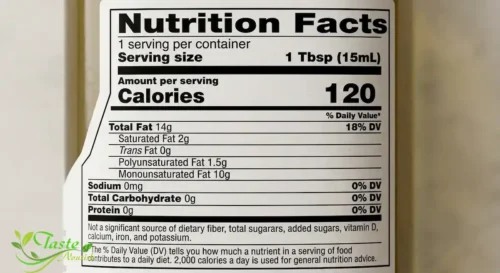
Calories and Fat Breakdown Per Tablespoon
Calories
119
Total Fat
13.5 g
Saturated Fat
1.9 g
Monounsaturated Fat
9.9 g
Polyunsaturated Fat
1.4 g
Carbohydrates
0 g
Protein
0 g
Vitamin E
1.9 mg (about 13% DV)
Vitamin K
8.1 mcg (about 7% DV)
These figures come from USDA FoodData Central, the federal government’s public nutrient database. Because olive oil is 100% fat, even small serving sizes add up in calories, which is worth keeping in mind if you’re tracking intake closely.
Vitamins, Antioxidants, and Plant Compounds
Beyond vitamins E and K, extra virgin olive oil contains a group of plant compounds called polyphenols, including oleocanthal, oleuropein, hydroxytyrosol, and tyrosol. These compounds are largely responsible for olive oil’s peppery, throat-catching finish, and they’re also the focus of much of the anti-inflammatory research on olive oil.
Health Benefits of Olive Oil
Most of the research on the health benefits of olive oil comes from large observational studies and laboratory research on its individual compounds. Here’s what the evidence points to.
Heart and Cardiovascular Health
This is the best-documented area of olive oil health benefits. Replacing saturated fats like butter with monounsaturated fats from olive oil is associated with improvements in LDL (“bad”) cholesterol. The U.S. Food and Drug Administration allows food labels to carry a qualified health claim stating that daily use of oils high in oleic acid, including olive oil, may help reduce the risk of coronary heart disease when they replace saturated fat.
Anti-Inflammatory and Antioxidant Effects
Oleocanthal, a compound unique to fresh extra virgin olive oil, has a mechanism of action that resembles ibuprofen at the molecular level. Laboratory research published in the peer-reviewed journal Nutrients found that oleocanthal and a related compound called oleacein reduced markers of inflammation in fat cells by calming a signaling pathway called NF-κB, as described in a peer-reviewed study on extra virgin olive oil polyphenols. This research was done in cell models, so it points to a plausible mechanism rather than proof of an effect in the human body from normal dietary intake.
Brain Health and Cognitive Function
Observational research has linked higher olive oil intake to a lower risk of death from neurodegenerative conditions such as Alzheimer’s disease. The associations are promising, but this type of study can show a pattern without proving that olive oil itself is the cause.
Blood Sugar and Metabolic Health
Some research suggests that replacing saturated fats with olive oil may modestly improve insulin sensitivity and support healthier blood sugar patterns, particularly within an overall Mediterranean-style diet. The effect appears to be tied to the overall dietary pattern rather than olive oil alone, since people following this eating style also tend to eat more fiber-rich vegetables, legumes, and whole grains at the same time.
Some researchers have proposed that olive oil’s polyphenols may play a supporting role here too, possibly by reducing oxidative stress in cells involved in insulin signaling. This line of research is still developing, and it shouldn’t be read as a reason to skip standard blood sugar management strategies recommended by a healthcare provider.
Weight Management
Because it’s calorie-dense, olive oil isn’t a weight-loss food on its own. That said, using it to replace butter or to make vegetables and legumes more appealing may indirectly support a healthier overall eating pattern, which is a more realistic way to think about its role.
Some research on Mediterranean-style eating patterns that include generous olive oil use has found comparable or better long-term weight outcomes than low-fat diets, likely because the meals feel more satisfying and are easier to stick with over time. The takeaway isn’t that olive oil melts fat away, but that it can make a health-supportive eating pattern more sustainable.
Scientific Evidence for the Health Benefits of Olive Oil
One of the most cited studies on this topic followed more than 92,000 U.S. health professionals for close to three decades.
People who consumed more than half a tablespoon of olive oil daily had a lower risk of dying from any cause, and specifically lower risk of cardiovascular disease, cancer, and neurodegenerative disease, compared with those who rarely or never used it, according to Harvard Health Publishing. The study, published in the Journal of the American College of Cardiology, also estimated that swapping a small daily amount of margarine, butter, mayonnaise, or dairy fat for olive oil was tied to a meaningfully lower risk of death from several causes.
It’s worth being clear-eyed about what this kind of research can and can’t tell us. Observational studies like this one show associations, not direct proof of cause and effect, since people who use more olive oil often have other health-supportive habits too. Researchers try to adjust for that statistically, but it’s a limitation worth keeping in mind.
Potential Risks and Side Effects of Olive Oil
Olive oil is generally well tolerated, but it isn’t risk-free for everyone.
Calorie load: At roughly 119 calories per tablespoon, unmeasured “generous pours” can add up quickly in a calorie-controlled diet.
Allergic reactions: True olive oil allergy is rare, but it can happen, sometimes causing skin irritation or digestive upset.
Digestive discomfort: Large amounts consumed at once, such as “olive oil shots” trending on social media, may cause nausea or a laxative effect in some people.
Interactions with blood-thinning medication: Because olive oil contains vitamin K, very high intakes could theoretically affect people on certain blood thinners, though typical culinary use isn’t usually a concern.
Who Should Be Cautious With Olive Oil?
Most healthy adults can enjoy olive oil without issue. People managing calorie-restricted diets for medical reasons should measure portions rather than free-pouring. Anyone on warfarin or similar anticoagulants who is making a large dietary change, such as adding several tablespoons of olive oil daily, should mention it to their prescribing clinician. People with a diagnosed olive or olive oil allergy should avoid it entirely and check ingredient labels on packaged foods.
How Much Olive Oil Should You Eat Each Day?
The FDA’s qualified health claim references about two tablespoons (23 grams) daily as the amount studied for heart benefits when it replaces saturated fat. Separately, the Harvard-led longevity study found benefits starting at just over half a tablespoon daily, with some researchers suggesting three to four tablespoons as a realistic target within a Mediterranean-style diet.
There’s no single “correct” number, but consistently using a modest daily amount in place of butter or other solid fats appears more meaningful than occasional large amounts.
How to Choose the Best Extra Virgin Olive Oil
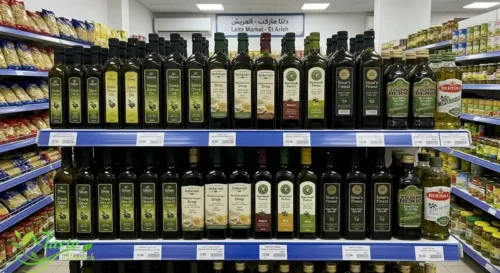
Not every bottle labeled “extra virgin” delivers the same benefits of extra virgin olive oil, since quality and freshness vary widely.
Look for a harvest date rather than just a “best by” date, and choose the most recent one available.
Choose oil in a dark glass or tin container, since light degrades polyphenols over time.
A slightly bitter or peppery finish at the back of the throat is actually a good sign, since it points to higher polyphenol content.
Buy smaller bottles you’ll use within a few months rather than large containers that sit half-used for a year.
How to Store Olive Oil for Freshness
Heat, light, and air are the three things that degrade olive oil fastest. Store your bottle in a cool, dark cabinet away from the stove, not on a sunny countertop where it looks decorative but slowly loses quality. Keep the cap tightly closed between uses, and try to finish a bottle within about six to eight weeks of opening it for the best flavor and antioxidant content.
Best Ways to Cook and Eat Olive Oil
Extra virgin olive oil has a smoke point generally in the range of 375 to 405°F, which makes it suitable for most home cooking, including sautéing and roasting, contrary to the persistent myth that it’s only for cold uses. For high-heat searing or deep frying, a more refined olive oil or another neutral oil may be a better fit simply because you don’t want to waste EVOO’s flavor and polyphenols on extreme heat.
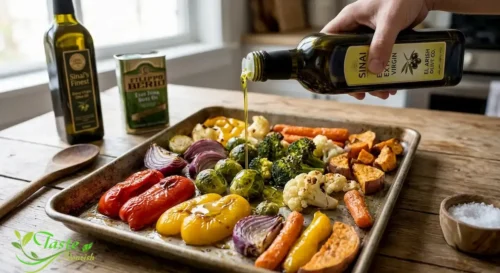
It shines brightest finished raw, drizzled over roasted vegetables, whisked into salad dressings, or swirled into a bowl of soup right before serving.
Common Mistakes People Make With Olive Oil
Buying a large bottle that oxidizes before it’s finished, rather than a smaller one that stays fresh.
Storing it next to the stove, where heat quietly breaks down its flavor compounds.
Assuming all “extra virgin” labels are equally high quality, when adulteration and mislabeling are documented issues in parts of the industry.
Pouring it freely without measuring, then being surprised at how quickly the calories add up.
Myths vs. Facts About the Health Benefits of Olive Oil
Myth
Fact
You can’t cook with extra virgin olive oil.
It’s suitable for most everyday sautéing and roasting; only very high-heat frying favors a more refined oil.
Olive oil is calorie-free because it’s “healthy.”
It’s about 119 calories per tablespoon, same ballpark as other oils; the type of fat differs, not the calorie count.
A morning olive oil “shot” boosts metabolism.
No good evidence supports a fat-burning effect from drinking olive oil alone.
All olive oil labeled extra virgin is equally beneficial.
Freshness, harvest date, and storage all affect how many polyphenols actually remain in the bottle.
Extra Virgin vs. Refined Olive Oil at a Glance
Feature
Extra Virgin Olive Oil
Refined/Light Olive Oil
Processing
Mechanically pressed, no chemicals or added heat
Heat- or chemically refined
Polyphenol content
Highest
Significantly lower
Flavor
Robust, peppery, fruity
Mild, neutral
Smoke point
~375–405°F
Slightly higher, ~465°F
Best use
Finishing, dressings, everyday cooking
High-heat frying, neutral-flavor recipes
Calories per tablespoon
119
119
the Health Benefits of Olive Oil FAQs
Is extra virgin olive oil healthier than regular olive oil?
It generally contains more antioxidants and polyphenols because it’s less processed, though both types share the same beneficial monounsaturated fat profile.
Can olive oil help lower cholesterol?
Research suggests replacing saturated fat with olive oil may help improve LDL cholesterol levels, which is the basis for the FDA’s qualified heart health claim.
How much olive oil is too much in a day?
There’s no official upper limit, but because it’s calorie-dense, most guidance points to two to four tablespoons daily as a reasonable, sustainable range within an overall balanced diet.
Does cooking with olive oil destroy its health benefits?
Normal home cooking temperatures don’t eliminate its benefits, though very high, prolonged heat can gradually reduce polyphenol content over time.
Is olive oil good for weight loss?
It’s not a weight-loss food on its own, but using it to replace less healthy fats within a calorie-appropriate diet can support a healthier overall eating pattern.
Conclusion
The evidence behind olive oil is some of the more consistent nutrition research out there, particularly for heart health, when it’s used to replace saturated fats rather than added as an extra. Extra virgin olive oil offers the most antioxidant value thanks to minimal processing, but any grade of olive oil brings a healthier fat profile than butter or lard.
As with most nutrition topics, the real-world benefit comes from consistent, moderate use as part of an overall diet pattern rather than treating any single food as a cure-all.
The Extra-Virgin Olive Oil Polyphenols Oleocanthal and Oleacein Counteract Inflammation-Related Gene and miRNA Expression in Adipocytes by Attenuating NF-κB Activation. National Library of Medicine, National Center for Biotechnology Information (PMC). https://pmc.ncbi.nlm.nih.gov/articles/PMC6950227/
Hanan Abo Samra is the founder of Taste & Nourish, sharing trustworthy nutrition guidance and recipes drawn from 20+ years of hands-on cooking experience. When she's not developing new recipes, Hanan is researching the science behind everyday ingredients to bring readers practical, evidence-based guidance for a healthier lifestyle.