

Egg Nutrition Facts: Calories, Protein & Choline

Egg nutrition facts look simple on paper: a small calorie count, a solid dose of protein, and one cholesterol figure that tends to steal the attention. The useful part is knowing what those numbers describe, what changes them, and which nutrient deserves more credit than it usually gets.
Here is what one large egg provides, how the yolk and white differ, what cooking does to the label, and how to read the cholesterol line in context.
Quick Answer
Egg nutrition facts for one large egg (about 50 grams) show roughly 72 calories, 6 grams of protein, 5 grams of fat, and under 1 gram of carbohydrate, based on the USDA FoodData Central entry for raw whole egg. Eggs are also a standout source of choline, and the yolk holds most of the fat and cholesterol.
Key Takeaways: Egg Nutrition Facts
- The yolk and white are nutritionally different. The white is mostly protein and water, while the yolk carries nearly all the fat, cholesterol, and fat-soluble vitamins.
- Choline is the nutrient that sets egg nutrition facts apart. Many adults fall short of the intake target, so an egg is a useful contributor but not a complete fix.
- Cooking barely changes the calorie and macronutrient picture. It does make egg protein easier to digest and reduces the foodborne illness risk of raw eggs.
- Shell color does not change an egg’s nutrition. Hen diet, egg size, and the fat you cook with can.
- Cholesterol is the headline number on the label. Current American Heart Association guidance allows an egg a day for healthy people within a heart-healthy pattern, but individual health conditions change that advice.
Egg Nutrition Facts Per Large Egg
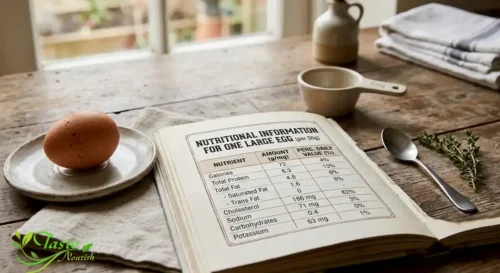
The table below describes one large raw whole chicken egg (about 50 grams, the standard portion in US nutrition data). Values come from the USDA FoodData Central entry for raw whole egg, scaled from its per-100-gram figures, and percent Daily Values use the FDA’s current Daily Values.
| Nutrient | Amount | % Daily Value |
|---|---|---|
| Calories | 72 | – |
| Protein | 6.3 g | 13% |
| Total fat | 4.8 g | 6% |
| Saturated fat | 1.6 g | 8% |
| Carbohydrate | 0.4 g | Less than 1% |
| Dietary fiber | 0 g | 0% |
| Cholesterol | 186 mg | 62% |
| Sodium | 71 mg | 3% |
Against its Daily Values, an egg is low in sodium, a good source of protein, and notably high in cholesterol, with saturated fat sitting in the middle. Nearly all the calories come from fat and protein, since eggs have almost no carbohydrate. If you want to see how egg size and cooking method change the total, our egg size and calorie guide walks through both.
Choline and the Other Micronutrients in an Egg
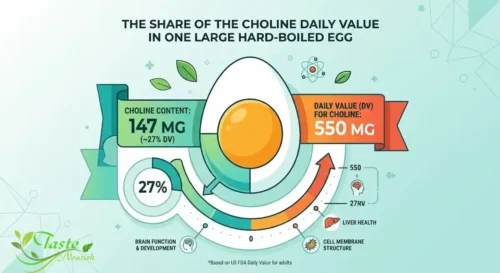
Choline is where egg nutrition facts stand out most. The NIH Office of Dietary Supplements’ choline fact sheet lists one large hard-boiled egg at 147 mg, or 27% of the Daily Value, which clears the 20% mark for a high source.
The Adequate Intake values it sets are 425 mg a day for adult women and 550 mg for adult men, with 450 mg in pregnancy. The same page reports that average adult intakes from food and beverages in a 2013–2014 national survey were 278 mg for women and 402 mg for men. One egg therefore contributes a meaningful share, but it does not close the gap alone.
Adequate Intakes are set to prevent problems such as liver damage. Meeting one is not the same as a proven health benefit from eating eggs.
An egg also contains vitamin B12, riboflavin, selenium, folate, vitamin A, and iodine, plus smaller amounts of vitamin D and iron. Exact amounts depend on the hen’s diet, so treat per-egg figures for these nutrients as typical rather than fixed. The USDA entry linked above lists them. For what research says these nutrients mean for health outcomes, our benefits of eggs article sorts the evidence by strength.
Yolk vs. White: Where the Nutrients Sit

Separating an egg changes its profile a lot, because the two parts are nutritionally different.
| Part | Main contents | Practical note |
|---|---|---|
| White | Mostly water and protein, very little fat | Contains no cholesterol |
| Yolk | Nearly all the fat and cholesterol, plus choline, vitamins A, D, and E, and carotenoids such as lutein | Also supplies a meaningful share of the protein |
If you are weighing calories against nutrients, our comparison of egg whites versus whole eggs covers the trade-offs in detail.
Does Cooking Change Egg Nutrition Facts?
Not much for calories and macronutrients, but cooking does change digestibility, safety, and whatever fat you add.

Raw vs. Cooked Protein
In one small human study, researchers gave five people with ileostomies a test meal of 25 g of isotope-labeled egg protein, once cooked and once raw. In this study of cooked and raw egg protein digestibility, true ileal digestibility was about 91% for cooked egg protein and 51% for raw.
That is a large gap, but the sample was tiny and ileostomy patients are not typical eaters. I’d read it as strong evidence that heat improves egg protein digestibility, not as a precise figure for everyone. Raw egg white also contains avidin, a protein that can bind biotin. Cooking deactivates it, which is one more reason raw whites are a poor habit.
Heat, Vitamins, and Added Fat
Heat-sensitive nutrients in eggs can decline with cooking. How much depends on the nutrient, the temperature, and the time. Added fat usually shifts the totals more visibly than the cooking method does. Butter, oil, cheese, or bacon in the pan can change the numbers noticeably.
Safety Comes With the Numbers
Shell eggs can carry Salmonella. USDA’s food safety service advises keeping eggs refrigerated and cooking them until the yolks are firm. USDA’s guidance for egg dishes is that they should reach 160°F, measured with a food thermometer. If you like runny yolks, a softer cook trades away part of that safety margin. Pasteurized shell eggs are one alternative. For timing from soft to hard, see our boiled egg timing guide.
What Changes the Numbers From Egg to Egg
Egg sizes are defined by weight, so a smaller or larger egg shifts every number roughly in proportion. The table above uses the large egg, which most US recipes assume.
Hen diet affects yolk color and, in enriched eggs, certain nutrients such as omega-3 fats or vitamin D. Check the carton, because an ordinary egg will not match those claims.
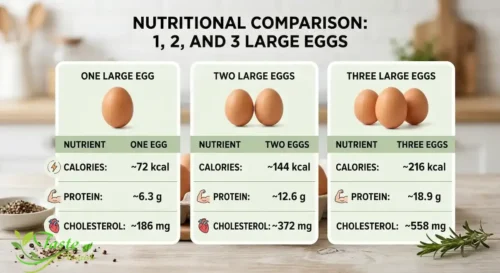
Eggs are rarely eaten one at a time, so here are the same data scaled up. Values are multiples of the per-egg figures in the USDA entry.
| Eggs | Calories | Protein | Cholesterol |
|---|---|---|---|
| 1 large | 72 | 6.3 g | 186 mg |
| 2 large | 143 | 12.6 g | 372 mg |
| 3 large | 215 | 18.8 g | 558 mg |
Cholesterol is the column that passes its Daily Value as eggs add up, which is why it gets its own section below. Storage affects freshness and safety rather than the label itself, and our egg storage guide covers fridge, counter, and freezer handling.
The Cholesterol Number on the Label
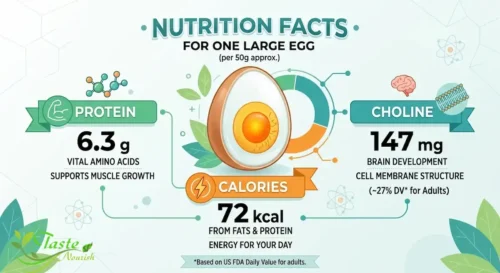
A large egg has about 186 mg of cholesterol, roughly 62% of the Daily Value, according to the USDA entry. That is high for a single food, and it is why eggs were long treated as something to limit.
The advice has since softened. The American Heart Association News summary of its 2019 advisory reports that egg intake was not significantly associated with cardiovascular disease risk in the studies reviewed. It also says one whole egg a day is reasonable for healthy people as part of a heart-healthy diet, and that research does not support a specific numerical limit on dietary cholesterol.
Much of that evidence is observational, so it shows associations rather than proof. It also applies to healthy people. Anyone with diabetes, heart disease, or high LDL cholesterol should ask a clinician what fits them. For amounts and who should be more careful, see our guide to the risks of eating too many eggs.
Egg Nutrition Facts FAQs
Are brown eggs more nutritious than white eggs?
No. The USDA Agricultural Marketing Service egg guide (archived) states that shell color depends on the hen’s breed and that there is no nutritional difference between brown and white shells, or between pale and dark yolks. Hen diet and enrichment matter more than color.
Is an egg a complete protein?
Yes. Egg protein contains all nine essential amino acids, which is why it is treated as a high-quality protein. Cooking it matters for how much of that protein you can use, as covered above.
Can eggs cover my vitamin D needs?
Not on their own. Eggs contain vitamin D, mostly in the yolk, but the amount is small compared with daily needs. Sunlight exposure, fortified foods, fatty fish, or a supplement chosen with a clinician usually do more of the work.
Bottom Line
In practice, I’d judge an egg less by its label than by the plate around it. The egg itself is compact, affordable protein, while the butter, cheese, and sides decide most of what a meal adds up to. If you follow your cholesterol closely for medical reasons, let your clinician’s advice set how many you eat, not a general rule.
Conclusion
Egg nutrition facts are easy to state and easy to misread. The label describes a plain raw egg, while the egg you eat arrives scrambled in butter or boiled and sliced. Use these numbers as a baseline, check the USDA entry or the carton for the exact form you buy, and adjust for what goes in the pan.
Explore Egg Nutrition by Topic
- Calories in an Egg: Shows how egg size and cooking method change the calorie count.
- Egg White vs Whole Egg: Compares protein, calories, and nutrients when you separate the yolk.
- Are Eggs Healthy?: Weighs cholesterol, nutrition, and how many eggs reasonably fit a healthy eating pattern.
- Benefits of Eggs: Sorts the health claims about eggs by how strong the evidence is.
- How to Store Eggs the Right Way: Covers fridge, counter, and freezer handling for quality and safety.
This article offers general nutrition information and is not medical advice. If you have a medical condition such as diabetes or heart disease, an egg allergy, or take medication, check with a doctor or registered dietitian before changing how many eggs you eat.