
Easy Avocado Salsa Recipe: Chunky Avocado Tomato Salsa Fresca
Avocado Salsa Recipe: Easy Chunky Avocado Tomato Salsa
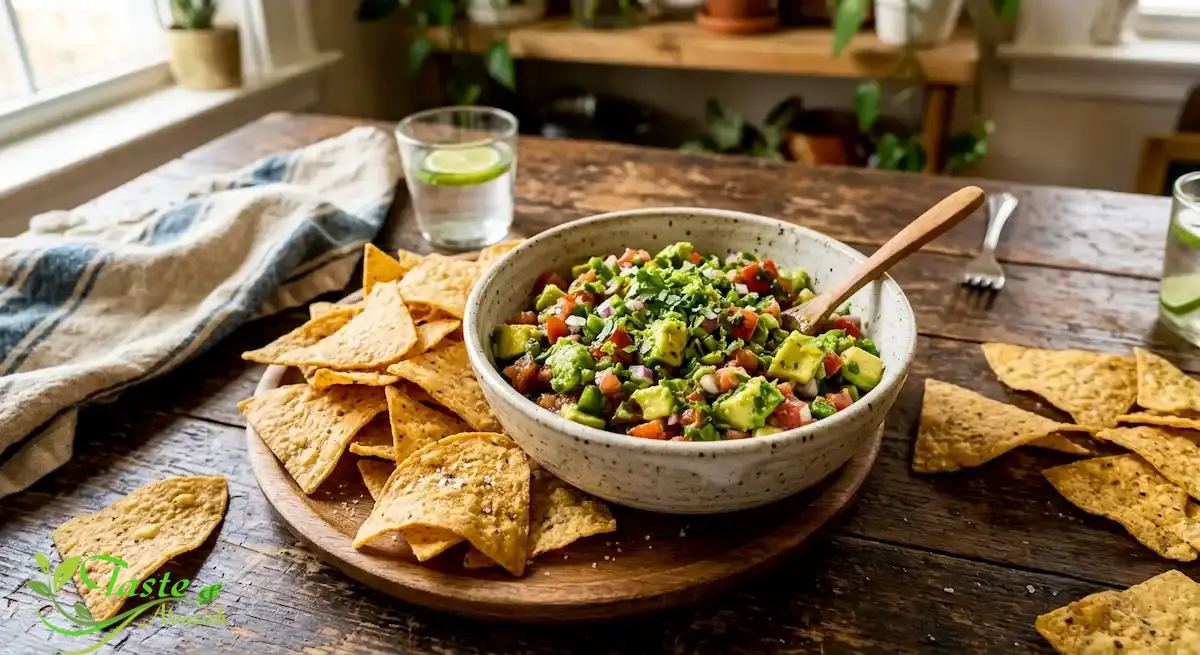
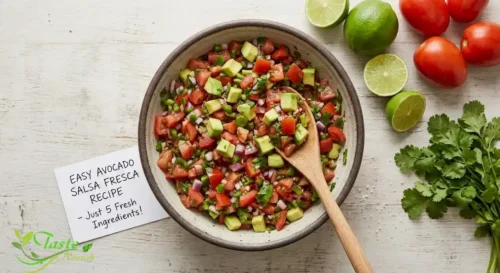
There’s a reason this avocado salsa recipe shows up at every cookout, taco night, and last-minute get-together in my kitchen. It takes about fifteen minutes, needs no cooking, and turns four humble ingredients into something people ask you to text them the recipe for. This is an easy avocado salsa fresca recipe built around ripe avocado, juicy tomato, lime, and a little heat, and it works equally well as a dip, a taco topper, or a spoonable garnish for grilled chicken and fish.
What follows is a complete guide, not just a list of ingredients. You’ll get the exact recipe, the nutrition behind it, what current research actually says about avocados and health, and answers to the questions people usually have about ripeness, storage, and substitutions.
Quick Answer
This avocado salsa recipe combines diced avocado, tomato, onion, jalapeño, cilantro, garlic, and fresh lime juice into a chunky, no-cook salsa ready in about 15 minutes. It’s naturally gluten-free and vegan, and the healthy fat in avocado may help your body absorb more of the fat-soluble nutrients from the tomatoes and other vegetables mixed in. Serve it the same day for the best color and texture.
Key Takeaways
- This avocado salsa recipe takes about 15 minutes and requires no cooking or special equipment.
- Ripe, unblemished avocados and fresh lime juice are the two things that make or break the texture and color of the finished salsa.
- Avocados provide monounsaturated fat, fiber, and potassium, and research suggests regular avocado intake may support heart health as part of an overall healthy diet.
- Salsa keeps best for about 1 day in the fridge; the lime juice slows, but does not fully stop, browning.
- People with a diagnosed latex allergy should be cautious with avocado, since it’s one of the foods most often linked to latex-fruit cross-reactivity.
What Is Avocado Salsa Fresca?
Salsa fresca, sometimes called pico de gallo, is an uncooked salsa built from fresh chopped vegetables, citrus juice, and salt. Avocado salsa fresca takes that same base and folds in diced avocado, which adds a creamy richness without turning the mixture into guacamole.
The distinction matters for texture. Guacamole is mashed and smooth, meant to be a spread. Avocado salsa stays chunky, with each ingredient still recognizable in the spoonful, which is why it works so well as a topping rather than a dip you’d scoop with a single chip.
Chunky Avocado Tomato Salsa: The Full Avocado Salsa Recipe
This version makes about 3 cups, enough for a party bowl of chips or several taco nights. Adjust the jalapeño up or down depending on how much heat you want.
Easy Avocado Salsa Recipe (Chunky Avocado Tomato Salsa Fresca)
This easy avocado salsa recipe blends ripe avocado, tomato, lime, and jalapeño into a chunky, no-cook salsa ready in 15 minutes.
⏱ Prep Time: 15 minutes • 🔥 Cook Time: 0 minutes • 🍽 Servings: 6
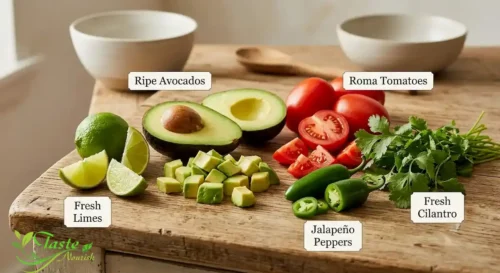
Ingredients
- 3 ripe avocados, diced
- 2 medium ripe tomatoes, seeded and diced (or 1½ cups halved cherry tomatoes)
- ½ medium white or red onion, finely diced
- 1 jalapeño, seeded and minced (use 2 for extra heat)
- ⅓ cup fresh cilantro, chopped
- 2 garlic cloves, minced
- Juice of 2 limes, about 3 to 4 tablespoons
- ½ teaspoon fine salt, plus more to taste
- ¼ teaspoon ground cumin, optional
Instructions
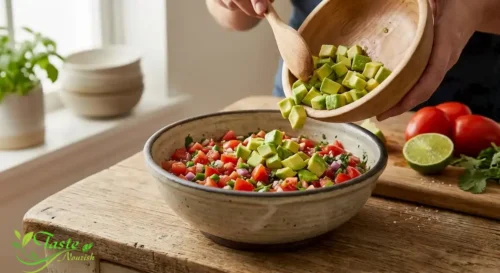
- Dice the avocados, tomatoes, and onion into roughly equal, bite-sized pieces and add them to a large bowl.
- Add the minced jalapeño, cilantro, and garlic to the bowl.
- Squeeze the lime juice over everything right away. This isn’t just for flavor; it slows the browning of the avocado.
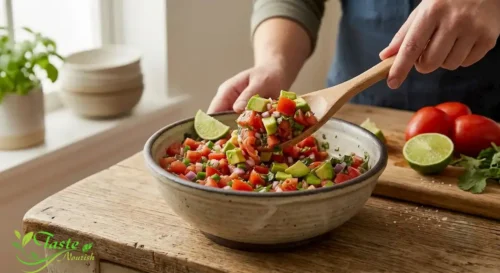
- Add the salt and cumin, then fold everything together gently with a spoon. Stir just enough to combine; overmixing turns the salsa mushy.
- Taste and adjust salt, lime, or heat as needed. Let the bowl sit for about 10 minutes before serving so the flavors settle.
- Serve right away, or cover tightly and refrigerate for up to a day.
Recipe Notes
If you’re prepping ahead, chop the tomato, onion, jalapeño, garlic, and cilantro a few hours early and store them separately. Add the diced avocado and lime juice only right before serving, since avocado is the ingredient most likely to brown and go soft if it sits too long.
For a smoother, guacamole-style version, mash half the avocado and leave the other half diced. This gives you a salsa that clings to a chip better while still keeping some chunky texture.
Why This Avocado Salsa Recipe Works So Well
Good salsa recipes balance four things: acid, salt, heat, and fat. Lime juice supplies the acid, salt sharpens every other flavor, jalapeño brings the heat, and avocado brings the fat that makes the whole thing feel satisfying rather than just tangy.
Because nothing here is cooked, ingredient quality does most of the work. A slightly underripe avocado or a mealy winter tomato will show up in the final bowl, so this is one of those recipes where five extra minutes spent picking good produce pays off more than any technique.
Nutrition Facts for Avocado Salsa
Because this is a fresh, unmeasured mix rather than a packaged food, exact nutrition varies by ingredient size and ripeness. The estimate below is per ½-cup serving of the recipe above, based on standard USDA values for each ingredient.
| Nutrient | Approximate Amount per ½ Cup |
|---|---|
| Calories | 110–130 kcal |
| Total fat | 9–10 g, mostly monounsaturated |
| Carbohydrates | 8–9 g |
| Dietary fiber | 4–5 g |
| Protein | 1–2 g |
| Sodium | 150–200 mg, depending on added salt |
Avocado Nutrition at a Glance
The avocado is doing most of the nutritional heavy lifting here. According to USDA FoodData Central, raw avocado provides about 160 calories per 100 grams, with roughly 15 grams of fat, 8.5 grams of carbohydrate, and close to 7 grams of fiber in that same portion. A single medium avocado also delivers a meaningful share of daily potassium, folate, and vitamin K.
That potassium content is worth calling out on its own. Potassium supports normal heart, muscle, and nerve function, and most American adults still fall short of the recommended daily amount according to the National Institutes . A cup of diced avocado contributes several hundred milligrams toward that daily target.
Health Benefits of Avocado in Salsa
None of this makes avocado salsa a cure for anything, and it shouldn’t be sold that way. What the current evidence shows is more modest and more useful: avocado is a nutrient-dense food that, eaten regularly as part of an overall healthy pattern, is associated with some meaningful health outcomes.
Heart Health
The strongest evidence for avocado centers on cardiovascular health. Harvard T.H. Chan School of Public Health points to a large, long-term analysis of more than 110,000 adults which found that those eating roughly two or more servings of avocado weekly had meaningfully lower rates of cardiovascular disease and coronary heart disease compared with people who rarely ate it.
A separate study published in the Journal of the American Heart Association followed nearly 111,000 people for up to 30 years and found that swapping half a daily serving of butter, cheese, or processed meat for avocado was tied to a lower risk of cardiovascular disease. Frank Hu, a Harvard nutrition researcher involved in related work, has said the findings support the benefits of “healthy fat sources like avocados” for cardiovascular prevention.
Blood Sugar and Fullness
Avocado is unusually low in sugar and carbohydrate for a fruit, while being high in fiber and fat. That combination tends to slow digestion and may help blunt the blood sugar spike that often follows a carb-heavy meal like tacos or nachos.
The fiber and fat pairing also supports satiety. Adding avocado to a meal, rather than a lower-fat salsa alternative, may help people feel fuller for longer, which can be useful if you’re trying to manage portion sizes without feeling deprived.
Skin and Antioxidants
Avocado contains carotenoids and vitamin E, compounds with antioxidant properties that researchers have studied for their potential role in skin and eye health. The evidence here is earlier-stage compared with the cardiovascular research, so it’s fair to view this as a promising area rather than a settled one.
What the Research Says (Scientific Evidence)
It’s worth being upfront about a limitation in avocado research: a lot of it has been funded, at least in part, by avocado industry groups, a point Harvard’s Nutrition Source itself notes. That doesn’t invalidate the findings, but it’s a reason to weigh independently funded studies a little more heavily.
The Pacheco et al. cardiovascular study cited above was funded primarily through National Institutes of Health grants, which adds independent weight to its conclusions. Systematic reviews pooling multiple clinical trials have generally found favorable effects on blood lipid markers such as LDL cholesterol, though effects on stroke risk specifically have been less consistent across studies.
Potential Risks and Side Effects
Avocado is calorie-dense compared with most vegetables, so portion size matters if you’re watching total calorie intake. A whole avocado can run 240 calories or more, and it’s easy to eat a whole one across a bowl of salsa without quite noticing.
Avocado also contains natural compounds that have been linked to allergic reactions in some people, particularly those with a latex allergy. Research on latex-fruit syndrome consistently lists avocado, banana, chestnut, and kiwi among the foods most likely to trigger cross-reactive symptoms in latex-sensitive individuals.
Who Should Be Careful With Avocado Salsa?
People with a diagnosed latex allergy should talk to an allergist before eating avocado regularly, since studies estimate that roughly 30 to 50 percent of people with latex allergy also react to cross-reactive foods like avocado. Anyone on blood thinners such as warfarin should also be mindful of avocado’s vitamin K content, since large, inconsistent intakes of vitamin K–rich foods can interfere with medication dosing.
People managing kidney disease may need to watch potassium-rich foods, including avocado, and should check with their doctor or dietitian about how much fits their individual plan. This recipe is not intended as medical guidance for any of these situations.
How Much Avocado Salsa Should You Eat?
There’s no official serving guideline specifically for avocado salsa, but a reasonable starting point is a ½-cup serving, roughly the amount you’d use to top two or three tacos. That portion delivers meaningful fiber and healthy fat without pushing calories too high.
If avocado is one of several fat sources in your day, such as olive oil in a dressing or nuts in a snack, it makes sense to size your salsa portion down slightly to keep total fat intake in a comfortable range.
How to Choose the Best Avocados for Salsa
For salsa, you want avocados that are ripe but still hold their shape when diced. Gently press the avocado near the stem end; it should yield slightly without feeling mushy.
Skip avocados with deep, dark sunken spots or a hollow-feeling flesh, both signs of overripeness or bruising underneath the skin. If your avocados feel rock-hard, buy them 2 to 3 days ahead and let them ripen on the counter, away from direct sun.
Storage Tips for Your Avocado Salsa Recipe
This avocado salsa recipe is best eaten within a few hours of making it, but it will hold reasonably well in the fridge for about 24 hours. Press a piece of plastic wrap directly onto the surface of the salsa before sealing the container to limit air contact.
The lime juice slows browning but won’t stop it completely, so expect some darkening by day two. If you see significant discoloration or the salsa smells off, it’s safest to discard it rather than eat it.
Before you dice into a fresh batch, it’s also worth rinsing whole avocados under running water and scrubbing the skin with a clean produce brush. The FDA’s surveillance sampling of whole fresh avocados found that bacteria such as Listeria monocytogenes turned up more often on avocado skins than in the flesh, and a knife can transfer that from the peel to the part you eat.
Best Ways to Serve Avocado Salsa
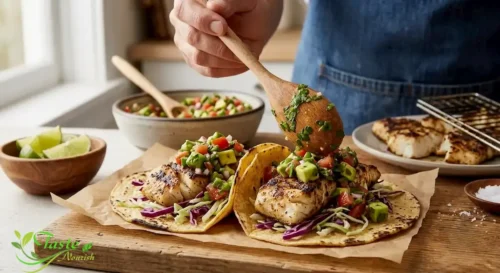
Chips are the obvious pairing, but this salsa earns its keep well beyond the snack table. Spoon it over grilled chicken, fish tacos, or steak for instant brightness and richness.
It also works as a bed for eggs at brunch, a topping for a baked sweet potato, or a mix-in for a grain bowl built around rice, black beans, and corn.
Common Mistakes When Making This Avocado Salsa Recipe
The most common misstep is adding the lime juice too late, after the avocado has already started to brown from air exposure. Squeeze the lime in as soon as the avocado is diced, not after every other ingredient is already in the bowl.
Overmixing is another frequent issue. Stirring vigorously breaks down the avocado into a paste, which turns a chunky salsa into something closer to guacamole. Fold gently instead, using a spoon and a light hand.
Skipping the salt-and-taste step at the end also trips people up. Salt needs a few minutes to dissolve and distribute, so a salsa that tastes flat right after mixing often tastes balanced ten minutes later.
Myths vs. Facts About Avocado Salsa
| Myth | Fact |
|---|---|
| Avocado is a vegetable | Avocado is botanically a fruit, specifically a large berry with a single seed. |
| Keeping the pit in leftover salsa stops browning | The pit only blocks air from the small area it touches; it does not meaningfully slow browning elsewhere in the bowl. |
| All the fat in avocado is “bad” fat | Most of the fat in avocado is monounsaturated, the same type found in olive oil, which research links to favorable effects on blood lipids. |
| Avocado salsa and guacamole are the same thing | Guacamole is typically mashed smooth; avocado salsa stays chunky, with distinct pieces of each ingredient. |
Chunky Avocado Salsa vs. Traditional Guacamole
| Feature | Chunky Avocado Salsa | Traditional Guacamole |
|---|---|---|
| Texture | Chunky, distinct pieces | Smooth, mashed |
| Ratio of avocado to other vegetables | Lower; tomato and onion are prominent | Higher; avocado is the dominant ingredient |
| Best use | Topping for tacos, fish, grain bowls | Dip for chips, spread for sandwiches |
| Typical calories per ½ cup | Around 110–130 | Around 180–220 |
Avocado Salsa Recipe FAQs
Q1. Can I make this avocado salsa recipe ahead of time?
You can prep the tomato, onion, jalapeño, and cilantro several hours ahead, but add the diced avocado and lime juice shortly before serving for the best color and texture.
Q2. How do I keep avocado salsa from turning brown?
Use plenty of fresh lime juice, press plastic wrap directly onto the surface of the salsa, and store it in the coldest part of the fridge. Some browning is still normal by the next day.
Q3. Is avocado salsa healthy?
It can fit well into a healthy eating pattern. It’s naturally low in added sugar, provides fiber and heart-healthy monounsaturated fat, and research suggests avocado consumption is linked with favorable cardiovascular outcomes when it replaces less healthy fats.
Q4. What can I substitute for jalapeño in this recipe?
Serrano pepper works well for more heat, while a small amount of diced bell pepper gives crunch without spice for anyone sensitive to heat.
Q5. Can people with a latex allergy eat avocado salsa?
Avocado is one of the foods most frequently linked to latex-fruit cross-reactivity, so anyone with a diagnosed latex allergy should check with an allergist before eating it regularly.
Avocado Salsa Recipe
6
servings15
minutes40
minutes120
kcalThis easy avocado salsa recipe blends ripe avocado, tomato, lime, and jalapeño into a chunky, no-cook salsa ready in 15 minutes.
Ingredients
3 ripe avocados, diced
2 medium ripe tomatoes, seeded and diced
1/2 medium white or red onion, finely diced
1 jalapeño, seeded and minced
1/3 cup fresh cilantro, chopped
2 garlic cloves, minced
Juice of 2 limes
1/2 teaspoon fine salt
1/4 teaspoon ground cumin, optional
Directions
- Dice the avocados, tomatoes, and onion into roughly equal, bite-sized pieces and add them to a large bowl.
- Add the minced jalapeño, cilantro, and garlic to the bowl.
- Squeeze the lime juice over everything right away to slow browning of the avocado.
- Add the salt and cumin, then fold gently to combine without mashing the avocado.
- Taste and adjust seasoning, then let the bowl rest 10 minutes before serving.
- Serve immediately, or cover tightly and refrigerate for up to 1 day.
Conclusion
A good avocado salsa recipe doesn’t need a long ingredient list or fancy technique, just ripe produce, fresh lime, and a light hand when mixing. This chunky avocado tomato salsa comes together in about fifteen minutes and holds its own on tacos, chips, grilled proteins, or a simple bowl of rice and beans. Beyond flavor, avocado brings real nutritional value to the table, including fiber, potassium, and heart-healthy monounsaturated fat backed by a growing body of research. Keep the ripeness, timing, and storage tips above in mind, and this is a recipe you’ll likely make on repeat.
References
- FoodData Central. U.S. Department of Agriculture, Agricultural Research Service. https://fdc.nal.usda.gov/
- Avocados. The Nutrition Source, Harvard T.H. Chan School of Public Health. https://nutritionsource.hsph.harvard.edu/avocados/
- Pacheco LS, Li Y, Rimm EB, et al. Avocado Consumption and Risk of Cardiovascular Disease in US Adults. Journal of the American Heart Association, 2022;11:e024014. https://www.ahajournals.org/doi/10.1161/JAHA.121.024014
- Microbiological Surveillance Sampling: FY14-16 Whole Fresh Avocados. U.S. Food and Drug Administration. https://www.fda.gov/food/sampling-protect-food-supply/microbiological-surveillance-sampling-fy14-16-whole-fresh-avocados
- Potassium: Fact Sheet for Consumers. Office of Dietary Supplements, National Institutes of Health. https://ods.od.nih.gov/factsheets/Potassium-Consumer/