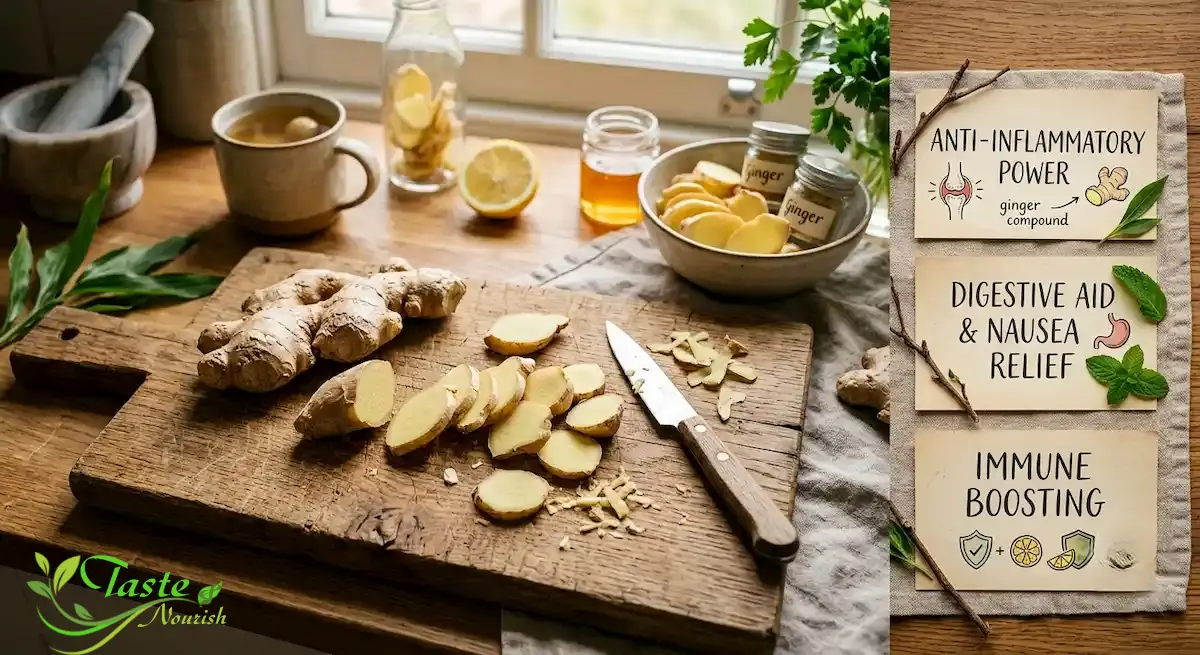
Ginger has been showing up in kitchens and home remedies for thousands of years, and it’s still one of the most talked-about ingredients in nutrition circles today. If you’ve ever sipped ginger tea for an upset stomach or tossed a knob of it into a stir-fry, you’ve already experienced a small taste of what this root can do. This guide walks through the real, research-backed health benefits of ginger, along with the nutrition facts, safety considerations, and practical tips you need to use it well.
The health benefits of ginger are best supported for easing nausea (including pregnancy-related and chemotherapy-related nausea), supporting digestion, and providing anti-inflammatory and antioxidant compounds called gingerols. Research on other uses, such as blood sugar control and osteoarthritis pain, is promising but still developing. Most healthy adults can enjoy ginger safely in food-level amounts, though anyone on blood thinners or with an upcoming surgery should talk to a doctor first.
Key Takeaways
Ginger’s most well-studied use is easing nausea, particularly during pregnancy, chemotherapy, and after surgery.
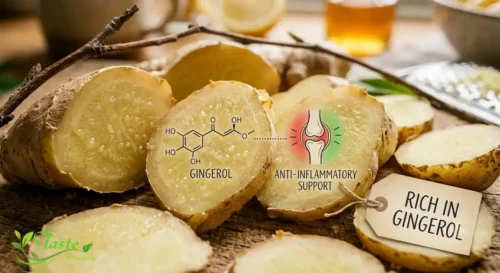
The health benefits of ginger are largely linked to gingerol and shogaol, plant compounds with anti-inflammatory and antioxidant properties.
A 100-gram portion of raw ginger root has about 80 calories and small amounts of potassium, magnesium, and vitamin B6.
Up to 3 to 4 grams of ginger daily is generally considered safe for most adults, though pregnant women are usually advised to stay under 1 gram.
Ginger may thin the blood slightly, so people on anticoagulant medication should check with their doctor before adding supplements.
What Is Ginger?
Ginger, or Zingiber officinale, is a flowering plant native to Southeast Asia. The part people actually eat isn’t a root in the botanical sense but a rhizome, an underground stem that stores energy for the plant and happens to be packed with flavor and aroma.
It belongs to the same plant family as turmeric, cardamom, and galangal, which explains why these spices often show up together in curries and traditional remedies. Fresh ginger has a sharp, peppery bite balanced by a warm sweetness, while dried and powdered forms taste more concentrated and slightly less bright.
People have used ginger in cooking and traditional medicine across Asia, the Middle East, and beyond for centuries, long before modern researchers started studying gingerol, its primary active compound. That long history is part of why ginger has earned so much trust, even as scientists continue working out exactly which claims hold up under controlled study.
Nutrition Facts for Ginger
Ginger isn’t a major source of vitamins or minerals in the way leafy greens or citrus fruits are, but it does contribute small, useful amounts of several nutrients along with its signature bioactive compounds. Here’s what a typical 100-gram (about 3.5-ounce) serving of raw ginger root provides.
Nutrient
Amount per 100g
Calories
80 kcal
Protein
1.8 g
Fat
0.75 g
Carbohydrates
17.8 g
Dietary fiber
2 g
Potassium
415 mg
Magnesium
43 mg
Vitamin C
5 mg
Vitamin B6
0.16 mg
Since people typically use just a teaspoon or tablespoon of fresh ginger at a time rather than eating it by the cupful, these nutrients add up slowly. The real draw isn’t the vitamin and mineral content but the concentration of gingerol and related compounds, which is where most of ginger’s research interest lies.
Health Benefits of Ginger Backed by Research
Ginger has attracted scientific interest for decades, and while not every traditional claim about it has strong clinical backing, several uses are supported by a meaningful body of research. Here’s a closer look at the areas where evidence is strongest.
Nausea and Digestive Comfort
This is where ginger’s reputation is most solid. Research reviewed by the National Center for Complementary and Integrative Health points to ginger being helpful for nausea and vomiting linked to pregnancy, and it’s also been studied for chemotherapy-related and postsurgical nausea with encouraging results.
Johns Hopkins Medicine explains that gingerol supports gastrointestinal motility, meaning it can help food move through the stomach more efficiently. That faster stomach emptying is thought to be a key reason ginger takes the edge off nausea and general digestive discomfort for many people.
Anti-Inflammatory and Antioxidant Health Benefits of Ginger
Gingerol and shogaol, the compounds responsible for ginger’s spicy bite, also function as antioxidants that may help the body manage oxidative stress. Harvard Health Publishing notes that ginger has been shown to support immune function and help counter inflammation, which is part of why it’s been studied for conditions like arthritis and general pain.
Some research suggests these anti-inflammatory properties may contribute to modest pain relief, including for muscle soreness after exercise and menstrual cramps. The effect sizes in these studies tend to be small to moderate, so ginger works better as a complementary approach than a standalone treatment.
Blood Sugar and Metabolic Support
A growing number of clinical trials have looked at ginger’s effect on blood sugar in people with type 2 diabetes, and the results are fairly encouraging. A systematic review and meta-analysis of randomized controlled trials, published through the National Institutes of Health, found that ginger supplementation meaningfully lowered fasting blood glucose and hemoglobin A1c compared with placebo across the pooled studies.
That said, this is an area where research quality varies quite a bit between individual trials, and ginger should never replace prescribed diabetes medication. Anyone managing blood sugar with medication should loop in their doctor before adding ginger supplements, since the combined effect could push glucose levels lower than intended.
Motion Sickness and Nausea Prevention
Ginger’s reputation as a motion sickness remedy is widespread, but the science here is more mixed than for pregnancy-related nausea. Federal health researchers note that most controlled studies haven’t actually demonstrated a clear benefit for motion sickness specifically, even though some individual trials have shown promise.
This doesn’t mean ginger candy or tea won’t help you feel better on a boat or long car ride. It just means the evidence isn’t as consistent or strong as it is for other types of nausea.
The Science Behind the Health Benefits of Ginger
Most of what researchers know about the health benefits of ginger comes from randomized controlled trials and the systematic reviews that pool their results together. In the diabetes research mentioned earlier, a meta-analysis covering roughly 490 participants across ten trials found ginger reduced fasting blood glucose by more than 20 points on average and improved HbA1c compared with control groups.
Clinical trials registered with the National Cancer Institute and the National Center for Complementary and Integrative Health have also tested ginger specifically for chemotherapy-related nausea, reflecting how seriously mainstream medical research has taken this traditional remedy. Results across these trials generally support ginger as a helpful, low-risk complementary option rather than a replacement for standard antiemetic medication.
It’s worth being upfront that ginger research isn’t uniform in quality. Study sizes are often small, dosing varies widely between trials, and long-term safety data beyond a few months is limited. Cautious interpretation is the right approach, even when individual findings look promising.
Potential Risks and Side Effects
Ginger is generally well tolerated, and most people can eat it regularly without any issues. Still, a few side effects show up often enough in clinical research to be worth knowing about.
Heartburn or acid reflux, especially on an empty stomach
Mild diarrhea or general stomach upset
Mouth or throat irritation, particularly with concentrated supplements
A mild blood-thinning effect that can increase bleeding risk at high doses
Reduced appetite in some people taking supplemental doses
These effects tend to be dose-dependent, meaning they show up more with concentrated supplements than with the amount of fresh ginger you’d use in cooking or tea. Long-term safety data for high-dose supplementation is still limited, so it’s smart to treat ginger supplements the way you’d treat any other over-the-counter product and check in with a healthcare provider before regular use.
Who Should Avoid It?
Ginger isn’t risky for most healthy adults, but a few groups should be more careful or check with a doctor first.
People on blood-thinning medication, such as warfarin, since ginger may add to the bleeding risk
Anyone scheduled for surgery, since ginger is often recommended to be stopped about a week or two beforehand
Pregnant women in later pregnancy, due to a possible increase in vaginal bleeding risk with higher intake
People with gallstones, since ginger can increase bile production
Anyone taking diabetes medication, because combining it with ginger may lower blood sugar more than expected
None of this means ginger is dangerous for these groups in the small amounts used in everyday cooking. It’s really about concentrated supplement doses and making sure a doctor is aware of what you’re taking, particularly if you’re already managing a health condition.
How Much Should You Eat?
For most healthy adults, up to 3 to 4 grams of ginger a day from food and supplements combined is considered safe. That’s roughly one teaspoon of fresh grated ginger or about half a teaspoon of ground ginger powder, though people typically use less than this in day-to-day cooking anyway.
Fresh and dried ginger aren’t equally potent gram for gram. Around 2 grams of fresh ginger root delivers roughly the same amount of gingerols as 1 gram of ginger powder, so it’s easy to end up with a stronger dose than intended if you’re not paying attention to form.
Pregnant women are usually advised to keep total daily intake under 1 gram and to check with an OB-GYN before using ginger supplements specifically, even though food-level amounts in cooking are generally considered fine.
How to Choose the Best Ginger
Good fresh ginger should feel firm and heavy for its size, with smooth, taut skin rather than wrinkled or shriveled patches. Wrinkled skin is usually a sign the root has started drying out and losing some of its punch.
Give it a sniff if you can. Fresh ginger has a sharp, slightly citrusy aroma even through the skin, and a piece that smells musty or has no scent at all has likely been sitting around too long. When you snap or cut into a fresh piece, it should break cleanly and look pale yellow inside, not fibrous, mushy, or discolored.
Storage Tips
Unpeeled fresh ginger keeps well in the refrigerator, wrapped loosely in a paper towel or placed in a partially open bag, for about three to four weeks. For longer storage, ginger freezes remarkably well and can be grated straight from frozen into whatever you’re cooking, no thawing required.
Peeled ginger stored in a jar covered with dry sherry or rice vinegar in the fridge can last for several months while also flavoring the liquid for later use. Ground ginger powder should be kept in a sealed container away from heat and light, where it will hold its potency for around six months to a year before it starts to fade.
Best Ways to Eat or Cook It
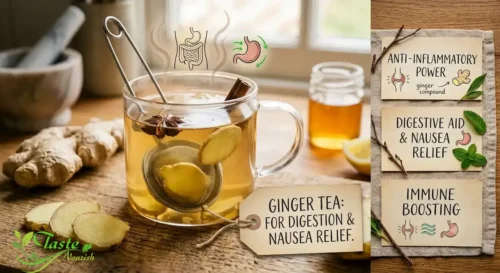
Fresh ginger is endlessly versatile, and there’s no single “correct” way to use it. Grating it into stir-fries, curries, marinades, and soups adds warmth and depth without overwhelming other flavors, while thin slices steeped in hot water make a simple, soothing tea.
Powdered ginger works beautifully in baked goods like gingerbread, cookies, and spice cakes, and it blends easily into smoothies or overnight oats for a subtle kick. Pickled ginger, the pale pink slices often served alongside sushi, offers a tangy, slightly sweet way to enjoy it, and ginger shots have become a popular grab-and-go option for people who want a concentrated dose without cooking anything at all.
Common Mistakes
One of the most common mistakes is assuming that more ginger automatically means more benefit. Past a certain point, extra intake mostly just raises the odds of heartburn or stomach upset rather than adding meaningful health value.
Another frequent misstep is using ginger that’s past its prime, dried out, fibrous, or starting to mold, which affects both flavor and the concentration of beneficial compounds. It’s also easy to underestimate supplement potency and combine a concentrated capsule with a strong dose of fresh ginger in cooking, unintentionally exceeding recommended daily amounts.
Myths vs Facts
Myth
Fact
Ginger cures colds and the flu
It may ease some symptoms through its warming and anti-inflammatory effects, but there’s no clinical evidence it cures or shortens a cold
Ginger works for motion sickness in everyone
Evidence here is mixed, and most controlled studies haven’t shown a consistent benefit for this specific use
Natural means risk-free
Ginger can interact with blood thinners and diabetes medication, so “natural” doesn’t mean no precautions are needed
Ginger tea is just as potent as raw ginger or supplements
Steeping releases only some of the active compounds, so tea tends to be milder than fresh ginger or concentrated capsules
Comparing Different Forms of Ginger
Form
Potency
Best For
Fresh root
Moderate, varies by size and freshness
Cooking, stir-fries, homemade tea
Ground powder
High, about twice as concentrated by weight as fresh
Baking, quick seasoning
Ginger tea (steeped)
Low to moderate
Mild, everyday digestive comfort
Supplement capsules
High and standardized
Consistent dosing under medical guidance
the Health Benefits of Ginger FAQs
Is it safe to eat ginger every day?
Yes, for most healthy adults, small daily amounts used in cooking or tea are considered safe. Problems tend to arise only with high-dose supplements, not everyday culinary use.
Does ginger actually help with weight loss?
Some studies suggest ginger may modestly support metabolism and appetite control, but the effect is small and works best alongside a balanced diet, not as a standalone solution.
Can ginger lower blood pressure?
Early research suggests a possible mild effect on blood pressure, though evidence is still limited. It shouldn’t be relied on in place of prescribed blood pressure medication.
Is ginger tea as effective as fresh ginger?
Ginger tea is gentler and generally milder than fresh grated ginger or concentrated supplements, since steeping only releases some of the active compounds into the water.
Can children have ginger?
Small culinary amounts are typically fine for children, but supplement doses and larger amounts should be discussed with a pediatrician first, especially for younger kids.
Conclusion
Ginger has earned its long-standing reputation, and modern research backs up quite a bit of it, particularly around nausea relief, digestion, and its anti-inflammatory compounds. Other uses, like blood sugar support, show real promise without being definitive yet, which is a pretty normal place for nutrition science to sit. Used thoughtfully, in food-level amounts or with medical guidance for supplements, ginger is a low-risk way to add both flavor and a genuine nutritional boost to your routine.
Zhu J, et al. “Effects of Ginger (Zingiber officinale Roscoe) on Type 2 Diabetes Mellitus and Components of the Metabolic Syndrome: A Systematic Review and Meta-Analysis of Randomized Controlled Trials.” National Institutes of Health, PubMed Central. https://www.ncbi.nlm.nih.gov/pmc/articles/PMC5818945/
This guide is for informational purposes only and should not replace professional medical or nutritional advice. Always consult with healthcare providers regarding specific dietary needs and health conditions.
Hanan Abo Samra is the founder of Taste & Nourish, sharing trustworthy nutrition guidance and recipes drawn from 20+ years of hands-on cooking experience. When she's not developing new recipes, Hanan is researching the science behind everyday ingredients to bring readers practical, evidence-based guidance for a healthier lifestyle.