
The Best Turmeric Tea Recipe: A Complete Guide to Making It at Home
Turmeric Tea Recipe: Easy, Soothing & Homemade Guide
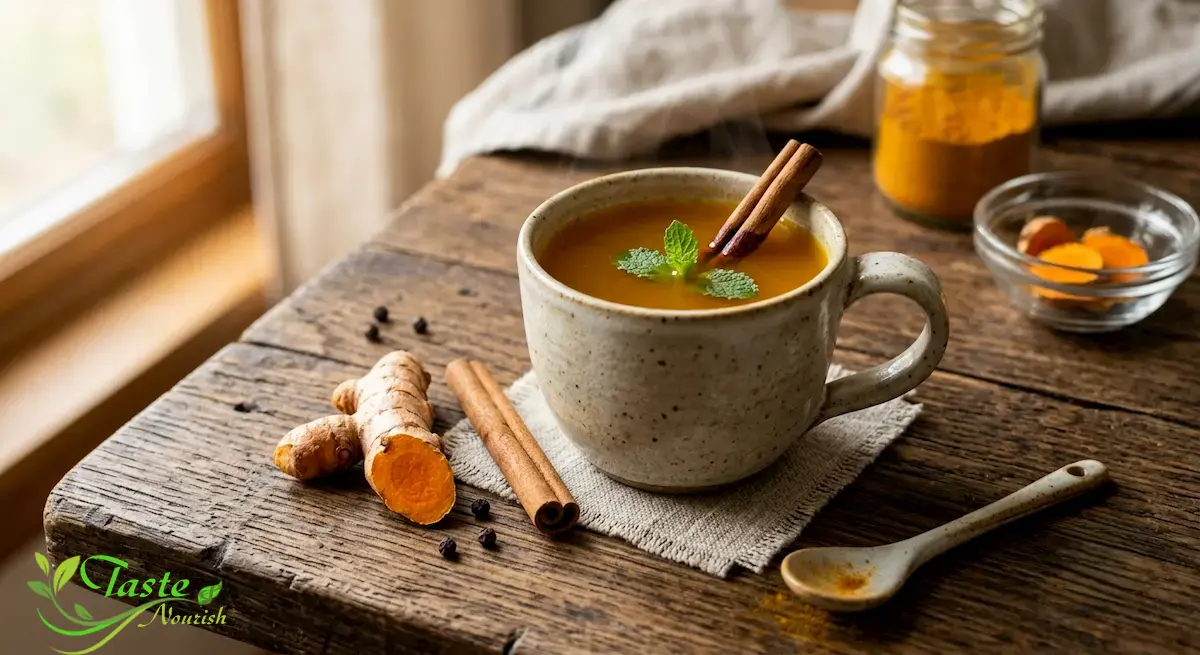
There’s a reason golden-hued mugs of turmeric tea keep showing up on kitchen counters and café menus alike. It’s warm, a little peppery, faintly earthy, and it feels like a small act of self-care in a cup. If you’ve been curious about how to make it properly — not the bitter, chalky version you get from dumping powder into hot water — this turmeric tea recipe will walk you through it step by step.
We’ll also cover the honest science behind turmeric tea for inflammation, because a lot of what circulates online oversimplifies the research. By the end, you’ll have a reliable homemade turmeric tea recipe, plus the practical knowledge to make it safely and to your taste.
What Is Turmeric Tea?
Turmeric tea is a warm beverage made by steeping or simmering turmeric — either the fresh rhizome or ground powder — in water or a milk-based liquid. It’s sometimes called “golden tea” or confused with “golden milk,” which is really just turmeric tea’s richer, dairy-forward cousin.
The base flavor comes from curcumin, the yellow-orange pigment responsible for turmeric’s color and much of its bioactivity. On its own, turmeric tastes mildly bitter and peppery with an earthy, almost mustardy undertone. That’s exactly why most recipes, including this one, round it out with ginger, cinnamon, black pepper, and a touch of natural sweetness.
Turmeric has roots in Ayurvedic and traditional Chinese medicine, where it’s been used for centuries in cooking and folk remedies. Its modern popularity as a wellness drink is newer, riding a wave of interest in functional foods and anti-inflammatory diets. That popularity is well-earned in terms of flavor, though the health claims deserve a more measured look, which we’ll get into shortly.
Why People Turn to Turmeric Tea for Inflammation
Ask anyone why they started drinking turmeric tea, and inflammation usually comes up. Curcumin has been studied for decades as a compound that may influence some of the body’s inflammatory pathways, and that reputation has made it a go-to ingredient for people managing joint discomfort, post-workout soreness, or general wellness goals.
It’s worth being precise about what “anti-inflammatory” actually means here. Curcumin appears to interact with several molecular pathways involved in the body’s inflammatory response, and laboratory research has explored this extensively. That’s different from saying a cup of tea will measurably lower inflammation in your body — the evidence for that leap is thinner than wellness marketing often suggests.
What the Research Actually Says
The National Center for Complementary and Integrative Health (NCCIH), takes a cautious stance. The agency notes that while laboratory research suggests curcumin may have anti-inflammatory properties, there still isn’t enough evidence to formally recommend turmeric supplementation for inflammatory conditions, despite its long history of traditional use.
A 2019 systematic review and meta-analysis published in Pharmacological Research, which pooled data from 19 randomized controlled trials involving people with chronic inflammatory diseases, found something similarly nuanced: turmeric and curcumin did not produce a statistically significant reduction in common inflammatory markers like CRP, IL-6, or TNF-alpha compared to control groups, as detailed in the PubMed.
That doesn’t mean turmeric does nothing — the researchers also noted high variability between studies — but it’s a useful reality check against the idea that turmeric tea is a guaranteed inflammation fix.
Key takeaway: Turmeric may be associated with anti-inflammatory activity at a cellular level, but current clinical evidence is mixed and inconclusive for treating diagnosed inflammatory conditions. Think of turmeric tea as a supportive, flavorful habit — not a substitute for medical treatment.
Why Black Pepper Matters
If you’ve ever wondered why almost every turmeric tea recipe insists on a pinch of black pepper, here’s the reason. Curcumin is notoriously poorly absorbed by the body on its own, since it’s broken down quickly during digestion.
A frequently cited 1998 study published in Planta Medica found that combining piperine — the active compound in black pepper — with curcumin dramatically increased curcumin’s bioavailability in human volunteers, based on measured blood concentrations, as reported in the original Planta Medica research. Piperine appears to work by slowing down how quickly the liver and intestines break curcumin down, giving it more time to be absorbed.
It’s fair to note that not every later study has replicated results as dramatic as the original figures, and some researchers have raised questions about whether the effect holds consistently across formulations. Still, the general principle — that black pepper meaningfully improves curcumin absorption compared to turmeric alone — is well-supported enough that it’s become standard practice. A single pinch is all you need; more isn’t better here.
Turmeric Tea Recipe Card
Now for the part you came here for. This recipe makes a smooth, gently spiced turmeric tea that’s easy to customize.
Recipe Overview
| Detail | Information |
|---|---|
| Prep Time | 5 minutes |
| Cook Time | 10 minutes |
| Total Time | 15 minutes |
| Servings | 2 cups |
| Cuisine | Ayurvedic-inspired, global wellness |
| Difficulty | Easy |
Ingredients
- 2 cups water (or 1 cup water + 1 cup milk of choice)
- 1 teaspoon ground turmeric (or 1 tablespoon freshly grated turmeric root)
- 1/2 teaspoon ground ginger (or 1 tablespoon freshly grated ginger)
- 1 small cinnamon stick (or 1/4 teaspoon ground cinnamon)
- 1 small pinch of freshly ground black pepper
- 1–2 teaspoons honey or maple syrup, to taste
- Optional: a squeeze of fresh lemon juice
Equipment You’ll Need
- Small saucepan
- Whisk or spoon
- Fine mesh strainer
- Two mugs
Step-by-Step Instructions
- Heat the liquid. Pour the water (and milk, if using) into a small saucepan and set it over medium heat.
- Add the spices. Whisk in the ground turmeric, ginger, cinnamon, and black pepper as the liquid begins to warm.
- Simmer gently. Bring the mixture to a light simmer — not a rolling boil — and let it cook for 8 to 10 minutes, stirring occasionally so the spices don’t settle and scorch.
- Strain into mugs. Pour the tea through a fine mesh strainer directly into your mugs to catch any spice sediment or ginger fibers.
- Sweeten and finish. Stir in honey or maple syrup to taste, add a squeeze of lemon if desired, and serve immediately while warm.
Pro Tips for the Best Homemade Turmeric Tea
Pro tip: Toast your ground spices in the dry saucepan for 30 seconds before adding liquid. This wakes up their essential oils and gives the tea a noticeably deeper flavor.
A few small adjustments separate an average cup from a genuinely good one. First, always add fat — whether that’s whole milk, coconut milk, or a splash of oat milk with added fat — since curcumin is fat-soluble and this can help with both flavor and absorption. Second, resist the urge to boil the mixture hard; a gentle simmer preserves more of the delicate aromatic compounds in fresh ginger and cinnamon.
Fresh turmeric root, when you can find it, gives a noticeably brighter, more citrus-forward flavor than the powder, though it will stain your cutting board and hands (wear gloves if that bothers you). If you’re using powder, make sure it’s fresh — turmeric loses potency and flavor after about a year on the shelf. Finally, taste before you strain; it’s much easier to adjust sweetness and spice level while everything is still in the pot.
Common Mistakes to Avoid
| Mistake | Why It Happens | The Fix |
|---|---|---|
| Skipping the black pepper | Assuming it’s just a flavor add-on | Always include a pinch — it meaningfully aids curcumin absorption |
| Boiling too hard or too long | Trying to intensify the flavor faster | Simmer gently for 8–10 minutes instead of a rolling boil |
| Using old, dull turmeric powder | Not checking expiration or aroma | Buy in small quantities and smell-test before using |
| Adding honey while the tea is boiling | Convenience of one-step mixing | Stir in honey after removing from heat to preserve its flavor and nutrients |
| Over-sweetening to mask bitterness | Turmeric’s natural bitterness catches people off guard | Balance bitterness with ginger, cinnamon, and a splash of milk instead of extra sugar |
Substitutions and Variations
Turmeric tea is forgiving, which is part of why it’s become such a popular base recipe for home cooks to riff on.
Ingredient Substitutions
- No fresh ginger? Ground ginger works fine at roughly a third of the amount.
- No black pepper on hand? A pinch of cayenne can stand in, though it changes the flavor profile toward “spicy” rather than “warming.”
- Avoiding dairy? Any unsweetened plant milk — oat, almond, coconut, or soy — works well; coconut milk gives the richest, most golden-milk-like result.
- Avoiding added sugar? A few fresh mint leaves or a strip of orange zest can add brightness without needing extra sweetener.
Flavor Variations
Some of the most popular twists on this base recipe include a chai-spiced version with added cardamom and cloves, a tropical version blended with a spoonful of coconut cream and a dash of vanilla, and an iced summer version made by chilling the strained tea and serving it over ice with a lemon wheel.
A small spoonful of coconut oil or ghee whisked in at the end is another common addition, since it boosts the fat content that helps with curcumin absorption while adding a silkier mouthfeel.
Storage and Reheating
Turmeric tea is best enjoyed fresh, but it holds up reasonably well for later. Let any leftover tea cool to room temperature, then transfer it to an airtight container and refrigerate for up to 3 days.
To reheat, warm it gently on the stovetop over low heat, stirring occasionally, until steaming — avoid the microwave if you can, since it tends to heat unevenly and can slightly dull the spice flavors. If the tea separates or the spices settle at the bottom, a quick whisk before serving brings it back together. Freezing isn’t recommended, since the texture of any dairy or plant milk in the mixture can become grainy once thawed.
Nutrition Facts
Nutrition will vary depending on which liquid and sweetener you use, but here’s an approximate breakdown for one serving made with water, 1 teaspoon of ground turmeric, a pinch of black pepper, and 1 teaspoon of honey.
| Nutrient | Approximate Amount per Serving |
|---|---|
| Calories | 25–30 kcal |
| Total Fat | 0.2 g |
| Carbohydrates | 7 g |
| Sugars | 6 g |
| Protein | 0.3 g |
| Manganese | Notable source, even at 1 tsp of turmeric |
| Iron | Small but meaningful amount |
These figures are based on standard nutrient values for ground turmeric reported in the USDA FoodData . If you swap in whole milk or a sweetened plant milk, expect calories, fat, and sugar to rise accordingly — often by 80–150 additional calories per cup.
Who Should Be Cautious With Turmeric Tea
Turmeric used in everyday cooking and tea-making amounts is generally considered safe for most healthy adults. But “generally safe” isn’t the same as “risk-free for everyone,” and a few groups should be more careful, particularly with concentrated or frequent use.
According to guidance from Memorial Sloan Kettering Cancer Center’s Integrative Medicine service, turmeric may increase the risk of kidney stones in people with a family history of them, and it can interact with certain medications, including some pain relievers and blood thinners, as outlined in their patient information page on turmeric.
The table below summarizes who should talk to a healthcare provider before making turmeric tea a regular habit.
| Condition or Situation | Why It Matters |
|---|---|
| Gallstones or bile duct obstruction | Turmeric stimulates bile secretion, which may worsen symptoms |
| History of kidney stones | Turmeric is high in oxalates, a contributor to calcium-oxalate stones |
| Taking blood thinners (e.g., warfarin) | Turmeric may have mild blood-thinning effects of its own |
| Upcoming surgery | Its effect on clotting may increase bleeding risk |
| Pregnancy | Concentrated turmeric doses are not well studied for safety in pregnancy |
| Iron deficiency or anemia | Turmeric may interfere with iron absorption in some cases |
If none of these apply to you, a cup or two of turmeric tea a day, made the way it’s described in this recipe, fits comfortably within normal dietary use. If any of them do apply, it’s worth a quick conversation with your doctor, especially before treating turmeric as a daily supplement rather than an occasional culinary spice.
Turmeric Tea Recipe FAQs
Q1. Does turmeric tea actually reduce inflammation?
Curcumin, the active compound in turmeric, has shown anti-inflammatory activity in laboratory studies, but clinical research in humans is mixed. Some trials show modest benefits for specific conditions, while broader meta-analyses have found no statistically significant effect on common inflammatory markers. It’s reasonable to view turmeric tea as a potentially supportive habit rather than a proven treatment.
Q2. Can I drink turmeric tea every day?
For most healthy adults, one to two cups a day made with culinary amounts of turmeric is considered a normal part of a varied diet. People with gallstones, kidney stone history, bleeding disorders, or those on blood-thinning medication should check with a healthcare provider first.
Q3. Is fresh turmeric root better than ground turmeric for tea?
Fresh turmeric root tends to have a brighter, slightly citrusy flavor, while ground turmeric is more convenient and has a more concentrated, earthy taste. Both work well in this recipe — it largely comes down to preference and what’s available in your kitchen.
Q4. Does turmeric tea contain caffeine?
No. Turmeric tea is naturally caffeine-free, since it’s made from a root spice rather than tea leaves. That makes it a good option for an evening wind-down drink or for anyone limiting caffeine intake.
Q5. What’s the best time of day to drink turmeric tea?
There’s no strict rule here — some people prefer it in the morning as a coffee alternative, while others enjoy it in the evening for its warming, caffeine-free qualities. Since it pairs well with milk and a touch of sweetness, many people find it works nicely as a bedtime ritual.
Turmeric Tea Recipe
2
servings5
minutes10
minutes30
kcalA simple, soothing turmeric tea recipe made with fresh ginger, cinnamon, and a pinch of black pepper to help the body absorb curcumin.
Ingredients
2 cups water (or 1 cup water + 1 cup milk of choice)
1 teaspoon ground turmeric (or 1 tablespoon fresh grated turmeric root)
1/2 teaspoon ground ginger (or 1 tablespoon fresh grated ginger)
1 small cinnamon stick (or 1/4 teaspoon ground cinnamon)
1 small pinch freshly ground black pepper
1-2 teaspoons honey or maple syrup, to taste
Optional: squeeze of fresh lemon juice
Directions
- Pour the water (and milk, if using) into a small saucepan and set over medium heat.
- Whisk in the ground turmeric, ginger, cinnamon, and black pepper as the liquid warms.
- Bring to a light simmer, not a rolling boil, and cook for 8 to 10 minutes, stirring occasionally.
- Pour through a fine mesh strainer directly into mugs to remove spice sediment.
- Stir in honey or maple syrup, add lemon if desired, and serve warm.
Conclusion
A good turmeric tea recipe is really about balance: enough turmeric to get that signature golden color and earthy flavor, enough warming spice to make it comforting, and just enough black pepper and fat to help your body actually use what you’re drinking.
The science on turmeric and inflammation is genuinely promising but still evolving, so it’s smart to enjoy this tea for what it reliably delivers — a cozy, flavorful ritual — rather than treating it as medicine in a mug. Made with fresh ingredients and a little patience at the stove, homemade turmeric tea is one of the simplest ways to bring a bit of warmth and comfort into your daily routine.
References
- National Center for Complementary and Integrative Health. “Turmeric.” U.S. Department of Health and Human Services, National Institutes of Health. https://www.nccih.nih.gov/health/turmeric
- Fadus, M.C., et al. “Oral turmeric/curcumin effects on inflammatory markers in chronic inflammatory diseases: A systematic review and meta-analysis of randomized controlled trials.” PubMed, National Library of Medicine. https://pubmed.ncbi.nlm.nih.gov/31121255/
- Shoba, G., Joy, D., Joseph, T., Majeed, M., Rajendran, R., Srinivas, P.S. “Influence of Piperine on the Pharmacokinetics of Curcumin in Animals and Human Volunteers.” Planta Medica, 64 (1998): 353–356. https://www.thieme-connect.com/products/ejournals/pdf/10.1055/s-2006-957450.pdf
- U.S. Department of Agriculture, Agricultural Research Service. “Spices, turmeric, ground.” FoodData Central. https://fdc.nal.usda.gov/food-details/172231/nutrients
- Memorial Sloan Kettering Cancer Center. “Turmeric.” Integrative Medicine, About Herbs, Botanicals & Other Products. https://www.mskcc.org/cancer-care/integrative-medicine/herbs/turmeric