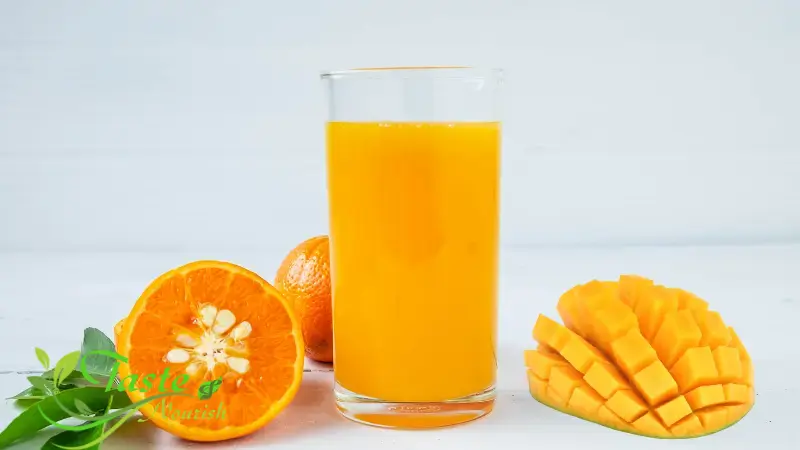
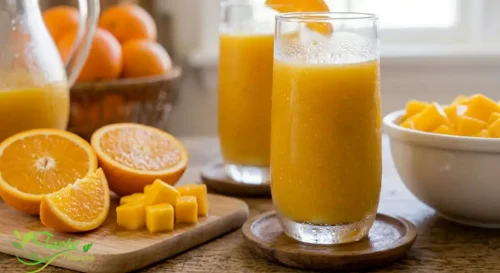
Jump to Recipe Print RecipeOrange and mango juice works because the two fruits balance each other. Mango gives body and a deep tropical sweetness but has little acidity. Fresh orange juice supplies the bright acidity mango lacks. Blend them with a splash of cold water and you get a juice that tastes like both fruits, without an added sweetener.
This recipe makes about 3 cups. It covers how to pick fruit that tastes good, how to get a smooth texture, and how to store the juice safely.
From my kitchen: I made this juice following the recipe, and I liked it even more without straining the mango. I love juice thick with pulp and fiber, so I skip the straining step after blending and drink it as it is. I still sieve the orange juice to catch the seeds. If you prefer a silky juice, strain it as written; if you like it thick, like I do, leave it unstrained.
Quick Answer
Orange and mango juice is made by blending ripe mango with freshly squeezed orange juice and a little cold water, then straining it if you want a smoother drink. This recipe uses 5 to 6 oranges and 2 cups of mango to make about 3 cups, with no added sugar needed.
Key Takeaways for Orange and Mango Juice
The base is 1½ cups fresh orange juice, 2 cups ripe mango, and ½ cup cold water. This makes 3 servings of about 1 cup each.
Ripe mango sets the sweetness, so choose fruit that is fragrant and gives slightly when pressed. No sweetener is needed.
Pour the liquids into the blender first and add the mango on top. This gives the smoothest result in under a minute.
Straining removes the pulp and fibrous strands, along with some of the fiber. Skip it if you like a thicker juice.
For the best flavor, drink this orange and mango juice the day you make it, and refrigerate leftovers promptly.
Why This Combination Works
The fruit ratio is deliberate. At roughly 1½ parts orange juice to 2 parts mango by volume, the mango stays dominant, but the orange keeps the drink from tasting flat or syrupy. Too much mango makes the juice heavy and sweet. Too much orange makes it sharp and thin.
The ½ cup of water loosens the mango purée to a pourable consistency. It also stops the juice from tasting concentrated, which can happen when only fruit is blended. Chilled ingredients mean you can serve it cold without ice, so nothing waters it down.
Ingredients for Orange and Mango Juice
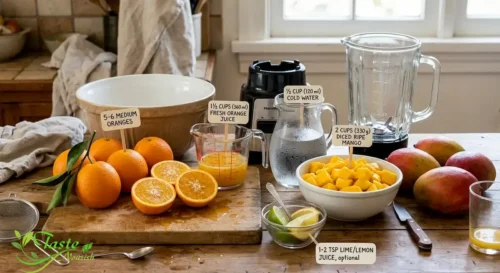
5 to 6 medium oranges, to yield 1½ cups (360 ml) juice. Valencia is ideal, but any sweet, juicy orange works.
2 cups (about 330 g) ripe mango, diced. This is about 2 medium mangoes.
½ cup (120 ml) cold water
1 to 2 teaspoons lime or lemon juice, optional, only if the mango tastes very mild
Choosing the Fruit
Oranges vary a lot in juiciness, so measure the juice rather than counting fruit. If you fall short of 1½ cups, juice one more orange.
Navel oranges are sweet and easy to peel, but their juice can turn noticeably bitter if it sits after squeezing. If you use navels, blend and serve right away. Valencia oranges hold their flavor better.
For mango, look for fruit that smells sweet near the stem and gives slightly under gentle pressure. Honey (Ataulfo) mangoes are smooth and low in fiber, which gives a silky juice with little straining. Larger varieties such as Tommy Atkins can be stringy, so strain the juice if you use them.
Substitutions That Work
Frozen mango: Use the same amount, partly thawed. The juice will be colder and a bit thicker, so add water 1 tablespoon at a time if needed.
Store-bought orange juice: Use 1½ cups of pasteurized, not-from-concentrate juice. The flavor is slightly less bright, so a teaspoon of lime juice helps.
Sweetened canned mango pulp: Use about 1½ cups and cut the water to ¼ cup. Taste before adding any sweetener, since the pulp already contains sugar.
How to Make Orange and Mango Juice
1. Wash the fruit. Rinse the oranges and mangoes under running water and dry them. Even though you will not eat the peel, washing first keeps surface dirt and bacteria from transferring to the flesh when you cut it, as the FDA advises. Do not use soap or produce wash.
2. Chill what you can. If you have time, refrigerate the fruit for 30 minutes before starting. Cold fruit makes a cold drink without ice.
3. Cut the mango. Stand the mango on its end and slice down on each side of the flat pit to remove the two cheeks. Score the flesh in a grid without cutting through the skin, then scoop out the cubes. Trim the flesh around the pit and measure 2 cups.
4. Juice the oranges. Roll each orange firmly on the counter, halve it across the middle, and press it on a reamer or citrus press. Avoid grinding into the white pith, which adds bitterness. Pour the juice through a sieve to catch seeds and measure 1½ cups.
5. Blend. Pour the orange juice and water into the blender first, then add the mango. Blend on low for 10 seconds, then on high for 30 to 45 seconds. The juice is ready when it is a uniform golden orange with no visible flecks or strings.
6. Taste and adjust. If it needs correcting, see the troubleshooting section below.
7. Strain if you like. For a smoother juice, pour it through a fine-mesh sieve set over a pitcher, pressing gently with a spoon. For a thicker, more nectar-like drink, skip this step.
8. Rest and serve. Blending creates foam. Let the juice sit for 2 minutes, stir, and pour into chilled glasses.
Fixing Flavor and Texture Problems
Too Sweet
Cause: Very ripe mango or especially sweet oranges. Solution: Stir in 1 to 2 teaspoons of lime or lemon juice, or add 2 to 3 tablespoons of cold water. Acid makes the sweetness taste less heavy without diluting it as much.
Too Sour or Sharp
Cause: Underripe mango or tart oranges. Solution: Blend in another ¼ cup of mango. If the mango is firm and bland, a teaspoon of honey rounds out the acidity. Do not give honey to children under one year old.
Too Thick
Cause: Dense mango, frozen mango, or too little liquid. Solution: Stir in cold water 2 tablespoons at a time, or add a splash of orange juice for more flavor.
Too Thin or Watery
Cause: Too much water or ice, or very juicy oranges. Solution: Blend in ¼ cup more mango. Next time, reduce the water to ¼ cup.
Bitter Aftertaste
Cause: Pith pressed into the juice, or navel orange juice left standing. Solution: Blend in a little extra mango and serve immediately. Bitterness cannot be removed, so prevention matters more than correction.
Separation
Cause: Mango pulp is heavier than the juice, so it settles as the drink stands. Solution: Stir or shake before pouring. Separation is normal and does not indicate spoilage.
Foamy
Cause: Air whipped in during high-speed blending. Solution: Let the juice rest for a couple of minutes, or skim the foam with a spoon.
Fresh vs Frozen Mango
Fresh mango gives the most aromatic, floral flavor when it is perfectly ripe, but out-of-season mango is often bland or stringy. Frozen mango is picked and frozen at ripeness, so it can taste better than a disappointing fresh one, and it needs no cutting. The trade-off is a thicker, colder juice. If you use frozen mango, skip the ice entirely. Added ice dilutes the flavor and turns the juice watery as it melts.
Nutrition Facts
Approximate nutrition per 1-cup (8 fl oz) serving, unstrained
Nutrient
Approximate Amount
Calories
120
Carbohydrates
29 g
Total sugars (naturally occurring)
25 g
Added sugar
0 g
Fiber
2 g
Protein
2 g
Fat
Less than 1 g
These values are calculated estimates based on reference values for raw orange juice and raw mango in USDA FoodData Central, divided across 3 servings. They are not laboratory-tested. Actual values depend on fruit variety and ripeness, and straining lowers the fiber.
All the sugar here comes from the fruit. Juice still contains less fiber than whole fruit, and MyPlate advises that at least half of your fruit intake come from whole fruit rather than juice. This is a good drink to enjoy in a normal serving alongside whole fruit, not a replacement for it.
Food Safety for Fresh Orange and Mango Juice
Homemade juice is not pasteurized, so it has no step that kills bacteria. Washing the fruit, using clean hands, a clean blender, and a clean cutting board, and refrigerating the juice promptly all lower the risk.
Young children, adults 65 and older, pregnant people, and people with weakened immune systems are at higher risk of serious illness from food poisoning, according to the CDC. If anyone in these groups will be drinking it, consider using pasteurized store-bought orange juice as the base and ask a healthcare provider if you have questions.
Storing Orange and Mango Juice
Pour the juice into a clean, airtight glass jar or bottle and refrigerate it right away at 40°F (4°C) or below, the standard refrigerator temperature recommended by FoodSafety.gov. Plan to finish it within 24 hours. There is no official shelf-life chart for homemade juice, so it is safest not to stretch that window. Never rely on tasting or smelling the juice to decide whether it is safe, and discard it if you are unsure.
Over time the juice will separate, the color will dull, and the citrus notes will fade. Shake or stir before serving.
For a party, keep the pitcher on ice and discard any juice that has been out for more than two hours.
Can You Freeze It?
Yes, with some texture loss. Pour the juice into ice cube trays or a freezer-safe container, leaving about 1 inch of headspace for expansion. Thaw it in the refrigerator, then shake or briefly re-blend it, because it will separate. Frozen cubes are also handy for chilling a glass of juice without diluting it as ordinary ice does. Treat thawed juice as fresh, drink it within a day, and do not refreeze it.
Common Mistakes
Using underripe mango. Firm, pale mango tastes sour and starchy, and no amount of blending fixes that. Let it ripen on the counter first.
Juicing too hard. Pressing the orange rind and pith releases bitter oils. Press just until the juice stops flowing.
Adding too much ice. Ice dilutes the juice. Chill the fruit in advance or use frozen mango.
Skipping the straining decision. Stringy mango leaves fibers in the glass. Strain if the fruit is fibrous.
Adding sugar by habit. Ripe fruit usually needs none. Taste first.
Leaving it out on the counter. Refrigerate promptly.
Variations
Silky smooth — Strain through a fine-mesh sieve or a layer of cheesecloth for a pulp-free juice.
Sparkling — Fill a glass halfway with the juice and top with chilled sparkling water for a lighter, less sweet drink.
Ginger kick — Blend in a ½-inch slice of peeled fresh ginger for a warming bite that suits the mango.
Slushy — Use fully frozen mango and a little less water for a thick, cold juice you can sip with a spoon.
Serving Suggestions
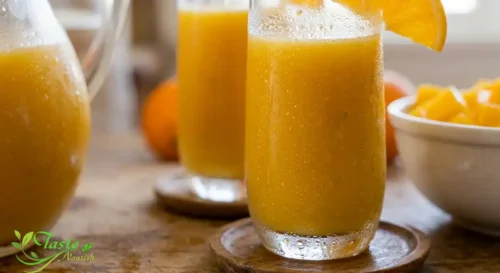
Serve the juice as cold as possible in chilled glasses. It needs no ice if the fruit was cold. A single orange wedge on the rim is all it needs, and it pairs well with breakfast foods such as yogurt, oatmeal, or eggs.
Orange and Mango Juice Recipe FAQs
Do I have to strain orange and mango juice?
No. Unstrained juice is thicker and keeps more fiber. Strain only if the mango is stringy or you want a smoother texture.
Can I use store-bought orange juice?
Yes. Use 1½ cups of not-from-concentrate juice. Because it is usually pasteurized, it is also a safer base for higher-risk drinkers, though the mango is still fresh and should be washed and handled carefully.
Is this juice high in sugar?
It contains about 25 g of naturally occurring sugar per cup and no added sugar. Juice has less fiber than whole fruit, so enjoy it in moderation alongside whole fruits.
Can I make a bigger batch for a party?
Yes. Double or triple the ingredients, blend in batches so the blender is never more than two-thirds full, and keep the pitcher refrigerated or on ice until serving.
Why does the juice separate in the fridge?
Mango pulp is denser than orange juice and settles over time. It is a normal texture change, and a quick stir or shake fixes it.
Dice the mango and juice the oranges, straining out seeds.
Pour the orange juice and water into a blender, then add the mango.
Blend on low for 10 seconds, then high for 30 to 45 seconds until smooth.
Strain if desired, rest for 2 minutes, and serve cold.
Notes
Refrigerate at 40°F or below and finish within 24 hours.
Stir before serving, as the juice separates on standing.
Conclusion
This orange and mango juice works because the orange’s acidity balances the mango’s sweetness, so the fruit does all the work. For the best result, use ripe, well-chilled fruit and serve the juice within a day.
**Hanan Abo Samra** shares practical cooking insights, delicious recipes, and evidence-based nutrition information. Drawing on more than 20 years of hands-on cooking experience, she creates helpful food content that combines everyday cooking knowledge with information from reliable scientific sources. Her goal is to help readers better understand the foods they eat, explore their nutritional benefits, and prepare delicious meals with confidence.