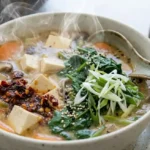
When you want something warm and soothing, this ginger chicken soup recipe is a good place to start. Fresh ginger goes into the pot twice, once for mellow depth and once for a bright finish. A partly blended base gives the broth a silky body, and tender shredded chicken thighs fill out every bowl. Here is how to make it in one pot, with tips for storing, freezing, and fixing common problems.
When serving this soup, I like to offer freshly grated ginger and lemon wedges on the side so everyone can adjust the flavor to their taste. Ginger adds a warm, slightly spicy note, while lemon brings a fresh, tangy contrast. After chilling overnight, the ginger flavor may become more noticeable as the ingredients blend, so it’s worth tasting the soup again before serving. For busy weeknights, preparing the soup base ahead of time can make serving easier, especially if the half-and-half is added just before serving.
Quick Answer: How to Make This Ginger Chicken Soup Recipe
Sauté onion, carrot, celery, garlic, and fresh ginger. Simmer them with chicken broth, diced potato, and boneless chicken thighs until the chicken reaches 165°F. Shred the chicken, blend about 2 to 3 cups of the vegetables and broth until smooth, then stir everything back together with half-and-half. Finish with more fresh ginger and a little lemon juice. It makes about 8 cups, enough for 6 servings, with about 15 minutes of prep and 40 minutes of cooking.
Key Takeaways
This ginger chicken soup recipe adds ginger twice: some early for mellow warmth, and some at the end for a fresh, bright bite.
Blending only part of the soup, including the potato, makes it creamy while keeping tender chunks of vegetables and chicken.
Boneless chicken thighs stay juicy in the simmering broth. Check that they reach 165°F, then shred them.
Add the half-and-half and lemon juice off a hard boil to keep the soup smooth.
For the best texture, freeze the soup base without the half-and-half and add it when you reheat.
Why This Ginger Chicken Soup Recipe Works
Ginger behaves differently depending on when it goes into the pot. Cooked in oil with the aromatics, it turns mellow and deeply savory. Added at the end, it tastes sharper and fresher. Using both gives the soup warmth and brightness, and nothing in the bowl tastes flat or harsh.
Creaminess comes from the soup itself. A medium Yukon Gold potato softens in the broth, and when a portion of the soup is blended, its starch gives the broth a silky body. The half-and-half then rounds it out, so you need far less dairy than in a traditional cream soup.
The word “healing” here describes how the soup feels. Warm broth with ginger can be soothing when you are under the weather, but this is comfort food, not a medical treatment.
Ingredients for This Ginger Chicken Soup Recipe
2 tablespoons olive oil
1 medium yellow onion, diced (about 1 cup)
2 medium carrots, sliced ¼ inch thick
2 celery ribs, sliced ¼ inch thick
5 garlic cloves, minced
3 tablespoons finely grated fresh ginger (from a 3- to 4-inch piece), divided
1 teaspoon ground turmeric (optional)
¼ teaspoon crushed red pepper flakes (optional)
1 teaspoon kosher salt, divided, plus more to taste
½ teaspoon black pepper
1 medium Yukon Gold potato (about 8 ounces), peeled and cut into ½-inch cubes
Chopped fresh cilantro or parsley, for garnish (optional)
Ingredient Notes
Fresh ginger: Choose a firm knob with smooth, tight skin. Wrinkled, dry ginger is more fibrous and less fragrant. Ground ginger is not a true substitute here (see the FAQ).
Chicken thighs: Thighs have more fat and connective tissue than breasts, so they stay tender in a simmering soup and are hard to overcook. Breasts work too, with a shorter cooking time (see Variations).
Low-sodium broth: Low-sodium broth lets you control the salt. The soup reduces slightly as it simmers, so season in two stages instead of all at the start.
Yukon Gold potato: Its creamy, medium-starch flesh blends smoothly. Waxy red potatoes blend less creamily, and russets can turn gluey if over-blended.
Tip: Keep a knob of ginger in the freezer and grate it frozen. It turns into a fluffy pulp with no stringy fibers, and you can scrape the peel off with the edge of a spoon first.
Ginger Chicken Soup Recipe Instructions
1. Prep everything first. Dice the onion, slice the carrots and celery, mince the garlic, grate the ginger, and cube the potato. Measure 2 tablespoons of the grated ginger into one pile for cooking and set the remaining 1 tablespoon aside, covered, for the end.
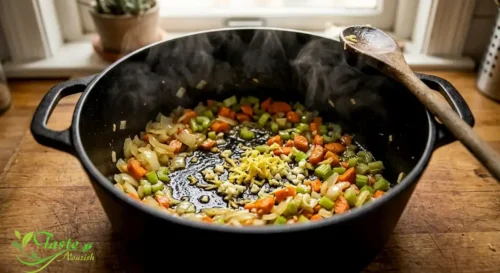
2. Soften the vegetables. Heat the olive oil in a large Dutch oven or soup pot over medium heat. Add the onion, carrots, celery, and ½ teaspoon of the salt. Cook, stirring occasionally, for 6 to 7 minutes, until the onion is translucent and the carrots are slightly softened. Keep the heat moderate so the vegetables soften without browning, which would give the soup a darker, sweeter flavor than you want here.
3. Bloom the aromatics. Stir in the garlic, the 2 tablespoons of ginger, the turmeric, the red pepper flakes if using, and the black pepper. Cook for about 1 minute, stirring constantly, until the mixture smells strongly of ginger and garlic. Do not let the garlic brown.
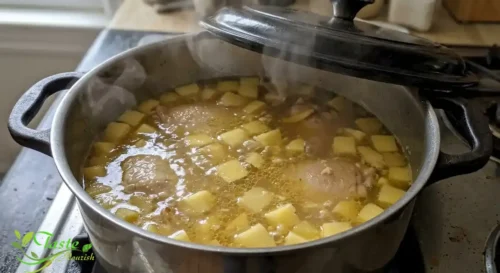
4. Add the broth, potato, and chicken. Pour in the broth and scrape up any bits from the bottom of the pot. Add the potato and the chicken thighs. Bring to a boil over medium-high heat, then reduce the heat to low and simmer gently with the lid slightly ajar.
5. Simmer until tender. Cook for about 20 minutes, until the potato is fork-tender and a thermometer inserted into the thickest part of a thigh reads 165°F. If you see foam or fat on the surface, skim it off with a spoon.
6. Shred the chicken. Lift the chicken onto a plate with tongs or a slotted spoon. Let it cool for a few minutes, then shred it with two forks into bite-size pieces. Discard any bits of fat or gristle.
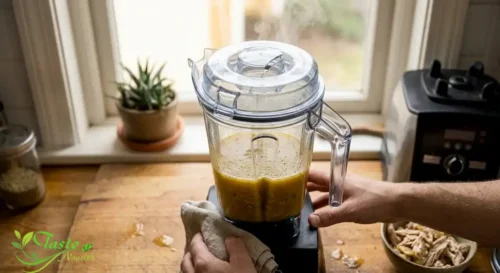
7. Blend part of the soup. Take the pot off the heat. Using a ladle, transfer 2 to 3 cups of broth and vegetables to a blender, including plenty of the potato and carrot. Fill the blender no more than half full, remove the center cap from the lid, and cover the opening with a folded kitchen towel so steam can escape. Start on low speed and increase to high, blending for 20 to 30 seconds, just until smooth. Work in batches if needed. You can also use an immersion blender and pulse it in the pot a few times, leaving visible chunks.
8. Bring it together. Stir the blended soup back into the pot. Add the shredded chicken and the half-and-half. Warm over low heat for 3 to 5 minutes, stirring occasionally, until steaming hot. Keep it at a gentle simmer at most, never a rolling boil.
9. Finish and season. Turn off the heat. Stir in the remaining 1 tablespoon of fresh ginger, the lemon juice, and the remaining ½ teaspoon of salt. Taste and adjust, adding salt a pinch at a time, or more lemon juice if the flavor needs lifting.
How to Control the Consistency
The finished soup should be pourable and lightly creamy, with the texture of a thin chowder: a silky broth with soft vegetables and shredded chicken. If you want it thicker, blend another cup of the soup. If you want it thinner, stir in warm broth a ¼ cup at a time. There is no need for flour or cornstarch, because the potato does that job.
How to Serve
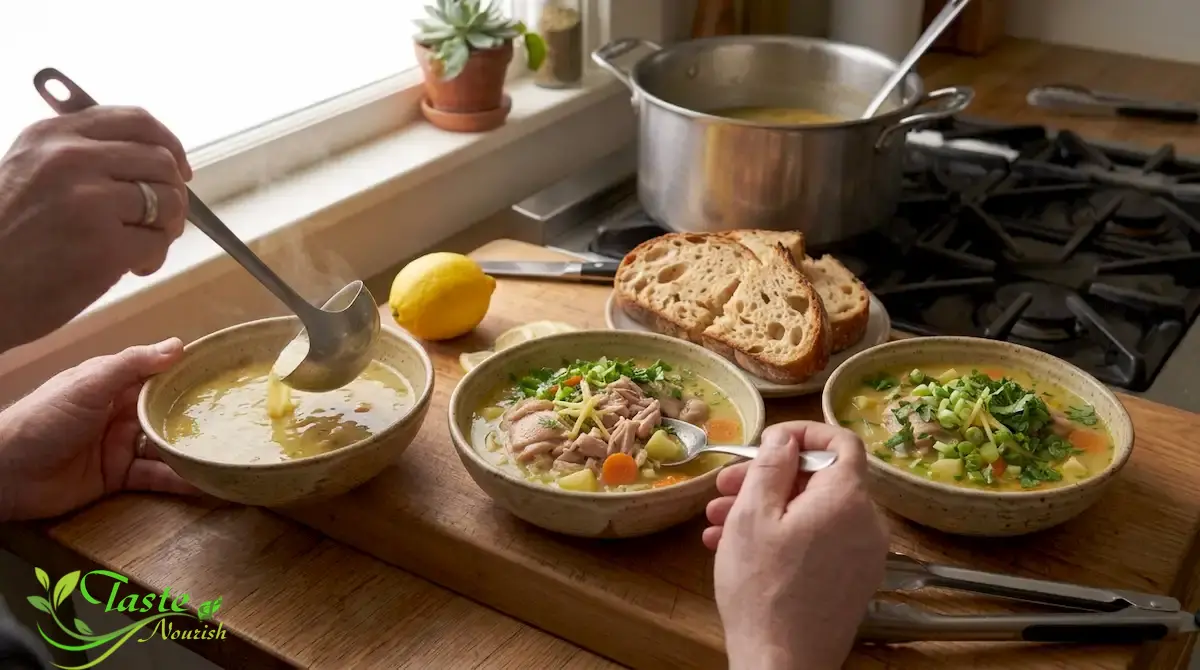
Ladle the soup into warm bowls and top with sliced scallions and a pinch of cilantro or parsley. A squeeze of lemon at the table suits anyone who likes a sharper finish. Crusty bread, buttered toast, or a simple green salad make it a full meal. For a heartier bowl, spoon in a scoop of cooked rice (see Variations).
Ginger Chicken Soup Nutrition Information
The values below are for one serving, about 1⅓ cups, from a batch that makes 6 servings. They are estimates based on typical USDA FoodData Central values for the ingredients as listed.
Nutrient
Per Serving (Approx.)
Calories
270
Protein
25 g
Carbohydrates
14 g
Total fat
12 g
Saturated fat
3 g
Fiber
2 g
Sugar (naturally occurring)
4 g
Sodium
600 mg
The estimate includes the optional turmeric and red pepper flakes, the scallions, and 1 teaspoon of kosher salt. It leaves out the optional cilantro or parsley and any extra salt you add to taste.
Sodium varies the most. The estimate assumes a low-sodium broth and Morton kosher salt, which lists 480 mg of sodium per ¼ teaspoon. Diamond Crystal kosher salt lists 280 mg per ¼ teaspoon, which would lower each serving by roughly 130 mg. Calories and fat also shift if you swap the half-and-half for coconut milk or use chicken breast instead of thighs.
These numbers are for general reference only and are not medical or dietary advice. If you follow a specific eating plan, calculate the values with the exact brands you use.
Make-Ahead, Storage, and Reheating
This soup is a good candidate for making ahead. For the best flavor and texture, prepare it through the blending step, cool it, and refrigerate. Add the half-and-half, the finishing ginger, and the lemon juice when you reheat it, so the dairy stays smooth and the ginger stays bright.
Per USDA food safety guidance on leftovers, refrigerate the soup within 2 hours of cooking and divide large amounts into shallow containers so it cools quickly. Cover the containers and use the refrigerated soup within 3 to 4 days.
To reheat, warm the soup in a saucepan over medium-low heat, stirring often, until it reaches 165°F on a food thermometer. The USDA also recommends covering leftovers as they reheat. The potato will have thickened the soup in the refrigerator, so add a splash of broth or water as it warms.
Can You Freeze Ginger Chicken Soup?
Yes, but it freezes best without the half-and-half. Dairy can turn grainy when frozen and thawed, and the cubed potatoes may soften and crumble a little. The blended portion holds up better than the chunks.
Cool the soup completely, then freeze it in airtight containers, leaving about an inch of room at the top for expansion. USDA leftovers guidance says frozen leftovers can be kept for three to four months, but aim for the earlier end of that range for the best texture. Thaw the soup overnight in the refrigerator, then reheat it to 165°F. Stir in the half-and-half, fresh ginger, and lemon juice at the end. If the texture looks uneven after thawing, a few seconds with an immersion blender will smooth it out.
Troubleshooting
The soup tastes bland. Add salt in small pinches, then a little more lemon juice. If it still seems flat, stir in a bit more freshly grated ginger and let it sit for a minute before tasting.
The ginger is too strong. Add a splash more half-and-half and a little more broth to dilute it. Next time, reduce the finishing ginger to 2 teaspoons.
The soup is too thin. Blend another cup or two of the soup and stir it back in. Simmering uncovered for 5 minutes will also concentrate it slightly.
The soup is too thick. This is common with leftovers. Whisk in warm broth a few tablespoons at a time until it loosens.
The soup looks grainy or curdled. This usually happens when the soup boils after the half-and-half goes in, or when the lemon juice is added to very hot soup. Lower the heat, blend briefly with an immersion blender to smooth it, and add lemon juice only after the pot is off the heat.
The potato is gluey. The blender ran too long or the potato was a high-starch variety. Blend for only 20 to 30 seconds and keep the blended portion small.
The chicken is dry. It likely cooked too long, which is most common with breasts. Pull the chicken as soon as it reaches 165°F.
Variations
Dairy-free: Replace the half-and-half with ½ cup of canned full-fat coconut milk. The soup will taste slightly sweeter and more tropical, and the ginger pairs well with that.
Chicken breast: Use 1½ pounds of boneless, skinless breasts. Check them after 12 to 15 minutes of simmering and remove them as soon as they hit 165°F. Return them to the pot only after shredding.
Cooked chicken (faster): For an easy ginger chicken soup recipe on a busy night, simmer the vegetables and potato in the broth for about 15 minutes, until tender. Blend, then stir in about 3 cups of shredded cooked chicken, such as leftover roast or rotisserie chicken, and heat through. This method makes a lighter-tasting broth, so season well.
With rice or noodles: Cook rice or noodles separately and add a scoop to each bowl. Cooking them in the pot soaks up the broth and makes leftovers too thick.
Spicy: Increase the red pepper flakes to ½ teaspoon, or add a sliced fresh chili with the garlic.
With greens: Stir in a few handfuls of baby spinach after you turn off the heat. The residual heat wilts it in about a minute.
Food Safety Notes
Raw chicken can carry bacteria, so wash your hands, cutting board, and knife after handling it. The USDA lists 165°F as the safe minimum internal temperature for all poultry, and leftovers should be reheated to the same temperature. Insert a food thermometer into the thickest part of a thigh, away from any bone, rather than judging by color or cooking time alone.
Chopped fresh cilantro or parsley, for garnish (optional)
Directions
Dice the onion, slice the carrots and celery, mince the garlic, grate the ginger, and cube the potato. Measure 2 tablespoons of the grated ginger into one pile for cooking and set the remaining 1 tablespoon aside, covered, for the end.
Heat the olive oil in a large Dutch oven or soup pot over medium heat. Add the onion, carrots, celery, and ½ teaspoon of the salt. Cook, stirring occasionally, for 6 to 7 minutes, until the onion is translucent and the carrots are slightly softened.
Stir in the garlic, the 2 tablespoons of ginger, the turmeric, the red pepper flakes if using, and the black pepper. Cook for about 1 minute, stirring constantly, until the mixture smells strongly of ginger and garlic. Do not let the garlic brown.
Pour in the broth and scrape up any bits from the bottom of the pot. Add the potato and the chicken thighs. Bring to a boil over medium-high heat, then reduce the heat to low and simmer gently with the lid slightly ajar.
Cook for about 20 minutes, until the potato is fork-tender and a thermometer inserted into the thickest part of a thigh reads 165°F. Skim off any foam or fat from the surface.
Lift the chicken onto a plate. Let it cool for a few minutes, then shred it with two forks into bite-size pieces. Discard any bits of fat or gristle.
Take the pot off the heat. Ladle 2 to 3 cups of broth and vegetables, including plenty of the potato and carrot, into a blender, filling it no more than half full. Remove the center cap from the lid and cover the opening with a folded kitchen towel so steam can escape. Start on low speed and increase to high, blending for 20 to 30 seconds, just until smooth. Work in batches if needed, or use an immersion blender and pulse it in the pot a few times.
Stir the blended soup back into the pot. Add the shredded chicken and the half-and-half. Warm over low heat for 3 to 5 minutes, stirring occasionally, until steaming hot. Keep it at a gentle simmer at most, never a rolling boil.
Turn off the heat. Stir in the remaining 1 tablespoon of fresh ginger, the lemon juice, and the remaining ½ teaspoon of salt. Taste and adjust, adding salt a pinch at a time, or more lemon juice if the flavor needs lifting.
Ginger Chicken Soup Recipe FAQs
Can I use ground ginger instead of fresh?
You can, but the soup will taste warmer and duller. Use about 1 teaspoon of ground ginger in place of the 2 tablespoons of cooking ginger, and skip the finishing tablespoon. Add a little extra lemon juice at the end to add some brightness.
Can I make the soup less spicy or more gingery?
Ginger’s heat comes mostly from how much you use, and grating releases more of it than slicing. For a milder soup, reduce the total to 2 tablespoons and keep the finishing ginger small. For a stronger one, increase the finishing ginger to 2 tablespoons.
Do I have to blend the soup?
No. Without blending, you will get a lighter, brothy soup with the half-and-half stirred in. It will still taste good, but it will not have the same silky body.
Can I use bone-in chicken?
Yes. Use about 2 pounds of bone-in, skinless thighs and simmer for 30 to 35 minutes, until the chicken reaches 165°F and pulls easily from the bone. Remove the bones before blending.
What if I leave out the half-and-half?
The blended potato and vegetables still give the soup a creamy texture, though it will be a little less rich. Add a splash of extra broth if it is thick, and taste for salt.
Can I double the recipe?
Yes, in a pot large enough to hold it, with the broth doubled as well. Start with about 1½ times the ginger and add more to taste, since ginger intensity does not always scale evenly. The simmering time stays about the same.
Conclusion
This ginger chicken soup recipe is easy to make, and it rewards a few simple techniques: ginger in two stages, a partially blended base, and gentle heat once the cream goes in. Keep a thermometer handy for the chicken, and the soup is ready to serve at the table or save for a busy week.
**Hanan Abo Samra** shares practical cooking insights, delicious recipes, and evidence-based nutrition information. Drawing on more than 20 years of hands-on cooking experience, she creates helpful food content that combines everyday cooking knowledge with information from reliable scientific sources. Her goal is to help readers better understand the foods they eat, explore their nutritional benefits, and prepare delicious meals with confidence.