
Chocolate Overnight Oats Recipe (+ Protein-Packed Variation)
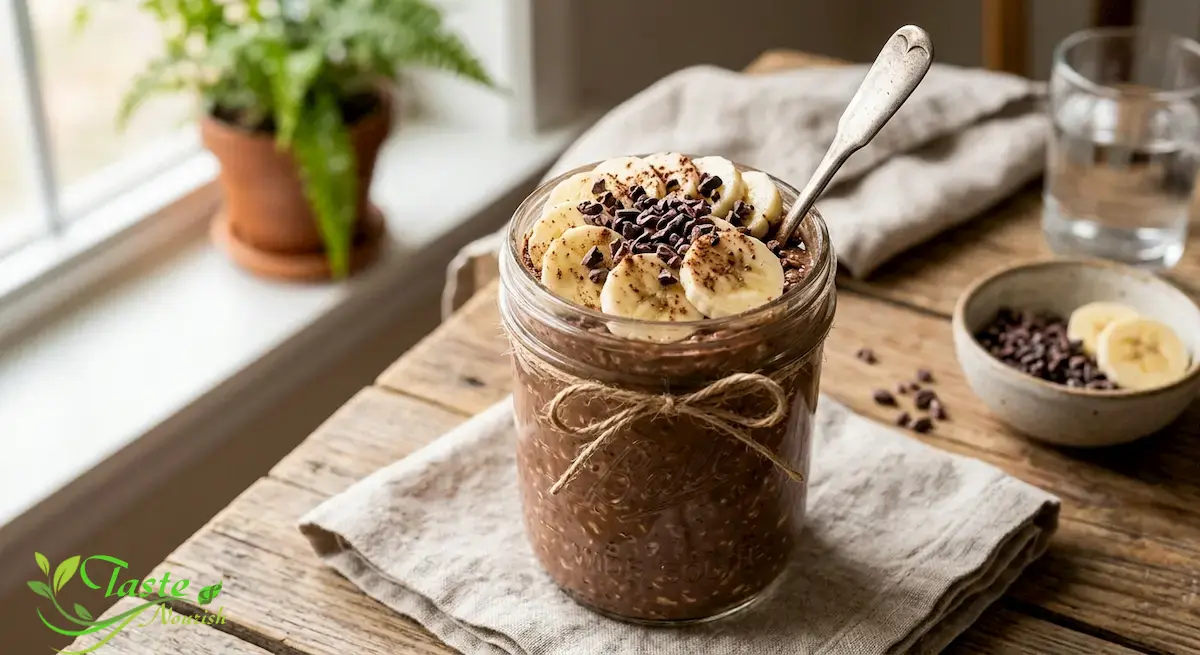
Some breakfasts feel like a chore. This one doesn’t. Chocolate overnight oats turn a humble bowl of oatmeal into something you’ll genuinely look forward to, and the best part is you make it the night before, so mornings ask nothing of you but a spoon.
If you’ve only ever had oatmeal cooked on a stovetop, this version might surprise you. There’s no heat involved. The oats soften in the fridge overnight, soaking up milk, cocoa, and a touch of sweetness until they turn creamy, almost pudding-like. It tastes indulgent. It isn’t, really — and that gap between how it feels and what it delivers is exactly why so many people have made it a weekly habit.
What Are Chocolate Overnight Oats, Exactly?
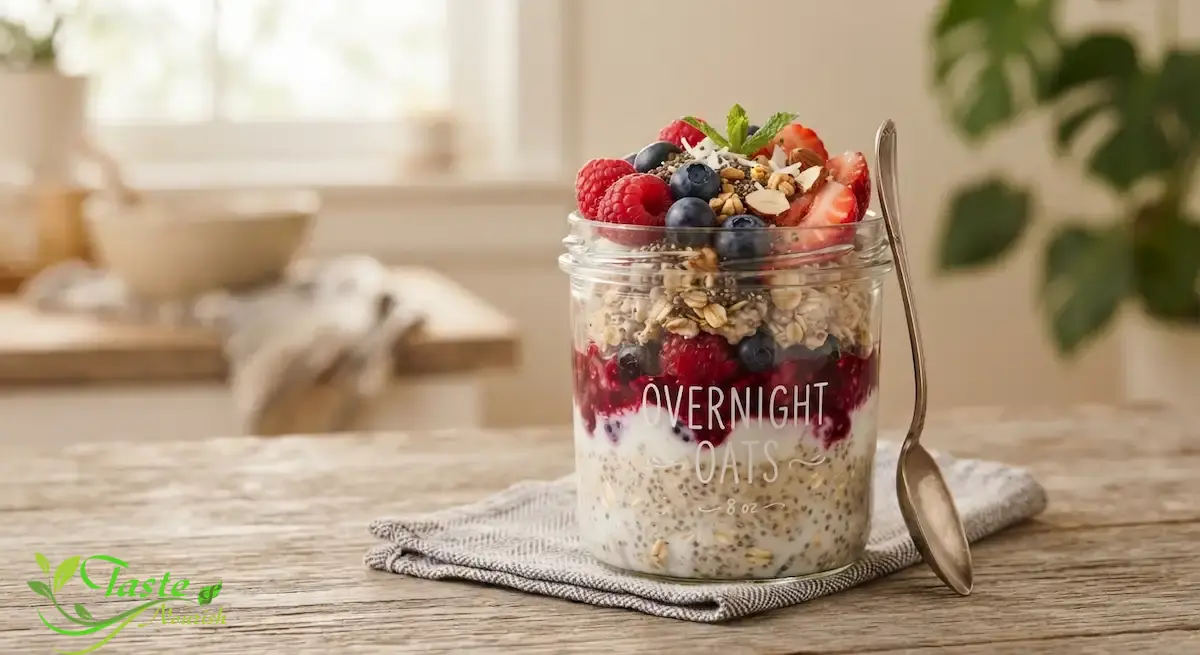
Overnight oats are raw rolled oats soaked in liquid — usually milk or a dairy-free alternative — for several hours, typically in the refrigerator. The soaking softens the oats without any cooking, similar to how muesli works. Add cocoa powder, a little sweetener, and a splash of vanilla, and you’ve got the chocolate version.
The texture lands somewhere between rice pudding and a thick smoothie. Some people love that dense, spoonable consistency right out of the jar. Others thin it out with extra milk in the morning. Either way, it’s a make-ahead answer to the eternal question of what to eat before you’ve had coffee.
This isn’t a new idea dressed up for social media, either. Soaked-grain breakfasts have existed in various forms for generations, from Swiss bircher muesli to simple porridge left to sit overnight in colder climates where refrigeration wasn’t guaranteed. The chocolate spin is newer, but the underlying method is old and reliable.
Why This Recipe Works (and Why It’s Trending)
Convenience is the obvious selling point. You spend five minutes at night, and breakfast is done before your alarm even goes off. But there’s more going on here than time-saving.
Cold-soaking oats changes their texture in a way that some people find easier to digest than a hot bowl of oatmeal. The oats also pick up flavor differently when they sit rather than cook, so the cocoa has time to fully distribute instead of clumping on the surface. That’s part of why a well-made jar tastes richer than you’d expect from just a few tablespoons of powder.
There’s also the portability factor. A mason jar with a lid travels well in a bag or car cupholder, which matters for anyone commuting or juggling a packed morning. And because the base recipe is so adaptable, it rarely gets boring — swap the mix-ins and you’ve essentially got a new breakfast without changing your routine.
A Quick Nutrition Snapshot
A standard serving of rolled oats provides a meaningful dose of fiber along with a modest amount of plant protein, and that base carries over into the chocolate version. According to USDA FoodData Central, oats provide roughly 379 calories, 13.5 grams of protein, and 68.7 grams of carbohydrate per 100 grams, along with a strong contribution of manganese and other micronutrients.
Cocoa powder adds very few calories but contributes flavanols, a type of plant compound that’s been studied for its role in cardiovascular health — more on that later. Combined with milk or yogurt, a single jar of chocolate overnight oats typically lands in the 300–400 calorie range for a standard serving, with fiber often reaching 8–10 grams depending on how much chia or flax gets added.
Key takeaway: The chocolate flavor is doing a lot of the “treat” work here, while the oats and dairy (or dairy alternative) are doing the nutritional heavy lifting. That combination is part of why this breakfast feels satisfying without needing a large portion.
The Classic Chocolate Overnight Oats Recipe
This base recipe is intentionally simple. Once you’ve made it a couple of times, you’ll have the ratios memorized and can start improvising.
Recipe at a Glance
| Detail | Info |
|---|---|
| Prep time | 5 minutes |
| Chill time | 4 hours minimum (overnight recommended) |
| Total time | 8 hours 5 minutes |
| Servings | 1 (easily doubled or tripled) |
| Cuisine | American, make-ahead breakfast |
| Diet | Vegetarian; easily made vegan or gluten-free |
Ingredients
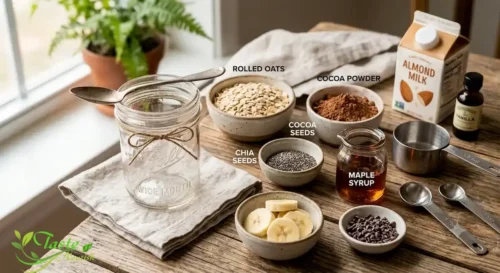
- 1/2 cup old-fashioned rolled oats
- 2 tablespoons unsweetened cocoa powder
- 3/4 cup milk (dairy or plant-based)
- 1/4 cup plain Greek yogurt
- 1 tablespoon chia seeds
- 1–2 tablespoons maple syrup or honey, to taste
- 1/2 teaspoon vanilla extract
- Small pinch of salt
- Optional topping: mini chocolate chips, cacao nibs, or sliced banana
Equipment
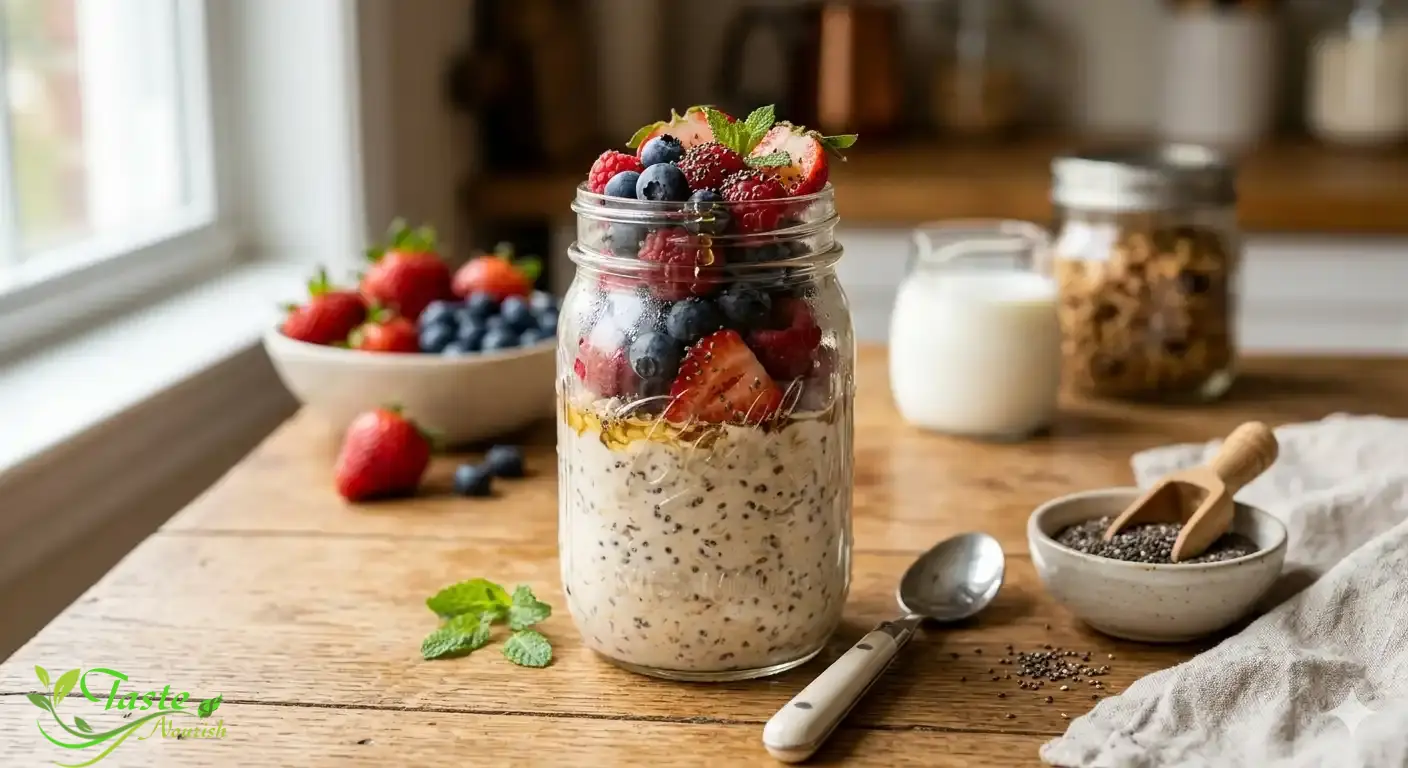
You don’t need anything fancy for this one. A pint-sized mason jar or any small container with a tight-fitting lid works well, along with standard measuring cups and spoons and a spoon for stirring. If you’re making a few jars at once for the week, a small funnel makes filling the jars considerably less messy.
Step-by-Step Instructions
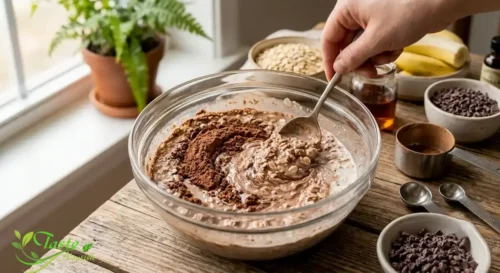
- Add the rolled oats, cocoa powder, chia seeds, and salt to your jar first, and give them a quick stir so the cocoa doesn’t clump later.
- Pour in the milk, then add the Greek yogurt, maple syrup, and vanilla extract.
- Stir thoroughly, scraping the bottom of the jar, until there’s no dry cocoa powder left and the mixture looks uniformly chocolate-colored.
- Seal the jar and refrigerate for at least 4 hours, though overnight (8 hours or more) gives the best texture.
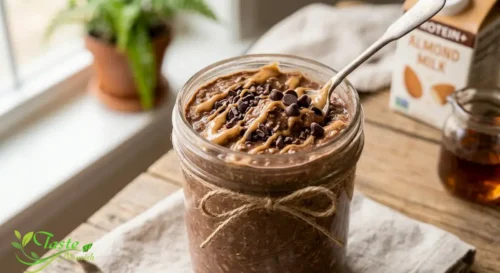
- In the morning, stir again — the oats settle and the top layer can look drier than the rest — then add your toppings and eat straight from the jar or transfer to a bowl.
Pro Tips for Better Texture
Pro tip: Use old-fashioned rolled oats, not instant oats. Instant oats are cut thinner and pre-steamed, so they turn gummy and lose structure after a long soak. Old-fashioned rolled oats hold a pleasant chew even after eight-plus hours in the fridge.
Dutch-process cocoa powder, which has been treated to reduce acidity, tends to taste smoother and less bitter than natural cocoa powder in a cold application like this. If your jar tastes a little flat or chalky, it’s often a cocoa powder issue rather than a technique issue, so it’s worth experimenting with brands. Letting the sweetener sit for a few minutes before tasting also helps, since flavors mellow and blend more as the mixture chills.
Chocolate Protein Overnight Oats
Turning the classic version into chocolate protein overnight oats is mostly about the add-ins rather than a different technique. The base ratio of oats to liquid stays about the same; you’re just introducing a concentrated protein source to push the total higher.
A scoop of chocolate or vanilla protein powder is the most direct route, since it dissolves into the liquid and reinforces the chocolate flavor at the same time. Cottage cheese, blended smooth or left slightly chunky depending on preference, is another popular option that adds protein along with a pleasant tang.
Silken tofu, blended until completely smooth, works for a dairy-free version without altering the flavor much, and extra Greek yogurt is the simplest tweak if you’d rather not introduce a new ingredient at all.
Comparing Protein Add-Ins
| Add-in | Approx. protein added | Flavor impact | Texture impact |
|---|---|---|---|
| Chocolate protein powder (1 scoop) | 20–25 g | Reinforces chocolate flavor | Can thicken mixture; add extra liquid |
| Extra Greek yogurt (1/4 cup) | 6–7 g | Mild tang | Creamier, denser |
| Cottage cheese (1/4 cup) | 7 g | Slightly savory unless blended | Can be chunky unless blended smooth |
| Silken tofu (1/4 cup, blended) | 4–5 g | Neutral | Very smooth, custard-like |
| Hemp seeds (2 tbsp) | 6 g | Nutty, subtle | Adds slight graininess |
For most people chasing a specific protein target, a scoop of protein powder plus the Greek yogurt already in the base recipe is the easiest way to land somewhere around 25–30 grams per jar without needing to blend anything or change the method.
That range is worth knowing because updated federal dietary guidance now points toward higher daily protein intakes than in years past — Stanford Medicine reports that current guidelines suggest 1.2 to 1.6 grams of protein per kilogram of body weight, up from the longstanding 0.8 gram benchmark — so a protein-boosted jar can meaningfully contribute toward that target at breakfast, when protein intake tends to lag.
Common Mistakes to Avoid
The recipe is forgiving, but a few missteps show up often enough to call out directly. Using instant oats instead of old-fashioned rolled oats is probably the most common one, and it’s the fastest way to end up with a mushy, gluey jar instead of one with texture.
Skimping on liquid is another frequent issue — oats keep absorbing moisture as they sit, so a ratio that looks right when you first mix it can turn thick and dry by morning if you don’t use enough milk.
Skipping the final stir before eating is a small thing that makes a noticeable difference, since the ingredients can settle unevenly overnight and the first bite might taste more like plain oats than chocolate. Using natural (non-Dutch-process) cocoa powder without enough sweetener is another common miss, since natural cocoa is noticeably more bitter and acidic on its own.
And storing the jar without a proper seal lets it pick up odors from other food in the fridge, which is an easy problem to avoid with a simple airtight lid.
Storage, Make-Ahead & Reheating
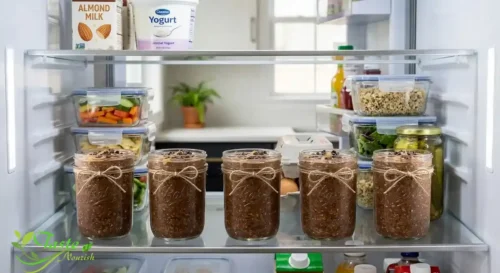
Chocolate overnight oats are built for batch prep. Making four or five jars on a Sunday for the week ahead is a common approach, and it holds up well as long as storage guidelines are followed. According to the USDA , leftovers should be kept covered in airtight packaging and refrigerated for rapid cooling, and can generally be kept in the refrigerator for 3 to 4 days.
That guidance applies here too, so it’s best to plan on eating a batch within that window rather than stretching it further. If you want to prep further ahead than that, portioning dry ingredients into jars and adding the wet ingredients closer to eating time is a reasonable workaround.
Reheating is optional, since most people eat this cold straight from the fridge. If you’d rather have it warm, a quick 30–45 second stint in the microwave works fine — just stir in a splash of extra milk first, since the oats thicken further as they chill and can turn overly stiff once heated without added liquid.
Smart Substitutions
Every part of this recipe has a reasonable swap if you’re missing an ingredient or working around a dietary need. The table below covers the most common substitutions people ask about.
| Original | Substitute | Notes |
|---|---|---|
| Rolled oats | Certified gluten-free rolled oats | Necessary for celiac disease due to cross-contamination risk |
| Dairy milk | Almond, oat, soy, or coconut milk | Oat milk gives the creamiest result |
| Greek yogurt | Coconut yogurt or extra milk | For a dairy-free or thinner version |
| Maple syrup | Honey, agave, or mashed dates | Adjust to taste; dates add fiber too |
| Cocoa powder | Cacao powder | Cacao is less processed and slightly more bitter |
| Chia seeds | Ground flaxseed | Similar thickening effect, milder taste |
Flavor Variations Worth Trying
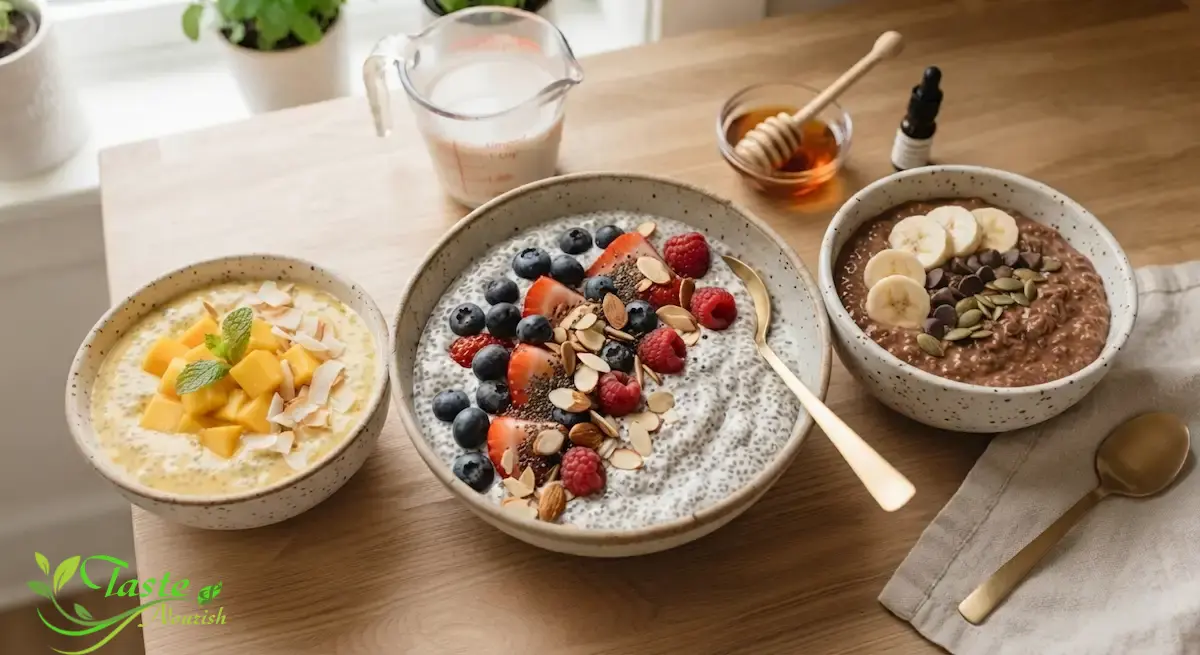
Once the base ratio feels familiar, it’s easy to riff on it without any real risk of failure:
- Peanut Butter Twist: Stir 1 tablespoon of peanut butter into the mixture before chilling for a rich chocolate–peanut butter flavor.
- Banana Boost: Mix in half a mashed banana to add natural sweetness and create an extra-creamy texture.
- Mocha Upgrade: Blend a pinch of instant coffee or espresso powder with the cocoa powder for a subtle mocha flavor, especially delicious with oat milk.
- Chocolate-Cherry Combination: Fold in fresh or frozen cherries before serving for a classic chocolate-covered cherry taste.
- German Chocolate Inspiration: Add shredded coconut and chopped pecans for a flavor reminiscent of German chocolate cake.
- Mint Chocolate Variation: Replace the vanilla extract with a few drops of peppermint extract to create a refreshing mint-chocolate version perfect for the holiday season.
The Science Behind the Ingredients
It’s worth understanding what the two headline ingredients — oats and cocoa — actually contribute, since the health interest around this recipe isn’t just marketing.
Oats, Beta-Glucan, and Cholesterol
Oats contain a soluble fiber called beta-glucan, and it’s one of the more well-studied fibers when it comes to cardiovascular health. A meta-analysis of randomized controlled trials published via the National Library of Medicine found that daily intake of at least 3 grams of oat beta-glucan may reduce plasma total and LDL cholesterol by roughly 5 to 10 percent in both normal and elevated-cholesterol subjects. That’s a meaningful effect for a fiber that occurs naturally in a food most people already eat.
A half-cup serving of rolled oats, the amount used in this recipe, doesn’t hit that 3-gram threshold on its own, so this jar shouldn’t be framed as a cholesterol treatment. It’s more accurate to say that regular oat consumption, as part of an overall diet pattern, is associated with the kind of modest improvements in LDL cholesterol that researchers have documented across dozens of trials.
Cocoa Flavanols and Heart Health
Cocoa’s flavanol content has drawn a similar level of research interest. A systematic review and meta-analysis of randomized controlled trials noted that chocolate, cocoa, or cocoa flavanols may lower blood pressure and improve certain cardiometabolic biomarkers, based on evidence gathered across multiple trials.
Separately, a large-scale trial known as COSMOS, which tested a concentrated cocoa extract supplement in older adults, did not find a significant reduction in total cardiovascular events but did find a 27% reduction in cardiovascular death among participants.
It’s an important distinction that the COSMOS trial used a concentrated cocoa extract supplement, not a couple of tablespoons of cocoa powder stirred into breakfast oats. The takeaway isn’t that a jar of chocolate oats will meaningfully change your cardiovascular risk.
It’s that cocoa flavanols are a genuinely interesting area of nutrition research, and enjoying cocoa as part of a food you already eat is a reasonable way to include them without needing a supplement.
Who Should Be Cautious With This Recipe
Oats are naturally gluten-free, but cross-contamination during growing and processing is common, so anyone with celiac disease or a serious gluten sensitivity should look specifically for oats labeled certified gluten-free.
People managing blood sugar closely should pay attention to portion size and added sweetener, since maple syrup and honey both contribute to the total carbohydrate load even though the oats themselves digest more slowly than refined grains.
Anyone with a dairy allergy or lactose intolerance can swap in a plant-based milk and yogurt without much trouble, and the recipe holds up well either way. Because this dish contains raw oats that haven’t been cooked, it also shouldn’t sit out at room temperature; the same food safety principles that apply to other perishable, dairy-containing foods apply here, so refrigeration from the start is non-negotiable rather than optional.
Chocolate Overnight Oats FAQs
Q1. Can chocolate overnight oats sit out at room temperature overnight instead of the fridge?
No. Because the recipe contains dairy or dairy alternatives and raw oats soaking in liquid, it needs to stay refrigerated the entire time, following the same cold-storage principles that apply to any perishable food.
Q2. How long do chocolate overnight oats last in the fridge?
Generally 3 to 4 days when kept in a sealed, airtight container, in line with standard USDA guidance for refrigerated leftovers.
Q3. Can I make chocolate overnight oats without yogurt?
Yes. Simply replace the yogurt with an equal amount of additional milk; the texture will be slightly thinner and less tangy, but the recipe still works.
Q4. Are chocolate overnight oats good for weight management?
They can fit well into a weight-conscious eating pattern thanks to their fiber and protein content, which may help with fullness, though portion size and added sweetener still matter and no single food determines weight outcomes on its own.
Q5. Is cocoa powder the same thing as chocolate for this recipe?
Not quite. Unsweetened cocoa powder is essentially pure cocoa solids with the fat removed, while chocolate contains added sugar and fat. Using cocoa powder keeps the recipe lower in added sugar than stirring in melted chocolate would.
Chocolate Overnight Oats
1
servings5
minutes8
hours340
kcalA make-ahead chocolate overnight oats recipe made with rolled oats, cocoa powder, milk, and Greek yogurt, soaked overnight in the fridge for a creamy, no-cook breakfast
Ingredients
1/2 cup old-fashioned rolled oats
2 tablespoons unsweetened cocoa powder
3/4 cup milk (dairy or plant-based)
1/4 cup plain Greek yogurt
1 tablespoon chia seeds
1-2 tablespoons maple syrup or honey, to taste
1/2 teaspoon vanilla extract
1 small pinch salt
Mini chocolate chips or cacao nibs, for topping (optional)
Directions
- Add the rolled oats, cocoa powder, chia seeds, and salt to your jar, and stir briefly so the cocoa doesn't clump later.
- Pour in the milk, then add the Greek yogurt, maple syrup, and vanilla extract.
- Stir thoroughly, scraping the bottom of the jar, until there is no dry cocoa powder left and the mixture looks uniformly chocolate-colored.
- Seal the jar and refrigerate for at least 4 hours, though overnight (8 hours or more) gives the best texture.
- Stir again in the morning, add toppings, and eat straight from the jar or transfer to a bowl.
Conclusion
Chocolate overnight oats sit in that rare category of food that’s genuinely easy, reasonably nutritious, and still feels like a treat. The base recipe takes five minutes, keeps for a few days in the fridge, and flexes easily toward a higher-protein version or a completely different flavor profile depending on what’s in your pantry.
Whether you’re making it because mornings are chaotic, because you like the make-ahead convenience, or simply because cold chocolate oatmeal sounds better than a granola bar, it’s a small habit that tends to stick once you find your preferred ratio.
References
- U.S. Department of Agriculture, Agricultural Research Service. FoodData Central. https://fdc.nal.usda.gov/
- Whitehead, A., et al. “Cholesterol-lowering effects of oat β-glucan: a meta-analysis of randomized controlled trials.” PubMed, National Library of Medicine. https://pubmed.ncbi.nlm.nih.gov/21631511/
- “Cocoa Flavanol Intake and Biomarkers for Cardiometabolic Health: A Systematic Review and Meta-Analysis of Randomized Controlled Trials.” PMC, National Library of Medicine. https://pmc.ncbi.nlm.nih.gov/articles/PMC5086796/
- Stanford Medicine. “How much protein should we really be eating? Five things to know.” https://med.stanford.edu/news/insights/2026/03/how-much-protein.html
- U.S. Department of Agriculture, Food Safety and Inspection Service. “Leftovers and Food Safety.” https://www.fsis.usda.gov/food-safety/safe-food-handling-and-preparation/food-safety-basics/leftovers-and-food-safety