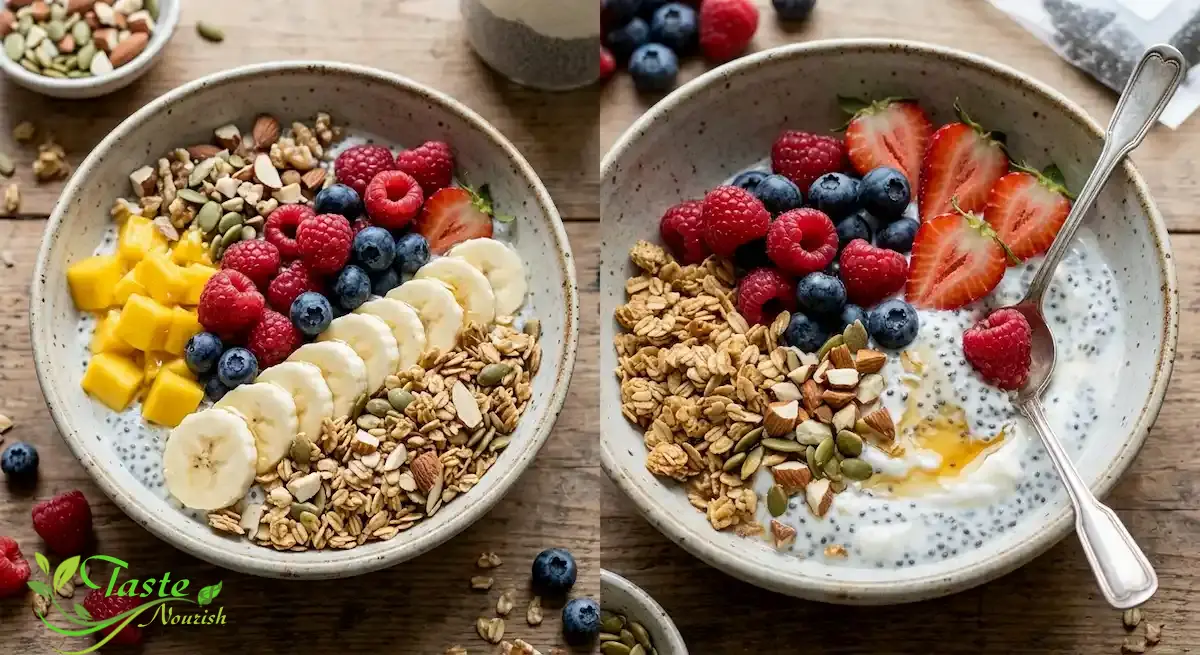
A great chia seed yogurt bowl comes down to timing and technique, not luck. Get the ratio wrong or skip a step, and you end up with clumpy seeds or a gluey mess instead of a creamy, spoonable breakfast. This guide walks through exactly how to hydrate chia seeds properly, fold them into Greek yogurt for the best texture, and build a make-ahead chia seed yogurt parfait for busy mornings — plus how to store it, troubleshoot it, and avoid the mistakes that ruin the texture.
A chia seed yogurt bowl is a no-cook breakfast made by hydrating chia seeds in a little milk, folding that mixture into Greek yogurt, and letting it rest until it thickens into a creamy, pudding-like base. Stir the chia seeds into milk, whisk again after five minutes to prevent clumping, fold in the yogurt and a little sweetener, then let it sit at least 10 to 15 minutes before topping with fruit, granola, and nuts.
Key Takeaways
A chia seed yogurt bowl comes together with just two techniques that matter: stirring the chia seeds twice to prevent clumping, and letting the mixture rest so it actually thickens.
The right ratio — roughly 2 tablespoons of chia seeds to 3/4 cup of Greek yogurt and a few tablespoons of milk — gives a creamy, spoonable texture without turning gluey.
For a make-ahead chia seed yogurt parfait, soak the chia seeds in milk overnight so the pudding is ready to layer with yogurt and fruit in the morning.
Store the plain yogurt-and-chia base in the fridge for a few days, but hold off on adding fresh fruit and granola until just before eating.
Chia seeds should always be given time to fully hydrate in liquid before eating — this affects both texture and safe swallowing.
What Is a Chia Seed Yogurt Bowl?
A chia seed yogurt bowl combines two ingredients that each bring something different to the table. Greek yogurt supplies thickness, tang, and protein right out of the container. Chia seeds, once hydrated, swell into a soft gel that adds body and a subtle, tapioca-like texture without any cooking.
It’s closely related to chia pudding, but it isn’t quite the same thing. Classic chia pudding is just chia seeds soaked in milk until the whole mixture sets into a pudding. A chia seed yogurt bowl instead uses yogurt as the main base, with a smaller amount of hydrated chia stirred in for texture — so it’s ready faster, tastes tangier, and has a lighter, creamier mouthfeel.
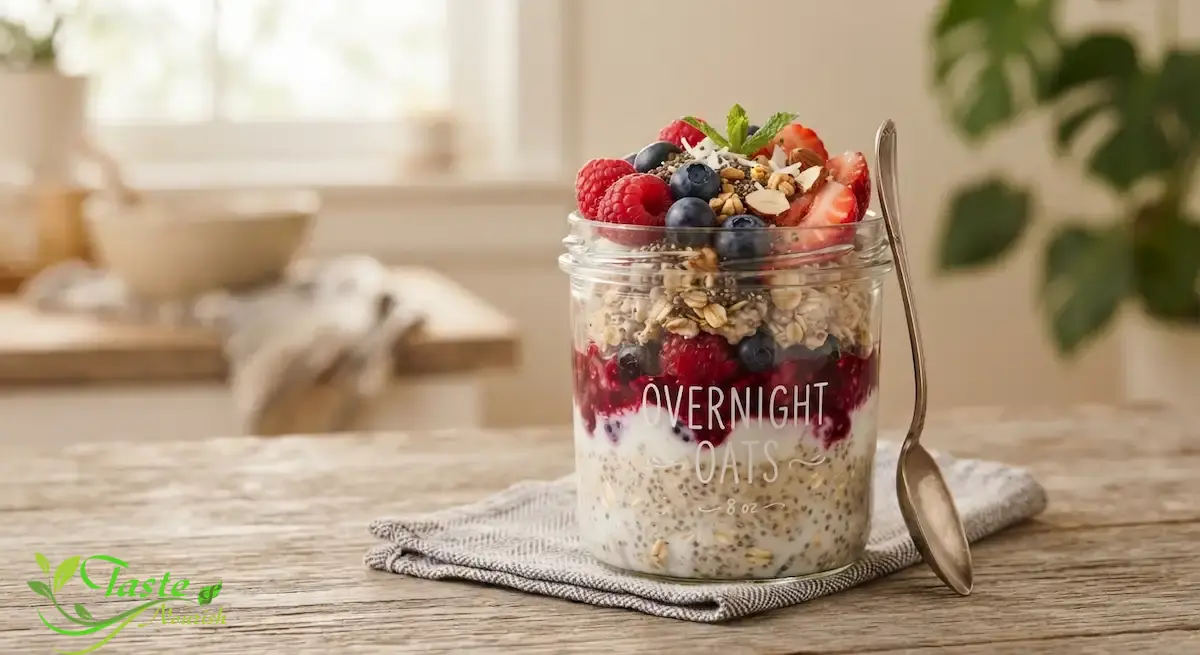
♦ If you want the pudding-style version for meal prep, that’s essentially a chia seed yogurt parfait recipe, where a separately made chia pudding is layered with yogurt instead of blended into it. Both versions are covered below.
Ingredients
For the classic bowl (serves 1, easily doubled or tripled):
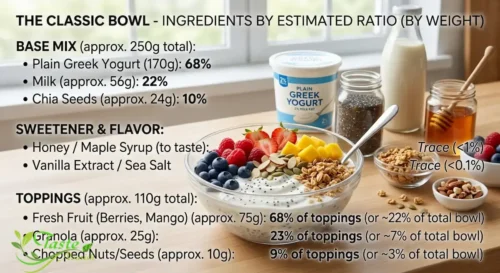
3/4 cup (170g) plain Greek yogurt, whole milk or 2%
2 tablespoons (about 24g) chia seeds, black or white
3 to 4 tablespoons milk (dairy, oat, almond, or coconut), plus more to adjust consistency
1 to 2 teaspoons honey or maple syrup, to taste
1/4 teaspoon pure vanilla extract (optional)
Small pinch of fine sea salt
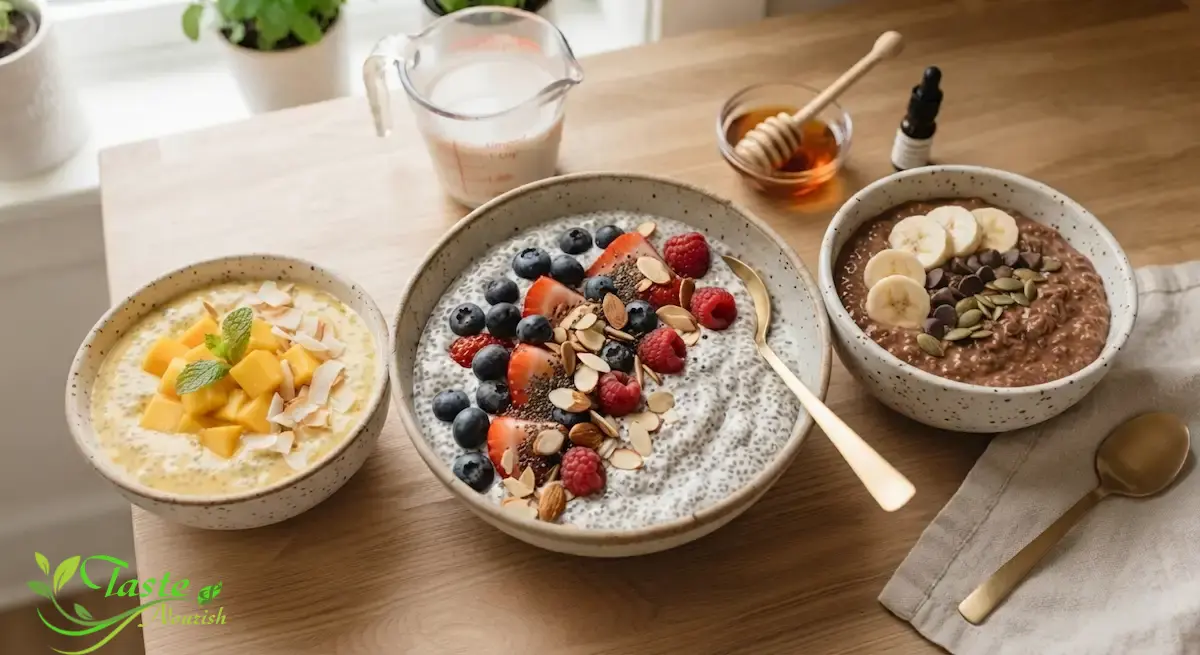
1/2 cup fresh fruit, such as berries, sliced banana, or diced mango
2 to 3 tablespoons granola
1 tablespoon chopped nuts or seeds, such as almonds, walnuts, or pepitas
For the make-ahead chia pudding parfait (makes about 2 servings of pudding base):
1/4 cup (about 48g) chia seeds
1 cup milk (dairy or plant-based)
1 teaspoon honey or maple syrup (optional)
1/4 teaspoon vanilla extract (optional)
Greek yogurt and toppings, for layering
Ingredient Notes for Your Greek Yogurt Chia Bowl
Chia seeds: Chia seeds are coated in a soluble fiber called mucilage, which is what forms the gel when the seeds meet liquid — this is the mechanism that thickens the whole bowl, not the seeds themselves swelling in isolation, as Harvard T.H. Chan School explains. Black and white chia seeds behave identically in texture and flavor, so use whichever you have. Unlike flaxseed, chia doesn’t need to be ground to be digestible or to thicken properly.
Greek yogurt: The straining process that makes Greek yogurt “Greek” removes much of the liquid whey, which is why it’s thicker and more protein-dense than regular yogurt straight out of the tub — exact protein content varies by brand and fat percentage, and you can check specifics for any product through USDA FoodData Central. Whole-milk Greek yogurt gives the richest, creamiest bowl; nonfat versions work fine but taste slightly tangier and thinner.
Milk: This is your consistency dial. More milk loosens the bowl; less keeps it thick. Any milk works, though thicker options like whole dairy milk or full-fat oat milk give a creamier result than watery plant milks like plain almond milk.
Sweetener: Honey and maple syrup both dissolve easily into cold yogurt. Start with less than you think you need — you can always stir in more after tasting, but you can’t take it back out.
Fruit: Fresh fruit holds its texture better than frozen. If you only have frozen fruit, thaw it first and drain off the excess liquid before adding it, or it will water down the bowl.
How to Make a Chia Seed Yogurt Bowl
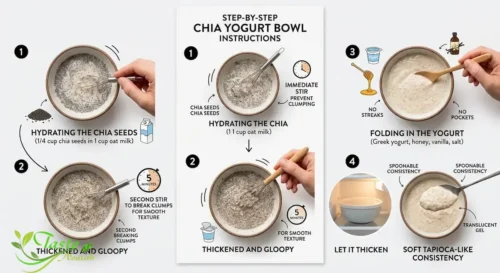
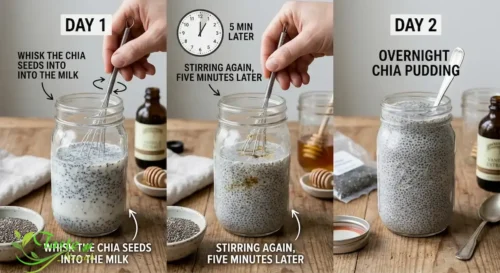
1. Hydrate the chia seeds. In a small bowl or jar, combine the chia seeds with the milk. Stir immediately and thoroughly — this first stir is what keeps the seeds from clumping into gel balls with dry centers.
2. Stir again after five minutes. The mixture will already look slightly thickened and gloopy. Stir it a second time to break up any clumps that formed as the gel started to set. This second stir is the single most important step for a smooth final texture.
3. Fold in the yogurt. Add the Greek yogurt, sweetener, vanilla, and salt to the chia mixture. Stir until fully combined — the color and texture should look uniform, with no streaks of plain yogurt or pockets of chia gel.
4. Let it thicken. Cover and let the bowl sit at room temperature for 10 to 15 minutes, or refrigerate for at least 15 minutes (up to overnight). The chia seeds keep absorbing liquid as they sit, and the mixture should firm up into a thick, creamy, spoonable consistency, similar to a soft tapioca pudding, with each seed coated in a translucent gel.
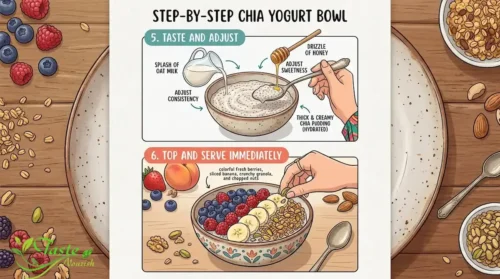
5. Taste and adjust. Give it a final stir. If it’s thicker than you’d like, loosen it with a splash more milk. If it needs more sweetness, add it now, since it’s easier to taste accurately once the mixture has set.
6. Top and serve immediately. Add fruit, granola, and nuts right before eating so the crunchy toppings stay crisp instead of going soft in the moisture of the yogurt.
Make-Ahead Chia Seed Yogurt Parfait
If you want breakfast fully ready the night before, build a chia pudding separately and layer it with yogurt in the morning, rather than mixing everything together right away.
Whisk the chia seeds into the milk in a jar or container. Stir well, then stir again five minutes later to prevent clumping, exactly as with the classic bowl.
Stir in honey and vanilla if using, cover, and refrigerate overnight, or at least 4 hours. The finished pudding should be thick and gel-like, with no pooled liquid at the bottom of the jar.
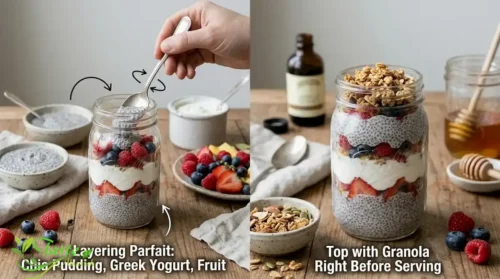
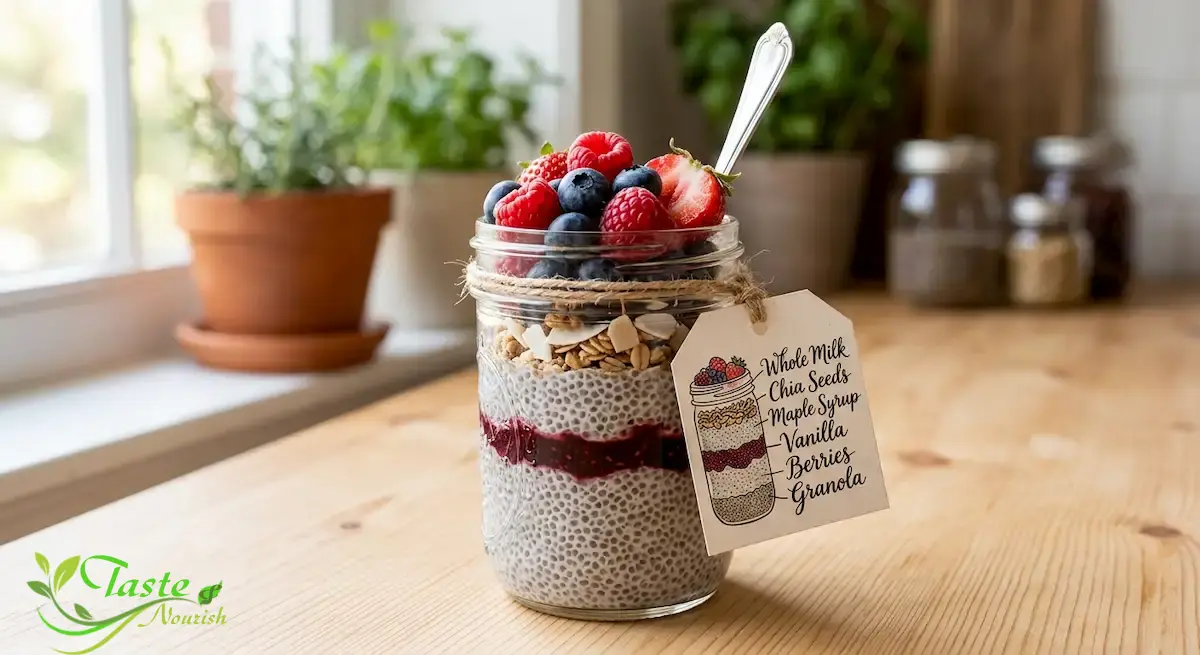
When you’re ready to eat, spoon alternating layers of chia pudding, Greek yogurt, and fruit into a glass or jar.
Finish with granola right before serving so it keeps its crunch.
How to Get the Best Texture
The texture you’re aiming for is thick enough to hold a spoon upright for a second, creamy rather than watery, and studded with soft, gel-coated seeds that give a slight pop as you bite into them — not a gluey or paste-like mouthfeel.
Two things throw this off. Too little chia or too short a rest leaves the bowl thin and soupy, with seeds that still feel a bit crunchy. Too much chia relative to liquid pushes it the other way, into a dense, gluey texture that’s unpleasant to eat.
♦ If you’re adjusting the recipe, change the liquid in small increments and give the mixture time to rehydrate before deciding it needs more tweaking — chia seeds take a few minutes to show their full thickening effect.
How to Get the Best Flavor
Plain Greek yogurt has a noticeable tang, which is part of what makes this bowl taste bright rather than flat and sweet. Vanilla extract rounds out that tang without masking it, and a small pinch of salt sharpens the sweetness of the honey or maple syrup rather than making the bowl taste salty.
Taste before you add sweetener rather than after, especially if your toppings include naturally sweet fruit or sugared granola — it’s easy to end up with an overly sweet bowl if you sweeten the base to taste and then pile on sweet toppings on top of that.
Toppings and Add-Ins
Fresh berries: Add acidity that balances the richness of the yogurt and a burst of color.
Sliced banana or diced mango: Contribute natural sweetness, so you can use less added sweetener.
Granola: The main source of crunch — always add it right before eating.
Chopped nuts or seeds: Add richness and a different kind of crunch than granola; pepitas or sunflower seeds work well for a nut-free option.
Nut butter swirl: A spoonful of peanut or almond butter adds richness and a slightly savory edge.
Cocoa powder or cinnamon: Stir a small amount into the base itself for a flavored bowl rather than a plain one.
Storage
Keep the plain chia-and-yogurt base in an airtight container or jar in the refrigerator. Because it’s a dairy-based mixture, it should be treated like any other perishable dairy food: refrigerate it promptly and don’t leave it sitting out at room temperature for more than about two hours, per general guidance from the USDA Food Safety and Inspection Service. For best quality and safety, plan to eat refrigerated dairy-based mixtures like this within about 3 to 4 days, in line with the general storage windows listed on FoodSafety.
Keep fresh fruit and granola stored separately from the base and add them only when you’re ready to eat. Fruit releases liquid over time, which waters down the texture, and granola loses its crunch quickly once it’s sitting in a moist mixture.
Can You Freeze a Chia Seed Yogurt Bowl?
Freezing isn’t recommended for this recipe. Yogurt’s proteins and water content tend to separate once thawed, leaving a grainy, watery texture instead of the smooth consistency you started with. The chia gel doesn’t hold up well through freezing and thawing either, so you’d lose the pleasant, pudding-like texture that makes this bowl work in the first place. It’s better to make smaller batches more often than to freeze extra.
Common Mistakes
Only stirring the chia seeds once. The gel forms almost instantly on contact with liquid, which traps seeds together in clumps before they’re evenly distributed. Stir immediately when you add the chia, then stir again after about five minutes to break up any clumps.
Skipping the rest time. Eating the bowl right after mixing means the chia hasn’t had time to hydrate, so it stays thin and the seeds feel crunchy instead of soft. Give it at least 10 to 15 minutes before serving.
Using flavored yogurt and adding a full amount of sweetener. Pre-sweetened yogurt combined with honey or maple syrup often turns cloying and one-note. Taste the yogurt on its own first if it’s flavored, and cut back on added sweetener accordingly.
Adding too much chia relative to liquid. This produces a dense, gluey texture rather than a creamy one. Stick to the ratio in the recipe and adjust with small additions of milk if needed.
Adding granola or nuts too far in advance. Crunchy toppings sitting in a moist yogurt mixture go soft within a short time. Add them just before eating, especially if you’re meal prepping.
Eating chia seeds before they’ve fully hydrated. Dry or under-soaked chia seeds can continue to absorb liquid after swallowing, and there are documented cases of this causing esophageal blockages, particularly in people with a history of swallowing difficulty, according to a report from the American College . Always let chia seeds fully hydrate in liquid — at least the 10 to 15 minutes this recipe calls for — before eating them.
Storing an already-assembled bowl with fresh fruit in it for several days. The fruit breaks down and releases liquid, diluting the texture and making the yogurt taste less fresh. Store the base and toppings separately.
Troubleshooting
Bowl is thin or watery — Likely cause is too little chia or not enough resting time. Stir in an extra teaspoon of chia seeds and let it sit another 10 to 15 minutes before checking again.
Bowl is too thick or gluey — Likely cause is too much chia relative to liquid. Stir in a splash of milk or an extra spoonful of yogurt to loosen it.
Chia seeds are clumped into gel balls — This happens when the seeds aren’t stirred right after they’re added to liquid. Whisk vigorously to break up the clumps now, and next time stir immediately after adding the chia, then again five minutes later.
Yogurt tastes too tart — Some Greek yogurt brands are noticeably tangier than others. Balance it with a little more honey or maple syrup, a splash of vanilla, or sweeter fruit like ripe banana or mango.
Granola has gone soft — This means it was added too early. Add granola immediately before eating, and for meal prep, always keep it in a separate container until serving.
Variations
Dairy-free: Use a thick, unsweetened plant-based yogurt labeled “Greek-style” for a similar consistency to dairy Greek yogurt.
Higher protein: Choose a higher-protein Greek yogurt and stir a scoop of unflavored or vanilla protein powder into the milk before mixing in the chia seeds.
Lower sugar: Skip the added sweetener and rely on ripe fruit like banana or mango for sweetness instead.
Chocolate version: Whisk a teaspoon of cocoa powder into the base along with the sweetener.
Nut-free: Swap nuts for pepitas or sunflower seeds, and check that your granola is made in a nut-free facility if that’s a concern.
Meal-Prep Ideas
This recipe is well suited to batch prep. Make a larger batch of the chia-and-yogurt base at the start of the week and portion it into individual jars, storing it plain. Each morning, add fresh fruit and granola right before eating rather than in advance, so the toppings stay fresh and the base doesn’t become watery.
Keeping the components separate until serving time is the single biggest factor in whether a prepped bowl still tastes good by day three or four.
Chia Seed Yogurt Bowl FAQs
Can I make a chia seed yogurt bowl ahead of time?
Yes. The plain base keeps well in the fridge for a few days, and the make-ahead parfait version is designed to be built the night before. Just hold off on adding fresh fruit and granola until you’re ready to eat.
How long does a chia seed yogurt bowl keep in the fridge?
The plain base is a dairy-based mixture, so it’s best treated like other perishable dairy foods and used within about 3 to 4 days when refrigerated properly, per general food storage guidance from FoodSafety.gov.
Can I freeze a chia seed yogurt bowl?
It isn’t recommended. Freezing causes yogurt to separate and turn grainy once thawed, and it affects the chia gel’s texture as well, so the bowl won’t be as creamy after freezing and thawing.
Why are my chia seeds clumping instead of turning creamy?
This almost always means the seeds weren’t stirred enough right after being added to liquid. Stir immediately when combining chia with milk, then stir again about five minutes later to break up any clumps before they set.
Can I use regular yogurt instead of Greek yogurt?
Yes, though regular yogurt is thinner and less protein-dense than Greek yogurt. Reduce the amount of added milk slightly, since regular yogurt already has more liquid in it.
Is a chia seed yogurt bowl the same thing as chia pudding?
Not quite. Chia pudding is chia seeds soaked directly in milk until the whole mixture thickens. A chia seed yogurt bowl uses Greek yogurt as the main base with a smaller amount of hydrated chia folded in, which gives a tangier flavor and a faster set time.
Do I need to soak chia seeds before eating them?
Yes. Chia seeds should always be given time to fully absorb liquid before eating. This isn’t just about texture — under-hydrated chia seeds can continue swelling after being swallowed, which has been linked to esophageal blockages in documented cases, so it’s worth taking the resting time in this recipe seriously.
What milk should I use for the make-ahead parfait?
Any dairy or plant-based milk works. Thicker milks, like whole dairy milk or full-fat oat milk, produce a creamier pudding than thinner options like plain almond milk.
Conclusion
A well-made chia seed yogurt bowl comes down to two simple habits: stirring the chia seeds twice so they hydrate evenly, and giving the mixture enough time to actually thicken before you eat it. Once those two things are dialed in, you can vary the flavor, toppings, and sweetness however you like and always land on the same creamy, satisfying result — whether you’re making it fresh in fifteen minutes or setting up a make-ahead parfait the night before.
Hanan Abo Samra is the founder of Taste & Nourish, sharing trustworthy nutrition guidance and recipes drawn from 20+ years of hands-on cooking experience. When she's not developing new recipes, Hanan is researching the science behind everyday ingredients to bring readers practical, evidence-based guidance for a healthier lifestyle.