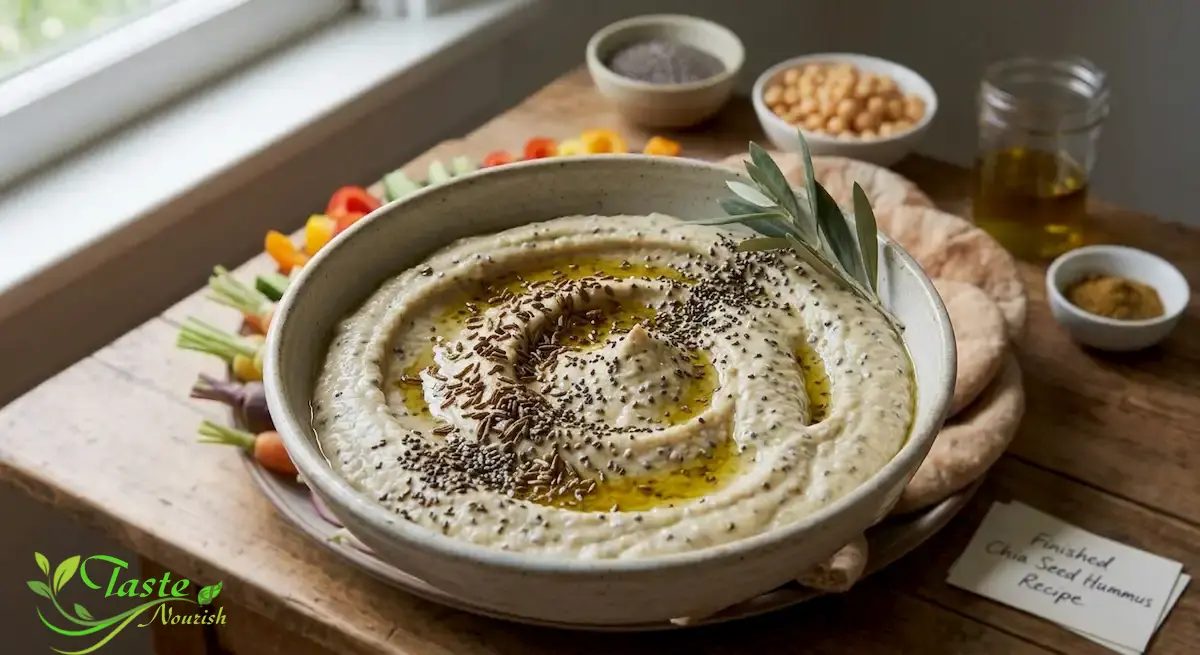
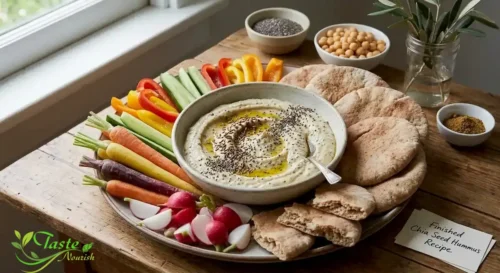
Most homemade hummus recipes stop at chickpeas, tahini, and lemon — this chia seed hummus recipe goes one step further by folding in chia seeds for extra fiber and plant-based omega-3s, without losing the smooth, creamy texture you expect. Whether you soak the chia for a silky finish or add it dry for a bit of crunch, this healthy hummus with chia seeds comes together in under 20 minutes with no cooking required.
To make this chia seed hummus recipe, whip tahini with lemon juice first, blend in peeled chickpeas with ice water and olive oil until smooth, then fold in 1 to 2 tablespoons of chia seeds (soaked briefly for a smooth finish, or added whole for texture). Chill for 10 to 15 minutes before serving so the chia can fully hydrate.
Key Takeaways
This chia seed hummus recipe uses 1 to 2 tablespoons of chia seeds per standard batch — more than that can make the dip gummy.
Soaking chia briefly in water or lemon juice before blending gives a smoother result than adding the seeds dry.
Whipping tahini and lemon juice together before adding chickpeas is the single biggest factor in achieving a creamy texture.
Homemade hummus has no preservatives, so it belongs in the refrigerator at or below 40°F and is best used within a few days.
Chia seeds are one of the richest plant sources of omega-3 alpha-linolenic acid (ALA), according to Harvard’s Nutrition Source.
What You Need to Know About Healthy Hummus with Chia Seeds
Chia seeds aren’t part of traditional hummus, which is built from chickpeas, tahini, olive oil, lemon juice, and garlic. What chia adds is functional: the seeds absorb liquid and form a gel, so they can gently thicken the dip while contributing fiber and fat that weren’t there before.
Two tablespoons of chia seeds contain roughly 140 calories, 4 grams of protein, 11 grams of fiber, and 7 grams of mostly unsaturated fat, and chia is considered one of the richest plant-based sources of omega-3 fatty acids, with about 60 percent of its oil made up of alpha-linolenic acid (ALA), per the Harvard T.H. Chan School . ALA is an essential fatty acid your body can’t produce on its own, so it has to come from food, though your body converts only a small amount of it into the more active EPA and DHA forms, according to the (National Institutes).
Chickpeas already bring plenty to the table on their own. Hummus made from chickpeas is a source of dietary fiber, resistant starch, folate, potassium, and unsaturated fat, and people who regularly eat chickpeas or hummus tend to have higher fiber intakes than those who don’t, according to a peer-reviewed review published in the journal Nutrients. Adding chia doesn’t replace any of that — it layers additional fiber and omega-3s on top of it.
Ingredients
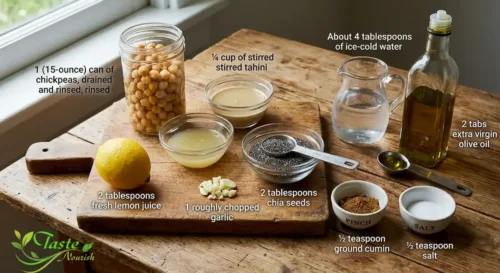
1 (15-ounce) can chickpeas, drained and rinsed (or about 1½ cups cooked chickpeas)
¼ cup tahini, well stirred
2 tablespoons fresh lemon juice
1 small garlic clove, roughly chopped
1 to 2 tablespoons chia seeds (white or black)
2 to 4 tablespoons ice-cold water, divided
2 tablespoons extra virgin olive oil, plus more for serving
½ teaspoon ground cumin
½ teaspoon salt, plus more to taste
How to Make Chia Seed Hummus Recipe: Step by Step
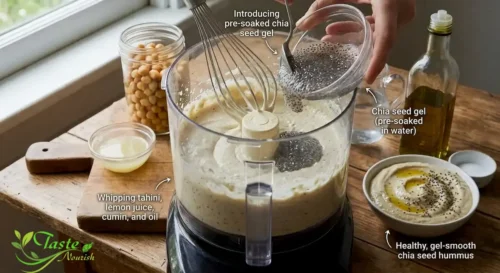
1. Choose your chia method. For a smooth, traditional-looking hummus, stir the chia seeds into 2 tablespoons of water or lemon juice and let them sit for 10 minutes until they form a gel. For a hummus with visible flecks and a bit of bite, skip this step and add the seeds dry near the end of blending instead.
2. Peel the chickpeas (optional but recommended). Rub the drained chickpeas between two clean kitchen towels or gently squeeze off the skins under running water. This single step makes the biggest visible difference in creaminess.
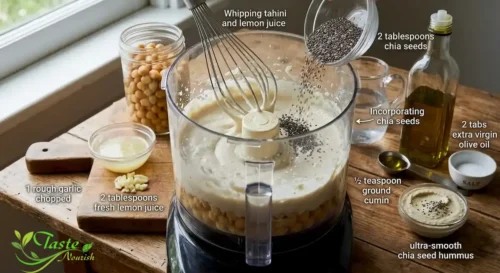
3. Whip the tahini and lemon juice. In a food processor, blend the tahini and lemon juice alone for 1 to 2 minutes, scraping down the sides, until the mixture turns pale and fluffy. This “whips” the tahini and prevents grainy hummus later.
4. Add garlic, cumin, and salt. Pulse a few times to combine.
5. Add the chickpeas. Blend on low, then drizzle in the olive oil and 2 tablespoons of ice water while the motor runs, until the mixture is smooth. Add another tablespoon or two of ice water if it’s still thick.
6. Fold in the chia. Add the soaked chia gel or the dry seeds and pulse just 3 to 4 times to incorporate — don’t over-process, or the mixture can turn gluey.
7. Taste and rest. Adjust salt or lemon juice, then refrigerate for 10 to 15 minutes before serving so the chia fully hydrates and the flavors settle.
Best Way to Get Extra-Creamy Chia Seed Hummus
Three habits separate smooth hummus from grainy hummus, and none of them involve fancy equipment.
First, always whip the tahini and lemon juice before adding anything else — this emulsifies the fat and acid so the rest of the ingredients blend evenly.
Second, use ice-cold water rather than room-temperature water; the cold helps the tahini and olive oil stay emulsified instead of separating, which is what gives store-bought hummus its whipped texture.
Third, peel the chickpeas. Chickpea skins don’t fully break down in a food processor, and leaving them in is the most common reason home hummus turns out grainy instead of silky.
Quick Reference
Step
Time
Notes
Active prep and blending
10 to 15 minutes
No cooking required
Chia soaking (optional, for smooth texture)
10 minutes
Skip for a textured, flecked hummus
Chilling before serving
10 to 15 minutes
Lets chia fully hydrate and flavors meld
Yield
About 2 cups
Serves 6 to 8 as a dip
Best Containers and Tools
A food processor gives the smoothest result; a high-powered blender works too, but you may need to stop and scrape the sides more often since hummus is thick. For storage, use a glass or BPA-free plastic container with a tight-fitting lid — glass is easiest to clean and doesn’t absorb garlic or tahini odors over time.
How to Store Chia Seed Hummus
Because this is a homemade dip with no preservatives, treat it the way you would any fresh dairy- or bean-based spread.
Refrigerate it in an airtight container at or below 40°F, and don’t leave it sitting out at room temperature for more than 2 hours — or 1 hour if the room is above 90°F — since that window is when bacteria multiply fastest in perishable foods, per USDA’s Food Safety and Inspection Service. A thin layer of olive oil pressed onto the surface before sealing helps limit air exposure and keeps the top from drying out. For best quality, plan to finish homemade hummus within about 4 to 5 days.
Can You Freeze Chia Seed Hummus?
Yes. Portion it into small freezer-safe containers or an ice cube tray, leaving a little headspace since the mixture expands slightly as it freezes. Thaw it overnight in the refrigerator rather than at room temperature. The tahini and olive oil can separate slightly during freezing and thawing, and the chia gel may make the texture a touch grainier than fresh — stirring in a small drizzle of olive oil or a splash of water after thawing usually brings it back together. For best quality, use frozen hummus within about a month.
How to Tell If Chia Seed Hummus Has Gone Bad
Any visible mold, including small colored spots — discard the whole batch, not just the affected area.
A sour, yeasty, or otherwise “off” smell that’s different from its normal tangy, garlicky aroma.
A slimy or noticeably watery texture that isn’t just the usual thin pool of olive oil on top.
Noticeable darkening or discoloration across the surface rather than just at the very top edge.
If you’re unsure, don’t taste-test it to check — rely on smell and appearance, and when in doubt, throw it out.
Common Mistakes to Avoid
Adding too much chia. More than 2 tablespoons per batch can make the hummus stiff and gummy as the seeds keep absorbing liquid, even after chilling.
Skipping the tahini-lemon whip step. Dumping everything in at once is the most common reason for grainy hummus.
Not peeling the chickpeas. Skins add unwanted texture that the food processor can’t fully smooth out.
Using warm water instead of ice water. Warm liquid can cause the oils to separate rather than emulsify.
Over-processing after adding the chia. Extended blending activates more of the gel, pushing the texture toward gluey.
Adding all the salt and lemon up front. Taste at the very end, since flavors intensify slightly as the hummus chills.
Sealing the container while still warm. Let it cool briefly before sealing tightly to avoid trapped condensation, but still refrigerate within 2 hours of making it.
Expert Kitchen Tips
Save the liquid from the can of chickpeas (aquafaba) and use it in place of plain water for extra creaminess and a subtle richness.
For a fluffier, almost whipped texture, add a couple of ice cubes instead of ice water while blending.
If you like a stronger visual and textural cue, reserve a teaspoon of whole chia seeds to sprinkle on top before serving instead of blending all of them in.
Warming the chickpeas slightly (a quick rinse under hot water) before blending can help the food processor break them down more smoothly.
Letting the finished hummus rest in the fridge for at least 30 minutes before serving noticeably improves both flavor and texture.
Finish with a swirl of olive oil, a pinch of paprika or cumin, and a few whole chia seeds on top for both flavor and presentation.
Variations and Substitutions
Ground flaxseed instead of chia: Flax also forms a gel and adds omega-3s, though the flavor is slightly nuttier and less neutral than chia.
Roasted garlic version: Swap the raw garlic clove for 2 to 3 cloves of roasted garlic for a milder, sweeter flavor.
Lighter version: Reduce the tahini to 2 tablespoons and let the chia gel do more of the thickening work; the flavor will be brighter and less nutty.
Roasted red pepper chia hummus: Blend in ¼ cup of roasted red peppers along with the chickpeas for color and a milder sweetness.
What to Do With Leftovers
Leftover hummus doesn’t need reheating — serve it cold or at room temperature after sitting out briefly. Beyond dipping, it works well as a sandwich or wrap spread, a base for a grain bowl, or thinned with a little water and lemon juice to use as a salad dressing. Always use a clean spoon each time you scoop from the container rather than double-dipping, which introduces bacteria and shortens how long the batch stays good.
Chia Seed Hummus Recipe FAQs
Can I use chia seeds instead of tahini in a chia seed hummus recipe?
No. Tahini provides the fat, richness, and traditional flavor that define hummus, while chia contributes fiber, omega-3s, and thickening. They serve different roles, so this recipe uses both rather than one in place of the other.
Do I need to soak the chia seeds first?
It’s optional. Soaking briefly in water or lemon juice creates a smoother, more traditional-looking hummus. Adding the seeds dry gives you visible flecks and a bit of crunch instead.
How much chia seed should I add to hummus?
Start with 1 to 2 tablespoons per standard batch made from a 15-ounce can of chickpeas. More than that can make the texture stiff or gummy as the seeds continue absorbing liquid.
Can you freeze chia seed hummus?
Yes, though the texture may turn slightly grainier and the oils can separate a bit during thawing. Stirring in a small amount of olive oil or water after it thaws usually restores the texture.
How long does homemade chia seed hummus last in the fridge?
Since it contains no preservatives, plan to use it within about 4 to 5 days when stored in an airtight container at or below 40°F.
Is a chia seed added hummus recipe actually healthier than regular hummus?
It adds fiber and plant-based omega-3 ALA on top of the fiber, folate, and unsaturated fat that chickpea-based hummus already provides, so it can modestly boost the nutritional profile without changing the core recipe.
Why did my chia hummus turn out gummy?
This almost always comes down to using too much chia or over-processing the mixture after the chia goes in. Stick to 1 to 2 tablespoons and pulse briefly once it’s added.
Key Takeaways: Chia Seed Hummus Recipe
Use 1 to 2 tablespoons of chia seeds per standard batch to avoid a gummy texture.
Whipping tahini and lemon juice first, and peeling the chickpeas, are the two biggest factors in achieving smooth hummus.
Soak the chia briefly for a smooth finish, or add it dry for texture and crunch.
Store this chia seed hummus recipe refrigerated at or below 40°F and use within about 4 to 5 days.
It freezes reasonably well for up to a month, with a slight texture change after thawing.
Conclusion
This chia seed hummus recipe keeps everything familiar about classic hummus while quietly adding more fiber and omega-3s to each serving. The technique details — whipping the tahini first, peeling the chickpeas, using ice water, and not overdoing the chia — matter more than any special equipment. Made once, you’ll likely find it’s just as easy to fold chia into your regular hummus routine going forward.
Hanan Abo Samra is the founder of Taste & Nourish, sharing trustworthy nutrition guidance and recipes drawn from 20+ years of hands-on cooking experience. When she's not developing new recipes, Hanan is researching the science behind everyday ingredients to bring readers practical, evidence-based guidance for a healthier lifestyle.