If you’ve ever sprinkled turmeric into a curry, a smoothie, or a “golden milk” latte, you’ve probably wondered what it’s actually doing to your daily calorie count. The short answer: almost nothing. Turmeric is used in such small amounts that its calorie contribution barely registers. But there’s a lot more to the story than a single number, and understanding the full nutritional picture will help you use this spice more confidently.
This guide breaks down exactly how many calories are in turmeric across different serving sizes, what else is in that golden powder, and what the science actually says about its much-discussed health effects.
Key takeaways:
Ground turmeric has about 354 calories per 100 grams, but a typical serving (a teaspoon or less) contains only around 8 calories.
Most of turmeric’s calories come from carbohydrates, not protein or fat.
The calorie count is not the point — turmeric is used for flavor, color, and its curcumin content, not as an energy source.
Turmeric supplements carry different risks than the culinary spice, including possible liver effects and drug interactions.
Contamination with lead has been documented in some ground turmeric products sold in the United States, making sourcing worth paying attention to.
Turmeric Calories: The Numbers You Need
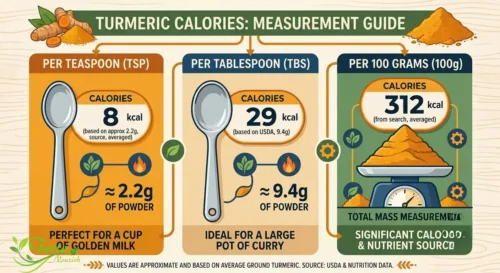
According to the U.S. Department of Agriculture’s FoodData Central, ground turmeric contains roughly 354 calories per 100 grams. That figure sounds substantial until you consider how turmeric is actually used in real life — as a spice, not a food group. Since a typical serving is a fraction of a teaspoon to a full teaspoon, the practical calorie impact is tiny.
Calories by Common Serving Size
Here’s how the numbers break down for the amounts people actually use:
Serving Size
Approximate Calories
1 teaspoon (about 2.2 g)
8 calories
1 tablespoon (about 6.8 g)
24 calories
1 gram
roughly 3.5 calories
100 grams
354 calories
For context, a recipe calling for a teaspoon of turmeric adds fewer calories than a single almond. Even a generous tablespoon — more than most people would use in one dish — comes in under 25 calories, which is less than a stick of celery.
♦ If you’re tracking calories closely, turmeric is essentially a rounding error compared to the oils, proteins, and starches that make up the rest of your plate.
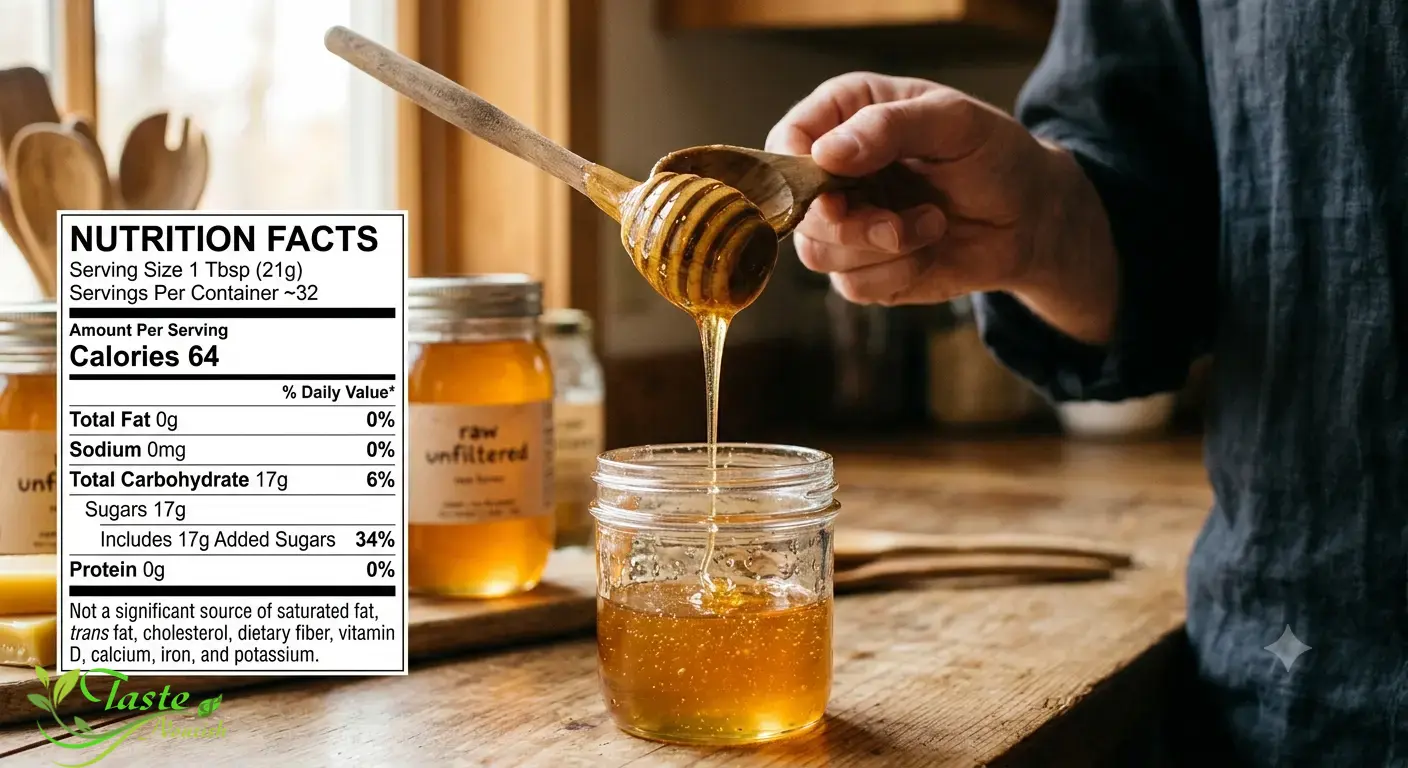
Pro tip: If you’re using turmeric in golden milk or a latte, the calories you should actually watch come from the milk, honey, or coconut cream you’re blending it with — not the spice itself.
Turmeric vs. Other Common Spices: A Calorie Comparison
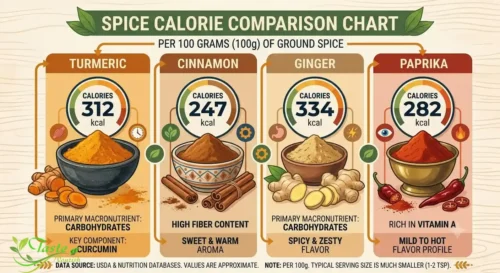
Turmeric’s calorie density is fairly typical for a dried, ground spice. Here’s how it stacks up against a few pantry staples per teaspoon:
Spice (1 tsp, ground)
Approximate Calories
Turmeric
8
Ground cinnamon
6
Ground ginger
6
Ground black pepper
6
Paprika
6
Ground cumin
8
The takeaway is simple: spices in general contribute so little to your daily intake that comparing them on calories alone misses the point. What actually differentiates turmeric from cinnamon or paprika isn’t the calorie count — it’s the specific plant compounds each one brings to the table.
What Is Turmeric, Exactly?
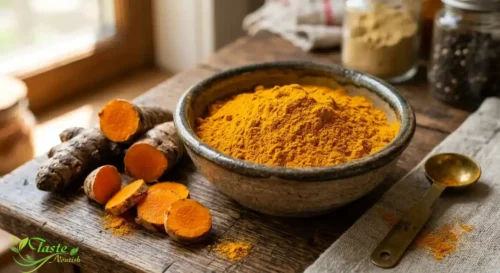
Turmeric is a bright yellow-orange spice made by drying and grinding the rhizome (underground stem) of Curcuma longa, a flowering plant in the ginger family.
Fresh turmeric root looks a lot like ginger on the outside, but slice it open and you’ll find that deep amber color that stains everything it touches — countertops, fingers, and yes, white t-shirts. The compound responsible for that pigment, curcumin, is also the ingredient most researchers focus on when studying turmeric’s potential health effects.
Most people encounter turmeric as a fine powder in the spice aisle, but it also shows up fresh in South and Southeast Asian cooking, steeped into teas, and concentrated into dietary supplements. Each form delivers curcumin differently, and that distinction matters more than most nutrition labels let on.
♦ A pinch of turmeric in your rice is a completely different exposure than a 500-milligram curcumin capsule, both in dose and in how your body absorbs it.
Origin and Culinary History
Turmeric has been cultivated in South Asia for thousands of years, with India remaining the world’s largest producer and consumer today. It’s a cornerstone of Ayurvedic tradition, where it was used for everything from digestive complaints to skin conditions long before modern researchers started studying curcumin in a lab.
According to the National Center for Complementary and Integrative Health, turmeric has historically been used across Chinese, Indian, Islamic, and Thai medicine systems for conditions such as indigestion, the common cold, arthritis, and liver disease.
Culinarily, turmeric is the backbone of curry powder blends and gives many mustards their vivid yellow hue. It has a warm, slightly bitter, earthy flavor that’s more about depth and color than heat — unlike chili powder, a little goes a long way without overwhelming a dish. That’s actually central to understanding turmeric calories: because the flavor is potent even in tiny amounts, nobody is measuring out quarter-cup servings of straight turmeric powder the way they might with rice or nuts.
Full Nutritional Profile of Turmeric
Because turmeric is consumed in such small quantities, its role in your diet is less about macronutrients and more about the trace compounds it delivers. Still, it’s worth understanding where those 354 calories per 100 grams actually come from.
Where the Calories Come From
Based on USDA nutrient data, the majority of turmeric’s calories — roughly 79% — come from carbohydrates, with about 12% from protein and 9% from fat. In practical terms, a teaspoon of turmeric provides well under two grams of carbohydrate and only a fraction of a gram each of protein and fat. None of these amounts are large enough to meaningfully affect your macronutrient totals for the day, even if you’re following a strict tracking plan.
Ground turmeric also contains a notable amount of dietary fiber relative to its weight, since it’s essentially a dried, ground root. Again, the actual serving size keeps this from being significant — you’d need to eat several tablespoons to get even a gram or two of fiber, which isn’t realistic for a spice this potent in flavor.
Vitamins and Minerals Worth Knowing
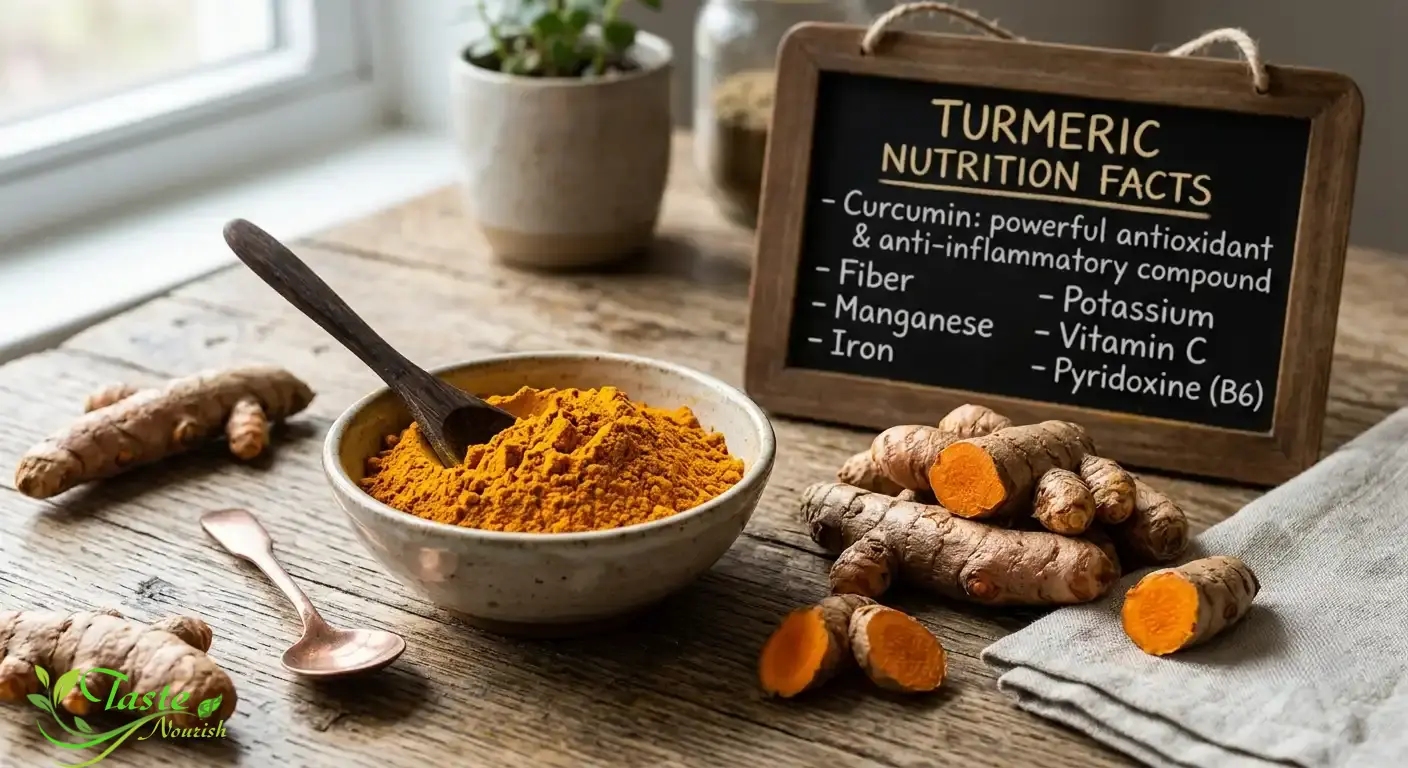
Turmeric contains small but measurable amounts of manganese, iron, potassium, and vitamin B6, along with trace vitamin C. Manganese and iron are the two most frequently cited, since ground turmeric is relatively concentrated in both compared to many other spices. That said, the tiny serving sizes mean turmeric shouldn’t be relied on as a primary source of any of these nutrients — think of it as a flavorful bonus rather than a supplement replacement.
Does Turmeric’s Calorie Count Actually Matter?
Honestly, not much. Nobody adds turmeric to a dish because they’re trying to hit a calorie target, and nobody should avoid it because they’re worried about calorie intake either. The entire point of using a spice is flavor and, in turmeric’s case, the potential effects of curcumin — not caloric contribution.
If you’re counting calories carefully, your energy needle will move far more from the cooking oil, cream, or sugar in a recipe than from the turmeric stirred into it.
Where the calorie question becomes more relevant is with turmeric supplements, some of which are combined with other ingredients like maltodextrin, sweeteners, or oils in gummies and blended powders. Those add-ons can carry meaningfully more calories than the turmeric itself, so it’s worth checking labels on processed turmeric products rather than assuming they’re calorie-neutral just because turmeric is.
Health Benefits Linked to Turmeric and Curcumin
Curcumin, turmeric’s main active compound, has been studied extensively in laboratory and animal research, and increasingly in human clinical trials — though the evidence base is still developing. The National Center for Complementary and Integrative Health notes that while turmeric has a long history of traditional use, current evidence is often described as insufficient to draw firm conclusions for most specific health claims. With that caveat in mind, here’s what the research so far suggests.
Anti-Inflammatory and Antioxidant Potential
Curcumin is classified as a polyphenol, a category of plant compounds known for antioxidant activity. Research suggests curcumin may help neutralize free radicals and modulate inflammatory pathways in the body, which is why it’s frequently studied in the context of chronic inflammatory conditions.
According to Johns Hopkins Medicine, curcumin’s antioxidant and anti-inflammatory properties are thought to be behind many of the benefits attributed to turmeric, and diets rich in colorful plant-based foods like this one are broadly associated with lower risk of certain chronic diseases.
It’s worth being cautious here, though: laboratory and animal studies showing anti-inflammatory effects don’t always translate directly into meaningful results in humans, especially at the doses found in food rather than concentrated supplements.
Joint and Heart Health
Some of the more promising human research involves osteoarthritis. Several clinical trials have found that turmeric or curcumin extracts may reduce joint pain and improve function in people with knee osteoarthritis, with effects that researchers have compared to certain over-the-counter pain relievers in some studies. On the cardiovascular side, research has looked at curcumin’s potential effects on blood lipids, though results across studies remain mixed and are not considered conclusive enough to recommend turmeric as a treatment for high cholesterol.
Blood Sugar and Metabolic Support
Emerging research has also examined curcumin’s relationship to blood sugar regulation. Johns Hopkins Medicine points to clinical trial findings that curcumin supplementation may help reduce fasting blood glucose, HbA1c, and insulin resistance markers in some populations, with one often-cited study on prediabetic individuals reporting a lower rate of progression to type 2 diabetes among those given curcumin compared to placebo.
These findings are encouraging, but they typically involve concentrated curcumin supplements rather than the small amounts of turmeric used in everyday cooking, so it’s important not to assume culinary use will produce the same effect.
Potential Risks and Side Effects
Turmeric used as a culinary spice is considered safe for most people, but concentrated curcumin supplements are a different story, and it’s worth separating the two in your head.
The National Center for Complementary and Integrative Health has noted that highly bioavailable curcumin formulations — the kind engineered for better absorption — may carry a risk of liver harm, and that overall, more high-quality evidence is needed before turmeric or curcumin can be considered reliably beneficial for most conditions people take it for.
Who Should Be Cautious or Avoid Turmeric
Certain groups should be more careful with turmeric, particularly in supplement form. Johns Hopkins Medicine advises caution for people who are pregnant, since safety data during pregnancy is limited, as well as anyone with a personal or family history of kidney stones, since high-dose curcumin may increase that risk.
People taking blood thinners like warfarin should also be cautious, as turmeric may increase bleeding risk, and those on chemotherapy or immunosuppressive medications such as tacrolimus should talk to their doctor first, since curcumin can interact with how these drugs are processed in the body.
A quick reference for common turmeric drug interactions:
Medication Type
Potential Concern
Blood thinners (e.g., warfarin)
Increased bleeding risk
NSAIDs and pain relievers
May alter drug effectiveness
Chemotherapy agents
Possible interference with treatment
Immunosuppressants (e.g., tacrolimus)
May increase side effects
If you take any prescription medication regularly, it’s worth a quick conversation with a pharmacist or doctor before starting turmeric supplements — the culinary amounts used in cooking are far less likely to cause issues.
The Lead Contamination Concern
This is one of the lesser-known risks, and it’s specific to ground turmeric rather than curcumin itself. A peer-reviewed study published in Public Health Reports and hosted on PubMed Central found that some ground turmeric sold in U.S. grocery stores contained elevated lead levels, with researchers attributing documented cases of childhood lead poisoning to contaminated turmeric.
The suspected cause is intentional adulteration with lead chromate, a compound used elsewhere to enhance color and weight, particularly in turmeric sourced from certain regions with less stringent quality controls.
This doesn’t mean all turmeric is unsafe — far from it — but it’s a good reason to buy from established, reputable brands rather than unlabeled bulk bins or unfamiliar imported sources, especially if turmeric is a regular part of your household’s cooking.
Buying, Storing, and Cooking with Turmeric
Ground turmeric should have a vivid, consistent orange-yellow color without a dull or brownish tint, which can indicate age or lower quality. Store it in an airtight container away from direct light and heat — a spice cabinet rather than a shelf above the stove — and it should retain good flavor and color for up to two to three years, though its potency will gradually fade over time.
♦ If you’re buying fresh turmeric root, look for firm, unwrinkled pieces and store them in the refrigerator, where they’ll keep for a few weeks, or in the freezer for longer-term storage.
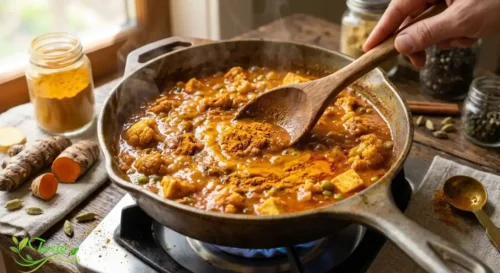
Pro tip: Pairing turmeric with a source of fat and a pinch of black pepper can improve curcumin absorption. Piperine, the compound responsible for black pepper’s heat, has been shown in research to significantly boost curcumin bioavailability, which is part of why so many golden milk recipes call for both black pepper and a fat like coconut milk.
Fresh Root vs. Ground Powder vs. Supplements
These three forms of turmeric aren’t interchangeable, and understanding the differences helps explain why calorie counts and curcumin content vary so much between them.
Fresh root has a brighter, slightly more peppery flavor than the dried powder and is common in Southeast Asian and South Asian cooking, particularly in curries and pickles.
Ground powder is the most common form in Western kitchens, shelf-stable and convenient, but its curcumin content can vary noticeably between brands and sourcing.
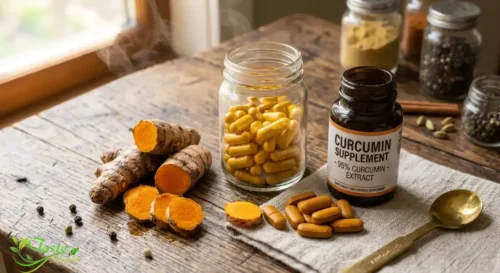
Supplements (capsules, extracts, gummies) typically deliver a much more concentrated, standardized curcumin dose than food-based turmeric, which is why they carry a different risk profile and are the form most associated with liver concerns and drug interactions.
If your main goal is flavor and general wellness through diet, the ground spice or fresh root is the more conservative choice. If you’re considering a supplement for a specific health concern, that’s a conversation worth having with a healthcare provider first, given the more concentrated dosing involved.
Common Myths About Turmeric, Debunked
A lot of the buzz around turmeric has outpaced what the research can actually confirm, so it’s worth clearing up a few persistent myths.
The first is the idea that turmeric alone can “cure” or meaningfully treat serious conditions like cancer or Alzheimer’s disease — while laboratory and early-phase research on curcumin’s effects on cell signaling pathways is genuinely interesting, agencies like the National Cancer Institute are clear that results from small early trials are not the same as proof of a treatment effect, and turmeric should never replace prescribed medical care.
A second myth is that more turmeric automatically means more benefit. In reality, curcumin has notoriously poor bioavailability on its own, meaning your body absorbs and uses very little of it without help from fat or piperine, so simply eating larger quantities of the raw spice doesn’t proportionally increase its effects.
A third common misconception is that turmeric and curry powder are the same thing — turmeric is just one ingredient in most curry powder blends, alongside coriander, cumin, and other spices, so the two shouldn’t be used interchangeably in recipes or in nutritional comparisons.
Conclusion
Turmeric calories are, in practical terms, a non-issue. A teaspoon adds roughly 8 calories to whatever you’re cooking, and even generous use in a recipe won’t meaningfully affect your daily intake. What actually matters with turmeric is everything else it brings to the table: distinctive flavor, vivid color, and a compound — curcumin — that continues to draw serious scientific interest, even if the evidence for many specific health claims is still developing.
Use it generously in your cooking, pair it with black pepper and a bit of fat if you want better absorption, buy from reputable sources to sidestep contamination concerns, and talk to a healthcare provider before reaching for concentrated supplements, especially if you’re pregnant, on medication, or managing a chronic condition.
Turmeric Calories FAQs
Does turmeric have calories?
Yes, but very few in the amounts typically used. Ground turmeric has about 354 calories per 100 grams, but a teaspoon — a realistic serving — contains only around 8 calories.
Will turmeric tea or golden milk break a calorie deficit?
The turmeric itself won’t. The calories in golden milk or turmeric tea come almost entirely from added ingredients like milk, honey, or sweeteners, not from the spice.
Is turmeric good for weight loss?
There’s no strong evidence that turmeric directly causes weight loss. Some early research has explored curcumin’s effects on metabolism and inflammation, but it shouldn’t be relied on as a weight-loss strategy on its own.
How much turmeric is safe to eat daily?
As a culinary spice, turmeric used in normal cooking amounts is considered safe for most people. Supplement dosing is different and should be discussed with a healthcare provider, particularly for anyone who is pregnant, on medication, or managing a health condition.
Is ground turmeric safe, given the lead contamination reports?
Most ground turmeric sold through reputable retailers is safe, but documented cases of lead-contaminated turmeric have occurred in the U.S. Buying from established, well-labeled brands rather than unregulated bulk sources is the simplest way to reduce that risk.
This article is for general informational purposes and isn’t a substitute for personalized medical advice. If you have a health condition or take medication, talk to your doctor before starting any new supplement.
National Center for Complementary and Integrative Health, National Institutes of Health. “Turmeric: Usefulness and Safety.” https://www.nccih.nih.gov/health/turmeric
Cowell, W., Ireland, T., Vorhees, D., & Heiger-Bernays, W. “Ground Turmeric as a Source of Lead Exposure in the United States.” Public Health Reports, PubMed Central, National Institutes of Health. https://pmc.ncbi.nlm.nih.gov/articles/PMC5415259/
♦ This guide is for informational purposes only and should not replace professional medical or nutritional advice. Always consult with healthcare providers regarding specific dietary needs and health conditions.
Hanan Abo Samra is the founder of Taste & Nourish, sharing trustworthy nutrition guidance and recipes drawn from 20+ years of hands-on cooking experience. When she's not developing new recipes, Hanan is researching the science behind everyday ingredients to bring readers practical, evidence-based guidance for a healthier lifestyle.



If some one desires expert view regarding running a blog after
that i recommend him/her to visit this webpage, Keep up
the good work.