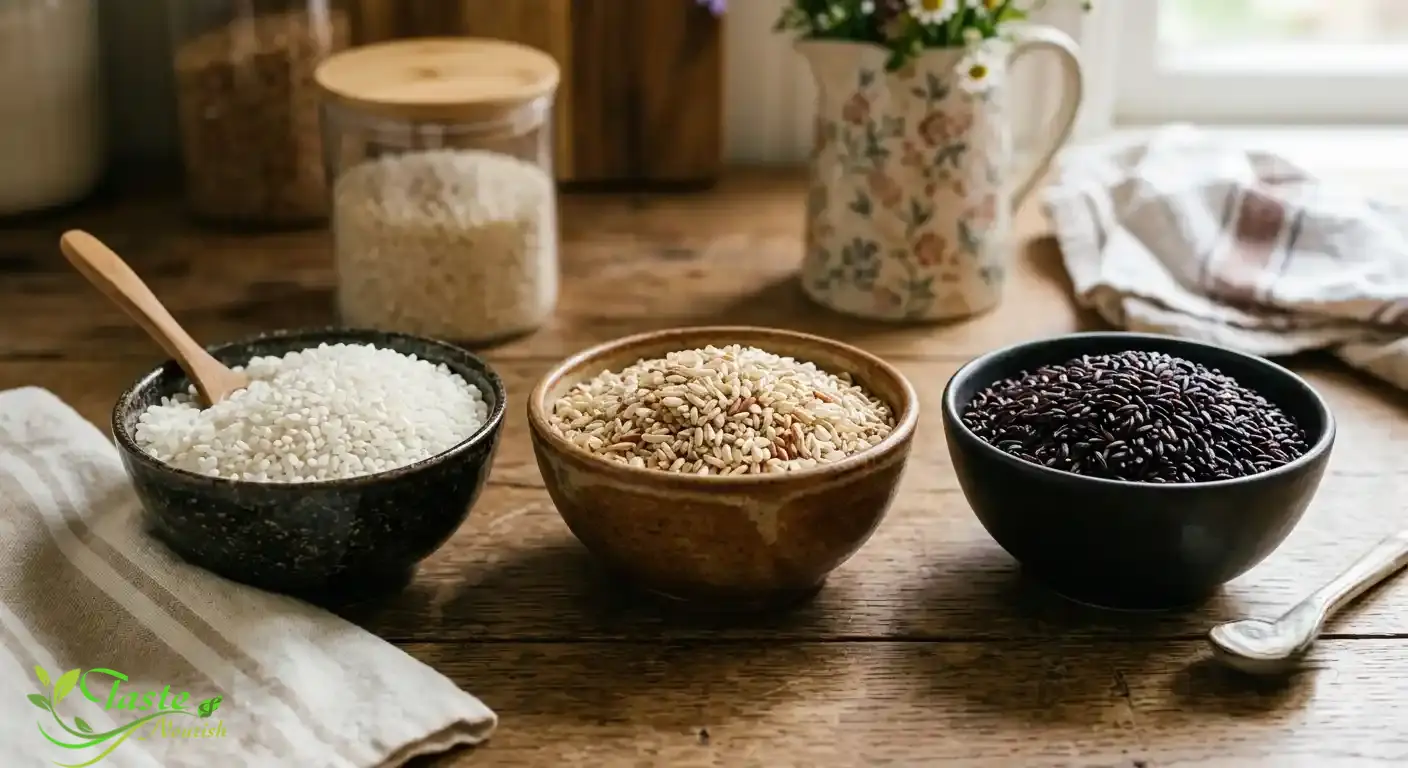
Walk down the rice aisle of any well-stocked grocery store and you’ll see more options than you’d expect from one small grain. Long, short, brown, black, sticky, fragrant — rice comes in dozens of forms, and each one behaves differently in a pot. Knowing the difference isn’t just trivia for food nerds. It changes how your risotto turns out, whether your sushi rice holds together, and even how a dish affects your blood sugar.
This guide breaks down the major types of rice, how they’re classified, what the nutrition science actually says, and how to pick the right variety for what you’re cooking. Cautious language is used around health claims throughout, because rice research — like most nutrition research — shows associations, not guarantees.
Key takeaway: Rice is generally grouped two ways — by grain length (long, medium, short) and by how much processing it’s been through (brown, white, parboiled). Most cooking questions come down to these two factors.
What Is Rice, and Why Are There So Many Varieties?
Rice is the seed of the grass species Oryza sativa, and it’s a dietary staple for more than half the people on the planet, with roughly 90% of global production grown in Asia, according to the U.S. Department of Agriculture’s Economic Research Service.
Thousands of cultivated varieties exist worldwide, but nearly all of them trace back to two subspecies: indica, which produces the long, slender grains common in South Asian and Southeast Asian cooking, and japonica, which produces the shorter, stickier grains used in sushi and risotto.
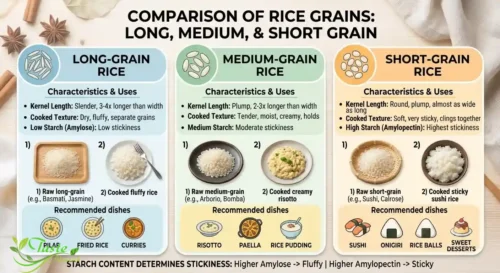
That genetic split is why a bag of basmati and a bag of arborio behave so differently on the stove. Different grain shapes contain different ratios of two starches — amylose and amylopectin — and that ratio determines whether the cooked rice turns out fluffy and separate or soft and clingy.
How Rice Is Classified
Rice is typically sorted along three lines: grain length, milling (how much of the outer grain layers were removed), and aroma. Grain length affects texture, milling affects nutrition and shelf life, and aroma is what gives varieties like basmati and jasmine their signature scent. Understanding these three factors makes it much easier to substitute one rice for another without wrecking a recipe.
Rice by Grain Length
Grain length is the first thing most cooks check, because it’s the single biggest predictor of texture.
Long-Grain Rice
Long-grain rice is about four to five times longer than it is wide, and it cooks up dry, light, and separate rather than sticky. In the United States, long-grain varieties make up roughly 75% of total rice production, according to USDA data. Basmati, jasmine, and most everyday American long-grain rice fall into this category, making it the default choice for pilafs, fried rice, and side-dish rice.
Medium-Grain Rice
Medium-grain rice is shorter and plumper than long-grain, with a bit more amylopectin, which gives it a softer, slightly clingy bite once cooked. It sits in a useful middle ground — not sticky enough for sushi, but too moist for a fluffy pilaf. Arborio and Valencia rice, the backbone of risotto and paella, are the best-known medium-grain varieties.
Short-Grain Rice
Short-grain rice is almost round and packed with amylopectin, so the grains cling together tightly when cooked. That stickiness is exactly what makes short-grain rice — including sushi rice — easy to shape by hand. In the U.S., medium- and short-grain production is concentrated almost entirely in California’s Sacramento Valley, while the South grows mostly long-grain rice, per USDA regional production data.
Pro tip: If a recipe calls for a rice you don’t have, matching by grain length is a safer swap than matching by name. A short-grain sushi rice can usually stand in for arborio in a pinch; a long-grain basmati cannot.
Popular Rice Varieties Around the World
Beyond grain length, individual named varieties bring their own flavor, aroma, and cultural history to the table.
Basmati Rice
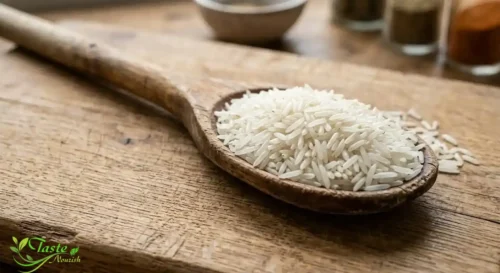
Basmati is a long-grain, aromatic rice grown mainly in India and Pakistan, prized for its nutty flavor and the way the grains elongate and separate when cooked. It’s the traditional base for biryani and pilaf across South Asian cuisine. Aged basmati, which is stored for a year or more before sale, tends to have an even more pronounced aroma and firmer bite.
Jasmine Rice
Jasmine rice is a fragrant long-grain variety from Thailand, softer and slightly stickier than basmati once cooked. Its subtle floral scent pairs naturally with Thai and Vietnamese curries, stir-fries, and coconut-based dishes. Jasmine and basmati together account for the large majority of aromatic rice imported into the United States.
Arborio Rice
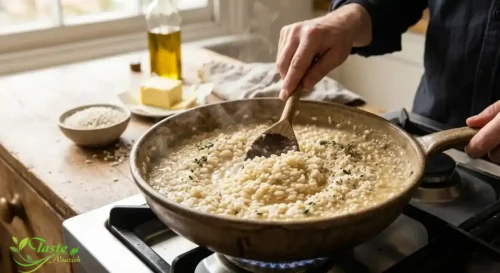
Arborio is a medium-grain Italian rice with a high starch content concentrated near the surface of the grain. That starch releases slowly during cooking and creates the creamy, spoonable texture that defines a proper risotto. It’s not a good substitute for everyday steamed rice, since it turns gummy if simply boiled and drained.
Sushi Rice
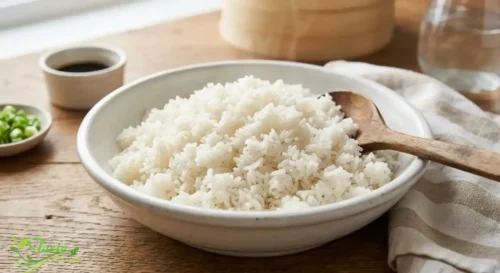
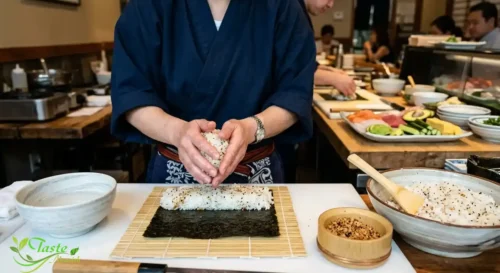
Sushi rice — often a short-grain Japanese japonica variety like Koshihikari — is seasoned with rice vinegar, sugar, and salt after cooking. The natural stickiness of short-grain rice is what allows it to hold its shape around fish or inside a roll. Rinsing the raw grains thoroughly before cooking is essential; skipping this step leaves the rice gummy rather than pleasantly tacky.
Wild Rice
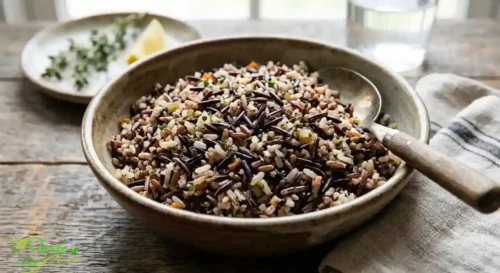
Wild rice isn’t technically rice at all — it’s the seed of a separate aquatic grass, most commonly Zizania palustris, native to the Great Lakes region of North America. It has a chewier bite, a smoky, earthy flavor, and a longer cook time than true rice. Nutritionally, it tends to run higher in protein than most true rice varieties, which is part of why it’s often blended into pilafs and stuffing.
Black Rice (Forbidden Rice)
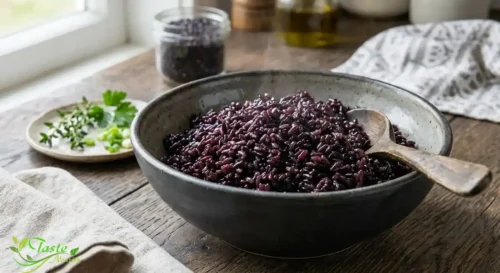
Black rice gets its deep purple-black color from anthocyanins, the same class of antioxidant pigments found in blueberries and purple cabbage. Historically grown in China, it’s a whole-grain rice with a chewy texture and a slightly sweet, nutty flavor once cooked. It’s sold whole (unmilled), so it retains the bran layer and cooks more like brown rice than white.
Red Rice
Red rice, including Bhutanese and Himalayan varieties, gets its color from a different antioxidant compound in the bran layer. Like black rice, it’s typically sold unmilled, giving it a firmer texture and more pronounced flavor than white rice. It works well in grain bowls and salads where a heartier bite is welcome.
Glutinous (Sticky) Rice
Despite the name, glutinous rice contains no gluten — the “glutinous” label refers to its glue-like texture, not wheat protein. It’s an extremely amylopectin-heavy short-grain rice used across Southeast Asian cooking for dishes like mango sticky rice and Chinese zongzi. It’s naturally safe for people avoiding gluten, though cross-contamination during processing is still worth checking on packaging.
Parboiled (Converted) Rice
Parboiled rice is partially boiled in the husk before milling, which pushes some nutrients from the bran into the grain’s interior and firms up the starch structure. The result is a rice that cooks up notably fluffy and resists clumping, with a slightly different color and aroma than regular white rice. Because part of the milling loss is offset by the parboiling process, it also tends to retain more nutrients than standard white rice.
White Rice vs. Brown Rice: What’s the Real Difference?
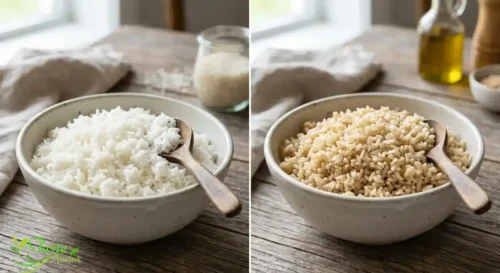
The white-versus-brown question isn’t really about variety — it’s about processing. Brown rice is the whole grain with only the inedible outer husk removed, keeping the bran and germ intact. White rice has been milled further, stripping away the bran and germ and leaving just the starchy endosperm.
Factor
White Rice
Brown Rice
Grain structure
Endosperm only
Bran, germ, and endosperm intact
Fiber
Very low
Noticeably higher
Cooking time
Faster (about 15–20 minutes)
Slower (about 40–50 minutes)
Shelf life
Longer (low oil content)
Shorter (bran oils can turn rancid)
Glycemic index
Higher, averaging around 64
Lower, averaging around 55
Flavor
Mild, neutral
Nuttier, chewier
Both are nutritionally reasonable choices in a varied diet, and the Harvard T.H. Chan School of Public Health’s Nutrition Source notes that white rice isn’t recommended as a primary staple grain given its lower fiber and micronutrient content compared with whole grains. Brown rice generally comes out ahead on fiber, B vitamins, and minerals like magnesium, simply because those nutrients are concentrated in the bran and germ layers that milling removes.
Rice Nutrition at a Glance
Based on U.S. Department of Agriculture FoodData Central figures, a standard 1-cup (158 g) serving of cooked white rice provides approximately:
Calories: about 205
Protein: about 4 grams
Carbohydrates: about 45 grams
Fiber: under 1 gram
Fat: less than 1 gram
Cooked brown rice runs close in calories — typically 215 to 250 per cup depending on how tightly it’s packed — but delivers meaningfully more fiber, along with more magnesium, phosphorus, and B vitamins, since the bran and germ are still intact. Rice in either form is naturally low in fat and sodium and contains no cholesterol, which is part of why it functions as a neutral base for so many different cuisines.
Pro tip: Because rice is almost entirely carbohydrate with very little fat or protein, portion size is what really drives the calorie count on your plate — not the type of rice you choose.
Potential Health Benefits of Rice
Rice, particularly in its whole-grain (brown, black, or red) form, may offer several dietary advantages as part of a balanced eating pattern. It’s naturally gluten-free, which makes it a reliable staple for people with celiac disease or gluten sensitivity who need to avoid wheat, barley, and rye. Whole-grain rice varieties also contribute dietary fiber, which is associated with steadier digestion and may support healthy cholesterol levels over time.
Large observational studies have linked higher whole-grain intake, including brown rice, with a lower relative risk of developing type 2 diabetes compared with diets heavier in refined grains. Black and red rice varieties additionally contain anthocyanin antioxidants, compounds that are being studied for a possible role in reducing oxidative stress, though this research is still developing and shouldn’t be read as a treatment claim.
Rice is also easy to digest and low in common allergens, which is why it’s frequently one of the first solid foods introduced to infants.
Health Risks and Who Should Be Cautious
Rice is generally considered a safe, well-tolerated food, but a few groups have specific reasons to moderate their intake or choose varieties carefully.
Arsenic in Rice: What the Science Says
Rice absorbs arsenic from soil and water more readily than most other grain crops, because it’s grown in flooded paddies that allow the naturally occurring element to accumulate in the grain.
The U.S. Food and Drug Administration has set a specific action level of 100 parts per billion for inorganic arsenic in infant rice cereal, reflecting concern that early-life exposure to inorganic arsenic may affect neurodevelopment. Brown rice tends to contain somewhat higher arsenic levels than white rice, since the metal concentrates more in the bran layer that white rice has had removed.
The FDA and pediatric health authorities recommend that infants and young children eat a variety of grains rather than relying on rice as the primary source, and that pregnant women do the same. For home cooks who want to reduce exposure, the Harvard Nutrition Source suggests rinsing rice thoroughly before cooking and using an excess-water method — roughly 6 to 10 cups of water per 1 cup of rice, drained after cooking — which can cut arsenic content by about half, though some water-soluble B vitamins are lost in the process too.
Key takeaway: Occasional rice consumption isn’t considered a significant arsenic risk for most healthy adults. The main precaution applies to infants, young children, and anyone eating rice as their dominant daily grain.
Rice and Blood Sugar
People managing type 2 diabetes or insulin resistance may want to pay closer attention to rice type and portion size. A widely cited cohort study published in Archives of Internal Medicine and led by Harvard researchers found that participants who ate white rice five or more times a week had a 17% higher relative risk of developing type 2 diabetes than those who ate it less than once a month, while higher brown rice intake was associated with a lower relative risk in the same population.
The researchers pointed to white rice’s higher glycemic index and lower fiber content as likely contributing factors, since fiber slows the rate at which starch is broken down into glucose.
This doesn’t mean white rice needs to be eliminated for everyone with blood sugar concerns — pairing it with protein, fat, or fiber-rich vegetables blunts its glycemic impact, and portion control matters as much as rice type. Anyone with diagnosed diabetes or prediabetes should work with a registered dietitian or physician to figure out how rice fits their individual plan, rather than relying on generic online guidance.
How to Buy and Store Rice
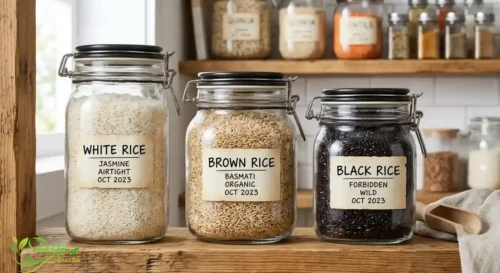
Buying good rice is mostly about matching the variety to your intended dish and checking that the packaging is sealed and free of moisture or pest damage. For brown, black, and red rice, look at the packing or “best by” date more carefully than you would for white rice, since the intact bran layer contains natural oils that can turn rancid over time.
Rice Type
Pantry Shelf Life (uncooked)
Storage Tip
White rice
4–5 years
Airtight container, cool and dry
Brown, black, red rice
6–12 months
Refrigerate or freeze for longer freshness
Cooked rice (any type)
4–6 days refrigerated
Cool quickly, store in a sealed container
Cooked rice deserves extra care. Rice can harbor spores of Bacillus cereus, a bacterium that survives cooking and can multiply if rice sits at room temperature too long, so leftovers should be refrigerated within about two hours of cooking and reheated until steaming hot throughout before eating.
Best Rice Type for Every Dish
Matching the right rice to the right recipe makes a bigger difference than most home cooks realize.
Dish
Best Rice Type
Why It Works
Sushi
Short-grain Japanese rice
High starch content holds shape
Risotto
Arborio or Carnaroli
Releases starch slowly for creaminess
Biryani or pilaf
Basmati
Grains stay long, dry, and separate
Thai or Vietnamese curry
Jasmine
Fragrant, slightly sticky, absorbs sauce
Paella
Bomba or Valencia (medium-grain)
Absorbs liquid without turning mushy
Stuffing or grain bowls
Wild rice
Chewy texture holds up to mixing
Everyday side dish
Long-grain white or brown
Neutral flavor, reliable texture
Common Myths About Rice, Debunked
A few persistent myths about rice are worth clearing up, since they shape how people cook and eat it more than the actual science does.
Myth: Brown rice is always the “healthy” choice and white rice has no place in a good diet. Brown rice offers more fiber and micronutrients, but white rice isn’t inherently unhealthy in reasonable portions — the concern in the research is mainly about very high, frequent intake displacing more nutrient-dense whole grains over time.
Myth: Rinsing rice removes all its nutrients. Rinsing mainly removes surface starch, which is why it prevents gumminess; it doesn’t strip out meaningful amounts of vitamins or minerals from intact grains, though it can reduce arsenic slightly.
Myth: All rice is naturally gluten-free, so any rice product is automatically safe for celiac disease. Plain rice is gluten-free, but processed rice products can pick up gluten through shared equipment or added ingredients, so anyone with celiac disease should still check labels on rice-based cereals, noodles, or crackers.
Myth: Sticky rice and glutinous rice are less nutritious than “regular” rice. Stickiness comes down to starch structure (amylopectin content), not nutrient density — a sticky short-grain rice and a fluffy long-grain rice from the same milling level are nutritionally quite similar.
Conclusion
Rice earns its place as a global staple because it’s genuinely versatile — the right variety can turn out fluffy, creamy, chewy, or sticky depending on what a dish calls for. Grain length and milling level explain most of the practical differences between varieties, while the health picture comes down mostly to fiber content, glycemic index, and reasonable portioning rather than any single rice type being universally “good” or “bad.”
Keeping a couple of varieties on hand — a long-grain like basmati or jasmine, plus a whole-grain option like brown or black rice — covers the vast majority of home cooking needs while offering some nutritional balance across the week.
Types of Rice FAQs
Is brown rice actually healthier than white rice?
Brown rice generally provides more fiber, B vitamins, and minerals because the bran and germ remain intact, and it’s associated with a lower relative risk of type 2 diabetes in large cohort studies compared with white rice. White rice isn’t unhealthy in moderate portions, but it offers less nutritional density per serving.
What’s the healthiest type of rice to eat regularly?
There’s no single “healthiest” rice for everyone, but whole-grain varieties — brown, black, and red rice — generally offer the most fiber and micronutrients per serving. The best choice ultimately depends on individual health goals, blood sugar sensitivity, and what the rest of the meal looks like.
Why does sushi rice stick together while basmati rice doesn’t?
It comes down to starch composition. Short-grain sushi rice is higher in amylopectin, which makes grains cling together, while long-grain basmati is higher in amylose, which keeps grains firm and separate after cooking.
Should I worry about arsenic in rice?
Occasional rice consumption isn’t considered a major arsenic concern for most healthy adults, but infants, young children, and pregnant women are advised to eat a variety of grains rather than relying heavily on rice, per FDA guidance. Rinsing rice and cooking it in excess water that’s later drained can also reduce arsenic content.
Can people with diabetes eat rice?
Yes, but portion size and rice type matter. Choosing brown, black, or red rice over white, pairing rice with protein and fiber-rich vegetables, and watching portions can all help moderate its effect on blood sugar; anyone with diabetes should still confirm an individual approach with their healthcare provider.
Sun Q, Spiegelman D, van Dam RM, et al. “White Rice, Brown Rice, and Risk of Type 2 Diabetes in US Men and Women.” Archives of Internal Medicine, National Institutes of Health, PubMed Central. https://pmc.ncbi.nlm.nih.gov/articles/PMC3024208/
Hanan Abo Samra is the founder of Taste & Nourish, sharing trustworthy nutrition guidance and recipes drawn from 20+ years of hands-on cooking experience. When she's not developing new recipes, Hanan is researching the science behind everyday ingredients to bring readers practical, evidence-based guidance for a healthier lifestyle.