Garlic sits in almost every kitchen, yet most people have no real idea how many calories it actually contains. That’s not surprising — you’re not exactly eating garlic by the bowlful. Still, if you track macros, manage a health condition, or just like knowing what’s on your plate, it’s worth understanding the numbers behind this pungent little bulb.
The short answer: garlic is one of the lowest-calorie ingredients in your pantry. The longer, more useful answer covers exactly how those calories break down, how cooking affects them, and what garlic actually does for your body beyond flavor. That’s what this guide covers, using verified data straight from the USDA and the National Institutes of Health rather than recycled blog estimates.
Key takeaway: A single raw garlic clove contains roughly 4 to 5 calories. Even a generous serving of six cloves adds up to less than 30 calories — about what you’d get from a single bite of bread.
Garlic Calories at a Glance
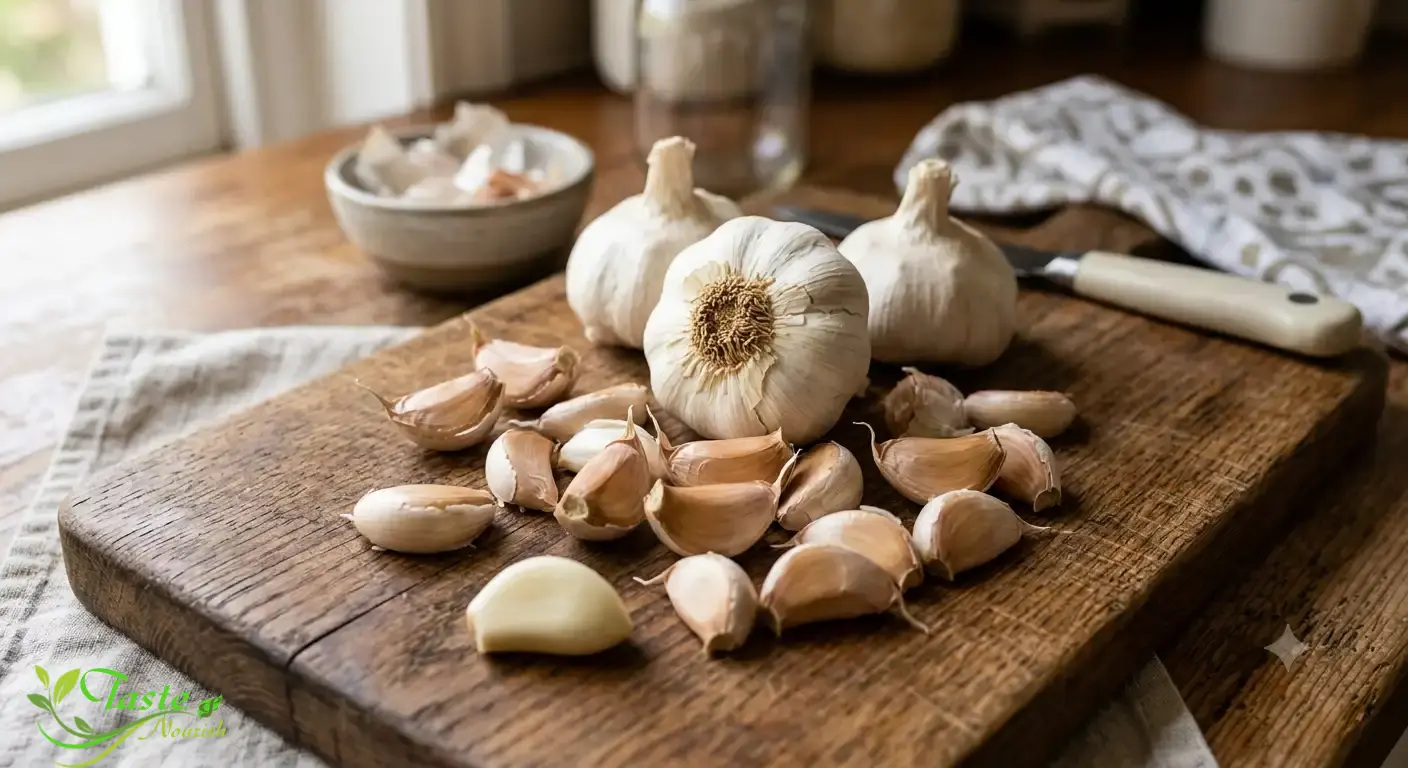
Raw garlic contains 149 calories per 100 grams, according to the U.S. Department of Agriculture’s FoodData Central database. That number sounds substantial until you remember how little garlic you actually use in a dish. A whole peeled clove typically weighs around 3 grams, which is a tiny fraction of that 100-gram reference amount.
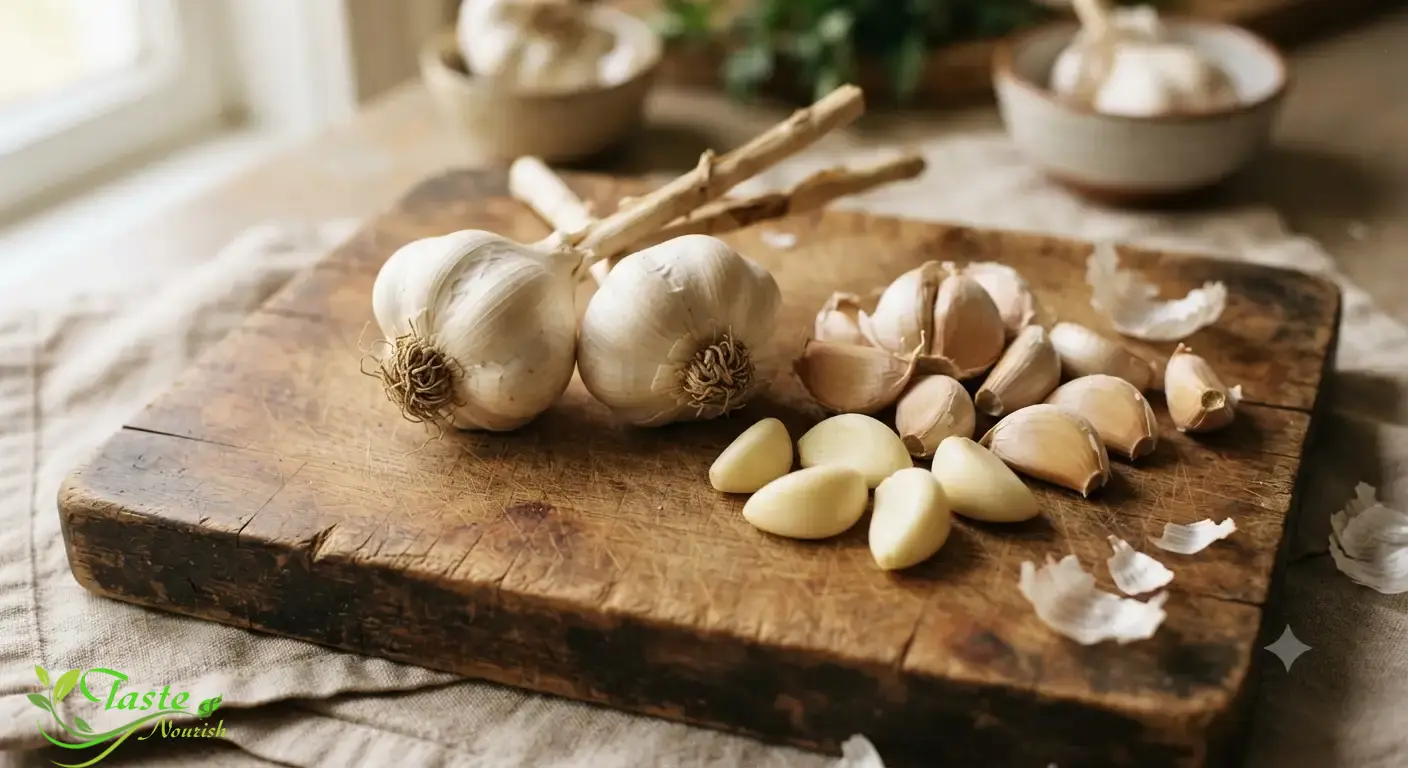
Clove size does vary. A small, papery clove from a softneck variety might weigh closer to 2 grams, while a large clove from a hardneck variety can weigh 5 grams or more. Elephant garlic, which is botanically closer to a leek than true garlic, produces cloves several times larger still. None of this changes garlic’s caloric density — it’s still about 1.5 calories per gram — but it does mean “one clove” isn’t a perfectly fixed unit for calorie tracking.
Calories Per Clove, Tablespoon & Cup
For everyday cooking, here’s how the numbers shake out using standard USDA reference weights:
Serving
Approximate Weight
Calories
1 clove, raw
3 g
4–5
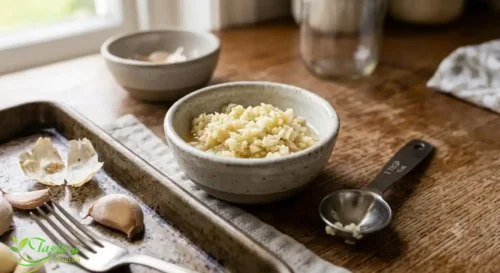
3 cloves (about 1 tbsp minced)
9 g
13–14
1 tablespoon, minced
9 g
13–14
1 whole head (about 10–12 cloves)
40 g
55–60
1 cup, chopped
136 g
~200
Even the most enthusiastic garlic lover rarely eats a full cup of it in one sitting, so in practical terms, garlic contributes almost nothing to your daily calorie total. Compare that to a tablespoon of olive oil at around 119 calories, and it’s clear garlic earns its keep on flavor, not fuel.
Full Nutrition Facts for Raw Garlic
Calories only tell part of the story. Garlic’s real nutritional identity comes from its unusually dense mix of sulfur compounds, trace minerals, and small but meaningful amounts of several vitamins — all packed into an ingredient you use by the clove, not the cup.
Macronutrients in Garlic
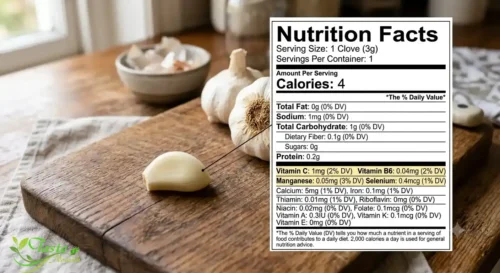
A single 3-gram clove of raw garlic breaks down to about 0.19 grams of protein, 0.99 grams of carbohydrate, and 0.02 grams of fat, with roughly 0.06 grams of that carbohydrate coming from fiber. Scaled up to the standard 100-gram USDA reference, raw garlic provides about 6.4 grams of protein, 33 grams of carbohydrate, 2.1 grams of fiber, and just 0.5 grams of fat.
Most of garlic’s carbohydrate content isn’t sugar — it’s made up of fructans, a type of fermentable fiber that feeds gut bacteria but can also trigger bloating in people sensitive to FODMAPs.
Key Vitamins and Minerals
Garlic isn’t a major source of any single nutrient in the amounts typically consumed, but it does contribute meaningfully to a few, especially vitamin B6 and manganese. Here’s what one clove provides, according to USDA FoodData Central:
Nutrient
Amount per Clove (3g)
% Daily Value
Vitamin C
0.94 mg
~1%
Vitamin B6
0.04 mg
~2%
Manganese
0.05 mg
~2%
Selenium
0.43 mcg
~1%
Potassium
12 mg
<1%
Calcium
5.4 mg
<1%
Sodium
0.51 mg
<1%
None of these numbers look impressive in isolation, and that’s the honest picture — one clove simply isn’t a large enough dose to move the needle on most nutrient targets. Garlic’s nutritional reputation rests less on vitamins and minerals and more on its organosulfur compounds, particularly allicin, which forms when a clove is crushed, chopped, or chewed.
Pro tip: Let chopped or crushed garlic sit for about 10 minutes before cooking it. This gives the enzyme alliinase time to convert alliin into allicin, which is partly destroyed by heat. Resting first preserves more of the compound before it hits the pan.
Does Cooking Change Garlic’s Calorie Count?
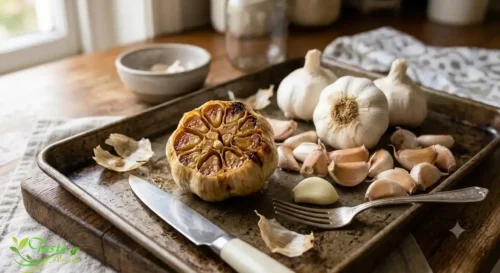
Cooking method affects garlic’s flavor dramatically, but it barely touches its calorie count. Roasting, sautéing dry, or drying garlic doesn’t add energy — it just removes water, concentrating the same calories into a smaller, more caramelized package. A roasted clove isn’t “more caloric” than a raw one of the same original weight; it just tastes sweeter and milder because heat mellows garlic’s sharp sulfur compounds.
Where calories genuinely climb is in how garlic gets prepared and served. Sautéing cloves in oil adds roughly 120 calories per tablespoon of oil used, and that’s coming from the fat, not the garlic itself. The same logic applies to garlic bread, aioli, or garlic butter — the garlic is nearly calorie-free, but the fat and refined carbs surrounding it are not.
This is a common point of confusion: people blame garlic for the calorie load of dishes where garlic is actually the least caloric ingredient on the plate.
⇒ Garlic powder is a different story worth flagging separately. Because it’s dehydrated, it’s far more calorie-dense by weight — about 331 calories per 100 grams — but a typical serving (roughly 1 teaspoon, or 3 grams) still comes in at around 10 calories, since you use so little of it at a time.
Garlic 101: Origin, Types & Flavor
Garlic (Allium sativum) belongs to the same plant family as onions, leeks, and chives, and humans have cultivated it for thousands of years across Asia, the Mediterranean, and beyond. It doesn’t grow wild — every bulb traces back to deliberate cultivation, which is part of why its species name, sativum, literally means “cultivated.” Ancient Egyptian, Greek, and Roman texts all reference garlic for both cooking and medicinal use, and that dual identity has followed it ever since.
Two broad categories dominate today’s garlic supply: softneck and hardneck varieties.
Softneck garlic (the kind you’ll usually find braided or sold loose in grocery stores) tends to have smaller, more numerous cloves and a longer shelf life.
Hardneck garlic produces fewer, larger cloves with a more complex, sometimes spicier flavor, but it doesn’t store as long.
♦ Raw garlic delivers a sharp, pungent bite thanks to freshly formed allicin; that harshness mellows considerably with cooking, shifting toward something nuttier and sweeter, especially when roasted whole.
Potential Health Benefits of Garlic
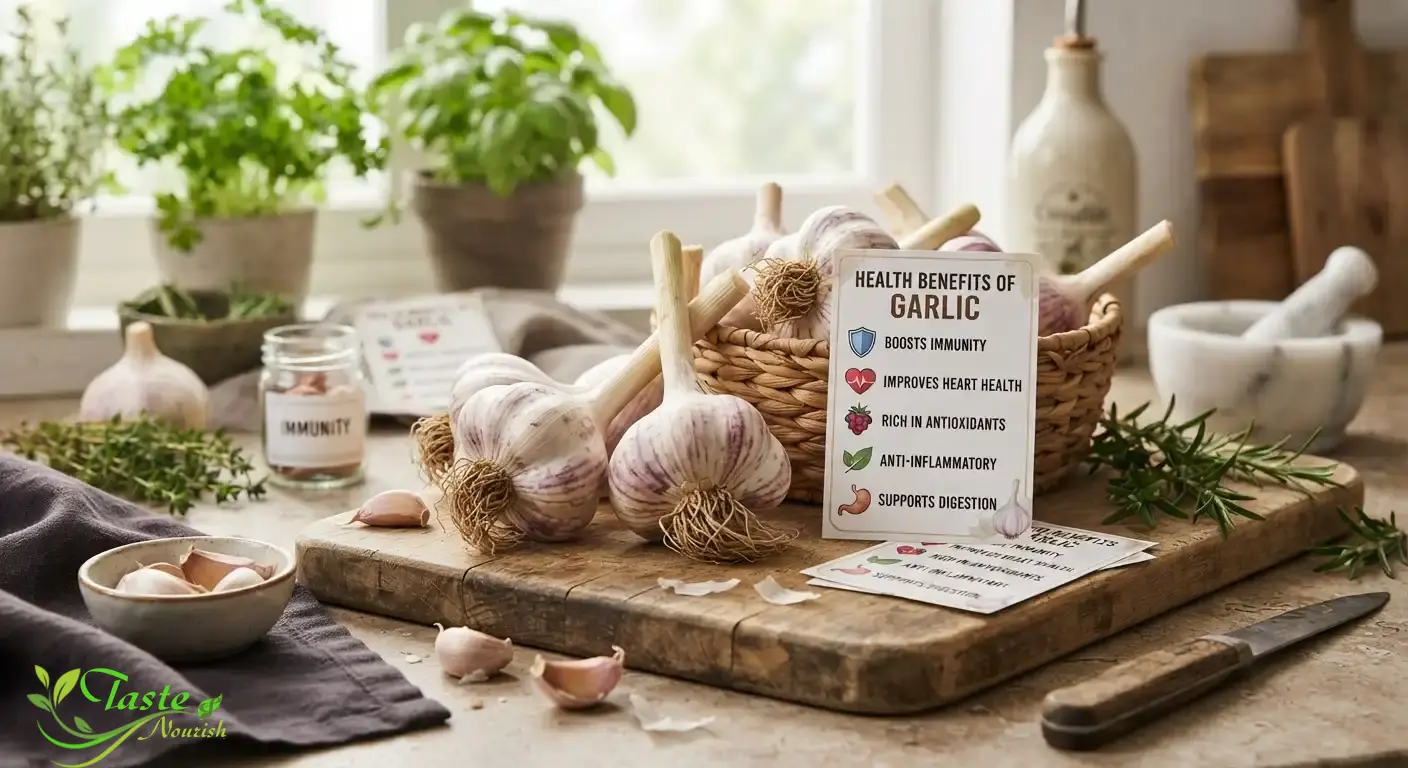
Garlic’s health reputation is centuries old, but modern research paints a more measured picture than folklore suggests. Some effects are reasonably well supported by clinical trials; others remain preliminary or mixed. According to the NIH’s National Center for Complementary and Integrative Health, garlic is heavily studied for cardiovascular effects in particular, though the evidence isn’t uniformly strong across every claimed benefit.
Heart Health, Cholesterol & Blood Pressure
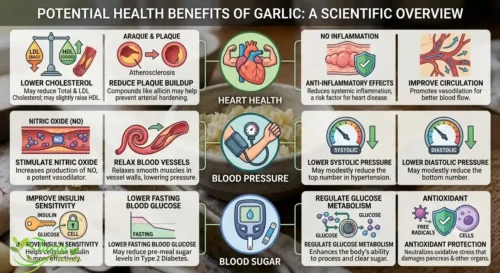
Garlic supplements may modestly reduce total and LDL (“bad”) cholesterol in people who already have elevated levels, though the effect size is generally small and doesn’t extend meaningfully to HDL cholesterol or triglycerides.
NCCIH notes that evidence remains mixed overall on whether garlic supplements meaningfully change cardiovascular risk factors, even though some individual trials have shown benefit.
♦ On blood pressure, the picture is similarly cautious: limited evidence suggests garlic supplements may lower blood pressure to a small extent in people who already have hypertension, but this isn’t considered a substitute for prescribed treatment.
Blood Sugar & Immune Support
For blood sugar, some research suggests garlic supplements may reduce fasting glucose to a modest degree in people with diabetes, though study quality and dosing vary widely, which makes it hard to draw firm conclusions for general use.
On immunity, NCCIH points out that very little rigorous research actually supports the popular idea that garlic wards off colds — a 2022 review found only two studies suggesting a possible benefit, both small and methodologically limited.
♦ None of this means garlic is ineffective; it means the evidence is real but modest, and garlic works best as a supporting player in an already healthy diet rather than a stand-alone treatment for any condition.
Risks, Side Effects & Who Should Be Cautious
For most people eating garlic in normal culinary amounts, it’s considered safe with few downsides beyond the obvious one: breath and body odor, which tend to be more noticeable with raw garlic than cooked. Other common side effects at higher intakes include heartburn, gas, and general stomach upset, particularly in people sensitive to FODMAPs.
The more important caution involves garlic’s effect on blood clotting. Garlic may increase bleeding risk, and it has known interactions with certain medications, including at least one HIV antiretroviral drug where interference has been documented. A few groups should be more careful:
People on blood thinners (such as warfarin or aspirin) or with bleeding disorders, since garlic may compound the effect.
Anyone scheduled for surgery, as some clinicians recommend stopping garlic supplements roughly two weeks beforehand.
People with a diagnosed garlic allergy, which can cause skin or digestive reactions.
Pregnant or breastfeeding individuals taking garlic in supplement doses well beyond typical food amounts, where safety data is limited.
It’s also worth noting garlic is toxic to dogs and cats, so keep garlicky scraps away from pets. And because dietary supplements containing garlic aren’t reviewed by the FDA for safety or effectiveness before hitting shelves, anyone considering a concentrated garlic supplement — rather than garlic as food — should talk to a healthcare provider first, especially if they take other medications.
Buying, Storing & Cooking Tips
Good garlic starts with the bulb itself: look for heads that feel firm and heavy for their size, with tight, unbroken skin and no soft spots, sprouting green shoots, or mold. Avoid anything that feels papery-light or has cloves that shift loosely inside the skin, which usually signals the bulb has dried out past its prime.
Store whole, unpeeled garlic in a cool, dry, well-ventilated spot — not the refrigerator, which encourages sprouting and can turn the texture rubbery. A mesh bag or open bowl works better than a sealed container. Once peeled or chopped, garlic should go in the fridge and gets used within a few days, since cut garlic loses potency and can develop food-safety concerns if stored improperly in oil at room temperature.
A few practical habits make a real difference in the kitchen:
Crush or chop garlic and let it rest 10 minutes before heating, to maximize allicin formation.
Add garlic later in the cooking process for sharper flavor, or earlier for a milder, sweeter result.
Never store garlic-in-oil mixtures at room temperature — refrigerate them and use within about a week, due to botulism risk in low-oxygen environments.
If you’re calorie-tracking with precision, weigh cloves on a kitchen scale rather than counting by eye, since size varies enough to shift totals meaningfully at scale.
Conclusion
Garlic earns its place in your kitchen without earning a spot on your calorie worry list. At roughly 4 to 5 calories per clove, it’s one of the most efficient flavor-to-calorie ingredients available, and cooking method changes its taste far more than it changes its energy content. The real nutritional story lies in its organosulfur compounds and the modest, well-documented — if not miracle-level — effects those compounds may have on cholesterol, blood pressure, and blood sugar.
♦ Use garlic generously for flavor, keep an eye on how you cook it (the oil matters more than the garlic does), and if you’re on blood thinners or facing surgery, loop in your doctor before upping your intake in supplement form.
Garlic Calories FAQs
How many calories are in one clove of garlic?
A single raw clove, averaging about 3 grams, contains roughly 4 to 5 calories, based on USDA FoodData Central values. Larger cloves from hardneck varieties can run slightly higher, while small softneck cloves may be a bit lower.
Does roasting garlic add calories?
No. Roasting concentrates garlic’s existing calories by removing water, but it doesn’t add new energy on its own. Any extra calories in a roasted garlic dish typically come from added oil, not the garlic itself.
Is garlic good for weight loss?
Garlic won’t drive weight loss on its own, but its low calorie count and intense flavor make it useful for building satisfying meals without relying on high-calorie sauces, cheese, or excess salt. It’s a supporting tool, not a fat-burning ingredient.
How many calories are in a whole head of garlic?
A full head, roughly 10 to 12 cloves and about 40 grams, contains approximately 55 to 60 calories total — still a small amount even if you used the entire bulb in one dish.
Can eating too much garlic cause side effects?
Yes. Common side effects of high garlic intake include bad breath, body odor, heartburn, gas, and stomach upset, which tend to be more pronounced with raw garlic. People on blood thinners or with upcoming surgery should also be cautious, since garlic may increase bleeding risk.
National Center for Complementary and Integrative Health, National Institutes of Health. “Garlic: Usefulness and Safety.” https://www.nccih.nih.gov/health/garlic
Ansary, J., Forbes-Hernández, T.Y., Gil, E., et al. “Potential Health Benefit of Garlic Based on Human Intervention Studies: A Brief Overview.” Antioxidants (Basel), 2020;9(7):619. National Library of Medicine, PubMed Central. https://pmc.ncbi.nlm.nih.gov/articles/PMC7402177/
This guide is for informational purposes only and should not replace professional medical or nutritional advice. Always consult with healthcare providers regarding specific dietary needs and health conditions.
Hanan Abo Samra is the founder of Taste & Nourish, sharing trustworthy nutrition guidance and recipes drawn from 20+ years of hands-on cooking experience. When she's not developing new recipes, Hanan is researching the science behind everyday ingredients to bring readers practical, evidence-based guidance for a healthier lifestyle.