
Benefits of Turmeric: What Science Really Says (2026 Guide)
Turmeric Benefits, Risks & Dosage: The Complete Evidence-Based Guide
The Benefits of Turmeric
If you’ve spent any time in the wellness aisle lately, you’ve probably noticed turmeric popping up everywhere — lattes, capsules, face masks, even ice cream. It’s the spice that turned into a supplement empire almost overnight. But behind the marketing, there’s a genuinely interesting story about a plant that’s been used in kitchens and healing traditions for thousands of years.
This guide breaks down what turmeric actually is, what the research does and doesn’t support, how to use it safely, and who should think twice before adding it to their routine. No hype, no miracle claims — just a clear, evidence-based look at the benefits of turmeric.
What Is Turmeric, Exactly?
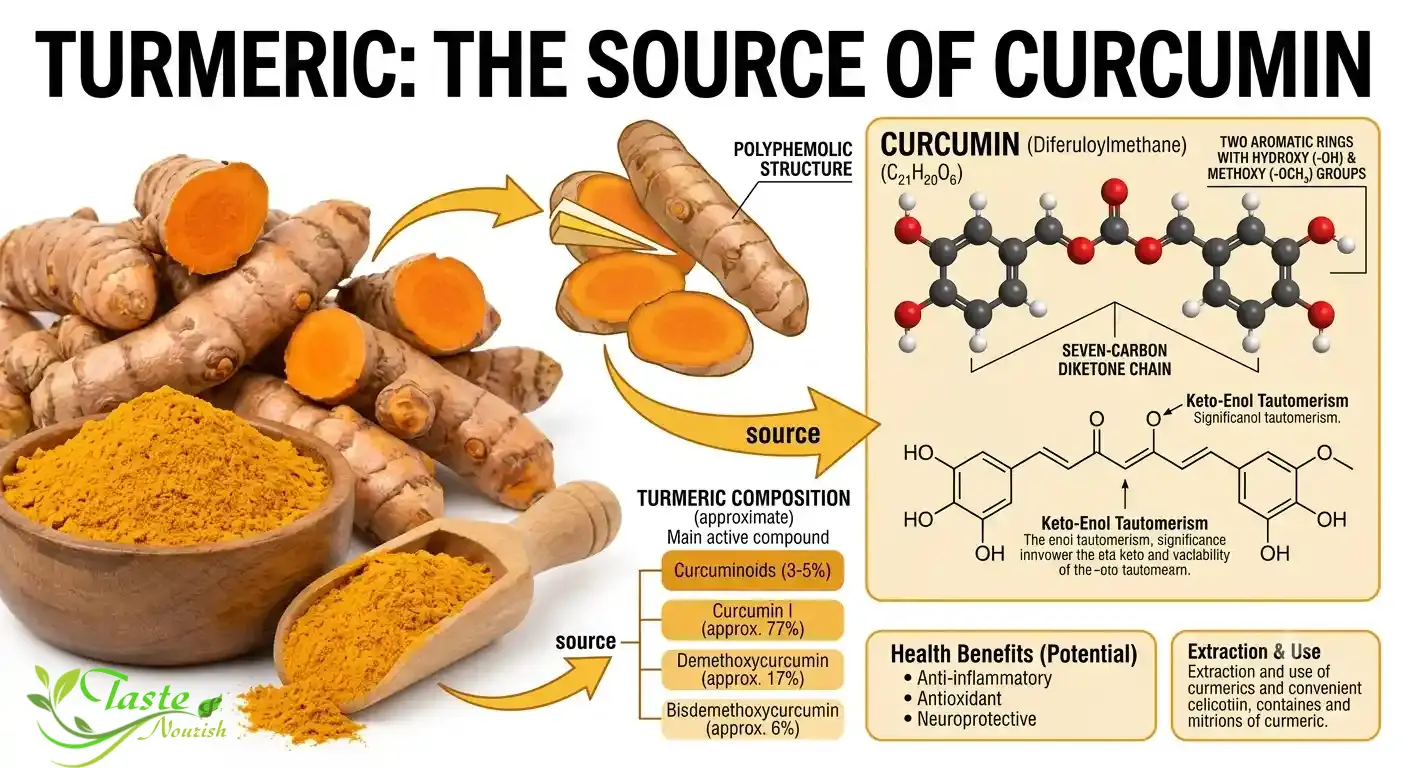
Turmeric is a bright orange-yellow rhizome — essentially an underground stem — that comes from the plant Curcuma longa, a relative of ginger. It’s grown throughout South and Southeast Asia, with India producing the vast majority of the world’s supply. Once harvested, the root is boiled, dried, and ground into the fine powder most of us recognize from curry blends and mustard.
The compound responsible for turmeric’s color and most of its buzz is curcumin, one of a group of plant chemicals called curcuminoids. Curcumin is what researchers are usually studying when you see a headline about “turmeric’s health benefits,” and it’s worth understanding that distinction early on.
Turmeric vs. Curcumin: What’s the Difference?
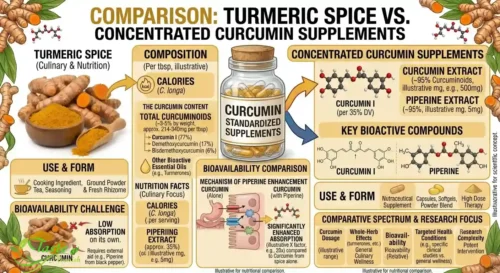
Think of turmeric as the whole orchestra and curcumin as its lead violinist. Turmeric root contains curcumin, but only in small amounts — roughly 2 to 5 percent by weight. That means a teaspoon of turmeric powder in your soup delivers a modest dose of curcumin, while a supplement labeled “curcumin extract” is concentrated specifically to boost that number. According to the National Center (NCCIH), the health activities associated with turmeric are commonly attributed to curcuminoids, including curcumin, which is why so much of the clinical research focuses on curcumin extracts rather than the raw spice itself.
Where Turmeric Comes From: A Quick History Lesson
Turmeric’s résumé goes back roughly 4,000 years. It has deep roots in Ayurvedic medicine, where it was traditionally used for everything from digestive complaints to skin conditions, and it holds a similarly long-standing place in traditional Chinese medicine. Beyond its medicinal use, turmeric has religious and ceremonial significance in parts of South Asia, where it’s used in weddings and rituals as a symbol of purity and prosperity.
Its culinary role is just as old. Turmeric is a foundational ingredient in curry powders across South Asian, Southeast Asian, and Middle Eastern cuisines, prized not just for flavor but for the deep golden color it lends to rice, stews, and sauces. That dual identity — spice cabinet staple and traditional remedy — is a big part of why it made such a smooth jump into the modern supplement world.
What Does Turmeric Taste Like?
If you’ve never cooked with it, turmeric’s flavor can be a little surprising. It’s earthy and slightly bitter, with a warm, peppery undertone and a faint mustard-like sharpness. It’s not spicy-hot like chili powder — the heat you taste in curry typically comes from other ingredients like chili or black pepper, not turmeric itself. Used sparingly, it adds warmth and color without overwhelming a dish; used heavily, it can turn bitter and slightly medicinal-tasting, which is why most recipes call for it in small, measured amounts alongside complementary spices like cumin, coriander, and ginger.
Turmeric Nutrition Facts
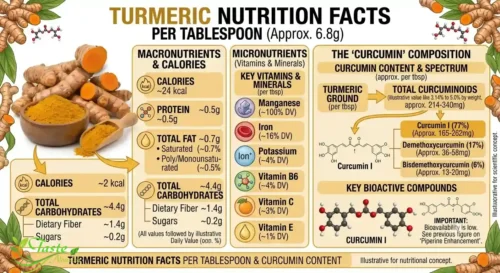
Turmeric isn’t eaten in large enough quantities to be a major source of most nutrients, but it does contain a small nutritional profile worth knowing. Here’s what one tablespoon (about 6.8 grams) of ground turmeric typically provides:
| Nutrient | Amount (approx.) |
|---|---|
| Calories | 24 kcal |
| Carbohydrates | 4.4 g |
| Fiber | 1.4 g |
| Protein | 0.5 g |
| Fat | 0.7 g |
| Iron | 1.7 mg (about 10% DV) |
| Manganese | 0.4 mg (about 19% DV) |
| Potassium | 111 mg |
| Curcumin content | roughly 150–250 mg |
Key Takeaway: Turmeric isn’t a significant source of calories or macronutrients, but its manganese and iron content is notable given how little of it people typically consume in a day. The real interest lies in curcumin, not the vitamin and mineral panel.
The Potential Health Benefits of Turmeric
This is the section everyone’s really here for, so let’s go through what the current research actually suggests — with the appropriate caveats, since much of this evidence is still developing.
1. May Help Calm Inflammation
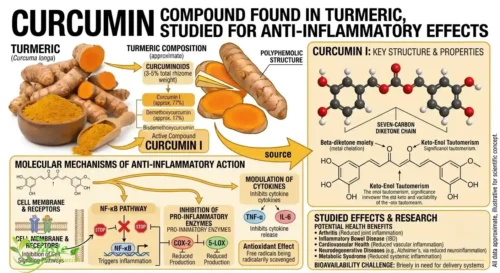
Curcumin’s anti-inflammatory activity is its most studied property. Laboratory research suggests curcumin may interfere with molecular pathways involved in inflammation, and this mechanism is the basis for most of the downstream benefits researchers have investigated, from joint comfort to cardiovascular health.
A widely cited peer-reviewed review in the journal Foods notes that curcumin aids in the management of oxidative and inflammatory conditions, along with metabolic syndrome, arthritis, anxiety, and hyperlipidemia, though the authors are careful to frame these as associations supported by early and ongoing research rather than settled conclusions.
2. May Support Joint Health and Ease Arthritis Symptoms
Osteoarthritis is one of the most heavily studied areas for turmeric and curcumin. Several clinical trials have looked at whether curcumin supplements can ease knee pain and improve mobility, with some showing modest benefits comparable to certain over-the-counter pain relievers. That said, researchers caution that supplement quality, dosage, and study length vary enormously, which makes it hard to draw firm conclusions across the board.
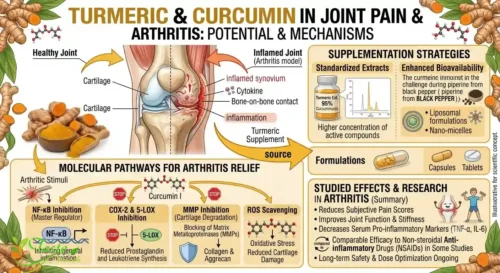
♦ If you’re managing arthritis symptoms, turmeric might be a reasonable complementary approach to discuss with a doctor — not a replacement for established treatment.
3. May Ease Digestive Discomfort
One of the more compelling recent findings involves functional dyspepsia — the medical term for chronic, unexplained stomach pain, bloating, and early fullness. A 2023 randomized trial covered by Harvard Health Publishing found that participants taking curcumin capsules experienced symptom relief comparable to those taking the acid-reducing medication omeprazole, with both groups reporting continued improvement over two months.
It’s a single study, and more research is needed, but it’s one of the more concrete pieces of clinical evidence for a specific, common complaint.
4. May Support Heart Health
Some research points to curcumin having a favorable effect on markers tied to cardiovascular health, including LDL cholesterol and markers of oxidative stress in blood vessels. The proposed mechanism ties back to curcumin’s antioxidant and anti-inflammatory properties, both of which are relevant to the processes underlying atherosclerosis.
However, this remains an area where lab and animal findings have outpaced large-scale human trials, so it’s best understood as a promising direction rather than a proven cardiovascular treatment.
5. May Help Manage Blood Sugar
There’s emerging interest in curcumin’s role in blood sugar regulation, particularly in people with prediabetes or type 2 diabetes. Some smaller studies suggest curcumin may modestly improve fasting blood glucose and other metabolic markers.
♦ If you have diabetes or take blood sugar medication, this is a benefit worth discussing with your healthcare provider rather than pursuing on your own, since turmeric can influence glucose levels and may interact with diabetes medications.
6. May Offer Antioxidant Protection
Curcumin is a polyphenol, a class of plant compounds known for neutralizing free radicals — unstable molecules that can damage cells over time. This antioxidant activity is part of why curcumin shows up in research on aging, skin health, and chronic disease prevention. It’s a genuinely interesting mechanism, but “antioxidant” alone isn’t a health outcome; the real question is whether that activity translates into measurable benefits in the body, and that’s still being worked out study by study.
7. Possible Brain and Mood Benefits
Turmeric occasionally gets mentioned alongside brain health and mood, partly because chronic inflammation is thought to play a role in both cognitive decline and depression. Some early research has explored whether curcumin might influence markers linked to memory and mood regulation. This is genuinely one of the more speculative areas of turmeric research, and it’s important to be direct about that rather than overstate what a handful of small trials can tell us.
What the Scientific Evidence Actually Shows
Here’s where it’s worth slowing down, because this is the part most turmeric articles gloss over.
The Bioavailability Problem
Curcumin has a well-documented absorption issue: your body simply doesn’t absorb much of it when taken on its own. It’s broken down quickly and eliminated before it can build up meaningful levels in the bloodstream. That’s why many supplements pair curcumin with piperine (an extract from black pepper) or use specialized formulations designed to improve absorption.
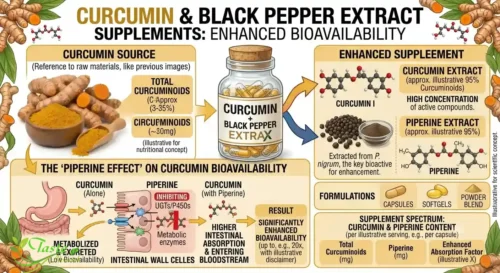
According to NCCIH, combining curcumin with piperine from black pepper is one recognized way to improve curcumin’s bioavailability — but the agency also flags an important trade-off worth taking seriously.
Where the Research Is Still Thin
NCCIH is refreshingly candid on this point: despite decades of interest, there isn’t yet enough evidence to definitively conclude that turmeric or curcumin is beneficial for any specific health condition. Much of the early promise comes from laboratory and animal studies, which don’t always translate cleanly into effects in real people.
The National Cancer Institute’s review of curcumin research reaches a similar note of caution, stating that early-phase trials exploring curcumin for cancer prevention have shown promising but preliminary results in colon, oral, and hepatic cancer research, language that reflects genuine scientific interest without overselling the findings.
Pro Tip: When you see a turmeric supplement claiming to “cure,” “reverse,” or “eliminate” a disease, treat that as a red flag rather than a selling point. Legitimate research on curcumin almost always uses cautious language — “associated with,” “may help,” “shows promise” — because the evidence, while genuinely interesting, isn’t at the level of a proven medical treatment.
Potential Risks and Side Effects
Turmeric used as a culinary spice, in the amounts typically found in food, is widely considered safe for most people. Concentrated curcumin supplements are a different story and deserve more caution. The most commonly reported side effects include mild digestive upset, nausea, and diarrhea, particularly at higher doses.
There’s also a less common but more serious concern: NCCIH notes that highly bioavailable curcumin formulations — the very products designed to absorb better — have been linked to liver injury in some people, which is a meaningful reason to be selective about which products you choose and to avoid assuming that “more absorbable” automatically means “safer.”Turmeric can also increase the risk of bleeding, especially when combined with blood-thinning medications, and there have been past cases of turmeric powder contaminated with lead, particularly in unregulated imported products. Buying from reputable, tested brands genuinely matters here.
Who Should Avoid or Use Caution With Turmeric
Certain groups should be more careful with turmeric supplements specifically, even if culinary use remains generally low-risk:
- People on blood thinners (like warfarin or aspirin), due to increased bleeding risk
- People with gallbladder disease, since turmeric can stimulate bile production
- People scheduled for surgery, who are typically advised to stop turmeric supplements beforehand
- People with kidney stones, because turmeric is relatively high in oxalates
- Pregnant or breastfeeding individuals, since supplement-level safety data is limited
- People with liver conditions, given the reports linking high-bioavailability formulations to liver stress
- People with diabetes, because turmeric may lower blood sugar and interact with medication
If you fall into any of these categories, the safest move is a conversation with your doctor before starting a curcumin supplement, not a quick online search.
How to Buy and Store Turmeric
Fresh Root vs. Powder vs. Supplements
Turmeric shows up in three main forms, and each serves a different purpose. Fresh turmeric root looks similar to ginger and has a brighter, slightly more citrusy flavor than the dried powder — it’s great grated into dressings, teas, or stir-fries, but it stains everything it touches, so handle it with care.
Dried, ground turmeric is the pantry staple most people know, shelf-stable and convenient, though it loses potency over time and should be stored in an airtight container away from light and heat.
Supplements, usually standardized curcumin extracts, are the most concentrated option and the form most clinical research actually studies — but they also carry the most risk if misused or poorly manufactured.
When buying supplements, look for third-party testing seals (like USP or NSF), a clearly listed curcumin content (not just “turmeric extract”), and a reputable manufacturer. Fresh turmeric root keeps for a couple of weeks in the fridge and can also be frozen for longer storage, while powder stays fresh for around a year if kept sealed and cool.
How to Use Turmeric in Cooking and Daily Life
Turmeric is far more versatile than curry powder alone. It works well in roasted vegetables, scrambled eggs, rice, lentil soups, and marinades, and a small pinch can deepen the color and flavor of a basic vinaigrette. Golden milk — turmeric warmed with milk, ginger, and a touch of black pepper — has become a popular evening ritual, partly for the taste and partly for the perceived calming effect of the routine itself.
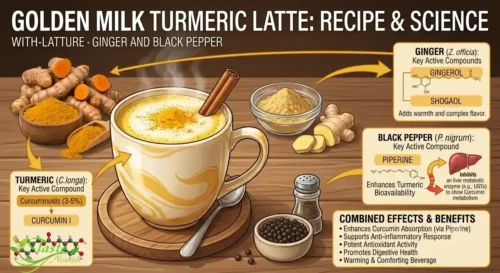
A practical tip that actually has some science behind it: pairing turmeric with a source of fat and a pinch of black pepper may modestly improve curcumin absorption, since curcumin is fat-soluble and piperine (found in black pepper) is one of the few well-documented bioavailability boosters. It won’t turn a pinch of curry powder into a clinical dose, but it’s a reasonable habit if you’re using turmeric regularly for its potential benefits rather than flavor alone.
Turmeric Spice vs. Curcumin Supplements
| Factor | Turmeric (Spice/Powder) | Curcumin Supplements |
|---|---|---|
| Curcumin content | Low (2–5%) | High, standardized |
| Absorption | Limited on its own | Often enhanced (piperine, liposomal, etc.) |
| Typical use | Cooking, everyday flavoring | Targeted, higher-dose supplementation |
| Risk level | Generally low | Moderate — watch dosage and formulation |
| Clinical research | Limited direct study | Most human trials use concentrated extracts |
| Cost | Inexpensive | Ranges from moderate to expensive |
| Best for | General wellness, flavor, low-risk daily use | Specific concerns, under medical guidance |
Common Myths About Turmeric, Debunked
A lot of turmeric’s popularity has outpaced the actual science, so a few myths deserve a direct response.
First, turmeric is not a proven cancer cure — early research is genuinely promising in specific contexts, but no health authority endorses it as a cancer treatment, and it should never replace conventional care.
Second, sprinkling turmeric on your food doesn’t deliver the same dose used in clinical studies, which typically rely on concentrated, enhanced-absorption extracts rather than the spice itself.
Third, “natural” doesn’t automatically mean risk-free — as the liver injury reports around high-bioavailability formulations show, concentrated plant compounds can still cause real side effects.
Finally, turmeric alone won’t reliably prevent or reverse Alzheimer’s disease; the NCCIH has specifically addressed this claim, noting that while lab studies hint at effects on brain function, those results haven’t held up consistently in human clinical trials.
Conclusion
Turmeric earns its reputation honestly — it’s a genuinely interesting spice with a long history and a compound, curcumin, that continues to intrigue researchers studying inflammation, joint health, and digestive comfort. At the same time, the evidence is still evolving, absorption is a real obstacle, and concentrated supplements carry risks that a pinch of curry powder simply doesn’t.
The most sensible approach is also the least exciting one: enjoy turmeric as part of a varied diet, be thoughtful about supplements, and loop in your doctor if you’re managing a health condition or taking medication. That’s not a letdown — it’s just what responsible, evidence-based wellness actually looks like.
Frequently Asked Questions About Benefits of Turmeric
Q1. Is it safe to take turmeric every day?
For most healthy adults, turmeric used in food is considered safe for daily use. Concentrated curcumin supplements are generally fine short-term for many people, but anyone with an underlying health condition, on medication, or considering long-term use should check with a healthcare provider first.
Q2. How much turmeric should I take for inflammation?
There’s no single, universally agreed-upon dose, since studies use different formulations and amounts. Rather than self-dosing based on online recommendations, it’s safer to discuss a specific goal — like joint discomfort or digestive symptoms — with a doctor or registered dietitian who can recommend an appropriate, well-studied product.
Q3. Can turmeric interact with medications?
Yes. Turmeric may interact with blood thinners, diabetes medications, and certain other drugs. It can also affect how the body processes some medications through liver enzyme pathways. Always tell your doctor or pharmacist if you’re taking turmeric supplements.
Q4. Does turmeric help with weight loss?
There isn’t strong evidence that turmeric directly causes weight loss. Some research has explored its role in metabolic markers, but it shouldn’t be relied on as a weight-loss strategy on its own.
Q5. What’s the difference between turmeric and curcumin supplements?
Turmeric is the whole spice, containing only a small percentage of curcumin along with other plant compounds. Curcumin supplements are concentrated extracts designed to deliver a much higher, standardized dose, which is why most clinical studies use supplements rather than the spice itself.
References
- National Center for Complementary and Integrative Health. “Turmeric: Usefulness and Safety.” National Institutes of Health. https://www.nccih.nih.gov/health/turmeric
- National Cancer Institute. “Curcumin and Cancer (PDQ) – Health Professional Version.” National Institutes of Health. https://www.cancer.gov/about-cancer/treatment/cam/hp/curcumin-pdq
- Restivo, Jenette. “Turmeric Benefits: A Look at the Evidence.” Harvard Health Publishing, Harvard Medical School. https://www.health.harvard.edu/staying-healthy/turmeric-benefits-a-look-at-the-evidence
- Godman, Heidi. “Curcumin Supplements Might Ease Meal-Related Discomfort.” Harvard Health Publishing, Harvard Medical School. https://www.health.harvard.edu/healthy-aging-and-longevity/curcumin-supplements-might-ease-meal-related-discomfort
- Hewlings, Susan J., and Douglas S. Kalman. “Curcumin: A Review of Its’ Effects on Human Health.” Foods, vol. 6, no. 10, 2017, article 92. National Library of Medicine, PubMed Central. https://www.ncbi.nlm.nih.gov/pmc/articles/PMC5664031/
♥ This guide is for informational purposes only and should not replace professional medical or nutritional advice. Always consult with healthcare providers regarding specific dietary needs and health conditions.