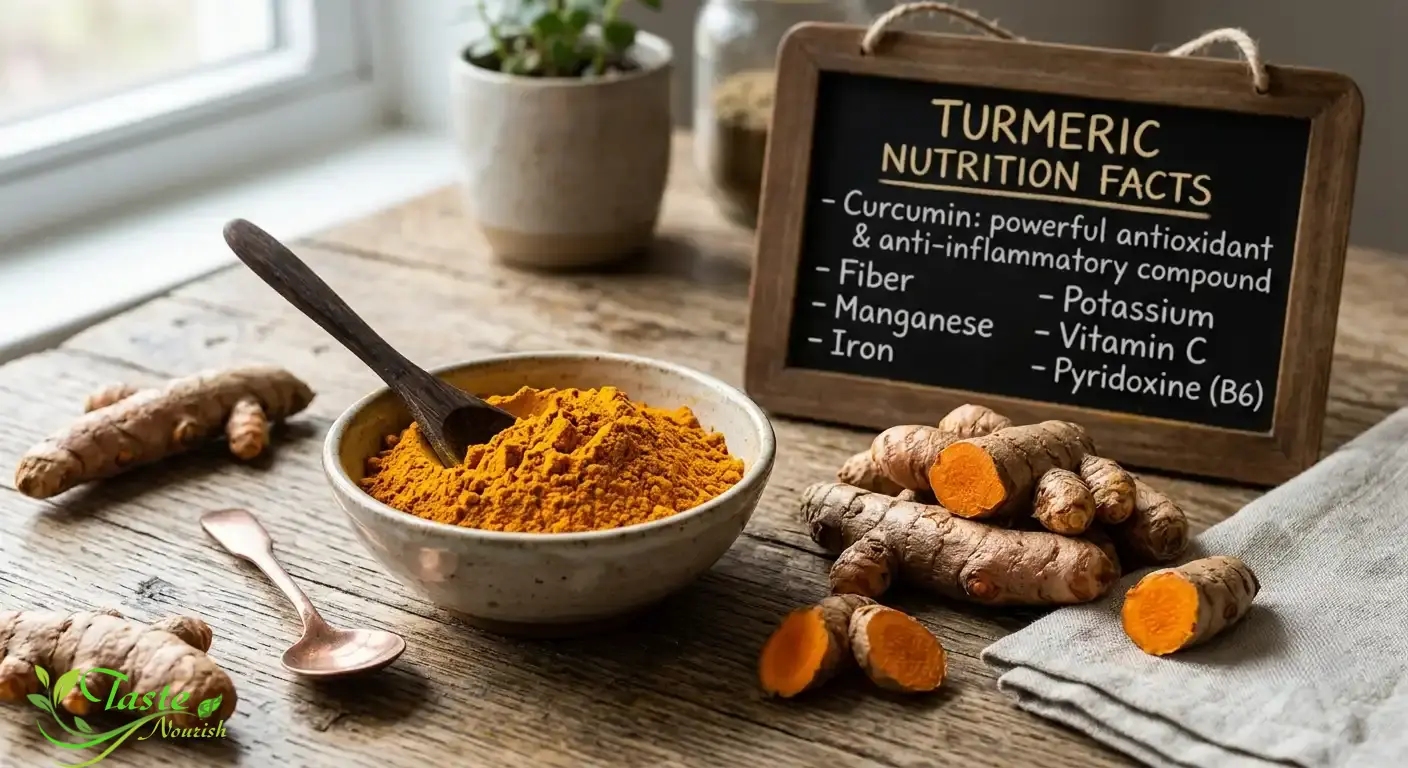
Turmeric Nutrition Facts — That bright yellow spice sitting in your cabinet has quietly become one of the most talked-about ingredients in nutrition circles. But between the supplement ads and the sweeping wellness claims, it’s easy to lose track of what turmeric actually contains — and what the research really supports. This guide breaks down the real numbers, the science, and the practical details, without the hype.
Key Takeaway:Turmeric is a low-calorie, fiber-rich spice that’s genuinely nutrient-dense per gram, but because people typically use only a teaspoon or less at a time, its real-world nutritional contribution is modest. Its reputation rests mainly on curcumin, a compound that’s poorly absorbed on its own and still being studied for its health effects.
What Is Turmeric?
Turmeric is the ground, dried rhizome (underground stem) of Curcuma longa, a flowering plant in the ginger family. It’s what gives curry powder its golden-orange hue and lends a warm, slightly bitter, earthy flavor to countless South and Southeast Asian dishes. The compound most associated with turmeric’s color and its studied health effects is curcumin, one of a group of plant chemicals called curcuminoids.
Origin and Traditional Use
Turmeric is grown commercially across Southeast Asia and India, where it has been cultivated for thousands of years. It has a long history in Chinese, Indian (including Ayurvedic), Islamic, and Thai traditional medicine systems, where it was used for conditions like indigestion, skin infections, arthritis, and liver complaints, according to the (NCCIH). It also holds a place in Indian religious ceremonies, where its color symbolizes prosperity and purity.
Today, that traditional use has translated into a modern supplement industry. Turmeric is now the third best-selling botanical supplement in the United States, reflecting just how far its reputation has traveled beyond the kitchen.
Flavor and Culinary Character
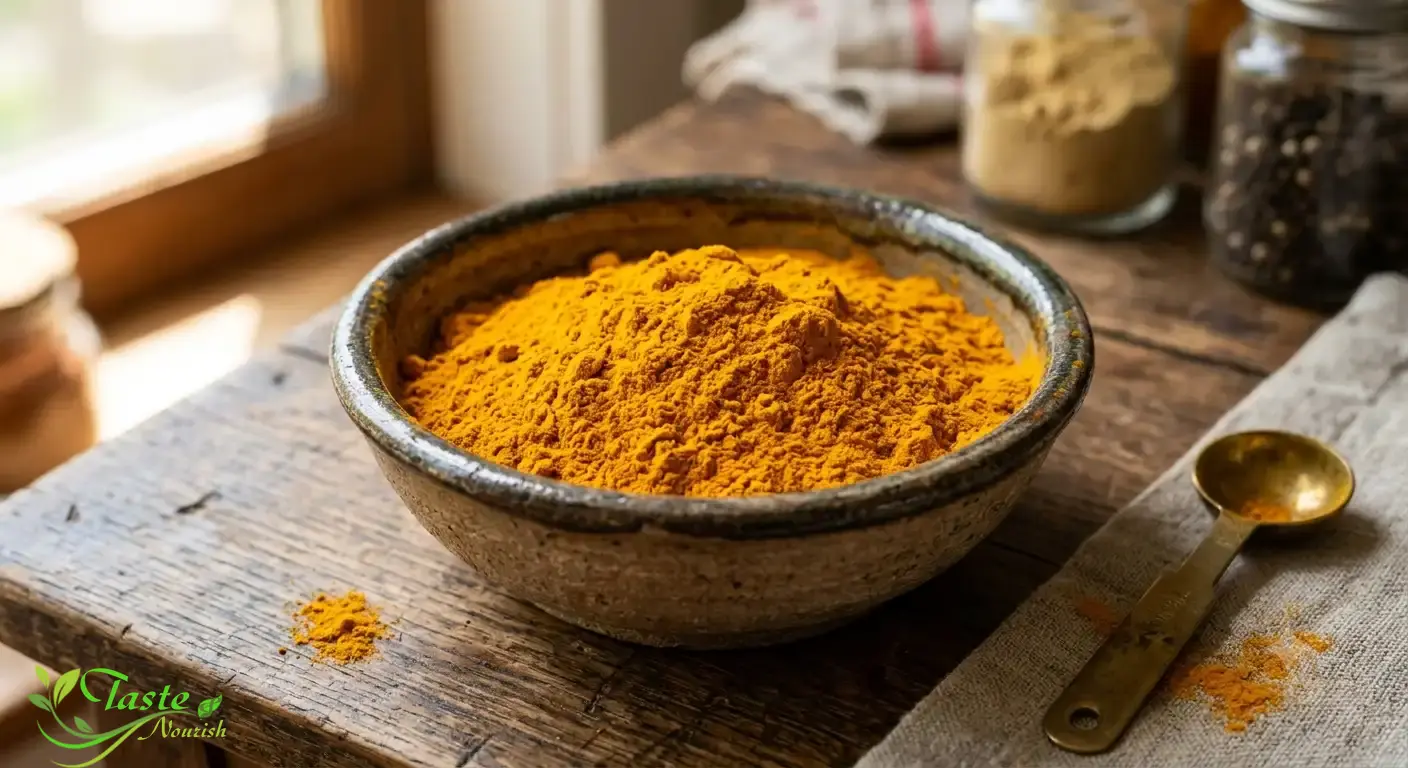
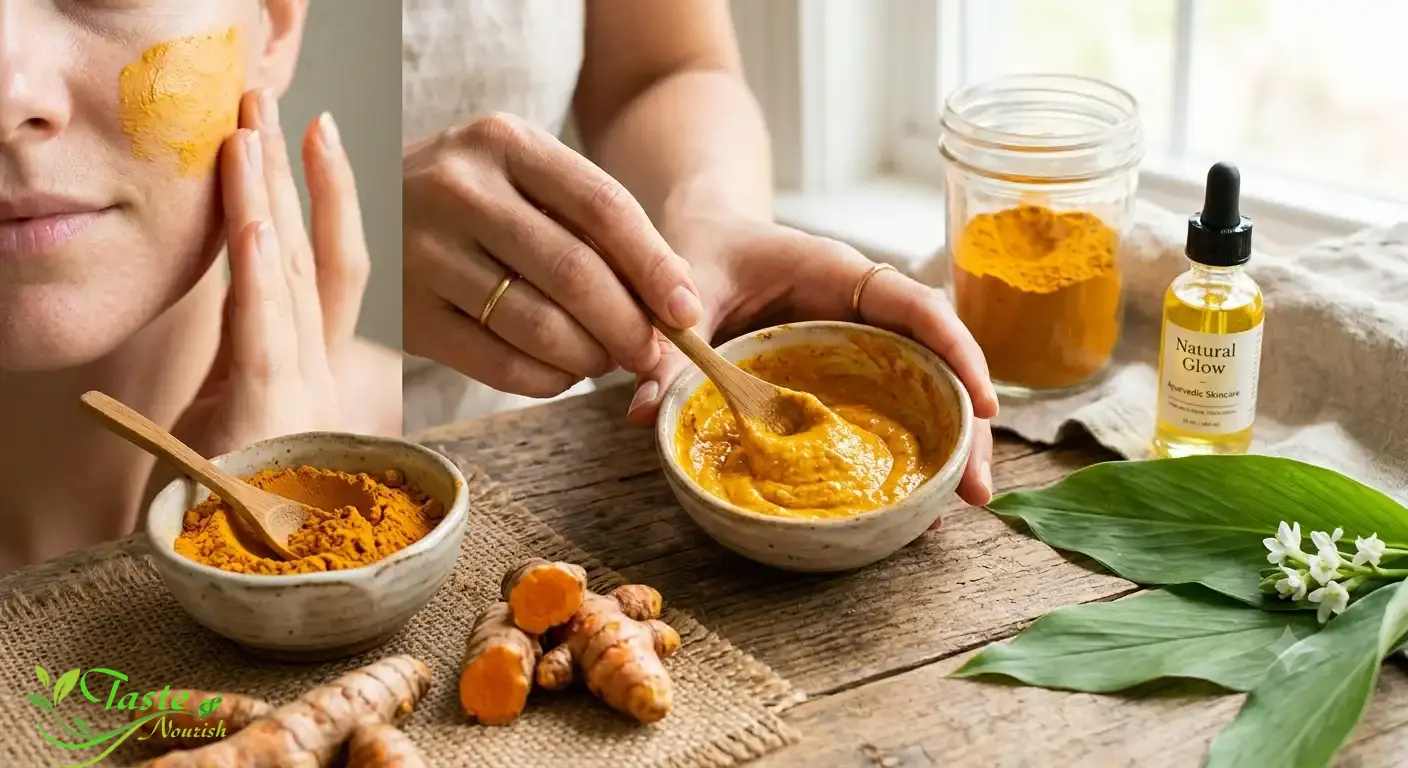
If you’ve only encountered turmeric in capsule form, you’re missing half the story. Fresh, the rhizome looks a bit like ginger but with flesh in a deep orange color. Dried and ground, it turns into the familiar fine yellow powder. The taste is warm and slightly peppery, with a mild bitterness and an earthy, almost musky undertone — not sweet, not sharp, just quietly assertive. It’s rarely eaten alone; instead, it’s built into spice blends like curry powder, or used to color rice, mustard, and pickles.
Turmeric Nutrition Facts
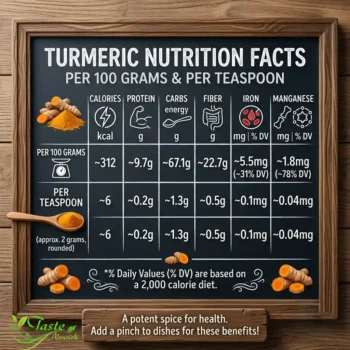
Here’s where the numbers matter. Turmeric’s nutrition profile looks impressive on paper, largely because it’s so nutrient-dense relative to its weight. The catch is that most people use it in tiny amounts — a teaspoon here, a pinch there — so its actual contribution to daily nutrient intake is smaller than the per-100-gram figures suggest.
Nutrition Table — Turmeric Per 100g and Per Teaspoon
Nutrient
Per 100g (Ground)
Per 1 tsp (~2g)
Calories
312 kcal
~9 kcal
Protein
9.7 g
~0.3 g
Total Fat
3.3 g
~0.1 g
Carbohydrates
67.1 g
~1.4 g
Dietary Fiber
22.7 g
~0.5 g
Sugars
3.2 g
~0.1 g
Sodium
27 mg
~1 mg
Potassium
2,080 mg
~62 mg
Iron
55 mg
~1.7 mg (≈9% DV)
Manganese
20 mg
~0.4 mg (≈17% DV)
Magnesium
208 mg
~6 mg
Calcium
168 mg
~5 mg
Vitamin E
4.4 mg
~0.1 mg
Percent Daily Values (DV) based on a 2,000-calorie diet; teaspoon values are approximate.
Macronutrient Highlights
Turmeric is mostly carbohydrate by weight, but that’s a bit misleading given how little of it people actually eat. A full third of its carbohydrate content is fiber, which is unusually high for a spice. Protein and fat are both present but minor contributors, and there’s essentially no meaningful fat content to speak of once you account for a realistic serving size. In practical terms, turmeric isn’t a macronutrient source at all — it’s a flavor and micronutrient contributor.
Vitamins and Minerals Worth Knowing
Manganese and iron stand out the most. A single teaspoon can provide a meaningful percentage of your daily manganese needs, which plays a role in bone formation and antioxidant enzyme function. Turmeric also contains modest amounts of potassium, magnesium, and vitamin E, along with small quantities of B vitamins like B6 and riboflavin.
Notably, dried turmeric powder is not a significant source of vitamin C, despite some claims you may see online — that mix-up often stems from confusing fresh turmeric root data with the dried, ground spice most people actually cook with.
Curcumin and Bioavailability
Curcumin is the reason turmeric gets so much attention, and it’s worth understanding what it actually is — and isn’t.
How Much Curcumin Does Turmeric Actually Contain?
Curcumin typically makes up somewhere between 2% and 9% of turmeric powder by weight, depending on the variety and growing conditions. That means a teaspoon of turmeric (about 2 grams) delivers somewhere in the range of 40 to 180 milligrams of curcumin — far less than the 500 to 2,000 milligram doses used in most clinical research on curcumin’s effects. This gap is exactly why culinary turmeric and curcumin supplements shouldn’t be thought of as interchangeable.
Feature
Whole Turmeric (Spice)
Standardized Curcumin Extract
Curcumin content
~2–9% by weight
Often 95%+ curcuminoids
Typical daily amount
0.5–2 g in food
500–2,000 mg in capsules
Absorption
Very low without fat or piperine
Still low, unless specially formulated
Regulatory status
Food ingredient
Dietary supplement (not FDA pre-approved)
Safety data
Long history of dietary use
Some bioavailability-enhanced products linked to liver injury reports
Why Absorption Matters More Than the Label
Here’s the part supplement marketing often glosses over: curcumin is notoriously poorly absorbed by the human body on its own.
Research published in Planta Medica found that combining curcumin with 20 milligrams of piperine — the compound responsible for black pepper’s bite — increased curcumin’s bioavailability in human volunteers, according to the original pharmacokinetics study by Shoba and colleagues. That’s part of why so many curcumin supplements now include black pepper extract on the label.
Pro Tip: If you’re cooking with turmeric at home, pairing it with a source of fat (like olive oil or coconut milk) and a pinch of black pepper is a simple, food-based way to support absorption — no supplement required.
Potential Health Benefits
It’s important to frame this section carefully: research on turmeric and curcumin is active, but far from settled. Much of what’s discussed publicly comes from laboratory or animal studies, and human clinical evidence remains limited and mixed for most claimed benefits.
Inflammation and Joint Comfort
Several meta-analyses have looked at oral turmeric or curcumin for osteoarthritis-related measures, including knee pain, stiffness, and joint mobility. According to NCCIH, initial evidence in this area is positive, though higher-quality research is still needed to reach firmer conclusions, and questions remain about how bioavailability affects the results people experience.
Antioxidant Activity
Curcumin is a polyphenol, a class of plant compounds generally associated with antioxidant activity in laboratory settings. This is one of the more consistently observed effects in preclinical research, though translating lab-level antioxidant activity into a measurable clinical benefit in humans is a separate — and much harder — question that researchers are still working through.
Metabolic and Liver Health
Early research suggests oral turmeric or curcumin might improve certain measures related to non-alcoholic fatty liver disease (NAFLD), though it’s unclear which specific measures are consistently affected across studies, per NCCIH’s review of the evidence. Separately, the National Cancer Institute (NCI) notes that curcumin has been studied in early-phase clinical trials for its potential role in cancer prevention research, though this work remains investigational and is not a substitute for established cancer treatment or screening.
What the Science Actually Says
If there’s one honest summary of where the research stands, it’s this: many studies have examined turmeric and curcumin for conditions like NAFLD, osteoarthritis, and cholesterol management, but researchers don’t yet know enough to definitively conclude whether turmeric or curcumin is beneficial for these purposes, according to NCCIH’s official assessment.
Part of the difficulty is that oral curcumin products vary widely in how much curcumin they actually contain, and many are combined with absorption enhancers like piperine, which makes it hard to compare results across studies. This isn’t a reason to dismiss turmeric — it’s a reason to hold the claims about it loosely until the evidence catches up.
Risks, Side Effects, and Who Should Be Cautious
Using turmeric as a cooking spice is generally considered a normal part of a varied diet. Concentrated supplements are a different story.
Common Side Effects
Oral turmeric can cause nausea, vomiting, acid reflux, stomach upset, diarrhea, or constipation in some people, particularly at higher supplement doses, per NCCIH. Topical curcumin, less commonly used, has been associated with hives or itching in some individuals.
Who Should Limit or Avoid Turmeric
A few groups should be more careful with turmeric, especially in supplement form:
People with a history of calcium oxalate kidney stones. Turmeric is notably high in soluble oxalate. A controlled study in the American Journal of Clinical Nutrition found that supplemental turmeric significantly increased urinary oxalate excretion in healthy subjects, which may raise kidney stone risk in people already prone to them.
People on blood-thinning medications. Turmeric may have mild effects on platelet function, and combining it with anticoagulants could theoretically increase bleeding risk — this is a conversation to have with a healthcare provider, not a DIY decision.
People considering high-dose, bioavailability-enhanced curcumin supplements. NCCIH notes that liver damage has been reported in some people using these specially formulated, highly absorbable curcumin products, distinct from ordinary culinary turmeric.
Pregnant or breastfeeding individuals. The use of turmeric supplements during pregnancy may be unsafe, and there’s limited data on turmeric consumed in amounts beyond typical food use during breastfeeding, per NCCIH.
Anyone with gallbladder disease. Turmeric can stimulate bile production, which may aggravate symptoms in people with gallstones or bile duct obstruction.
♦ If you notice symptoms like unusual fatigue, nausea, poor appetite, dark urine, or yellowing skin or eyes after starting a turmeric or curcumin supplement, NCCIH advises stopping the product and contacting a healthcare provider right away, since these can be signs of liver-related issues.
Buying and Storing Turmeric
How to Pick Quality Turmeric
Look for turmeric sold by reputable spice brands or retailers rather than unmarked bulk bins, since adulteration and contamination — including added coloring agents in low-quality bulk powders — has been a documented concern in some markets. Organic certification can offer some added assurance, though it isn’t a guarantee against contamination.
♦ If you’re buying fresh turmeric root, look for firm, unwrinkled rhizomes with a vibrant orange interior when cut.
Storage Tips
Ground turmeric stays potent for roughly 2 to 3 years when stored in an airtight container away from heat, light, and moisture — a cool, dark pantry shelf works well. Fresh turmeric root should be refrigerated and used within a few weeks, or peeled, chopped, and frozen for longer storage. Note that turmeric’s pigment stains readily, so keep it away from light-colored countertops and fabrics.
Cooking With Turmeric
Turmeric is remarkably versatile once you move past curry powder. It works well stirred into rice, lentils, roasted vegetables, scrambled eggs, or soups, and it’s a common base for golden milk lattes made with warm milk, black pepper, and a touch of honey. Because curcumin is fat-soluble, cooking turmeric in oil or ghee — rather than adding it to water alone — helps more of it dissolve and become available for absorption.
A small pinch of black pepper added at the same time rounds out both the flavor and the potential bioavailability benefit discussed earlier.
Common Myths About Turmeric
A few persistent myths are worth clearing up.
First, more turmeric in your food does not translate proportionally to more curcumin absorbed — the bioavailability bottleneck matters far more than the quantity used.
Second, turmeric is not a proven treatment for arthritis, cancer, or depression; it’s an area of active, promising, but still inconclusive research, and it shouldn’t replace prescribed medical care.
Third, “natural” doesn’t automatically mean “risk-free” — as the liver injury reports around high-bioavailability curcumin supplements show, concentrated plant extracts can carry real risks.
Finally, fresh turmeric root and dried turmeric powder aren’t nutritionally identical; water content, oxalate levels, and curcumin concentration can all differ between the two forms.
Conclusion
Turmeric earns its reputation honestly, at least in part — it’s a nutrient-dense, fiber-containing spice with a genuinely interesting compound at its core. But the gap between “curcumin shows promise in early research” and “turmeric cures inflammation” is wide, and it’s worth keeping that gap in mind every time you see a bold claim online.
Used as a cooking spice, turmeric is a flavorful, low-risk addition to most diets. Used as a concentrated supplement, it deserves the same caution you’d apply to any other health product — a conversation with your doctor, especially if you take medications or have kidney, liver, or gallbladder concerns.
Turmeric Nutrition Facts FAQs
What’s the difference between turmeric and curcumin?
Turmeric is the whole spice, ground from the Curcuma longa rhizome. Curcumin is just one compound found within turmeric, typically making up 2% to 9% of the powder by weight. Most research on health effects focuses specifically on curcumin, often at doses far higher than what you’d get from cooking with turmeric alone.
How much turmeric is safe to consume daily?
Turmeric used as a culinary spice, in the amounts typical of cooking, is widely considered safe. Supplemental curcumin taken conventionally (not in bioavailability-enhanced forms) appears likely safe for up to 2 to 3 months, according to NCCIH, though anyone considering longer-term or high-dose use should check with a healthcare provider first.
Does adding black pepper really boost turmeric’s benefits?
Human research has shown that piperine, the active compound in black pepper, can meaningfully increase curcumin’s absorption when taken together. That said, some independent researchers note the original findings haven’t always been replicated to the same degree, so it’s a reasonable practice rather than a guaranteed multiplier.
Can turmeric interact with medications?
Yes, it can. Turmeric may interact with blood thinners, diabetes medications, and certain other drugs. Anyone on prescription medication should talk with a healthcare provider before adding turmeric supplements, since food-level culinary use is generally lower risk than concentrated capsules.
Is it safe to take turmeric every day long-term?
For culinary use in food, yes, this is consistent with how it’s traditionally been consumed for generations. For concentrated supplements taken daily over months or years, the long-term safety data is less complete, and periodic check-ins with a healthcare provider are a reasonable precaution, particularly for liver and kidney health.
National Center for Complementary and Integrative Health, National Institutes of Health. “Turmeric: Usefulness and Safety.” https://www.nccih.nih.gov/health/turmeric
Tang M, Larson-Meyer DE, Liebman M. “Effect of Cinnamon and Turmeric on Urinary Oxalate Excretion, Plasma Lipids, and Plasma Glucose in Healthy Subjects.” American Journal of Clinical Nutrition, 2008;87(5):1262-1267. https://pubmed.ncbi.nlm.nih.gov/18469248/
Shoba G, Joy D, Joseph T, Majeed M, Rajendran R, Srinivas PS. “Influence of Piperine on the Pharmacokinetics of Curcumin in Animals and Human Volunteers.” Planta Medica, 1998;64(4):353-356. https://pubmed.ncbi.nlm.nih.gov/9619120/
Hanan Abo Samra is the founder of Taste & Nourish, sharing trustworthy nutrition guidance and recipes drawn from 20+ years of hands-on cooking experience. When she's not developing new recipes, Hanan is researching the science behind everyday ingredients to bring readers practical, evidence-based guidance for a healthier lifestyle.