Turmeric for Hair — Open any hair-care forum and you’ll find someone swearing by a turmeric mask. Open a dermatology journal, though, and the picture gets more complicated. Turmeric is genuinely interesting — it’s anti-inflammatory, it’s antimicrobial, and people have been rubbing it on their skin for thousands of years. But “interesting in a lab” and “proven to regrow hair” are two very different claims.
This guide walks through what turmeric actually is, what the research supports, where the evidence runs thin, and how to use it on your scalp without turning your bathroom sink yellow. No hype, no miracle promises — just a clear-eyed look at the golden spice.
What Turmeric Smells and Feels Like on Hair
If you’ve never worked with raw turmeric, it’s worth knowing what you’re signing up for before it’s smeared across your scalp. The powder has an earthy, slightly bitter, almost mustard-like aroma — pleasant to some, overwhelming to others, and it tends to linger in hair for a day or two after rinsing.
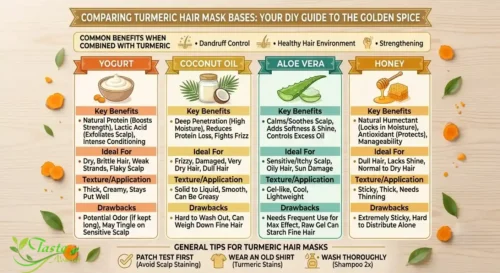
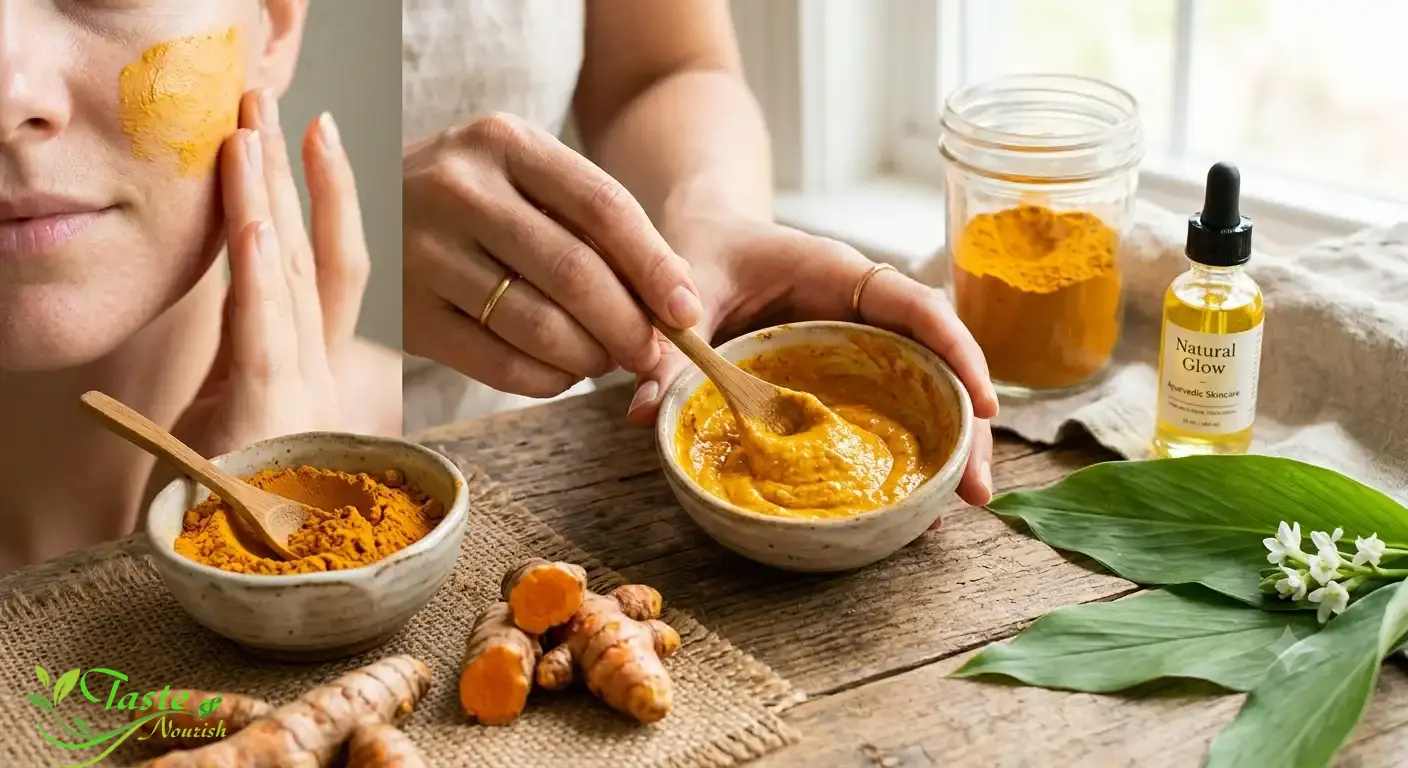
Texture-wise, turmeric powder mixed into a paste feels gritty rather than silky, which is why most hair masks combine it with a moisturizing base like yogurt, honey, or coconut oil. On its own, turmeric doesn’t condition hair; it’s the carrier ingredients doing that job while turmeric contributes its bioactive compounds.
Then there’s the color. Turmeric’s pigment is intense and notoriously stubborn, a property that matters a lot once it touches skin, nails, or a white towel — something we’ll cover in detail in the risks section.
Turmeric’s Nutritional and Chemical Profile
Turmeric isn’t a significant nutrition source in the amounts typically used on hair — you’re not applying enough to matter the way you would eating it in food. What matters for hair and scalp use is its chemical profile: the specific compounds responsible for its biological activity.
Curcuminoids and Antioxidant Content
Curcumin belongs to a family of compounds called curcuminoids, which together account for turmeric’s antioxidant capacity. Antioxidants work by neutralizing free radicals — unstable molecules that can damage cells, including the cells involved in hair follicle function. Oxidative stress has been studied as one contributor to premature hair aging and follicle miniaturization, which is part of why antioxidant-rich ingredients keep showing up in hair-health conversations.
Minerals, Volatile Oils, and Other Compounds
Beyond curcuminoids, turmeric contains trace minerals like manganese and iron, along with aromatic volatile oils (turmerones) that contribute to its scent and some of its biological activity. None of these are present in large enough amounts in a typical hair mask to function as a meaningful nutritional supplement — their relevance here is chemical and topical, not dietary.
Potential Benefits of Turmeric for Hair and Scalp
This is the section everyone wants, so let’s be precise about it: turmeric shows biological plausibility for several scalp-related benefits, meaning its known chemical properties line up with things a healthy scalp needs. That’s different from having strong human clinical trials proving it regrows hair. Below is where the real evidence — and its limits — actually sit.
Key Takeaways
Turmeric’s anti-inflammatory and antimicrobial properties are well documented in lab research.
Most hair-specific benefits are extrapolated from skin studies, not direct hair-growth trials.
DHT-related claims come primarily from cell and animal studies, not human trials.
Calming an Irritated or Inflamed Scalp
Scalp inflammation is linked to several conditions that affect hair, including seborrheic dermatitis and some forms of shedding. A systematic review of clinical evidence on turmeric and curcumin found that both topical and ingested forms have been studied for a variety of inflammatory skin conditions, with curcumin’s anti-inflammatory action considered one of its most consistently observed effects .
That review specifically catalogued human clinical studies, not just cell-culture work, which gives the anti-inflammatory angle more weight than most turmeric-for-hair claims.
Dandruff and Microbial Balance
Dandruff is largely driven by an overgrowth of Malassezia yeast on the scalp combined with local inflammation. Curcumin has demonstrated broad-spectrum antimicrobial activity across a wide range of studies, including antibacterial, antiviral, and antifungal effects against various organisms .
That antifungal angle is theoretically relevant to dandruff management, though it’s worth noting most of this antimicrobial evidence comes from laboratory testing rather than head-to-head trials against commercial anti-dandruff shampoos.
DHT, Androgenetic Alopecia, and Hair Thinning
This is where the internet gets ahead of the science. You’ll see claims that turmeric “blocks DHT” the way finasteride does. What actually exists is early laboratory research suggesting curcumin may influence enzymes involved in converting testosterone to DHT — but that research has largely been conducted in isolated cells and animal tissue, not in people with pattern hair loss. Treat any DHT-blocking claim about turmeric as a hypothesis still being tested, not a settled fact.
Antioxidant Support for Follicle Health
Hair follicles, like any actively dividing tissue, are vulnerable to oxidative damage from UV exposure, pollution, and normal metabolic processes. Curcumin’s antioxidant activity is one of its best-established properties in the broader research on turmeric and skin, which makes “protecting follicles from oxidative stress” a more defensible claim than “regrowing lost hair” — even though neither has robust, large-scale human hair trials behind it yet.
What Turmeric Is and Why It Ended Up in Hair Care
Turmeric is a bright orange-yellow spice ground from the root of the Curcuma longa plant, a relative of ginger. You know it best as the backbone of curry powder, but its reputation extends well beyond the kitchen. Long before it showed up in Pinterest hair-mask recipes, turmeric was already a fixture in traditional medicine systems across South Asia.
Its journey into shampoo bottles and DIY masks isn’t random. Turmeric contains compounds with documented anti-inflammatory and antimicrobial activity, and inflamed, irritated, or microbially imbalanced scalps are linked to several common hair complaints. That connection is exactly why researchers — not just influencers — have started paying attention to it.
A Quick Origin Story
Turmeric has been cultivated in India for at least 4,000 years, used as a dye, a food coloring, a religious offering, and a home remedy for everything from wounds to digestive trouble. Ayurvedic practitioners applied turmeric paste directly to skin and scalp long before “topical curcumin” was a phrase in a clinical trial.
That long history matters for two reasons. First, it explains why turmeric shows up so often in South Asian beauty rituals, including scalp treatments. Second, it’s also why dermatologists have documented decades of skin reactions tied to traditional turmeric use — a detail we’ll come back to, because tradition alone doesn’t guarantee safety.
Curcumin: The Compound Behind the Hype
Almost every claimed benefit of turmeric traces back to one molecule: curcumin. It’s the pigment that gives turmeric its color, and it’s also the compound researchers study when they investigate turmeric’s effects on inflammation, oxidative stress, and microbial activity. When an article says “turmeric may help with X,” what it usually means is “curcumin has shown some effect on X in a study.”
That distinction is worth holding onto. Raw turmeric powder contains only a modest percentage of curcumin by weight, and curcumin itself is notoriously hard for the body to absorb. So even when a study finds a promising effect, it doesn’t automatically mean a spoonful of turmeric paste on your scalp will deliver the same result.
What the Research Actually Says (and Where the Myths Creep In)
Here’s the honest state of the science: there is a meaningful body of research on turmeric and curcumin’s effects on skin generally, and a much smaller, much less conclusive body of research specifically on hair and scalp outcomes.
A comprehensive review of clinical studies on turmeric and skin health found promising results across various dermatologic applications, but the authors also noted that study quality varied considerably and called for more rigorous, larger trials before turmeric could be considered a proven treatment for most conditions examined .
The National Center for Complementary and Integrative Health, part of the NIH, echoes this caution more broadly: while turmeric and curcumin are generally considered probably safe when used appropriately, the agency notes that solid evidence supporting many of turmeric’s popular health claims is still limited, and more research is needed before firm conclusions can be drawn.
The most common myth worth debunking directly is the idea that turmeric can replace clinically proven hair-loss treatments like minoxidil or finasteride. It can’t — not because turmeric is useless, but because it simply hasn’t been tested against those benchmarks in humans with hair loss. A second myth is that “natural” automatically means “risk-free,” which the next section addresses directly.
Risks, Side Effects, and Who Should Skip Turmeric
Turmeric has a long safety record in food, but rubbing concentrated turmeric paste directly on skin is a different exposure than sprinkling it on rice. Several real, documented risks are worth knowing before you mix up a mask.
Skin Staining
This one’s more cosmetic than medical, but it catches people off guard constantly. Turmeric’s pigment binds readily to skin, nails, light-colored hair, grout, and fabric, and it can take several washes to fade completely. If you’re using it near your hairline or on light or gray hair, do a small patch test first, and consider applying petroleum jelly along your hairline as a barrier before your mask goes on.
Allergic Reactions and Contact Dermatitis
Despite its anti-inflammatory reputation, curcumin is also a recognized contact allergen. A dermatology literature review examining curcumin’s role in skin health found documented cases of allergic contact dermatitis linked to turmeric exposure, alongside its anti-inflammatory benefits, and concluded that patients and clinicians should stay alert to the possibility of allergic reactions even as curcumin’s therapeutic uses are explored .
A separate dermatology review focused specifically on turmeric-related allergy found that reactions are frequently tied to traditional and cosmetic turmeric use, including scalp and skin applications, and are more commonly reported than many people assume .
Watch for these signs of a reaction:
Redness, itching, or burning at the application site
Small bumps, hives, or a rash that develops within hours to a day or two
Swelling, especially around the hairline or ears
If any of these show up, rinse thoroughly, stop use, and consider a patch test on your inner forearm 48 hours before your next attempt.
Oral Turmeric: Interactions and Cautions
Some people take turmeric supplements alongside topical use, hoping for a combined effect. Worth knowing: NCCIH notes that conventionally formulated oral turmeric or curcumin is generally considered likely safe in typical amounts for short-term use, but that highly concentrated or high-bioavailability formulations may carry a risk of liver-related side effects, and that turmeric can interact with blood-thinning medications.
Who should be especially cautious:
People with a known allergy to turmeric, curcumin, or other members of the ginger family
Anyone with a history of contact dermatitis from cosmetic or herbal products
People taking blood thinners or preparing for surgery
Pregnant or breastfeeding individuals, who should check with a doctor before supplement-level use
Anyone with existing liver conditions, particularly regarding high-dose oral supplements
How to Use Turmeric for Hair (Masks, Rinses, and Buying Tips)
If you’ve weighed the evidence and the risks and still want to try it, here’s a straightforward approach that minimizes staining and irritation while keeping things simple.
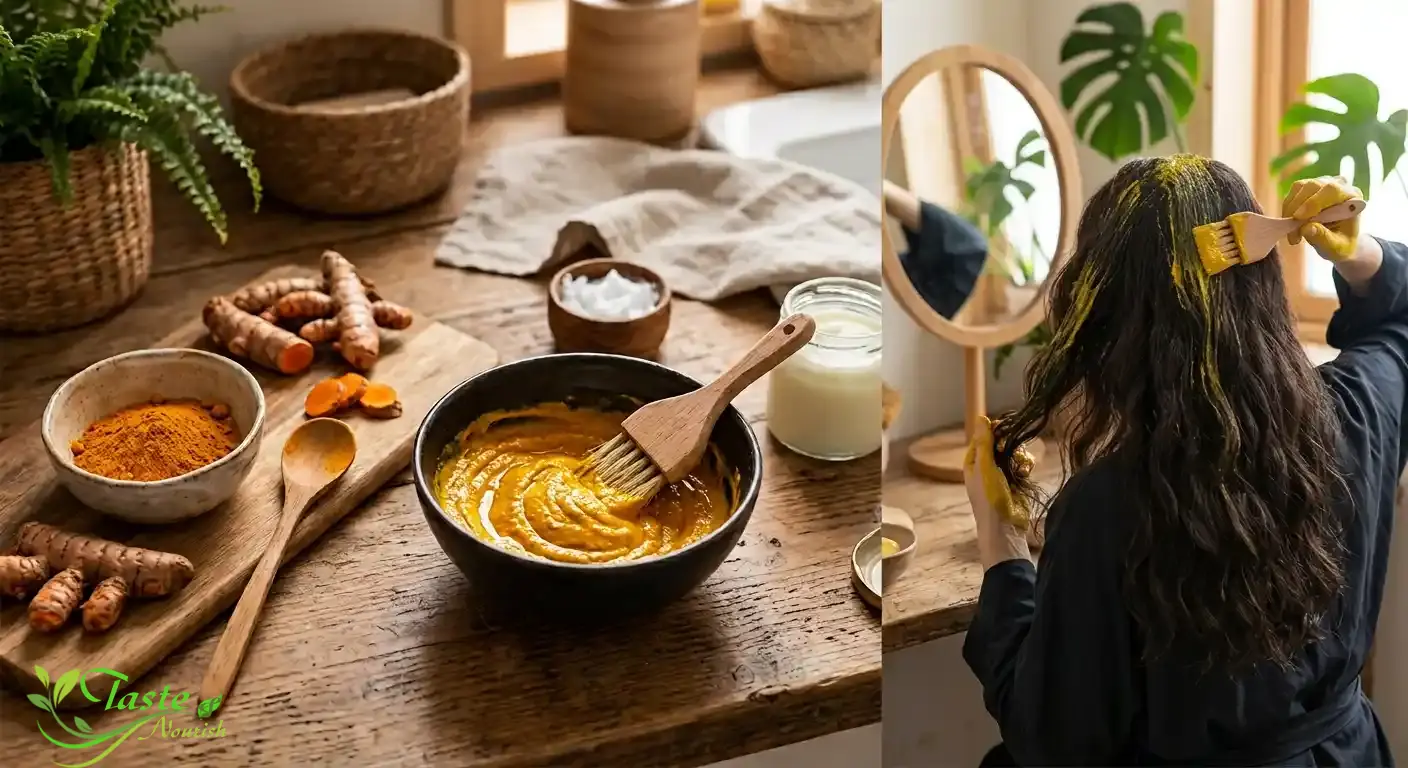
A basic turmeric hair mask:
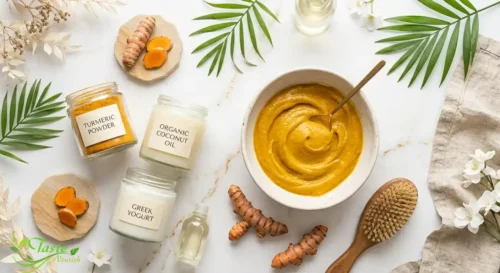
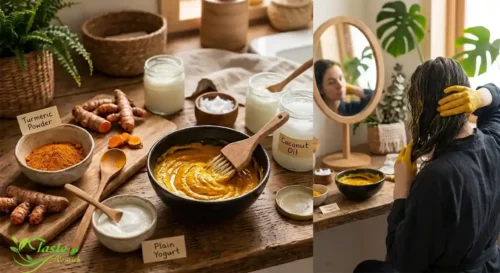
Mix 1 to 2 teaspoons of turmeric powder with 3 to 4 tablespoons of a moisturizing base (plain yogurt, coconut oil, or aloe vera gel).
Patch test the mixture on your inner forearm and wait 48 hours before applying it to your scalp.
Section dry or damp hair and apply the paste directly to the scalp, avoiding the hairline where possible.
Leave it on for 15 to 20 minutes — longer isn’t better, and it increases staining risk.
Rinse thoroughly with lukewarm water, then shampoo as usual to remove any residue.
Pro Tip: Apply a thin layer of petroleum jelly or coconut oil along your hairline and ears before starting. It creates a barrier that makes turmeric staining far easier to wipe away afterward.
For hair masks, plain culinary-grade turmeric powder from a grocery store is entirely sufficient — there’s no evidence that “cosmetic grade” turmeric marketed at a premium performs any differently on scalp or hair. Look for turmeric with a vivid, consistent orange color and a fresh, peppery aroma; dull or pale powder may be old and less potent.
Store turmeric in an airtight container away from direct light and heat, ideally in a cool pantry rather than above the stove. Properly stored, ground turmeric stays usable for around two to three years, though its aroma and pigment intensity will gradually fade over time.
Conclusion
Turmeric earns its place in the hair-care conversation honestly: it’s anti-inflammatory, it has documented antimicrobial activity, and its antioxidant properties are well studied in skin research more broadly. What it hasn’t earned is the status of a proven hair-growth treatment — the human clinical evidence specific to hair, especially around DHT and regrowth, simply isn’t there yet.
Used thoughtfully, with a patch test and reasonable expectations, a turmeric mask is a low-risk experiment for scalp comfort. Used as a replacement for medically proven hair-loss treatment, it’s not backed by the science currently available.
Turmeric for Hair FAQs
Can turmeric regrow hair that’s already been lost?
There’s no strong human clinical evidence that turmeric regrows hair on its own. The DHT-related research behind this claim comes mostly from cell and animal studies, not clinical trials in people with hair loss.
Will a turmeric hair mask stain my hair yellow?
It can, especially on light, gray, or bleached hair. Turmeric’s pigment is strong and can linger for a day or two even after thorough rinsing, so a patch test and hairline barrier are worth the extra few minutes.
How often can I use turmeric on my scalp?
Most people who tolerate it well use a turmeric mask once every one to two weeks. There’s no research establishing an optimal frequency, so starting infrequently and watching for irritation is the safer approach.
Is turmeric safe for color-treated hair?
Turmeric itself isn’t known to strip hair color, but its strong pigment can temporarily tint light or gray-toned color jobs. If you have recently color-treated hair, patch test on a small hidden section first.
Should I take turmeric supplements instead of using it topically for hair benefits?
Oral turmeric hasn’t been shown to specifically improve hair outcomes any more than topical use has, and it introduces additional considerations like interactions with blood thinners. Anyone considering supplements should talk to a doctor first, especially if pregnant, on medication, or managing a liver condition.
References
National Center for Complementary and Integrative Health. “Turmeric: Usefulness and Safety.” National Institutes of Health. https://www.nccih.nih.gov/health/turmeric
Vaughn, A.R., Branum, A., & Sivamani, R.K. “Effects of Turmeric (Curcuma longa) on Skin Health: A Systematic Review of the Clinical Evidence.” Phytotherapy Research, National Library of Medicine. https://pubmed.ncbi.nlm.nih.gov/27213821/
Chaudhari, S.P., Tam, A.Y., & Barr, J.A. “Curcumin: A Contact Allergen.” Journal of Clinical and Aesthetic Dermatology, National Library of Medicine. https://pubmed.ncbi.nlm.nih.gov/26705440/
Palaniappan, V., & Karthikeyan, K. “Turmeric: The Yellow Allergen.” Indian Dermatology Online Journal, National Library of Medicine. https://pubmed.ncbi.nlm.nih.gov/37521239/
Hanan Abo Samra is the founder of Taste & Nourish, sharing trustworthy nutrition guidance and recipes drawn from 20+ years of hands-on cooking experience. When she's not developing new recipes, Hanan is researching the science behind everyday ingredients to bring readers practical, evidence-based guidance for a healthier lifestyle.