
Ginger and Honey Tea: 6 Powerful Benefits, Recipe & Nutrition Facts
Ginger and Honey Tea: Benefits, Nutrition, Recipe & Side Effects (Complete 2026 Guide)
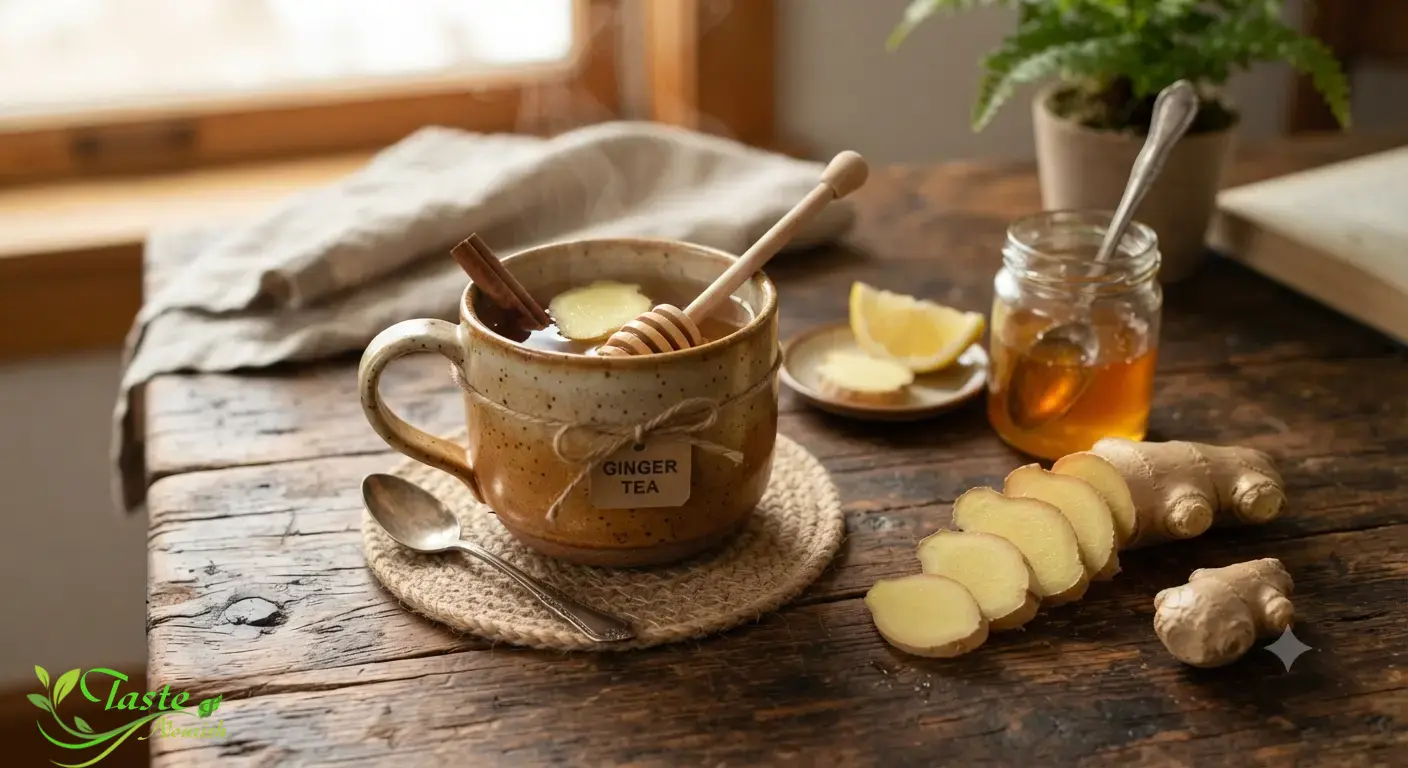
Cold mornings call for something warm, and few drinks deliver comfort quite like ginger and honey tea. It’s spicy, sweet, and surprisingly powerful for your health. If you’ve ever wondered whether this cozy cup is more than just a nice ritual, you’re in the right place.
This guide breaks down everything you need to know — the science-backed benefits, exact nutrition numbers, how to brew it properly, and the precautions worth knowing before you make it a daily habit.
What Is Ginger and Honey Tea?
Ginger and honey tea is a simple infusion. Fresh or dried ginger root steeps in hot water, then raw honey is stirred in for sweetness.
It’s classified as a functional herbal tea — consumed for both taste and therapeutic value. The pairing works because each ingredient brings something distinct to the cup.
Ginger (Zingiber officinale) contains gingerol, a compound responsible for its sharp flavor and much of its anti-inflammatory punch, according to Medical News Today. Honey, especially raw and unfiltered varieties, contributes antioxidants and natural antimicrobial compounds that complement ginger’s warming effect.
Origins and Traditional Use
This drink didn’t appear overnight — it’s rooted in centuries of tradition across Asia, Africa, and the Middle East. Ginger has been cultivated for medicinal and culinary use for over 5,000 years, originating in Southeast Asia before spreading to tropical regions worldwide.
Ayurvedic and Traditional Chinese Medicine practices have long used ginger to stimulate “digestive fire,” while honey was prized in ancient Egyptian and Greek remedies for wound care and respiratory relief. Combining the two wasn’t a modern wellness trend — it was practical medicine passed down through generations.
Key takeaway: Ginger and honey tea isn’t a fad. It’s a centuries-old remedy that modern research is now catching up to validate.
Health Benefits of Ginger and Honey Tea
Here’s where things get interesting. Science is starting to back up what grandmothers have known for generations.
Supports Digestion and Eases Nausea
Ginger has a long-documented reputation for calming an upset stomach. Its active compounds — gingerols and shogaols — help relieve bloating, gas, and general digestive discomfort, according to BetterMe.
One striking data point: a review covering 1,278 pregnant women found that ginger significantly reduced nausea symptoms, with minimal risk of side effects such as heartburn or drowsiness. That’s a meaningful sample size for a natural remedy.
Ginger tea is also commonly recommended for:
- Morning sickness during pregnancy
- Nausea related to chemotherapy treatment
- Motion sickness on long car, boat, or plane rides
- General post-meal bloating and gas
- Slow gastric emptying discomfort
- Mild indigestion after heavy meals
Boosts Immunity and Fights Cold Symptoms
When you’re fighting a cold, a warm mug of ginger and honey tea genuinely helps — and not just psychologically. The steam alone can loosen nasal congestion, while ginger’s anti-inflammatory properties may ease throat irritation.
Honey adds another layer of defense here. It’s been studied for antimicrobial and antibacterial properties that support the body’s natural response to minor infections.
Anti-Inflammatory and Antioxidant Effects
Gingerol isn’t just responsible for flavor — it’s a genuine antioxidant compound. Research published in Phytotherapy Research has linked ginger’s anti-inflammatory properties to reduced digestive irritation and general inflammatory markers, as noted by Bigelow Tea.
Honey brings its own antioxidant profile to the table too. Together, the combination creates a drink that actively works against oxidative stress rather than just tasting good.

Supports Heart Health
Honey has been associated with benefits for cardiovascular, gastrointestinal, and nervous system health in modern studies, per Klarity Health. While a single cup of tea won’t replace medication, regular consumption as part of a balanced diet may support healthy circulation and lower oxidative stress on blood vessels.
May Support Weight Management
This is one of the most searched benefits, and it deserves a fair, honest answer. Ginger and honey tea is not a magic weight-loss drink. But it can play a supportive role.
Here’s how it may help:
- Replacing sugary sodas or sweetened coffee drinks with a lower-calorie alternative
- Ginger’s potential to support healthy metabolic rate and thermogenesis
- Honey’s lower glycemic impact compared to refined white sugar
- The warming, satisfying nature of the drink, which may reduce unnecessary snacking
- Improved digestion, which can reduce bloating-related discomfort
- Better hydration habits when tea replaces less healthy beverages
None of these effects are dramatic on their own. But stacked together, and paired with a balanced lifestyle, they add up.
Soothes Sore Throat and Cough
If you suffer from a scratchy throat, this tea is practically a household remedy. Honey acts as a natural cough suppressant, while the warm liquid soothes irritated tissue directly.
Combined with lemon (a popular variation), the drink also delivers a small dose of vitamin C, which supports overall immune resilience during cold and flu season.
Nutrition Facts of Ginger and Honey Tea
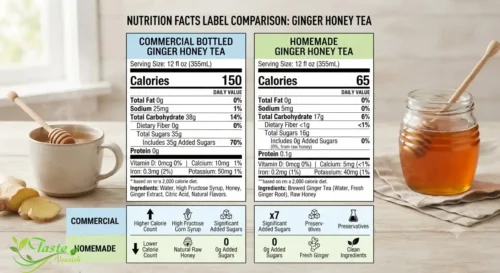
Numbers vary slightly depending on how much honey is used, but here’s a realistic breakdown for a standard homemade cup.
| Nutrient | Amount (per 1 cup / 240ml) |
|---|---|
| Calories | 50–60 kcal |
| Total Carbohydrates | 15–17 g |
| Sugars | 14–15 g |
| Protein | 0 g |
| Fat | 0–0.1 g |
| Fiber | 0 g |
| Vitamin C | ~5 mg (higher with lemon added) |
| Sodium | ~5–8 mg |
| Caffeine | 0 mg |
Reader note: These figures assume roughly one tablespoon of honey per cup. Using less honey lowers both calories and sugar significantly, which matters if you’re tracking intake for weight or blood sugar goals.
How to Make Ginger and Honey Tea at Home
Good news — this isn’t complicated. You genuinely just need a pot, water, and two ingredients.
⏱ Prep Time: 5 minutes • 🔥 Cook Time: 15 minutes • 🍽 Servings: 2

Basic Recipe
Follow these steps for a classic, no-fuss cup:
- Peel and thinly slice 1–2 inches of fresh ginger root
- Add the ginger to 2 cups of water in a small saucepan
- Bring to a boil, then reduce heat and simmer for 10–15 minutes
- Strain the liquid into a mug, discarding the ginger pieces
- Let it cool slightly for 1–2 minutes (honey loses some enzymes in boiling-hot liquid)
- Stir in 1 teaspoon to 1 tablespoon of raw honey to taste
That’s it. Fifteen minutes, minimal effort, maximum comfort.
Popular Variations
Not every cup has to look the same. Some popular twists include:
- Lemon-ginger-honey tea — adds vitamin C and a citrus brightness
- Green tea with ginger and honey — combines L-theanine’s calming effect with ginger’s warmth
- Turmeric-ginger-honey tea — boosts anti-inflammatory potential with curcumin
- Cinnamon-spiced version — adds warmth and may support blood sugar balance
- Mint-infused ginger honey tea — cooling contrast, good for digestion after meals
- Iced ginger honey tea — same benefits, served cold for warmer months

Best Time to Drink Ginger and Honey Tea
Timing genuinely matters here, and it depends on your goal.
Morning: Drinking it on a relatively empty stomach may support digestion and give a gentle metabolic nudge to start the day.
Before or after meals: A cup 20–30 minutes before eating can prime digestion, while one after a heavy meal helps reduce bloating.
Evening: Since it’s caffeine-free, it’s a safe bedtime option — though very fresh, strong ginger can feel slightly stimulating for some people, so a milder brew works best at night.
Ginger and Honey Tea vs Other Herbal Teas
Wondering how it stacks up against other popular herbal options? Here’s a side-by-side look.
| Tea Type | Caffeine | Primary Benefit | Calories (per cup) | Best For |
|---|---|---|---|---|
| Ginger & Honey Tea | None | Digestion, immunity, anti-inflammatory | 50–60 | Nausea, colds, digestion |
| Chamomile Tea | None | Relaxation, sleep support | 2–5 | Sleep, anxiety relief |
| Peppermint Tea | None | Digestive relief, freshness | 2–5 | Bloating, IBS symptoms |
| Green Tea | Yes (moderate) | Antioxidants, metabolism support | 2–5 (without honey) | Focus, metabolic support |
| Turmeric Tea | None | Anti-inflammatory | 5–10 | Joint pain, inflammation |
The main tradeoff is calories — ginger and honey tea is sweeter and slightly higher in natural sugar than plain herbal teas, purely because of the added honey.
Potential Side Effects and Precautions
No food or drink is entirely without risk, and this tea is no exception. It’s worth knowing these before making it a daily habit.
- Heartburn: Ginger can occasionally trigger acid reflux in sensitive individuals, even though it also helps some people with heartburn
- Blood-thinning effect: Ginger may inhibit platelet function, increasing bleeding risk when combined with blood-thinning medication
- Allergic reactions: Rare, but possible — watch for rashes, swelling, or an itchy throat after drinking
- Not for infants under one year: Honey carries a small botulism risk for babies and should never be given to children under 12 months
- Blood sugar considerations: Honey still raises blood glucose, so people managing diabetes should monitor portion size closely
- Interaction with surgery: Ginger’s effect on blood clotting means it’s often advised to stop consumption before scheduled surgeries
Key takeaway: For most healthy adults, one to two cups daily is safe. If you’re on medication or pregnant, check with a doctor first — especially regarding blood thinners.
Tips for Choosing Quality Ginger and Honey
Not all ginger and honey are created equal, and quality genuinely affects both flavor and benefits.
- Choose firm, smooth-skinned ginger root without soft spots or mold
- Store fresh ginger in the fridge, wrapped loosely, for up to three weeks
- Opt for raw, unfiltered honey over processed varieties for maximum antioxidant content
- Check labels for “100% pure honey” — many commercial brands cut honey with corn syrup
- Buy organic ginger when possible to avoid pesticide residue on the skin
- Local honey is often fresher and may offer minor regional allergy benefits
Ginger and Honey Tea FAQs
Is it okay to drink ginger and honey tea every day?
Yes, for most healthy adults, one to two cups daily is generally considered safe. Those on blood thinners or with diabetes should check with a healthcare provider first.
Can ginger and honey tea help with weight loss?
It can support weight management indirectly by replacing sugary drinks and aiding digestion, but it isn’t a standalone weight-loss solution.
Does ginger and honey tea have caffeine?
No. A basic ginger and honey infusion is naturally caffeine-free, making it suitable for evening consumption.
Can pregnant women drink ginger and honey tea?
Ginger is widely used to ease pregnancy-related nausea and is considered low-risk in moderate amounts, but pregnant women should confirm safe dosage with their doctor.
What’s the best honey to use for this tea?
Raw, unfiltered honey retains more natural enzymes and antioxidants compared to heavily processed commercial honey, making it the preferred choice.
Ginger and Honey Tea
2
servings5
minutes15
minutes55
kcalA simple, soothing homemade ginger and honey tea recipe made with fresh ginger root and raw honey, ready in 15 minutes.
Ingredients
2 cups water
1-2 inches fresh ginger root, peeled and sliced
1 teaspoon to 1 tablespoon raw honey, to taste
Directions
- Peel and thinly slice 1-2 inches of fresh ginger root.
- Add the ginger slices to 2 cups of water in a small saucepan.
- Bring to a boil, then reduce heat and simmer for 10-15 minutes.
- Strain the liquid into a mug, discarding the ginger pieces.
- Let the tea cool slightly for 1-2 minutes.
- Stir in raw honey to taste and serve warm.
Conclusion
Ginger and honey tea earns its reputation honestly. It’s simple to make, genuinely soothing, and backed by a growing body of research supporting its role in digestion, immunity, and inflammation management. It won’t replace medical treatment, but as a daily ritual, it’s hard to beat — warm, comforting, and quietly effective. Brew a cup, adjust the honey to your taste, and let this centuries-old remedy do what it’s always done best.
Sources:
- Medical News Today – Ginger Tea: Benefits, Side Effects, and Recipes
- Klarity Health – The Surprising Health Benefits of Ginger and Honey Tea
- BetterMe – Ginger Tea With Honey: Facts, Health Benefits and Side Effects
- Bigelow Tea – Ginger Honey Herbal Tea Plus Zinc: Functional Benefits
- Nutribit – Ginger Honey Tea Calories, Nutrients, Macros Breakdown