Honey for a Sore Throat — Does honey help a sore throat? There’s something almost comforting about reaching for a spoonful of honey the moment your throat starts to feel raw. Maybe your grandmother did it. Maybe you saw it on a cooking blog. Either way, honey has held a spot in home kitchens as a sore-throat go-to for centuries, long before pharmacies existed on every corner. But is this sticky, golden staple actually doing something for your throat, or is it just a comforting ritual dressed up as medicine?
As it turns out, there’s real substance behind the folklore. Honey isn’t a miracle cure, and it won’t knock out a strep infection or replace medical care when you genuinely need it. But a growing body of research suggests it may help ease the discomfort of a scratchy, inflamed throat, especially when that irritation comes from a common cold or upper respiratory infection. Let’s dig into what honey actually does, what the science says.
What Makes Honey a Go-To Remedy for a Scratchy Throat?
Honey isn’t just sugar in liquid form, even though that’s easy to assume when you see how sweet it is. It’s a complex substance made by bees from flower nectar, packed with natural compounds that go beyond simple carbohydrates. That complexity is exactly why researchers have taken a serious interest in it as a home remedy for throat and respiratory discomfort.
Think of honey as nature’s own multitasker. It’s thick, it’s sticky, and it clings to tissue in a way that watery liquids simply can’t. That physical trait alone gives it an advantage when your throat feels like sandpaper. Add in a handful of bioactive compounds, and you start to see why this humble pantry item has earned its reputation.
The Science Behind Honey’s Soothing Reputation
Sore throats are usually a symptom of inflammation, whether triggered by a viral infection, dry air, allergies, or overuse of your vocal cords. Honey seems to work on more than one front at once, which is part of why it keeps showing up in both grandmother’s kitchen and clinical research.
Antibacterial and Antimicrobial Properties
Honey has a naturally low pH and low moisture content, both of which make it a tough environment for many bacteria to survive in. It also produces small amounts of hydrogen peroxide through an enzymatic process, giving it mild antiseptic qualities.
According to a systematic review published through the National Center for Complementary and Integrative Health (NCCIH), part of the National Institutes of Health, honey has been studied specifically for its role in easing upper respiratory infection symptoms, including nighttime cough, in both children and adults (nccih.nih.gov).
That antimicrobial angle is one reason honey isn’t just a placebo dressed up in nostalgia.
Anti-Inflammatory and Antioxidant Effects
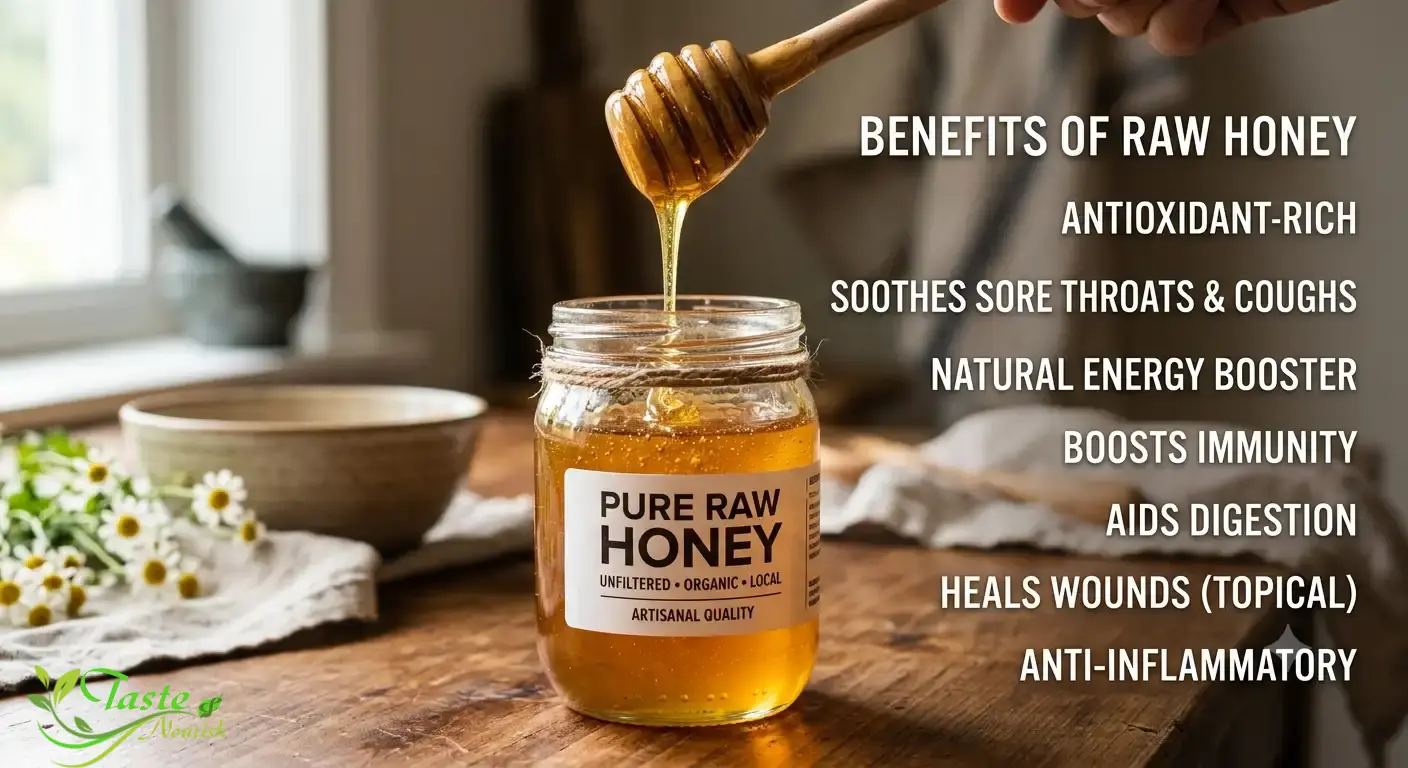
Beyond fighting microbes, honey contains polyphenols and flavonoids, plant-derived compounds known for their antioxidant activity. These compounds are associated with reduced inflammation at a cellular level, which could translate into less swelling and irritation in throat tissue.
Darker honey varieties, like buckwheat, tend to carry a higher concentration of these antioxidants than lighter types such as clover honey. That’s not a marketing gimmick; it’s a reflection of the different plant sources bees draw from when producing each variety.
How Honey Physically Soothes Throat Tissue
Here’s the part that’s easy to overlook: honey’s texture does a lot of the heavy lifting. When you swallow a spoonful, it coats the back of your throat in a thin protective layer, similar to how a bandage protects a scrape. This coating action can temporarily reduce the urge to cough and ease the raw, scraped feeling that makes swallowing uncomfortable. It’s a simple mechanical effect, but it’s often the first thing people notice when they try honey during a cold.
What Does the Research Actually Say?
Anecdotes are one thing, but what happens when researchers actually put honey to the test against conventional treatments? The results have been more encouraging than you might expect for a remedy this old-fashioned.
A widely cited systematic review and meta-analysis out of the University of Oxford, published in BMJ Evidence-Based Medicine, looked at 14 studies comparing honey to usual care for upper respiratory tract infection symptoms. The researchers found that honey improved combined symptom scores and reduced cough frequency more effectively than standard care approaches (ora.ox.ac.uk).
That’s a meaningful finding, particularly at a time when public health experts are trying to reduce unnecessary antibiotic use for infections that antibiotics can’t even treat, since most sore throats stem from viruses, not bacteria.
Honey vs. Over-the-Counter Cough and Throat Medicine
It might feel counterintuitive, but several studies suggest honey holds its own against common OTC remedies. A Cochrane-affiliated review examining honey for acute cough in children found that honey probably relieves cough symptoms to a greater extent than no treatment, diphenhydramine, and placebo, though it showed little difference compared to dextromethorphan (pubmed.ncbi.nlm.nih.gov). That’s a fairly strong signal for something you can pick up at a farmers market instead of a pharmacy counter.
It’s worth pausing on why this matters. Many OTC cough and cold products carry side effects like drowsiness, nervousness, or sleep disruption, particularly in kids. Honey, by comparison, has an excellent safety profile for anyone over the age of one, with mild stomach upset being the most commonly reported issue in trials.
That doesn’t mean honey is a substitute for medical treatment when symptoms are severe or persistent, but it does explain why so many pediatricians are comfortable recommending it as a first-line, low-risk option.
Honey for Children vs. Adults
Most of the strongest clinical trials on honey and throat or cough symptoms have actually focused on children, largely because pediatric cough treatment options are so limited and risky. The World Health Organization has recommended honey as a demulcent, meaning a soothing agent, for cough symptoms since as early as 2001.
Adults tend to get less individual research attention on this specific topic, but the underlying mechanisms, coating action, mild antimicrobial effects, and anti-inflammatory compounds, apply just as much to a 35-year-old with a scratchy throat as they do to a 5-year-old with a nighttime cough.
Nutritional Profile of Honey
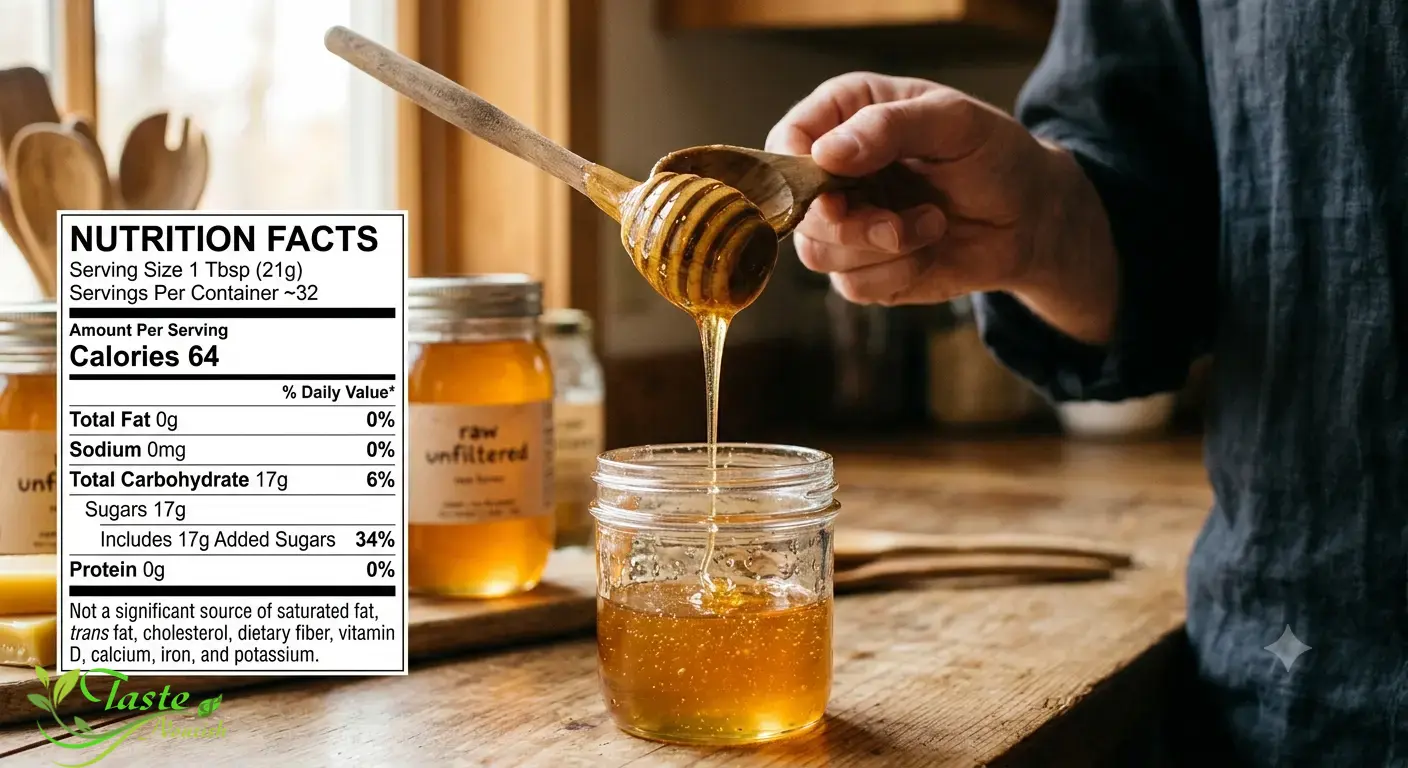
Before you start spooning honey into everything, it helps to understand exactly what you’re consuming. According to the USDA FoodData Central database, one tablespoon (about 21 grams) of honey contains roughly 64 calories, almost entirely from natural sugars, primarily fructose and glucose (fdc.nal.usda.gov). Honey contains negligible protein and essentially no fat, so its calorie contribution comes almost exclusively from carbohydrates.
Nutrient (per 1 tbsp / 21g)
Amount
Calories
~64 kcal
Total Carbohydrates
~17.3 g
Sugars
~17.2 g
Fiber
0 g
Protein
~0.1 g
Fat
0 g
Water content
~17%
Honey also contains trace amounts of B vitamins, vitamin C, calcium, iron, and potassium, though these amounts are too small to meaningfully contribute to your daily nutrient needs. The real value for throat relief isn’t nutritional density; it’s the combination of texture and bioactive compounds discussed earlier. Because honey is classified as an added sugar by dietary guidelines, it’s still smart to use it with intention rather than treating it as a health food you can eat freely.
How to Use Honey for a Sore Throat
Now for the part food lovers actually care about:how to use honey in a way that’s both effective and enjoyable. The good news is that you don’t need anything fancy. A little creativity in the kitchen goes a long way here.
Simple Ways to Take Honey
The most direct method is also the easiest one. Take a spoonful of honey, roughly one to two teaspoons, and let it slowly dissolve at the back of your throat rather than swallowing it immediately. This gives the honey more contact time with irritated tissue. Some people prefer stirring it into warm herbal tea, which adds hydration to the mix and makes the whole ritual feel a bit more like self-care than medicine.
Honey and Lemon Tea Recipe
This classic combination pairs honey’s soothing coat with lemon’s vitamin C and refreshing acidity. Warm, not boiling, water is key here, since high heat can degrade some of honey’s beneficial enzymes and break down the vitamin C in fresh lemon juice.
Warm one cup of water until it’s hot to the touch but not boiling.
Squeeze in the juice of half a fresh lemon.
Stir in one to two tablespoons of raw honey until fully dissolved.
Sip slowly, allowing the mixture to coat your throat as it goes down.
Honey and Ginger Remedy
Ginger brings its own anti-inflammatory reputation to the table, making this a popular pairing for cold-and-flu season. Grate about a teaspoon of fresh ginger into a mug of hot water, let it steep for five minutes, strain out the solids, and stir in a tablespoon of honey once the liquid has cooled slightly. The warmth alone can be soothing, and the ginger adds a little spice that many people find comforting when they’re feeling under the weather.
Choosing and Storing the Right Honey
Not all honey behaves the same way in the jar or in your body, and a few smart choices at the grocery store can make a real difference.
Raw vs. Processed Honey
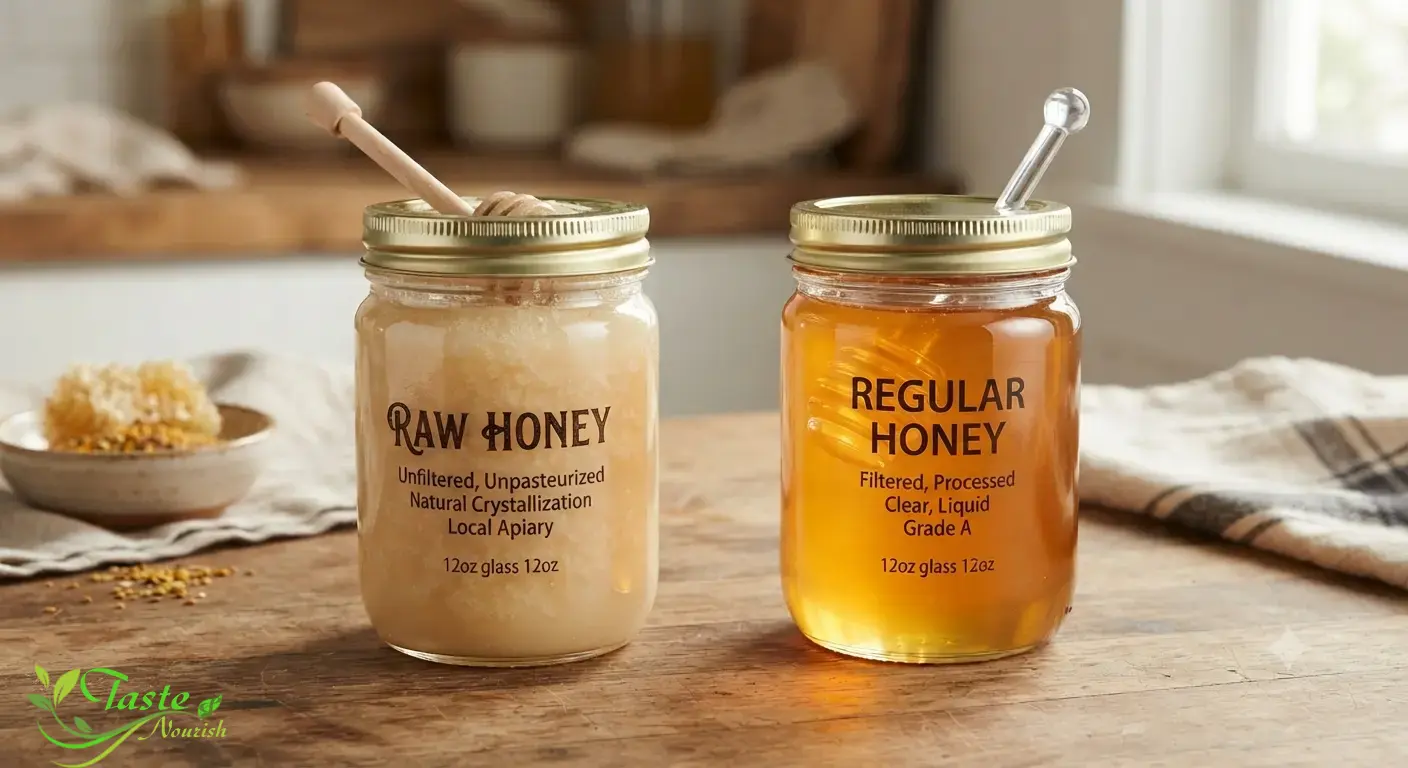
Raw honey is minimally filtered and unpasteurized, which means it retains more of its natural enzymes, pollen, and antioxidant compounds. Processed or pasteurized honey goes through heat treatment that extends shelf life and improves clarity, but that same heat can reduce some of the bioactive compounds researchers associate with honey’s soothing effects.
For sore-throat purposes specifically, raw honey is generally the better pick, though both types will still provide the coating and mild antimicrobial benefits.
Storage Tips
Honey is remarkably shelf-stable thanks to its low moisture content and acidity, both of which discourage microbial growth. Store it at room temperature in a sealed container, away from direct sunlight. If it crystallizes, which is a completely normal and harmless process, simply place the jar in a bowl of warm water until it returns to a liquid state. Avoid microwaving honey directly, as uneven heating can degrade its natural compounds.
Who Should Avoid Honey?
Honey has an excellent safety record for most people, but there are important exceptions every home cook and parent should know.
Infants Under 12 Months
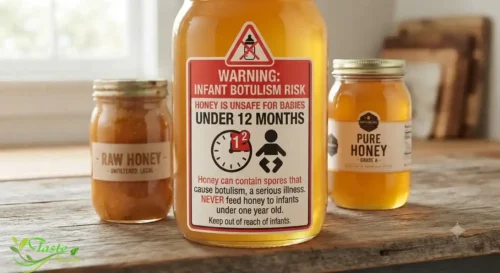
This is the single most important safety rule associated with honey. According to the Centers for Disease Control and Prevention (CDC), honey can contain spores of the bacteria Clostridium botulinum, which are harmless to older children and adults but can cause a serious illness called infant botulism in babies under one year old.
The CDC is explicit on this point: do not feed honey, or any product made with it, to a child younger than 12 months, and this includes baked goods, teas, or pacifiers dipped in honey (cdc.gov). Pasteurization does not eliminate this risk, since the spores can survive typical heat treatment, so “cooked” honey in baked goods isn’t a safe workaround for infants either.
Other Risk Groups
⇒ People managing diabetes or blood sugar sensitivity should treat honey the same way they’d treat table sugar, since it raises blood glucose in a similar manner despite its “natural” reputation.
⇒ Anyone with a known bee product or pollen allergy should also proceed cautiously, as raw honey can occasionally trigger allergic reactions in sensitive individuals.
If your sore throat is accompanied by a high fever, difficulty swallowing, swollen glands, or symptoms lasting longer than a week, honey is not a substitute for seeing a healthcare provider, since these signs can point to strep throat or another condition requiring medical treatment.
Key Takeaway: Honey is a low-risk, evidence-supported home remedy for throat irritation in anyone over age one, but it works best as a comfort measure alongside rest and hydration, not as a replacement for medical care when symptoms are severe.
Conclusion
Honey earns its reputation the old-fashioned way: through generations of home use now backed by a growing stack of clinical research. Its thick texture coats irritated tissue, its natural compounds show mild antimicrobial and anti-inflammatory activity, and multiple studies suggest it holds up well against, or even outperforms, some common OTC cough remedies. That said, it’s a food, not a drug, and it works best as part of a broader self-care routine that includes rest, fluids, and warm liquids.
Keep it away from infants under one year, use it thoughtfully if you’re managing blood sugar, and don’t hesitate to call a doctor if your sore throat sticks around or comes with more serious symptoms. Used wisely, that jar in your pantry might just be one of the most practical remedies already sitting in your kitchen.
Honey for a Sore Throat FAQs
Does honey actually cure a sore throat?
Honey doesn’t cure the underlying cause of a sore throat, whether that’s a virus or bacteria. It may help ease the discomfort by coating irritated tissue and offering mild antimicrobial and anti-inflammatory support, but it works as a symptom soother, not a cure.
How much honey should I take for a sore throat?
Most home remedies use one to two teaspoons taken directly or stirred into warm tea, up to a few times a day. There’s no strict clinical dosage, so it’s more about comfort and consistency than hitting an exact number.
Can honey help a sore throat caused by strep?
Honey may ease the discomfort of a strep-related sore throat, but it cannot treat the bacterial infection itself. Strep throat requires a proper diagnosis and, typically, antibiotics prescribed by a healthcare provider.
Is manuka honey better than regular honey for a sore throat?
Manuka honey has a higher concentration of certain antibacterial compounds and has been studied for wound care, but for everyday sore throat relief, regular raw honey provides similar coating and soothing benefits at a fraction of the cost.
Can I give honey to my toddler for a cough or sore throat?
Yes, once a child is over 12 months old, honey is generally considered safe and is even recommended by some pediatric guidelines for nighttime cough relief. Never give honey to a baby younger than one year due to the risk of infant botulism.
A soothing honey and lemon tea recipe traditionally used to ease sore throat discomfort, combining raw honey's coating properties with the vitamin C and refreshing acidity of fresh lemon.
Ingredients
1 cup warm water not boiling
Juice of 1/2 fresh lemon
1-2 tablespoons raw honey
Directions
Warm one cup of water until hot to the touch but not boiling
Squeeze in the juice of half a fresh lemon.
Stir in one to two tablespoons of raw honey until fully dissolved.
Sip slowly, allowing the mixture to coat the throat as it goes down.
Oduwole O, Udoh EE, Oyo-Ita A, Meremikwu MM — “Honey for Acute Cough in Children” (Cochrane Review), PubMed, National Library of Medicine. https://pubmed.ncbi.nlm.nih.gov/29633783/
Abuelgasim H, Albury C, Lee J — “The Effectiveness of Honey for Symptomatic Relief in Upper Respiratory Tract Infections: A Systematic Review and Meta-Analysis,” University of Oxford, Oxford University Research Archive (published in BMJ Evidence-Based Medicine). https://ora.ox.ac.uk/objects/uuid:99bfde7b-043d-4501-a025-b8b59728db03
This guide is for informational purposes only and should not replace professional medical or nutritional advice. Always consult with healthcare providers regarding specific dietary needs and health conditions.
Hanan Abo Samra is the founder of Taste & Nourish, sharing trustworthy nutrition guidance and recipes drawn from 20+ years of hands-on cooking experience. When she's not developing new recipes, Hanan is researching the science behind everyday ingredients to bring readers practical, evidence-based guidance for a healthier lifestyle.