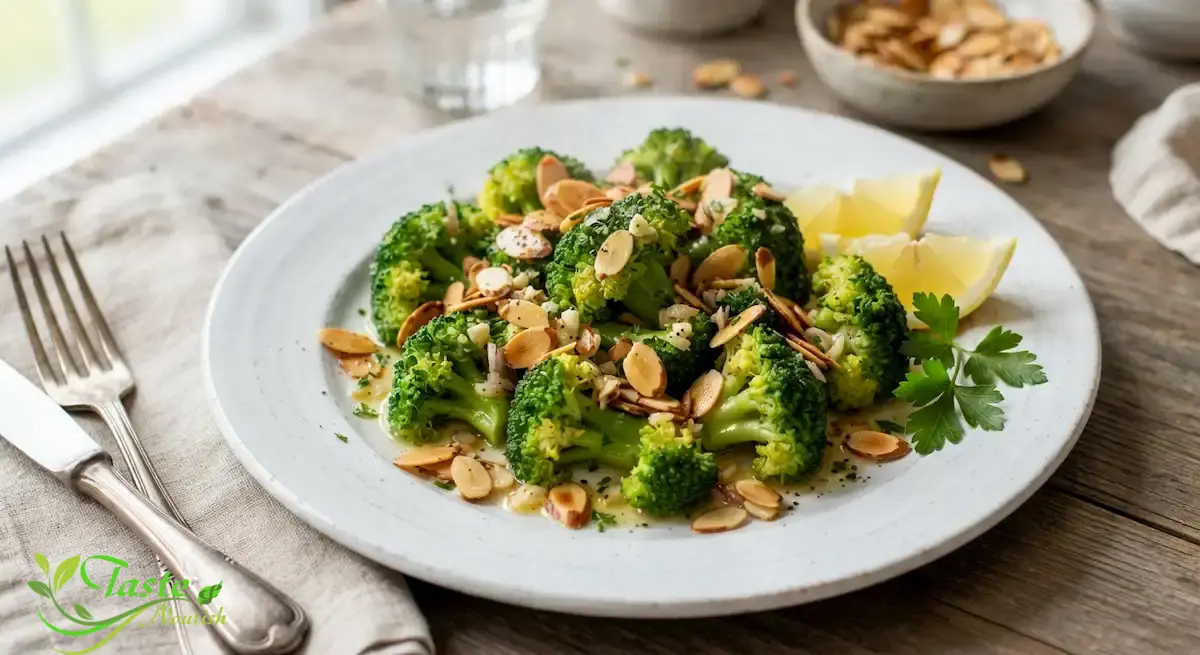
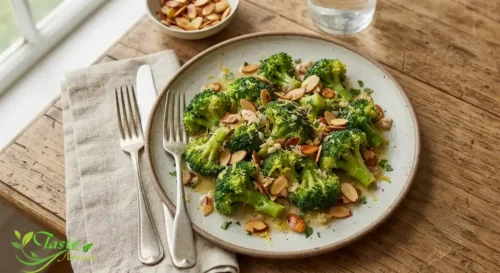
If you’ve ever wondered how restaurants make broccoli taste so much better than the steamed version on your own dinner plate, this broccoli almondine recipe is usually the answer. It’s a French-inspired side dish that pairs bright, crisp-tender broccoli with butter, toasted almonds, and a squeeze of lemon. Five ingredients, twenty minutes, and a side dish good enough to serve at a holiday table.
This guide covers the classic recipe step by step, plus the nutrition facts, health benefits, and practical questions people usually have about broccoli and almonds as ingredients on their own.
This broccoli almondine recipe steams or blanches broccoli florets until just tender, then tosses them with butter, toasted sliced almonds, and fresh lemon juice. The word “almondine” (from the French amandine) simply means a dish garnished with almonds, and the technique works equally well with green beans, fish, or other vegetables. From start to finish, it takes about 20 minutes and needs no special equipment beyond a pot and a skillet.
Key Takeaways
This broccoli almondine recipe takes about 20 minutes and uses just five main ingredients: broccoli, butter, sliced almonds, lemon juice, and salt.
“Almondine” refers to the almond garnish, not an almond flavoring, so no almond extract is involved.
Broccoli is a good source of vitamin C, vitamin K, and fiber, while almonds contribute vitamin E, magnesium, and heart-healthy fats.
Toasting the almonds separately, rather than cooking them with the broccoli the whole time, keeps them from burning or turning soggy.
People taking blood-thinning medication or living with a tree nut allergy should check with a healthcare provider before making changes to how much broccoli or almonds they eat.
Frozen broccoli works in a pinch, though fresh florets hold their shape and color better in this particular dish.
What Is Broccoli Almondine?
Broccoli almondine is a side dish built around two ingredients: broccoli and almonds. The name comes from classic French cooking, where “amandine” describes any dish finished with almonds, most famously trout amandine.
Broccoli itself is a cruciferous vegetable in the same plant family as cauliflower, cabbage, kale, and Brussels sprouts. It’s the edible flower head of Brassica oleracea, harvested before the small yellow buds open. Almonds, meanwhile, are technically the seed found inside the fruit of the almond tree, not a true nut, though they’re grouped with tree nuts nutritionally and for allergy purposes.
Put the two together with a little butter and lemon, and you get a dish that’s simple enough for a weeknight but polished enough for company.
The Classic Broccoli Almondine Recipe
Here’s the straightforward version, made the way most French and American kitchens have made it for decades.
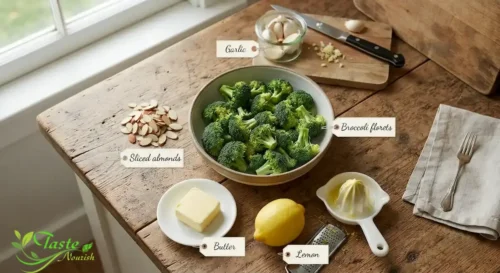
Ingredients You’ll Need
1 1/2 pounds broccoli florets (about 6 cups)
3 tablespoons unsalted butter
1/3 cup sliced almonds
1 tablespoon fresh lemon juice, plus zest for garnish
1 small garlic clove, minced (optional)
Salt and freshly ground black pepper, to taste
Equipment
Large pot with a steamer basket, or a wide skillet with a lid
A separate skillet for toasting the almonds
Tongs or a slotted spoon
How to Make Broccoli Almondine Step by Step
Trim the broccoli into evenly sized florets and rinse them well.
Steam the florets for 4 to 5 minutes, until they turn bright green and are tender but still have a slight bite. Drain and set aside.
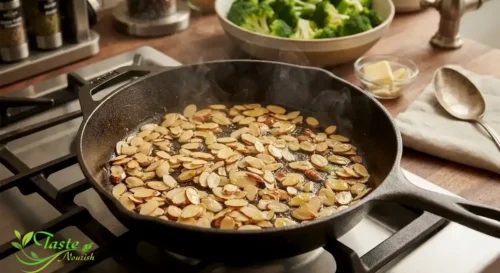
While the broccoli steams, toast the sliced almonds in a dry skillet over medium heat, stirring often, for 3 to 4 minutes until golden and fragrant. Move them to a plate immediately so they don’t keep cooking.
In the same skillet, melt the butter over medium heat. Add the garlic, if using, and cook for about 30 seconds until fragrant.
Return the almonds to the skillet and stir in the lemon juice.
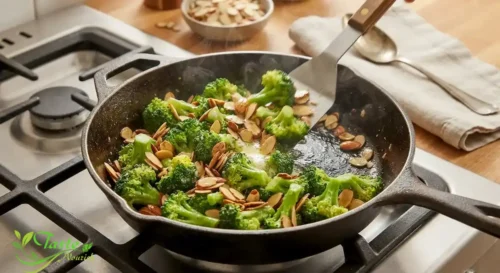
Add the steamed broccoli to the skillet and toss gently to coat everything in the butter and almonds.
Season with salt and pepper, garnish with lemon zest, and serve right away.
Chef’s tip: Toast the almonds first and hold them off to the side. Adding raw almonds to the pan with wet broccoli almost always leaves them soft instead of crisp.
Don’t skip the lemon. A little acid at the end is what keeps this dish from tasting flat or overly buttery, and it’s what separates a good broccoli almondine recipe from an average one.
If you like a browned-butter version, cook the butter alone for an extra minute or two before adding the garlic, just until it smells nutty and turns light amber. Watch it closely, since butter can go from browned to burnt quickly.
Variations on Broccoli with Toasted Almonds
Add a pinch of red pepper flakes for gentle heat.
Finish with grated Parmesan for a richer, saltier version.
Swap sliced almonds for slivered or whole almonds, chopped roughly, for more crunch.
Use olive oil instead of butter for a dairy-free take.
Stir in a handful of toasted breadcrumbs alongside the almonds for extra texture.
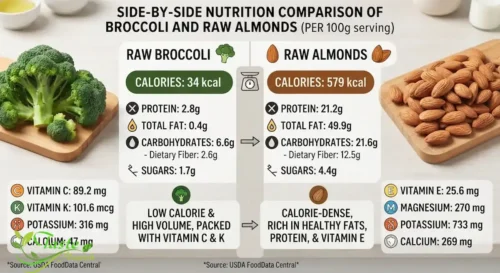
Broccoli Nutrition Facts
Broccoli is a low-calorie, nutrient-dense vegetable. The approximate values below come from USDA FoodData Central and are for raw broccoli.
Nutrient
Per 100g raw
Per 1 cup chopped raw (about 91g)
Calories
34 kcal
31 kcal
Protein
2.8g
2.6g
Carbohydrates
6.6g
6g
Fiber
2.6g
2.4g
Vitamin C
~89mg
~81mg
Potassium
316mg
288mg
Calcium
47mg
43mg
Almond Nutrition Facts
Almonds bring a different nutrient profile to the table, one built more around healthy fats, vitamin E, and magnesium.
Nutrient
Per 1 ounce raw (about 23 almonds)
Calories
164 kcal
Total fat
14g (mostly monounsaturated)
Protein
6g
Fiber
3.5g
Vitamin E
~7.3mg (about 49% of daily value)
Magnesium
~76mg (about 18% of daily value)
Health Benefits of Broccoli with Toasted Almonds
Neither broccoli nor almonds is a miracle food, but both are well-studied ingredients with real nutritional value, and eating them together covers a broader range of nutrients than either one alone.
Broccoli’s vitamin C content supports normal immune function, and its fiber may help support digestive health and steady blood sugar levels. It’s also one of the better plant sources of vitamin K, which plays a role in bone metabolism and normal blood clotting.
Cruciferous vegetables like broccoli contain plant compounds called glucosinolates, which break down into substances that researchers have studied for their antioxidant and anti-inflammatory properties. Some observational research suggests that regularly eating cruciferous vegetables may be associated with better cardiovascular markers, though this isn’t the same as proof that broccoli alone prevents disease.
Almonds contribute their own benefits. Their vitamin E acts as an antioxidant, their magnesium supports normal muscle and nerve function, and their fat profile is mostly monounsaturated, the same type of fat associated with heart-healthy diets like the Mediterranean pattern. The fiber and healthy fat combination in almonds may also help with feeling satisfied after a meal.
Scientific Evidence
Some of the most interesting research on broccoli and cardiovascular health comes from a study covered by Harvard Health Publishing, which found that older women who regularly ate cruciferous vegetables, including broccoli, had noticeably less calcium buildup in a major blood vessel compared with women who ate less of these vegetables. It’s worth remembering this was an observational study, meaning it shows an association rather than direct cause and effect, and diet quality overall likely played a role too.
On the almond side, much of the vitamin E and magnesium research points to their role as essential nutrients rather than treatments for any specific condition. The National Institutes of Health’s Office of Dietary Supplements notes that vitamin K, found in meaningful amounts in broccoli, is required for the body to properly form blood clotting factors and supports bone metabolism, which is part of why consistent intake matters more than occasional large amounts.
Potential Risks and Side Effects
For most people, broccoli and almonds are easy to digest in normal food-sized portions, but there are a few things worth knowing.
Broccoli contains raffinose, a type of fiber that isn’t fully broken down until it reaches the large intestine, where gut bacteria ferment it. This is a completely normal process, but it can cause gas or bloating in some people, especially if broccoli isn’t a regular part of their diet.
Like other cruciferous vegetables, raw broccoli contains compounds sometimes called goitrogens, which in very large, mostly raw quantities may interfere with iodine uptake by the thyroid. Cooking broccoli, as this recipe does, reduces this effect significantly, and typical serving sizes aren’t a concern for most people with a normally functioning thyroid.
Almonds carry a more clear-cut risk: tree nut allergy. According to the Cleveland Clinic, allergic reactions to tree nuts like almonds can range from mild hives to severe, life-threatening anaphylaxis, and anyone with a known or suspected tree nut allergy should avoid almonds entirely.
Who Should Avoid It
Two groups in particular should pay closer attention to this dish.
People taking warfarin or similar blood-thinning medications should talk with their healthcare provider about vitamin K–rich foods like broccoli. The goal generally isn’t to avoid these vegetables, but to keep intake fairly consistent from week to week, since sudden increases or decreases in vitamin K can affect how well the medication works.
Anyone with a tree nut allergy should leave the almonds out of this recipe. Toasted pepitas or sunflower seeds make a reasonable substitute if you still want some crunch.
How Much Should You Eat
General USDA dietary guidance suggests most adults aim for roughly 2 to 3 cups of vegetables a day, and a serving of this broccoli almondine recipe, around 1 to 1.5 cups, fits comfortably into that target as part of a meal. For almonds, a typical serving is about 1 ounce, or roughly the 1/3 cup used in this recipe split across four servings. There’s no need to eat broccoli or almonds in large therapeutic amounts to get their benefit; consistency over time matters more than any single serving.
How to Choose the Best Broccoli and Almonds
Choosing Fresh Broccoli
Look for broccoli with tightly closed, compact florets in a deep green or slightly purplish-green color. Avoid heads where the buds have started to open into small yellow flowers, since that’s a sign the broccoli is past its prime and will taste more bitter. The stalk should feel firm, not rubbery, and the cut end shouldn’t look dried out or woody.
Choosing Almonds
Raw, unsalted almonds give you the most control, since you’ll toast them yourself for this recipe. Give the bag a sniff if you can; rancid almonds smell faintly like paint or crayons rather than nutty and mild. Buying from a store with good turnover helps ensure fresher stock, since almonds’ natural oils can go rancid over time, especially in warm storage.
Storage Tips
Storing Fresh Broccoli
Keep raw broccoli in the refrigerator, ideally in a loosely closed or perforated bag in the crisper drawer. The U.S. Food and Drug Administration recommends storing perishable produce at 40°F or below to maintain both quality and food safety. Under these conditions, fresh broccoli generally stays good for about 3 to 5 days.
Storing Leftover Broccoli Almondine
Once cooked, this dish keeps in an airtight container in the refrigerator for up to 3 days. Reheat it gently in a skillet over medium-low heat rather than the microwave if you can, since a skillet helps the almonds hold onto some of their crunch instead of turning soft.
Best Ways to Cook Broccoli with Toasted Almonds
Steaming is the traditional method for a classic broccoli almondine recipe, since it keeps the color bright and the texture crisp-tender without adding extra water weight the way boiling can.
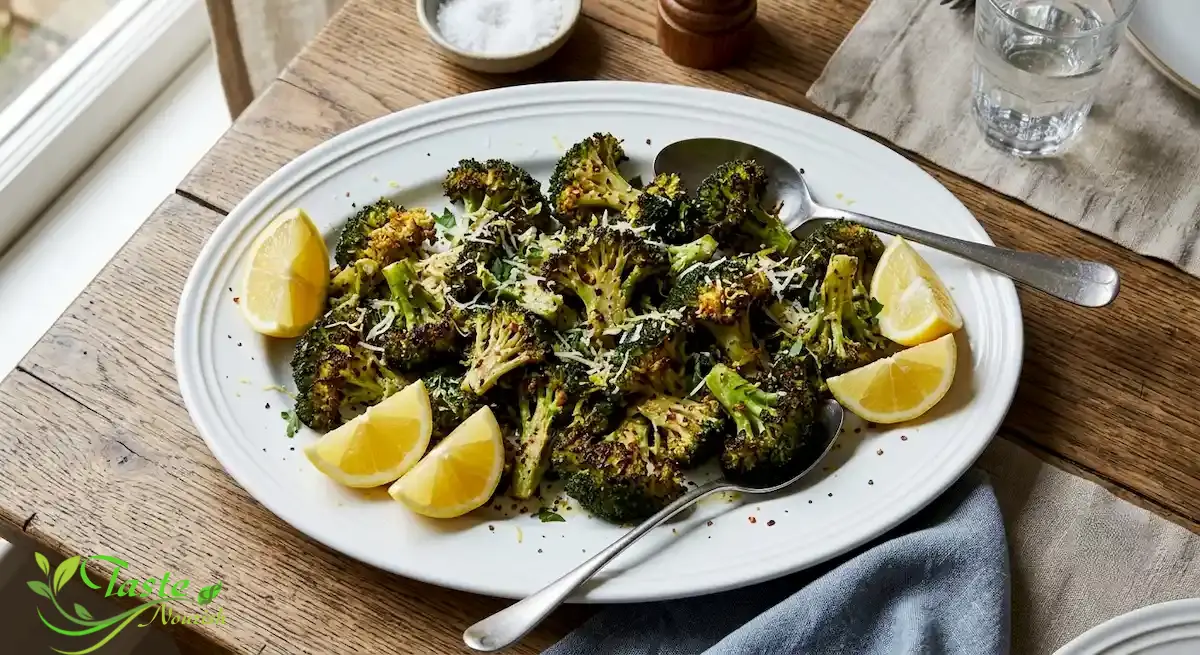
Roasting is a popular alternative. Toss broccoli florets with olive oil, roast at 425°F for about 15 to 18 minutes until the edges char slightly, then toss with the butter, toasted almonds, and lemon at the end rather than roasting the almonds alongside the broccoli, since they can burn well before the broccoli finishes.
Sautéing or stir-frying works too, especially if you want to add garlic or shallots earlier in the cooking process for more depth. A quick turn on the grill, either whole spears or in a grill basket, adds a smoky note that pairs surprisingly well with the toasted almonds.
Common Mistakes to Avoid in a Broccoli Almondine Recipe
Overcooking is the most common mistake. Broccoli that’s boiled too long turns a dull olive-green and goes mushy, losing both texture and some of its nutrient content in the process.
Burning the almonds is a close second. They go from perfectly golden to bitter and burnt in a matter of seconds once they start browning, so it helps to stay at the stove and move them off the heat the moment they smell toasted.
Other easy-to-fix mistakes include under-seasoning the dish, skipping the lemon juice that brightens everything, and adding the almonds to the pan too early so they lose their crunch by the time the dish is served.
Myths vs Facts About Broccoli Almondine
Myth
Fact
“Almondine” means the dish is flavored with almond extract.
Almondine simply refers to an almond garnish; no almond extract is used in the classic recipe.
Cooking broccoli destroys most of its nutrients.
Some water-soluble vitamins decrease with cooking, but brief steaming or roasting retains most of broccoli’s nutritional value.
Frozen broccoli is nutritionally inferior to fresh.
Frozen broccoli is typically flash-frozen shortly after harvest and can be comparably nutritious to fresh broccoli that’s spent days in transit and storage.
Broccoli Almondine vs. Other Broccoli Side Dishes
Preparation
Approx. Prep Time
Added Fat
Flavor Profile
Broccoli Almondine
20 minutes
Butter, moderate
Buttery, nutty, bright with lemon
Plain Steamed Broccoli
10 minutes
None to minimal
Mild, vegetal
Roasted Broccoli
25 minutes
Olive oil, moderate
Caramelized, slightly charred
Broccoli Stir-Fry
15 minutes
Oil, moderate to high
Savory, often garlicky or gingery
Broccoli Almondine Recipe FAQs
What does “almondine” mean in cooking?
Almondine, from the French word amandine, describes a dish finished or garnished with almonds. It doesn’t refer to a flavor of almond extract, just the presence of almonds themselves, usually toasted.
Can I make broccoli almondine with frozen broccoli?
Yes. Steam or microwave frozen florets according to the package instructions, drain them well to remove excess water, and then finish them in the skillet with the butter, almonds, and lemon just as you would with fresh broccoli.
What can I use instead of almonds if I have a nut allergy?
Toasted sunflower seeds or pepitas (pumpkin seeds) give a similar crunch without the tree nut allergen. Toast them the same way you would the almonds, watching closely since seeds can also burn quickly.
How do I keep the almonds from burning?
Toast them in a dry skillet over medium heat and stir frequently. Remove them from the pan the moment they turn golden and smell nutty, since they’ll continue cooking slightly from residual heat even off the stove.
Is broccoli almondine healthy?
As a vegetable side dish, broccoli almondine offers fiber, vitamin C, vitamin K, and healthy fats from the almonds. The butter adds some saturated fat, so portion size is worth keeping in mind if that’s a concern for you, but overall it’s a reasonably balanced way to eat more vegetables.
Conclusion
Broccoli almondine earns its place as a classic for a reason: it’s fast, it uses ingredients most kitchens already have, and it turns a plain vegetable into something people actually look forward to eating. Whether you’re making the traditional buttery version or trying one of the variations above, the technique is forgiving enough for a weeknight and polished enough for a holiday table.
References
“FoodData Central.” U.S. Department of Agriculture, Agricultural Research Service. https://fdc.nal.usda.gov/
Hanan Abo Samra is the founder of Taste & Nourish, sharing trustworthy nutrition guidance and recipes drawn from 20+ years of hands-on cooking experience. When she's not developing new recipes, Hanan is researching the science behind everyday ingredients to bring readers practical, evidence-based guidance for a healthier lifestyle.