
Baklava Cheesecake: Easy Recipe, Expert Tips & Delicious Variations
How to Make Baklava Cheesecake — Flaky, Creamy & Absolutely Irresistible
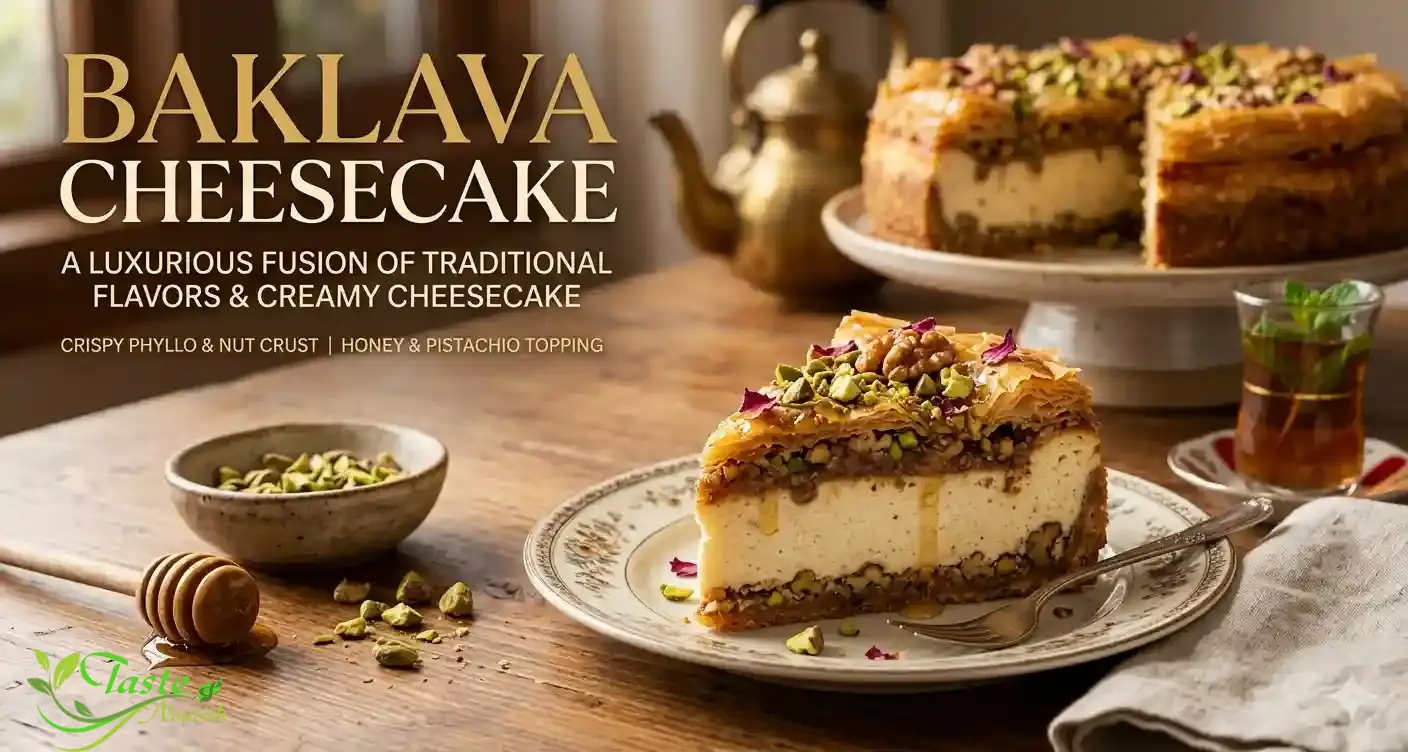
If you’ve ever stood at a dessert table torn between a glistening slice of honey-soaked baklava and a thick, creamy wedge of cheesecake, someone out there heard your internal struggle — and decided to fix it permanently. Baklava cheesecake is the show stopping fusion dessert that brings together the flaky, buttery, nut-filled layers of traditional Middle Eastern baklava with the velvety, rich filling of a classic cheesecake. The result? An extraordinary dessert that looks like it came out of a five-star patisserie but is surprisingly achievable in a home kitchen.
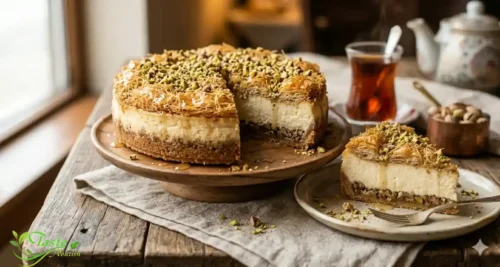
At its core, baklava cheesecake features a tangy cheesecake filling atop a phyllo crust, finished with a delicate honey, rose, and pistachio topping — a dessert that is both deceptively easy to make and undeniably impressive on any table. What makes it so special isn’t just the flavors — it’s the textural symphony happening in every single bite: crunchy phyllo, silky cream, and chewy caramelized nuts all at once.
💡 Key Takeaway: Baklava cheesecake is a cross-cultural fusion dessert combining Middle Eastern phyllo pastry traditions with Western-style baked cheesecake — and it’s one of the most searched fusion dessert recipes of 2026.
The Cultural Roots Behind the Fusion
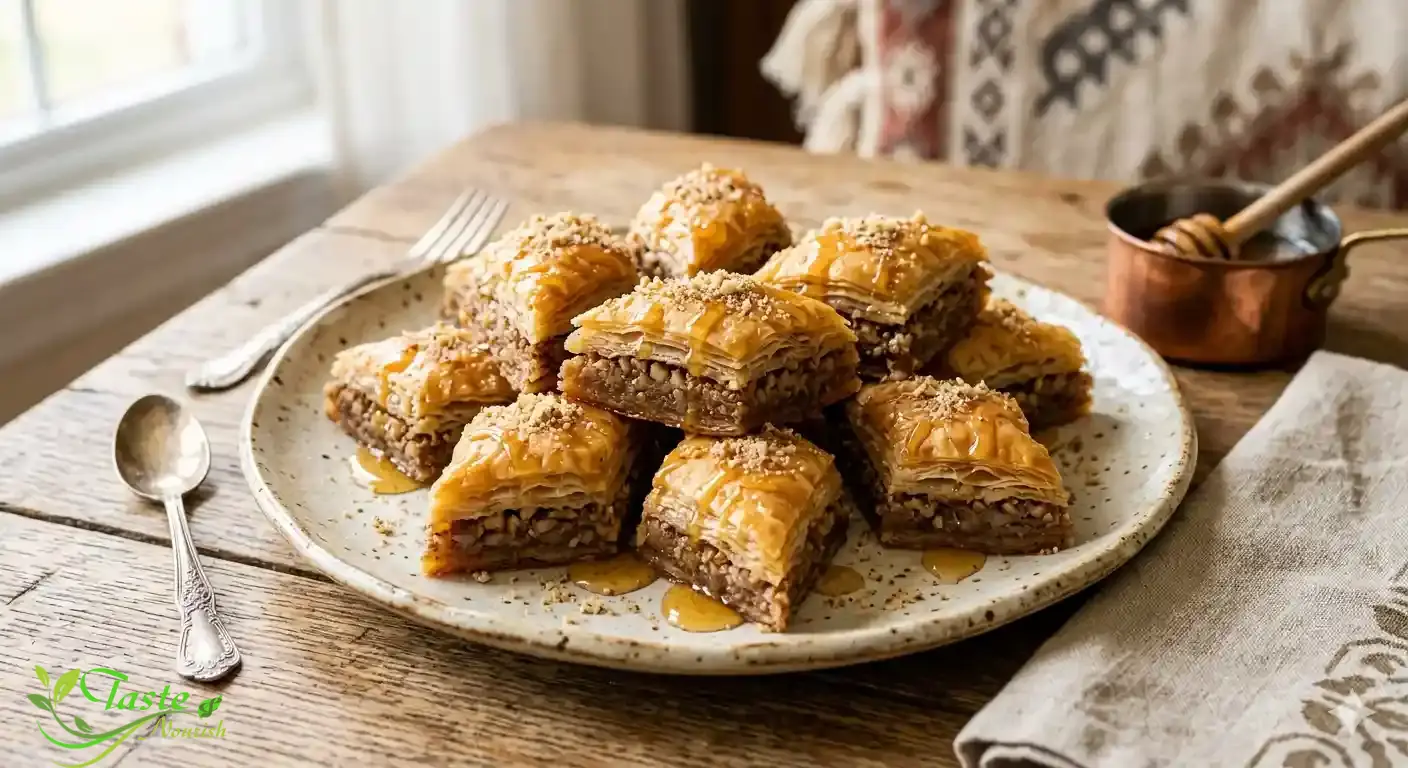
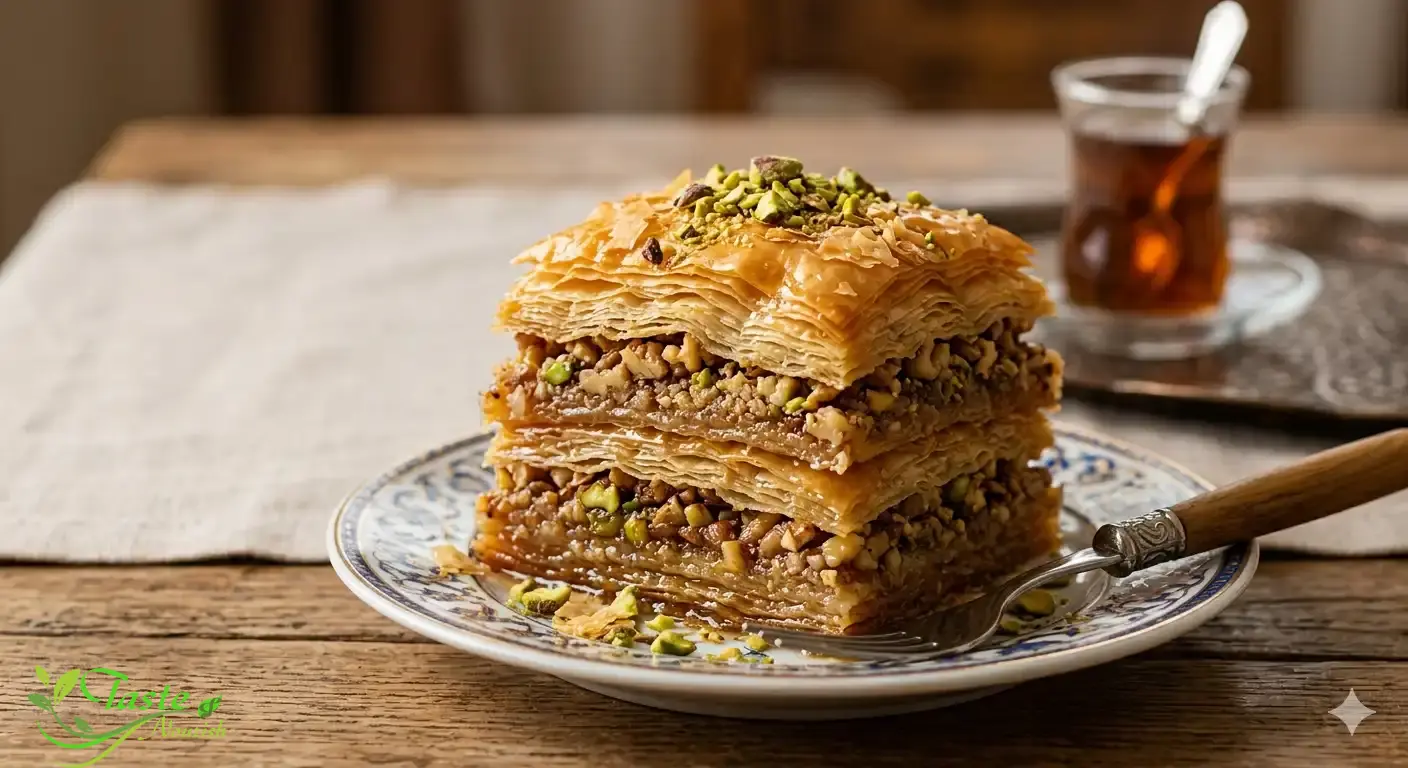
To truly appreciate baklava cheesecake, it helps to understand both of its parents. Baklava is a centuries-old dessert deeply embedded in the culinary traditions of the Middle East, the Mediterranean, and Central Asia. It’s made from paper-thin phyllo dough layered with chopped nuts and sweetened with honey or sugar syrup — simple ingredients that produce an almost impossibly complex result.
Cheesecake, on the other hand, has surprisingly ancient origins too. Most people are quick to associate baklava with Greece, but cheesecake also has ties to Greek culture — though today it looks quite different from how it once did, it’s still enjoyed for its rich and satisfying flavor. The earliest known cheesecake was reportedly made on the Greek island of Samos, centuries before New York-style versions became the global standard.
When these two legendary desserts collide, the outcome is something that honors both traditions while creating an entirely new culinary experience. It’s less of a compromise and more of a collaboration — each component making the other taste even better.
Ingredients You’ll Need for Baklava Cheesecake
⏱ Prep Time: 30 minutes • 🔥 Cook Time: 70 minutes • 🍽 Servings: 12
Before you start layering and whisking, let’s get organized. A well-stocked mise en place is the difference between a smooth baking session and a chaotic one. Here’s a complete breakdown of everything you’ll need, organized by component.
The Phyllo Crust Components
The phyllo crust is what transforms this from a standard cheesecake into something truly special. Unlike a graham cracker or digestive biscuit base, phyllo brings an airy, architectural quality that no other crust can replicate.
- Phyllo dough (filo pastry): 1 package (about 16–20 sheets), thawed overnight in the fridge
- Unsalted butter: ½ cup (113g), melted — for brushing between layers
- Crushed pistachios or walnuts: ½ cup, finely chopped
- Ground cinnamon: 1 teaspoon
- Honey: 2 tablespoons, for binding the nut layer
📝 Reader Note: Always thaw frozen phyllo dough in the refrigerator overnight — never at room temperature. Rapid thawing causes condensation, which makes the sheets stick together and tear.
The Cheesecake Filling Essentials
The filling is where you have the most creative freedom, and also where most recipes diverge. You can use classic cream cheese for that tangy New York-style density, or opt for ricotta for a lighter, more Italian-inspired texture.
- Cream cheese: 600g (about 21 oz), full-fat, softened to room temperature
- Whole milk ricotta: 250g (optional, for a lighter texture)
- Granulated sugar: ¾ cup
- Honey: 3 tablespoons (adds floral sweetness that ties to the baklava element)
- Eggs: 3 large, at room temperature
- Vanilla extract: 1 teaspoon
- Orange zest or lemon zest: from 1 fruit (adds brightness)
- Rosewater: 1 teaspoon (optional but highly recommended)
The star ingredient in some versions is whole milk ricotta cheese, whipped for a good 10 minutes with eggs and sugar to create an unbelievably indulgent yet airy and light batter. If you want that cloud-like, almost soufflé-adjacent filling, ricotta is your friend.
The Nut & Honey Topping
This is the crown of your creation — the part that screams “baklava” loud and clear. Don’t skimp here.
- Pistachios: ½ cup, roughly chopped (unsalted, roasted)
- Walnuts: ¼ cup, roughly chopped
- Honey: ¼ cup, warmed slightly for easier drizzling
- Rosewater: ½ teaspoon (mixed into the honey)
- Dried rose petals: 1 tablespoon (optional, for visual drama)
- Ground cardamom: ¼ teaspoon (adds warmth and depth)
Step-by-Step Baklava Cheesecake Recipe
Let’s walk through the full process. Don’t be intimidated — if you take it one step at a time, this recipe is genuinely manageable even for intermediate home bakers.
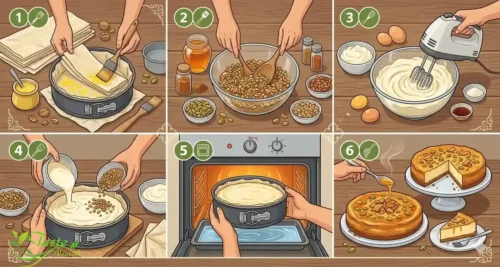
Preparing the Phyllo Crust
Step 1: Preheat your oven to 325°F (165°C). Lightly grease a 9-inch springform pan with butter or non-stick spray.
Step 2: Unroll the phyllo sheets and keep them covered with a slightly damp kitchen towel at all times. Phyllo dries out within minutes of exposure to air.
Step 3: Layer the phyllo. Place one sheet in the pan, letting the excess drape over the sides. Brush lightly with melted butter. Repeat with 8–10 sheets, rotating the pan slightly each time so the overhang is distributed evenly.
Step 4: Add the nut layer. Combine crushed pistachios, walnuts, cinnamon, and honey. Spread this mixture evenly over the phyllo base.
Step 5: Add more phyllo on top of the nut layer — about 5–6 more sheets, each brushed with butter. Fold the overhanging edges up and over the top, creating a rustic, crinkled border. This crinkled edge is what gives baklava cheesecake its iconic, dramatic appearance.
Making the Cheesecake Filling
Step 1: Beat the softened cream cheese on medium speed for 2–3 minutes until completely smooth and lump-free. This step is non-negotiable — lumps now mean lumps in the final product.
Step 2: Add sugar and honey, then beat for another 2 minutes. Scrape down the sides of the bowl.
Step 3: Add eggs one at a time, mixing on low speed after each addition. Overmixing at this stage incorporates too much air, which can cause cracks.
Step 4: Stir in vanilla extract, rosewater, and citrus zest. If you’re using ricotta, fold it in gently at this stage for a marbled effect, or blend it smooth for uniformity.
Assembling and Baking
Pour the cheesecake filling gently over the prepared phyllo crust. Smooth the top with a spatula. The best part of this show-stopping cake is that it does not require the fuss of a water bath like classic cheesecake — which for many bakers is a huge plus and removes a significant technical hurdle.
Bake at 325°F (165°C) for 55–70 minutes, or until the edges are set and the center has a slight jiggle (like wobbling Jell-O, not liquid). The residual heat will finish cooking the center as it cools.
Turn off the oven and crack the door open. Let the cheesecake sit inside for 30 minutes before removing. This gradual temperature change prevents the top from cracking.
Transfer to a wire rack and cool at room temperature for 1 hour, then refrigerate for a minimum of 4 hours (overnight is ideal).
The Finishing Honey Drizzle
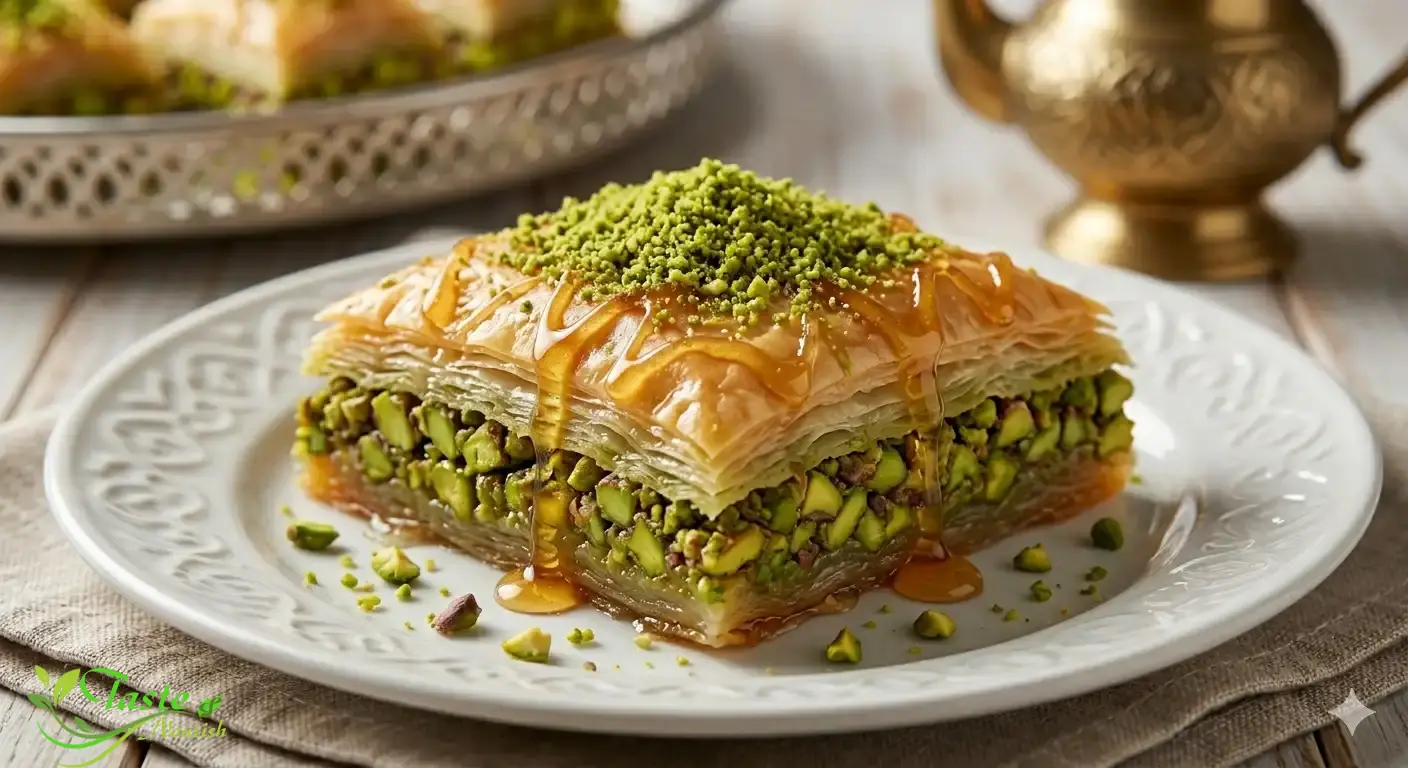
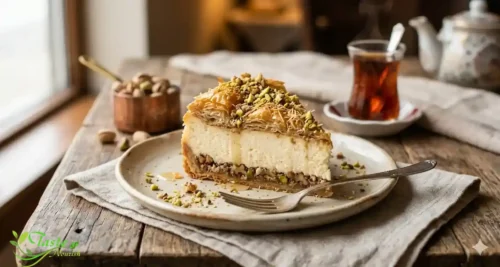
Once the cheesecake is fully chilled and set, mix warmed honey with rosewater and drizzle it generously over the top. Scatter the chopped pistachios and walnuts across the surface, add rose petals if using, and finish with a tiny pinch of cardamom. Layers of flaky phyllo, a luscious rosewater-scented creamy filling, and a delicate walnut and pistachio topping make this cheesecake gorgeous, festive, and tasting just incredible.
Expert Tips for a Perfect Baklava Cheesecake
Working With Phyllo Dough Like a Pro
Phyllo dough is the ingredient that intimidates most bakers — but it really shouldn’t. Here’s what you need to know before you start:
- Thaw properly. Move the phyllo from the freezer to the fridge the night before baking. Rushing this step is the #1 cause of torn sheets.
- Keep it covered. Work with one sheet at a time and keep the rest under a damp towel. Phyllo dries out in as little as 60 seconds.
- Be generous with butter. Each sheet needs a light but complete brush of melted butter. This is what creates that gorgeous, shattering crunch.
- Don’t panic about tears. A torn phyllo sheet isn’t a disaster — just layer it anyway. With 10+ sheets stacked together, no one will ever know.
- Embrace imperfection. The crinkled, ruffled edges aren’t mistakes — they’re the most beautiful part of the presentation.
💡 Pro Tip: If you find phyllo dough too delicate to handle, try working in a cool kitchen. Warm environments accelerate drying significantly.
Avoiding Common Cheesecake Mistakes
Even experienced bakers make these errors. Here’s how to sidestep all of them:
- Cold ingredients = lumpy filling. Always bring cream cheese and eggs to room temperature before mixing.
- Overmixing = cracks and puffing. Mix on low once the eggs go in. More air isn’t better.
- Underbaking = runny center. The cheesecake should wobble like set gelatin, not slosh like water.
- Rushing the chill. Cutting into a cheesecake that hasn’t had at least 4 hours in the fridge is always a mistake. Overnight is best.
- Skipping the gradual cooling. Going straight from hot oven to cold counter creates thermal shock and surface cracks.
Baklava Cheesecake Variations You’ll Love
One of the most exciting things about this fusion dessert is how adaptable it is. Once you’ve nailed the base recipe, the variations are genuinely endless.
Baklava Cheesecake Bars
If you’re serving a crowd or want a more portable format, baklava cheesecake bars are your answer. Baklava cheesecake bars are luxuriously rich and creamy, and even easier to serve when sliced into rectangles — featuring crispy layers of phyllo dough and a delicious nutty topping, plus a sprinkle of dried rose petals that makes this dessert as beautiful as it is tasty.
Simply use a 9×13-inch rectangular baking pan instead of a springform. The phyllo layers are built the same way, and the filling recipe stays identical. Bars are easier to transport, require no springform pan, and cut beautifully into neat portions for events, potlucks, and holiday gift boxes.
No-Bake Baklava Cheesecake
For those who want the flavors without the oven, a no-bake version is entirely possible. The key differences:
- Use whipped cream cheese and heavy cream folded together (no eggs needed)
- Set the filling with gelatin or let it firm up purely through refrigeration
- Use crushed graham crackers mixed with crushed pistachios for the base instead of phyllo
- Top with the same honey-nut mixture after setting
The no-bake version won’t have that signature crispy phyllo crust, but the flavor profile is still deeply reminiscent of baklava. It’s also faster — about 20 minutes of hands-on work, plus 6 hours of chilling.
Vegan & Gluten-Free Adaptations
Making this dessert accessible to more people is easier than you’d think. Here’s a quick guide:
| Adaptation | Swap Out | Swap In |
|---|---|---|
| Vegan | Cream cheese, eggs, butter | Vegan cream cheese, flax eggs, vegan butter |
| Gluten-Free | Standard phyllo dough | GF phyllo alternative or rice paper |
| Dairy-Free | Cream cheese, ricotta | Cashew-based cream cheese |
| Refined Sugar-Free | Granulated sugar | Maple syrup or coconut sugar |
| Nut-Free | Pistachios & walnuts | Sunflower seeds & pumpkin seeds |
📝 Reader Note: Gluten-free phyllo alternatives are genuinely difficult to find commercially. Your best bet is to check specialty Mediterranean or health food stores, or look for online retailers that carry rice paper wraps as a structural substitute.
Baklava Cheesecake Comparison Table
Not all baklava cheesecake recipes are the same. Here’s how the most popular variations compare across the key dimensions:
| Version | Crust | Filling Base | Complexity | Best For |
|---|---|---|---|---|
| Classic Baked | Phyllo dough (8–12 layers) | Cream cheese + eggs | Medium | Special occasions |
| Ricotta-Based | Phyllo dough (crinkled) | Whole milk ricotta | Medium | Lighter texture lovers |
| Bars Format | Phyllo in rectangular pan | Cream cheese | Easy | Crowds & events |
| No-Bake | Crushed nuts + biscuits | Whipped cream cheese | Easy | Quick prep, no oven |
| Vegan | Vegan phyllo or rice wrap | Cashew cream cheese | Hard | Dietary restrictions |
| Mini Cheesecakes | Phyllo cups (muffin tin) | Cream cheese | Easy | Individual servings |
Nutrition Facts & Dietary Information
Below is an approximate nutritional breakdown per slice, based on a 12-slice standard baked baklava cheesecake using cream cheese, phyllo dough, pistachios, walnuts, and honey.
| Nutrient | Per Slice (1/12 of cake) | % Daily Value* |
|---|---|---|
| Calories | 420 kcal | 21% |
| Total Fat | 28g | 36% |
| Saturated Fat | 14g | 70% |
| Cholesterol | 105mg | 35% |
| Sodium | 220mg | 10% |
| Total Carbohydrates | 36g | 13% |
| Dietary Fiber | 1.5g | 5% |
| Total Sugars | 22g | — |
| Protein | 9g | 18% |
| Calcium | 110mg | 8% |
| Iron | 1.2mg | 7% |
| Potassium | 145mg | 3% |
*Percent Daily Values are based on a 2,000-calorie diet. Values are approximate and will vary based on specific brands and recipe modifications.
⚠️ Note: This is a rich, indulgent dessert. For a lighter version, reduce the amount of butter used on phyllo sheets, swap some cream cheese for ricotta, and reduce sugar by 20%.
Storing, Freezing & Serving Your Baklava Cheesecake
How to Store
Baklava cheesecake should be kept covered in the refrigerator at all times due to the dairy filling. Here’s the storage breakdown:
- Refrigerator: Store in an airtight container or cover tightly with plastic wrap. Stays fresh for up to 5 days.
- At room temperature: Safe for up to 2 hours max (e.g., at a party or event). Beyond that, the filling begins to soften unsafely.
- Pre-sliced: Store individual slices in airtight containers, separated by parchment paper to prevent sticking.
Can You Freeze Baklava Cheesecake?
Yes — but with a caveat. The cheesecake filling freezes beautifully. The phyllo crust, however, loses some of its crunch upon thawing. Here’s how to freeze it properly:
- Allow the cheesecake to cool completely and refrigerate until fully set.
- Do not add the honey and nut topping before freezing — add it fresh after thawing.
- Wrap individual slices tightly in plastic wrap, then in aluminum foil.
- Store in a freezer-safe container for up to 2 months.
- Thaw overnight in the refrigerator. Never microwave to defrost.
- Add the fresh honey drizzle and nuts just before serving.
Serving Suggestions
Baklava cheesecake is a showstopper all on its own, but these pairings elevate it further:
- Turkish coffee or Arabic qahwa — the bitter, cardamom-laced coffee balances the sweetness perfectly
- Fresh berries — strawberries or raspberries add a tart, juicy counterpoint
- Whipped cream — a small dollop on the side offers textural relief
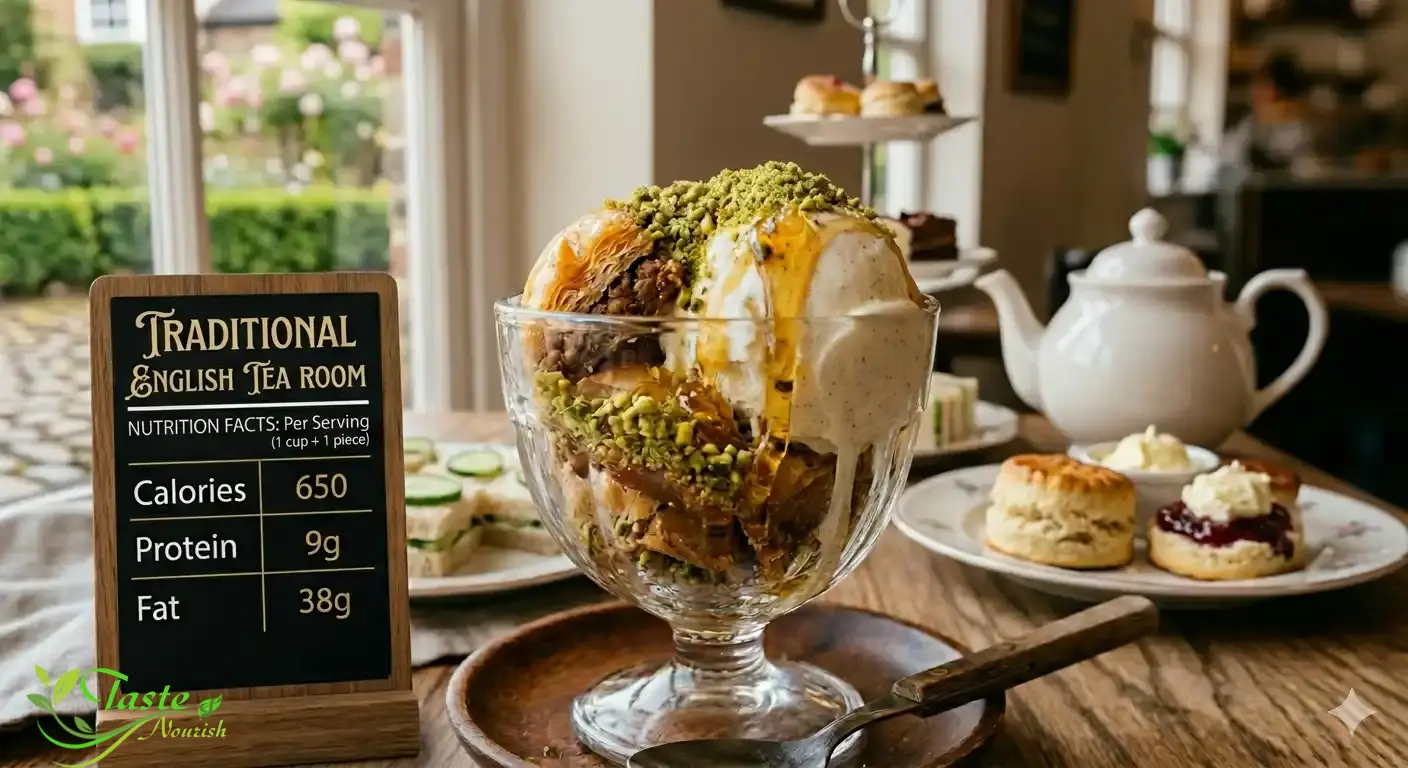
- Vanilla ice cream — for the truly indulgent, served warm from the oven alongside a cold scoop
- Mint tea — a traditional Mediterranean pairing that cleanses the palate between bites
Baklava Cheesecake: Troubleshooting Guide
Even with the best preparation, things can go sideways. Here’s a quick-reference troubleshooting table:
| Problem | Likely Cause | Solution |
|---|---|---|
| Phyllo turned soggy | Too much butter or filling seeped through | Use less butter per layer; chill crust before adding filling |
| Cheesecake center too liquid | Underbaked | Return to oven for 10-min intervals; check for jiggle not slosh |
| Top cracked | Overmixed or cooled too fast | Mix less; cool gradually in oven with door cracked |
| Phyllo didn’t brown | Oven temp too low or bottom-rack position | Move to center rack; increase to 340°F for last 10 minutes |
| Filling too dense | Cold cream cheese or over-beaten eggs | Always use room-temp ingredients; mix eggs on low |
| Honey topping crystallized | Applied honey to cold surface | Warm honey before drizzling; apply at room temperature |
The Cultural Significance of Fusion Desserts
There’s something deeply meaningful about fusion desserts like baklava cheesecake that goes beyond the culinary. Food has always been one of the most intimate ways cultures communicate with each other, share histories, and find common ground. When a dessert like this goes viral, it’s not just because it tastes good — it’s because it tells a story of cultural intersection.
Baklava alone carries centuries of history across Turkish, Greek, Lebanese, Syrian, and Iranian cuisines — each culture claiming it proudly as their own, each adding subtle regional variations in spice, nut selection, and syrup flavoring. Cheesecake similarly spans cultures, from the dense New York style to the airy Japanese soufflé version to the rustic Italian ricotta torte. When they meet in a single dessert, the result is both a creative achievement and a small act of cultural bridge-building — one delicious slice at a time.
This is also why baklava cheesecake resonates so powerfully with diaspora communities. For someone who grew up eating baklava at Eid celebrations or Greek Easter gatherings, seeing those familiar flavors — the honey, the cardamom, the pistachios — wrapped in the universally beloved format of cheesecake creates an immediate emotional connection. It feels both familiar and exciting at the same time, which is exactly what the best food should do.
Why This Dessert Is Taking the Internet by Storm
Search trends for baklava cheesecake have surged dramatically across food blogs, Pinterest boards, and YouTube channels throughout 2024 and 2025. Food creators are drawn to it because it photographs beautifully, tells a compelling story, and delivers on taste in a way that justifies every layer of effort.
This baklava cheesecake fits into the holy trifecta of dessert categories: it tastes incredible, looks fancy, but is secretly simple to make — with store-bought phyllo dough that is easier to manage than it seems, giving you a beautiful crispy and light crust with no kneading or rolling required.
Social media platforms have amplified the trend further, with home bakers sharing their golden, pistachio-crowned creations and racking up millions of impressions. The dessert appeals to a wide audience — Middle Eastern diaspora communities who grew up with baklava, cheesecake enthusiasts looking for a creative twist, and food explorers who simply want something different and memorable. It also bridges cultural conversations in the most delicious way possible.
Baklava Cheesecake FAQs
Can I make baklava cheesecake ahead of time?
Absolutely — in fact, it’s better when made a day ahead. The flavors meld and deepen overnight in the refrigerator, and the texture sets perfectly. Just add the honey drizzle and nut topping the day you plan to serve it, so the nuts stay crisp and the honey stays glossy.
What nuts work best in baklava cheesecake?
Pistachios are the most visually stunning option and offer a buttery, slightly sweet flavor. Walnuts are the most traditional baklava nut and add a pleasant bitterness that balances the sweetness of the honey. A combination of both is ideal. You can also use almonds or pecans as alternatives.
Do I need a springform pan for this recipe?
For the classic round version, yes — a springform pan is essential because it allows you to release the cheesecake cleanly without flipping it. For bars, a standard 9×13-inch baking pan works perfectly. Mini versions can be made in a muffin tin using phyllo cups.
Is rosewater necessary, or can I skip it?
Rosewater is optional but it adds an authentic, fragrant dimension that genuinely elevates the dessert. If you don’t have it or don’t enjoy floral flavors, substitute with orange blossom water for a citrusy-floral alternative, or simply omit it without the recipe suffering significantly.
Why did my phyllo crust go soft after refrigerating?
Phyllo loses its crunch when exposed to moisture over time — including the moisture from the cheesecake filling. This is largely unavoidable with an overnight chill. To maximize crunch, make sure the phyllo is fully baked and golden before adding filling, and serve the cheesecake within 24 hours of assembly for the best textural contrast.
Baklava Cheesecake
12
servings30
minutes1
hour10
minutes420
kcalIngredients
16–20 sheets phyllo dough, thawed overnight in the refrigerator
1/2 cup (113g) unsalted butter, melted
1/2 cup (60g) pistachios, finely chopped
1/4 cup (30g) walnuts, finely chopped
1 teaspoon ground cinnamon
2 tablespoons honey (for the nut layer)
600g (21 oz) full-fat cream cheese, softened to room temperature
250g (9 oz) whole milk ricotta cheese (optional, for lighter texture)
3/4 cup (150g) granulated sugar
3 tablespoons honey (for the filling)
3 large eggs, at room temperature
1 teaspoon pure vanilla extract
1 teaspoon rosewater
Zest of 1 orange or lemon
1/4 cup (60ml) honey, warmed (for topping)
1/2 teaspoon rosewater (mixed into topping honey)
1/2 cup (60g) pistachios, roughly chopped (for topping)
1/4 cup (30g) walnuts, roughly chopped (for topping)
1 tablespoon dried rose petals (optional, for garnish)
1/4 teaspoon ground cardamom (for topping)
Directions
- Prepare the Phyllo Crust: ( Preheat your oven to 325°F (165°C) and lightly grease a 9-inch springform pan with melted butter or non-stick cooking spray. Unroll the thawed phyllo dough and lay the sheets flat, keeping the unused sheets covered with a slightly damp kitchen towel to prevent them from drying out. Place one phyllo sheet in the prepared pan, allowing the excess to drape over the sides, then lightly brush it with melted butter. Repeat with 8–10 sheets, rotating the pan slightly with each layer so the overhanging edges are evenly distributed around the rim. In a small bowl, combine the finely chopped pistachios, walnuts, cinnamon, and 2 tablespoons of honey, then mix well and spread the nut mixture evenly over the phyllo base. Layer 5–6 more phyllo sheets on top, brushing each with melted butter. Finally, fold the overhanging edges up and over the top of the pan to create a rustic, crinkled border that will turn beautifully golden and dramatic during baking).
- Prepare the Cheesecake Filling: ( In the bowl of a stand mixer fitted with the paddle attachment, or using a hand mixer, beat the softened cream cheese on medium speed for 2–3 minutes until completely smooth and lump-free, scraping down the sides of the bowl as needed. Add the granulated sugar and 3 tablespoons of honey, then beat for another 2 minutes until light and well combined. Add the eggs one at a time, mixing on LOW speed after each addition just until incorporated. Avoid overmixing, as incorporating too much air can cause the cheesecake to puff and crack during baking. Add the vanilla extract, rosewater, and citrus zest, and mix on low speed just until combined. If using ricotta, gently fold it in by hand with a rubber spatula for a marbled texture, or blend it in until smooth for a uniform filling).
- Pour the Filling, Bake, and Chill the Cheesecake: ( Pour the cheesecake filling gently and evenly over the prepared phyllo crust inside the springform pan, then smooth the surface with an offset spatula or the back of a spoon. Place the pan on the center rack of the preheated oven and bake at 325°F (165°C) for 55–70 minutes, or until the edges are fully set while the center still has a slight wobble, similar to set gelatin rather than liquid; the top should remain pale golden without becoming deeply browned. Once baked, turn off the oven, crack the door open about 2 inches, and leave the cheesecake inside for 30 minutes to allow it to cool gradually and reduce the risk of surface cracks caused by a sudden temperature change. Then transfer the pan to a wire cooling rack and let the cheesecake cool at room temperature for 1 full hour, making sure not to place it in the refrigerator while it is still warm. Finally, loosely cover the cooled cheesecake with plastic wrap and refrigerate it for at least 4 hours, although chilling it overnight is strongly recommended for the best texture, flavor, and clean, firm slices).
- Warm, Garnish, and Serve the Cheesecake: ( Once the cheesecake is fully chilled and set, carefully release the springform pan. Meanwhile, gently warm the remaining 1/4 cup of honey in the microwave for 10–15 seconds or in a small saucepan over low heat, making sure it becomes pourable without getting hot. Stir in 1/2 teaspoon of rosewater and the ground cardamom until well combined, then drizzle the warm honey mixture generously over the surface of the chilled cheesecake. Scatter the roughly chopped pistachios and walnuts evenly across the top, and finish with dried rose petals if desired for an elegant floral touch. For clean, neat slices, dip a sharp knife in warm water, wipe it dry, and slice the cheesecake, reheating and cleaning the knife between cuts if needed. Serve the cheesecake immediately and enjoy the contrast between its creamy filling, crisp nut topping, fragrant honey, and delicate rosewater flavor).
Conclusion
Baklava cheesecake is more than a recipe trend — it’s a genuinely brilliant culinary creation that earns every bit of the attention it receives. By marrying the architectural crunch of honey-soaked phyllo with the luscious depth of a baked cheesecake, this dessert achieves something rare: it’s simultaneously sophisticated and comforting, culturally rooted and creatively fresh.
Whether you make the full baked version with ricotta and rosewater, opt for easy bars to feed a crowd, or try a no-bake adaptation for a weeknight treat, the core magic stays the same — layers of flavor and texture that reward every single bite. With the tips, troubleshooting guide, and variations covered here, you have everything you need to make a truly spectacular dessert that will absolutely own the room. Now go butter those phyllo sheets. You’ve got a masterpiece to make.